Highlights: Beautiful and interesting towns, good food and some appealing countryside and national parks, particularly if you like waterfalls. Also great bathrooms.
Lowlights: The weather was unseasonably cold and windy, locals kept assuring us it was more like January than April. And, both James and Aileen were sick on separate occasions.
Split
Our ferry from Ancona, Italy landed in Split at 7 am on a rainy and drizzly Saturday morning. We decided to find a site to stay overnight and wait out the rain. With the aid of the Park4Night app we found ourselves a space next to a church and the city’s football stadium.
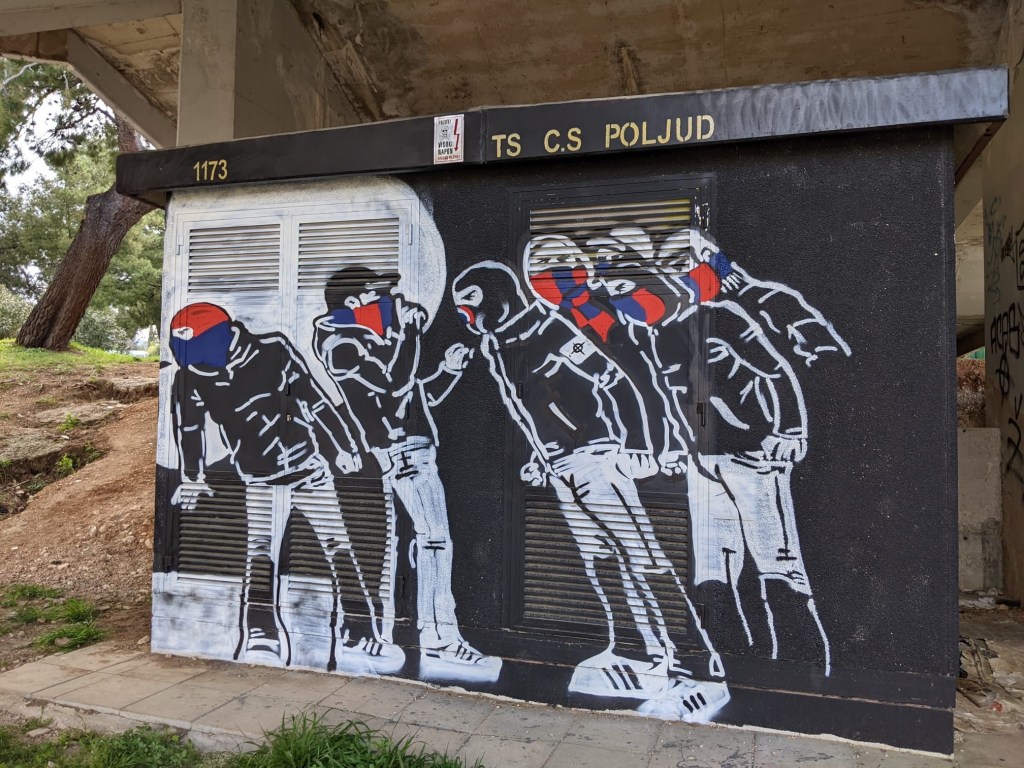
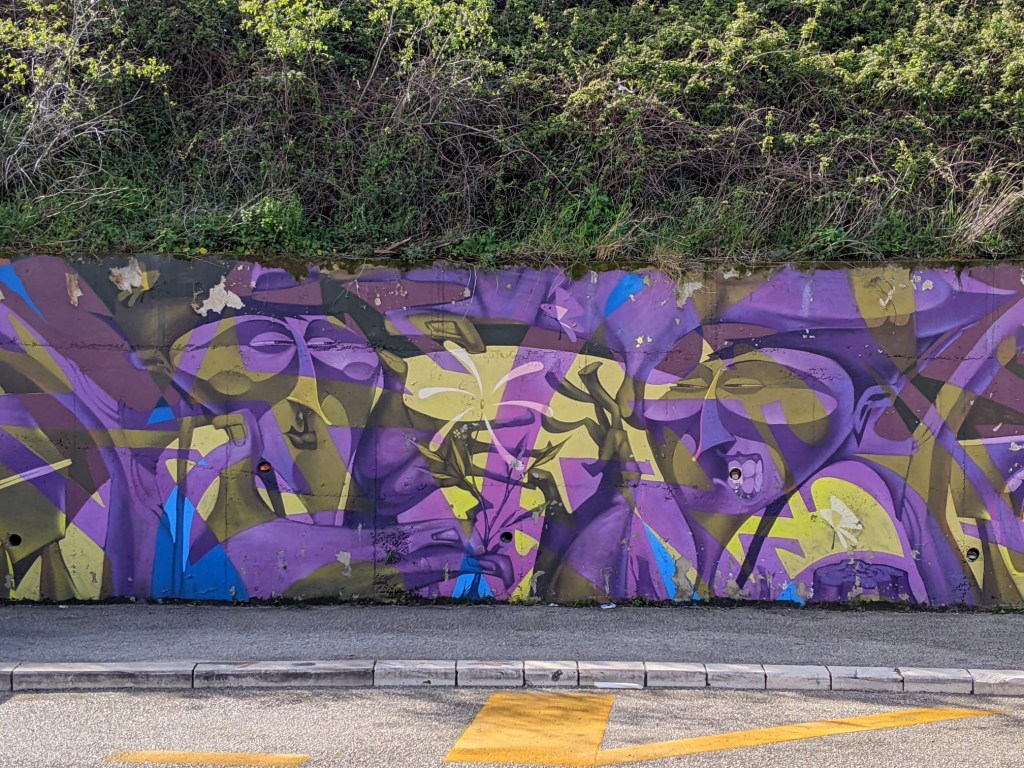
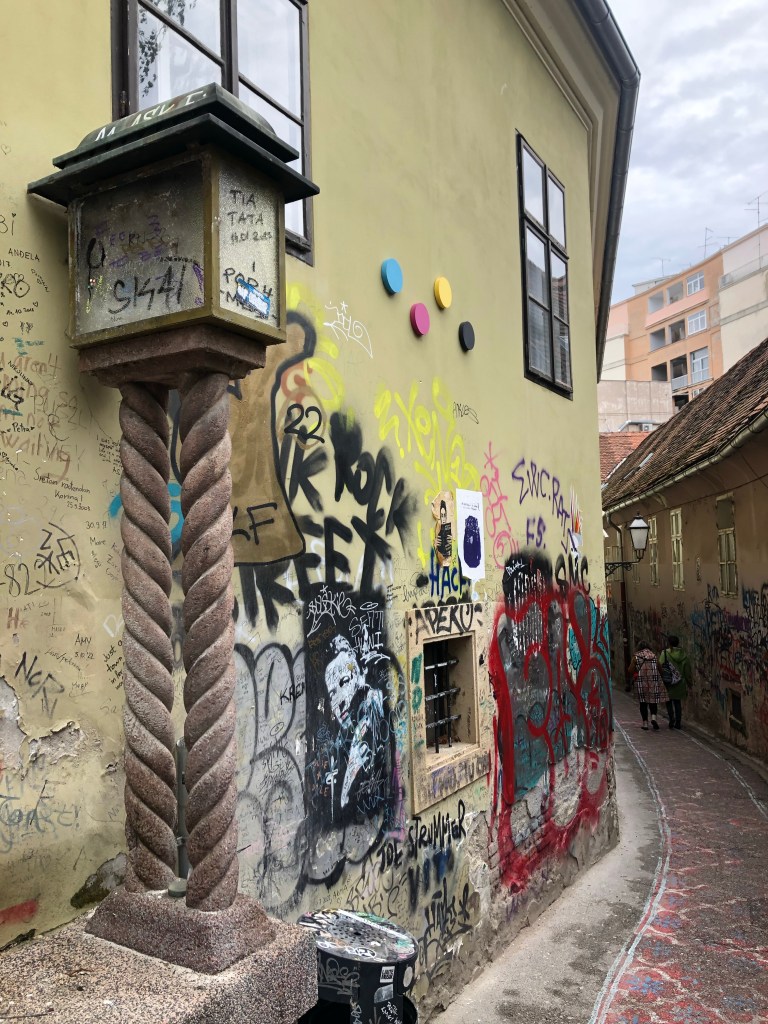
The rain did eventually stop so we went for a stroll into town via a shopping mall with the amusing name of “Joker” where we picked up a local SIM card. Enroute we saw some impressive graffiti – most of the countries we’ve visited have had quite basic graffiti typically just tagging, so it was nice to see something with more artistry. Arriving in the city centre we swiftly took care of buying other essentials: good coffee and proper jasmine rice.
Having covered life’s basic needs we were free to enjoy the city. Split centre is relatively compact, and roughly half of the old town has been built incorporating the structure from the previous Roman palace of Diocletian. It’s quite a fascinating place and well worth the visit. As the city developed over the years it maintained and “re-used” a lot of the original palace features. The current cathedral is built incorporating elements of the previous temple. The city walls form part of the structure of many current buildings, most obviously along the harbour front. The gates to the palace are still intact.
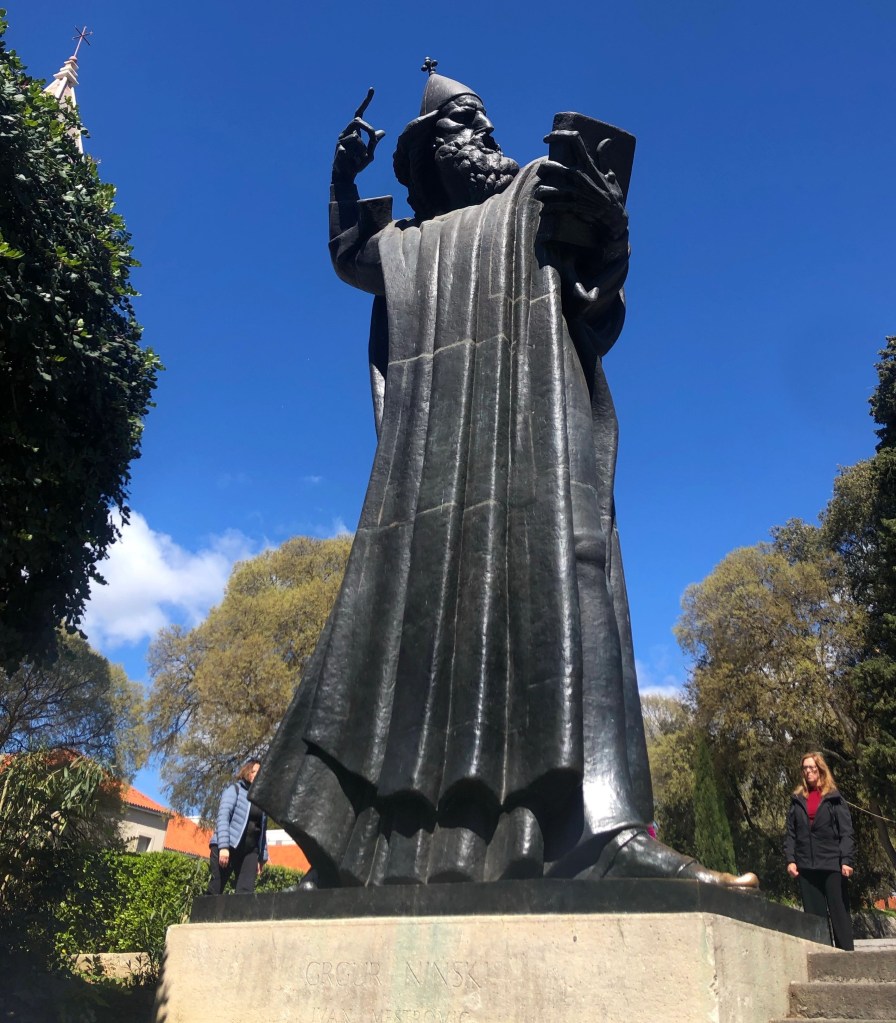
Outside the north gate is a huge bronze monument to Gregory of Nin, a local bishop who succeeded in introducing the Croatian language to religious services, in opposition to the Pope. Apparently it’s good luck to touch his big toe.
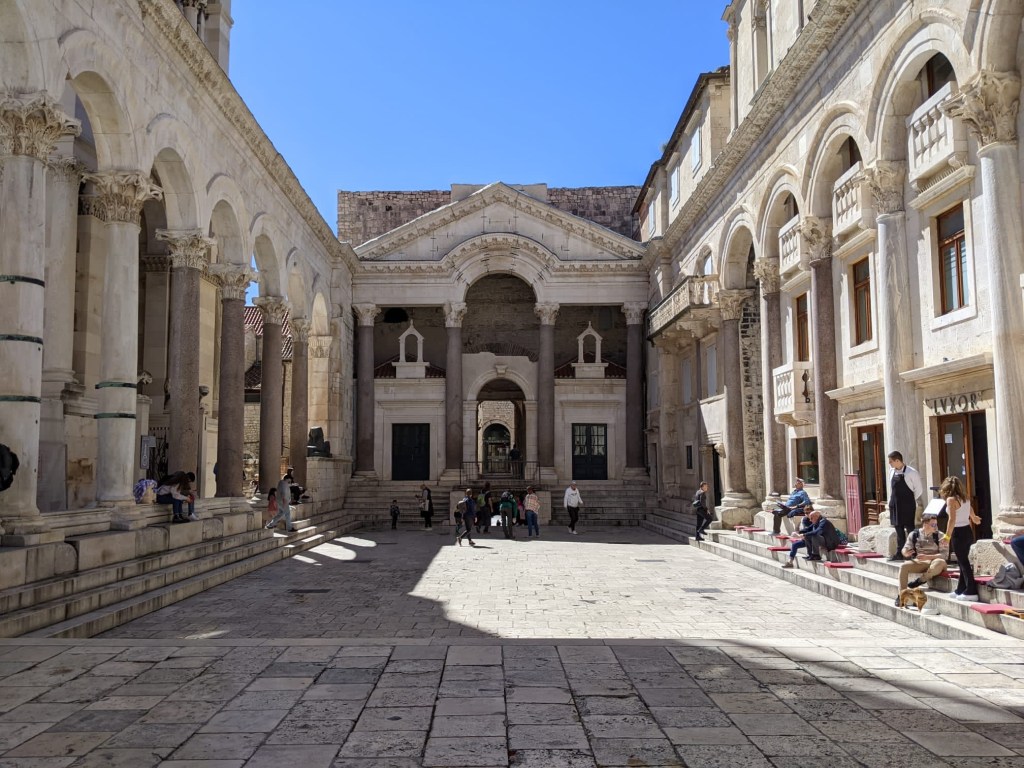
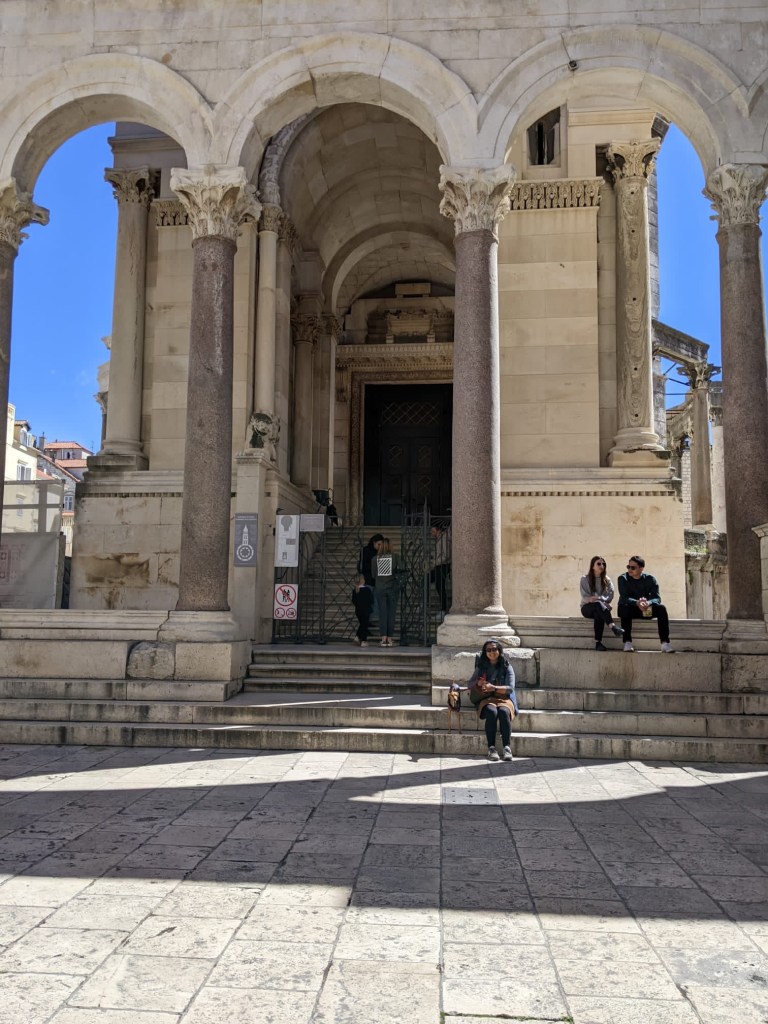
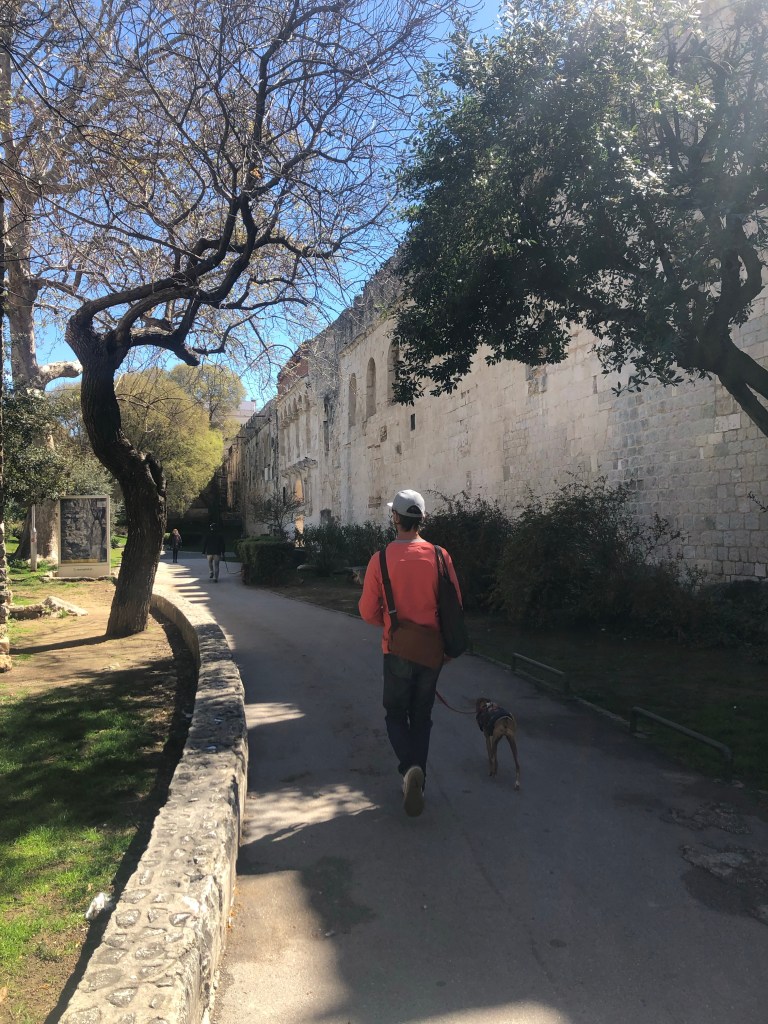
The rest of Split city centre is a maze of old pedestrian streets, gleaming in the sunshine from the old limestone buildings and cobblestone streets. We found later on this was typical of the Dalamation coast cities.
After a late lunch Aileen and Zeus retired to the campervan and James to the climbing wall which is built on the underside of a section of the football stadium seating. It’s convenient how many camper stops seem to be near places to climb 😉
Krka and Pltvice National Parks
One of our overriding memories of Croatia is that it has a lot of water. After “slumming” it Italy’s tiny showers with water sold in 2 minute increments, we found Croatia’s camp showers luxurious – Flowing warm water! No fear of it stopping when you have soap in your eyes! Enough space to maneuver without your body parts touching cold tiling! 10/10!
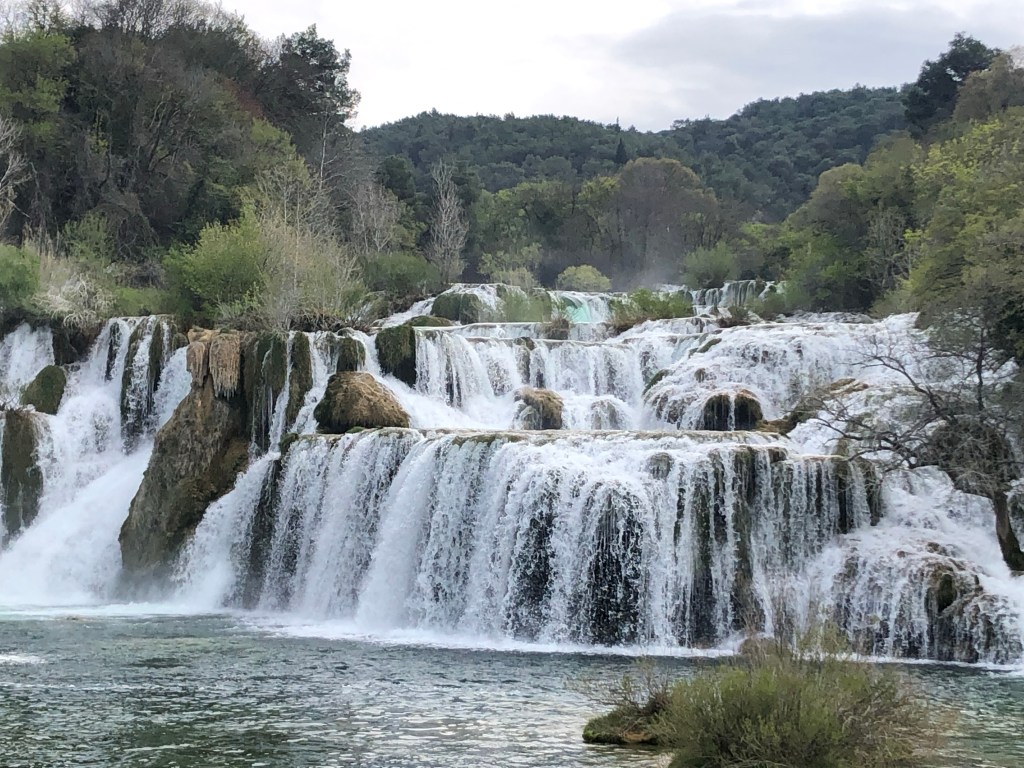
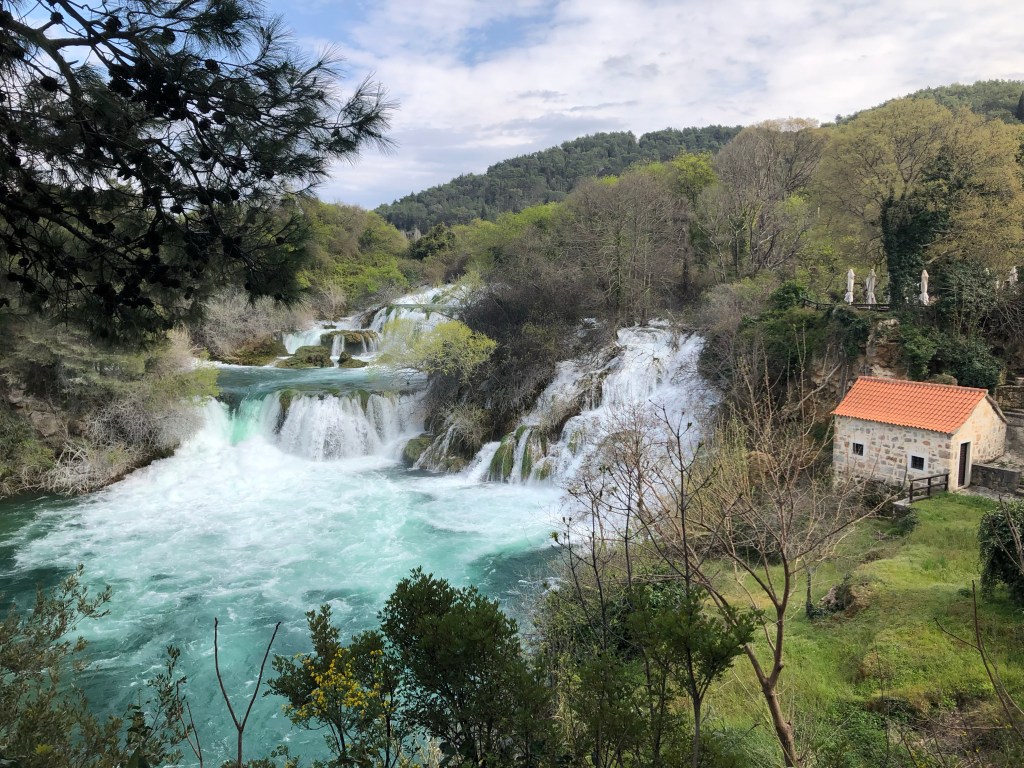
Aside from its lovely camp showers, we also visited two national parks well known for their waterfalls. Krka National Park is a mere 30 minute drive from Split. From the parking lot/entrance it looks to be flat dull terrain. There’s no indication of what awaits.
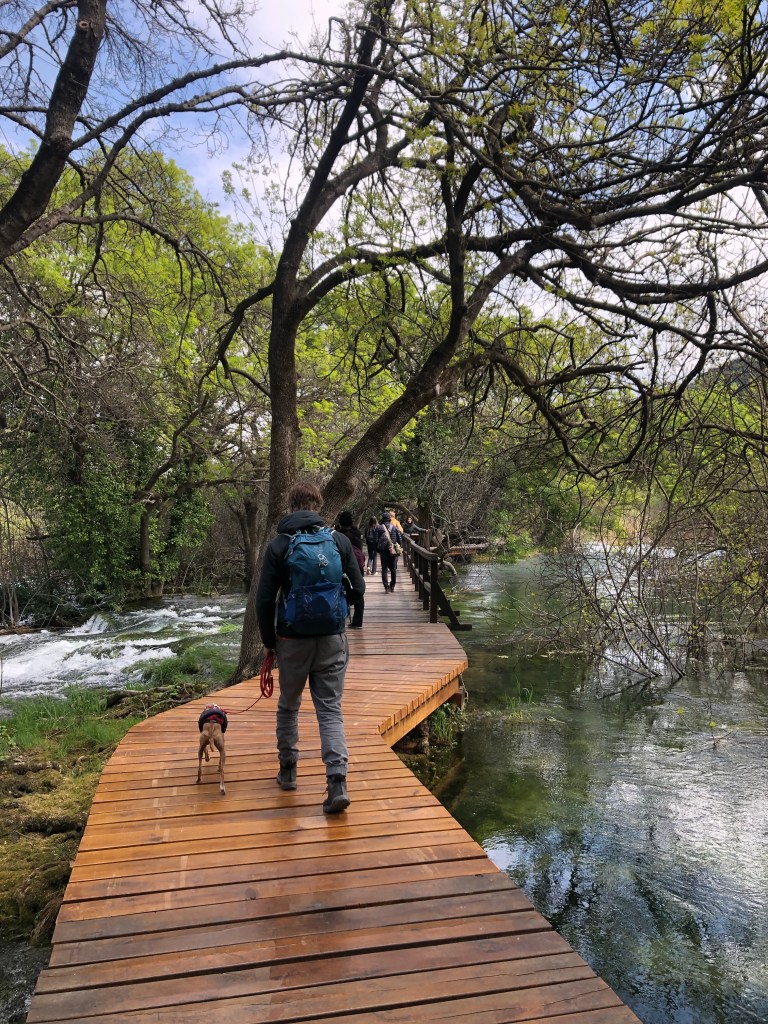
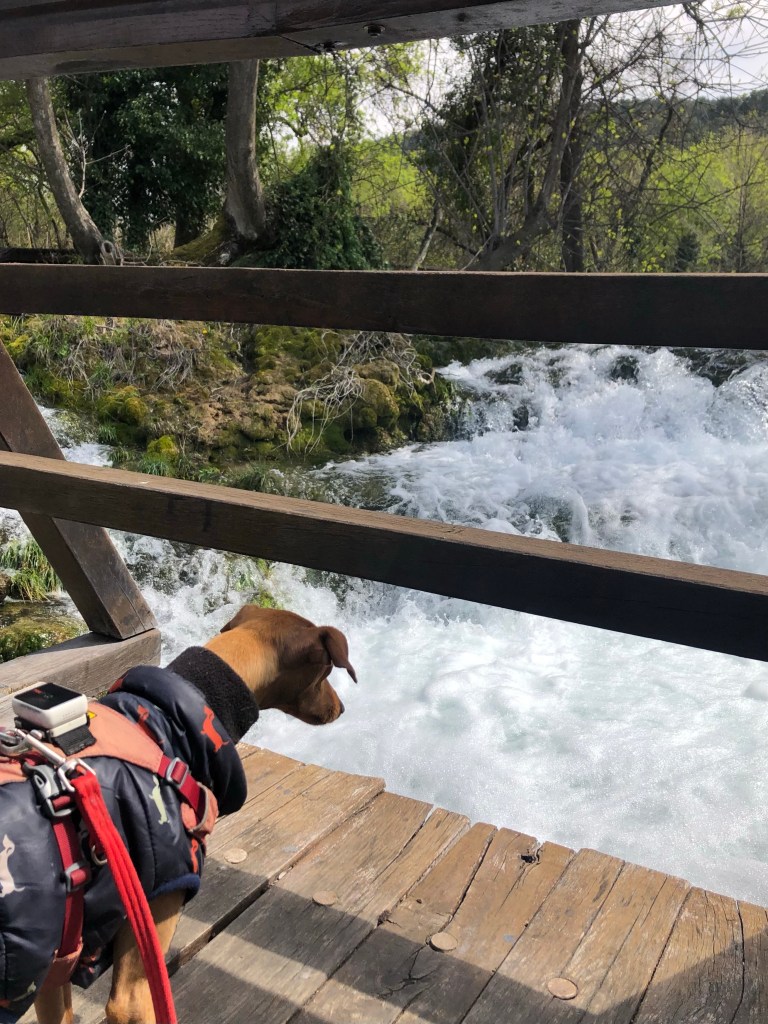
We were loaded up onto a bus and driven a kilometre down a steep road with switchbacks into a deep valley (there’s also a steep footpath down but it was closed for repair when we were there). When you step off the bus you enter a magical place with crystal clear blue lakes, forming steps further down into the valley, with water flowing (gushing) over the edges of each step. The park has wooden walkways winding between the lakes and waterfalls. It was certainly beautiful, though Zeus was not a fan of the wooden walkways and loud gushing water so he got a carry most of the way.
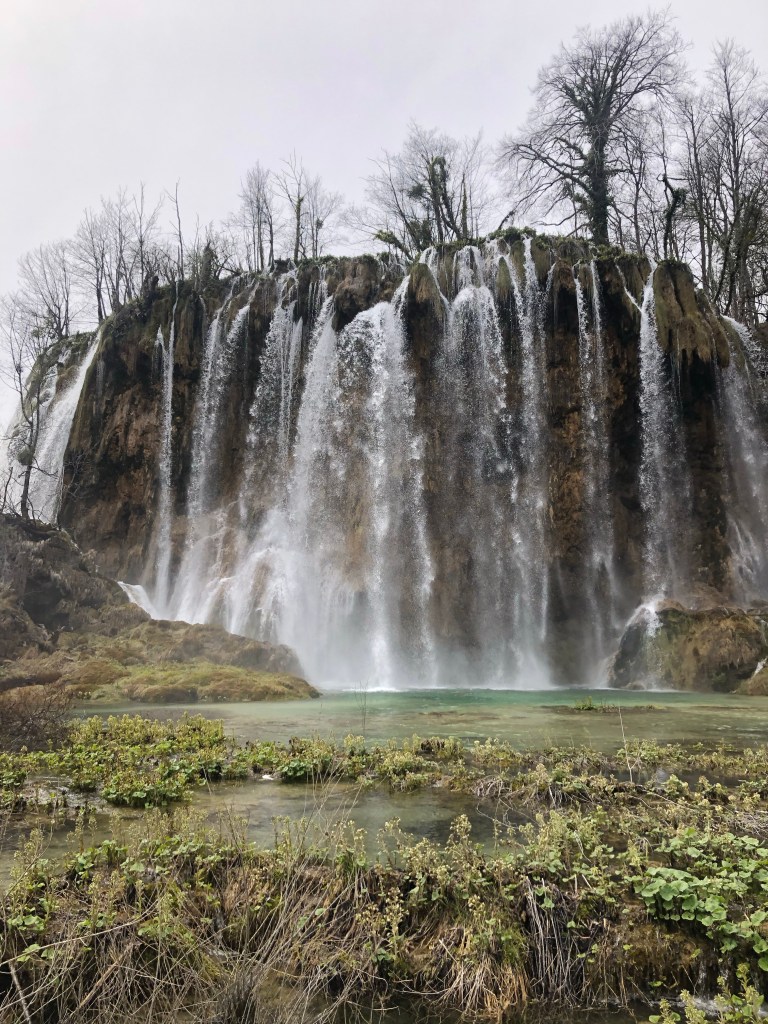
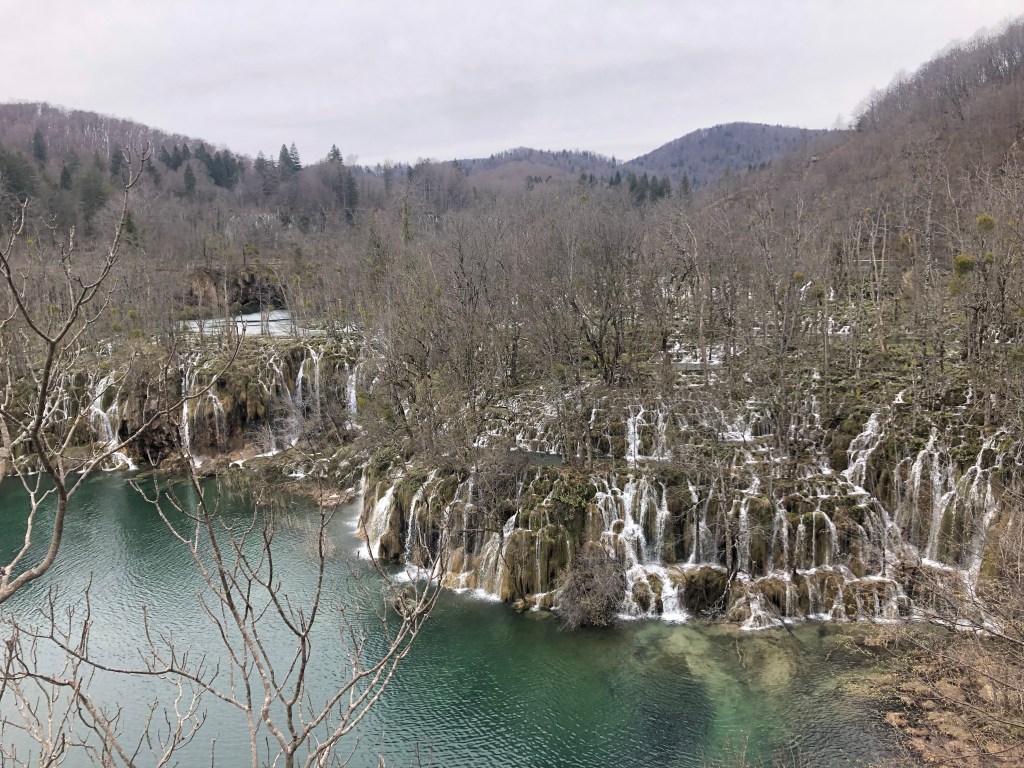
Plitvice National Park is an hour and a half’s drive from Zadar, and is the big sibling to Krka. It’s lakes are bigger. It’s waterfalls are bigger.
Zadar and Paklenica National Park
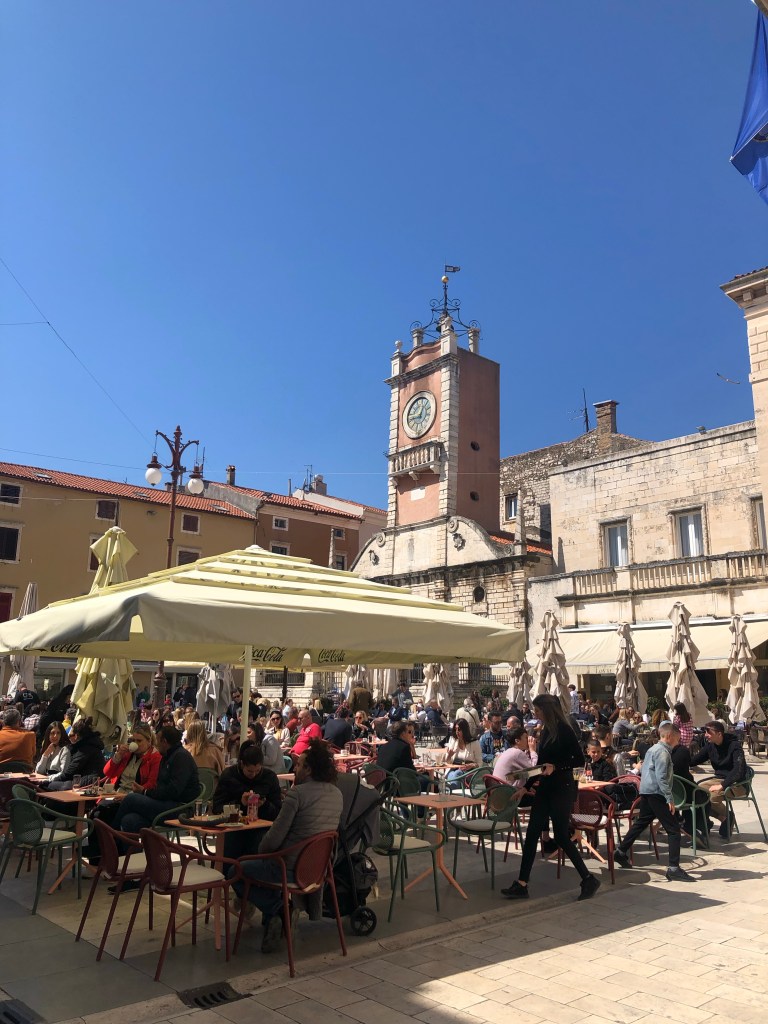
Zadar is a picturesque town on the Dalmatian coast north of Split. We enjoyed walking its streets in the morning. The other points of interest, aside from some historic buildings, eating and shopping (which we didn’t need) are two public art works on the sea wall:
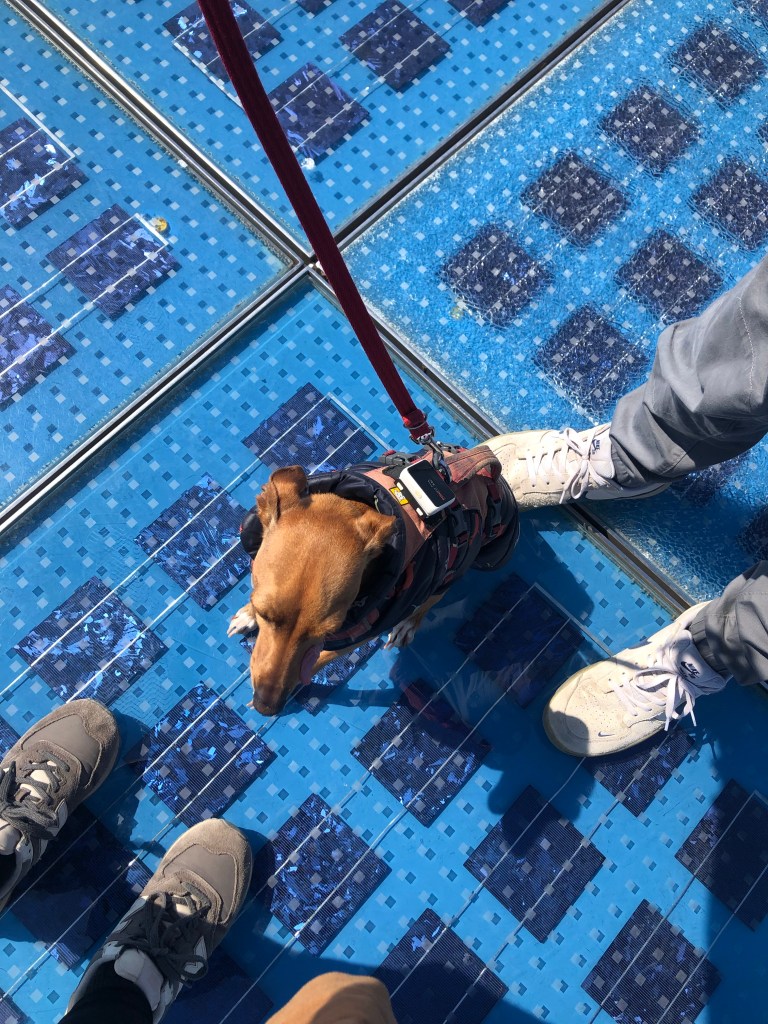
- Pozdrav Suncu (Greeting to the Sun) is a solar powered light installation that charges from the sun in the day and illuminates at night. We were there during day time so couldn’t see the light show, but could imagine it being very dramatic.
- Morske Orgulje (Sea Organ) was one we could witness in action. It’s an organ where pressure from incoming waves forces air through holes in the pavement, creating organ-like sounds. The effect is a random but somewhat mesmerising tune, reminiscent of whale song.
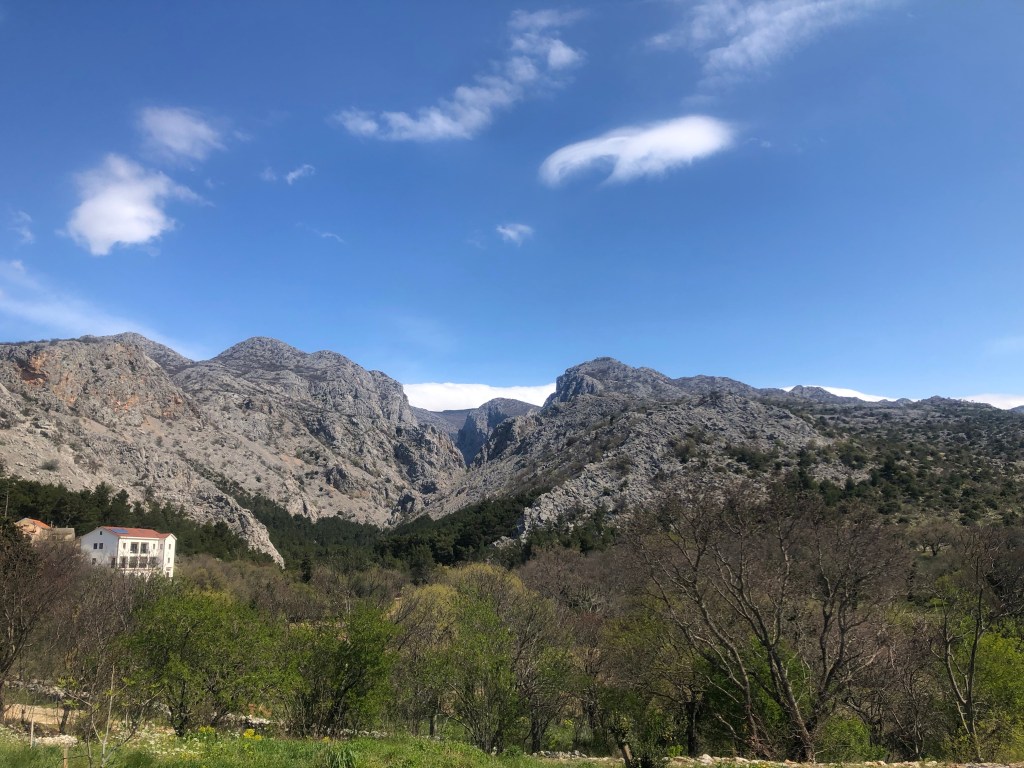
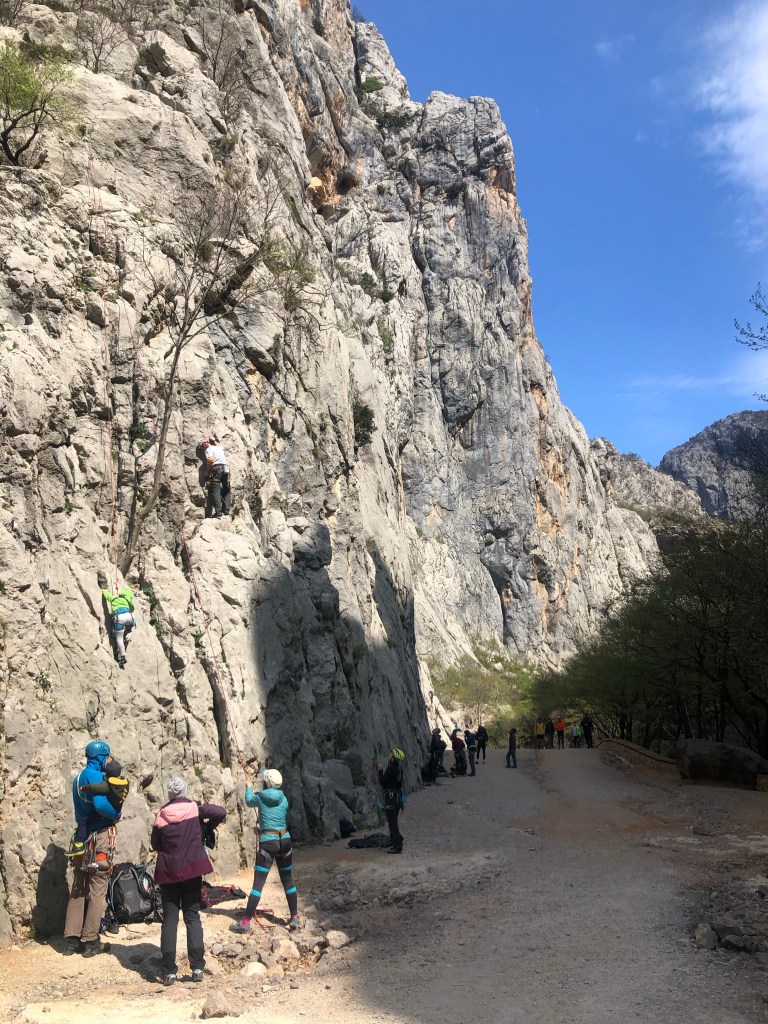
After Zadar we headed north-east for about 45 minutes, past an inland sound to Starigrad which sits at the entrance to Paklenica National Park . We stayed at a campsite which, in common with several that we visited in Croatia, seemed to be in someone’s garden, and it was run by a lovely older couple. There were several groups of climbers staying there. Paklenica is a significant venue for route climbing in Croatia.
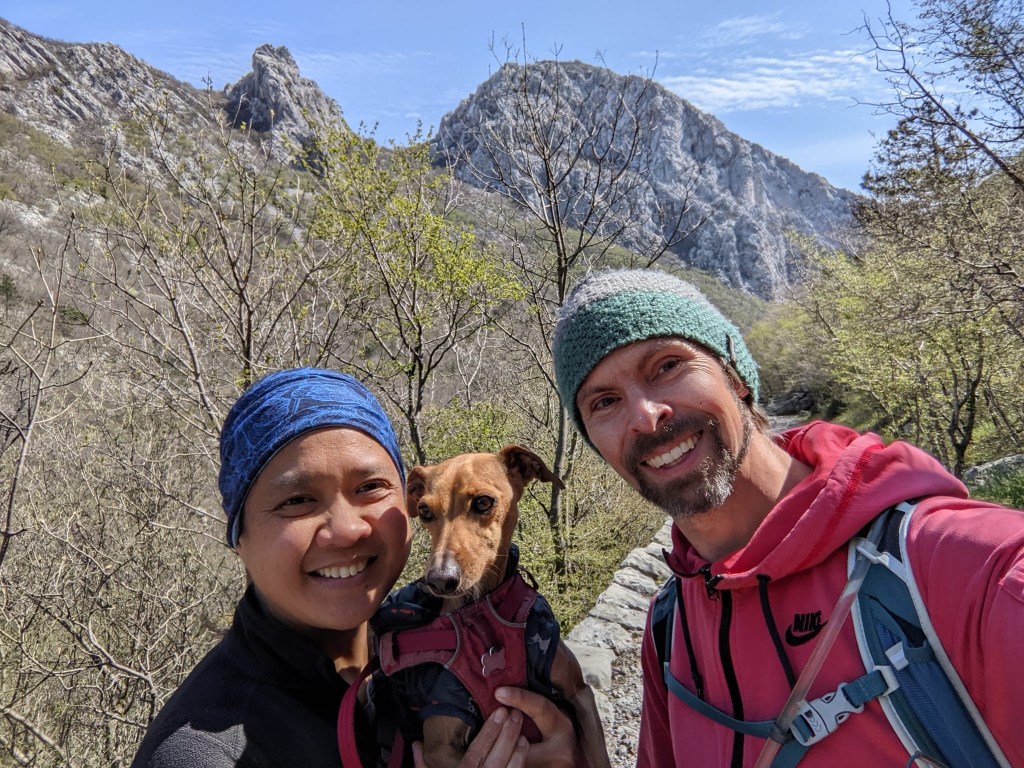
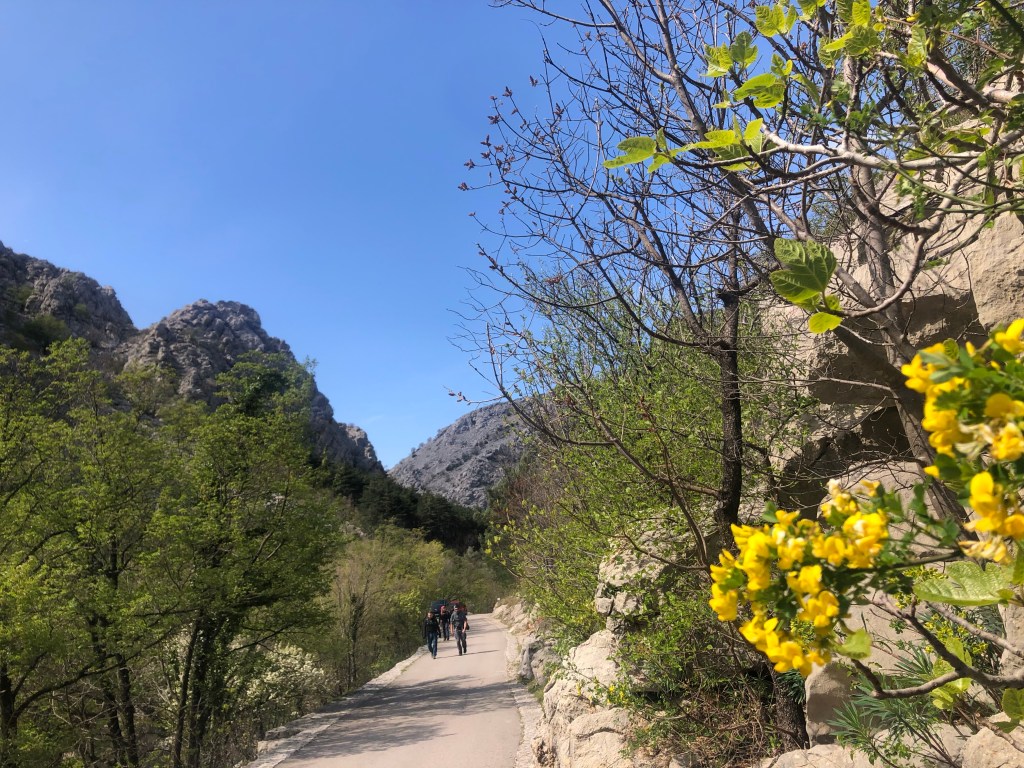
The next day we did an out and back hike from the campsite heading north up the Velika Paklenica canyon that also contains much of the climbing. We really enjoyed the walk – spring was breaking and lots of trees and plants were coming into flower. It was interesting to watch the climbers too. The valley has routes that attract beginners and experienced climbers alike. The atmosphere of encouragement and achievement was good and there was a noticeable positive buzz as we walked through the canyon. We chose a refuge serving Turkish coffee as our turnaround point, but it would be possible to do longer multi-day hikes exploring further into the park.
Istria
From Starigrad we headed north to Istria, a province of Croatia that shares a border with Italy, and is well known for its food and wine. We were prepared to feast on truffles, oysters, seafood and Croatian pasta. It is also famous for its rolling countryside with vineyards and pretty hilltop towns, so we looked forward to doing some hiking while there, and also planned to visit a vineyard.
But then the mysterious stomach bug reared its hideous head again. We managed to have a really nice meal at Konoba Vela Vrata, but Aileen was then out of commission after that for a couple of days. It also rained the whole time we were there – not a polite sprinkle, but an uncharacteristic deluge. So this meant exploring the outdoors was not an option.
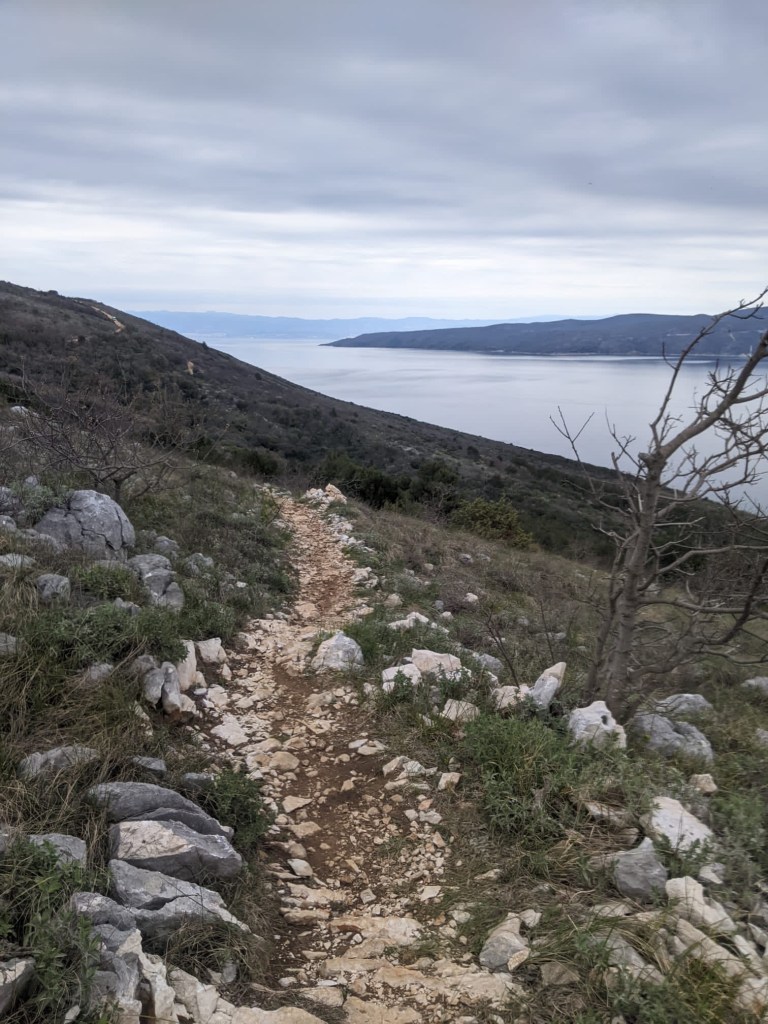
James did manage to go mountain biking before the deluge started. We went to a small bike park at Rabac on the south east coast. The park has several short trails and a couple of long trails which require 25 mins of climbing to access. The reward is some stunning views over the coast and Adriatic sea. Two very well built trails head across rocky terrain. A lot of thought and effort has been put into the direction the trails took down the hillside to ensure good flow. They were great fun to ride, but needed a committed mindset. Unfortunately a puncture slightly curtailed the fun.
We’ve been travelling long enough to accept that we’re at the mercy of the weather gods, and things won’t always go to plan. Istria is therefore on our list of places to revisit in the future.
Zagreb
We had a date in Zagreb with a VW garage. The campervan needed its first service and oil change (all good). While that was happening we explored Croatia’s capital.
Zagreb is split into upper and lower towns, largely denoted by elevation but also following a rough north-south split. We made ourselves a walking tour taking in some of the interesting sights:
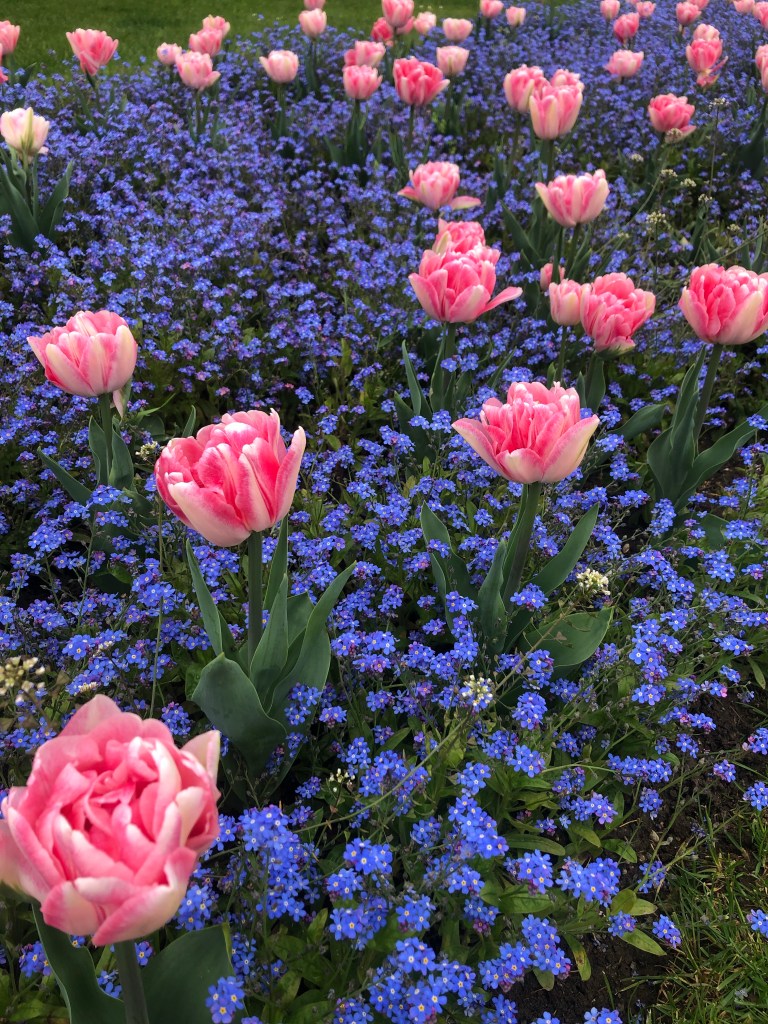
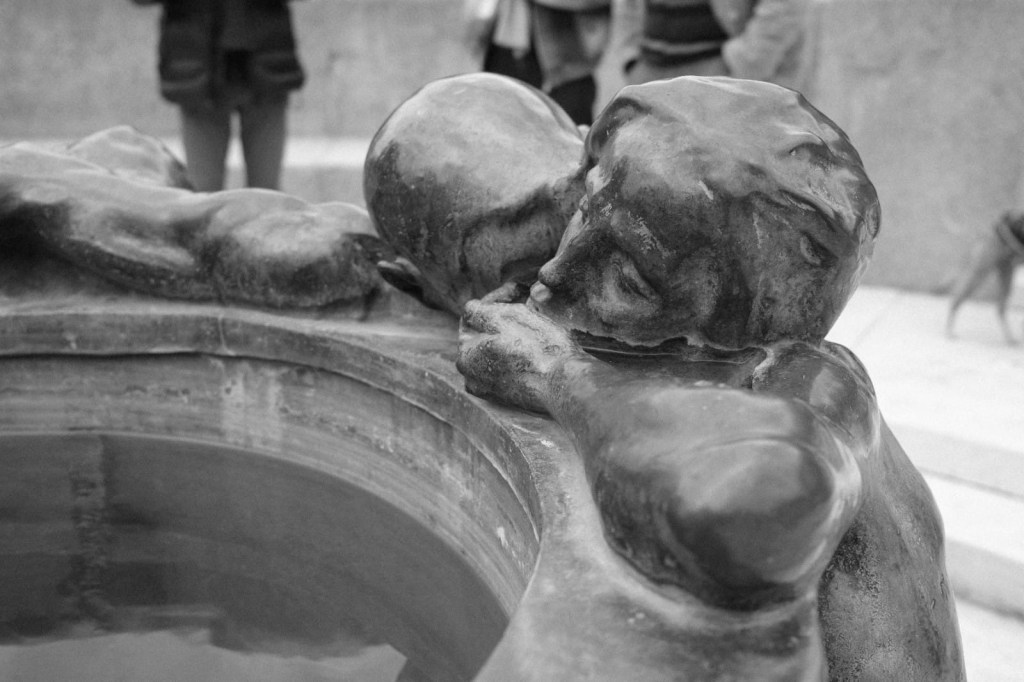
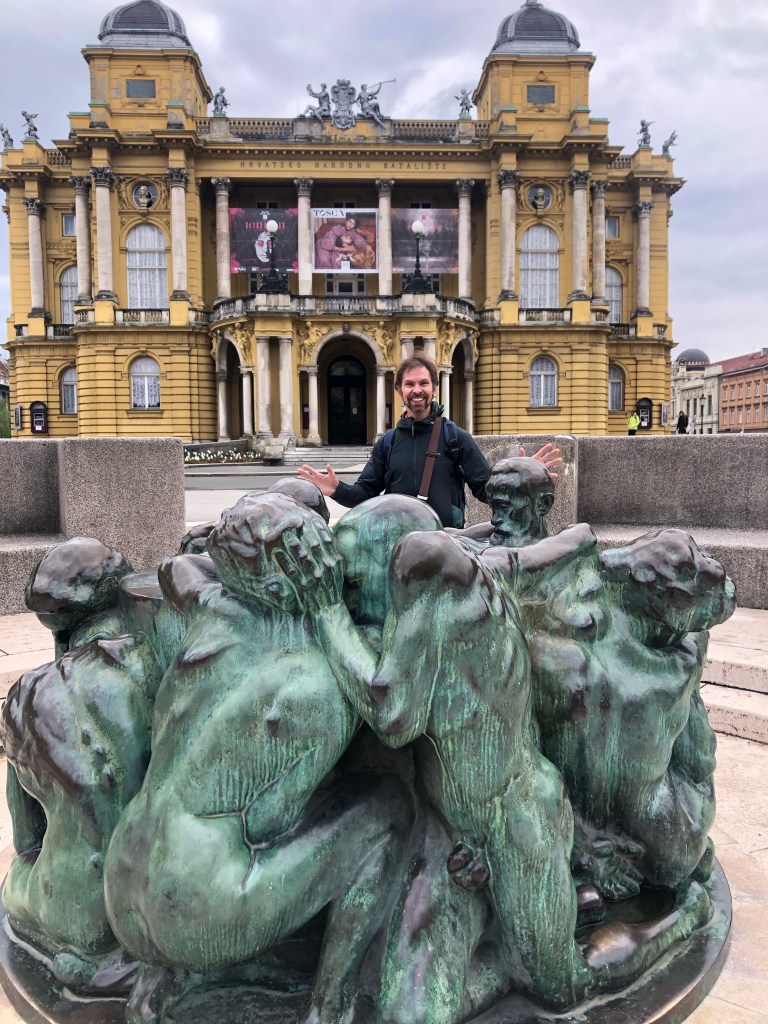
- Zdenac Života – We started our walk in the lower town at the National Theatre, which is an impressive building surrounded by gardens with lots of tulips in April. Also in the gardens is Zdenac Života (Well of Life), a beautiful and moving sculptured well by Ivan Meštrović, a noted Croatian sculptor also responsible for Gregory of Nin in Split. It depicts people at different stages and events in life surrounding and sometime regarding each other across the well.
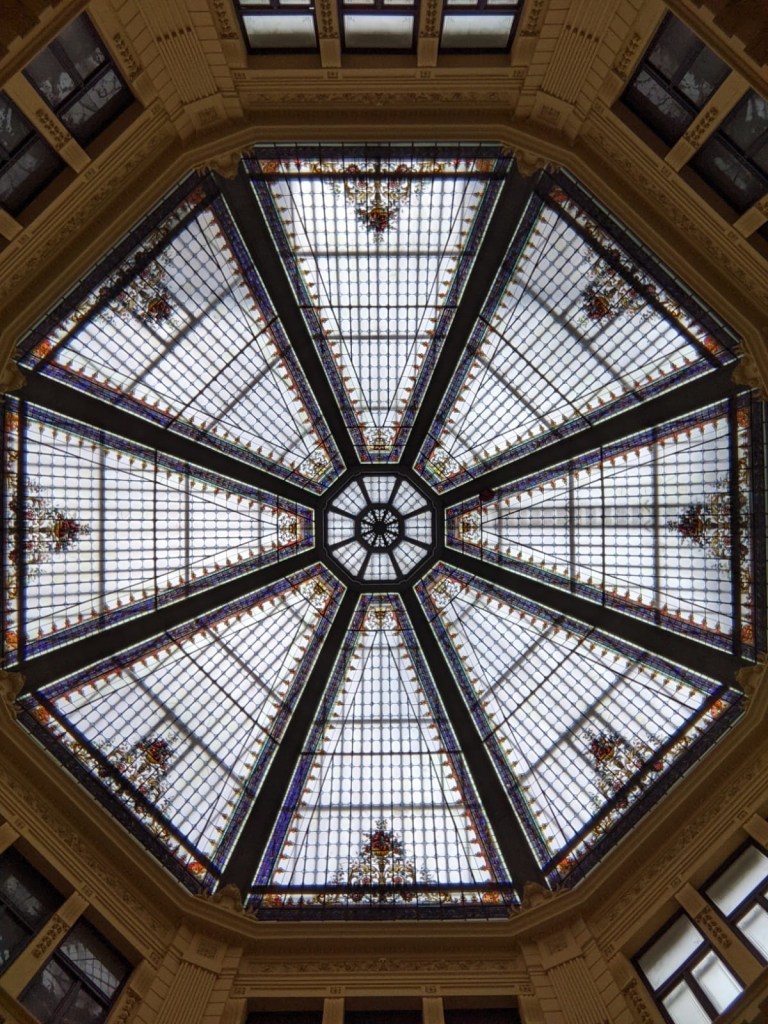
- Oktogon Building – An elegant gallery with a beautiful octagonal glass atrium.
- Nikola Tesla monument – Tesla wasn’t born in Zagreb (He was born in Smiljan, modern-day Croatia) but is celebrated as Croatia’s most famous inventor. Semi-related note: the Rimac factory was close to the VW garage, and is interesting for a driveby with chassis’ of cars in various states of production on display, but sadly it isn’t not possible to visit.
- Ban Jelačoć Square – The square is akin to Leicester Square in London, big and bustling – we didn’t stay long.
- Zagrebačka Katedrala – Zagreb’s famous cathedral was being renovated and had some impressive scaffolding being erected over its twin spires.
- Dolac Market – Zagreb’s largest market. It is extensive with a wide open air plaza of red-awninged vendor stands, a building for fabrics and other dry goods, and another with the meat and fish markets. We only took a cursory look since we didn’t need supplies and the market is sadly, not dog friendly.
- We had a nice Sri Lankan lunch at Curry Bowl on Ulica Ivana Tkalčića, a pedestrian street which is now home to many restaurants and bars, but in the past was Zagreb’s red light district. Post-lunch we walked up a severe set of steps which lead us to the upper town.
- We had a wander of the streets of the upper town seeing Crkva Sv. Marko a medieval-style church which has an impressive tiled roof and is just around the corner from the unique Museum of Broken Relationships . The museum gets good reviews on Google, is dog friendly and might have been fun to visit on a rainy day but we didn’t feel so inclined.
- A very short funicular connects upper and lower towns. We took the steps instead and ended our tour at Park Zrinjevac which had nice flowers and a mushroom shaped fountain.
Finally Zagreb has a nice climbing wall, The Hive which we visited on the morning we left heading for Slovenia.
Croatian Food
We explored Croatia for two weeks and both endured some mysterious stomach bugs, so sadly we didn’t try as much food as we had hoped. What we did try was very good. Highlights include:
Roasted pig
On Croation roadsides, it’s not uncommon to see large chimneyed cement structures next to mounds of firewood. And in these cement structures one could usually find whole pigs or lambs roasting on spits. Coming from the Philippines which prides itself in it’s roasted pigs (lechon), Aileen was very excited about this aspect of Croation cuisine. While in Zadar, we found a pečenjarnica with good reviews on Google that was near a Spar supermarket we went to.
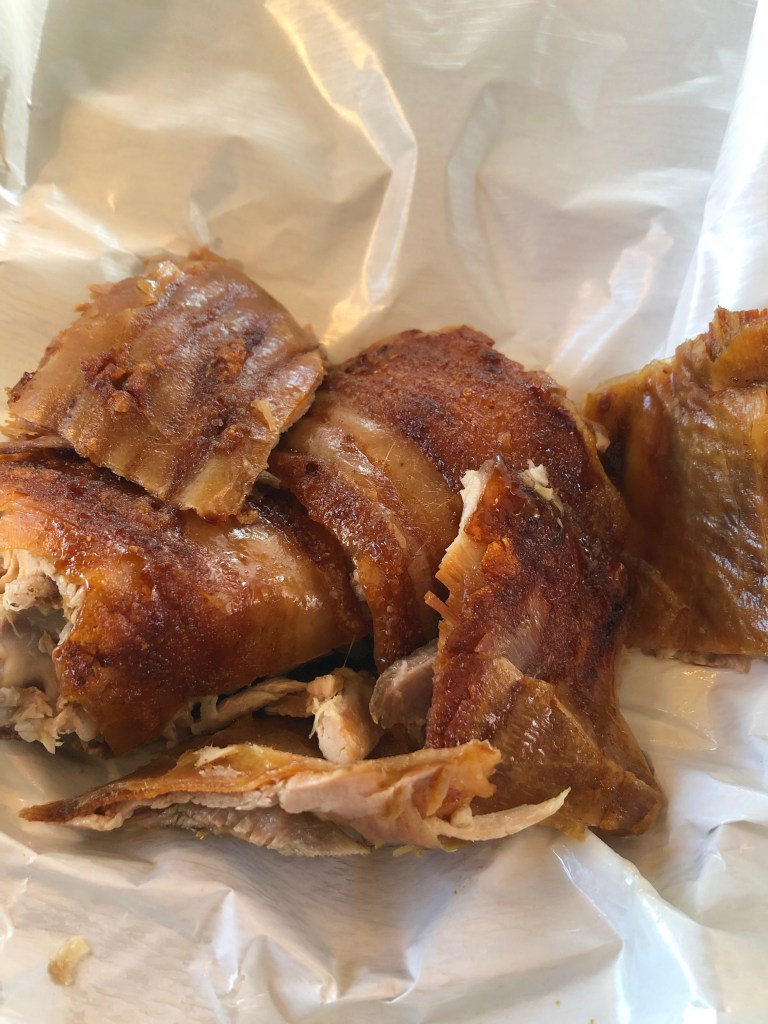
Pečenjarnica Brkljaca is a takeaway only place. There was a queue out the door and each time someone came out they signaled to those on the queue that thankfully there is still meat. When it was our turn, we saw the counters were empty and had a mild panic attack. The kind lady behind the counter spoke no English – thankfully someone behind us did and helped us order ½ kg of roasted suckling pig. She walked into a back room, returned with a whole roasted pig over her shoulders, asked us which part of the pig we wanted, and chopped and bagged our ½ kg which we took back to our campsite and devoured with some steamed rice on the side. Aileen would like to return at some point in the future and try some spit roasted lamb.
Ćevapčići
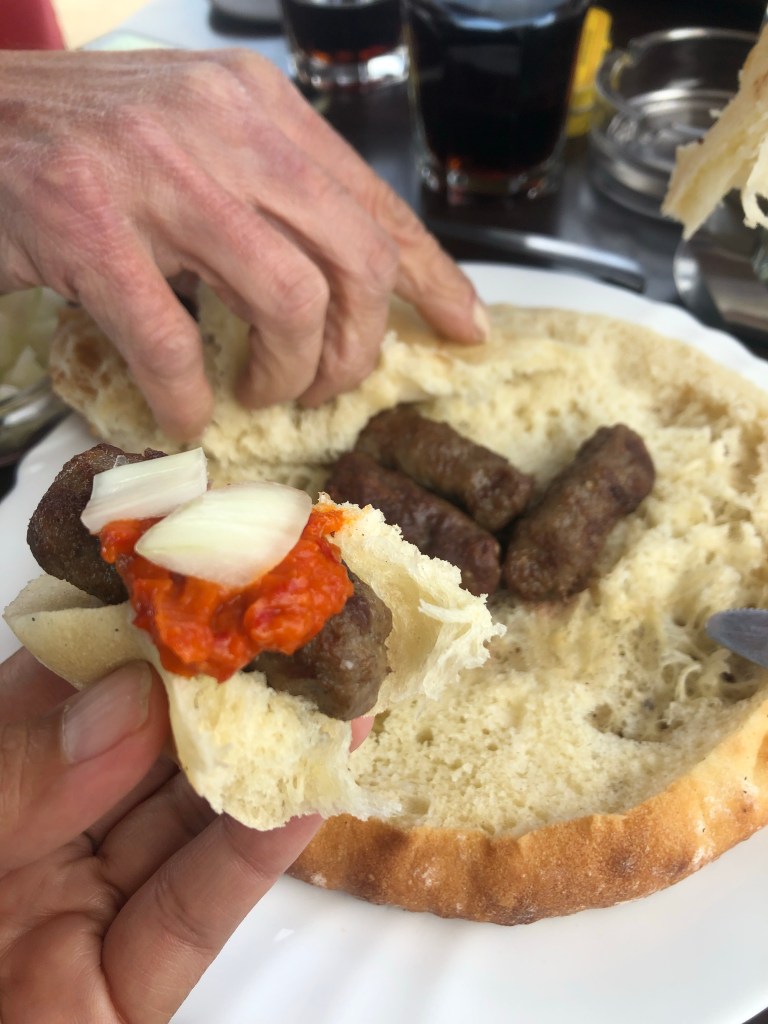
Ćevapčići is a vestige of Croatia’s being part of the former Yugoslavia. They are Bosnia-Herzegovina and Serbian-style spiced mixed meat sausages, cooked over a grill and typically served in lepina, a pita-style bread. We tried some at Ćevabdžinica Zadar, a short-walk away from the same Spar by Pečenjarnica Brkljaca. One might call the area a culinary hot spot. The menu had three options – small, medium and large – which was 5, 10, or 15(!) ćevapčići in a lepina. These were served with ajvar, a delicious roasted pepper relish, and some fresh chopped onions. We found it delicious – morsels of salty tasty meat in chewy bread.
Stews
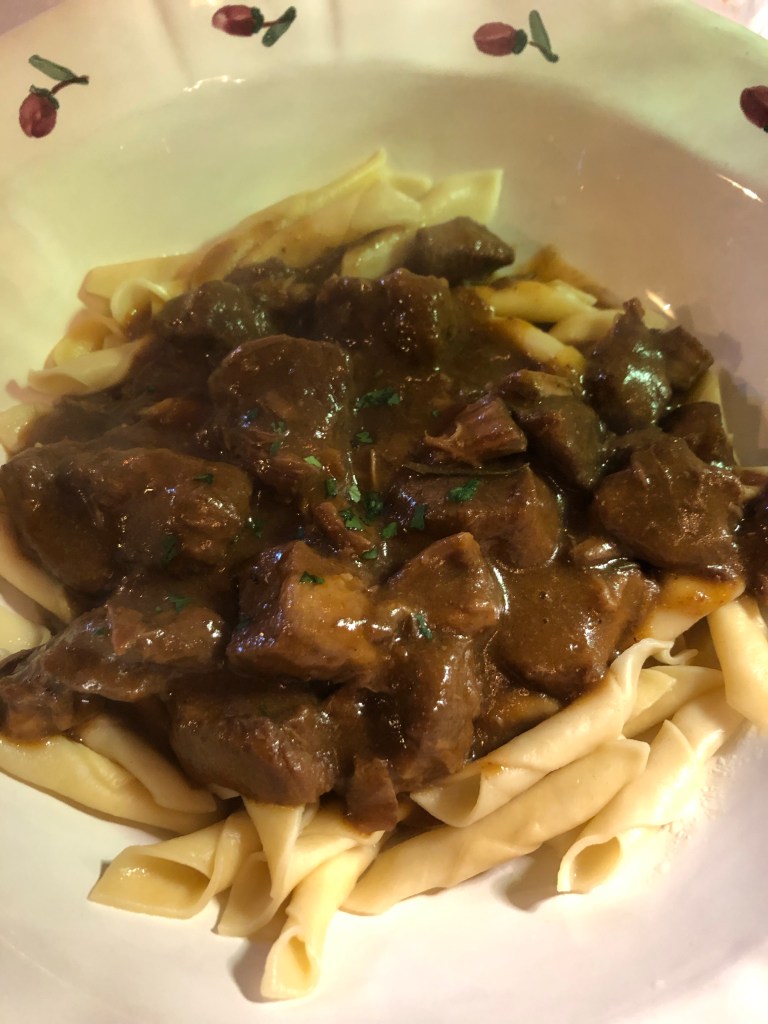
We found a lot of Croatian food to be simple and hearty. They have a variety of stews. There is goulash of course (which we didn’t try), but Aileen had a very tasty tripe stew at Antin Gust, an unfussy restaurant in Sibenik, where one can try most of Croatia’s popular dishes. We also had fuži (Croatian pasta) with a tasty venison-stew at Konoba Vela Vrata.
Truffles
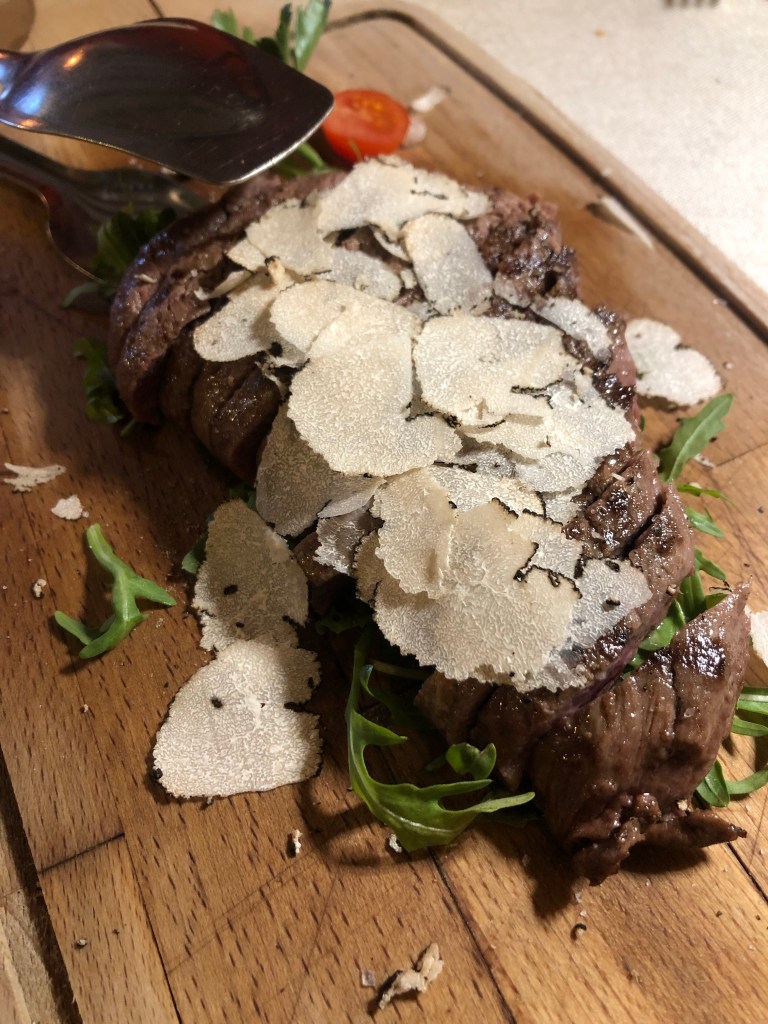
Truffles seemed to be on most menu’s in Istria, Croatia’s truffle hotspot. At Konoba Vela Vrata, we had steak cooked in their hearth grill, which was then brought to our table and our waitress then shaved a mountain of black truffle on top it. The aromas and of course taste were delicious! It’s also quite common to see pasta in cream sauce with truffles on menus, but alas we didn’t get to try this.
Seafood
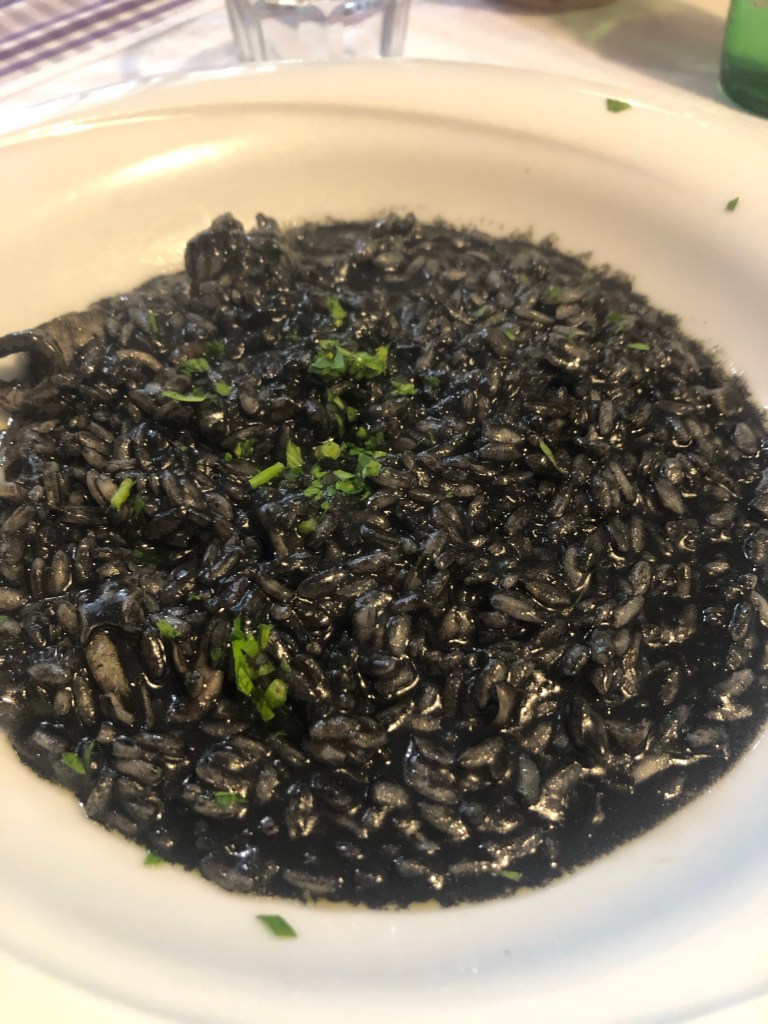
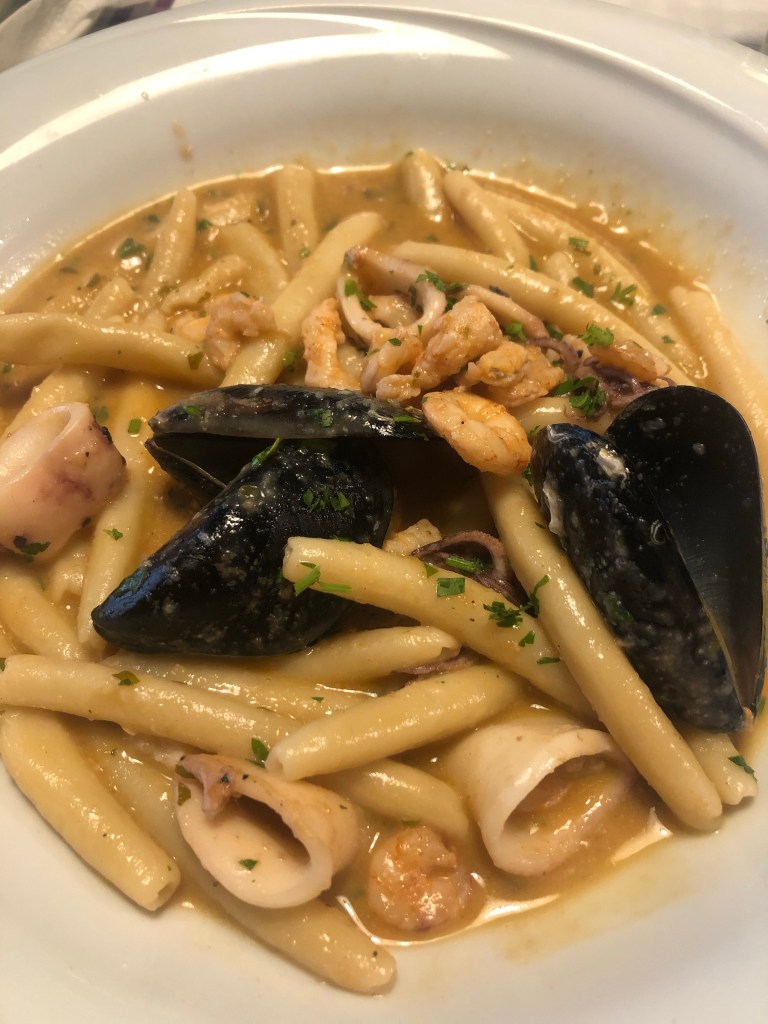
Croatia has quite an extensive coastline and seafood features in many restaurants, particularly along the coast. James had risotto with squid ink (another Croatian favourite), and Aileen had local pasta with seafood at Konoba Girica, a small restaurant in Rijeka, where we stopped at on our way east from Istria to Zagreb. Some things we had hoped to try but didn’t manage to are Peka Octupus (octopus baked in a lidded pot on a fire), and also fresh Istrian oysters – more reasons to return to Croatia.

What’s Next
As the final major stop on the first half of our adventure we are going to explore neighbouring Slovenia. After that our 6 months visa will expire and we’ll need to head back to the UK to apply for new ones.
 JAZ Adventures
Leave a comment