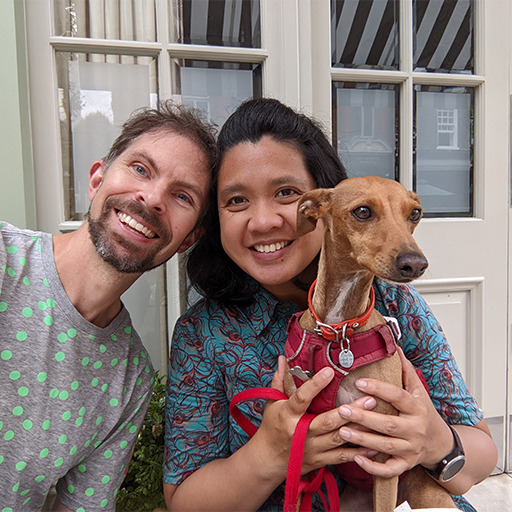
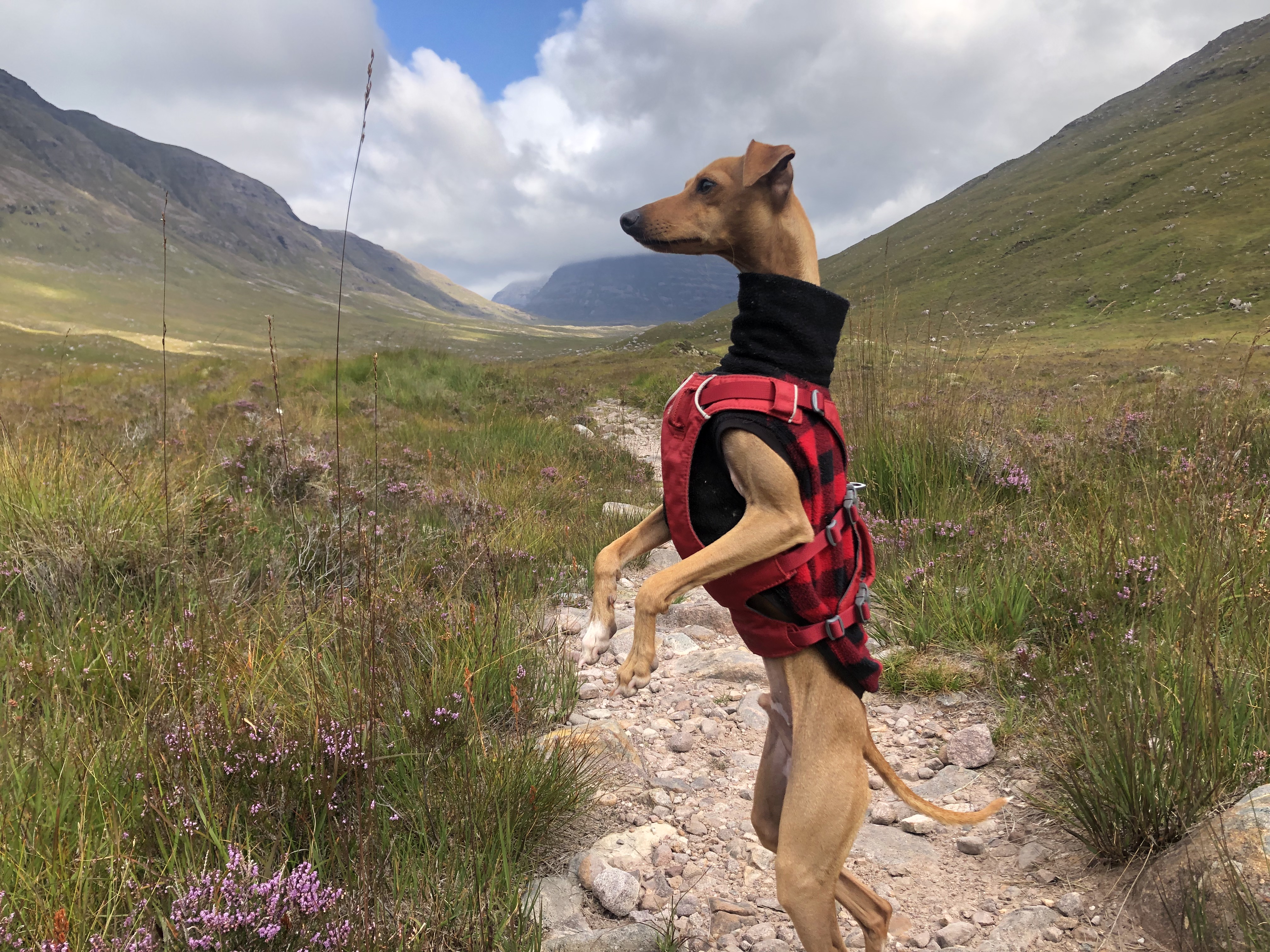
Hello, we’re James, Aileen and Zeus
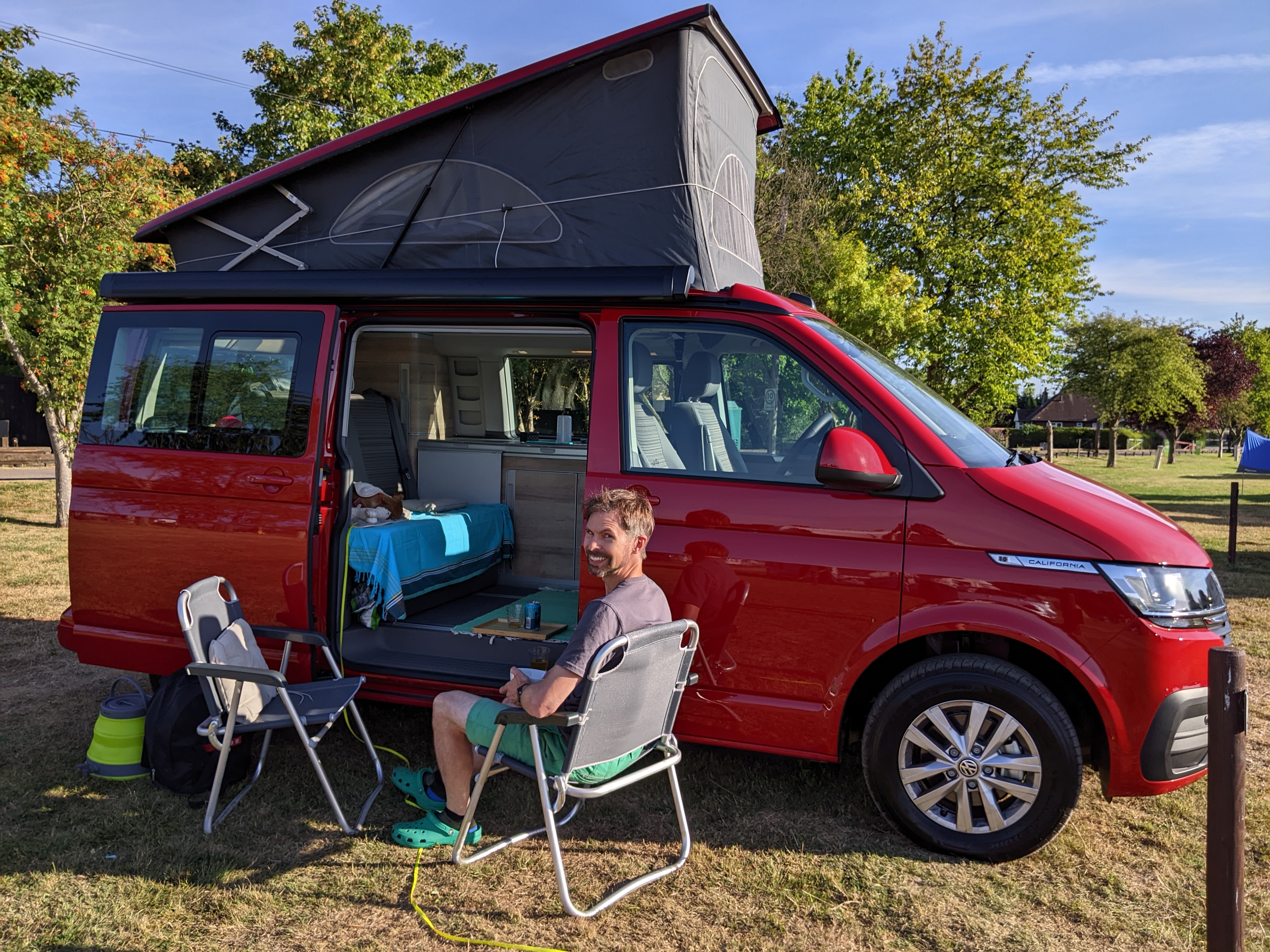
We’re touring Europe in a campervan. This is about our adventure.
-
Weeks 32-35: Sweden
Highlights:
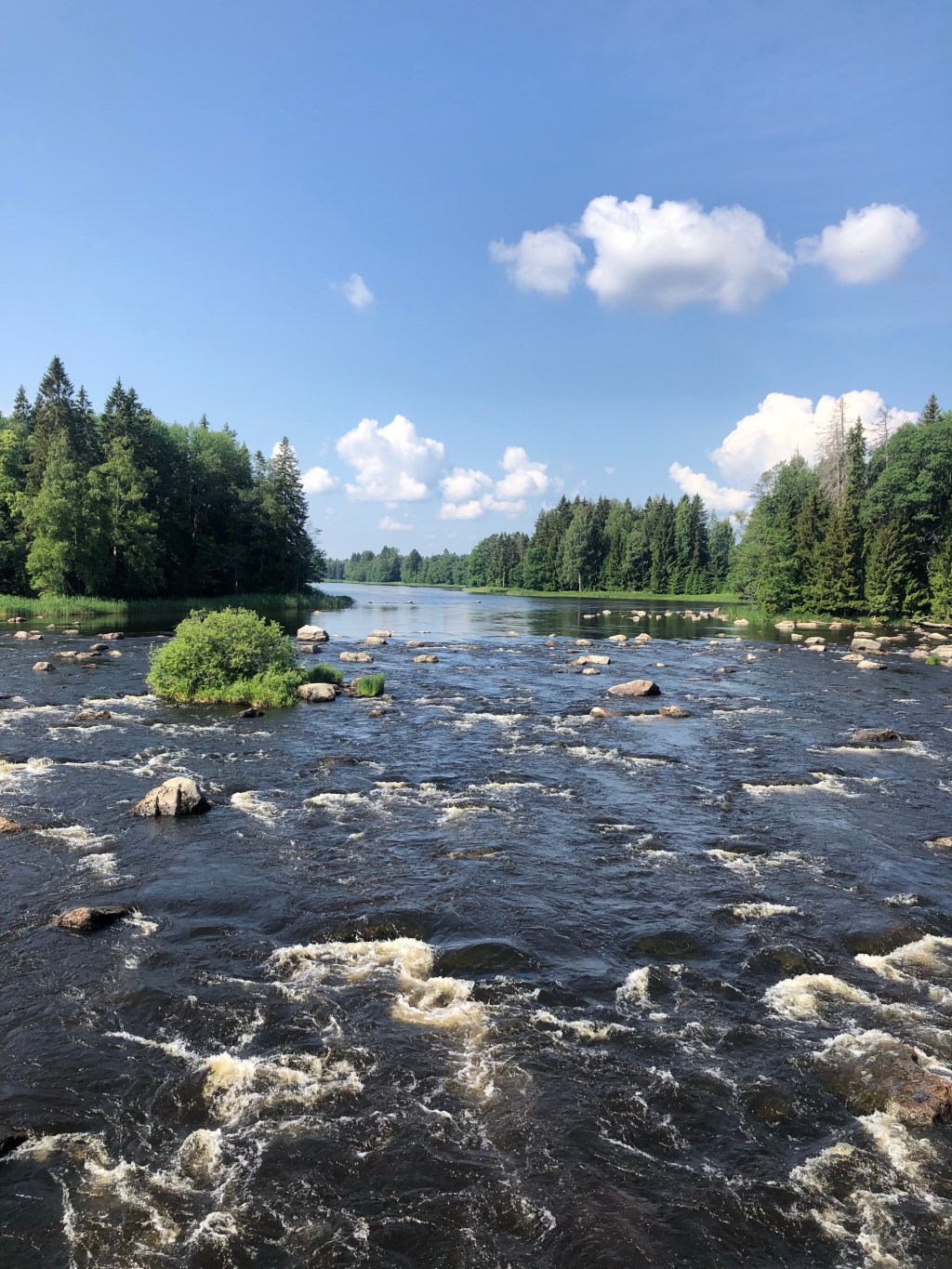
Beautiful and interesting landscapes, lovely mild weather this far north, top-notch bouldering, interesting cultural quirks, some surprisingly excellent fast food, and great facitilies and resources for campervan-life.
Lowlights:
Miles and miles of flat land, forest and lakes make for ideal mosquito conditions in June.
Our journey north from the UK
We left on the morning of Tuesday 13-June, crossing into France via the Eurotunnel. We were pleased to clear the border since the guidance on the use of our 90-day Schengen allowance soon after our 6 month visit wasn’t 100% clear.
From France we crossed to Belgium and then into the Netherlands. We spent our first night at a campervan stop at a horse stable near Nijkerkerveen roughly in the centre of the country. The next morning we had a nice stroll while people rode their bikes to work, school, etc.
We drove further north-east into Germany, past Hamburg to catch the ferry from Puttgarden to Rødbyhavn, Denmark. You can also drive to Denmark via a more westerly route, but it’s a slightly longer drive, so we opted for the ferry.
From the ferry in Rødbyhavn we drove further in the direction of Copenhagen on the E47 stopping overnight at campervan and truck stop on Bøgo island. The camperstop was next to the highway bridge crossing to the island. It was better than it sounds.
The following day was more driving. We headed past Copenhagen and over the 8 km long Øresund bridge to Malmo! Hoorah. After 2 and a bit days of driving we arrived in Sweden
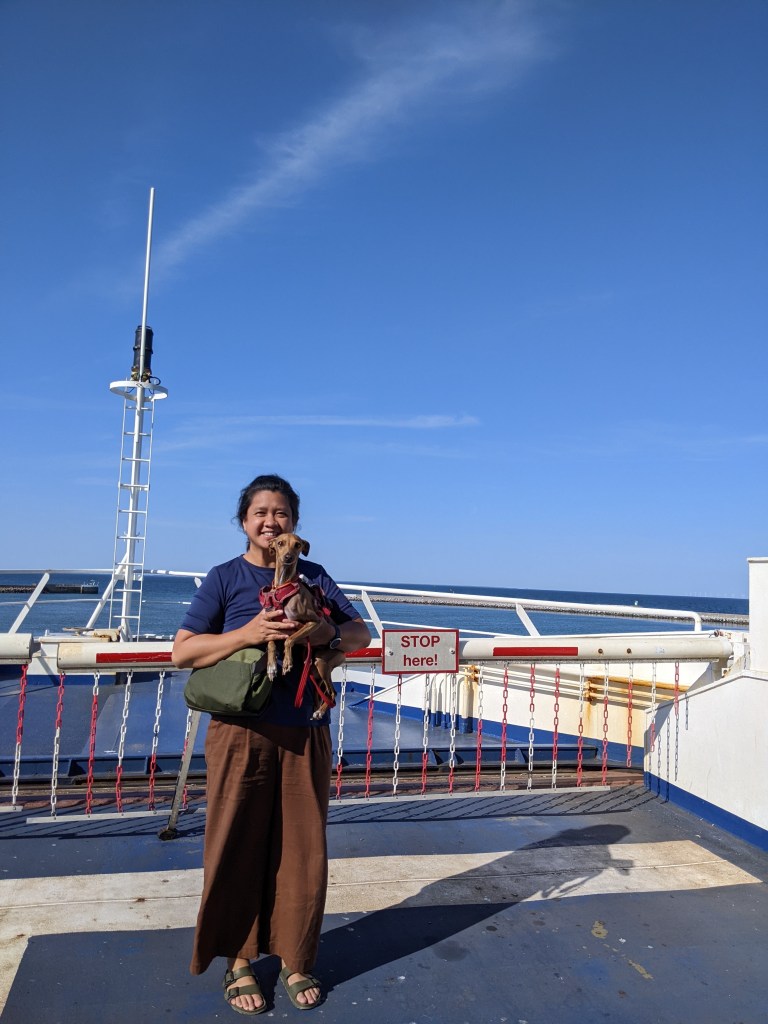
Ferry from Puttgarden 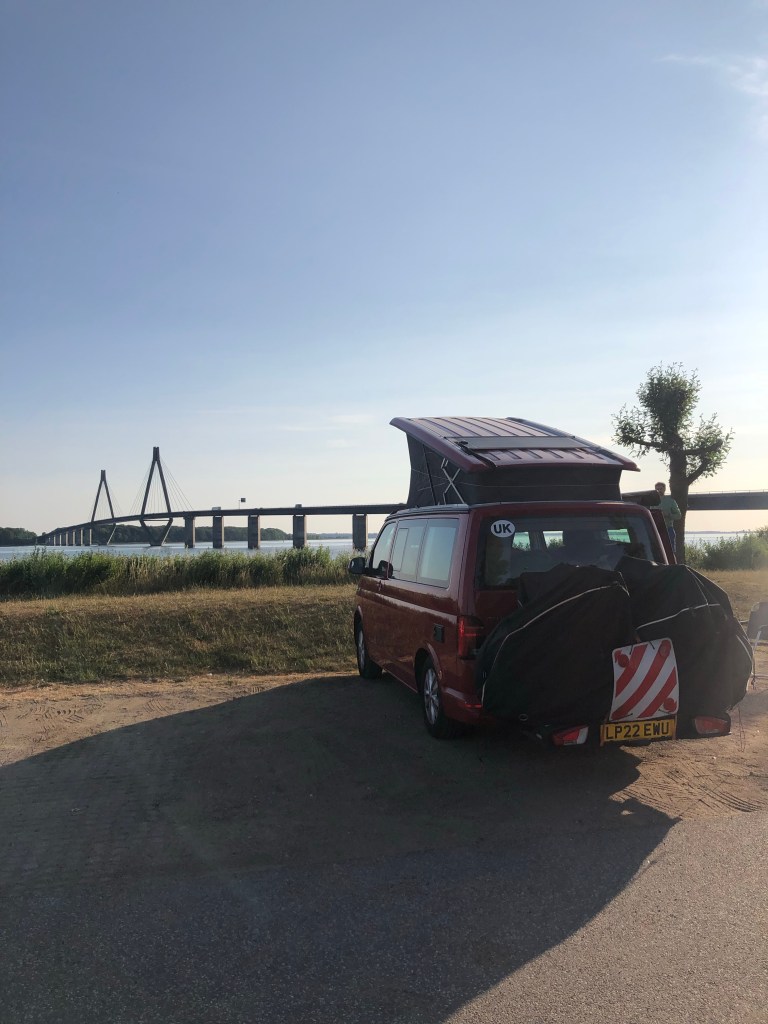
Camperstop on Bøgo Island A short exploration of Southern Sweden (Götaland)
Malmo
We stayed in Malmo only long enough to visit a climbing wall (see Climbing in Sweden), check out the amazing graffiti next door at Graffiti Hangaren – a warehouse set aside for that purpose, and hungrily gobble down some very tasty falafel wraps from Falafel Baghdad next door that serves Falafel with Iraqi bread (kind of a fluffy pita with pointy ends). Our initial impressions of Malmo were positive. It seemed an interesting, vibrant, multi-cultural city.
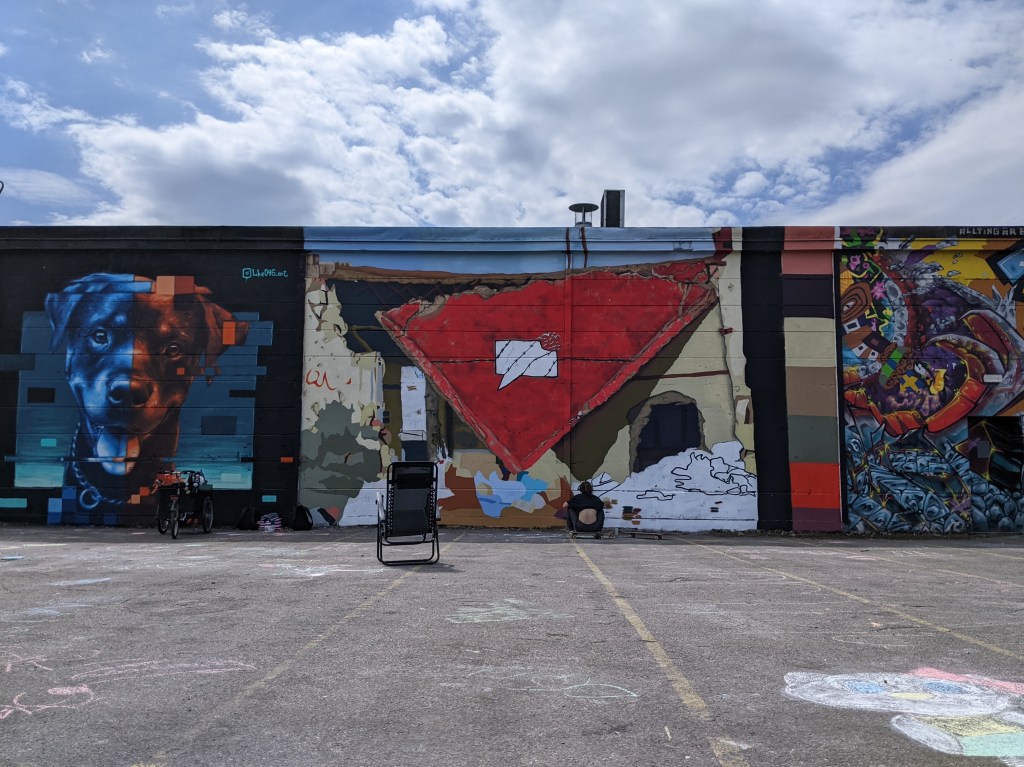
Graffiti Hangeren 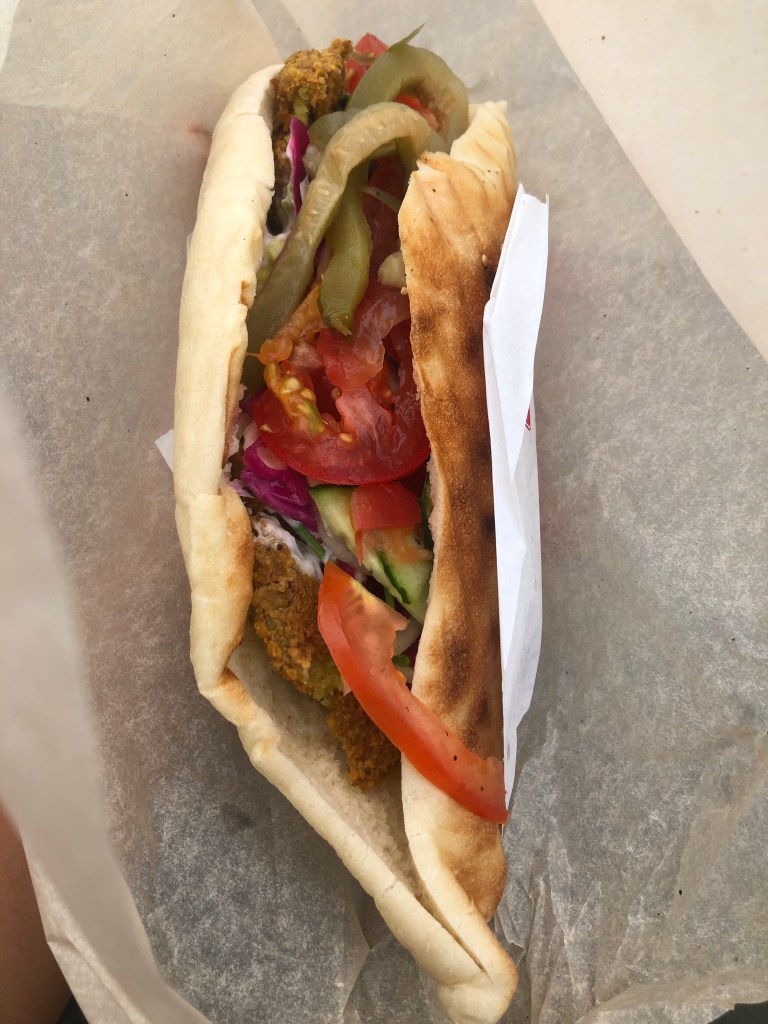
Falafel in Iraqi bread Stenshuvud National Park
From Malmö we drove east across rolling hills and farmland and stopped overnight at Brosarps Backar, a nature reserve that permits overnight stays in its concrete parking, and has some very nice loos considering they were public ones. We’ve learned over the course of the following weeks that this is normal in Sweden. Most places we parked (free/wild camped) had decent loos. In fact we would hazard to say that Sweden has been the most campervan-life friendly place with numerous free/wild camping options most with loos.
From Brosarps Backar we headed east stopped at Stenshuvud National Park on the east coast of the Skåne province. We did a circular walk around the park – we walked to a white sandy beach, passed a pretty lighthouse, walked through forests, and climbed some peaks with great views at the top.
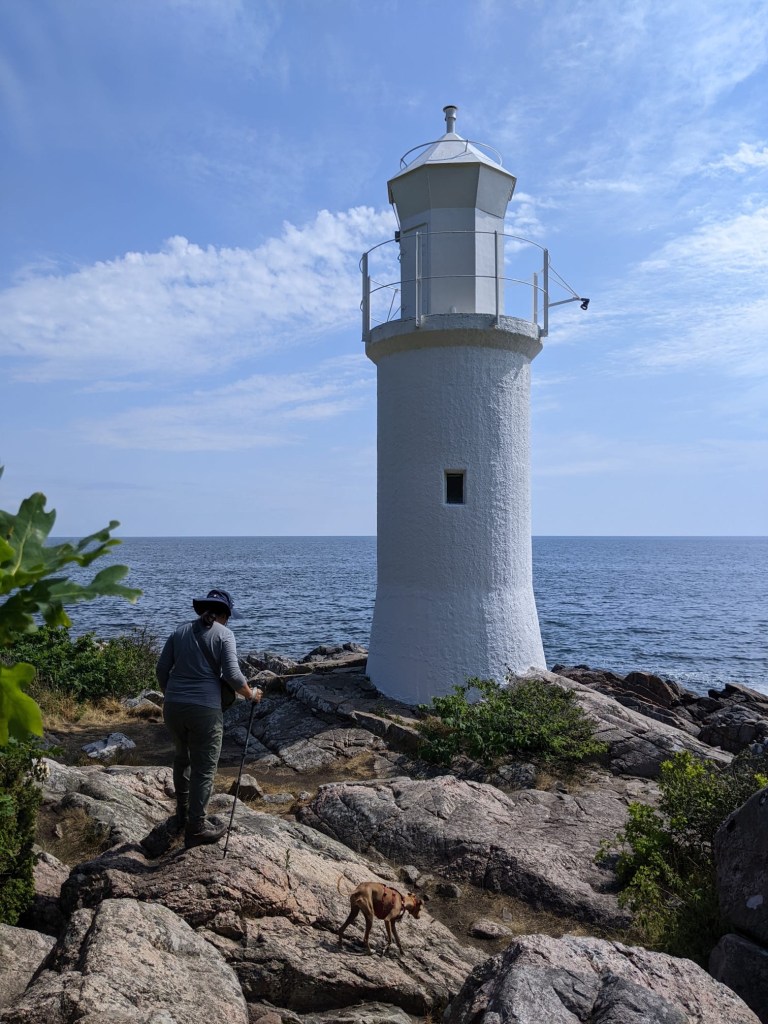
Lighthouse in Stenshuvud NP 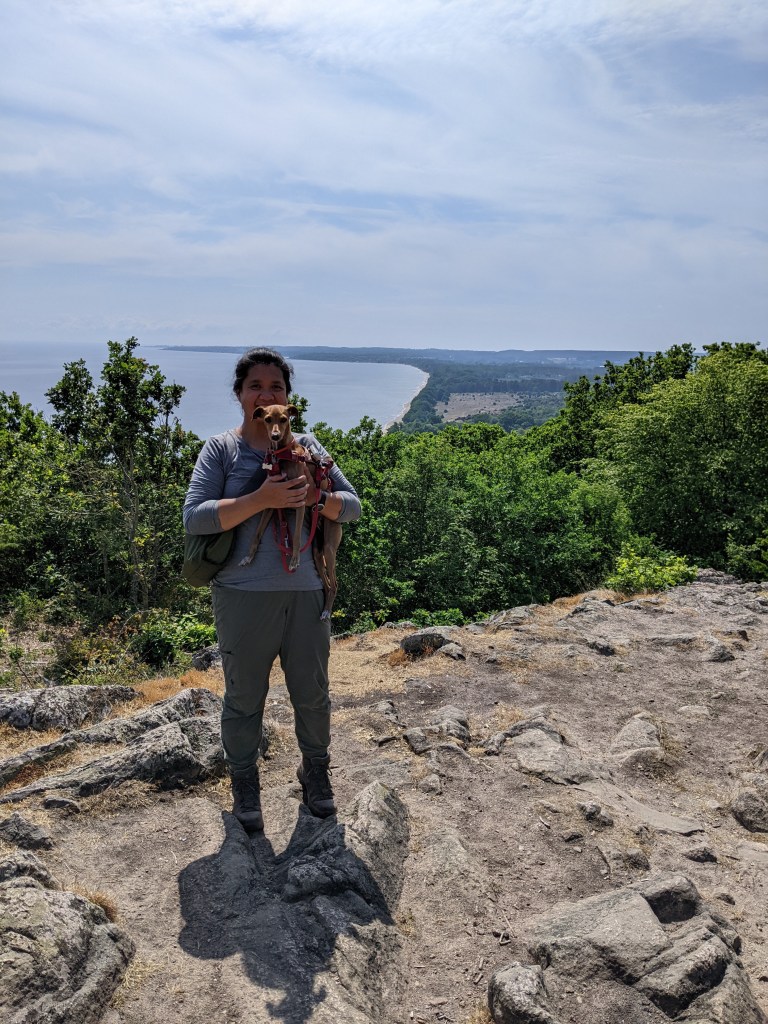
Views from the peak Kjugekull and Knutby Climbing
From Stenshuvud we headed to Kjugekull and then Knutby, two popular crags in southern Sweden (see Climbing in Sweden), stopping at Långsjön Stugor Camping, a picturesque lakeside campsite for our rest day in between.
Central Sweden (Svealand) – Its cultural centre
The “middle” of Sweden can be considered its cultural beating heart. On the east coast is the great city of Stockholm, and inland is Siljan Lake, famous for the picturesque towns that line its coast. Falun red, the colour of most Swedish houses originated here, and it’s also the centre of Sweden’s biggest holiday celebration, midsomnar. This is the Sweden you see in tourist brochures and postcards.
Färnebofjärdens National Park
From Långsön we drove north along the east coast, skirting Stockholm (we hope to visit Stockholm after our concert in Copenhagen in mid-August) and stopped at Färnbofjärdens National Park, where we planned to do a walk the next day before heading west inland to Rättvik for midsomnar.
Färnbofjärdens National Park is a beautiful mosaic of rivers, islands, lakes and forests. It also happens to be mosquito heaven in June, a day or so after heavy rainfall. This is when we visited.
We did our fastest 8km hike ever. The scenery was beautiful, skirting the edge of lakes and waterways, walking through ancient forest, admiring the camping shelters and BBQ spots. But we didn’t dwell anywhere for too long, or the mosquitoes descended and once they found you, they were difficult to shake. We were glad when we made it back to the safety of the campervan.
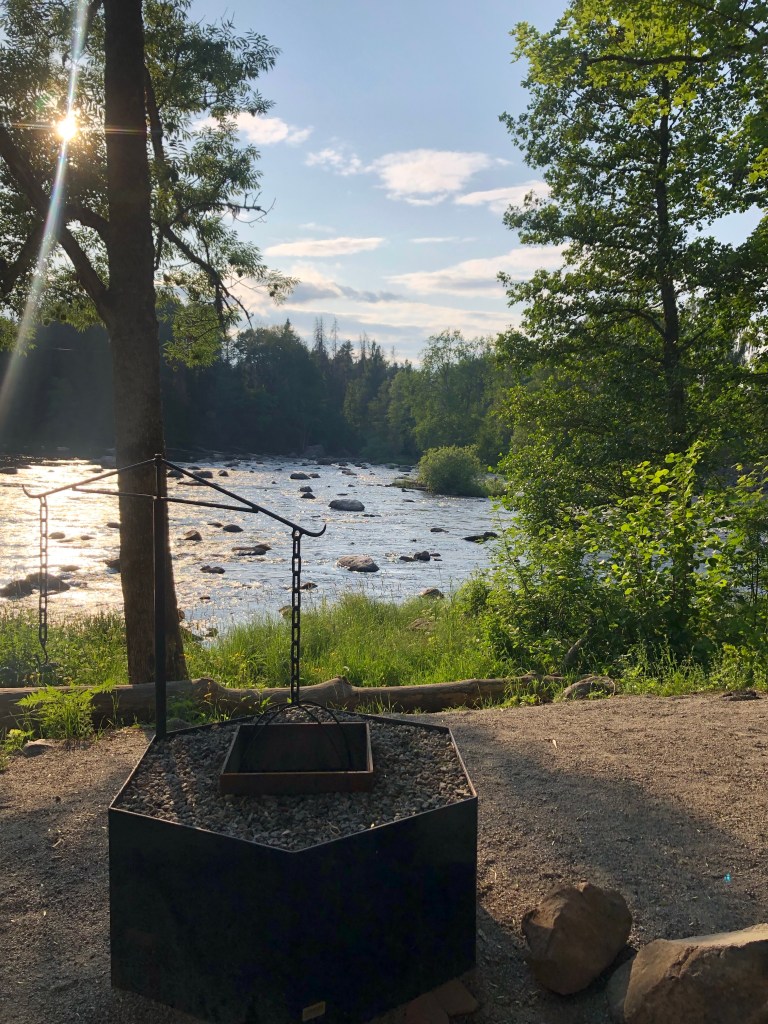
Firepit in Färnebofjärdens NP 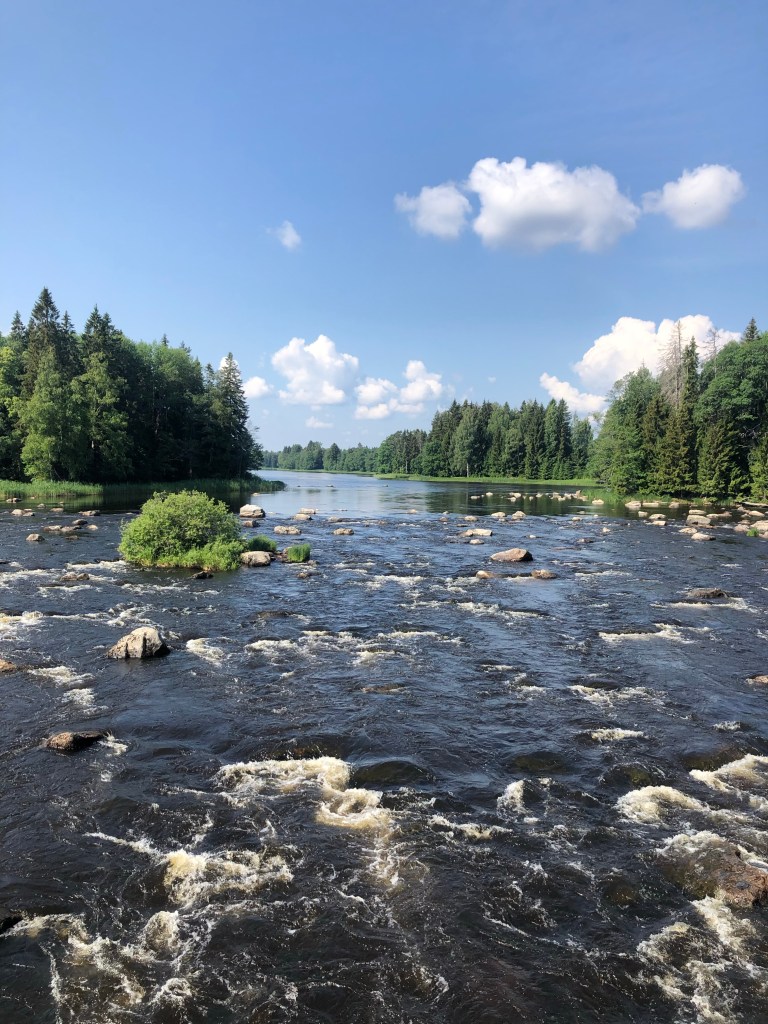
River mosaic 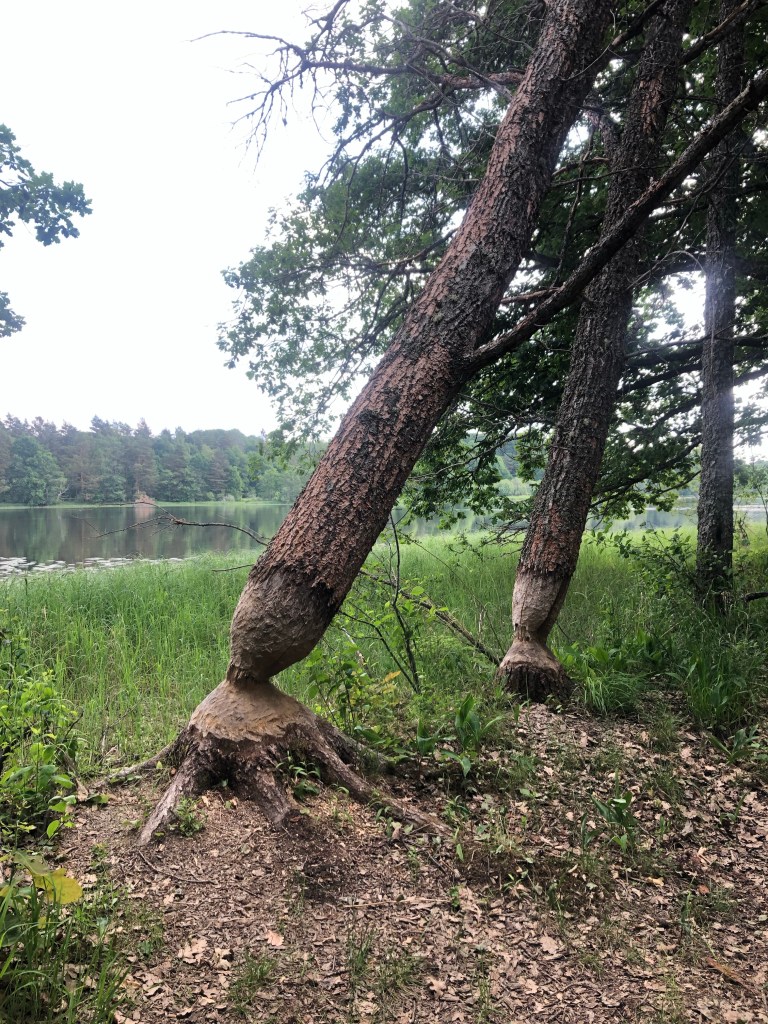
Beaver cut trees Oppala Climing
From Färnbofjärdens National Park, we headed to Oppala, a crag north of Gävle, a city technically in Norrland, for some climbing. See Climbing in Sweden.
Midsomnar in Rättvik
From Gävle, we headed west inland to Rättvik, a town that sits on the northeast corner of lake Siljan, and hosts one of the more famous midsomnar festivals.
We booked a spot in a campsite in advance so we could enjoy 3 days in Rättvik without the need to move and find places to stay everyday. When we arrived the campsite was PACKED. We hadn’t really appreciated how big a holiday midsomnar is. In Sweden, it’s a time when extended families get together and mark the start of the holiday season. It’s Sweden’s biggest holiday, like Thanksgiving is to America.
Midsomnar is a holiday with lots of festivities and raucous celebrations. The extended family next door (4 caravans, 3 generations, 4 couples, lots of kids) spent 3 days hanging out – playing weird games like finding potatoes on the ground whilst blindfolded, and a jelly-spitting race. They made flower wreaths, had extended family meals, swam in the river, and basically enjoyed each other’s company.
On midsomnar day we enjoyed a bike ride around town – we cooled down with an ice cream on the lake shore, stopped by the town centre to watch Swede’s dressed in traditional dress gather for picnics, and stopped at the midsomnar festival venue to check that dogs were allowed (they were!). In the evening, we headed to Gammelgården Rättvik, Rättvik’s cultural museum for midsomnar festivities.
We sat on a grass knoll and tucked into some hotdogs while we waited for festivities to start. The emcee, dressed in traditional garb began talking in Swedish. At some point he addressed English speakers, only to say we hoped we were with someone who could translate his Swedish. Lol.
The festivities properly kicked off when the procession arrived. The procession was composed of some majestic horses at the front, followed by a cheery band of musicians, and then the star of the show – the loooong wreath to wrap the pole with, carefully carried by elected local volunteers.
The pole wrapping then began, followed by pole raising. Raising involved more volunteers with long stilts. A set of stilts would be positioned along the pole, the volunteers holding them would walk forward, the pole would raise, and then another set of volunteers with longer stilts would position their stilts further up the pole. This process was repeated what felt like hundreds of times. About an hour and a half later the pole was finally straight. Hoorah.
Once the pole was up, traditional dancing around the pole commenced. A large crowd gathered around the pole and lead dancers tried to coordinate the crowd – sometimes is was coordinated, most times it was hilarious chaos.
The following day we chilled – we had a Tunnsbrödrulle at Sibylla, an ubiquitous fast food chain named after a Swedish princess. Swedes love their hotdogs. The Tunnsbrödrulle is a hotdog, mashed potato and salad in a wrap. It plugs a big hole. It was tasty. While in Sweden we also really enjoyed food at Max Burgers, a local burger chain. The ingredients seemed to be of high quality, you had a choice of beef, chicken or veg for all burgers, the fries were delicious.
We also spotted as many vintage American cars (mostly from the 1950’s) as we could. They were everywhere. We were surprised to learn that an estimated 5,000 classic American cars are shipped to Sweden each year. Some were rust buckets with loud music blaring and youthful elbows portruding from open windows, others were perfectly preserved specimens with couples and families in them. Swedes, we learned, LOVE a vintage American car. Who knew?!?
On our last day in Rattvik, James managed to squeeze in a cycle ride (see Cycling in Sweden).
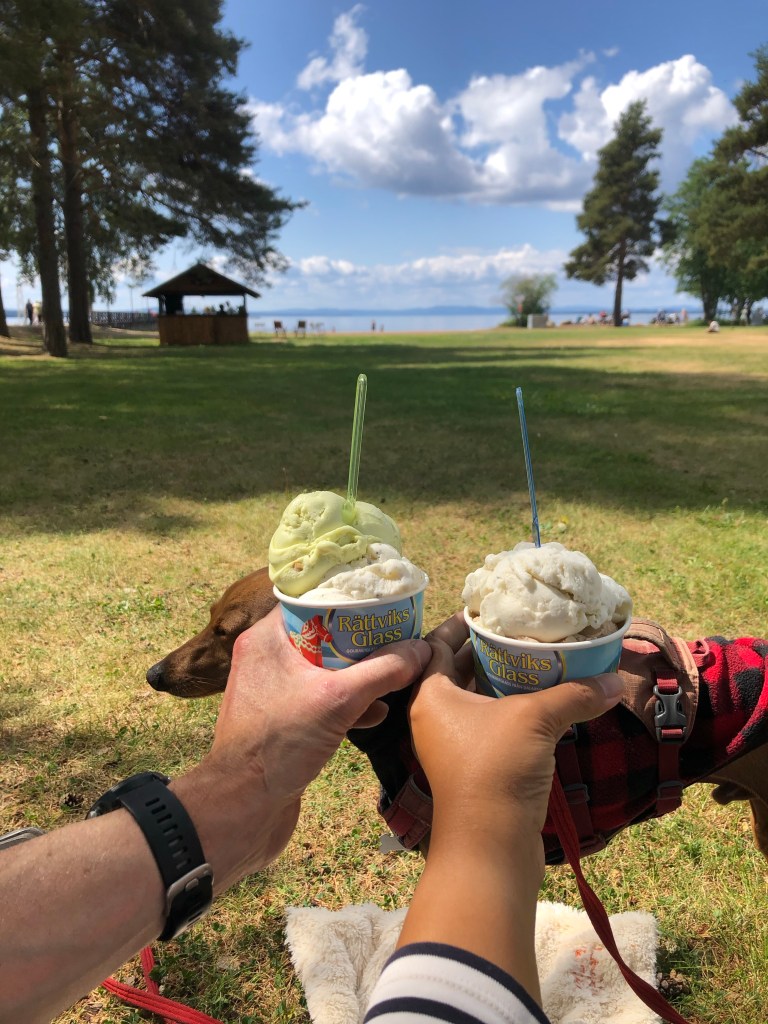
Ice cream by the lake 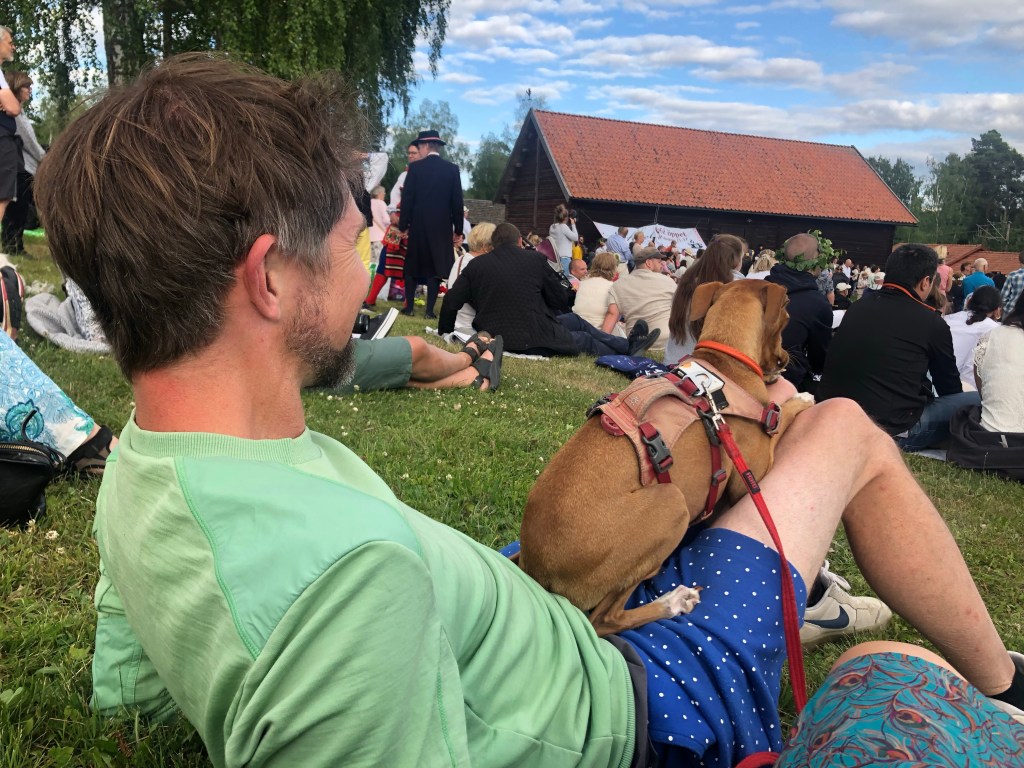
Someone is comfortable 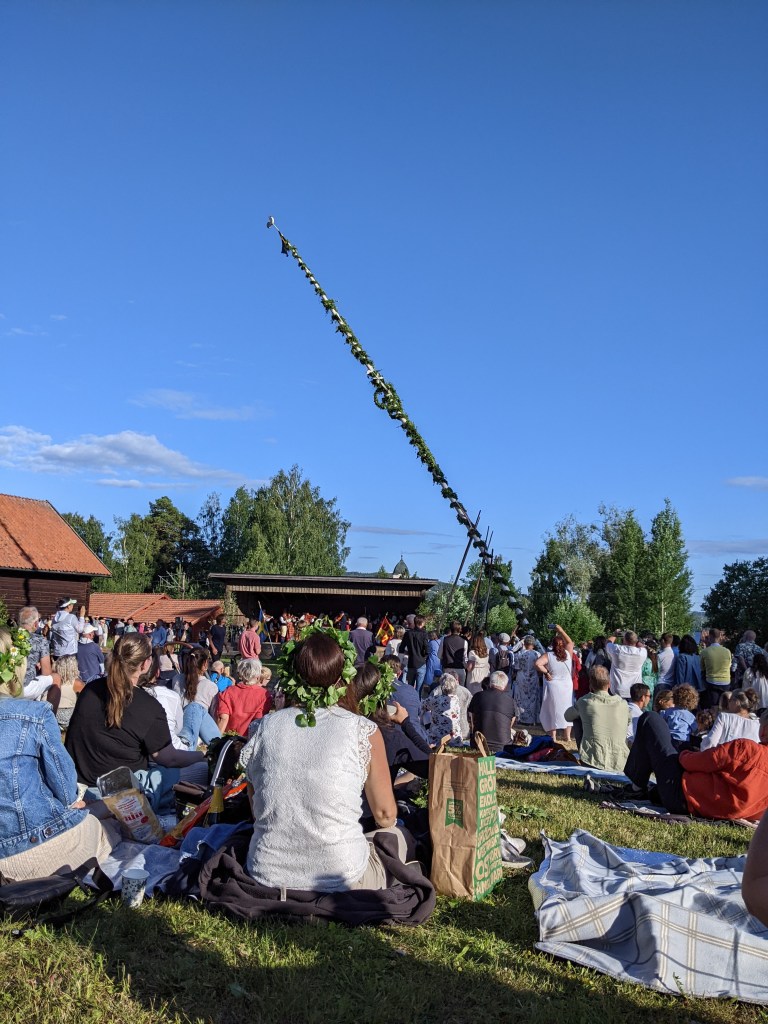
Raising the pole 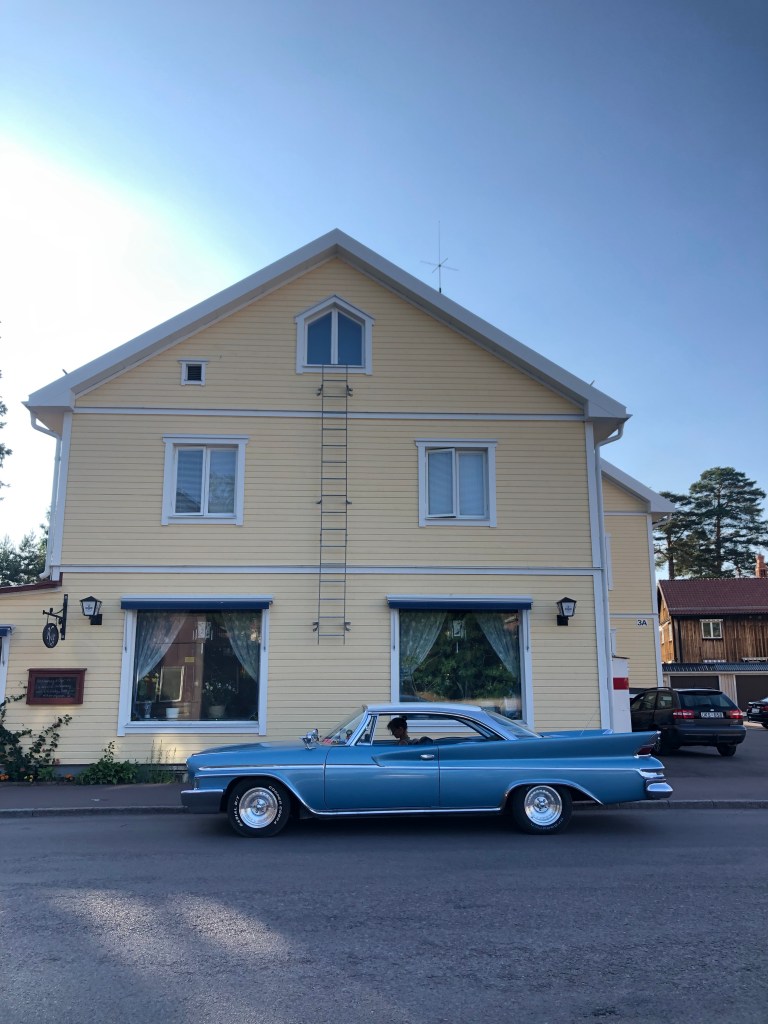
A vintage American car in Rättvik 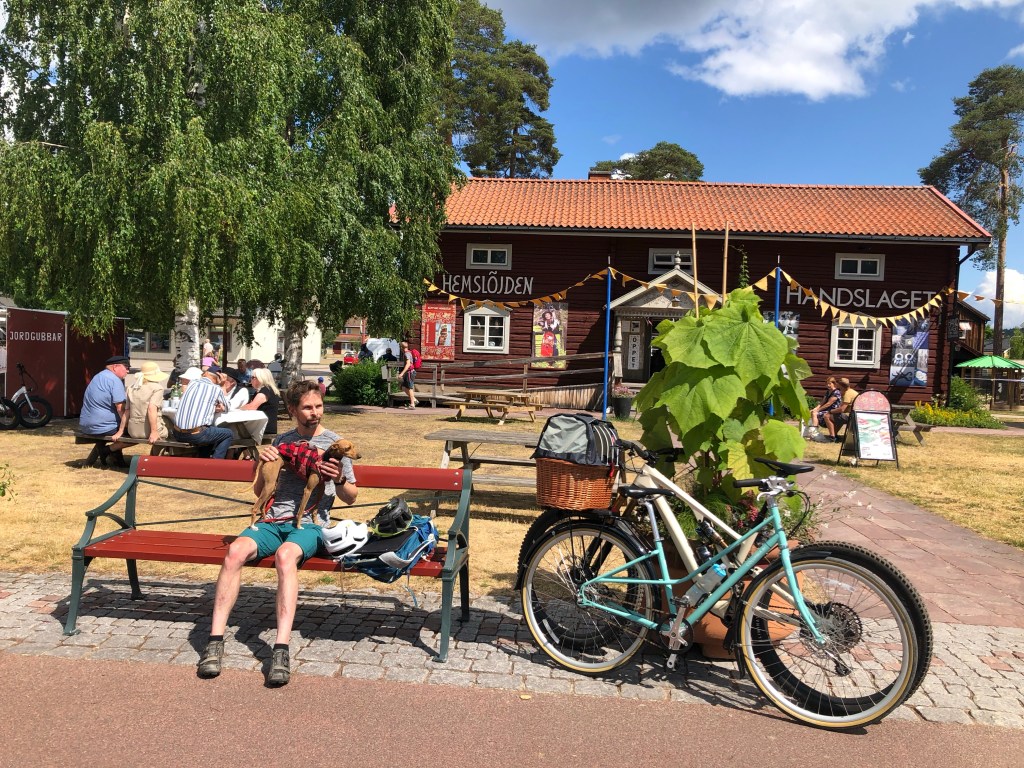
People watching in Rättvik 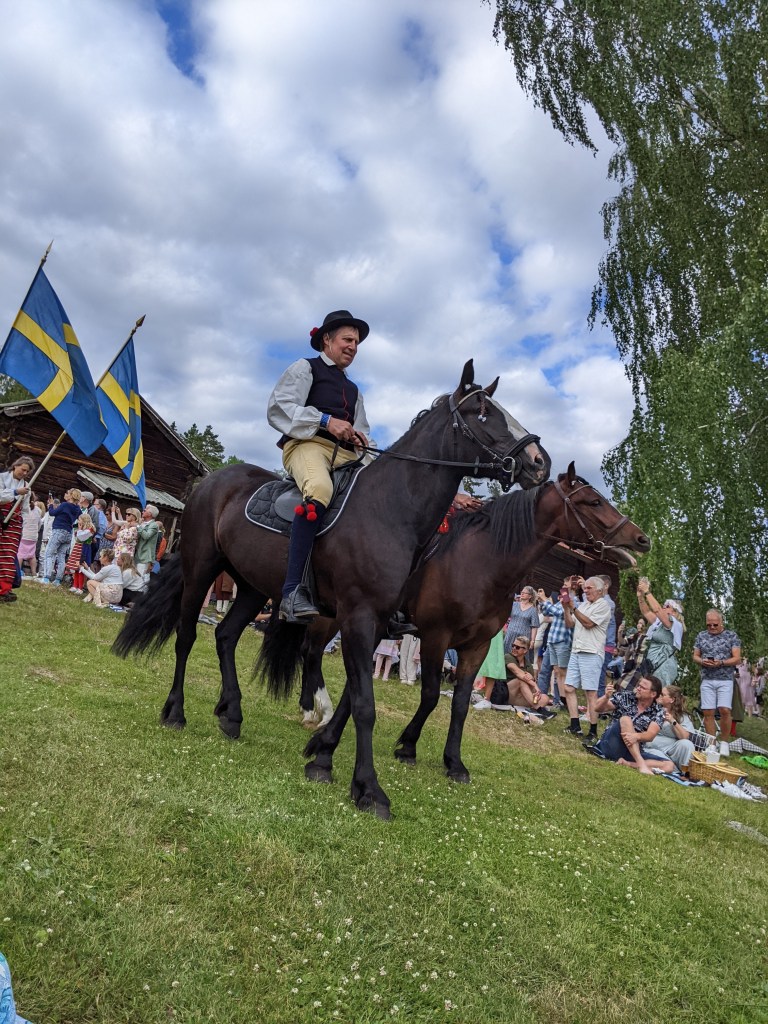
Midsomnar procession 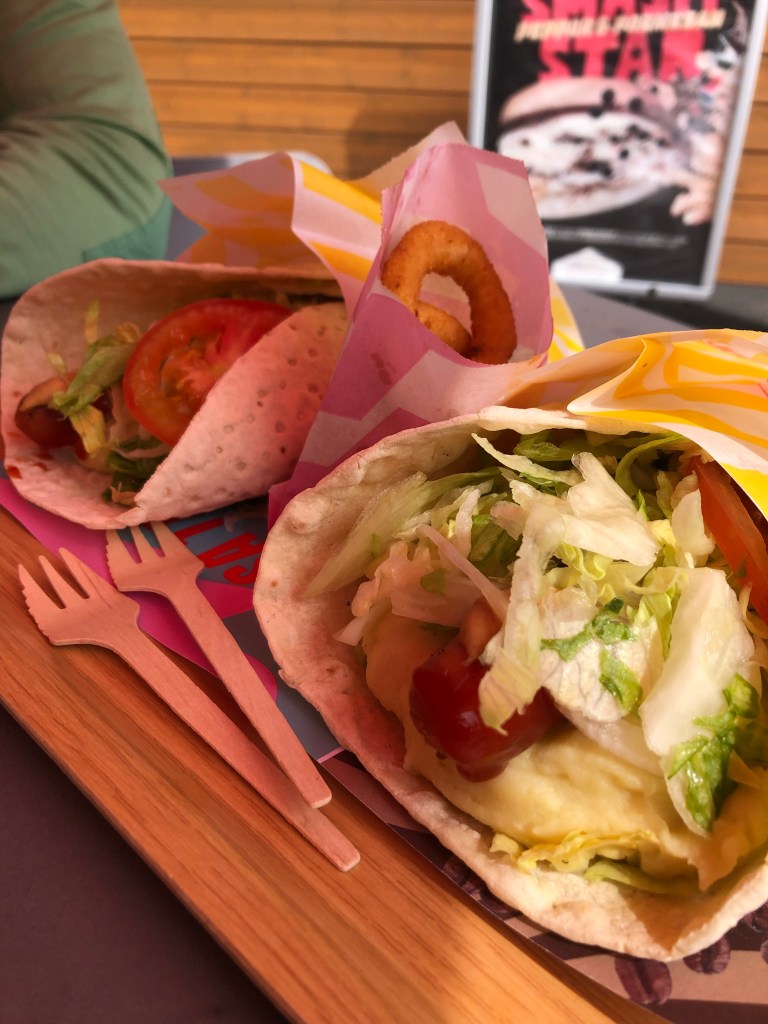
Tunnsbrödrulle Norrland (North Sweden)
Norrland is the northern-most, largest and least-populated of the three traditional lands of Sweden. It’s where the arctic circle sits in Sweden, Sweden’s Lappland, and is the location of Sweden’s famous northern National Parks – Abisko, Sarek, and Stora Sjofallet.
We were eager to check out the national parks, but first….
Climbing in Sundsvall
From Rattvik we headed north to Sundsvall, the location of a famous seaside crag Juniskår. We overnighted in a bike park in Sundsvall (where we did a nice little nature trail hike), before driving south along the coast to the crag. See Climbing in Sweden.
High Coast and Skuleskogen National Park
From Sundsvall we headed further to the High Coast, and Skuleskogen National Park. The High Coast is a UNESCO World Heritage area and a beautiful part of Sweden. It features undulating hills and mountains, numerous islands, and a stunning coastline formed by land-uplift when the ice ages ended and the glaciers melted. Land uplift is a process where areas were covered with thick and heavy ice sheets in the last ice age. Once these melted, the pressure from within the earth forces the land upwards. Around 700 hectares of new land are rising from the sea each year.
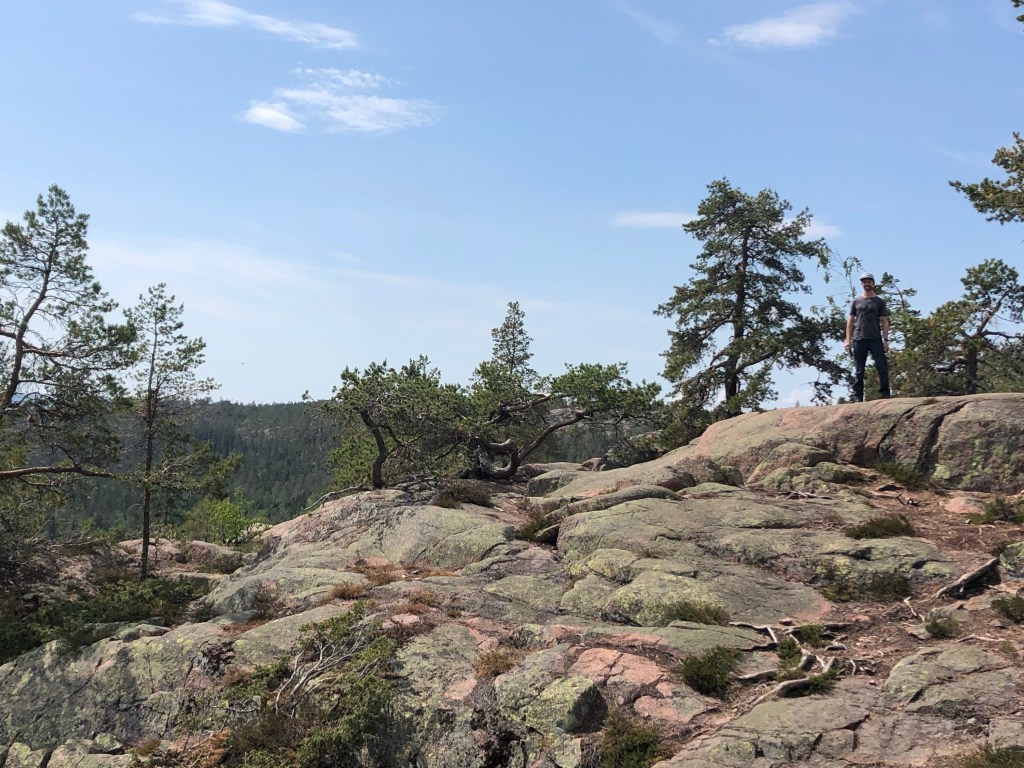
Skuleskogen National Park features large areas of bare rock, some huge and deep fissures in that rock, and large areas of rounded rocks that were once under and eroded by the sea. All of this is surrounded and interspersed by spruce and pine forest. We did an interesting walk with constantly changing views and some dramatic rock features.
Bare rock mountain 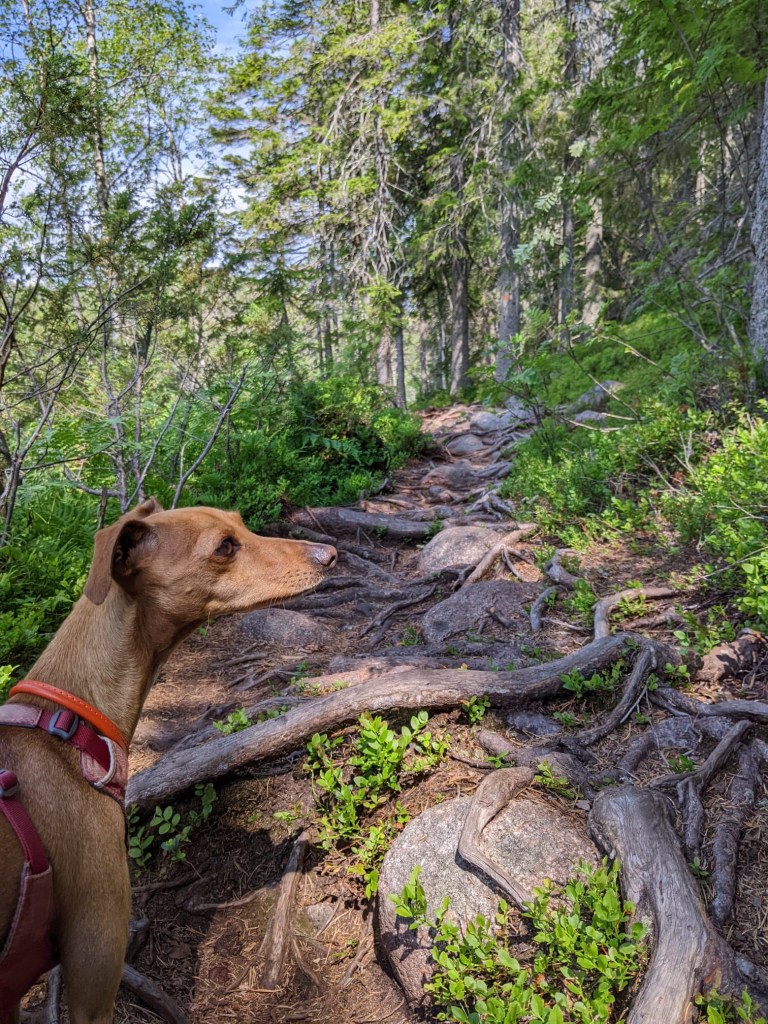
The trail was hard on the ankles. Tree roots are exposed and search for soil over the rock 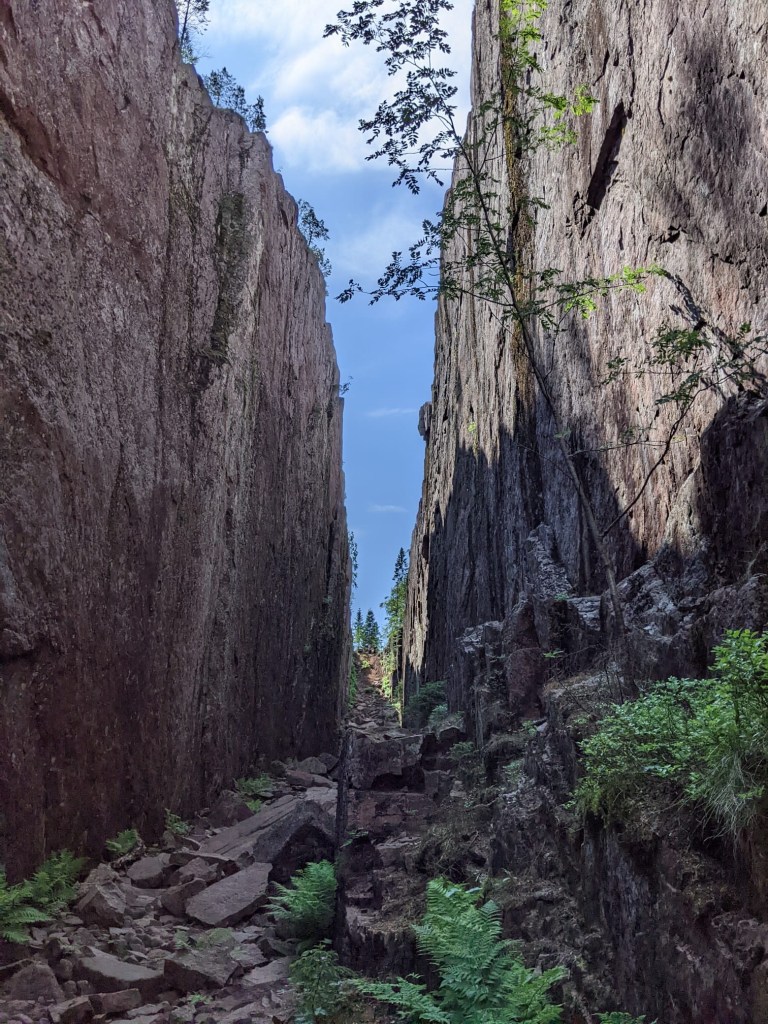
Slåttdalsskrevan ravine 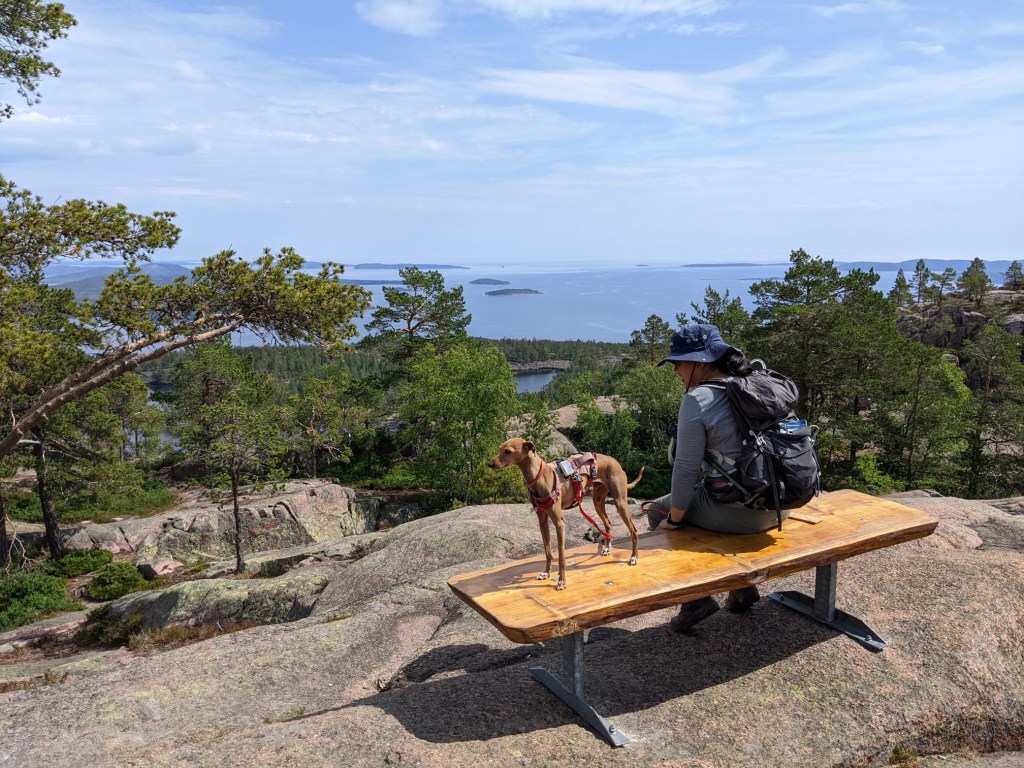
Wonderful views of the Baltic Sea Luleå – Last stop on the coast before heading inland towards Norway
From Skuleskogen we headed north to Luleå, via an overnight stop at Järnäsklubb. Järnäsklubb is at the tip of a peninsula off the highway. It lies about 15 km south of the E4 but felt very isolated, with only a few residences. The one cafe in town was closed for midsomnar holidays. We did have an interesting coastal walk in the nature reserve next to where we parked, and saw many similar features to those at Skuleskogen – rocky areas and islands, smooth boulder fields and forest but on a smaller, less dramatic scale.
At Luleå, James visited a climbing wall (see Climbing in Sweden), and we stocked up on supplies for our journey inland.
Crossing the Arctic Circle
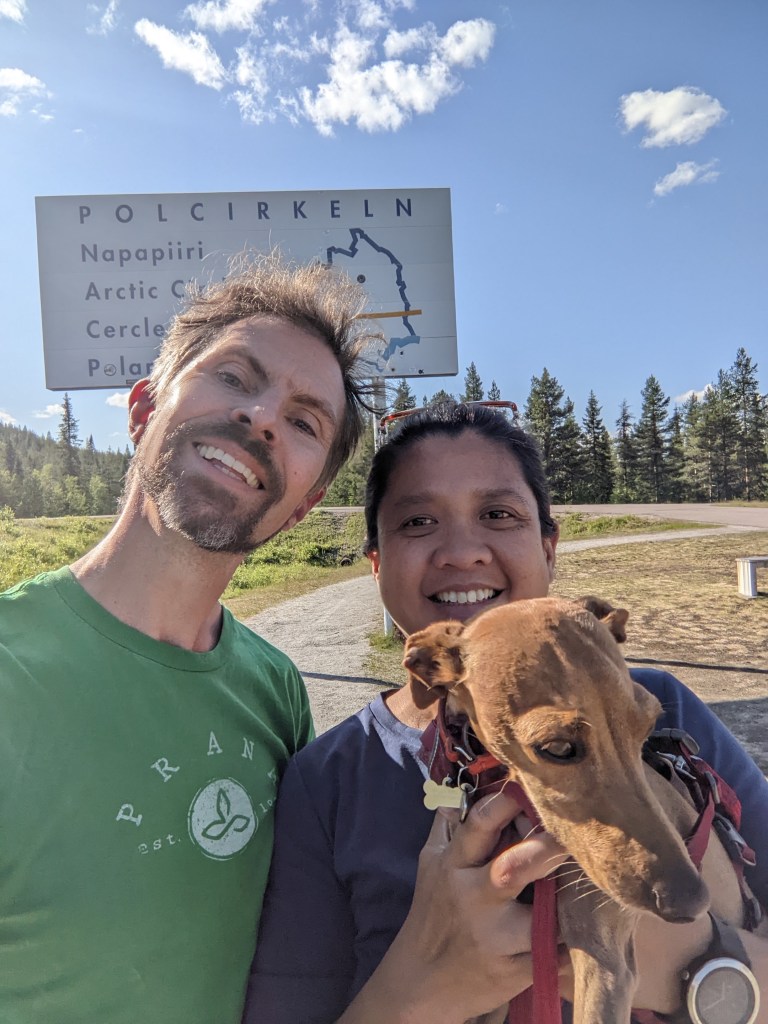
Stocked and ready to continue our adventures, we turned away from the Baltic coast and headed northwest inland on the E10 towards the Arctic Circle. We crossed the Arctic circle at Jokkmokk. The nights had been getting shorter and shorter, but it still felt like something of a milestone to cross into the circle. There was a roadside sign at the actual circle and some information boards. Interesting fact: The position of the arctic circle oscolates north and south slightly over time due to changes in the earth’s axial tilt.
Stora Sjofallet National Park
From Jokkmokk, we headed north to Stora Sjofallet National Park, which is one of several national parks that comprise the protected national heritage lands of Sami tribes. We saw our first reindeer on the drive up! They were chilling on the road (eek).
The national heritage lands are still actively used by the Sami people for the herding of reindeer, and have historical and spiritual significance to them. What this means practically for foreigners with a dog, is that access is limited to marked trails (there aren’t many and they don’t extend far into the parks), or to the sections of Kungsleden (King’s trail) which aside from Abisko National Park, don’t travel extensively through these parks either. As a result these parks are true places of wilderness, and while it’s a shame we couldn’t see more of them, we completely respect the rights and wishes of the Sami people with respect to their land.
We read a bit about the history of Kungsleden, and as the story goes, the Swedish Tourist Association wanted to be able to access the Sami land, so they devised a 400km long path they hoped would traverse the national parks. Whilst the path does travel the full length of Abisko National Park, it only skirts through small sections of Stora Sjofallet, and Sarek.
The walks we did do in Stora Sjofallet were still excellent. The first was a steep walk up to Soladen from the north shore of Langas lake . It first passed through some pine forest, then through beech forest, before passing into an exposed treeless plateau that was once a reindeer herding area, then across to a high ridgeline that had spectacular views of Stora Sjofallet and Sarek National Parks across the lake.
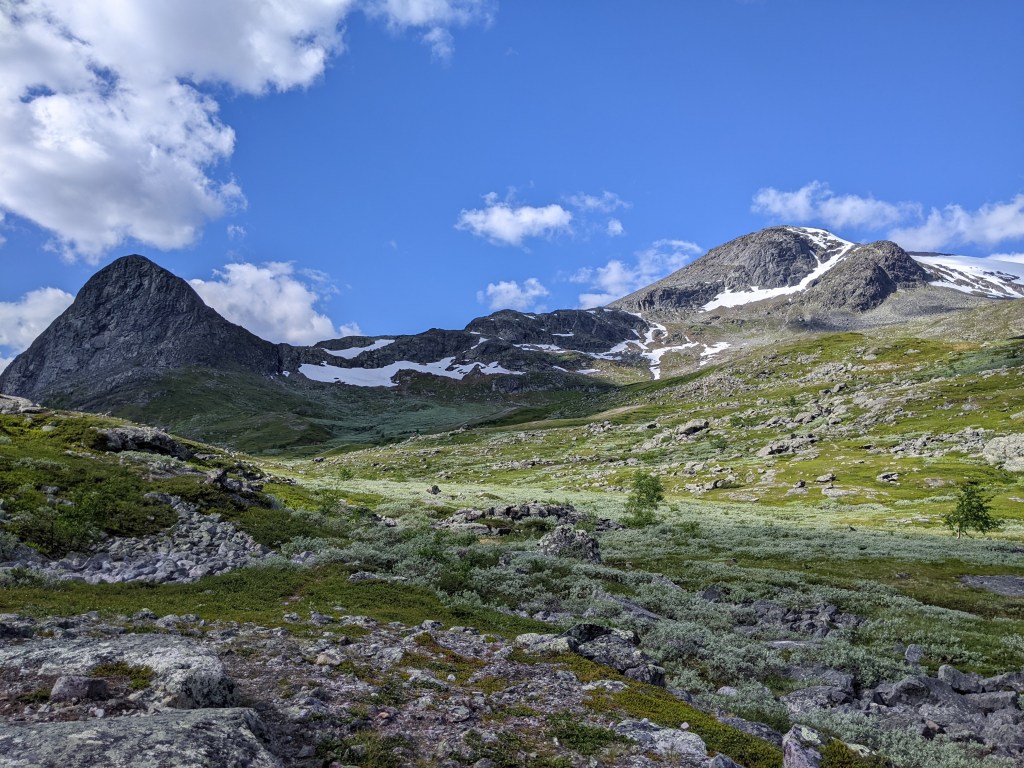
Old reindeer pasture 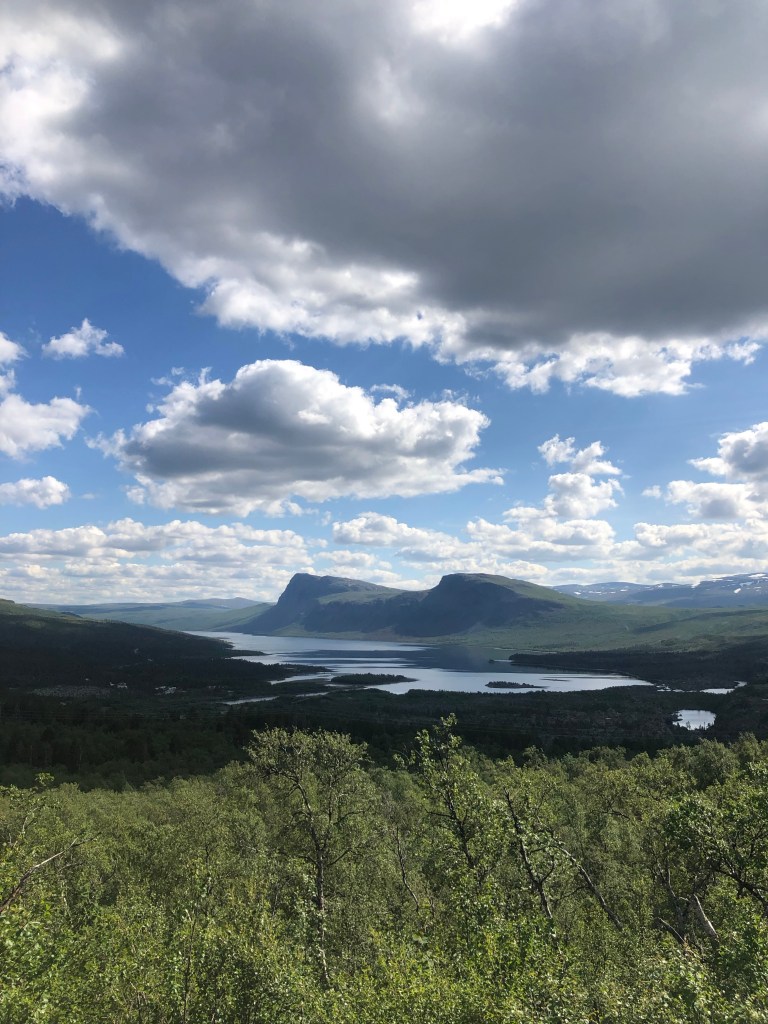
Views of Stora Sjoffalet across the lake 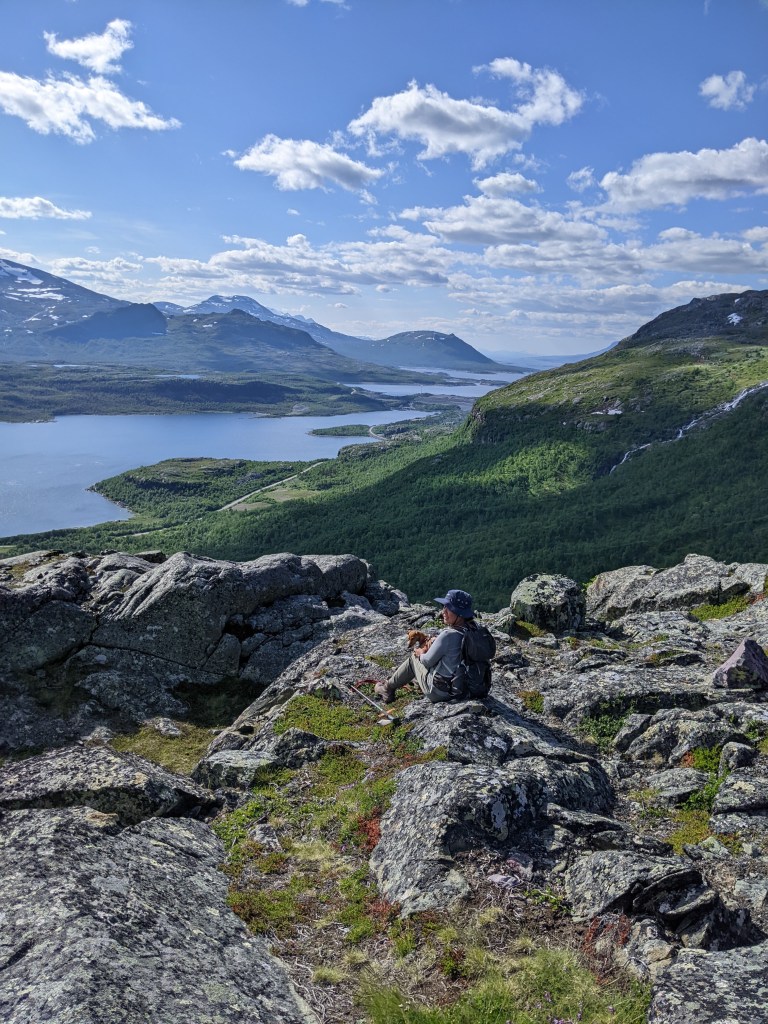
Looking towards Sarek NP The next day we decided to take the ferry across the lake to Saltoluokta Mountain Station, and from there did a short there-and-back-section of the Kungsleden path. The fauna was similar with pine, beach, and then open heathland. The views were equally spectacular looking back at the snow capped mountains north of the lake, and where we had walked the previous day.
There had been a folk festival at the mountain station the previous day so there were lots of festival goers and musicians packing up and catching the ferry back. We were treated to a folk band playing on the ferry back.
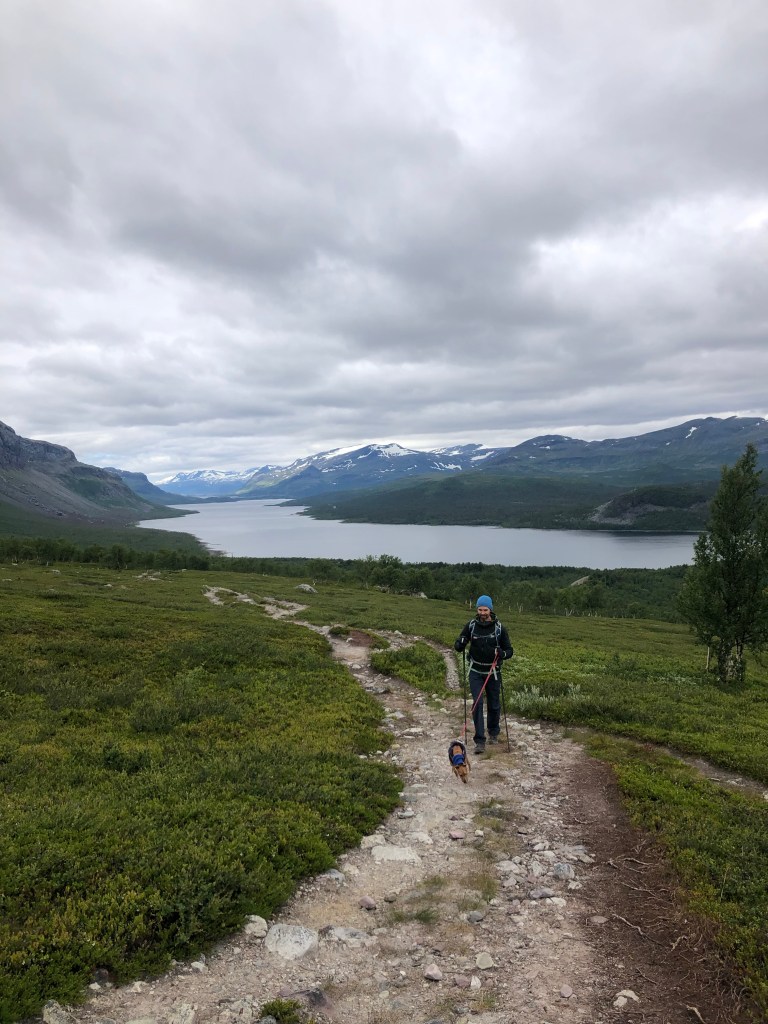
Walking along Kungsleden 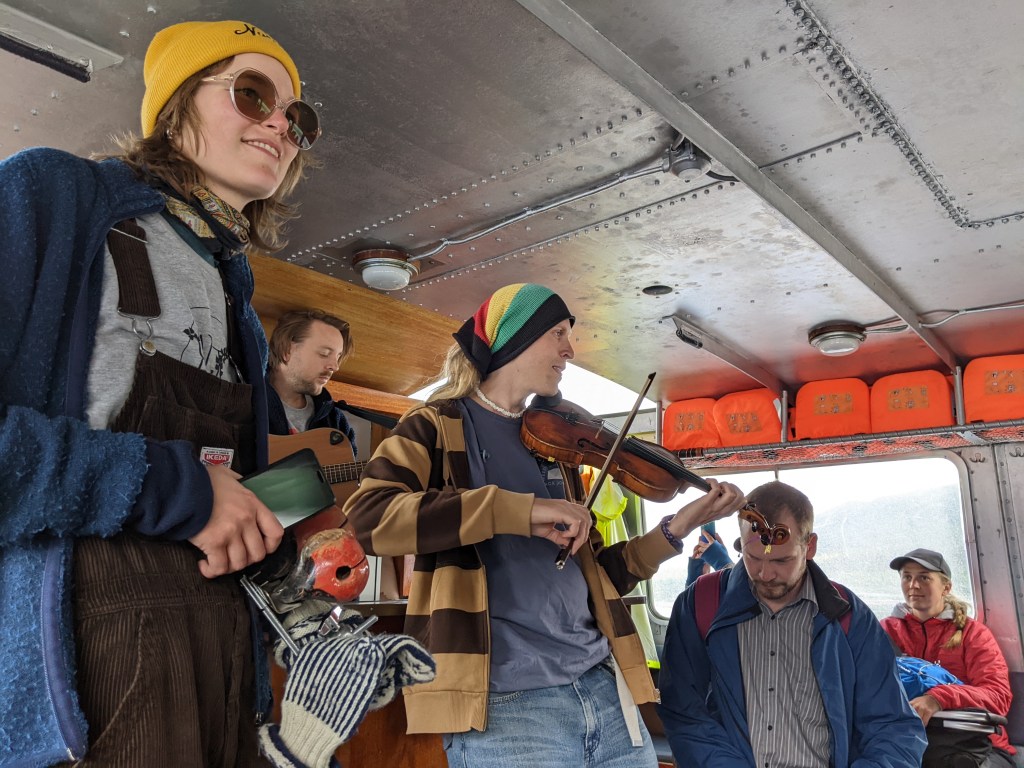
Folk music entertainment on the ferry Kiruna and Abisko National Park
From Stora Sjofallet we headed north to Kiruna, a fairly big town close to the border with Norway, where over 3-4 days we enjoyed a rest day at a campsite by a lake, stocked up on food, water and fuel, and had a vet appointment for Zeus to be administered a tapeworm tablet, a requirement for entering Norway from the EU.
In between these prep activities, we headed to Abisko National Park several times – once for James to do a bike ride (see Cycling in Sweden), and the next day to do the Nature Trail that starts from the tourist office. Abisko is famous for being where Kungsleden starts, and the path heads south-west through the middle of the park for about 100 km.
We also had some epic reindeer and moose subs at Stejkt Street Food. Stocked and stuffed, we started our journey west to Norway on the E10.
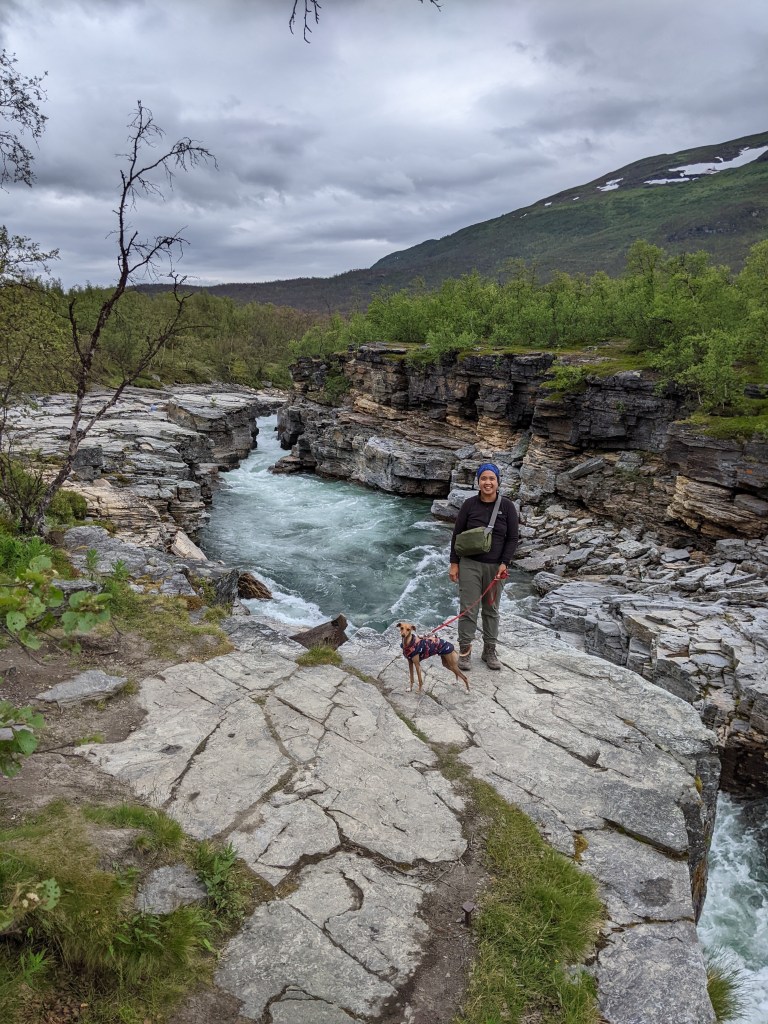
Gorge in Abisko NP 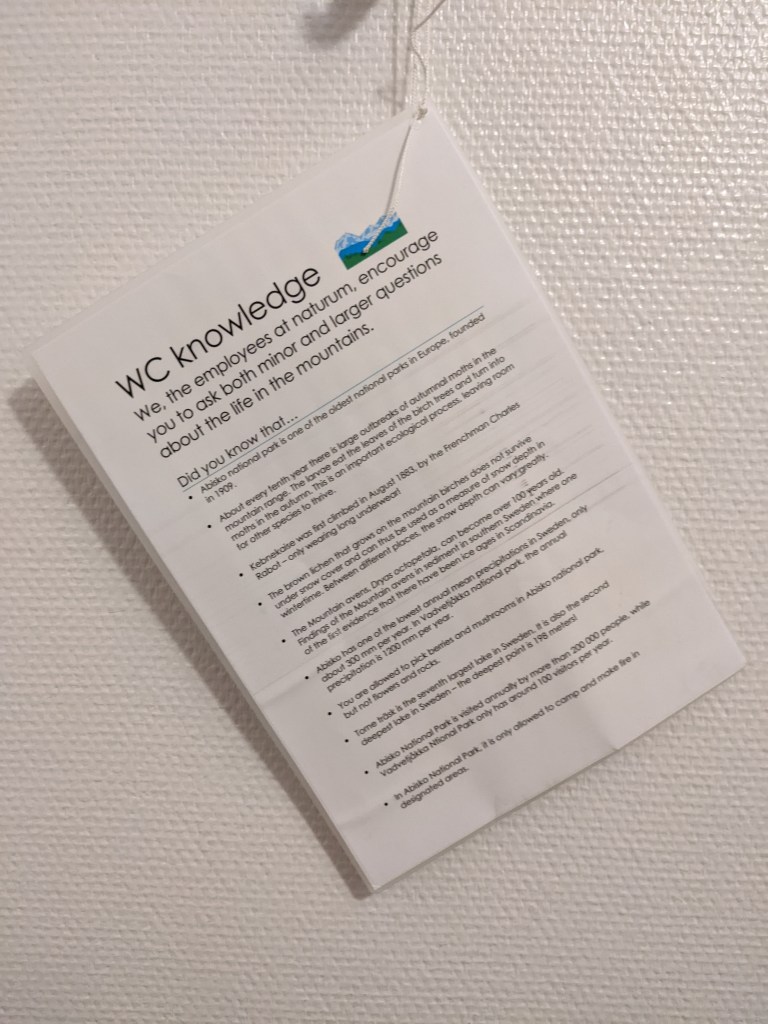
Highly informative and enjoyable reading in the Abisko NP loos 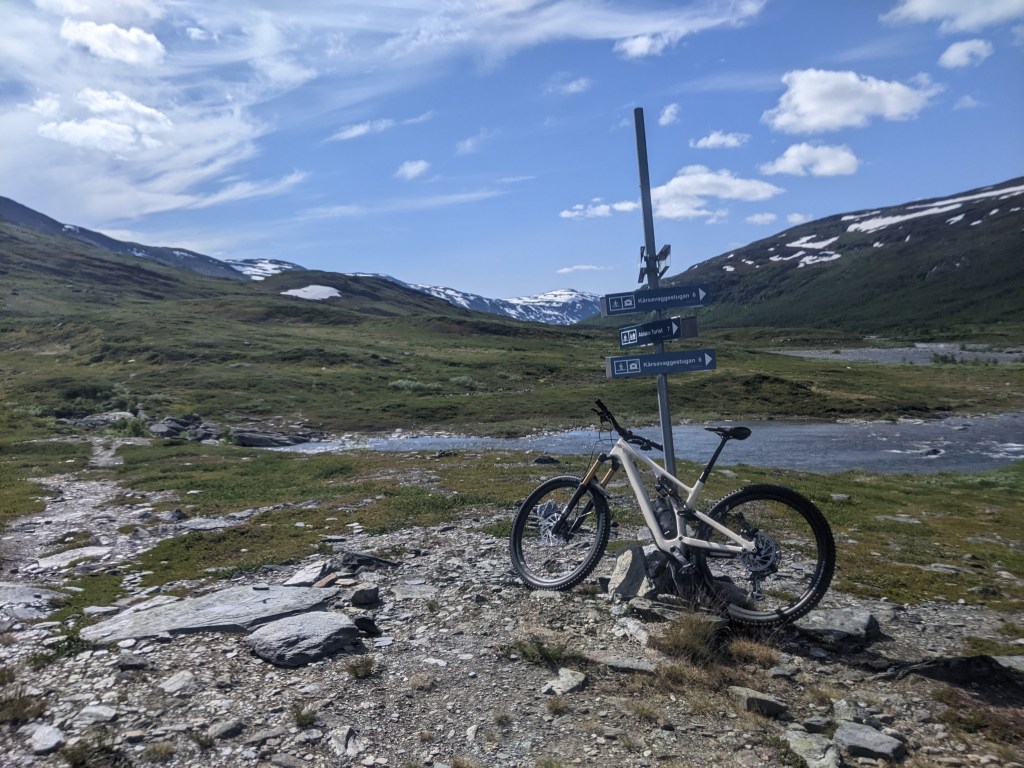
Good MTB day out 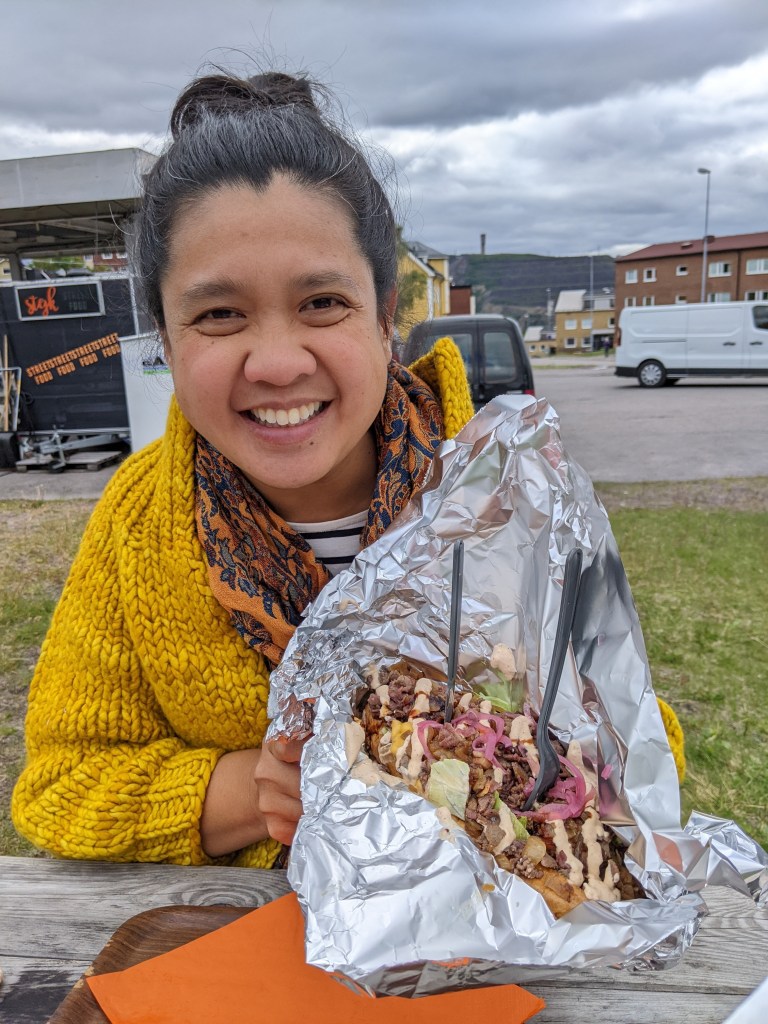
Tasty elk sub. Not shown: reindeer sub in James’ hands. It was also tasty 🙂 Climbing in Sweden
We visited several crags and a couple of climbing walls in Sweden. Described here in an easy to skip section 😉
Sweden Crags
James really enjoyed the opportunity to do several days of climbing on rock. All of the crags we visited were granite, it seems that most or all of Sweden is granite. All the crags were documented on 27Crags. In fact if you look at the app it can be a little bewildering since Sweden seems to have so many venues documented, although on close inspection a large proportion are just single boulders with a few problems. That does make figuring out where to go a little tricky, but fortunately we found a good article recommending some places.
Kjugeskull
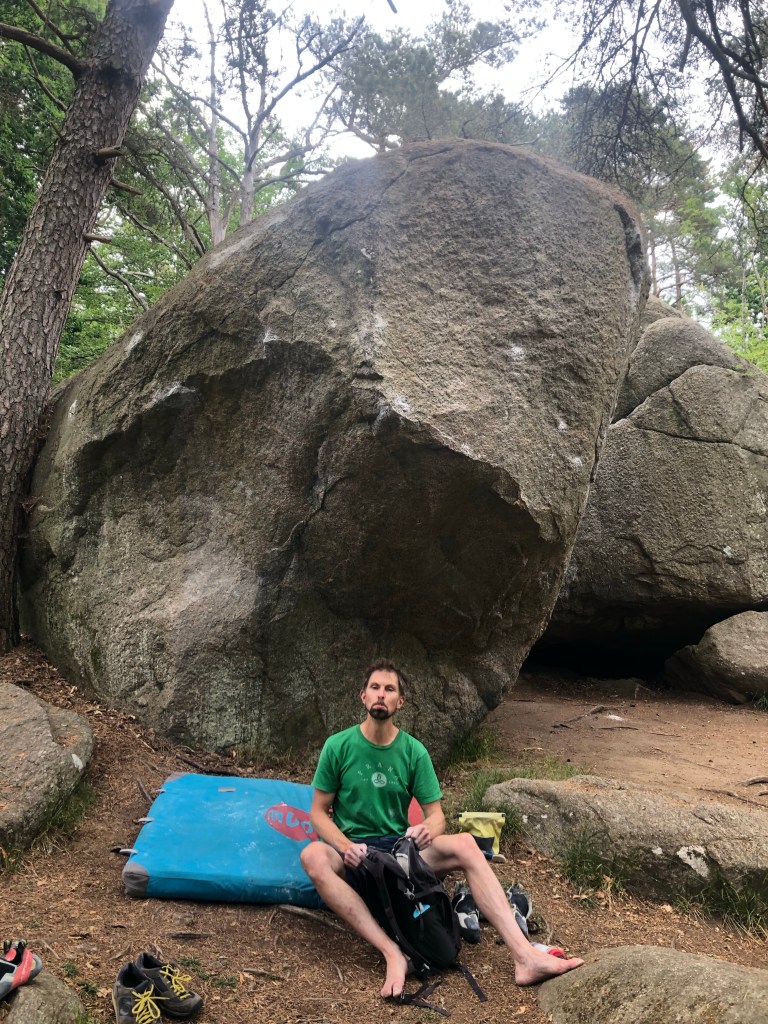
This is in the south and is one Sweden’s biggest bouldering venues with circa 1,400 problems. The boulders are in a forest that is slightly reminiscent of Fontainebleau. The granite here is quite rough, but forms some interesting features that James hasn’t seen on granite before, for example pocketed walls. Unfortunately mist and rain rolled in not long after warming up. But it looked like there were potentially lots of interesting climbs and James secretly hopes we might make a return trip as we head back to Denmark.
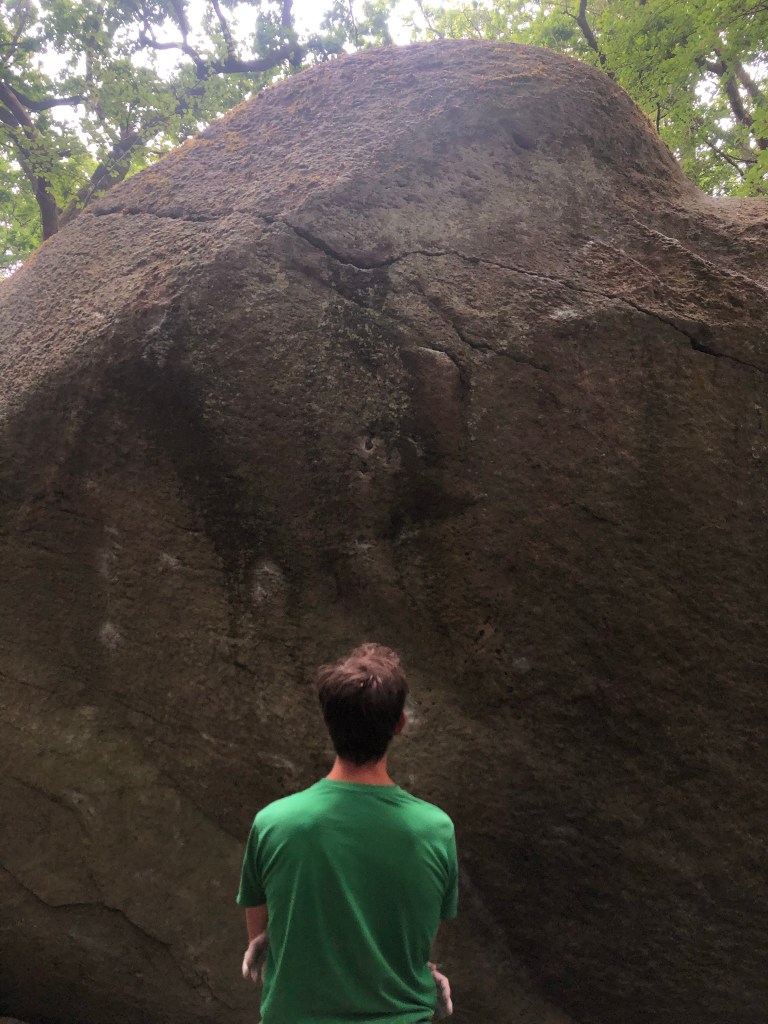
Knutby
This was the second crag we visited in Sweden and learning a little from our first experience, we were covered in mosquito repellent. It reduced the assault-level but some still bit. Getting to Knutby involved a few kilometers of dirt road, then a short walk into the woods.
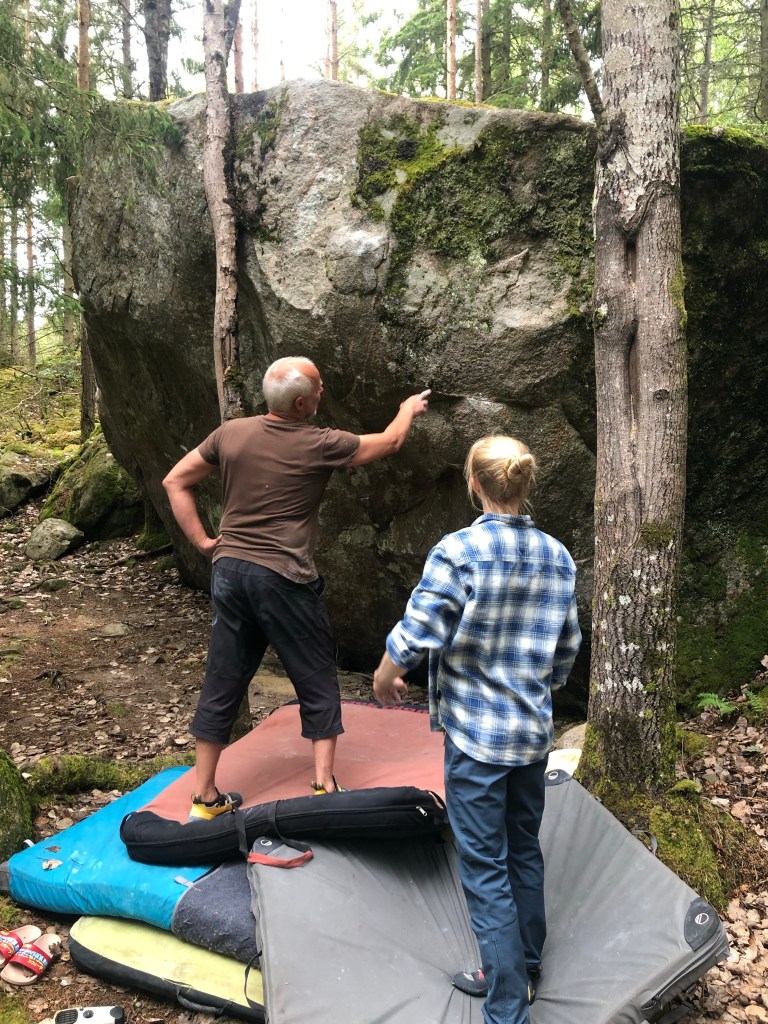
Shortly after we found a place to warm up, a Swedish climber came over introduced himself, then asked if we had a Thermacell, we looked at each other and at him with blank expressions and a “No, what’s that?”. He explained that it is a device which has a small gas burner that heats and releases an insecticide and without one it wasn’t going to end well for us. He also suggested we could (should) come and hang out with them and their Thermacell, where they were trying Tussilago one of the classic V5s of the crag.
After a warm up we did as suggested. The result: the Thermacell works very well, and Tussilago was a fine compression problem with poor right holds, but better left ones. We spent the rest of the day climbing with them. James enjoyed having people to climb with and they had lots of pads which meant he could do some problems that would have been too risky with our regular single pad set up. Knutby has finer grained granite, a lot of quality lines, decent landings and a few highballs. We bought a Thermacell while doing the grocery shop that evening.

Oppala
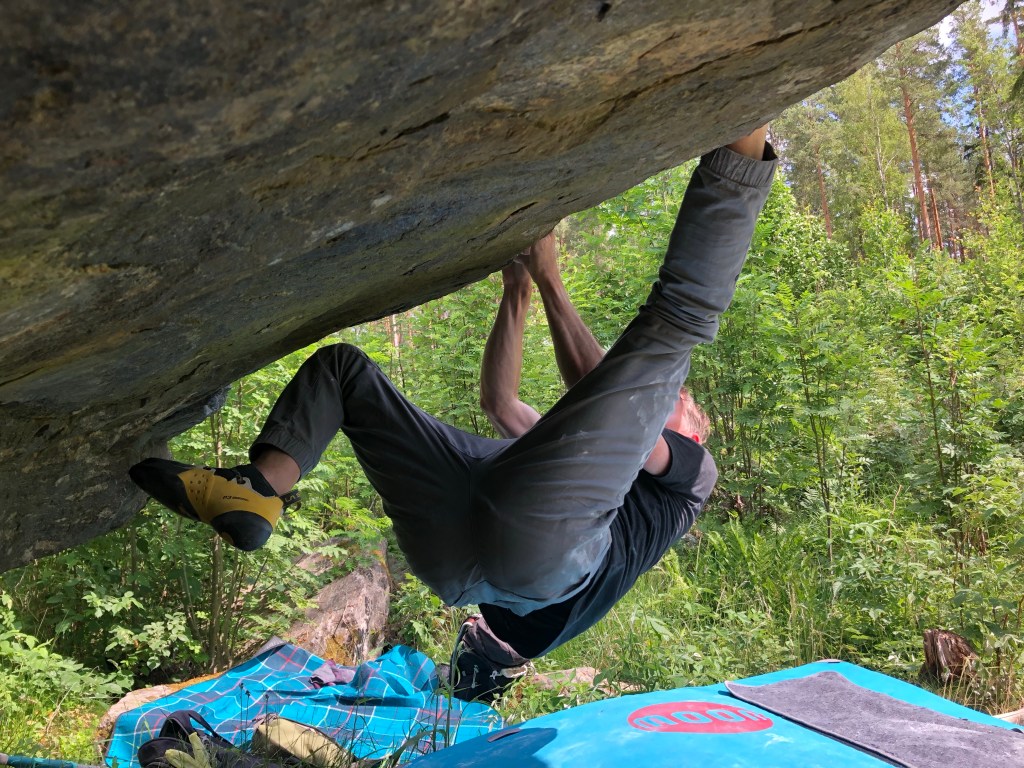
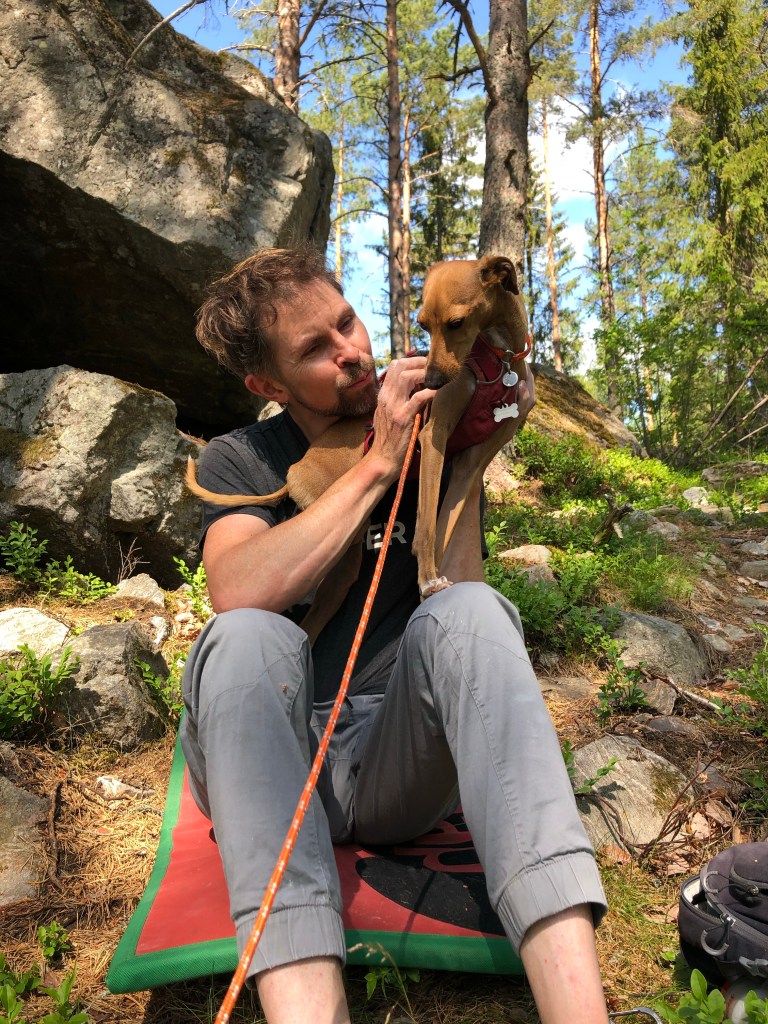
Oppala crag is in the middle of Sweden on the east coast, near the town of Gävle. The boulders are quite spread out, requiring different parking lots to access. We needed to do a fairly long drive to Rättvik in the afternoon so we just tried the boulders at one parking lot. One of the boulders looked amazing with lots of V6+ lines, but you also needed a ladder to get off (James had noticed someone’s ladder in a photo) so he skipped it. The other 2 boulders had simpler ways off and hosted a fine selection of climbs. Again good quality rock and nice holds.
Juniskär
Juniskär is on the Baltic coast near the town of Sundsvall. Getting to the climbing required a walk-in through what felt like a magical wilderness landscape, over rounded rocks and a lot of lichen, followed by some extensive exploration to actually find the boulders. It’s a super nice setting on a boulder jumble leading down into the sea. The seaside location also meant relatively little in the way of insect pestilence. Erosion from the sea meant some more rounded features, the boulder problems typically followed aretes and/or some weakness in the rock.
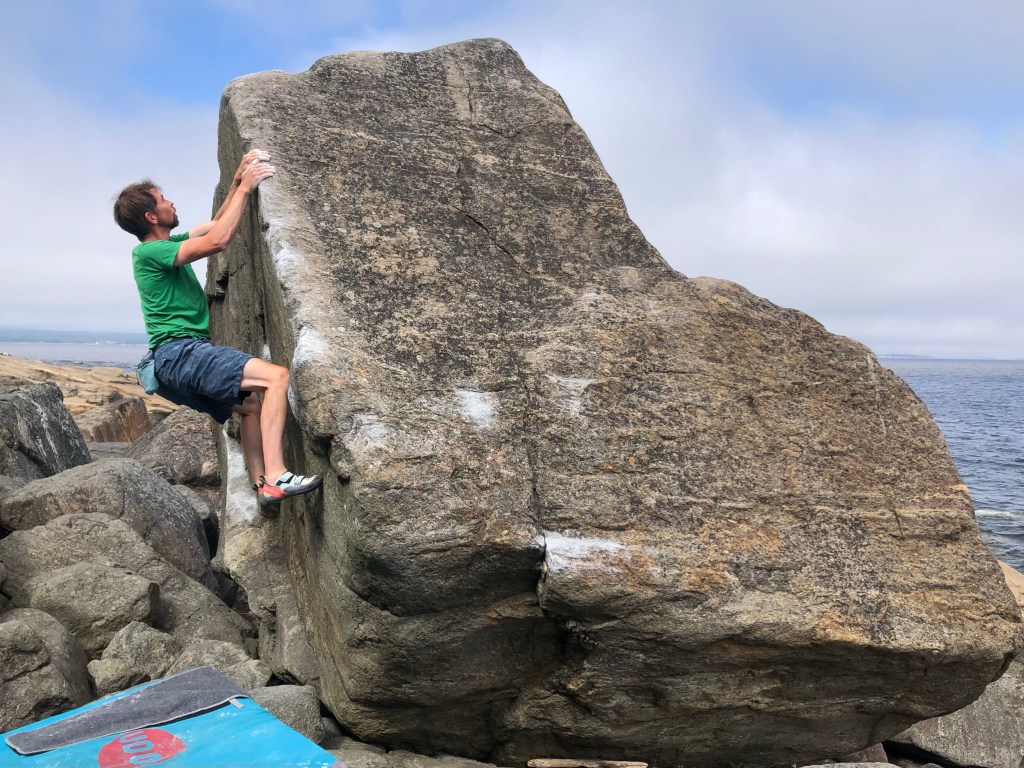
Sweden Climbing Walls
We also had a good opportunity to sample some climbing walls during our travels in Sweden. They tended to be good, on par with other European venues we’d visited. This is impressive given the relatively small population of Sweden.
Klättercentret, Malmo
Malmo has a nice climbing wall Klättercentret with a good range of different problem styles. We were lucky that a lady was working from the cafe and kept an eye on Zeus for us while he snoozed, which meant James and Aileen could do some climbing together.
Klätterhuset, Luleå
James also visited the climbing wall in Luleå, Klätterhuset where he really enjoyed climbing and chatting with the 3 owners. The wall has bouldering and routes. James only tried the bouldering. The problems were interesting and well set, and James was pleased to break the beta for one and as result get it reset. Apparently Luleå is near one of the premier sport (route) climbing areas in Sweden, but local bouldering is limited or involves a long walk in. The wall also has a ‘No outdoor shoes policy (in the whole building), something we came across elsewhere in Sweden and it seems like a good idea.
Is it worth a trip to Sweden to go climbing?
Yes, there is some great climbing. But here are some provisos:
- You need to be prepared to meet mosquitoes, especially in the summer
- We were probably lucky with the weather. The guys at Klätterhuset, Luleå said that September would probably be the best time to visit for weather and insect conditions.
- You’d need to be prepared to travel between different venues, since nowhere has enough problems to sustain interest for multiple days
- A 2-week or more roadtrip in a campervan would probably be an ideal and fun way of doing it
Cycling in Sweden
Rättvik
Rättvik had some excellent cross country trails around some woodland and lakes, which reminded James how much fun can be had on a simple cross country ride. The trails are just outside the town and as seems to be common in Sweden the same area hosts winter cross country skiing and snowmobile tracks. James did 2 rides here and found it nice to follow marked trials without having to think too much about navigation, although an overview map would have been nice to give some assurance you weren’t heading kilometres in the wrong direction.
Abisko
James had a really enjoyable time here.
The ride started with some fun technical rocky trail heading uphill with wood sections crossing wet ground. Then a technical uphill bog which was very tiring and James would have liked to stop, except that meant getting attacked by horse flies (that part of the ride is best forgotten) Then some nice singletrack out and back to a high point. And, to finish a really really good descent, not that steep, lots of technical but rideable with flowy rock sections into fast sections on long wooden bridges, great combinations of corners too. If time permitted James would have done more (the best forgotten section had been forgotten)
What’s next?
We plan to continue heading west on the E10, to Norway and specifically the Lofoten Islands next.
-
Weeks 26-31: Adventure break (Return to the UK)
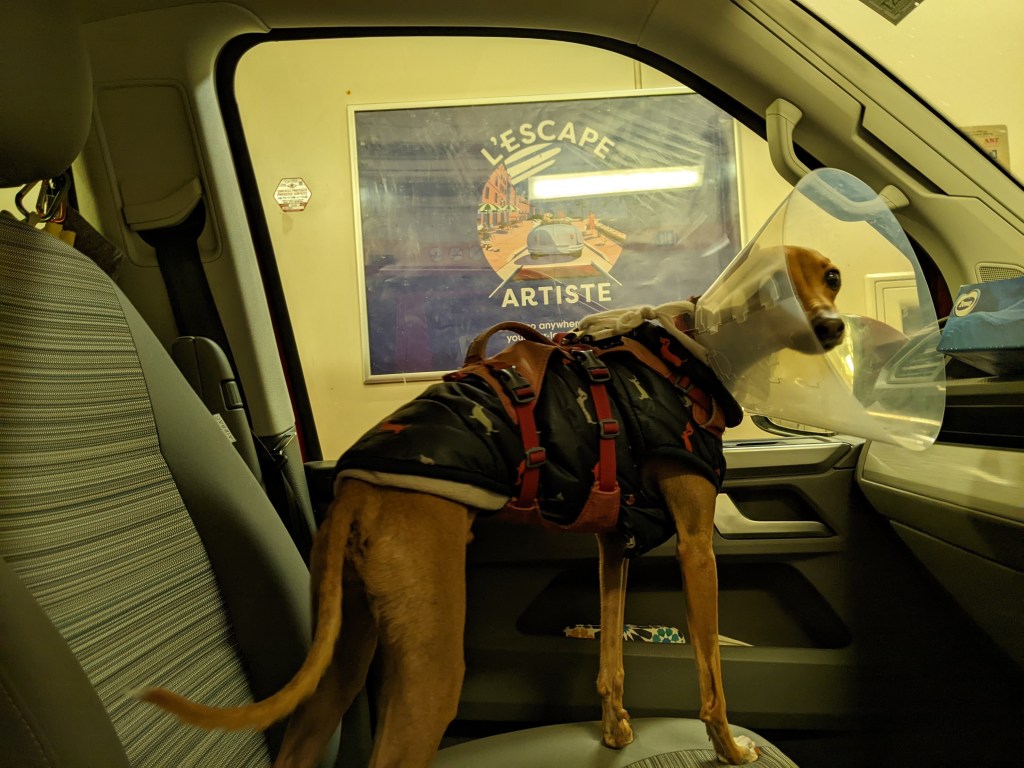
Our journey back was not without incident
From Slovenia we began our long journey west back to the UK. We had booked our Eurotunnel return crossing for 6 months minus 1 day from our departure last November. Our 6-month visas were due to expire so a return to the UK to apply for new visas was a logical break from our Europe adventures.
We gave ourselves 4 days to do the circa 1300 km drive from Bled to Calais. This meant we could do it at a more leisurely pace, and have some contingency time for unforeseen events. In hindsight, this turned out to be a crucial decision. We drove through Austria and much of Germany without incident. While crossing through Germany we noticed Zeus had a swelling spot on his bum. We assumed it was a reaction to something like an insect bite. After a long day of driving we stopped in a parking spot outside a campsite in Kirkel for the night. Zeus’ swelling spot was looking a lot angrier, and he was constantly licking it. We got worried, discussed the option of finding an emergency vet, but decided to see how things went overnight and find a vet in the morning.
Around 3 am, Aileen awoke to the sound of Zeus licking the spot and decided to check on him. She found the swelling spot had ruptured. We did not get any more sleep that night. We packed the van up, and headed to a vet hospital in Saarlouis. They were open at 7 am, and we were there at opening without an appointment. We were seen pretty quickly. The staff were professional and highly competent. They assessed his wound, told us he had a ruptured anal gland, cleaned the wound and administered some strong painkillers and antibiotics, emptied his other anal gland, and told us to visit a vet as soon as we got to the UK. We were out by 8 am with Zeus dozy on painkillers and antibiotics, and a supply of meds and saline solution. We expected our bill to be around £400+ given our experience of UK vets. They charged us EUR 80-something. We were exhausted, but so grateful we found excellent vet care in Germany.
We spent the rest of the day at a campsite resting. The whole team needed some rest.
We continued our journey to Calais the following day, and thankfully without further incident through Luxembourg, Belgium, France and back to the UK!
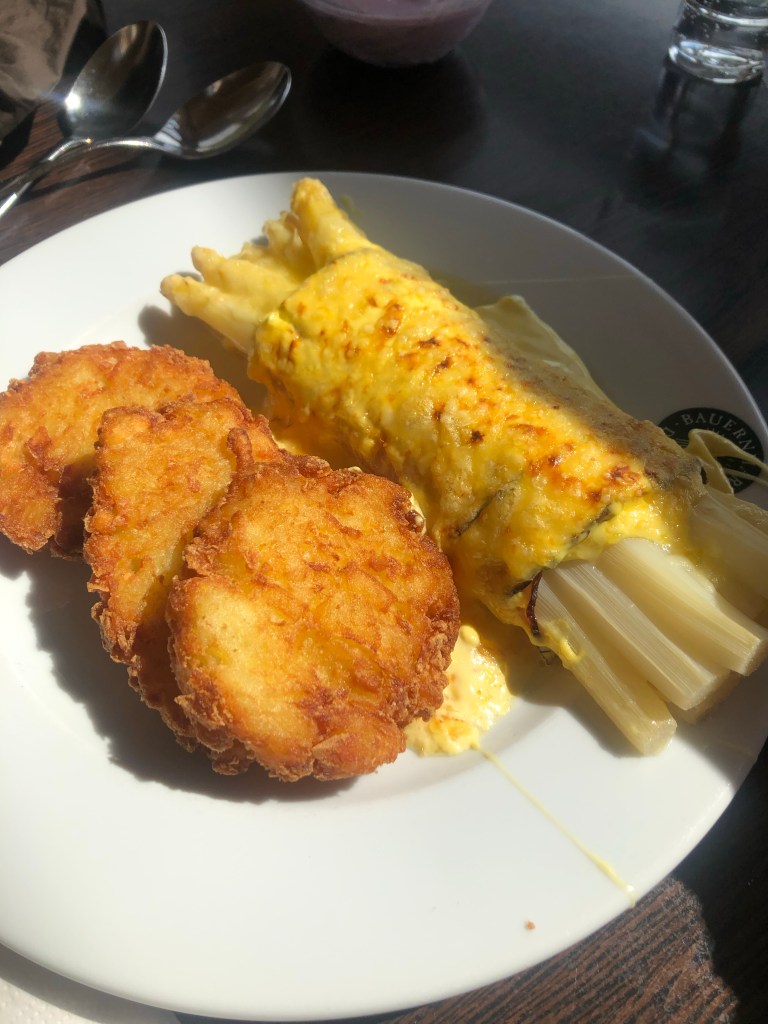
Enjoying some in-season asparagus in Germany before the Incident 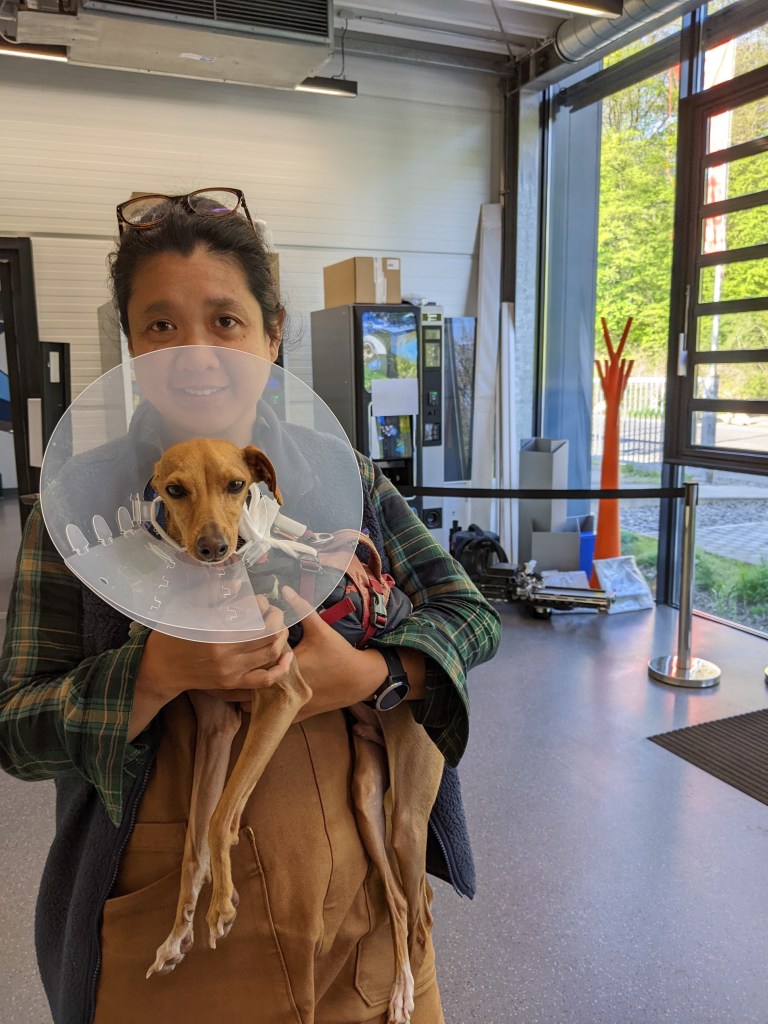
At the vet in Saarlouis – Exhausted but OK 
Resting team member Visa matters
Our main priority in the UK, aside from catching up with family and friends, was to apply for another visa which would grant us a further 6 months leave to explore Europe.
We booked the earliest appointment we could get at the France visa processing office. We prepared our application and reams of supporting documents. We had done the process once before and felt confident we were providing sufficient supporting evidence to be granted another visa.
When we finally got to see a visa processing officer, he very kindly informed us that unfortunately we could not apply for another visa until 6 months AFTER our last visa expired. Ruh roh. He apologized and acknowledged the visa website was clear as mud. He said we could return to Europe on the standard 90 day allowance, and then apply for another visa in November.
So….back to the drawing board. We hatched a plan and decided to use our 90-day allowance and do as much of the Scandics as we can.
The rest and recuperation bits
In between visa matters, visits to the vets, and admin such as catching up on post and tax returns, we did manage to enjoy catching up with friends and family:
- We spent several days in London catching up with some friends. James also got a haircut and a crucial supply of his favorite coffee beans
- We enjoyed a relaxing week in the Peaks with James’ parents, which involved walks, cycling, climbing and lots of nice home-made meals
- We went on a camping weekend with Ed, Dorothy and family where food was catered. The food was delicious and it was nice not to cook for a change. We enjoyed walks, camp fires, a little too much alcohol and lots of yacking
- We enjoyed relaxing downtime in Somerset with James’ parents. There was much watching of French Open tennis, and IFSC Climbing comps, much cooking and enjoying of nice meals, much knitting, cleaning of the van and restocking of supplies. Aileen also completed a beginner route climbing course.
- We had the pleasure of catching up with Candy , one of Aileen’s oldest friends who happened to be in London when we were!
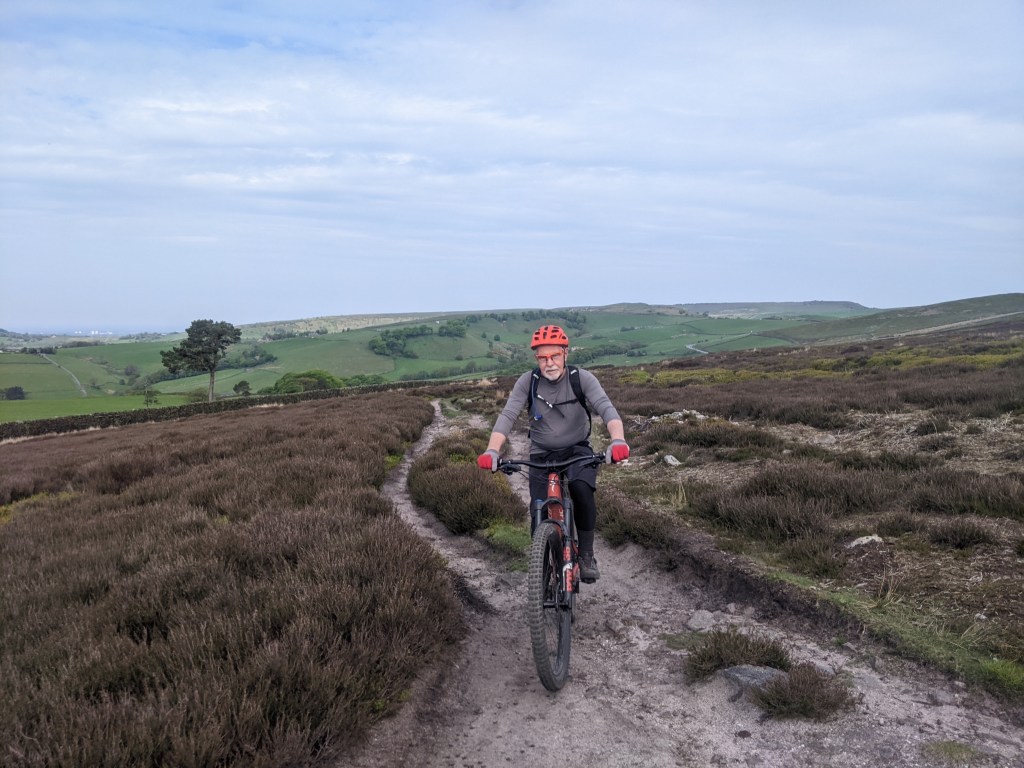
Cycling in the Peaks 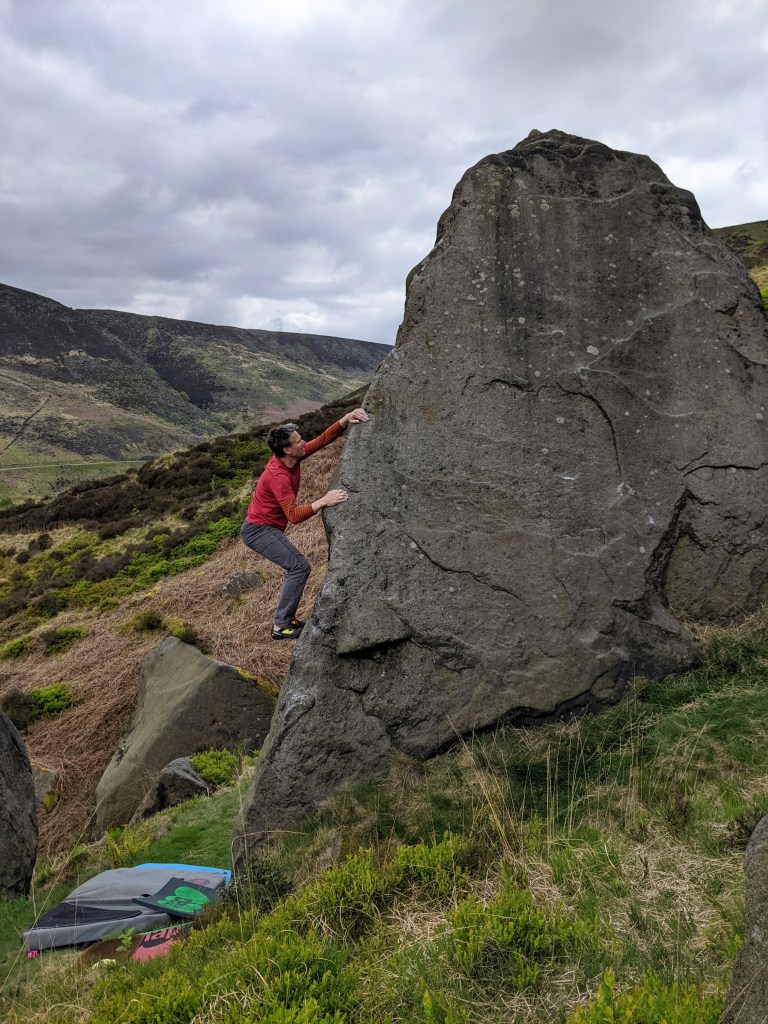
Climbing with Gavin 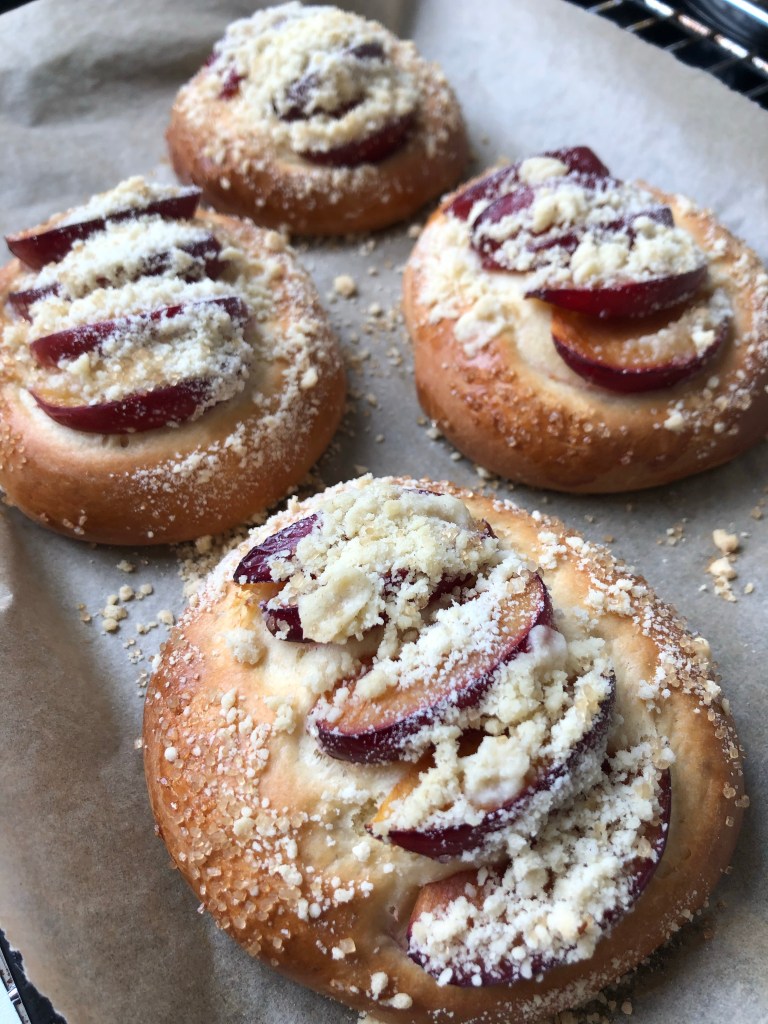
Baking isn’t so practical in a campervan so Aileen did a lot of baking in the UK 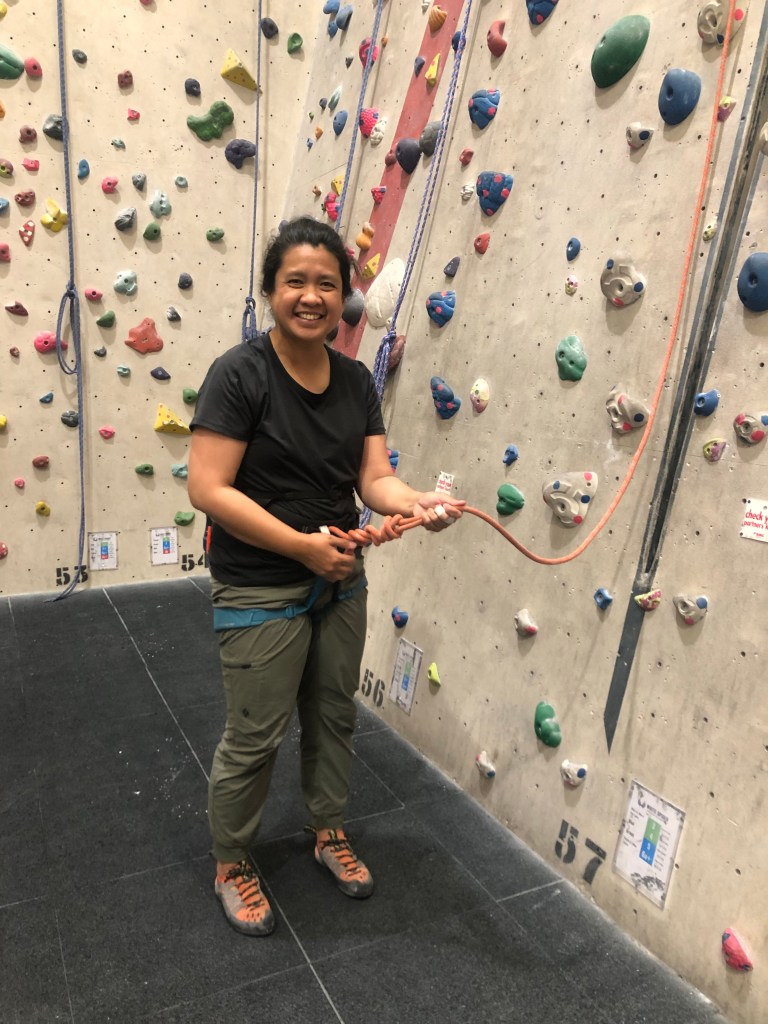
Nervous smile 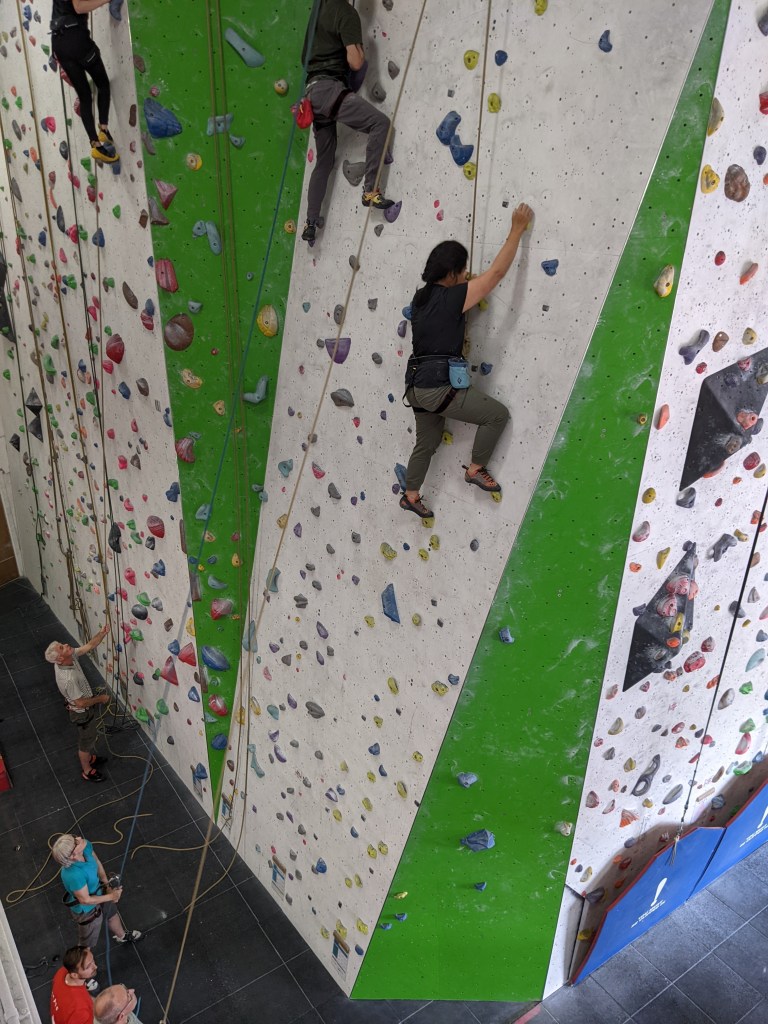
Aileen climbing a route 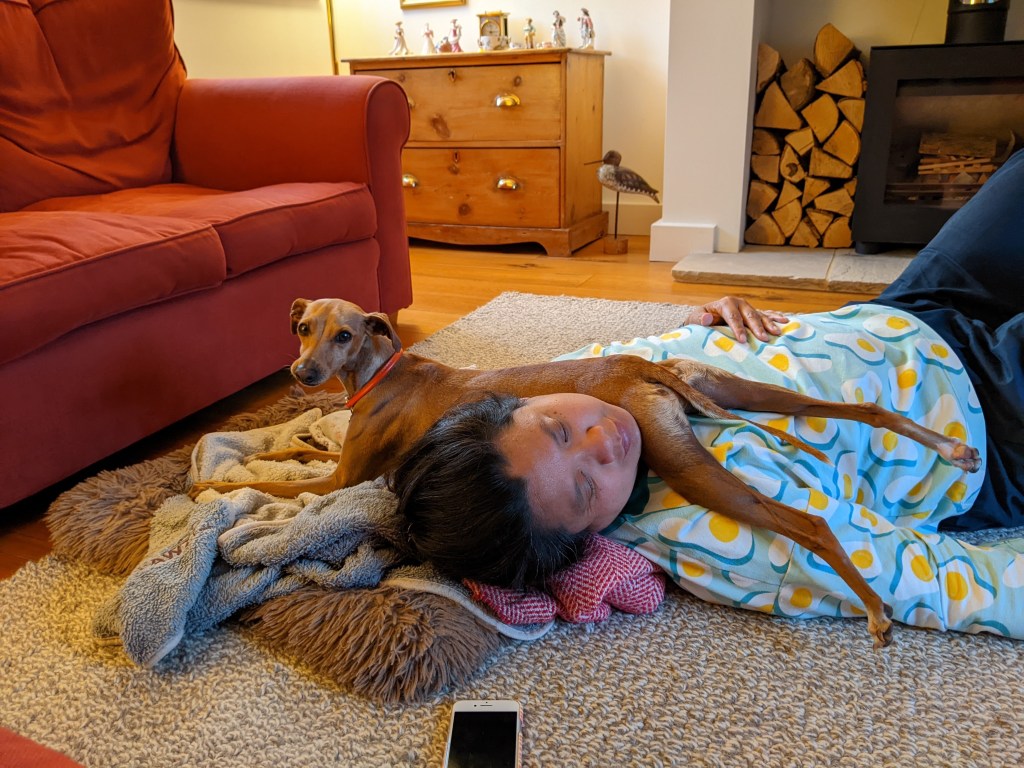
Rest and recuperation 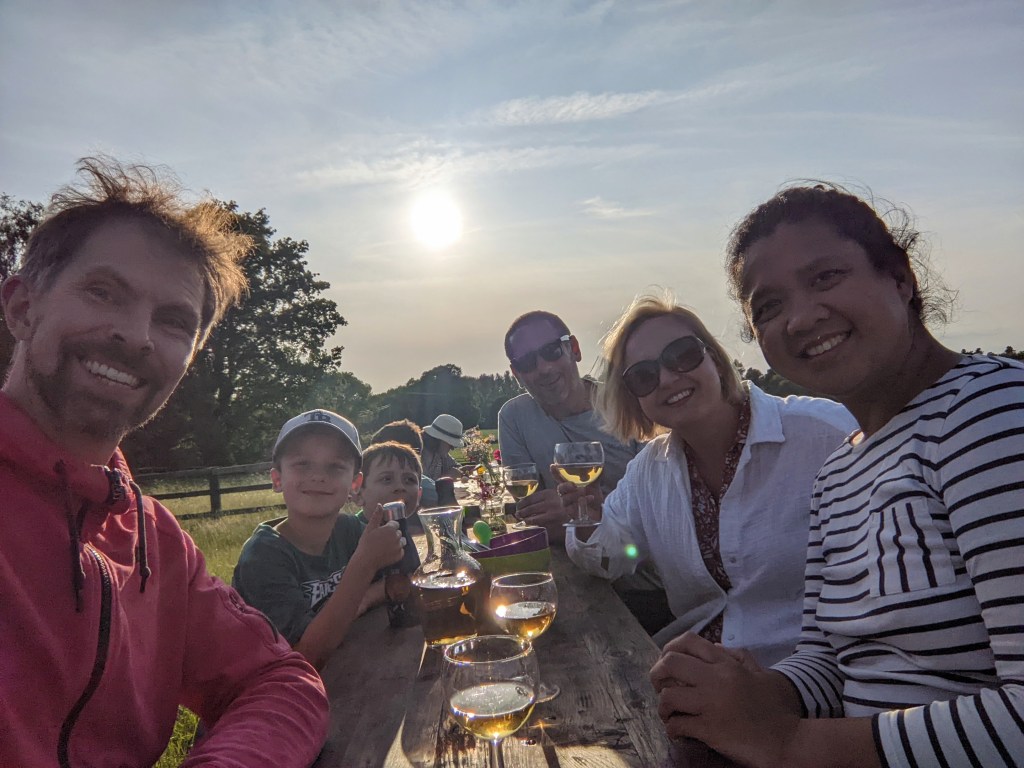
Camping with the Smalls 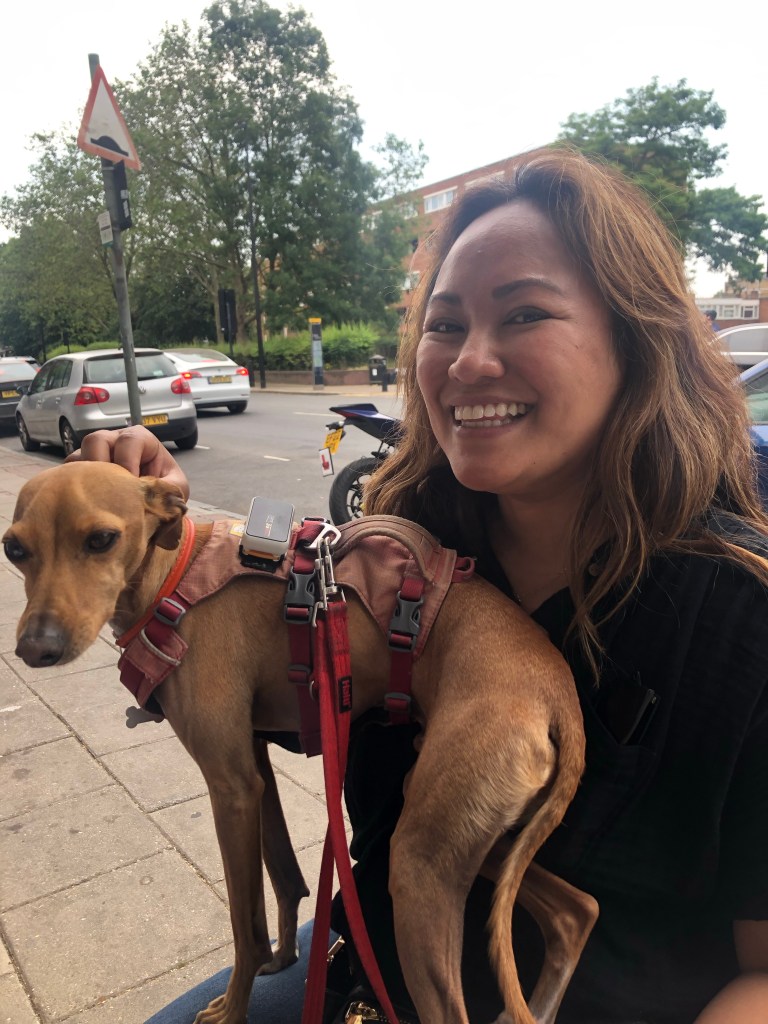
Candy ❤️ What’s next?
We have booked a Eurotunnel crossing for 13-June. We plan to drive over to Sweden as fast as we can, then drive up Sweden, and down Norway making it to Copenhagen for 13-August for a Boygenious concert. Then we’ll have a month to play with before heading back to the UK in mid-Sept.
-
Week 24/25: Slovenia
Highlights – wine, wine and more wine, stunning countryside and opportunities for outdoor pursuits, interesting geological features (karsts and related), small but perfectly formed Ljubljana
Lowlights – we didn’t have enough time to explore this beautiful country
East Slovenia – Wine, walk and bike ride around Maribor
From Croatia we drove north to the northeast corner of Slovenia close to the border of Austria. The eastern end of Slovenia bordering Austria, Hungary and Croatia is less frequented by tourists, however James wanted to check out the famous mountain biking area Maribor, and Aileen was curious about the wines in the area.
Mulec Wines
We found a small family-run vineyard Mulec Wines, in the hills north of Maribor, that offered facilities for campervan stays. The following day we did a walk through quiet lanes that surrounded where we were staying. This was an opportunity to see the local countryside of steeply vineyard-lined rolling hills and rural residences, often with well tended gardens. In one case there was a huge sculpture of a chopper motorcycle and in another, what might have been some Gaudi x Indian spiritually fusion decorative tile work.
In the evening we did a wine tasting with Gregor, one of the two sons that run the winery. Mulec Wines is a family business that produces mostly white wine, including some Austrian, Hungarian varieties, given the region’s proximity to those countries. His Dad transformed their grandparents’ mixed-use farm to focus on wine making. Mum and dad are now mostly retired. Gregor, took over from his Dad in the wine-making side of the business at the age of 22 when his dad suffered a heart attack. His brother runs the marketing side of the business.
We really enjoyed the wine served with an epic selection of cured meats they make at the winery, some homemade wild garlic butter and bread, and cheese and honey from local producers. Over 3-hours and 10 glasses of wine, it was nice to hear about Gregor and his family, the evolution of their family business, and the changes in Slovenia over time as it transitioned from being a province of Yugoslavia to independence and membership in the EU. We left Mulec with 6 bottles of wine to share with friends and family back in the UK, and a delicious cured deer and pork fat sausage.
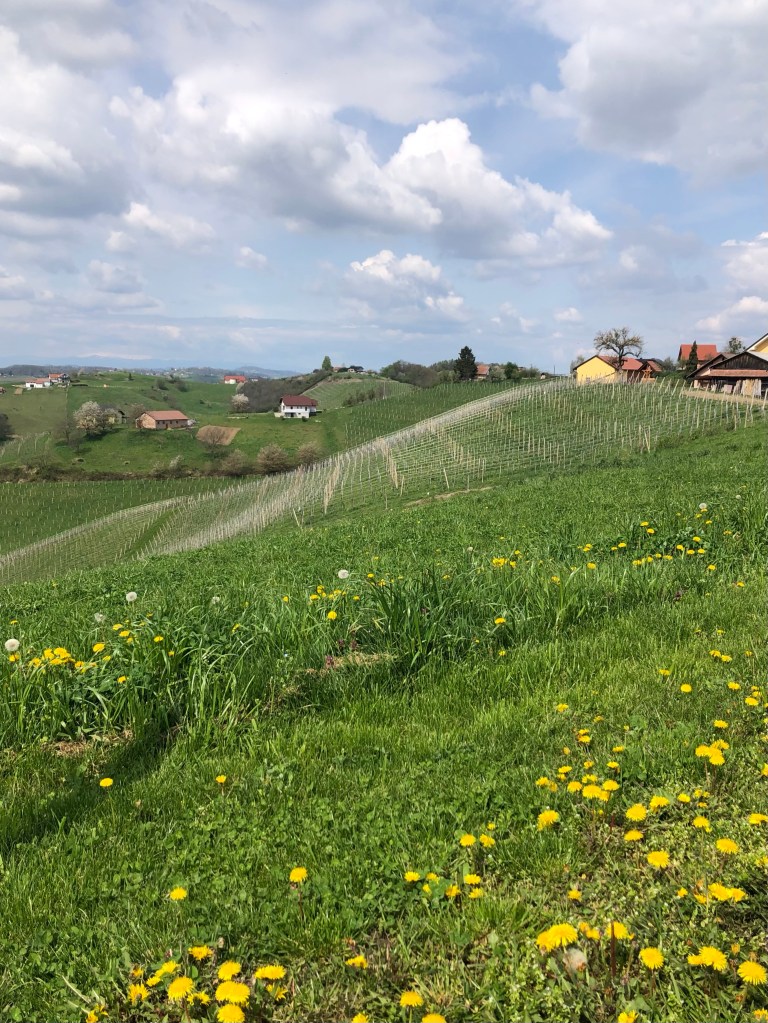
The hills around Ročica 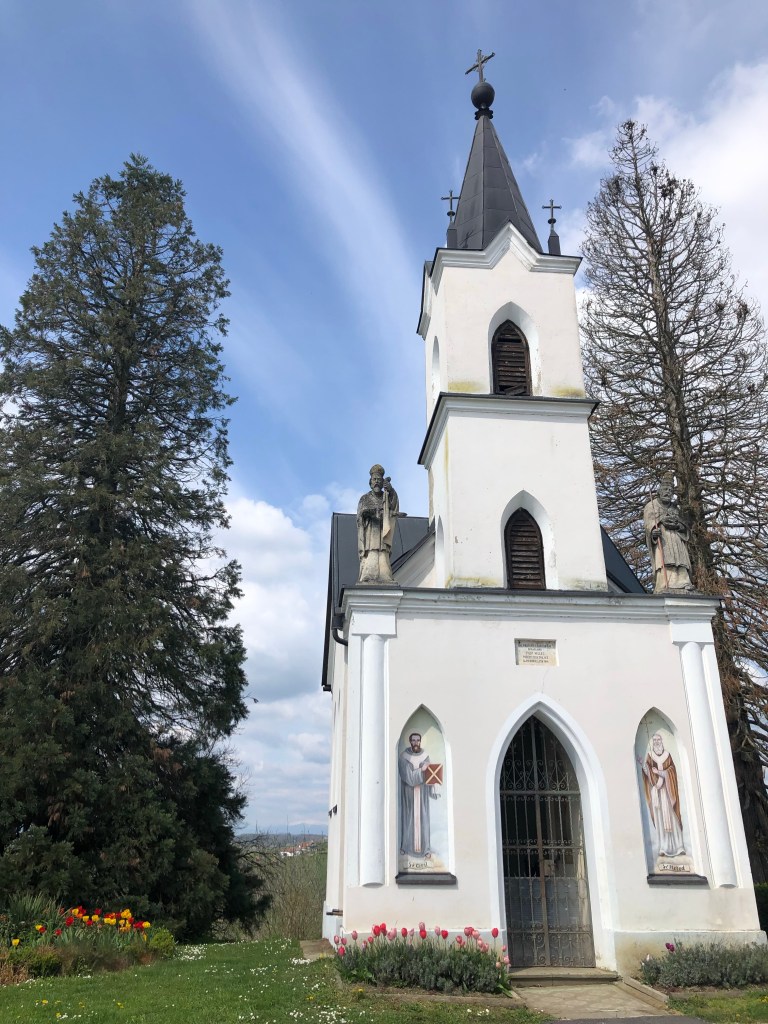
Chapel by Mulec Winery 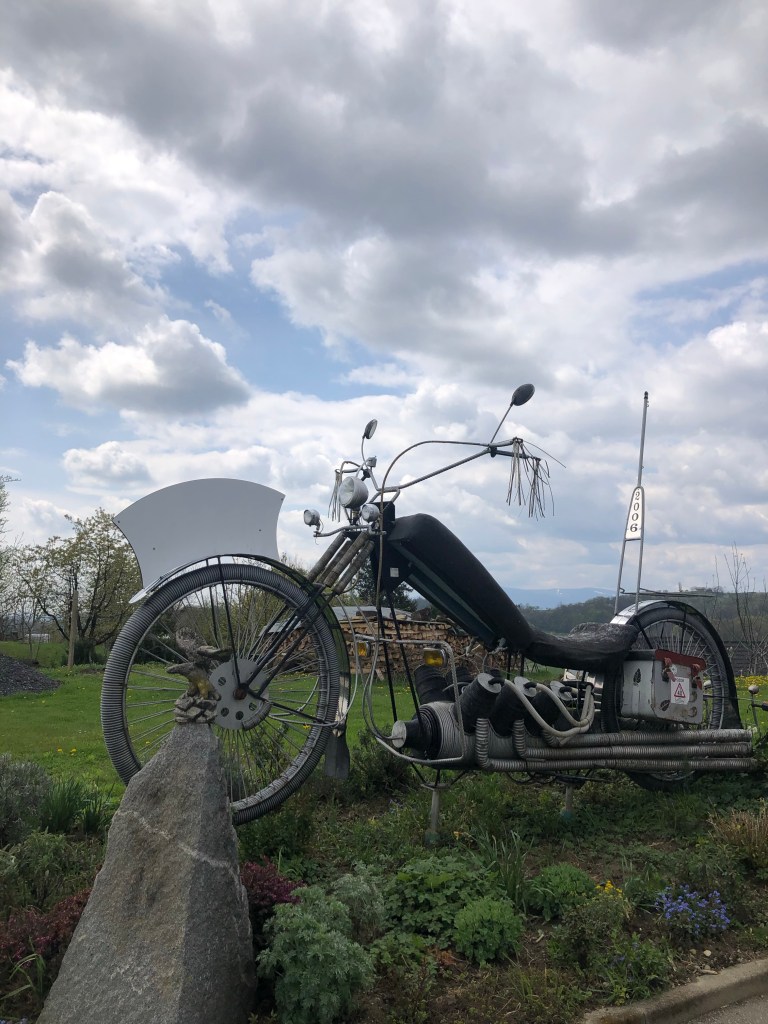
Interesting local garden decorations 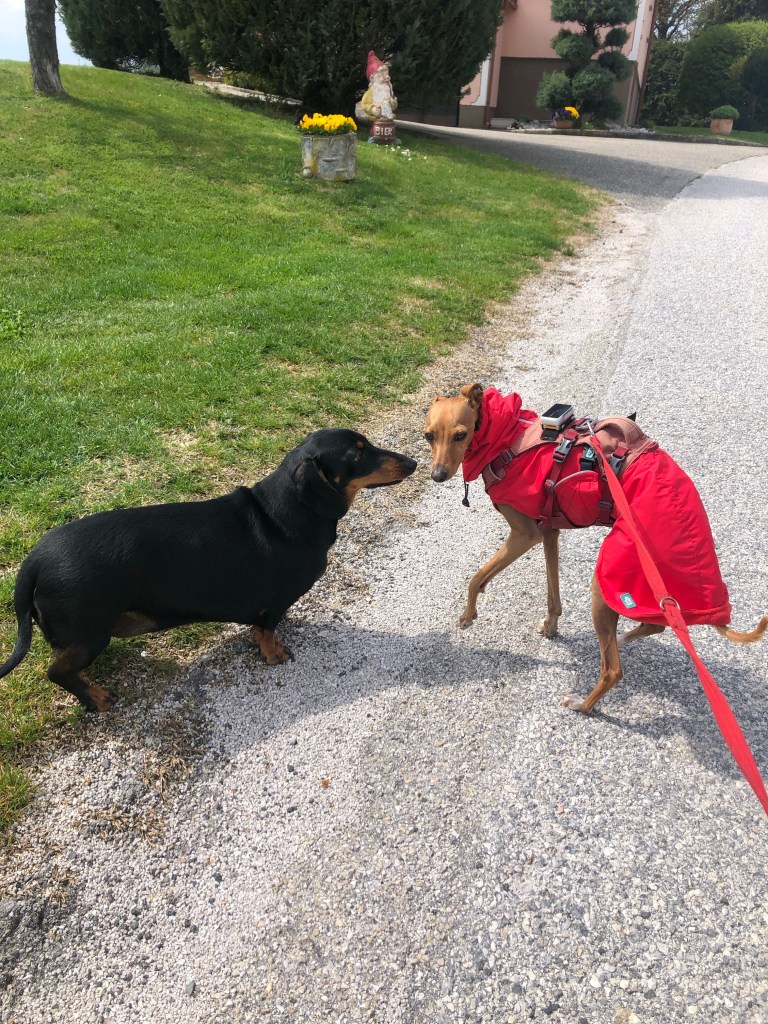
Zeus making friends with the locals 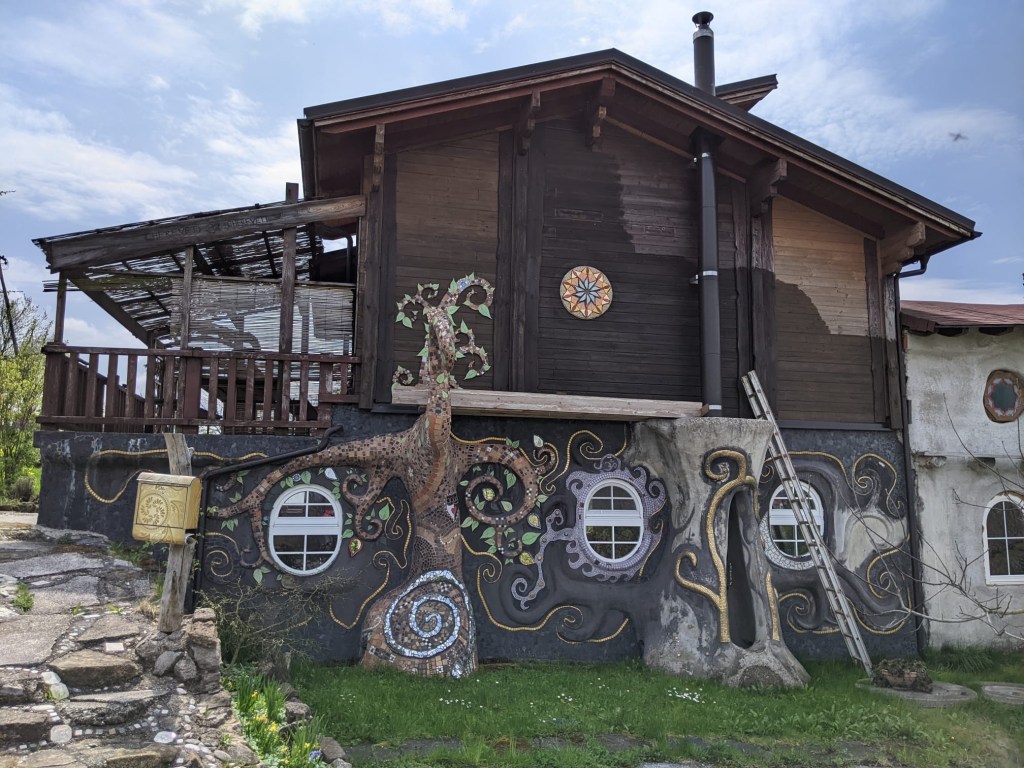
Interestingly decorated house 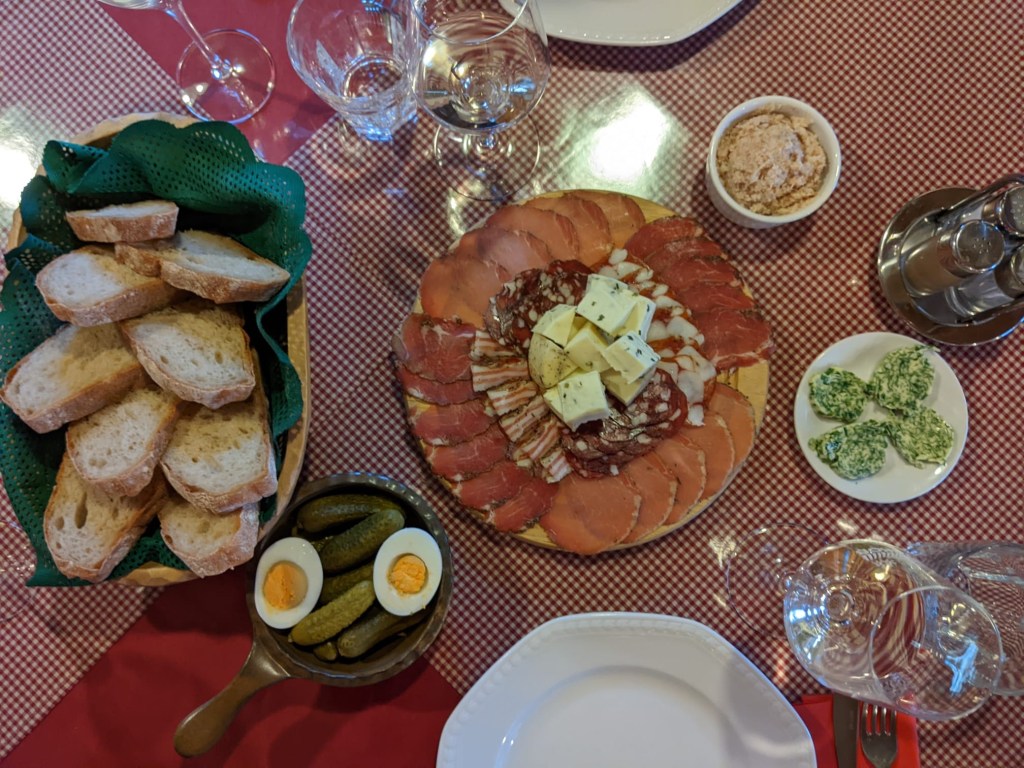
The epic spread at Mulec wine tastings MTB Maribor
Maribor is the site of a round of the Downhill Mountain Bike World Cup. Unfortunately the bike park that has the downhill world cup course doesn’t open during the week so James didn’t get to ride the trails, but perhaps it reduced the risk of James breaking himself. Instead he did a ride on some local trails in the hills south of Maribor, and got to see bits of history from WWII.
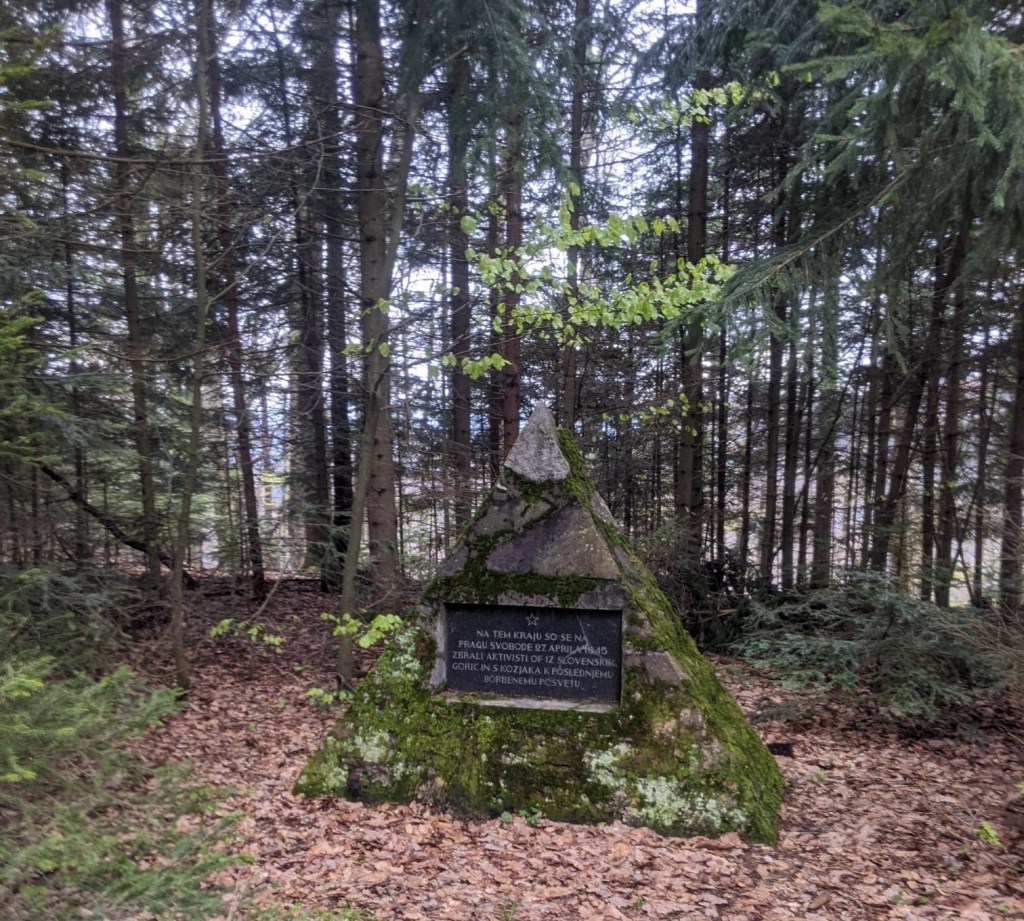
The plaque reads “In this place, on the threshold of freedom, on April 27, 1945, activists from the Slovenian mountains and from Kozjak gathered for the last combat conference.” Ljubljana
From Maribor we headed southwest to Ljubljana which sits in the centre of Slovenia. We didn’t know much about Ljubljana, other than we struggled with pronouncing it and that it’s the capital. We were very curious to check it out as we’d heard good things from various acquaintances and it’s the beating heart of an ex-Yugoslavian state that, from an outsider’s POV, has very successfully integrated into the EU and become a modern economy.
A good first impression
We parked at a camper stop just outside the city centre that was serviced by a chatty local taxi driver who completed a drop off shortly after we arrived, so we hopped into his taxi for the short drive into the city. We were hungry and curious to try some beers. We’d read somewhere that there’s a healthy microbrewery scene in Slovenia.
We headed to Pop’s Place, a popular riverside burger place with a good beer range. We sat at a table outside, ordered two “The Boss” burgers – burger patties made with dry-aged grass-fed Slovenian beef, Stilton cheese, grilled onion marmalade and truffle aioli. They were epic. The beers we ordered to wash them down were excellent too. We were quite content so we ordered beer tasting flights and watched the Ljubljana nightlife buzz go by.
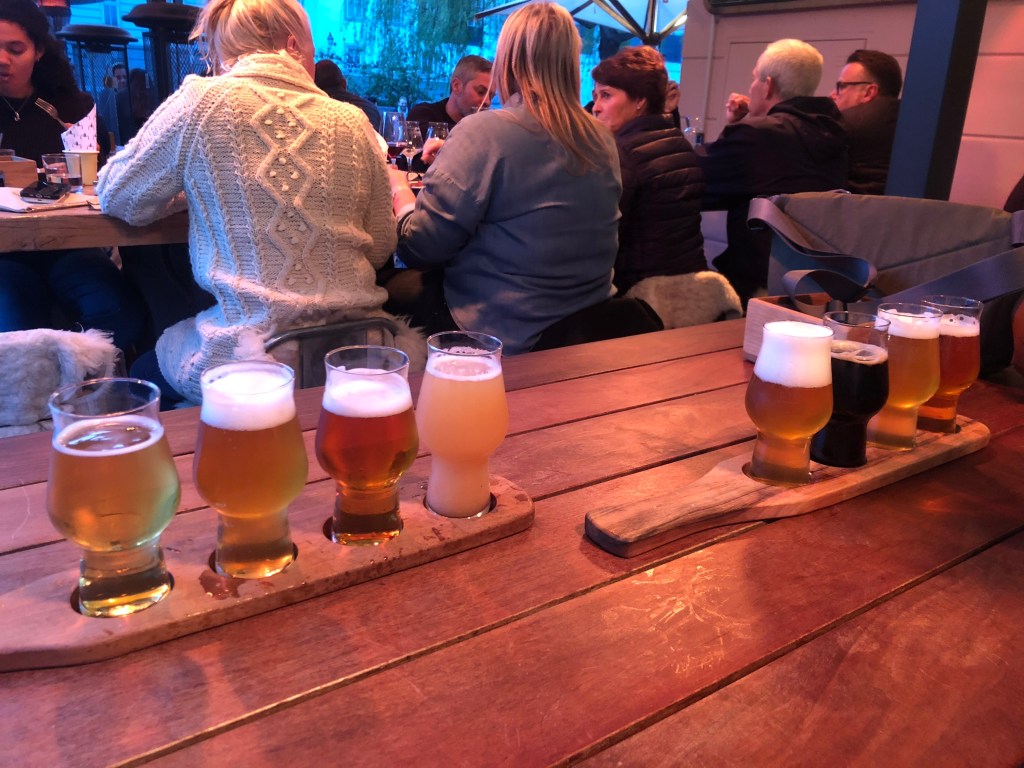
Beer flight at Pop’s Place Afterwards we decided to go for a stroll to find a taxi. We walked by a park where a euro-metal band was playing loud music to a throng of happy youths. We returned to our camper stop with full bellies, a good beer buzz, and good first impressions of Ljubljana.
Walking and Eating Tour
The following day we decided to explore the city centre some more, but the local taxi man was incognito and there was no easy way to buy tickets for the bus so we decided to do the 45 minute walk into town. A good part of the walk was along the river Ljubljana. We were rewarded with a beaver sighting!
A few hundred metres on we ran into Wine Bar Šuklje, a wine bar situated on the riverside and stopped to savour some Slovenian wines and people-watch. The sun was shining, the views of the river and city’s castle were lovely, the wine was good, and the steady stream of pedestrians, cyclists, dogs and all-around positive buzz further added to our favourable impression.
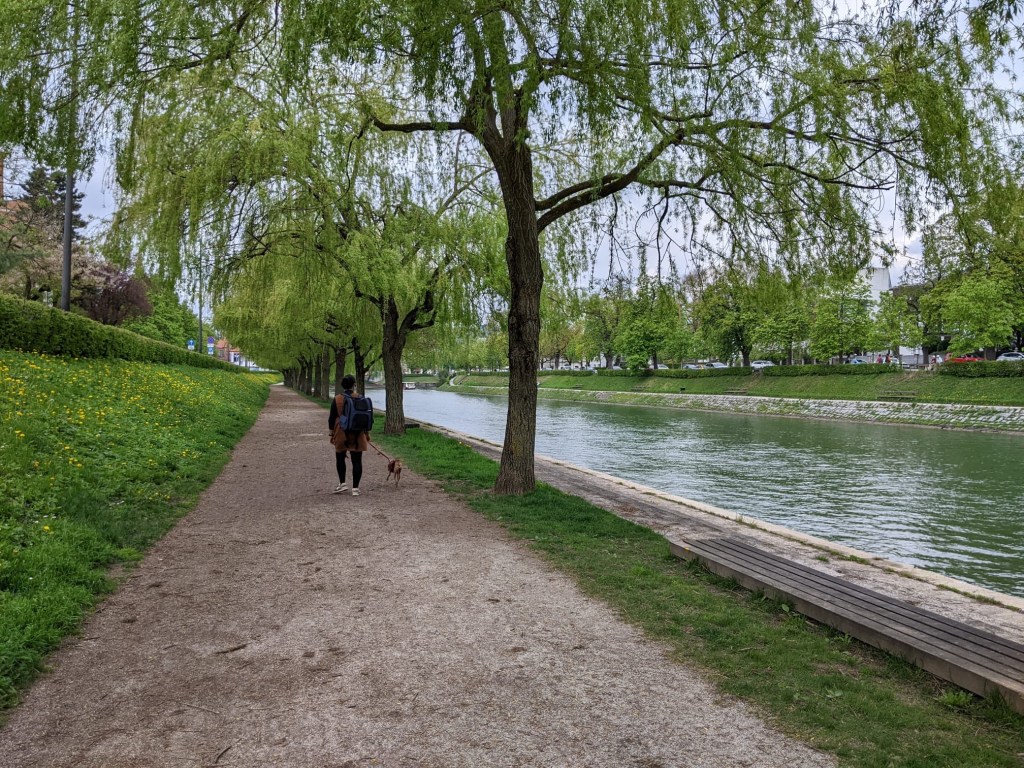
Path along River Ljubljana – the location of a beaver sighting 
Dog of leisure 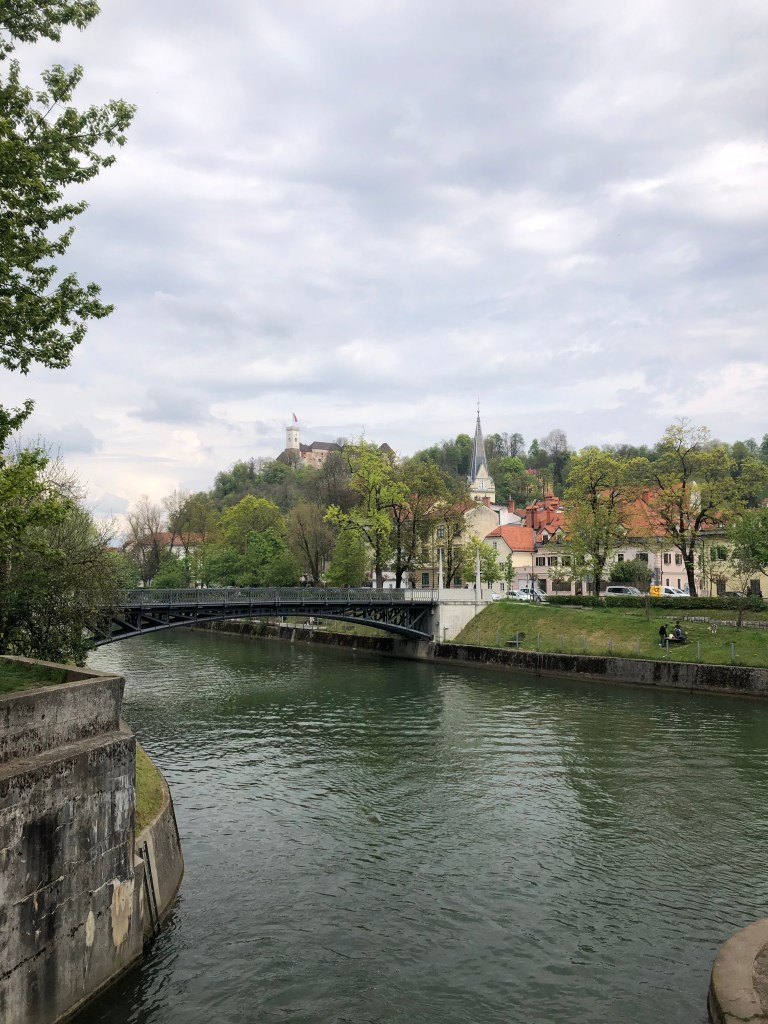
Beautiful Ljubljana We then fashioned ourselves a little walking/eating tour:
- Zmajski Most – our first stop was this bridge famous for its four bronze dragon statues (one on each corner), now the symbol of Ljubljana.
- Central market/food truck market – From Zmajski Most we crossed the bridge and headed to the Central Market, and a throbbing food-truck market.
- Klobasarna – We ducked our way through the crowds of the food truck market, and instead headed to Klobasarna tucked away in the street behind the market. Aileen was on a mission to try some Carnolian sausage, Slovenia’s most famous sausage. It’s similar to Poland’s kielbasa. There are strict rules on how it is made e.g. it must be made with at least 75% pork meat, and no more than 20% fatty pork. It has to be seasoned with sea salt from local salt pans, garlic, black pepper, and saltpetre. Nothing more. It’s typically served with a roll of bread, mustard and horseradish. We also tried something they call Istrian stew which was chunks of sausage in a sauerkraut stew.
- Cheese Štrukjli (Attempt 1) – It started raining and Aileen was keen to try Cheese Štrukjli (cheese dumplings), a savoury dish of cottage cheese in pastry, so we ducked into Gostlina Sokol, a touristy looking restaurant in the old town of Ljubljana to try some. It was sad. The dumpling itself was dense and gummy like it had been microwaved. The cheese sauce tasted like packet cream of mushroom sauce. We left disappointed.
- Ljubljana Grad – We wandered around the old town a bit more, and decided to take one of the several paths that leads up to Ljubljana Castle. There’s a furnicular that goes up to the castle, but we felt we needed to burn the unnecessary calories inflicted by the štrukjli. The castle sits on a promontory hill in the centre of town. It is surrounded by parks and walking trails where one can have great views of Ljubljana. There is also an interesting sculpture at the top of the hill by the castle that pays tribute to the Peasant Rebellions that occurred over 250 years between 15th and early 18th centuries. Read more about this interesting time of Slovenia’s history here.
- Cheese Štrukjli (Attempt 2) – The walk had the benefit of cheering Aileen up. So much so that on descending back into town we stopped at Julija, a charming restaurant in the old town that serves traditional Slovenian food. Restaurants in Slovenia area’t typically dog-friendly, but it was still early for dinner so they let us in and we were seated at a table where Zeus could snooze while we dined. We ordered cheese štrukjli and roasted pork knuckle. Both were delicious. The štrukjli in particular was a hundred million times better than Attempt 1. The pastry and cheese were light and creamy, the porcini mushroom sauce tasted lovely and earthy and complemented the dumplings well. We washed it all down with a nice Slovenian red wine.
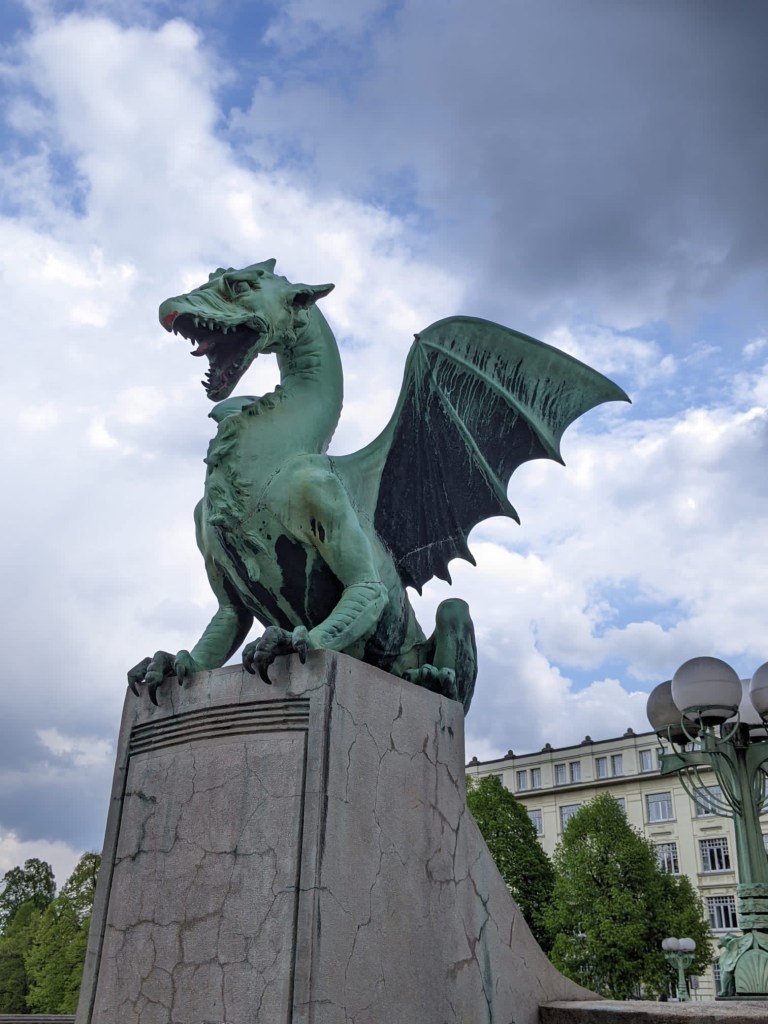
Zmajski Most 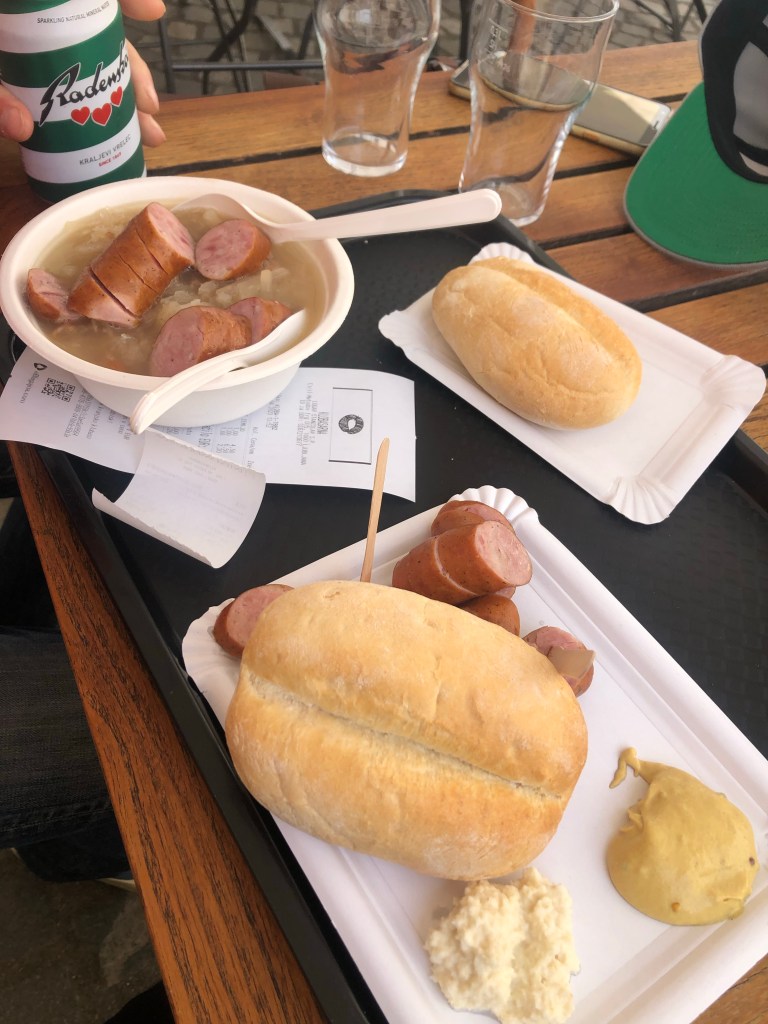
Carnolian sausage @ Klobasarna 
Cheese Štruklji – Attempt 1 
Cheese Štruklji – Attempt 2 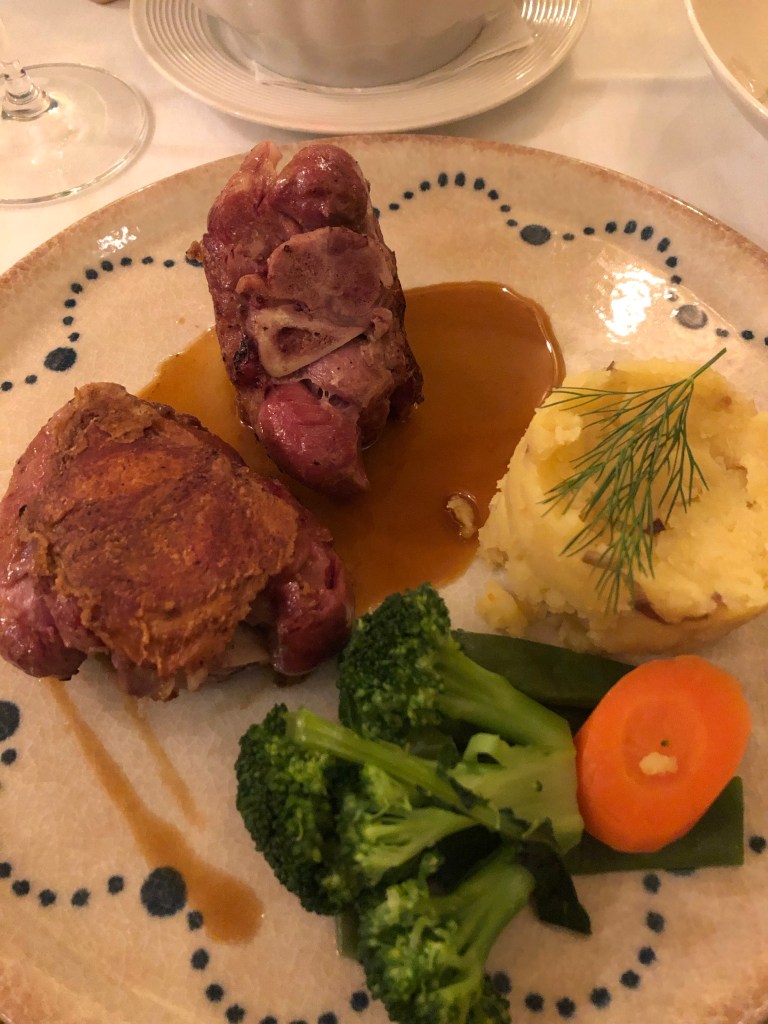
Roast Pork Knuckle @ Julija 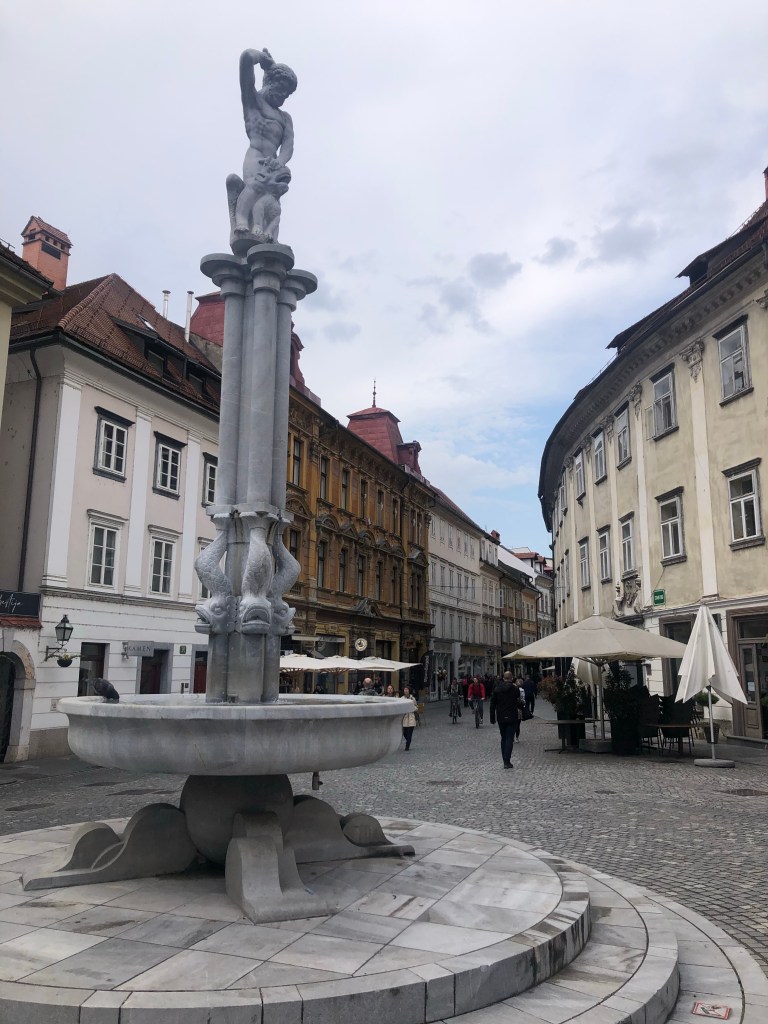
Old Town 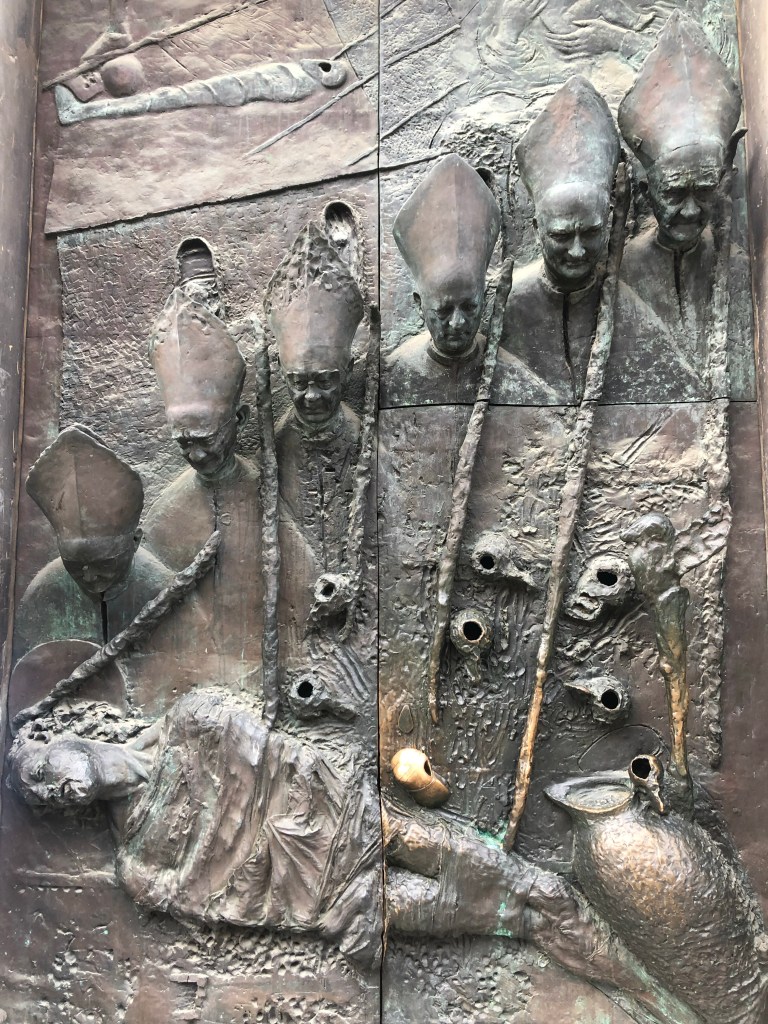
Sculptured door at the Ljubljana Cathedral 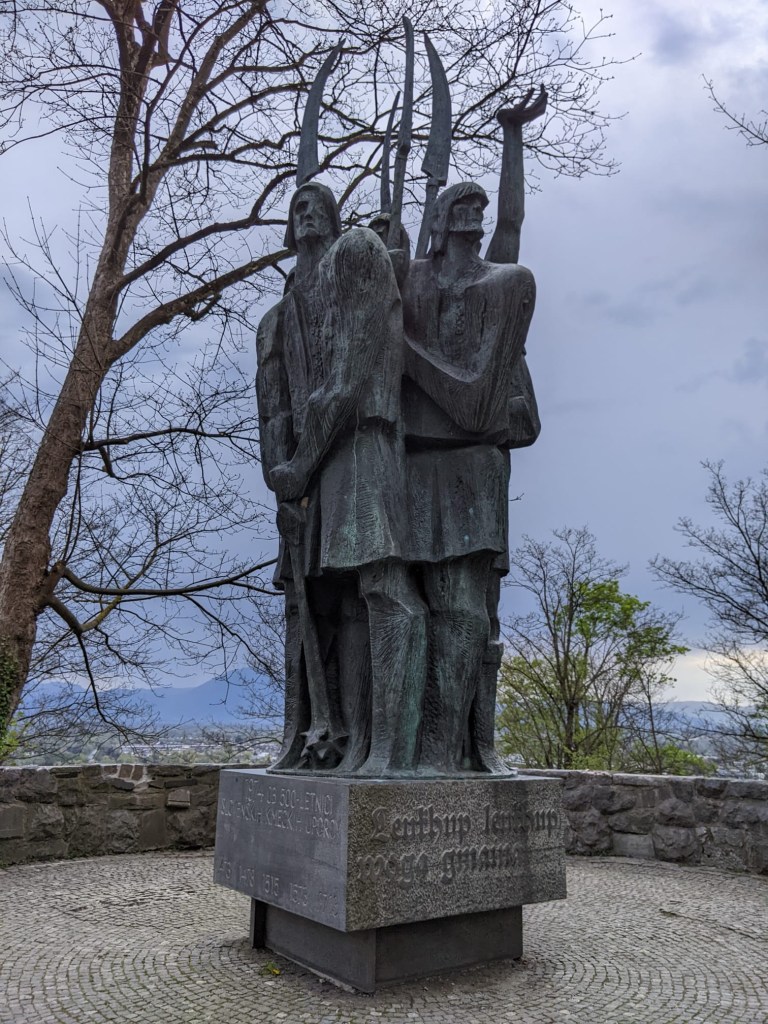
Peasant Rebellion Memorial The next day we stopped at Boulder Scena, a climbing wall, on our way out of the city. It was a very good wall. We reflected afterwards that living in Ljubljana could be quite nice.
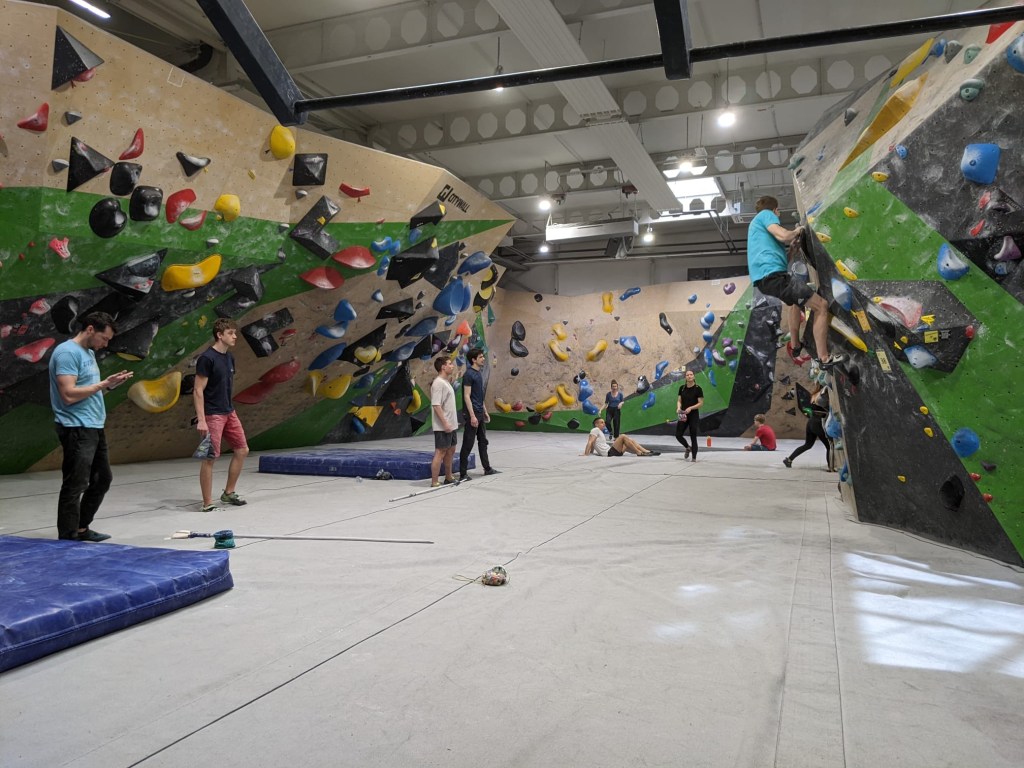
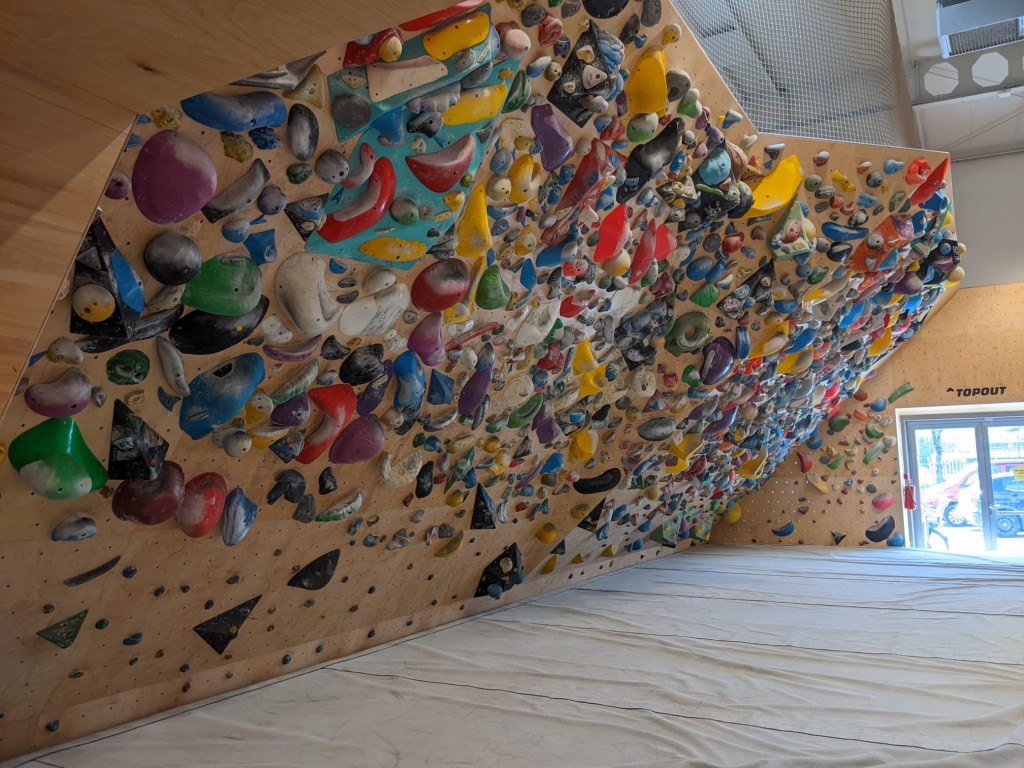
Boulder Scena Southwest Slovenia: Karst landscape and wine
From Ljubljiana we headed southwest. Southwest Slovenia borders Croatia and Italy and is known for its karst landscape and also has some famous wine regions. Slovenia’s karst landscape is characterised by disappearing lakes and rivers, large caves and sinkholes. This region of Slovenia is formed of fairly soft limestone similar to that found in the Italian Dolomites, but creating some different and interesting geography.
Rakov Skoljan
River Rak is in Notranjski Regijski Park. We did a hike that followed both sides of a 5 km section of the river from where it appears out of the ground to where it disappears again. The whole valley was previously underground cave and at some point parts of roof collapsed. In places gorges, caves, arches and rock bridgeways have been left behind and we enjoyed going over- and under- ground on the same sections of river. It transpires the same river goes by six different names for what previously appears to have been distinct sections of water, but are now known to be the same river. We read somewhere that the science that’s now known about karst landscapes originated in this area of Slovenia.
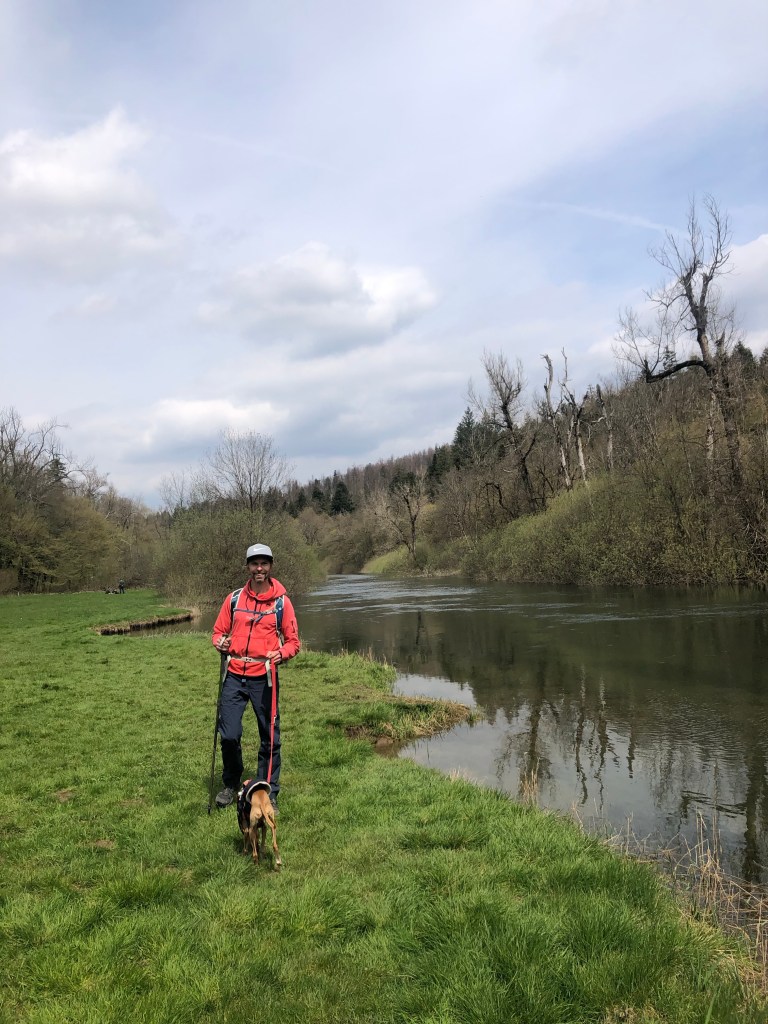
River Rak 
Pretty valley that was once underground 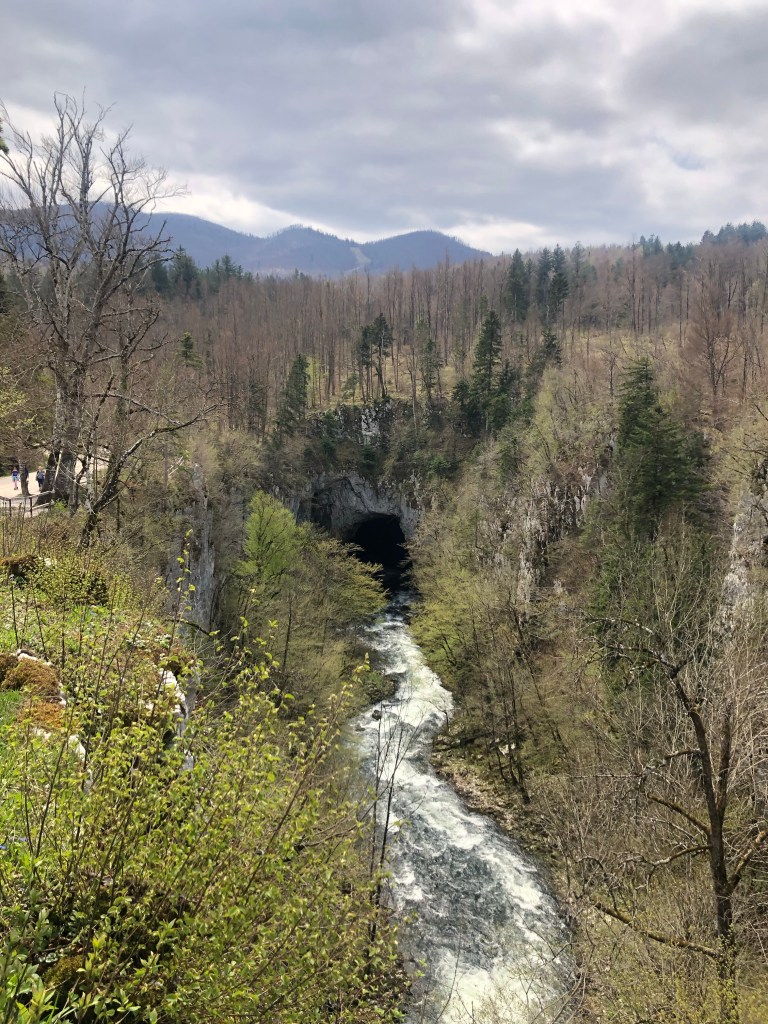
River Rak heading underground 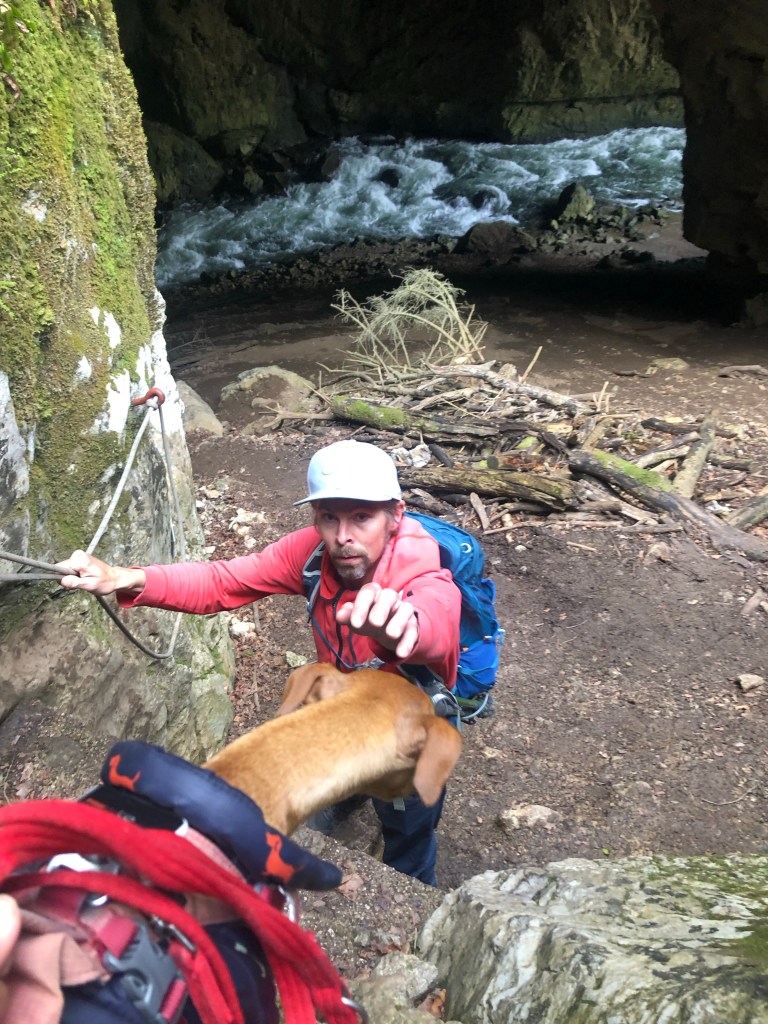
Tricky decent into The Weaver’s cave 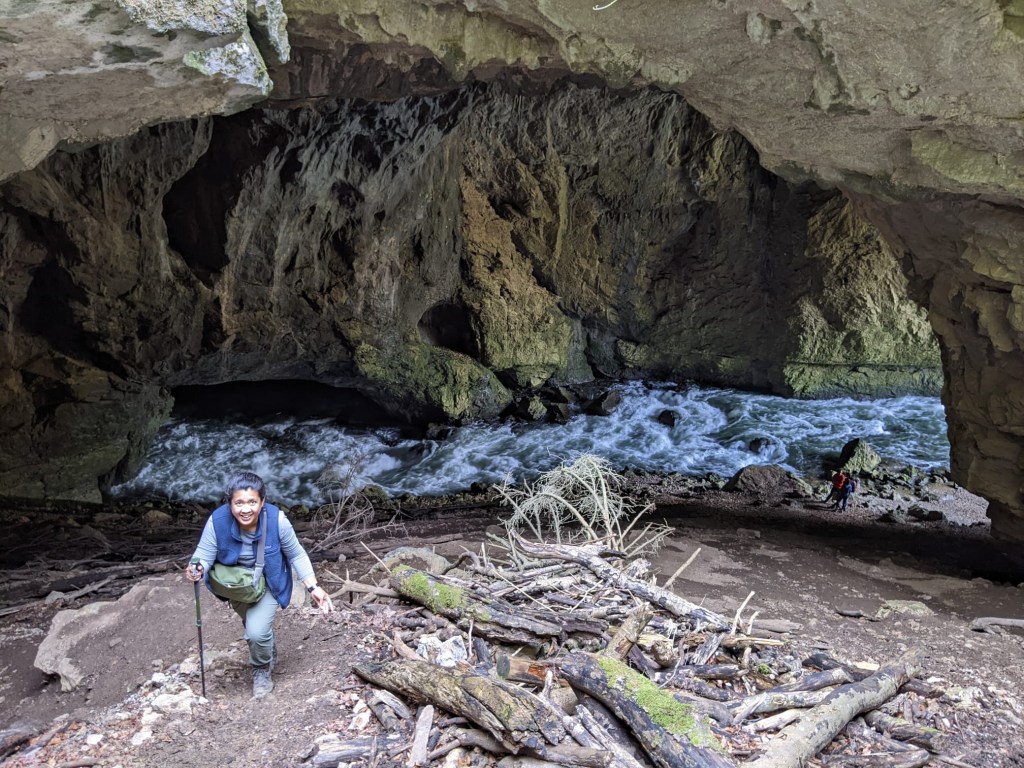
Tricky ascent back out 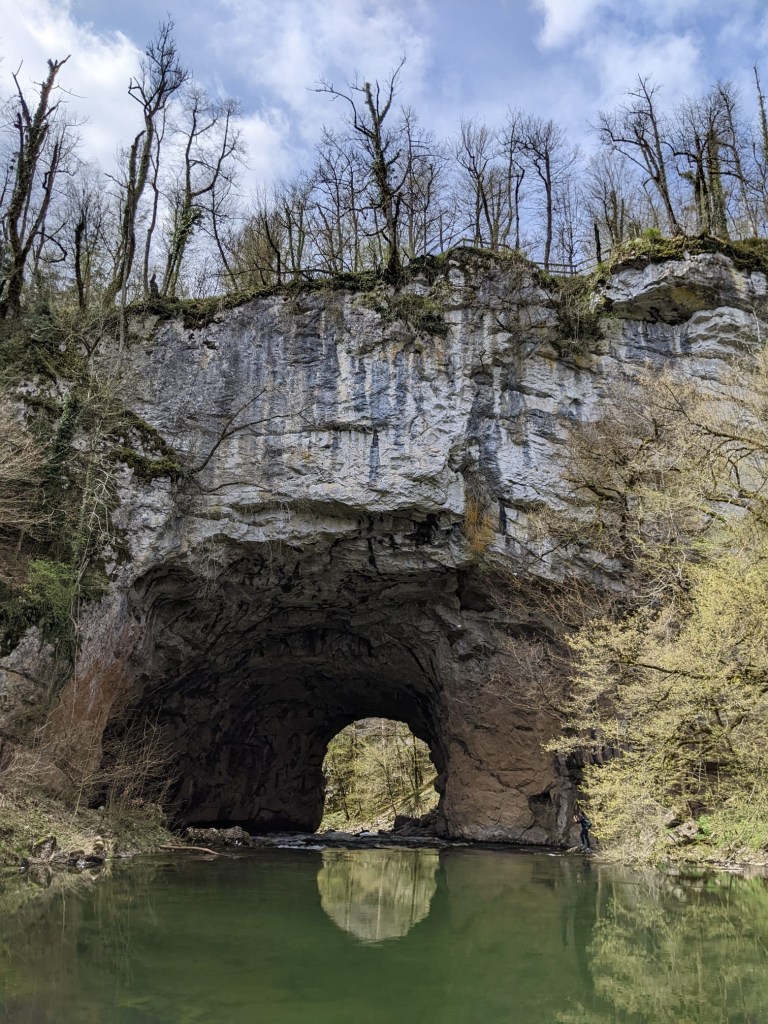
The Big Arch – a remaining section of the cave ceiling 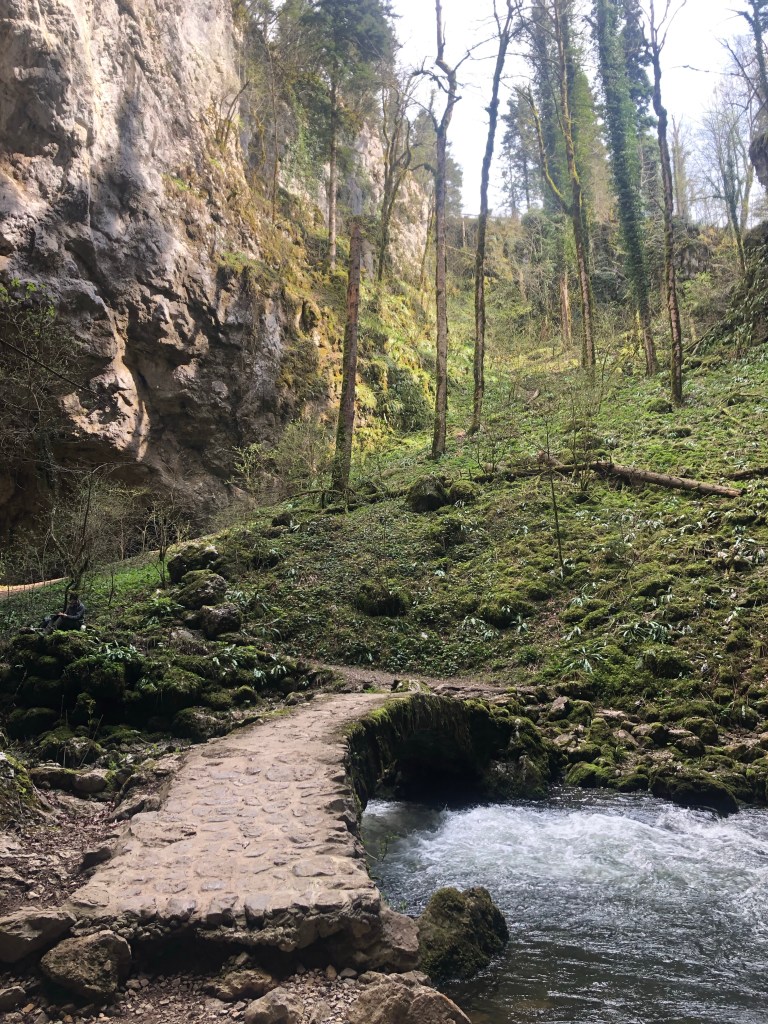
The pretty gorge by the Little Arch 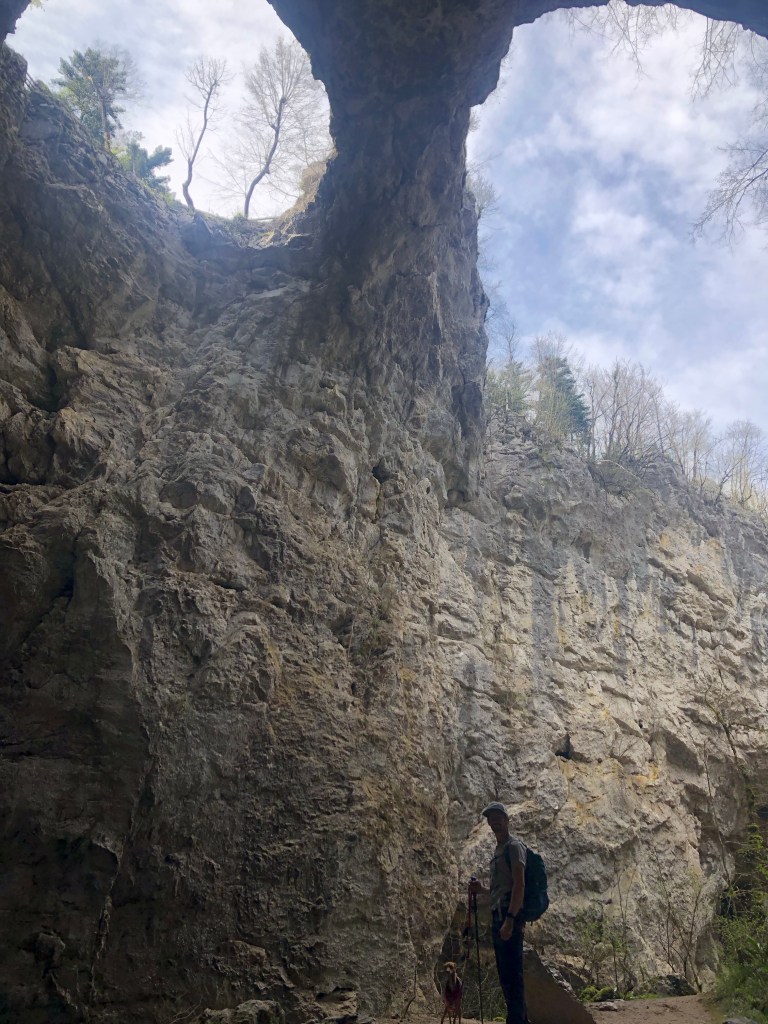
Little Arch – Remaining section of the cave ceiling 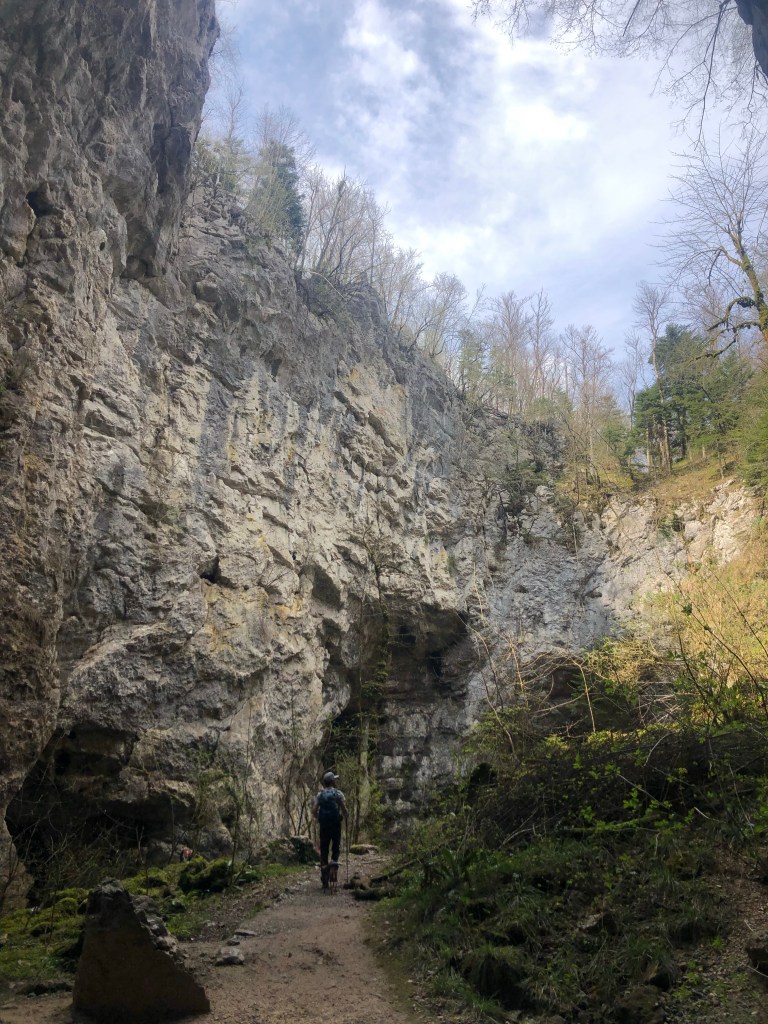
The gorge – this was once underground Škocjanska Jama Cave
Škocjanska Jama is a UNESCO world heritage site and it’s easy to see why. It is spectacular. It is a massive karst cave system which has two main sections, both of which are stunning in different ways. The first is a “dry” cave with the expected stalactites and stalagmites. The space and size of the formations are enormous, some estimated to be 100s of thousands years old. Our guide was refreshingly heavy on geological and historical information and didn’t go for describing which cartoon characters the stalactites and stalagmites might resemble.
The second section holds an underwater river and is even more impressive. The cave ceiling was 50m high. It was full of mist due to recent rain swelling the river, which added to the impression of being in the Mines of Moria from Lord of the Rings. The river runs in a gorge that is many stories below you as you enter that cave. There is a bridge that you pass over which joins paths on opposite sides of the gorge. We did our impressions of Gandalf saying “none shall pass”. You can also observe tenuous paths and steps created long ago by original explorers. There are high water marks from previous heavy rain floods. The exit tunnel the water passes through is smaller than the entry, so in periods of heavy rain the cave fills. The idea of the cave system filling with millions and millions of litres of water still seems hard to conceive.
Taking photographs inside the cave is not allowed. This is understandable given the fragile and unique environments in the caves, and the risk that taking photographs could cause damage to it’s ancient formations. So we can’t share any with you. In any case it’s well worth a visit.
After exiting the cave we took Zeus, who had been snoozing in the campervan, for a walk around the area surrounding the cave’s entrance, basically the lip of an area where the cave ceiling has collapsed. It was nice to get more context about how the caves formed.
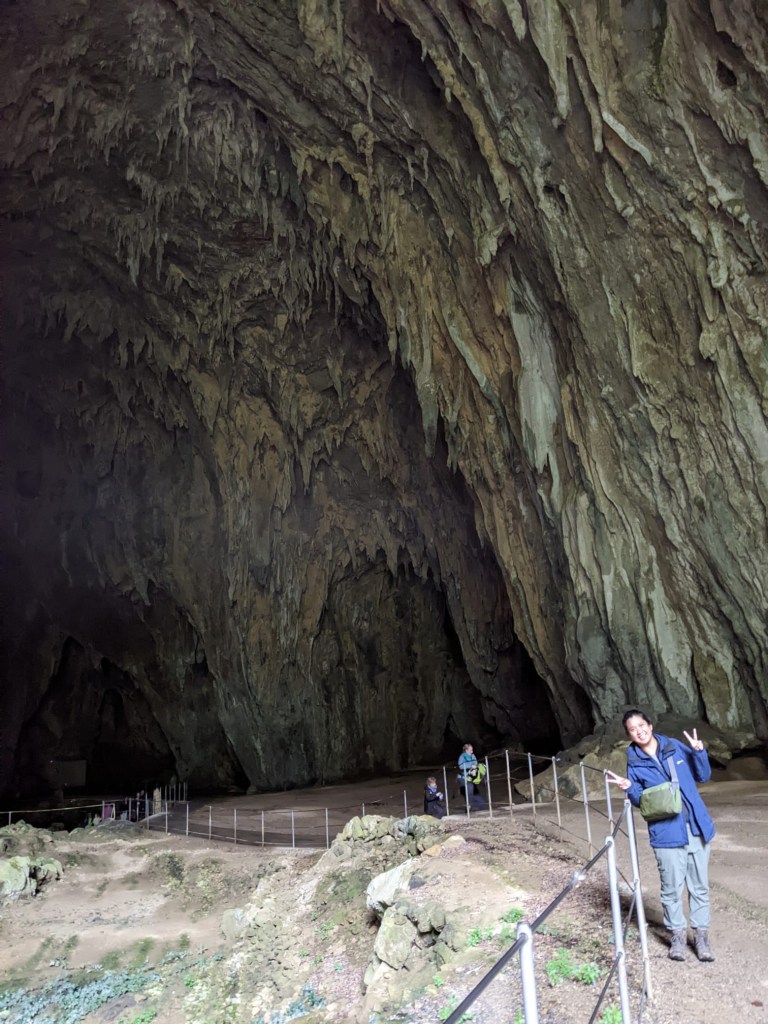
Cave exit 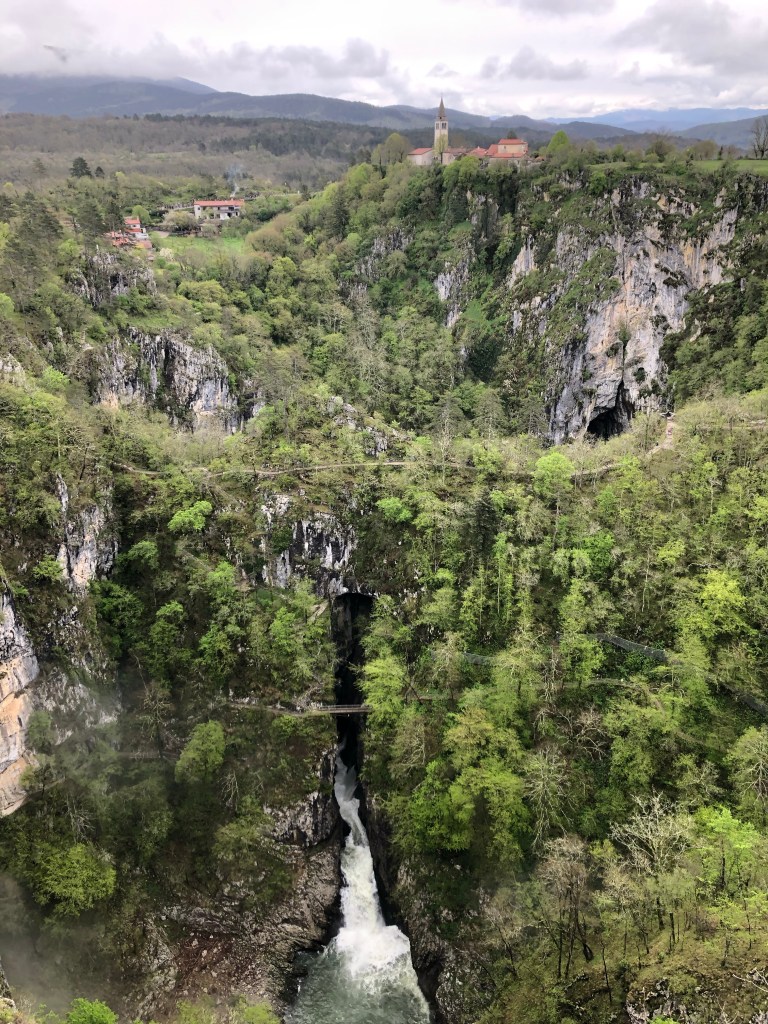
Aerial view – the sections where the cave ceiling collapsed are obvious 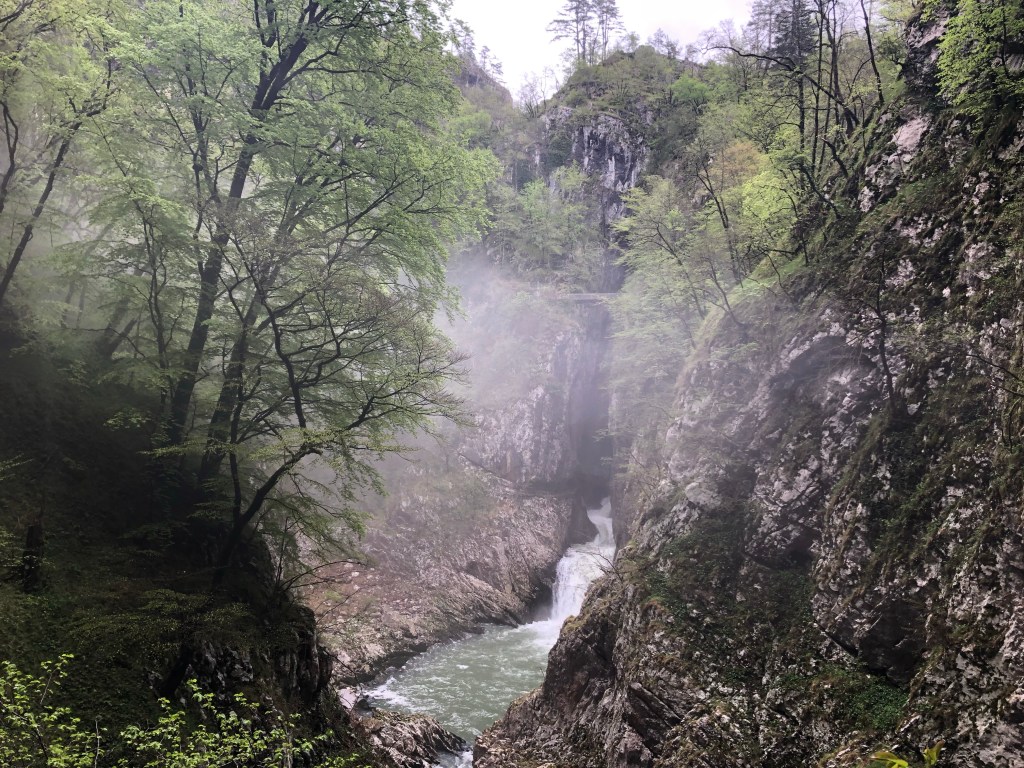
Cave river entrance – It has a microclimate with fauna found in colder climates Vipava Valley
From Škocjanska Jama Cave we headed north to Vipava, a famous Slovenian wine region that sits in a pretty valley.
We stayed at Kamp Vrhpolje, another campsite that seemed to be in someone’s garden. They were very kind with a welcome glass of their own wine, and provided pointers on local wine makers and restaurants.
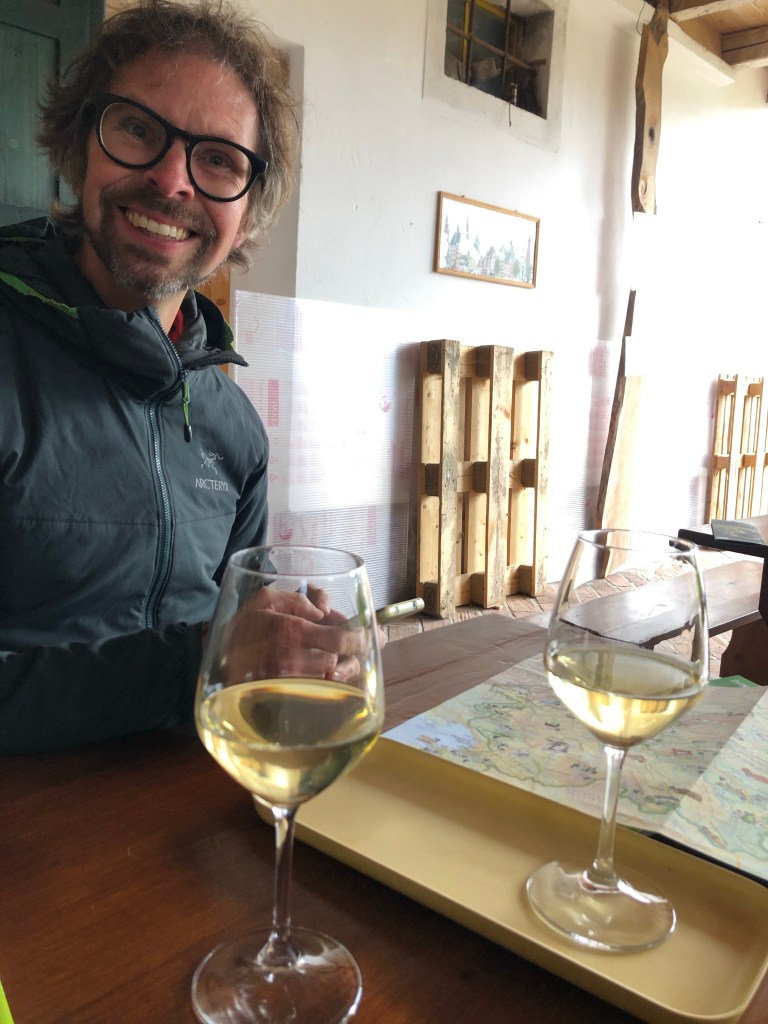
Welcome glasses of wine – how civilised! 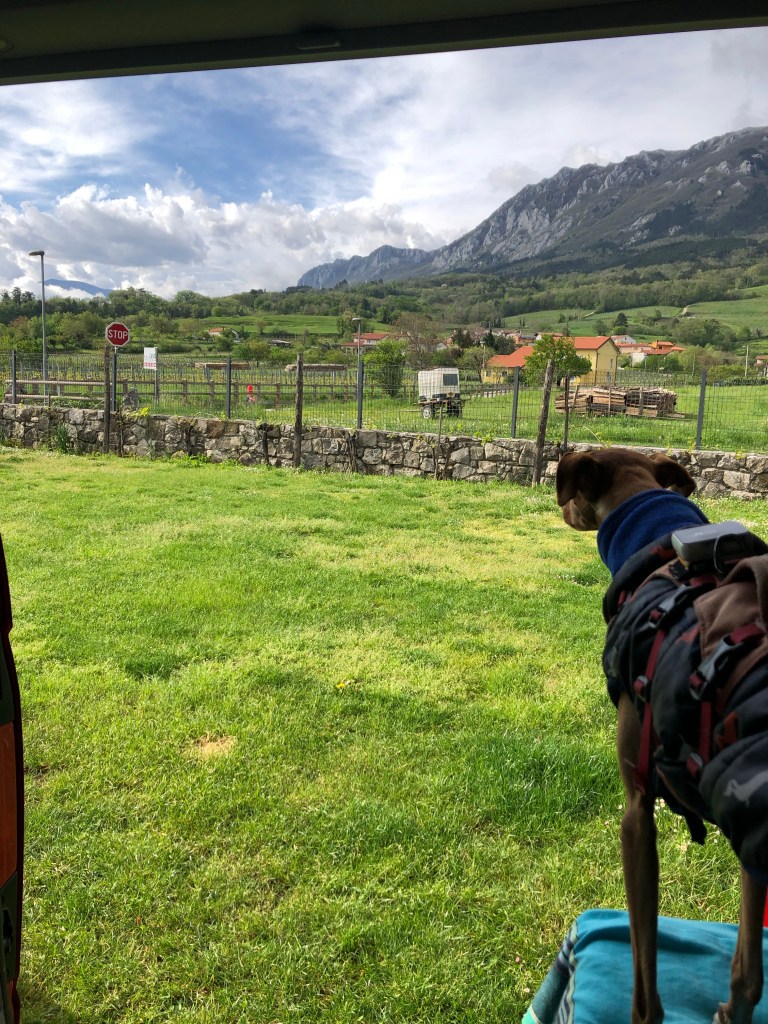
Zeus admiring the view from the campsite The next day we did a cycle tour of the valley and some wine producers. To start, we rode from our campsite just outside Vipava town, along the valley to Ajodovščina, a bigger town where we tried bread containing a hotdog from a local bakery, and then some gelato. It was a pretty hot day.
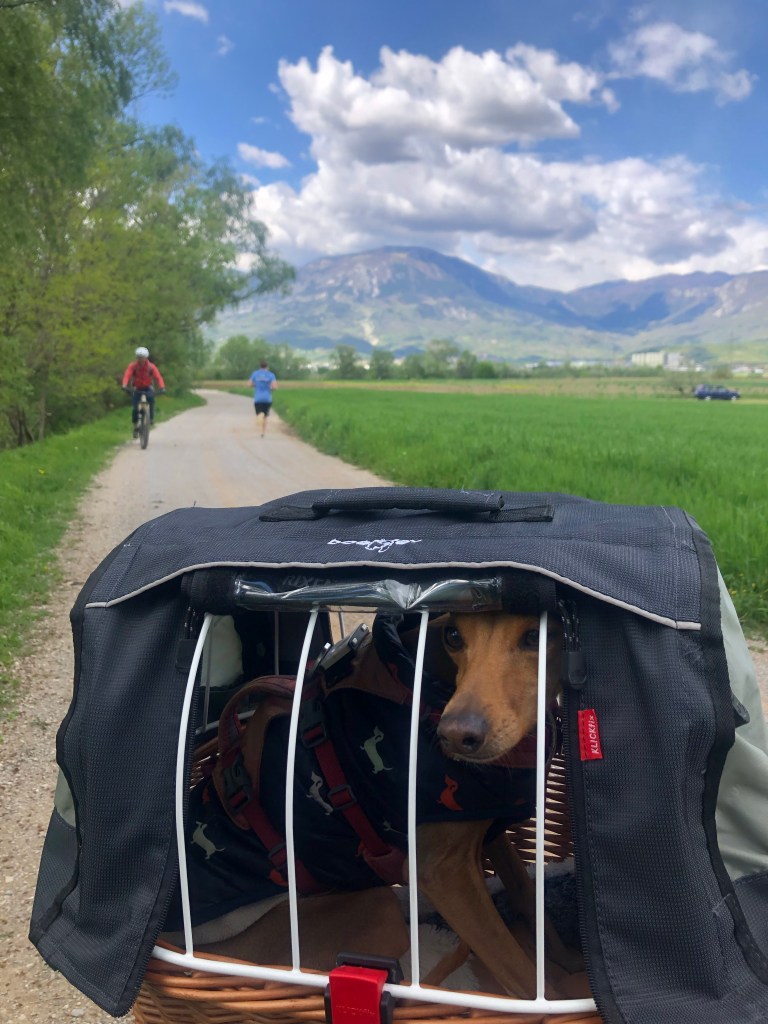
Relaxing ride 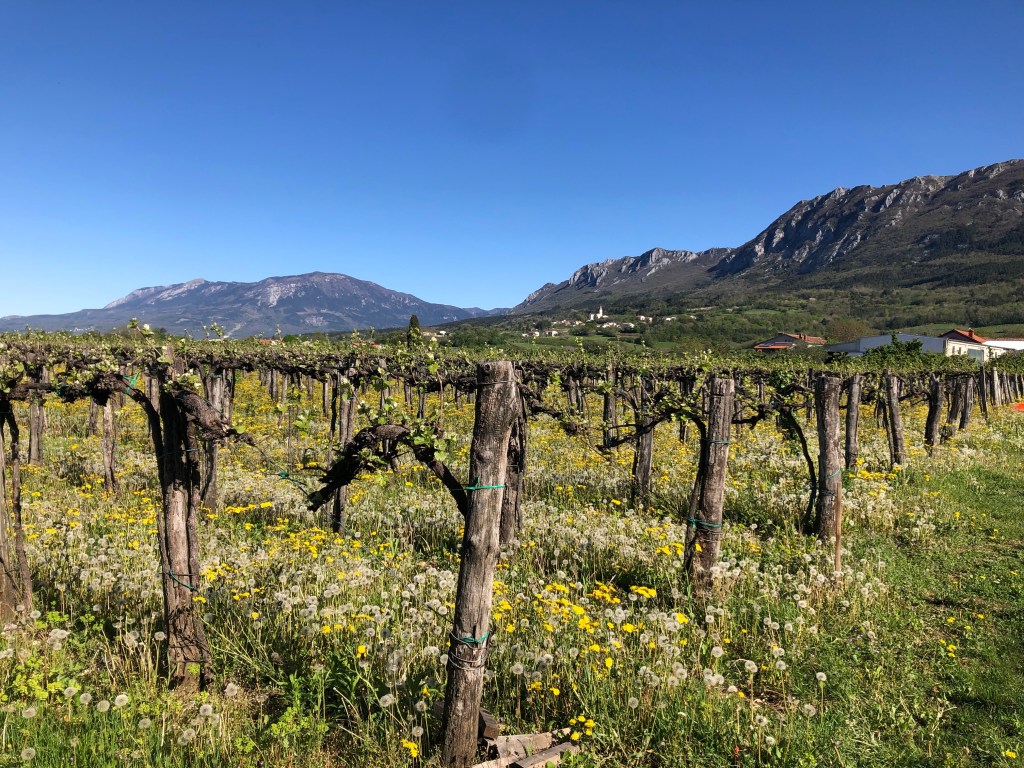
Vipava vineyards 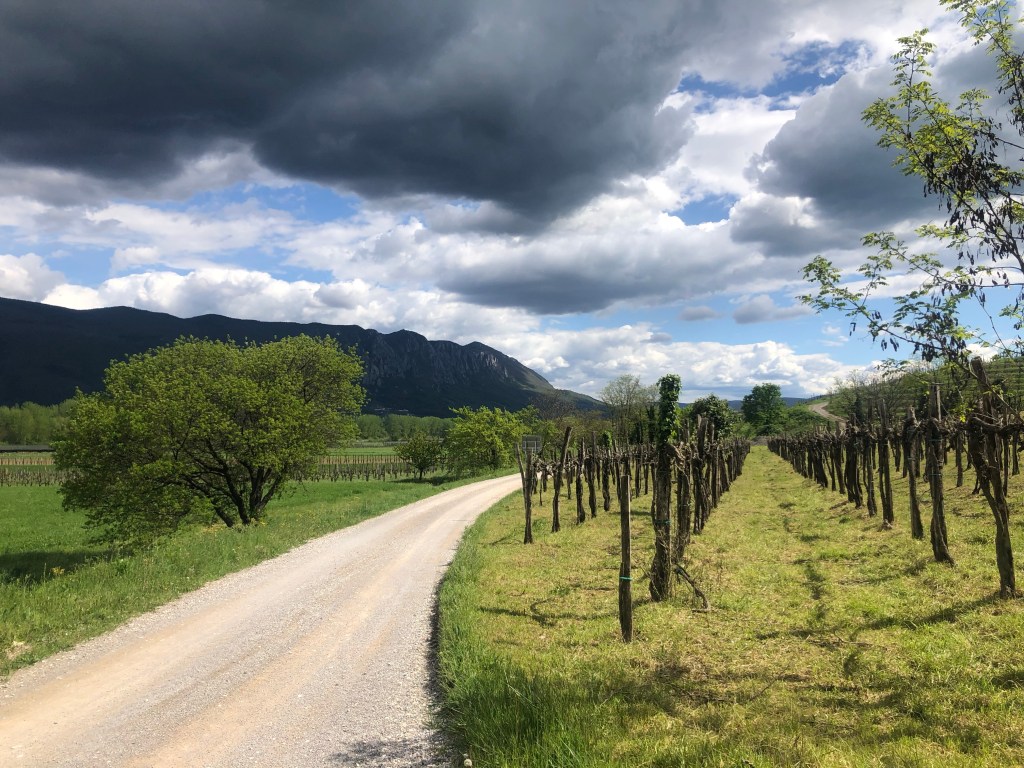
Vipava valley – so pretty We then followed the river back along its southern side to take in some wine producers. We were out of season so the vineyards we’d planned to visit weren’t open. We made it as far as Slap, a town that our campsite lady had recommended. There we found Vino Žorž, who could do a tasting for us, but since we didn’t have a reservation we’d need to wait an hour. No problem.
Petrič Winery
We rode 2 minutes up the hill and found Petrič winery, another producer. The owner was out, but his mum was in. Mum didn’t speak any English and we can’t speak Slovenian. She called her son who runs the tastings and speaks English and he said “Give them wine”. So we sat ourselves down at an outdoor table in the sunshine, and mum brought over 4 wines to taste – 2 local varieties Zelen and Pinela, a dry Rumeni Muškat, and a red blend whose primary grape was Barbera (the region grows some Italian varieties given its proximity to Italy). She asked (via a grandchild translator who spoke English) whether we wanted anything to eat. We politely declined so she gave us some nice pasta. We found Slovenians to be very warm and friendly. We left with 2 bottles of wine – the max we could carry on our bicycles.
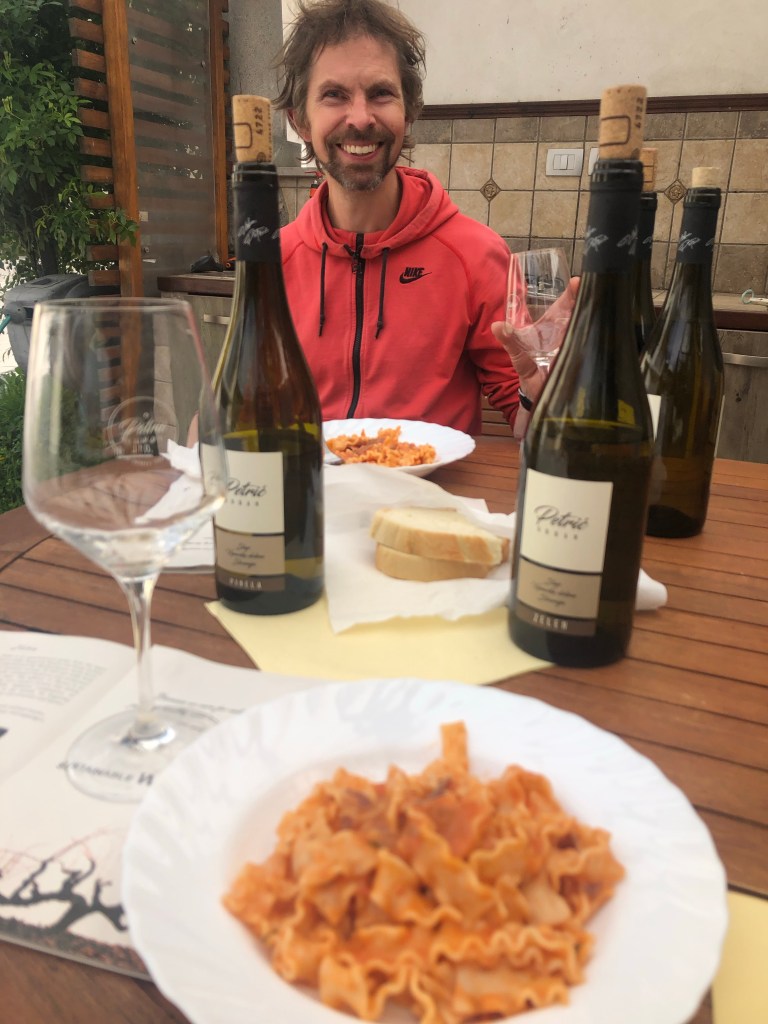
Surprise plates of pasta 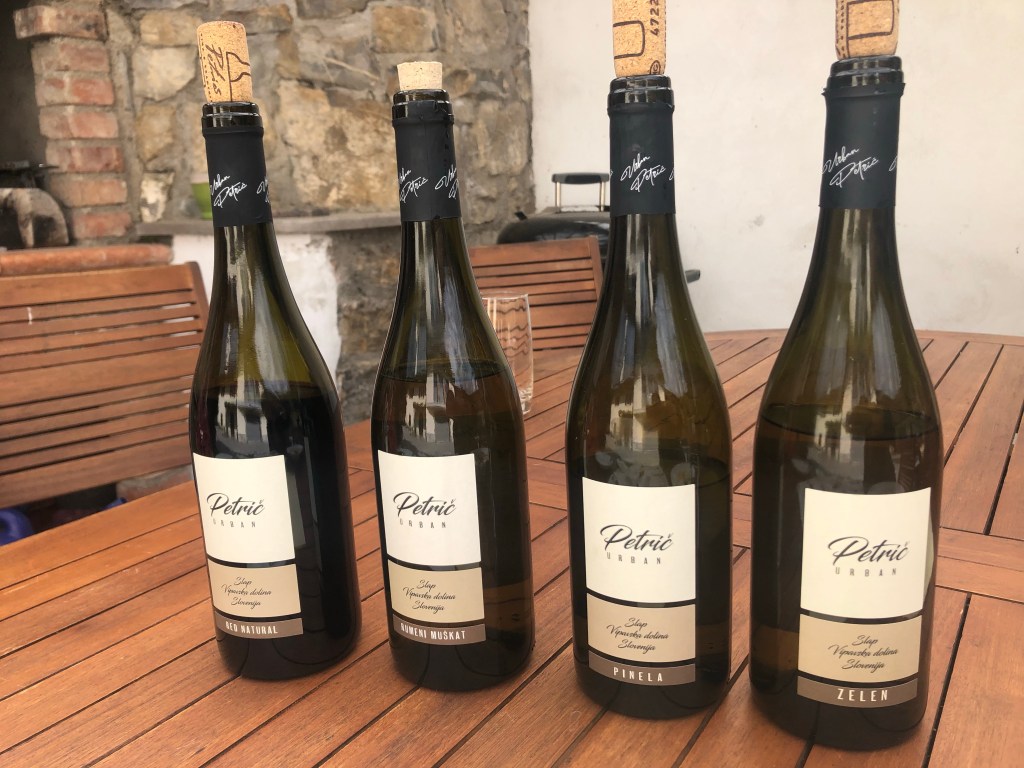
Petrič wines tasted Winery Žorž
After that warm up we headed back to Winery Žorž, where we had a really enjoyable tasting of 7 wines with lots of delicious local charcuterie and cheese. Our host Anja (also the winemaker – her family has been making wine 1696) also shared some really interesting insight on generational changes in Slovenia – she didn’t think the positive open spirit that we’d observed in many people extended to her parent’s generation who she considered more insular and guarded. The younger generations, she said, had a collaborative spirit as a counter reaction to their guarded parents. She talked about her generation of winemakers who openly shared ideas and feedback with each other, in the belief that one’s success was everyone’s success. She talked about the younger generation’s willingness to try new things/be less bound by tradition. For example, one of the wines we tasted was a Cabernet Sauvignon that they grew in the valley in a less sunny spot, and the resultant wine was more subdued and refined, not your usually big bold Cab Sav. They also made orange wines (very trendy in London), which we learned was a wine made with white grapes, but with the method for red wines i.e. includes a maceration step.
We enjoyed the wines and bought 5 bottles. Since this was the last leg of Part 1 of our trip, we’d abandoned the 6 bottle limit in the van on the pretence we’d be taking gifts back to the UK. Cycling an additional 5 bottles back to the campsite wasn’t possible however so we picked them up in the van the next day.
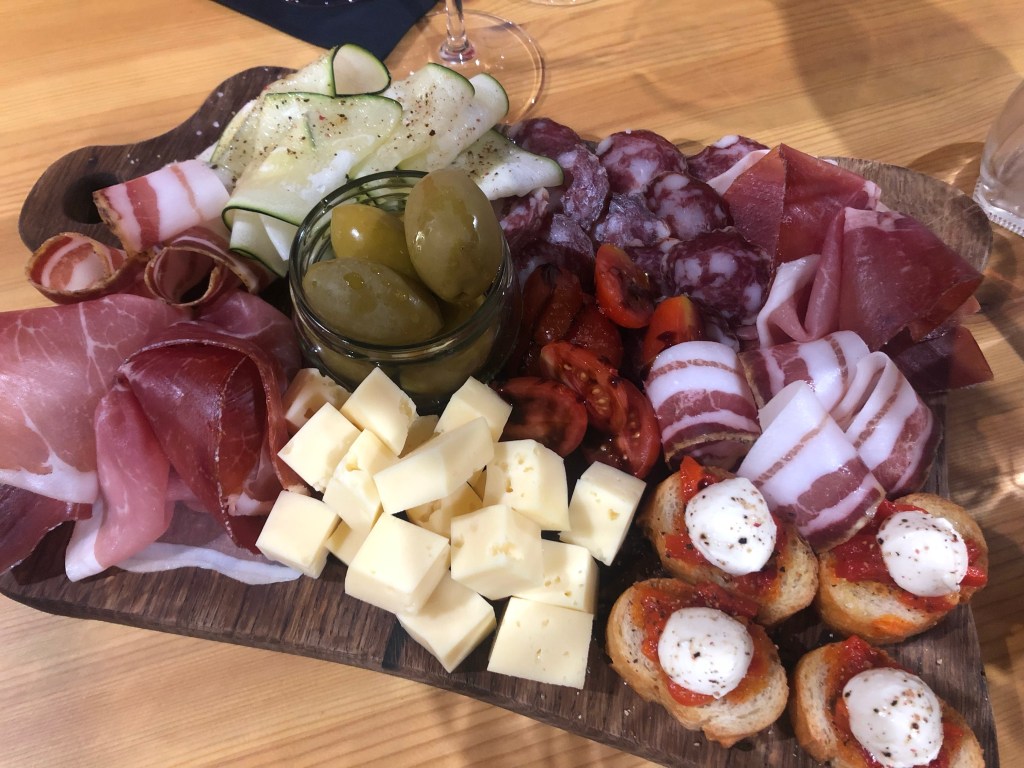
Amazing wine tasting spread at Žorž At that point we were still capable of riding our bikes, but it needed extra concentration to get back to our campsite. In the evening we walked up the hill to Gostilna Theodosius for a very nice meal and despite good intentions tried a couple more glasses of wine with our meal.
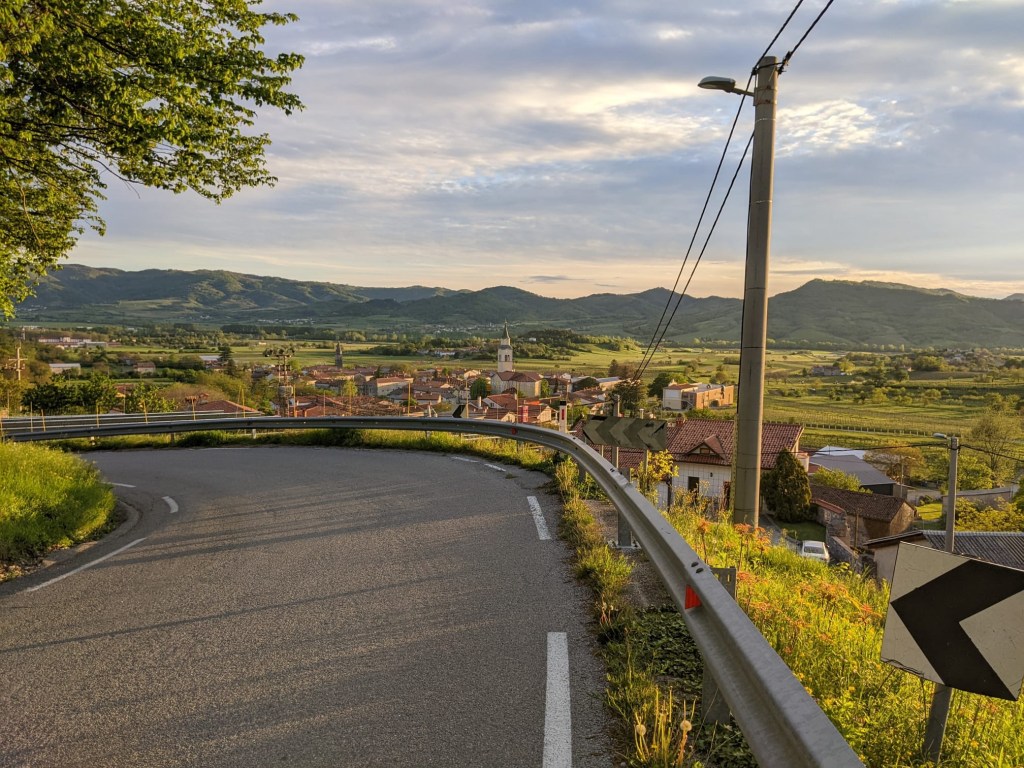
Beautiful dusk lighting on our walk to Gostlina Theodosius 
Their interpretation of English roast beef. Wash delicious paired with a Zelen. The following day Aileen could afford a leisurely start, but James had committed himself to exploring the local mountain bike trails. We’d seen a few people riding mountain bikes and a bike shop in Ajodovščina. It seemed like there was a strong local biking scene. The trails James rode were probably some of the best built and most varied of our trip to date. More fuel to the idea Slovenia deserves a return trip.
Northwest Slovenia – Majestic Soca River Valley and Lake Bled
From Vipava, we headed northwest. Northwest Slovenia borders the Alps of Austria and Italy. It is home to Slovenia’s tallest mountains.
We stayed at Kamp Koren, a campsite in Kobarid, along the Soca River valley which is famous for the crystal clear rapids of the Soca and high mountain peaks alongside the river. It is definitely a hot spot for wild water rafting – most of the people at our campsite were there for this reason – kayaks and drying wetsuits were littered all over the campsite.
First taste of Soca
There is a trail along the river that passes the campsite so we went for a late afternoon stroll the day we arrived. The scenery was breathtaking, with the crystalline river winding through majestic rocky mountains. We were keen to explore the area.
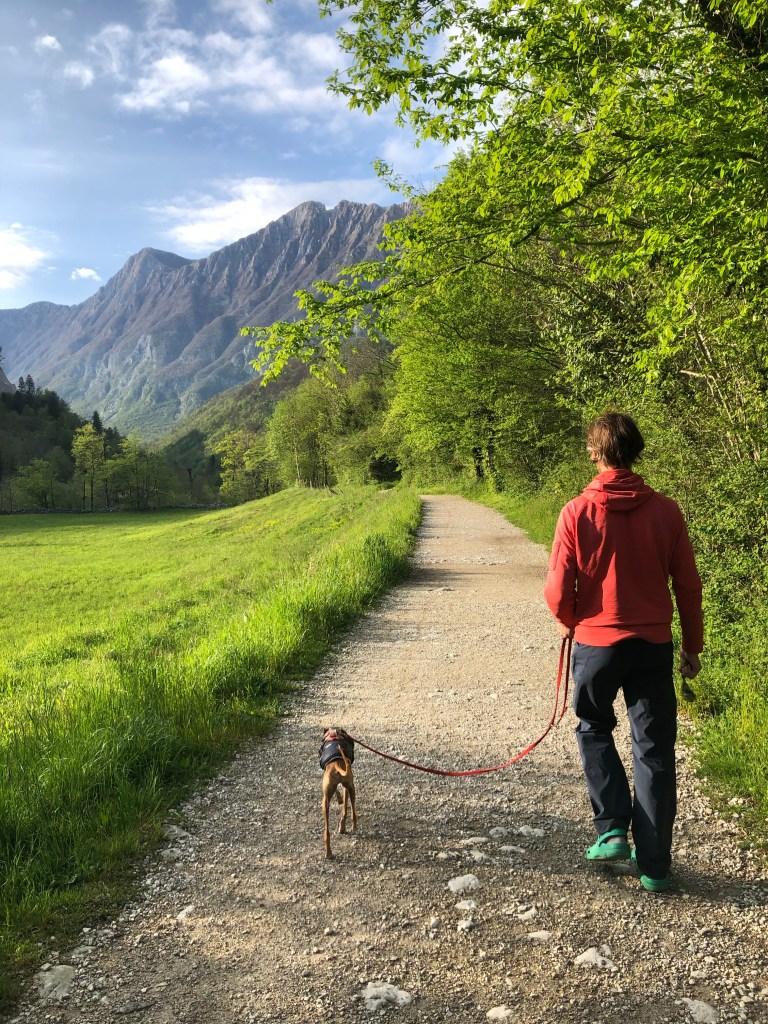
Dusk walk 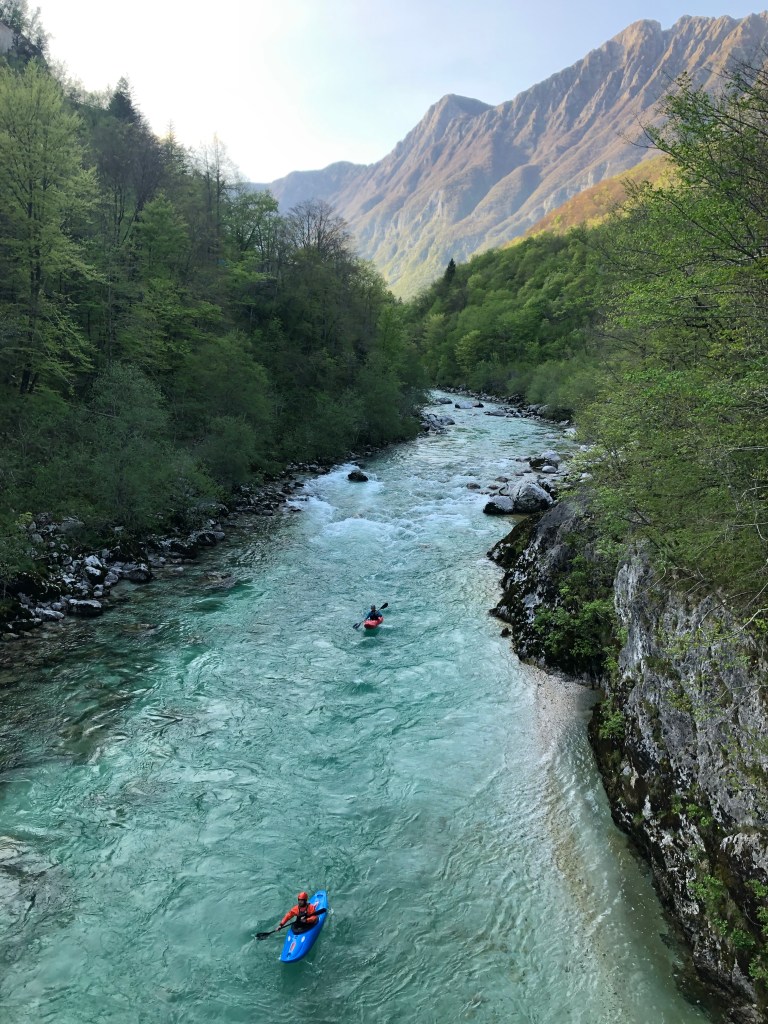
White water rafters on Soca River 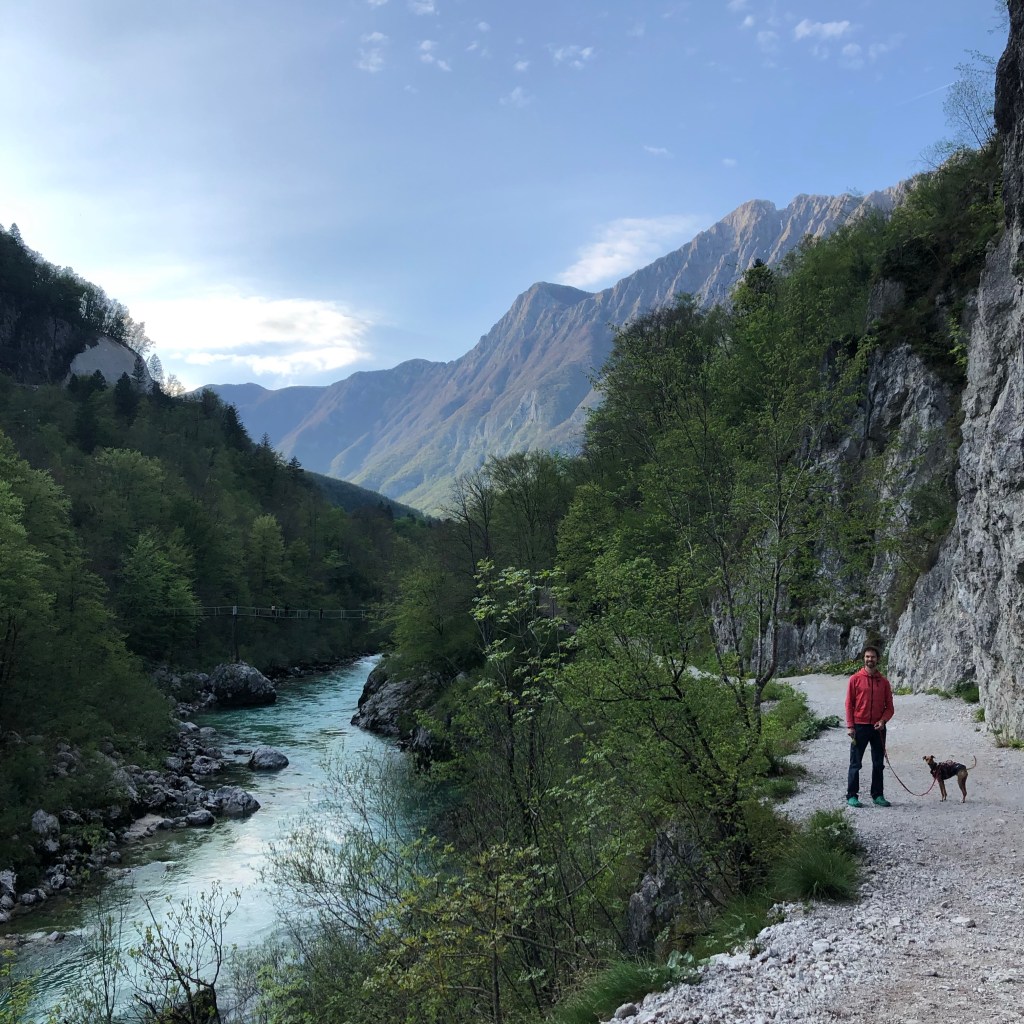
Soca River Valley – so beautiful! Kobarid Historical Trail
The next day we walked the Kobarid Historical trail taking in:
- The riverside walk we’d checked out the night before, but this time we went over the suspension bridge. Zeus was not a fan of the bridge.
- A pretty extensive WWI Italian bunker with various tunnels and rooms
- Kozjak waterfall – a very picturesque waterfall and worth the 3 EUR entrance fee
- Tonocov Grad – a copper-age hilltop settlement. It was quite a hike up and had excellent views of the valley so we stopped there for lunch. From the settlement, we walked down through a forested hillside to
- Kostnica Italijanskih – a Mussolini-era cemetery and memorial for the 7014 known and unknown Italian soldiers who perished in the area in WWI
- Kobarid town – a small pretty town – we needed an ice cream and couldn’t find one quick enough
- Napoleon bridge – a bridge over the Soca river right by the campsite. It received its name when Napoleon marched over it a day after WWI had been declared.
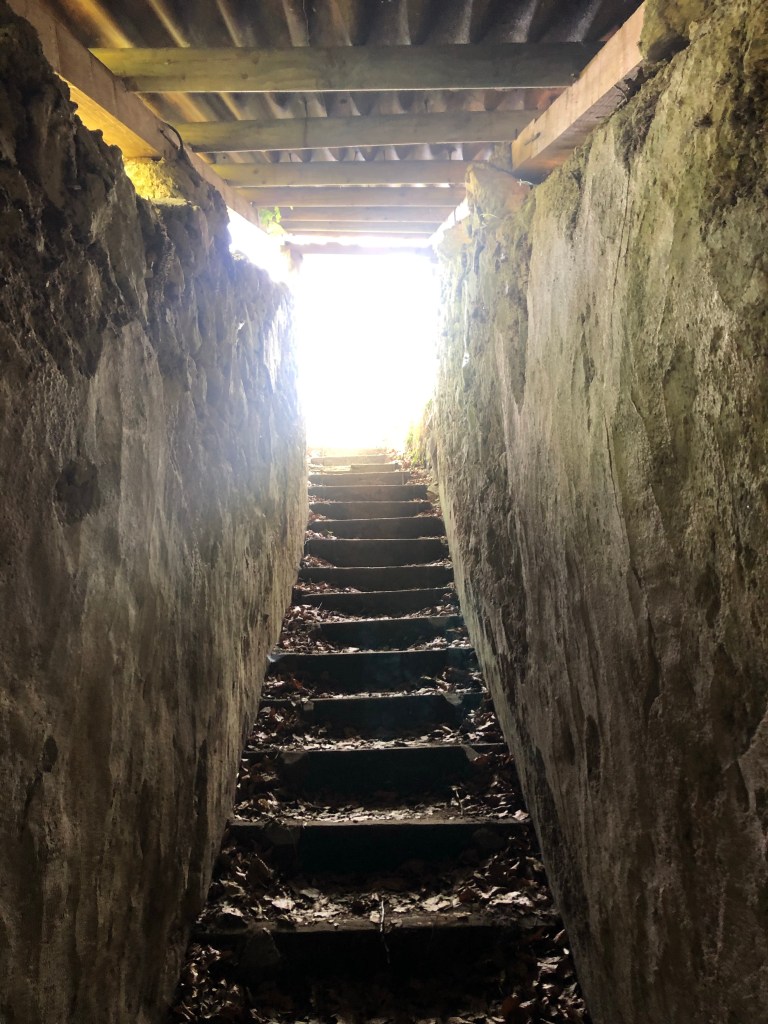
Italian WWI bunker 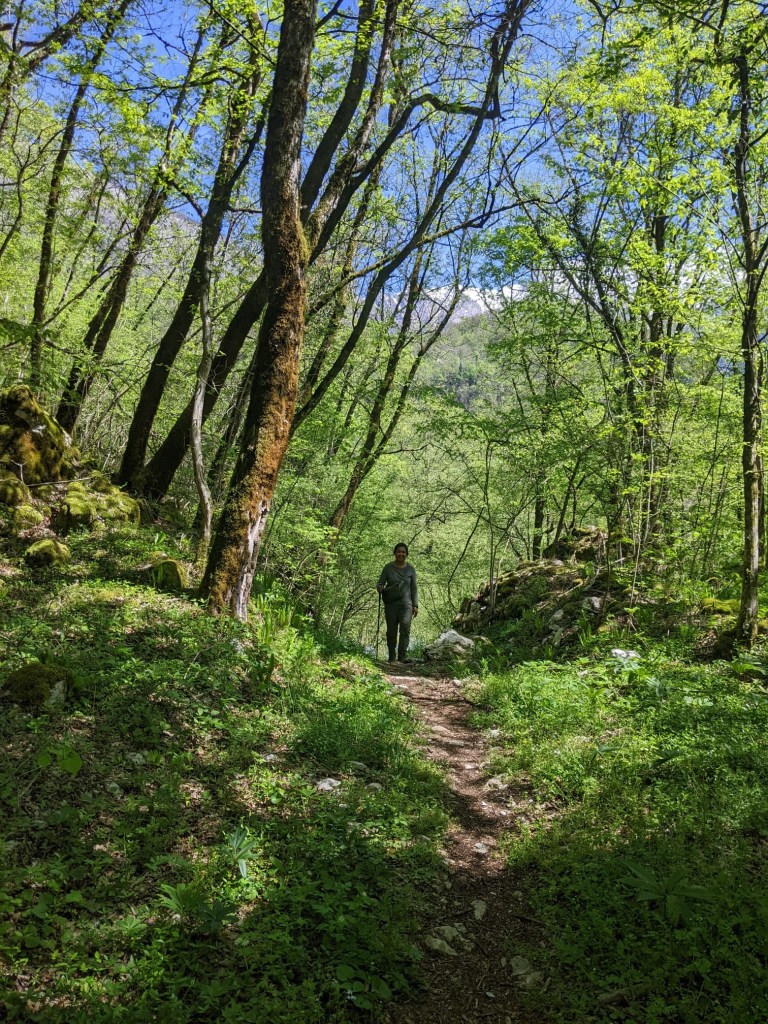
Forest of hellebores 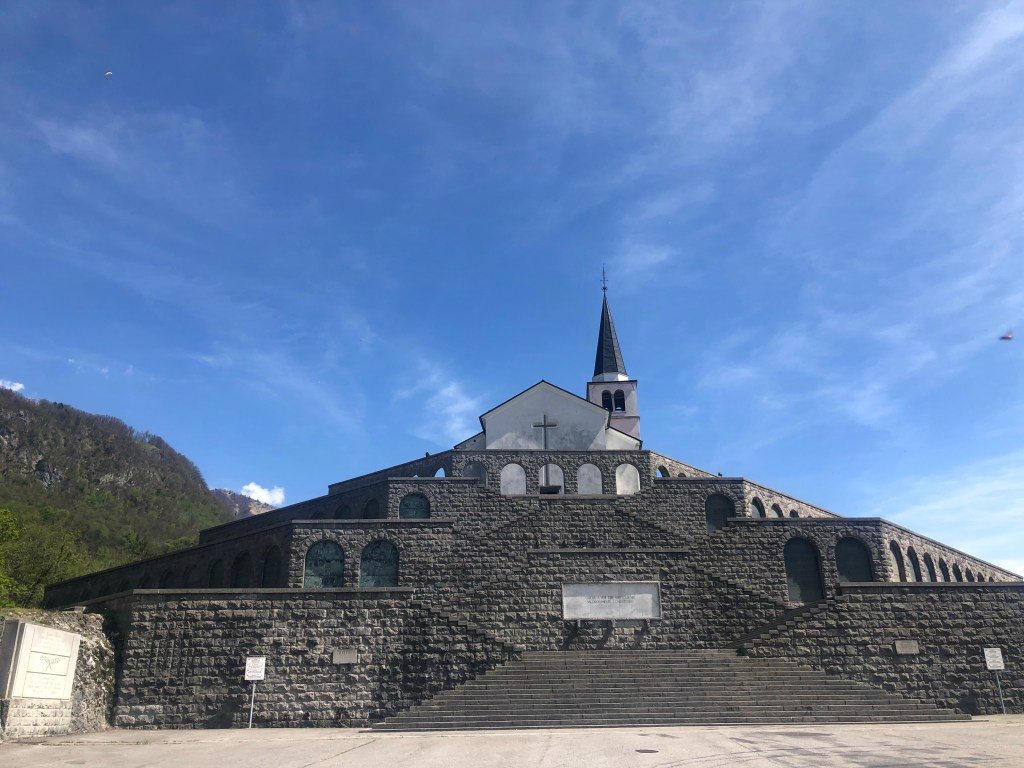
Kostnica Italijanskih 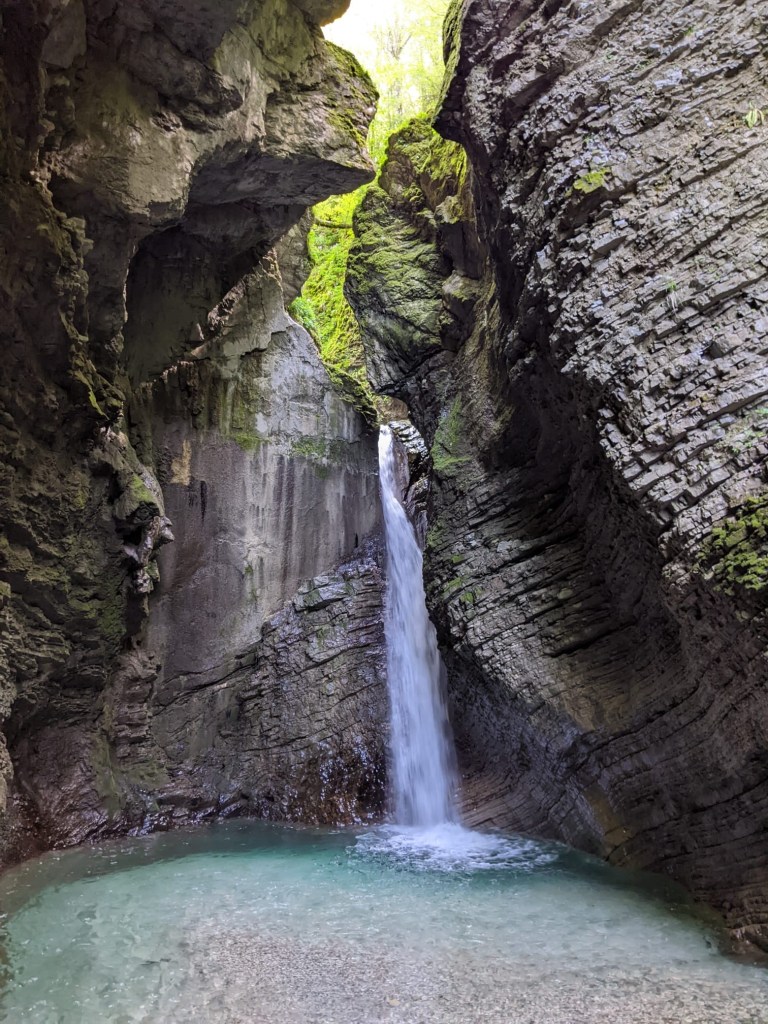
Kozjak waterfall 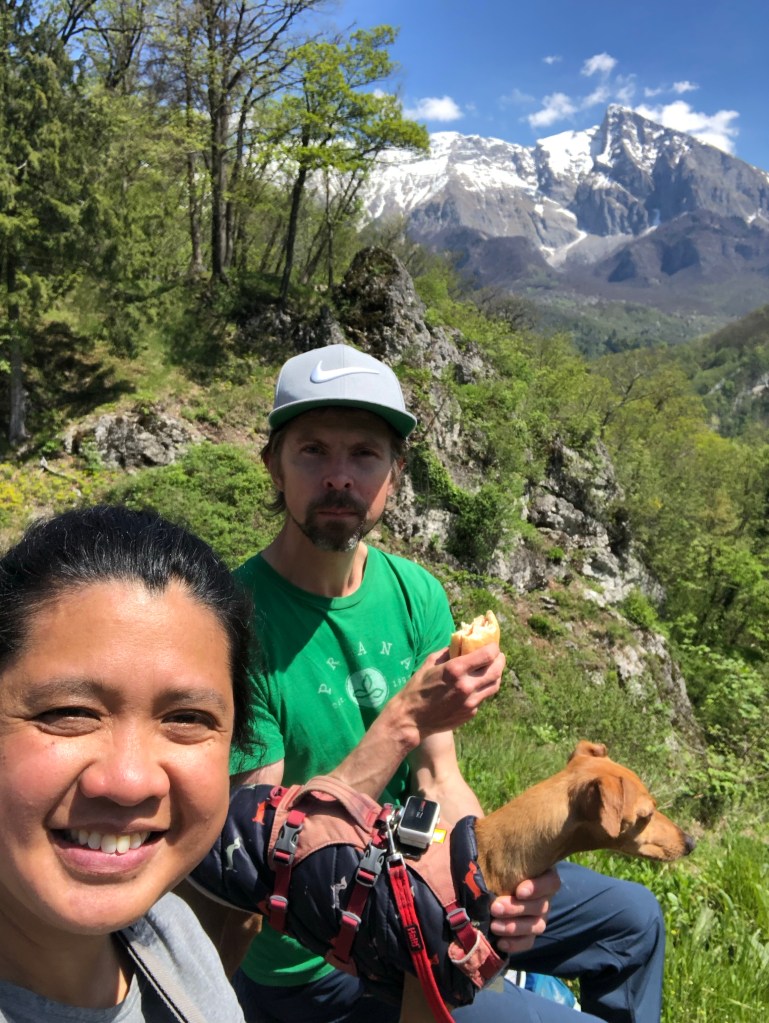
Tonocov Grad – Lunch with a view Soca Valley is definitely a place we’d like to return to. There looked to be a lot of hiking in the area including one to Soca gorge that we’d hoped to do but time and weather did not permit. The mountains look inviting for mountain biking, nearby is Goriška Brda another famous wine region, whitewater rafting looks worth a try, and the region is linked to Triglav National Park via Vrsic, a famous mountain pass and feat of human engineering at 1611 m above sea level. The pass was still closed for the season when we visited.
Lake Bled – lake walk, last night meal and hotel
Lake Bled is one of Slovenia’s best known tourist spots. The lake nestles in the mountains, just outside Triglavski National Park, home to Slovenia’s tallest mountain, Triglav which sits 2,864m above sea level. Lake Bled has an island with a church on it, and a castle overlooking it. It’s a relatively compact lake, about 2 km across, the length of the competition rowing lanes that run from its furthest points. It is, understandably, a much photographed lake.
We arrived at our campsite, Camping Bled, which sits on the opposite side of the lake from the town, during a strong rain storm. The rain stopped shortly after we had checked in so we went for a short walk to the lake shore and took the same photos as everyone else, but they all look incredibly beautiful.
The next day we did the 6 km walk circumnavigating the lake and took the chance to relax before the long drive back to the UK. In the evening we checked into Old Bled House, a small dog-friendly and charming local hotel with a nice restaurant attached to it. We had a very nice last meal and good night’s sleep. The next day we began our long journey back to the UK.
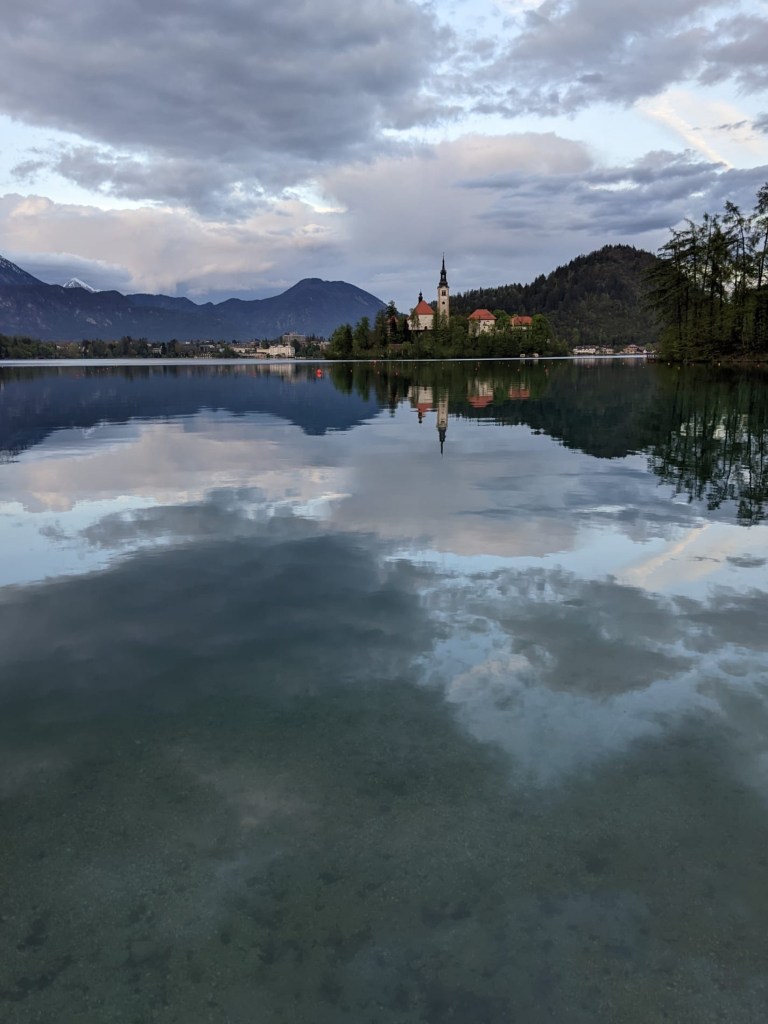
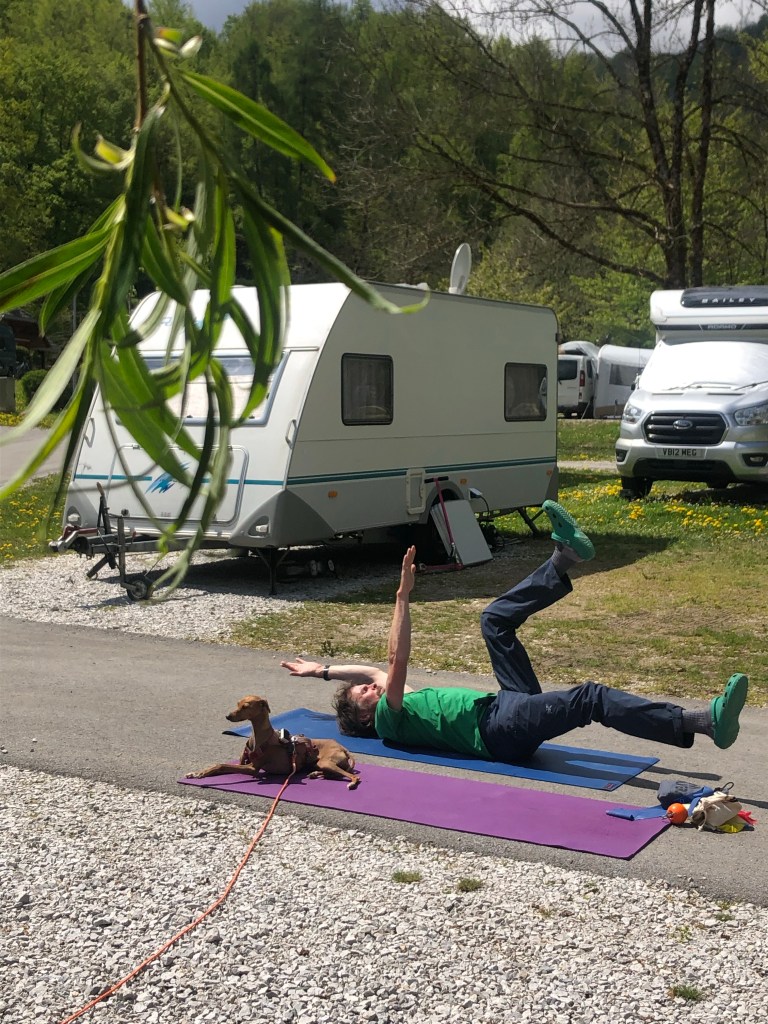
Campsite life – exercise and sunbathing 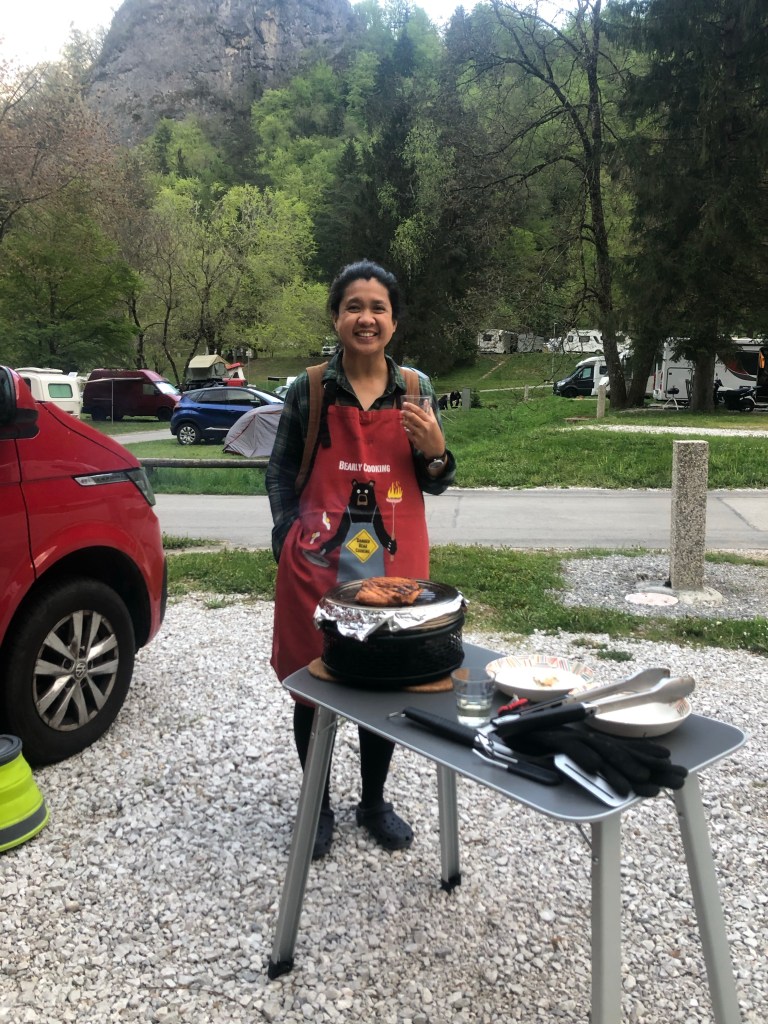
Campsite life – dinner prep 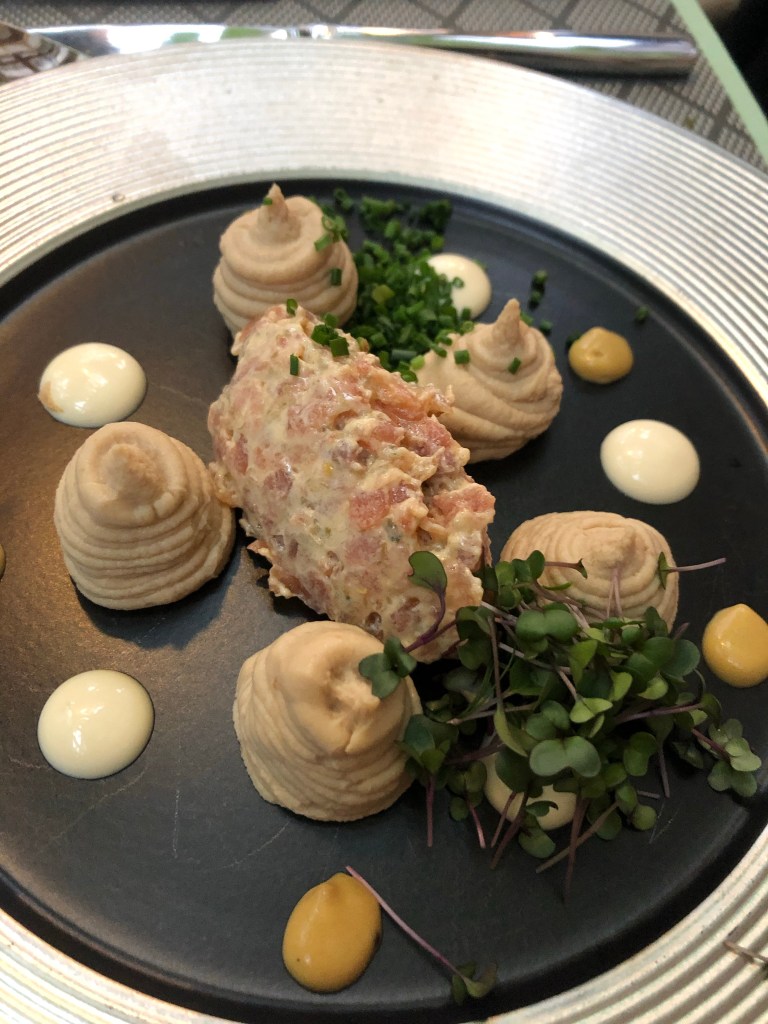
Last supper – Smoked fish in different ways 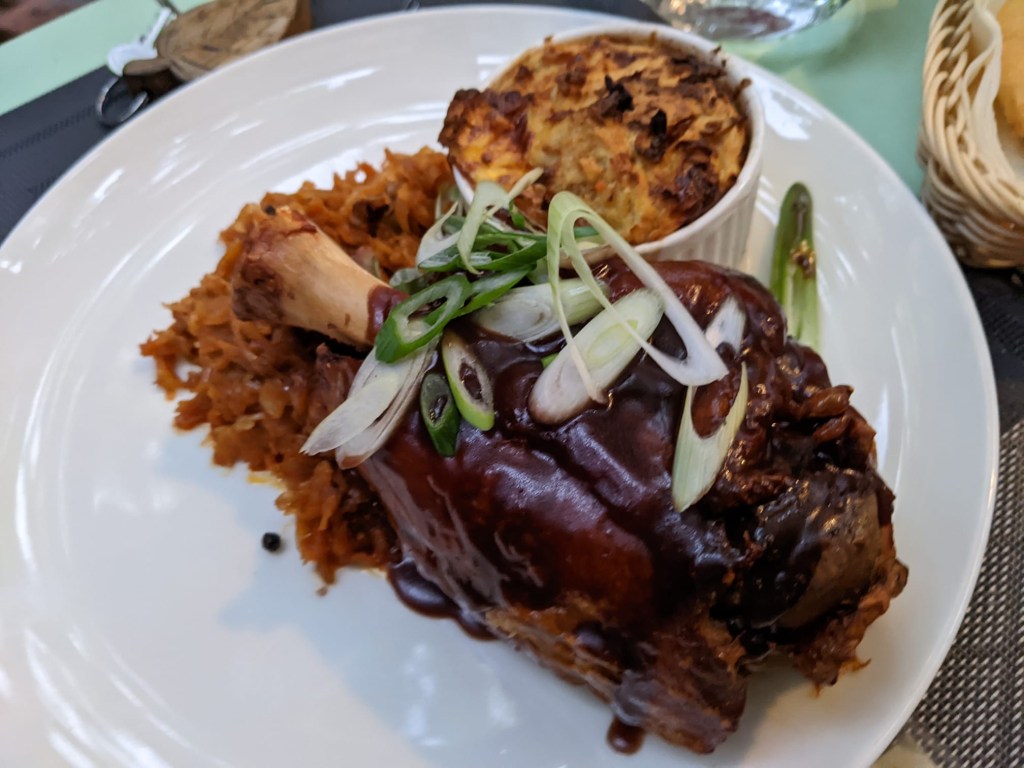
Last supper – Pork Knuckle 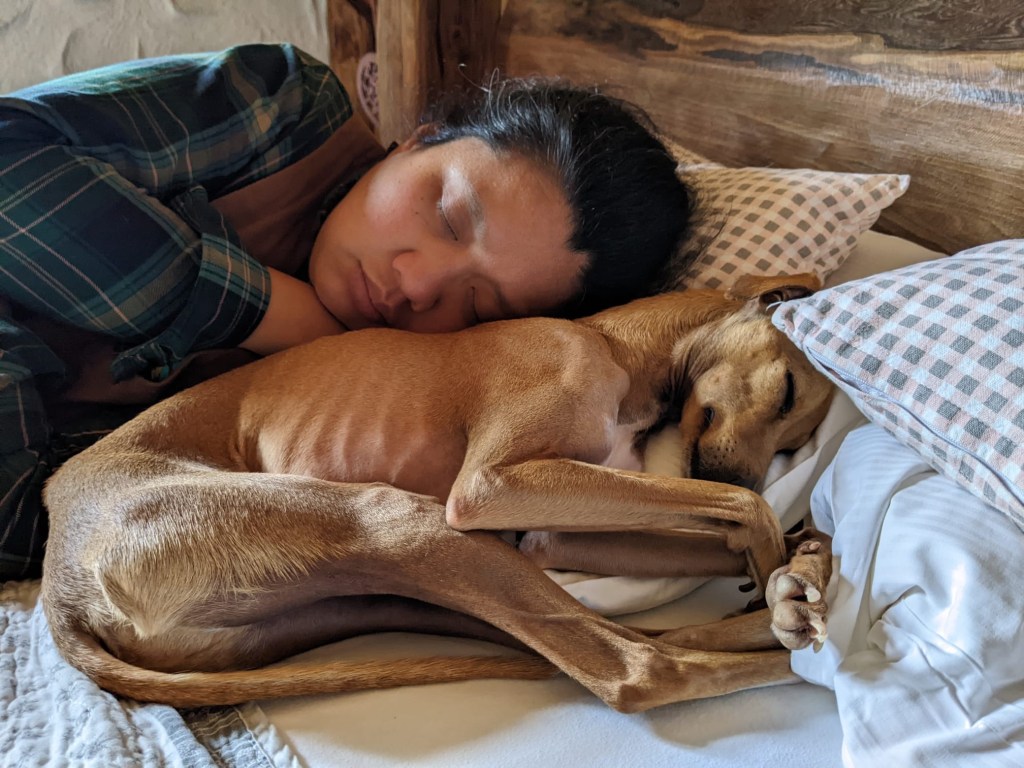
Good nights rest The bottom line
We really enjoyed visiting Slovenia. It’s one of our favourite countries so far on this adventure, and it’s a place we’d like to visit again with more time. It has beautiful countryside that one could actively enjoy and excellent food and wine. And we found the people to be warm, friendly, and positive, which was refreshing after having endured Brexit and UK’s economic woes in recent years.
What’s next
Our 6 month visa is expiring so we’re heading back to the UK to catch up with family and friends, and apply for another visa that will allow us to continue our adventure.
-
Week 22/23: Croatia
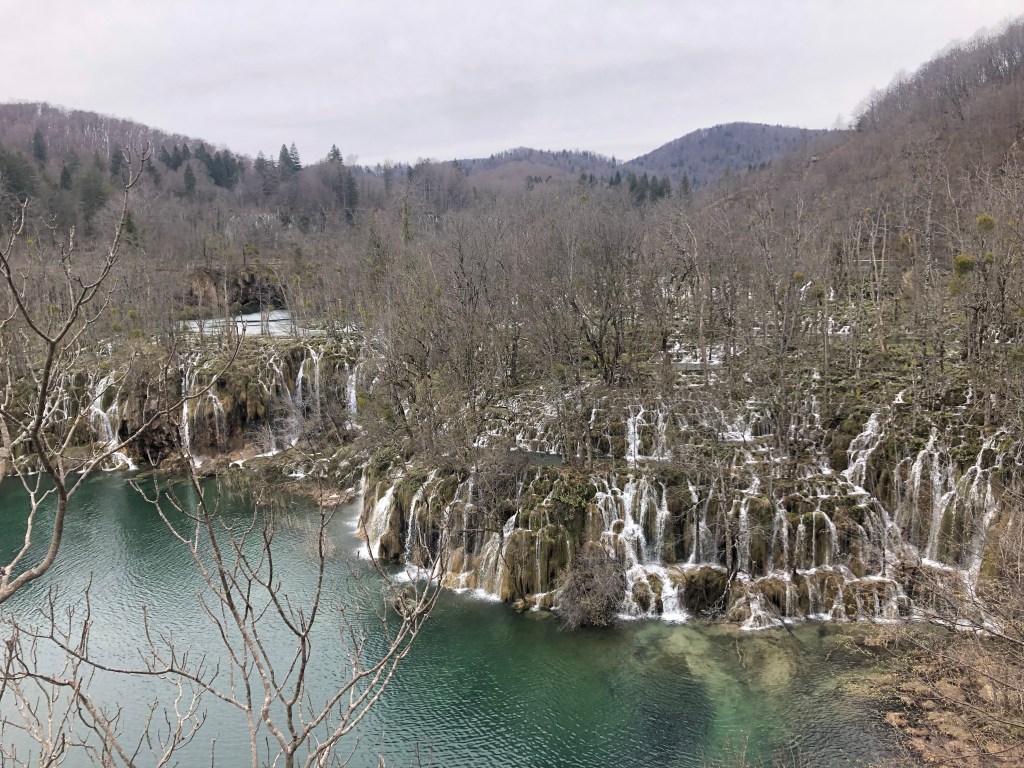
Highlights: Beautiful and interesting towns, good food and some appealing countryside and national parks, particularly if you like waterfalls. Also great bathrooms.
Lowlights: The weather was unseasonably cold and windy, locals kept assuring us it was more like January than April. And, both James and Aileen were sick on separate occasions.
Split
Our ferry from Ancona, Italy landed in Split at 7 am on a rainy and drizzly Saturday morning. We decided to find a site to stay overnight and wait out the rain. With the aid of the Park4Night app we found ourselves a space next to a church and the city’s football stadium.
The rain did eventually stop so we went for a stroll into town via a shopping mall with the amusing name of “Joker” where we picked up a local SIM card. Enroute we saw some impressive graffiti – most of the countries we’ve visited have had quite basic graffiti typically just tagging, so it was nice to see something with more artistry. Arriving in the city centre we swiftly took care of buying other essentials: good coffee and proper jasmine rice.
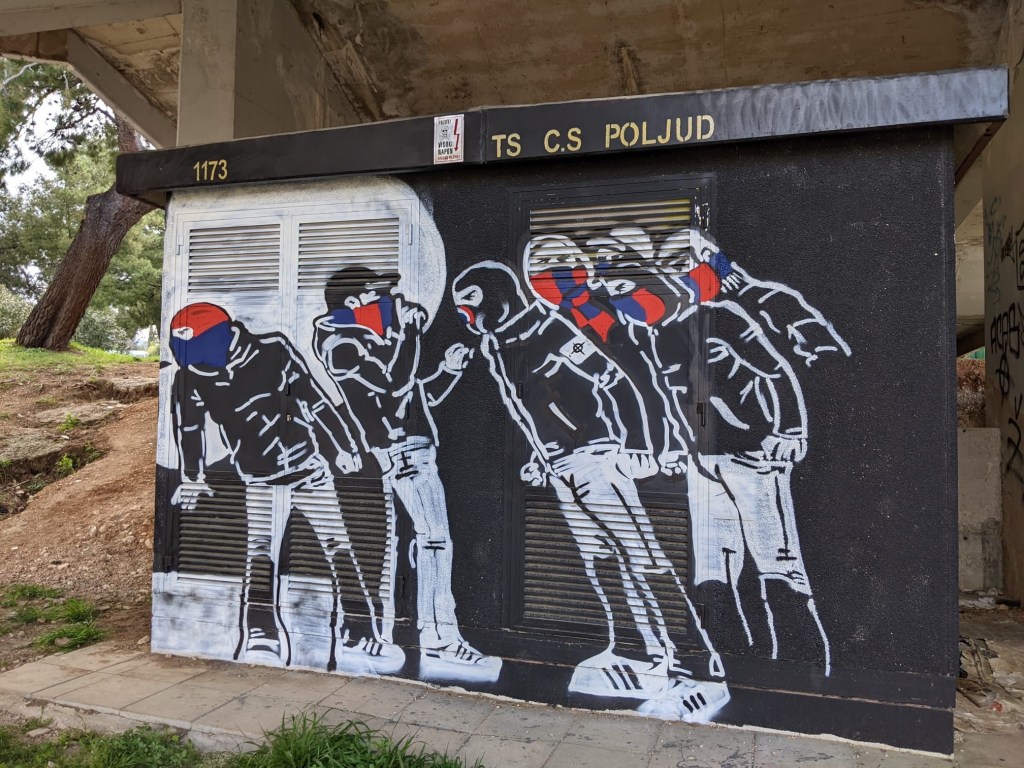
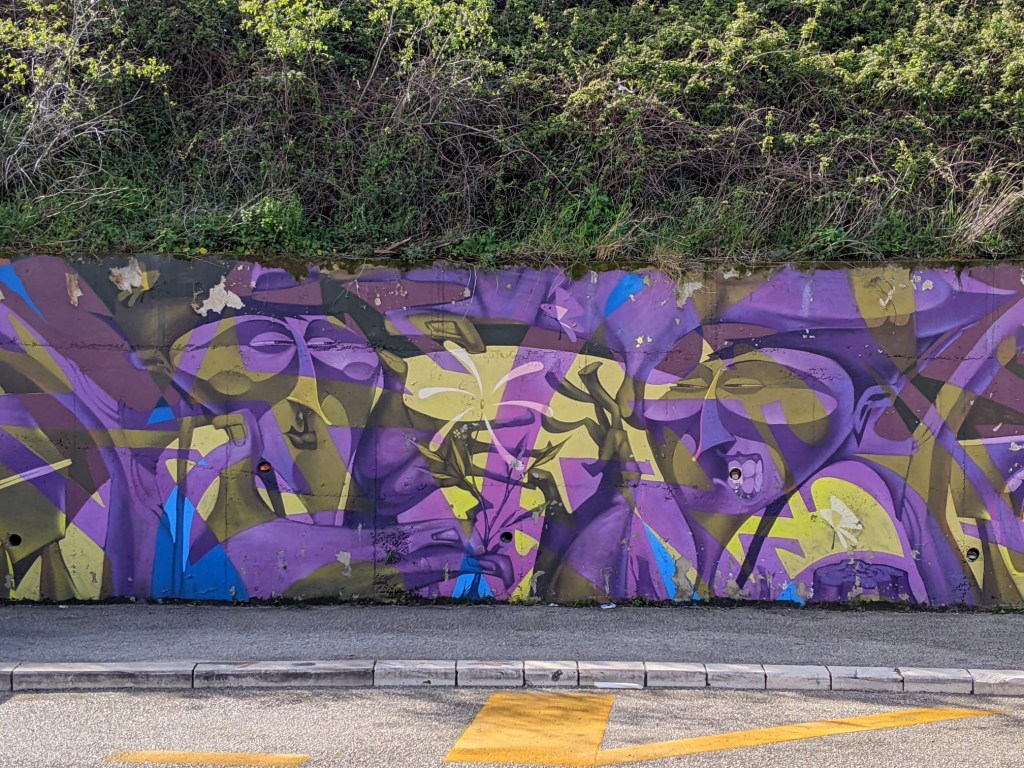
A sampling of Split’s impressive graffiti Having covered life’s basic needs we were free to enjoy the city. Split centre is relatively compact, and roughly half of the old town has been built incorporating the structure from the previous Roman palace of Diocletian. It’s quite a fascinating place and well worth the visit. As the city developed over the years it maintained and “re-used” a lot of the original palace features. The current cathedral is built incorporating elements of the previous temple. The city walls form part of the structure of many current buildings, most obviously along the harbour front. The gates to the palace are still intact.
Outside the north gate is a huge bronze monument to Gregory of Nin, a local bishop who succeeded in introducing the Croatian language to religious services, in opposition to the Pope. Apparently it’s good luck to touch his big toe.
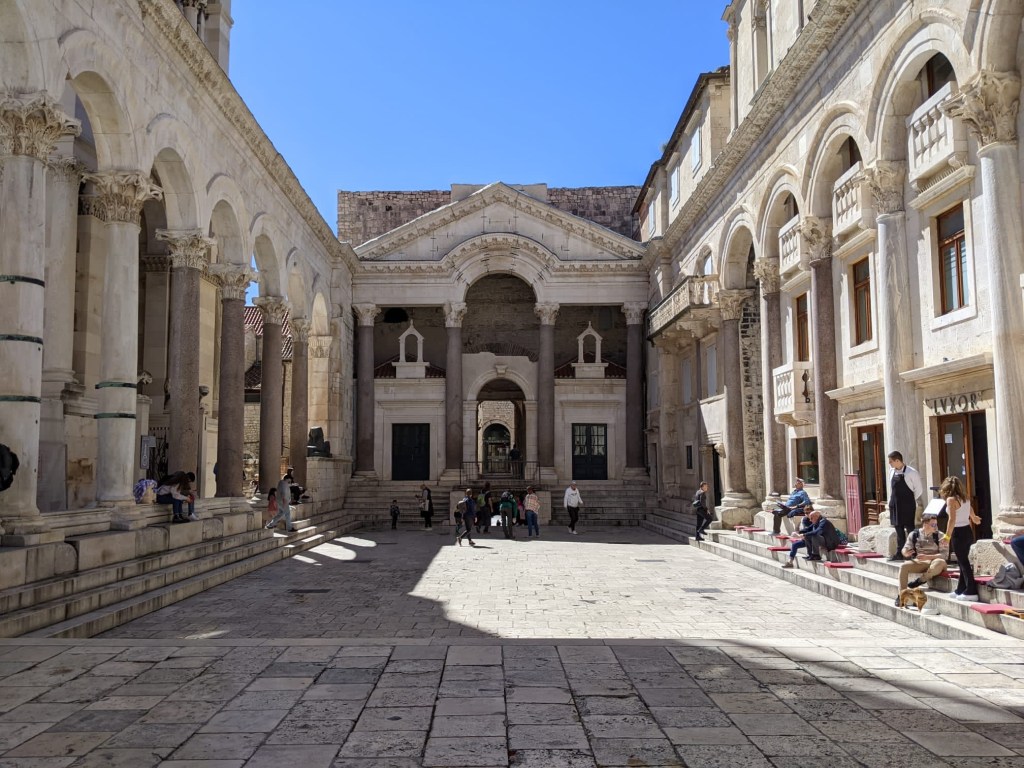
Palace Peristyle 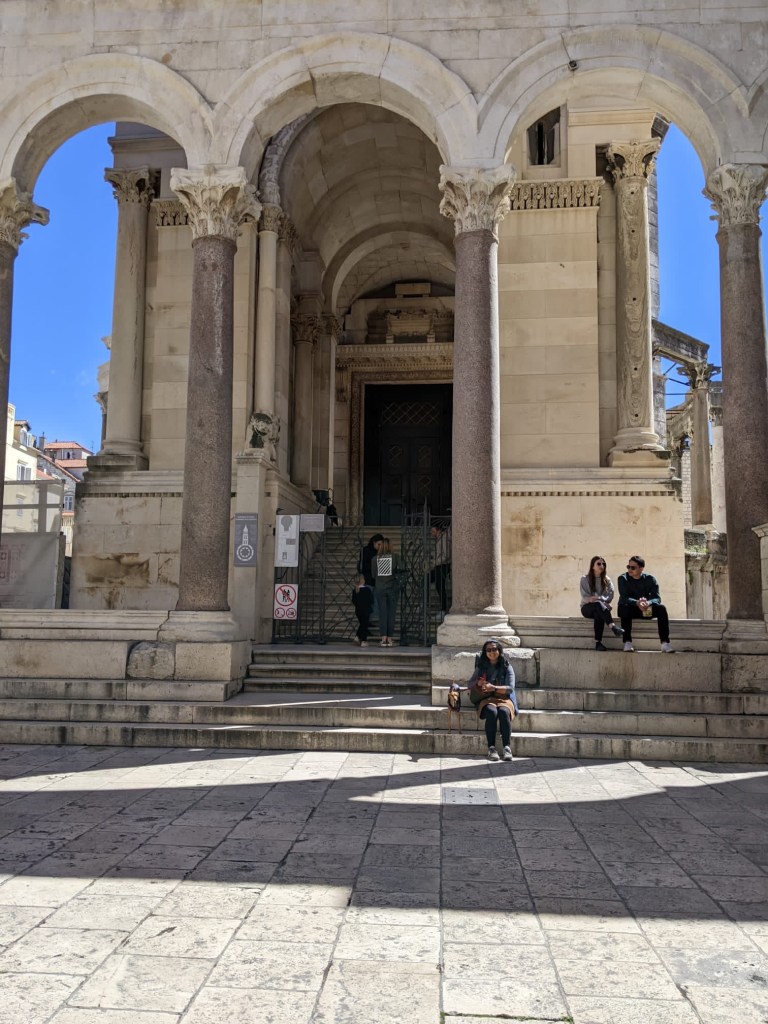
Roman columns used for a church entrance 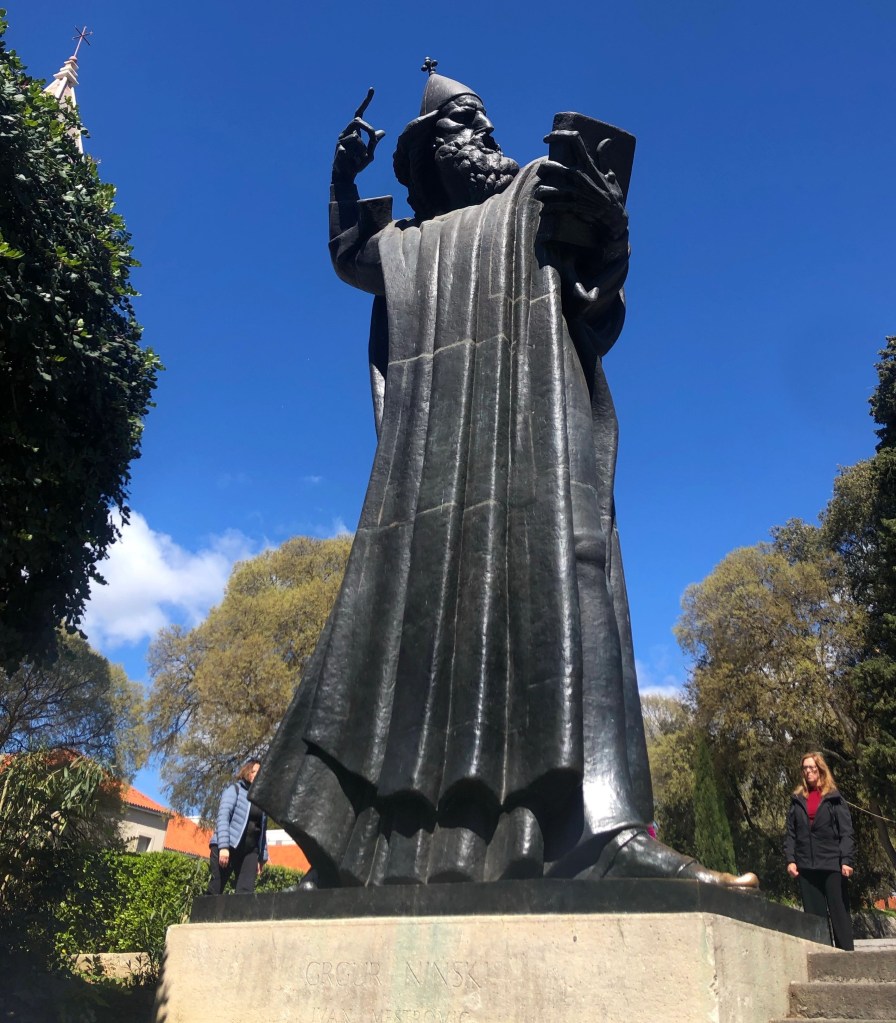
Gregory Nin and his lucky shiny toe 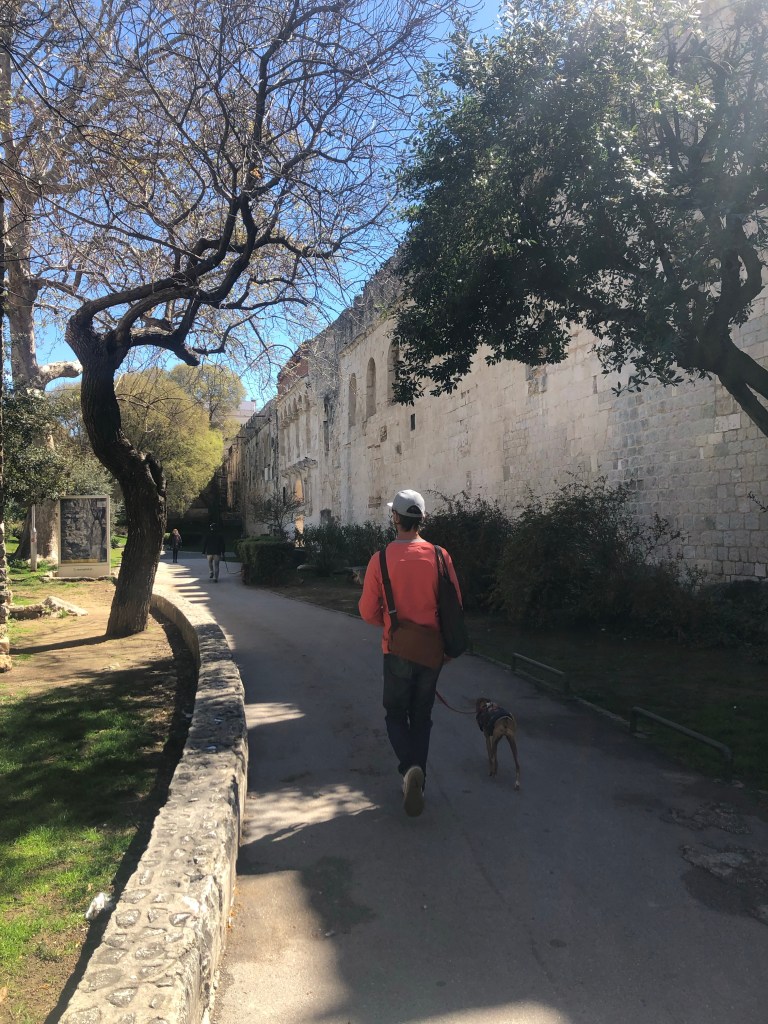
Diocletian palace walls The rest of Split city centre is a maze of old pedestrian streets, gleaming in the sunshine from the old limestone buildings and cobblestone streets. We found later on this was typical of the Dalamation coast cities.
After a late lunch Aileen and Zeus retired to the campervan and James to the climbing wall which is built on the underside of a section of the football stadium seating. It’s convenient how many camper stops seem to be near places to climb 😉
Krka and Pltvice National Parks
One of our overriding memories of Croatia is that it has a lot of water. After “slumming” it Italy’s tiny showers with water sold in 2 minute increments, we found Croatia’s camp showers luxurious – Flowing warm water! No fear of it stopping when you have soap in your eyes! Enough space to maneuver without your body parts touching cold tiling! 10/10!
Aside from its lovely camp showers, we also visited two national parks well known for their waterfalls. Krka National Park is a mere 30 minute drive from Split. From the parking lot/entrance it looks to be flat dull terrain. There’s no indication of what awaits.
We were loaded up onto a bus and driven a kilometre down a steep road with switchbacks into a deep valley (there’s also a steep footpath down but it was closed for repair when we were there). When you step off the bus you enter a magical place with crystal clear blue lakes, forming steps further down into the valley, with water flowing (gushing) over the edges of each step. The park has wooden walkways winding between the lakes and waterfalls. It was certainly beautiful, though Zeus was not a fan of the wooden walkways and loud gushing water so he got a carry most of the way.
Plitvice National Park is an hour and a half’s drive from Zadar, and is the big sibling to Krka. It’s lakes are bigger. It’s waterfalls are bigger.
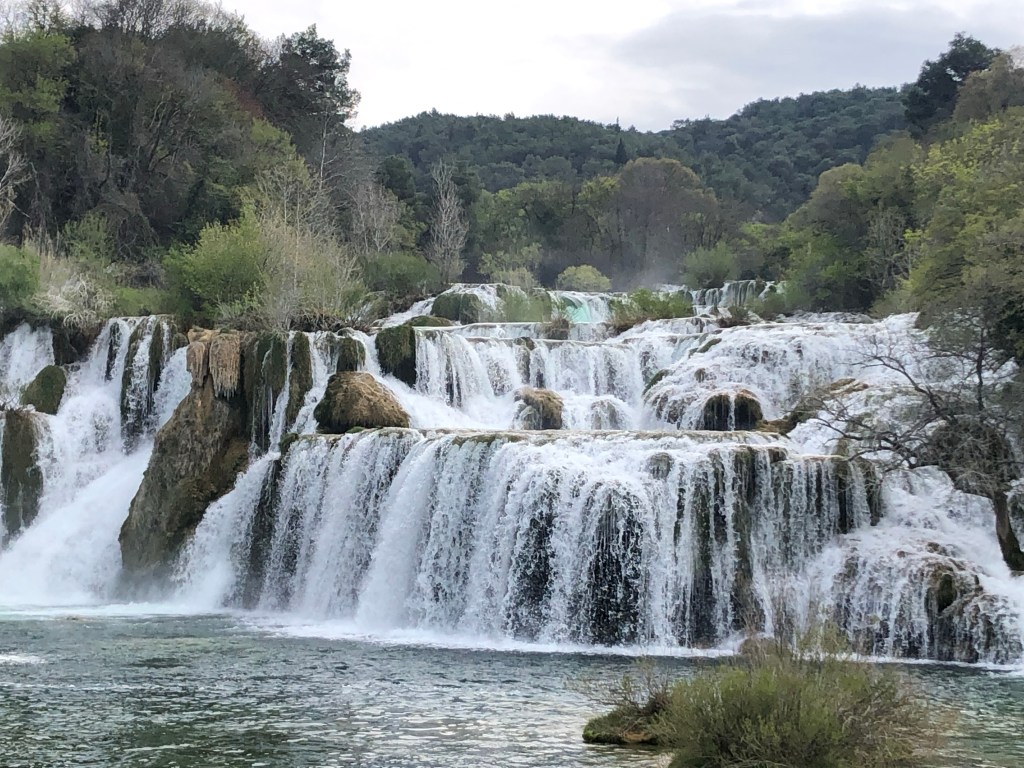
Skradinski Buk in Krka NP 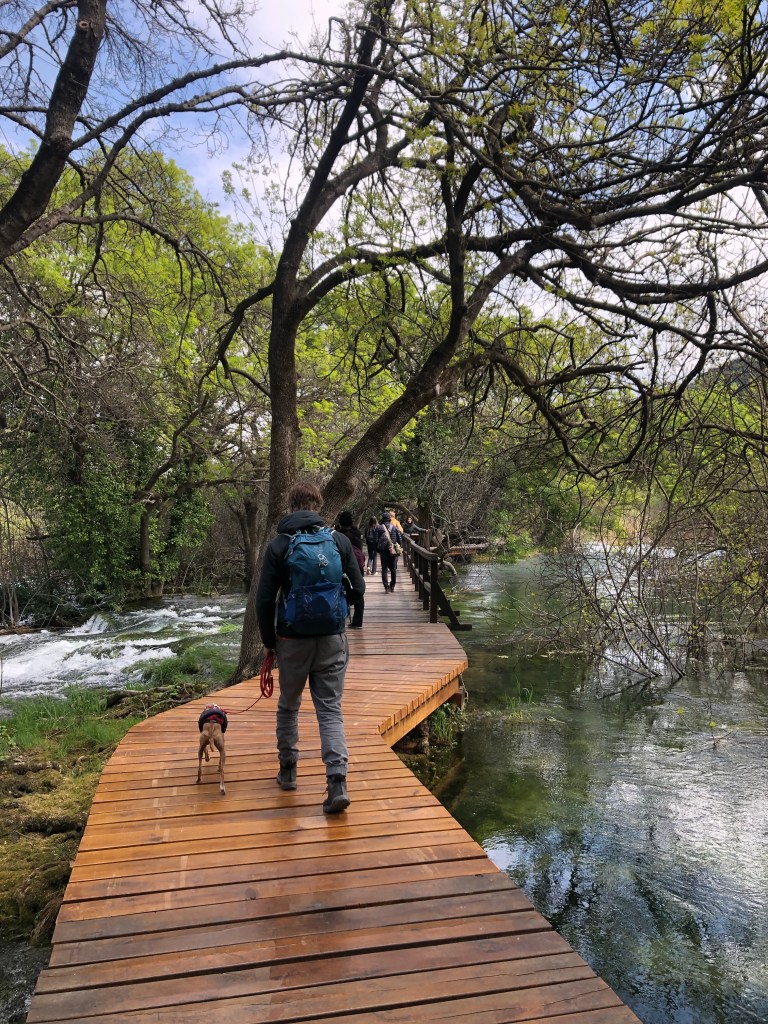
Krka NP walkways 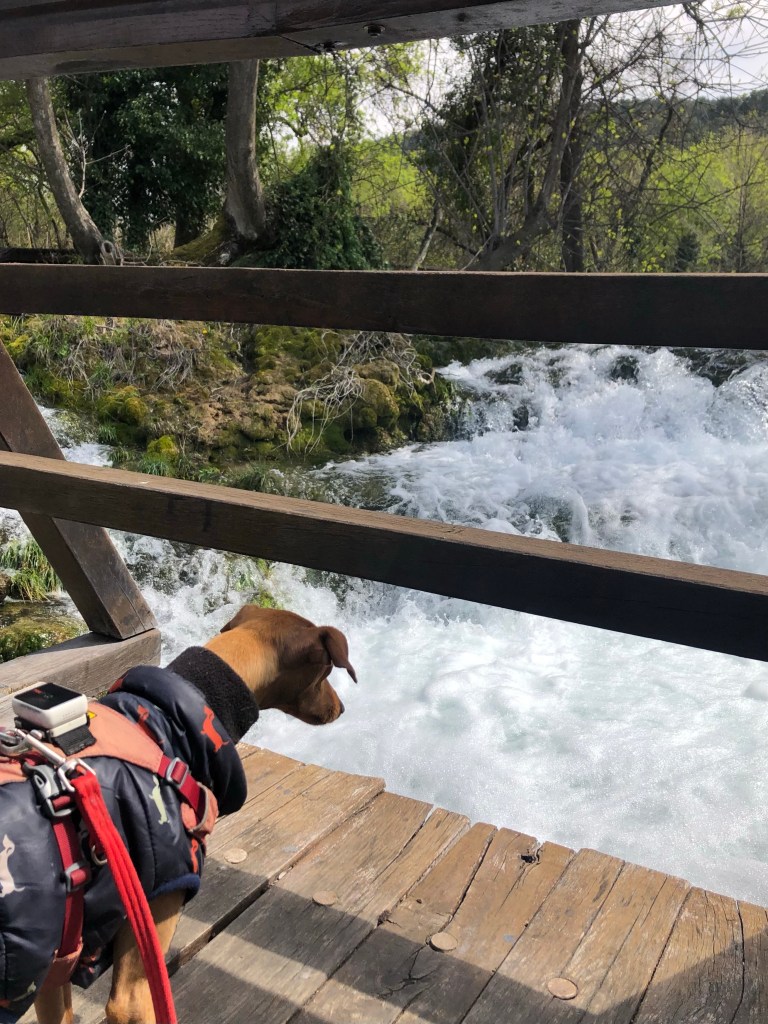
Zeus not a fan of waterfalls 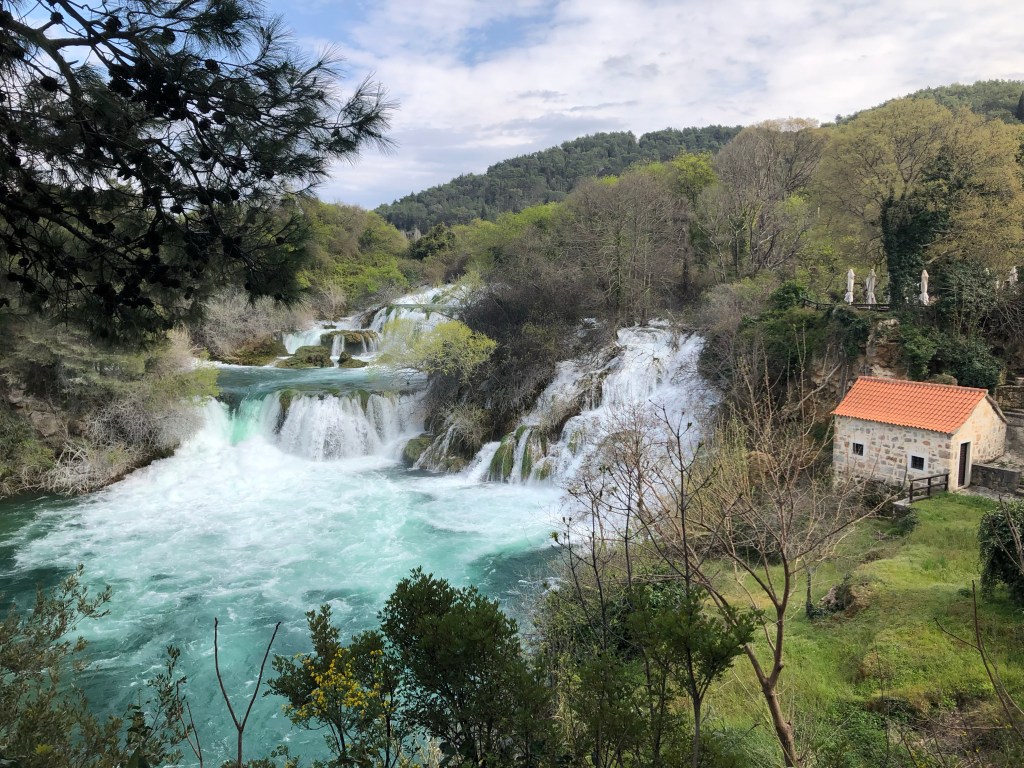
Krka NP 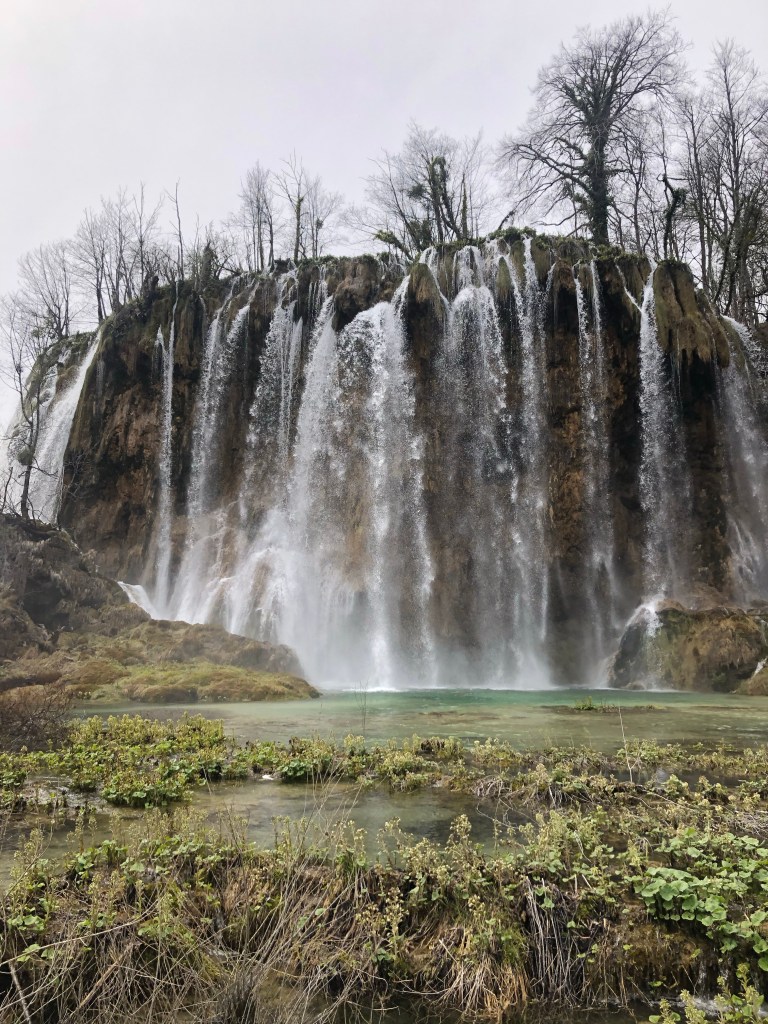
Waterfall in Pltvice NP Pltvice NP Zadar and Paklenica National Park
Zadar is a picturesque town on the Dalmatian coast north of Split. We enjoyed walking its streets in the morning. The other points of interest, aside from some historic buildings, eating and shopping (which we didn’t need) are two public art works on the sea wall:
- Pozdrav Suncu (Greeting to the Sun) is a solar powered light installation that charges from the sun in the day and illuminates at night. We were there during day time so couldn’t see the light show, but could imagine it being very dramatic.
- Morske Orgulje (Sea Organ) was one we could witness in action. It’s an organ where pressure from incoming waves forces air through holes in the pavement, creating organ-like sounds. The effect is a random but somewhat mesmerising tune, reminiscent of whale song.
After Zadar we headed north-east for about 45 minutes, past an inland sound to Starigrad which sits at the entrance to Paklenica National Park . We stayed at a campsite which, in common with several that we visited in Croatia, seemed to be in someone’s garden, and it was run by a lovely older couple. There were several groups of climbers staying there. Paklenica is a significant venue for route climbing in Croatia.
The next day we did an out and back hike from the campsite heading north up the Velika Paklenica canyon that also contains much of the climbing. We really enjoyed the walk – spring was breaking and lots of trees and plants were coming into flower. It was interesting to watch the climbers too. The valley has routes that attract beginners and experienced climbers alike. The atmosphere of encouragement and achievement was good and there was a noticeable positive buzz as we walked through the canyon. We chose a refuge serving Turkish coffee as our turnaround point, but it would be possible to do longer multi-day hikes exploring further into the park.
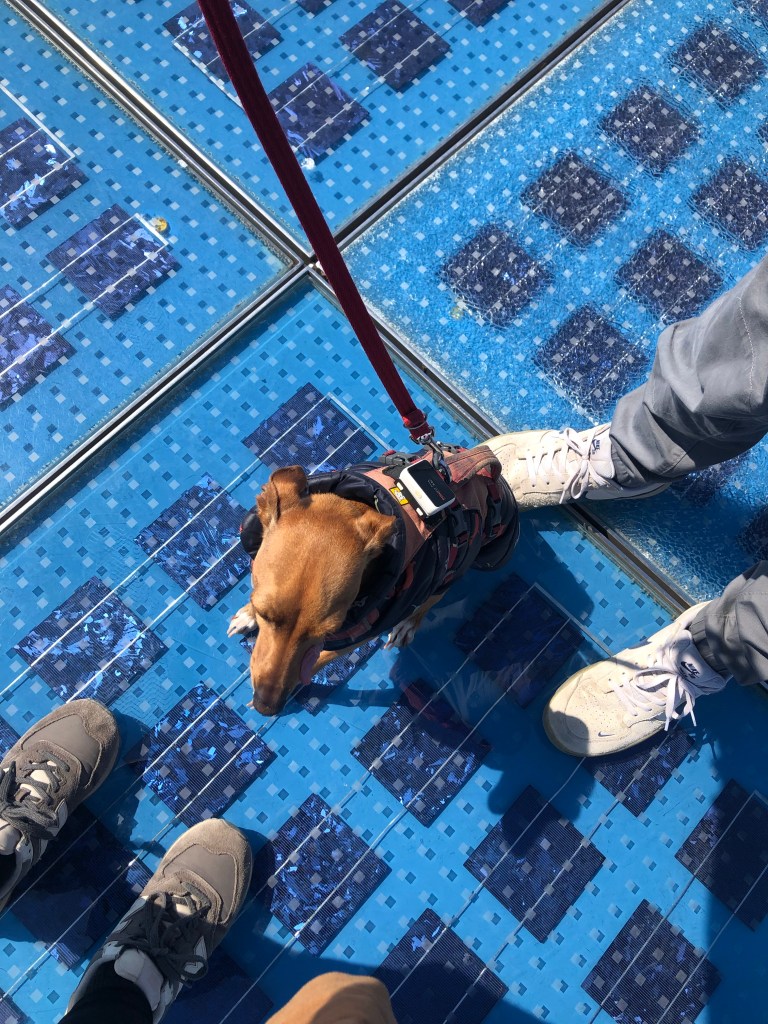
Pozdrav Suncu 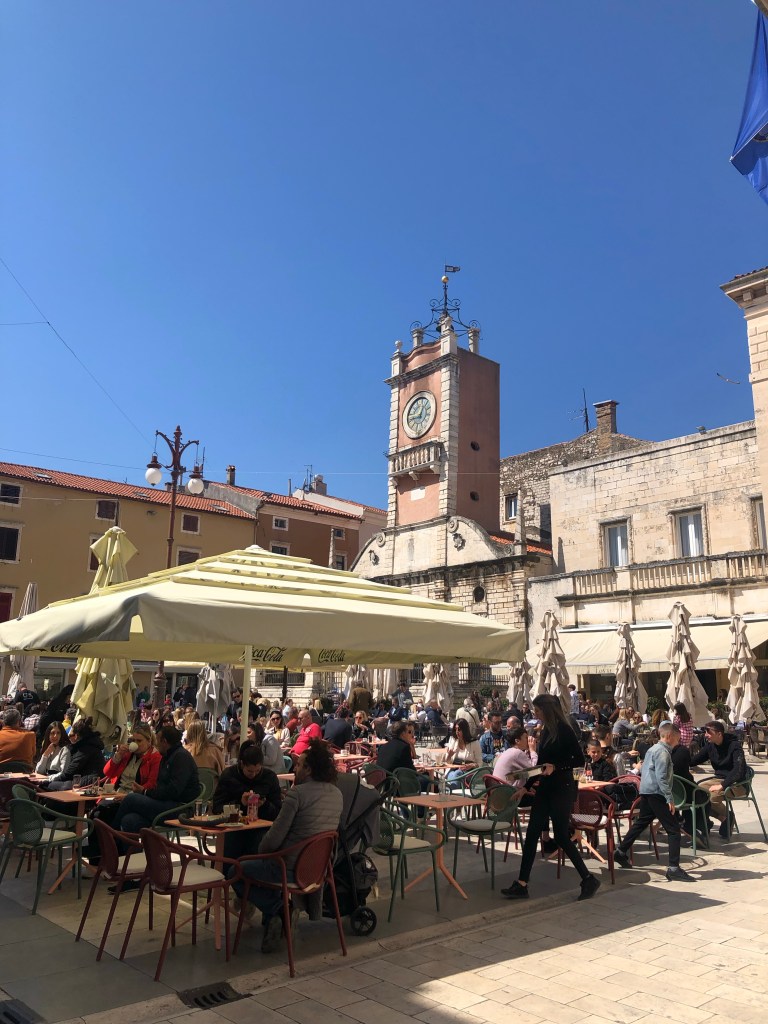
Bustling Zadar square 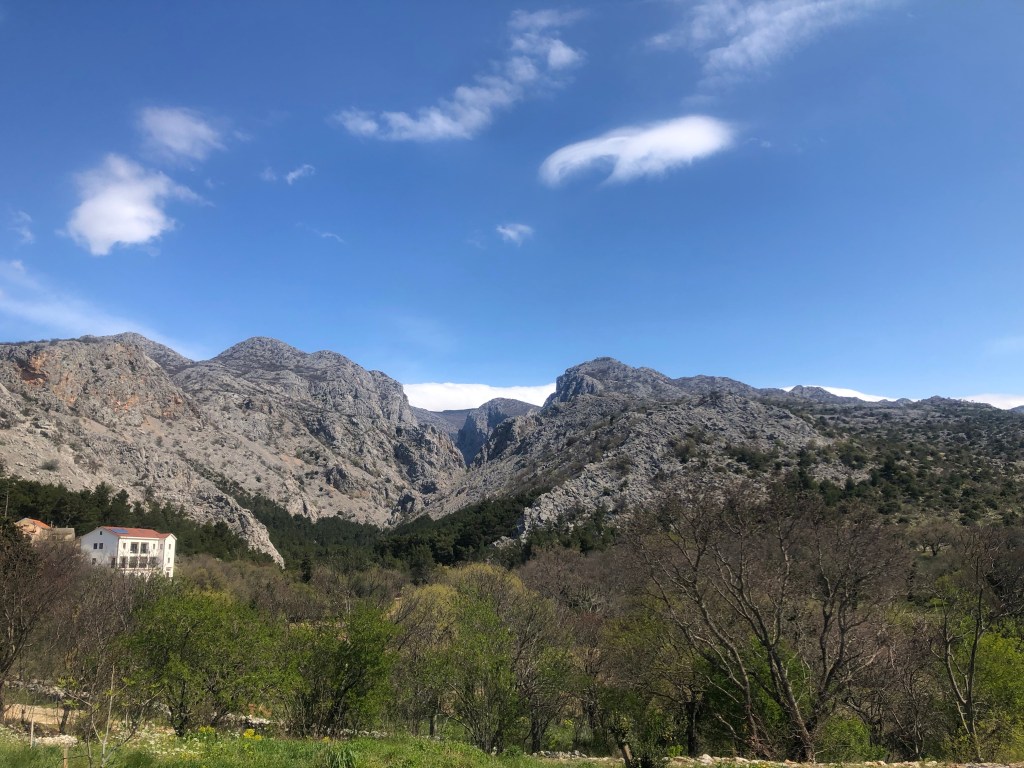
Paklenica NP 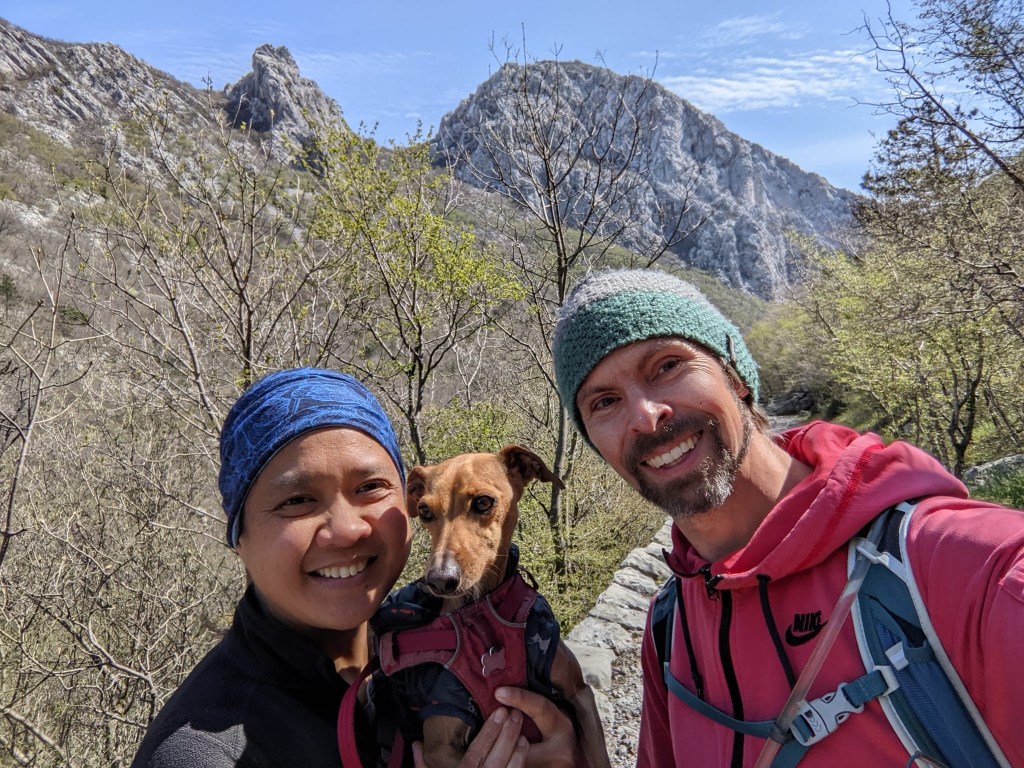
Enjoying the spring weather 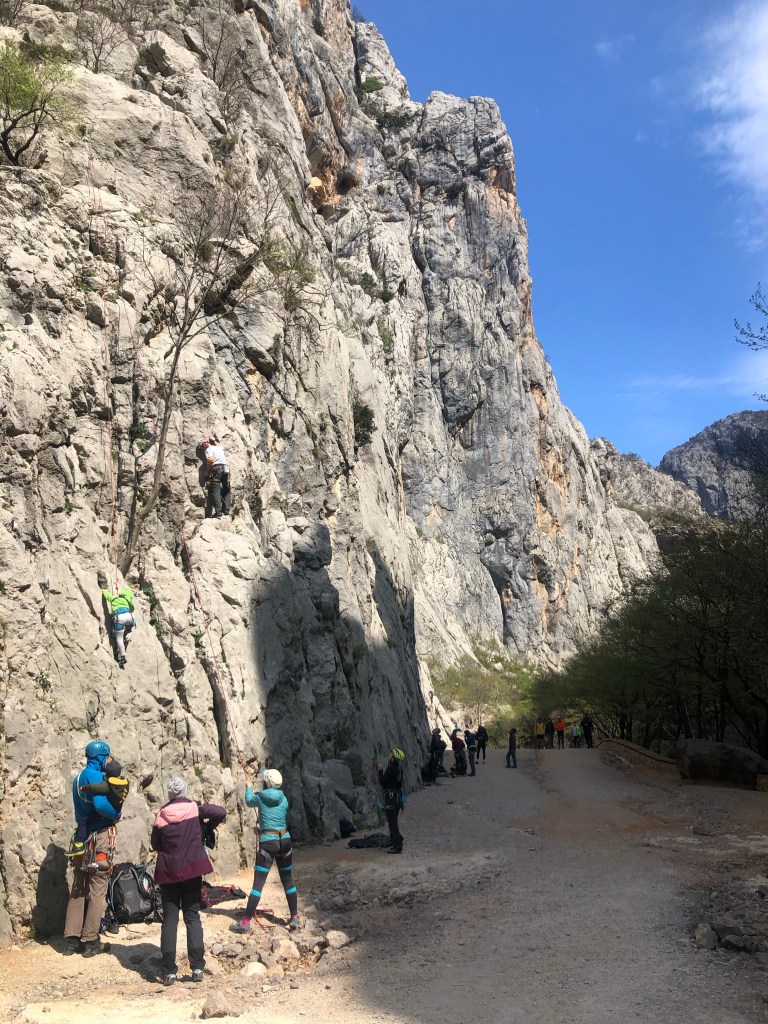
Routes, routes and more routes 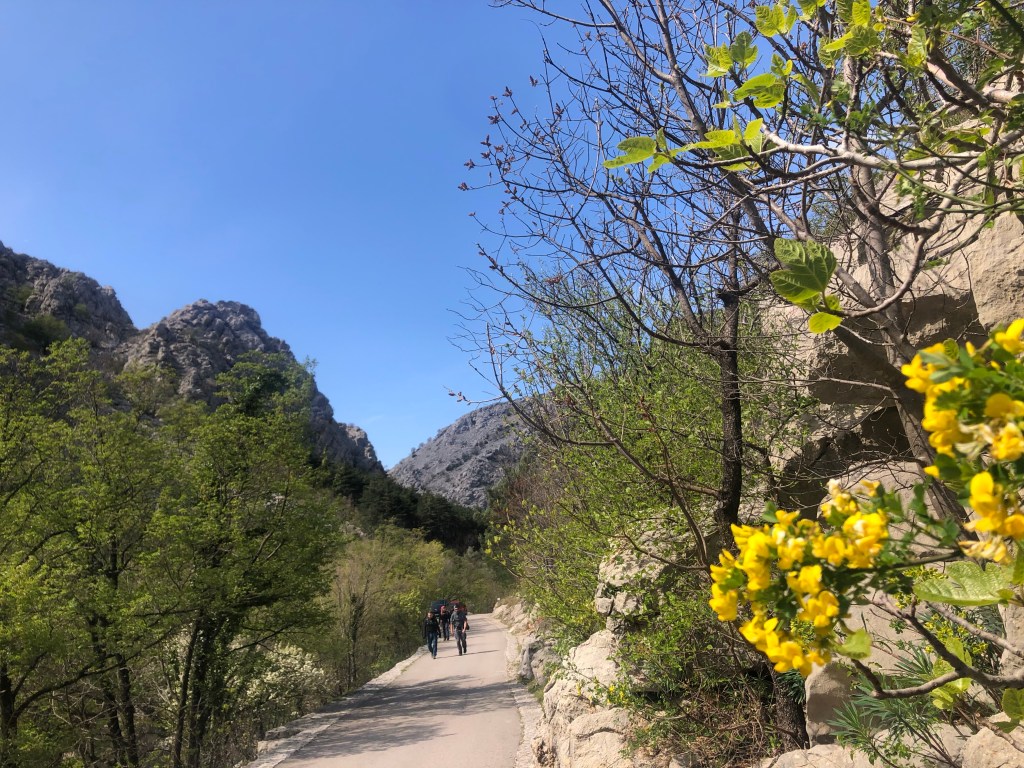
Budding trees and flower blossoms Istria
From Starigrad we headed north to Istria, a province of Croatia that shares a border with Italy, and is well known for its food and wine. We were prepared to feast on truffles, oysters, seafood and Croatian pasta. It is also famous for its rolling countryside with vineyards and pretty hilltop towns, so we looked forward to doing some hiking while there, and also planned to visit a vineyard.
But then the mysterious stomach bug reared its hideous head again. We managed to have a really nice meal at Konoba Vela Vrata, but Aileen was then out of commission after that for a couple of days. It also rained the whole time we were there – not a polite sprinkle, but an uncharacteristic deluge. So this meant exploring the outdoors was not an option.
James did manage to go mountain biking before the deluge started. We went to a small bike park at Rabac on the south east coast. The park has several short trails and a couple of long trails which require 25 mins of climbing to access. The reward is some stunning views over the coast and Adriatic sea. Two very well built trails head across rocky terrain. A lot of thought and effort has been put into the direction the trails took down the hillside to ensure good flow. They were great fun to ride, but needed a committed mindset. Unfortunately a puncture slightly curtailed the fun.
We’ve been travelling long enough to accept that we’re at the mercy of the weather gods, and things won’t always go to plan. Istria is therefore on our list of places to revisit in the future.
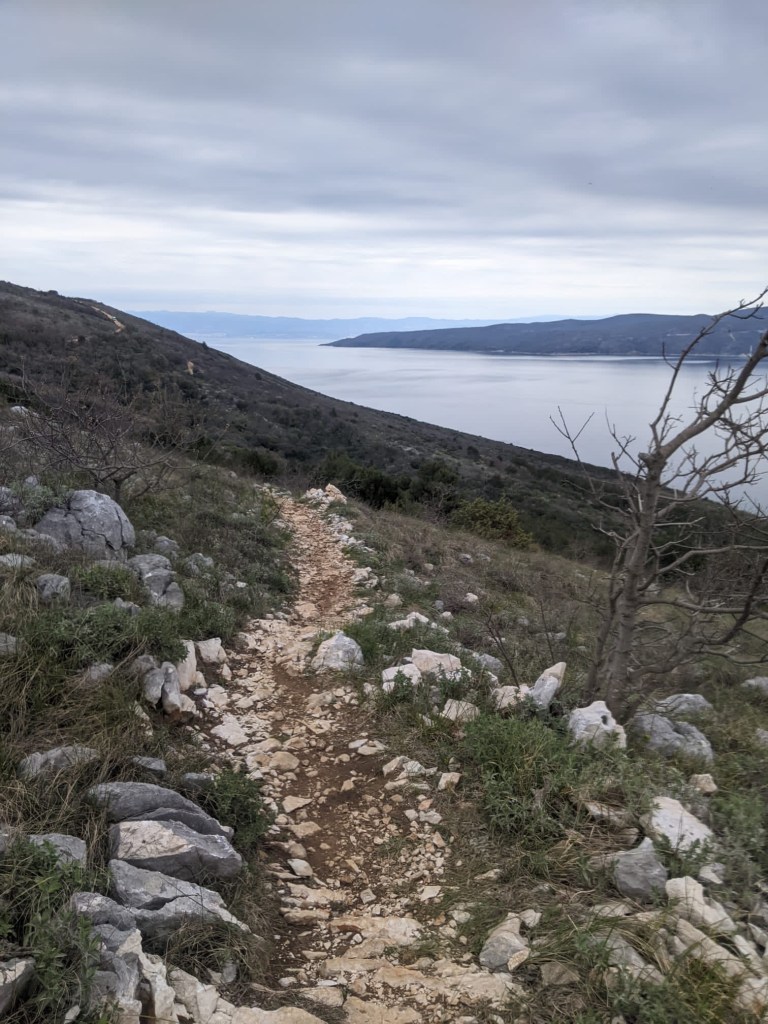
Mountain biking trail with views of the Adriatic 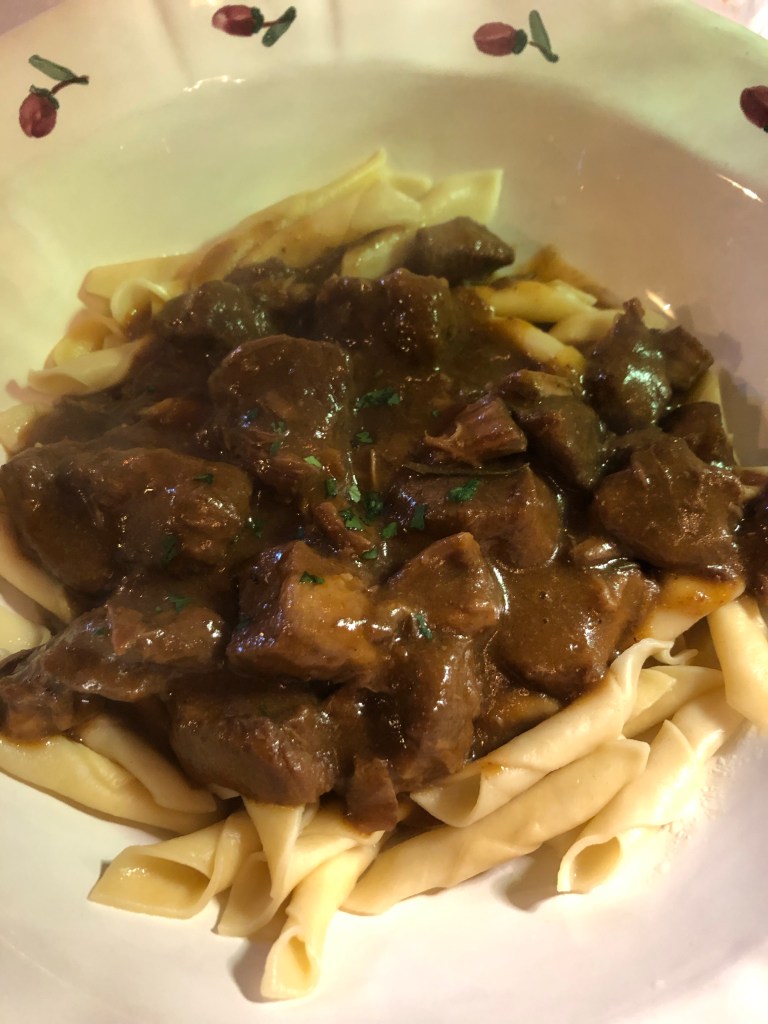
Venison stew with fuzi @ Konoba Vela Vrata Zagreb
We had a date in Zagreb with a VW garage. The campervan needed its first service and oil change (all good). While that was happening we explored Croatia’s capital.
Zagreb is split into upper and lower towns, largely denoted by elevation but also following a rough north-south split. We made ourselves a walking tour taking in some of the interesting sights:
- Zdenac Života – We started our walk in the lower town at the National Theatre, which is an impressive building surrounded by gardens with lots of tulips in April. Also in the gardens is Zdenac Života (Well of Life), a beautiful and moving sculptured well by Ivan Meštrović, a noted Croatian sculptor also responsible for Gregory of Nin in Split. It depicts people at different stages and events in life surrounding and sometime regarding each other across the well.
- Oktogon Building – An elegant gallery with a beautiful octagonal glass atrium.
- Nikola Tesla monument – Tesla wasn’t born in Zagreb (He was born in Smiljan, modern-day Croatia) but is celebrated as Croatia’s most famous inventor. Semi-related note: the Rimac factory was close to the VW garage, and is interesting for a driveby with chassis’ of cars in various states of production on display, but sadly it isn’t not possible to visit.
- Ban Jelačoć Square – The square is akin to Leicester Square in London, big and bustling – we didn’t stay long.
- Zagrebačka Katedrala – Zagreb’s famous cathedral was being renovated and had some impressive scaffolding being erected over its twin spires.
- Dolac Market – Zagreb’s largest market. It is extensive with a wide open air plaza of red-awninged vendor stands, a building for fabrics and other dry goods, and another with the meat and fish markets. We only took a cursory look since we didn’t need supplies and the market is sadly, not dog friendly.
- We had a nice Sri Lankan lunch at Curry Bowl on Ulica Ivana Tkalčića, a pedestrian street which is now home to many restaurants and bars, but in the past was Zagreb’s red light district. Post-lunch we walked up a severe set of steps which lead us to the upper town.
- We had a wander of the streets of the upper town seeing Crkva Sv. Marko a medieval-style church which has an impressive tiled roof and is just around the corner from the unique Museum of Broken Relationships . The museum gets good reviews on Google, is dog friendly and might have been fun to visit on a rainy day but we didn’t feel so inclined.
- A very short funicular connects upper and lower towns. We took the steps instead and ended our tour at Park Zrinjevac which had nice flowers and a mushroom shaped fountain.
Finally Zagreb has a nice climbing wall, The Hive which we visited on the morning we left heading for Slovenia.
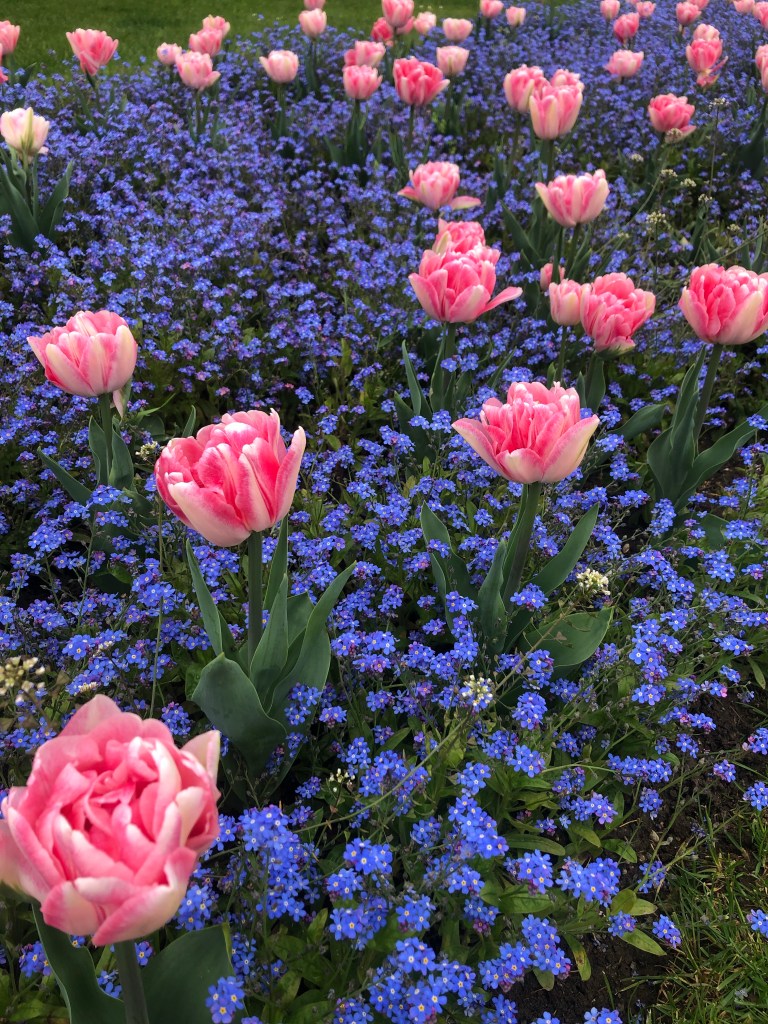
Cheerful tulips 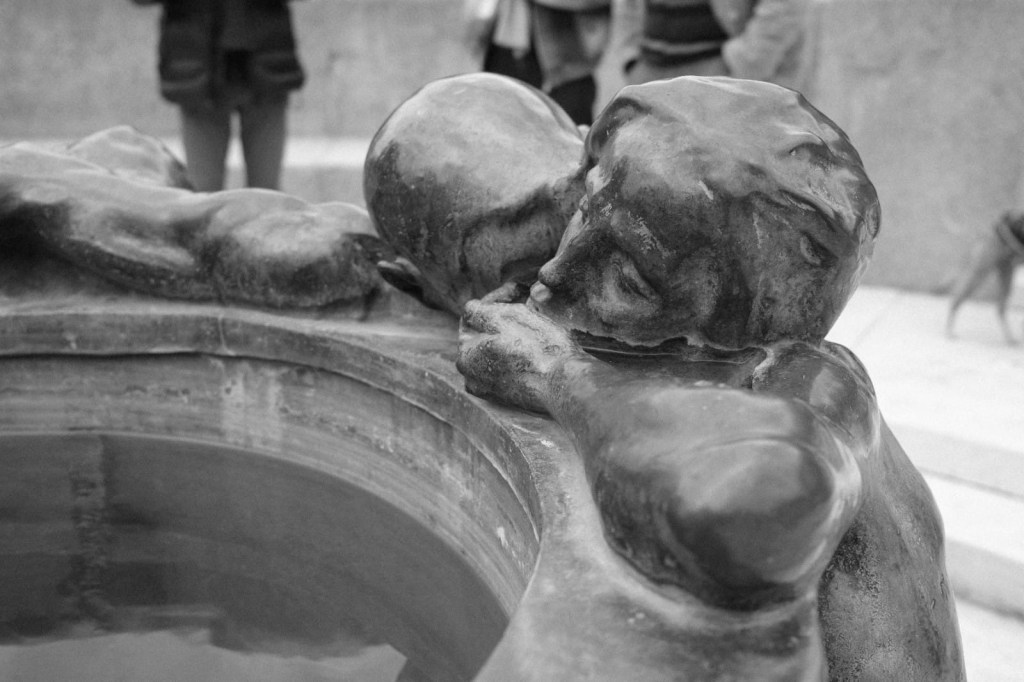
Close up of Well of Life 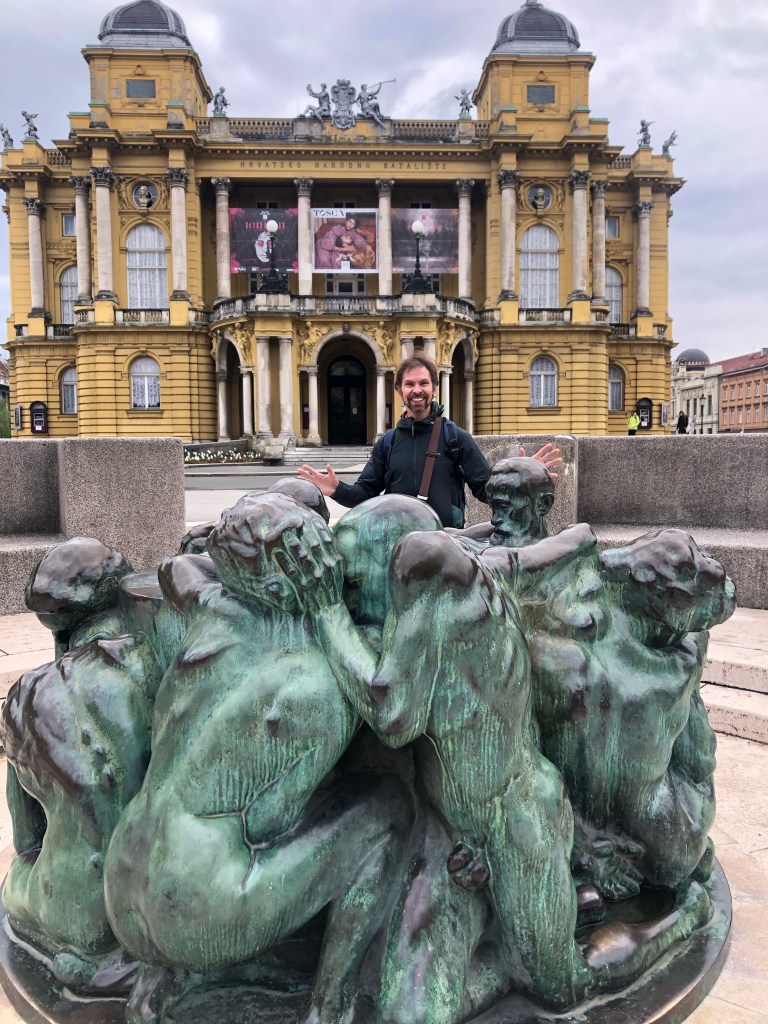
James alive and well 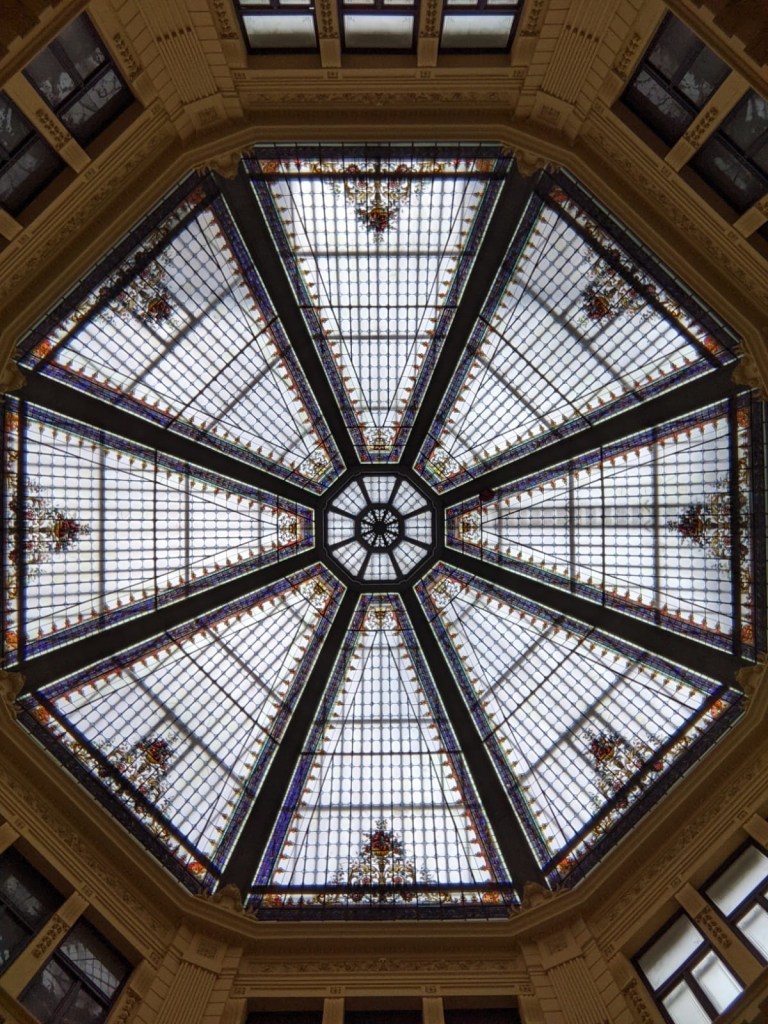
Oktogon Building 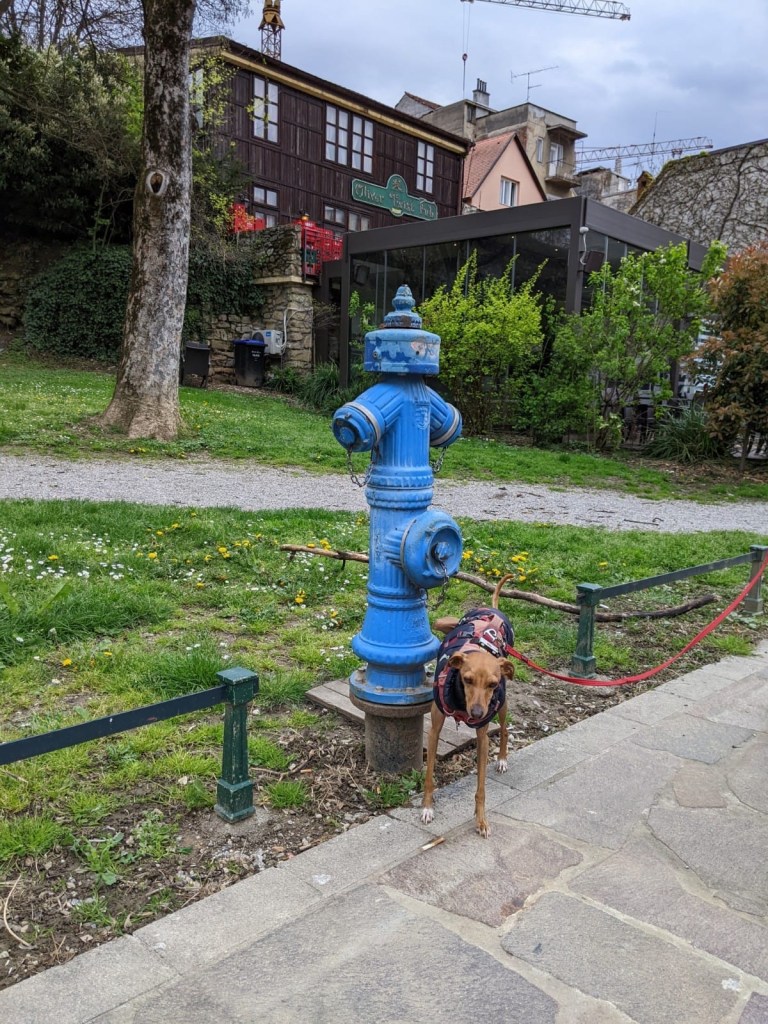
Distinctive blue fire hydrants of Croatia 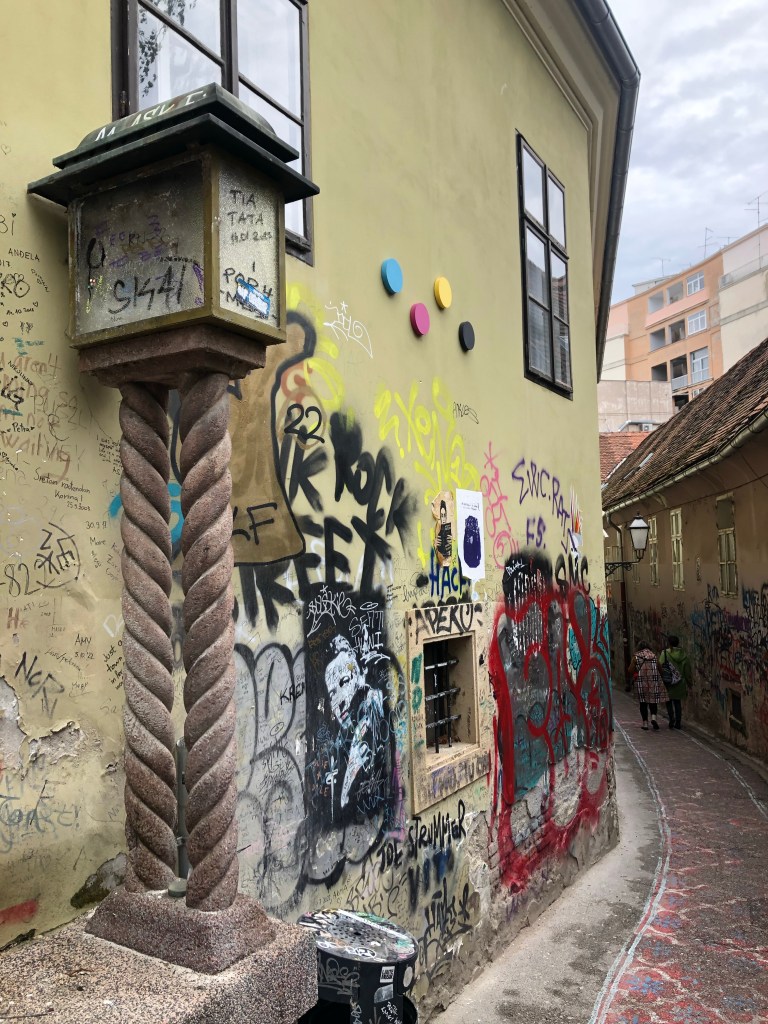
Interesting lamp in Zagreb Croatian Food
We explored Croatia for two weeks and both endured some mysterious stomach bugs, so sadly we didn’t try as much food as we had hoped. What we did try was very good. Highlights include:
Roasted pig
On Croation roadsides, it’s not uncommon to see large chimneyed cement structures next to mounds of firewood. And in these cement structures one could usually find whole pigs or lambs roasting on spits. Coming from the Philippines which prides itself in it’s roasted pigs (lechon), Aileen was very excited about this aspect of Croation cuisine. While in Zadar, we found a pečenjarnica with good reviews on Google that was near a Spar supermarket we went to.
Pečenjarnica Brkljaca is a takeaway only place. There was a queue out the door and each time someone came out they signaled to those on the queue that thankfully there is still meat. When it was our turn, we saw the counters were empty and had a mild panic attack. The kind lady behind the counter spoke no English – thankfully someone behind us did and helped us order ½ kg of roasted suckling pig. She walked into a back room, returned with a whole roasted pig over her shoulders, asked us which part of the pig we wanted, and chopped and bagged our ½ kg which we took back to our campsite and devoured with some steamed rice on the side. Aileen would like to return at some point in the future and try some spit roasted lamb.
Ćevapčići
Ćevapčići is a vestige of Croatia’s being part of the former Yugoslavia. They are Bosnia-Herzegovina and Serbian-style spiced mixed meat sausages, cooked over a grill and typically served in lepina, a pita-style bread. We tried some at Ćevabdžinica Zadar, a short-walk away from the same Spar by Pečenjarnica Brkljaca. One might call the area a culinary hot spot. The menu had three options – small, medium and large – which was 5, 10, or 15(!) ćevapčići in a lepina. These were served with ajvar, a delicious roasted pepper relish, and some fresh chopped onions. We found it delicious – morsels of salty tasty meat in chewy bread.
Stews
We found a lot of Croatian food to be simple and hearty. They have a variety of stews. There is goulash of course (which we didn’t try), but Aileen had a very tasty tripe stew at Antin Gust, an unfussy restaurant in Sibenik, where one can try most of Croatia’s popular dishes. We also had fuži (Croatian pasta) with a tasty venison-stew at Konoba Vela Vrata.
Truffles
Truffles seemed to be on most menu’s in Istria, Croatia’s truffle hotspot. At Konoba Vela Vrata, we had steak cooked in their hearth grill, which was then brought to our table and our waitress then shaved a mountain of black truffle on top it. The aromas and of course taste were delicious! It’s also quite common to see pasta in cream sauce with truffles on menus, but alas we didn’t get to try this.
Seafood
Croatia has quite an extensive coastline and seafood features in many restaurants, particularly along the coast. James had risotto with squid ink (another Croatian favourite), and Aileen had local pasta with seafood at Konoba Girica, a small restaurant in Rijeka, where we stopped at on our way east from Istria to Zagreb. Some things we had hoped to try but didn’t manage to are Peka Octupus (octopus baked in a lidded pot on a fire), and also fresh Istrian oysters – more reasons to return to Croatia.
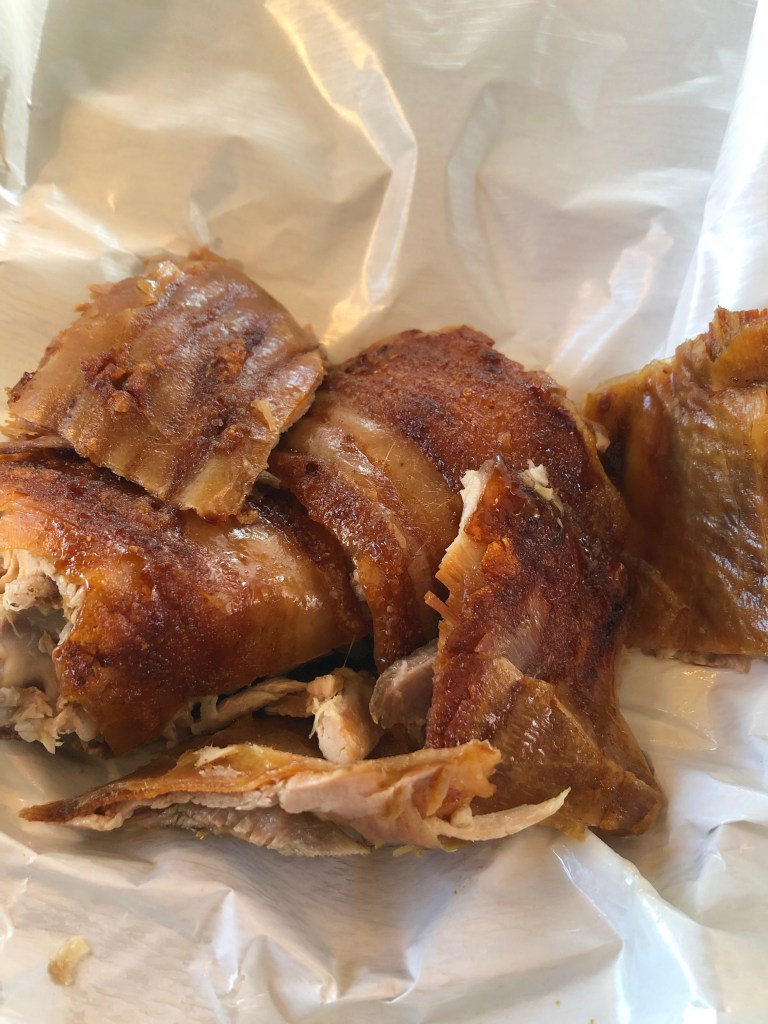
Roasted suckling pig 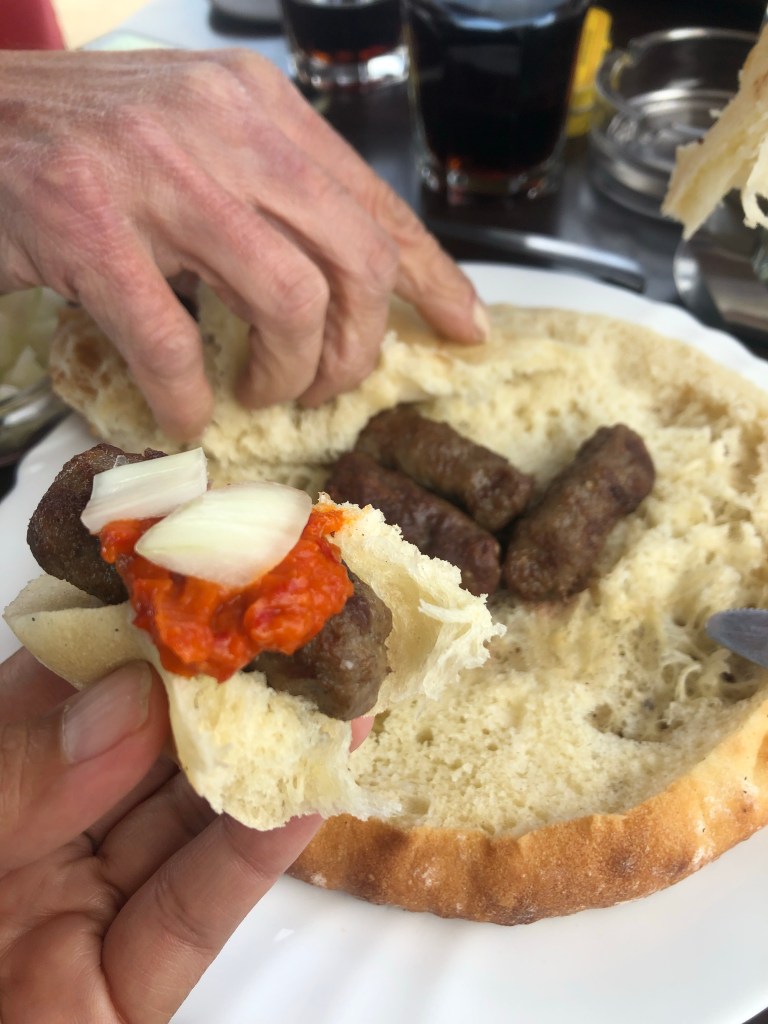
Cevapi 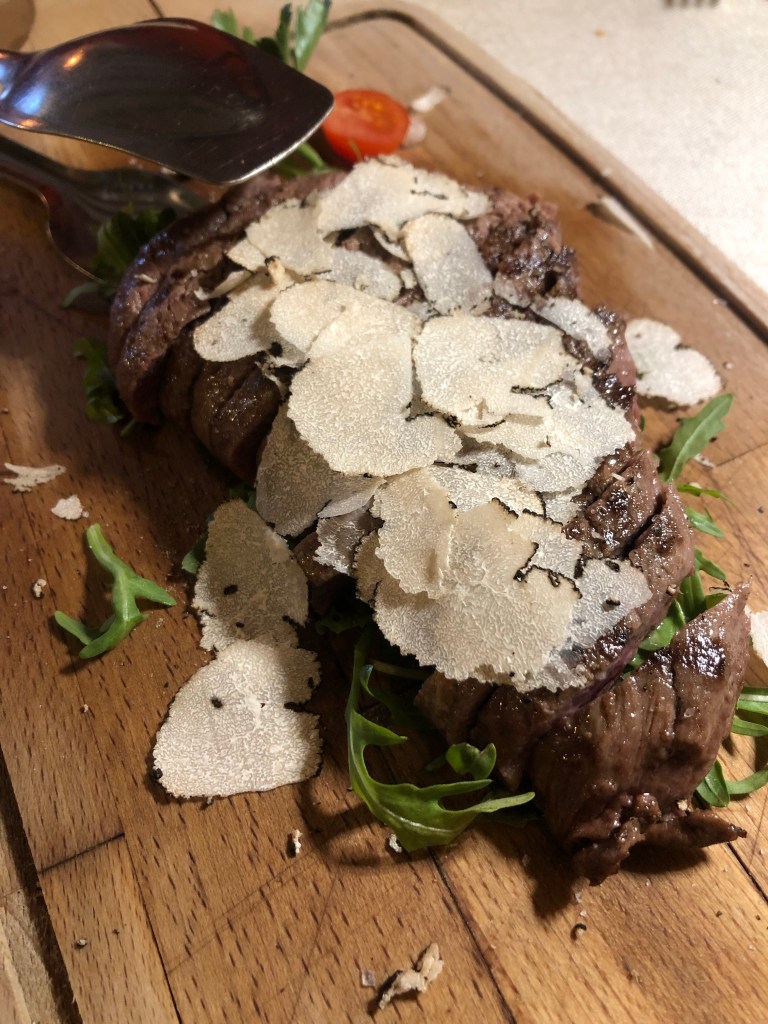
Steak with truffles 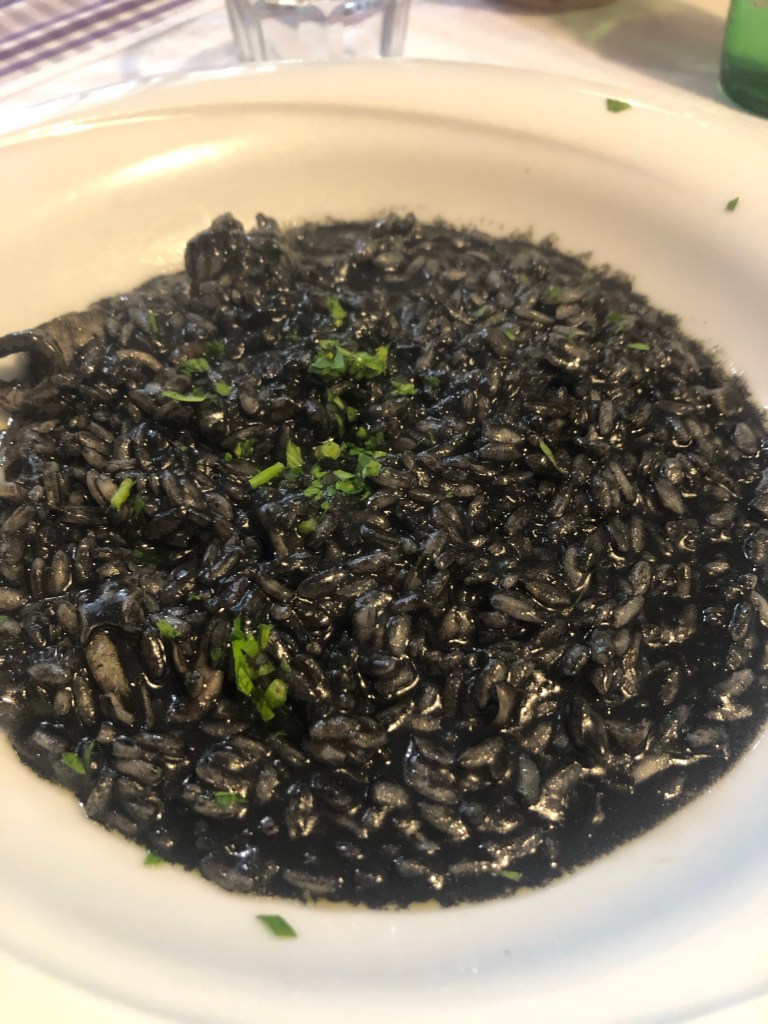
Squid ink risotto 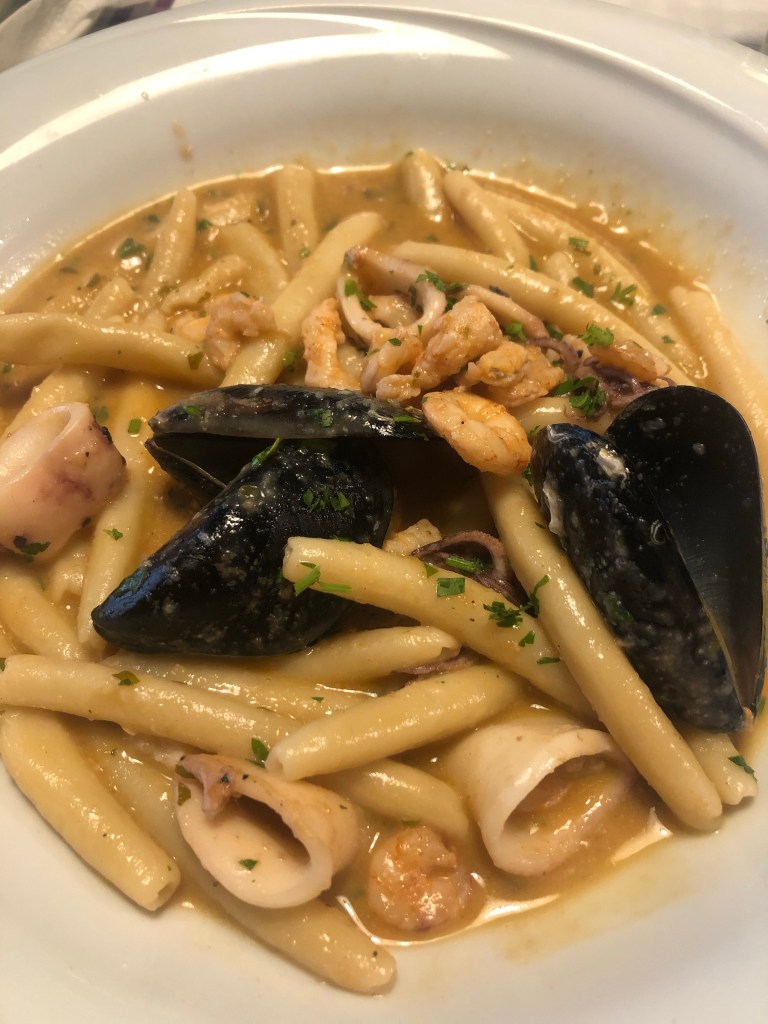
Fuzi with seafood 
Tripe stew What’s Next
As the final major stop on the first half of our adventure we are going to explore neighbouring Slovenia. After that our 6 months visa will expire and we’ll need to head back to the UK to apply for new ones.
-
Week 21: Crossing Italy to catch a ferry
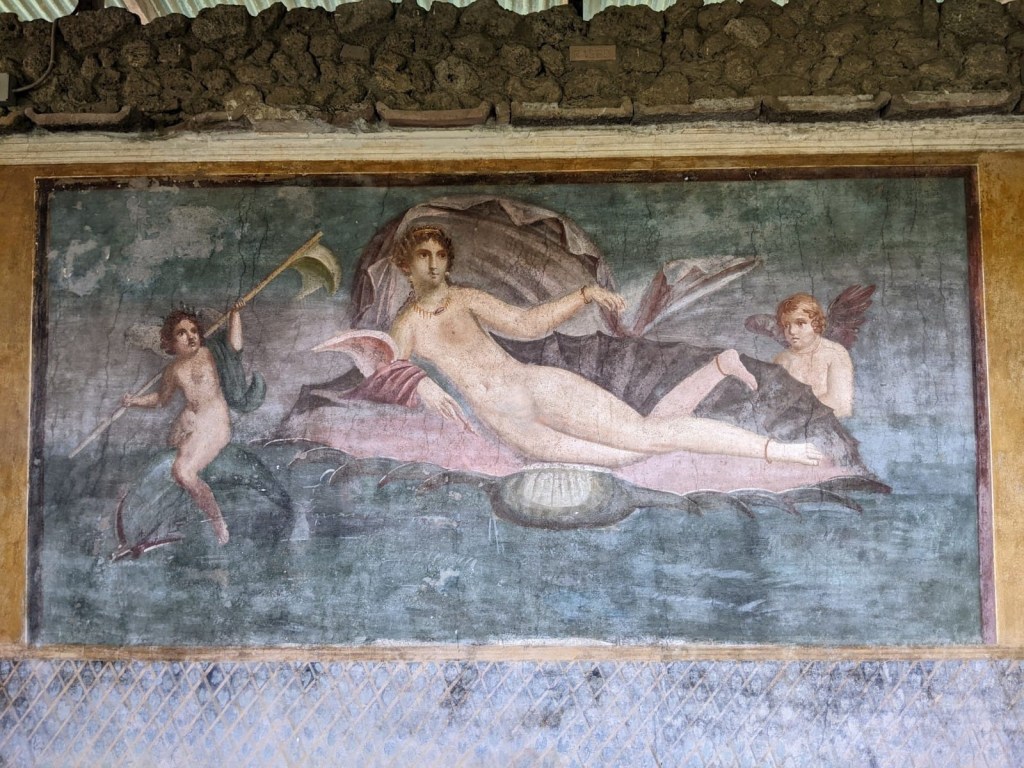
After Sicily our intention was to head to Croatia. At this time of year the only ferry running departs from Ancona to Split. Ancona is about two thirds of the way up the east coast of Italy. This required a few long driving days and there were a couple of things we wanted to do on the way: Visit Pompeii and have a meal at a good Agriturismo.
Pompeii
We hadn’t originally planned to visit Pompeii. James had seen it once before. Aileen, having been in the Philippines when Mt Pinatubo erupted, envisioned a site covered in volcanic ash. Which it is to some extent, but what she failed to appreciate was that:
- The eruption occurred a very long time ago, 79 AD, so what was covered in that event is a VERY OLD Roman city
- The ash preserved the city for more than a millennia, protecting it from the ravages of weather, history, progress etc. And thanks to centuries of excavation one can marvel at the city’s remains
We found a campsite that was almost opposite one of the entrances to the Pompeii site and at a sensible price, so we decided to stayed two nights so we could spend the following day having a good exploration of Pompeii, and the campsite also served as safe parking during the day.
Here are a couple of interesting bits of background, without repeating too much of the story of Pompeii which we expect people are familiar with:
- The city was established circa 7th century BC, before becoming a Roman colony much later in 80 BC. Pompeii was an important passage for goods arriving by sea bound for Rome or southern Italy so it was relatively wealthy.
- There was a big earthquake in 62 AD. Because of the need to repair the damage and a desire from the affluent population to make “improvements”, the population swelled significantly with builders, crafts people, etc. migrating there to work on the rebuild, and the city grew quite a bit
A mere 17 years later, the eruption of Mt Vesuvius buried Pompeii in ash and as a result it is remarkably well preserved. The most striking things about Pompeii for us were:
- The size of the site. It was a city and it felt like city size, with city-type institutions e.g. an amphitheatre, two different theatres, necropolis, hot food vendors and of course numerous temples and villas. We spent a day there, but to explore everything would take several. We also saw that excavation work continues to this day. The website has an interactive map that maybe gives some idea of the scale.
- How well preserved things were. You could see mosaics on the floors of some villas, in others murals were clearly visible and recognisable. One could really get a sense of the wealth of the city from the size of the villas and the opulent decorations. On the streets you could see the dolia used to heat and store food in Thermopolliums (takeaway food shops). Street paving is still intact, including where carts had worn grooves in the roads at intersections. There are also a few examples of preserved bodies in poses that remind you what a horrific end it was for people who hadn’t evacuated.
Small dogs are allowed so we had a lovely family day out exploring. We’re glad we went.
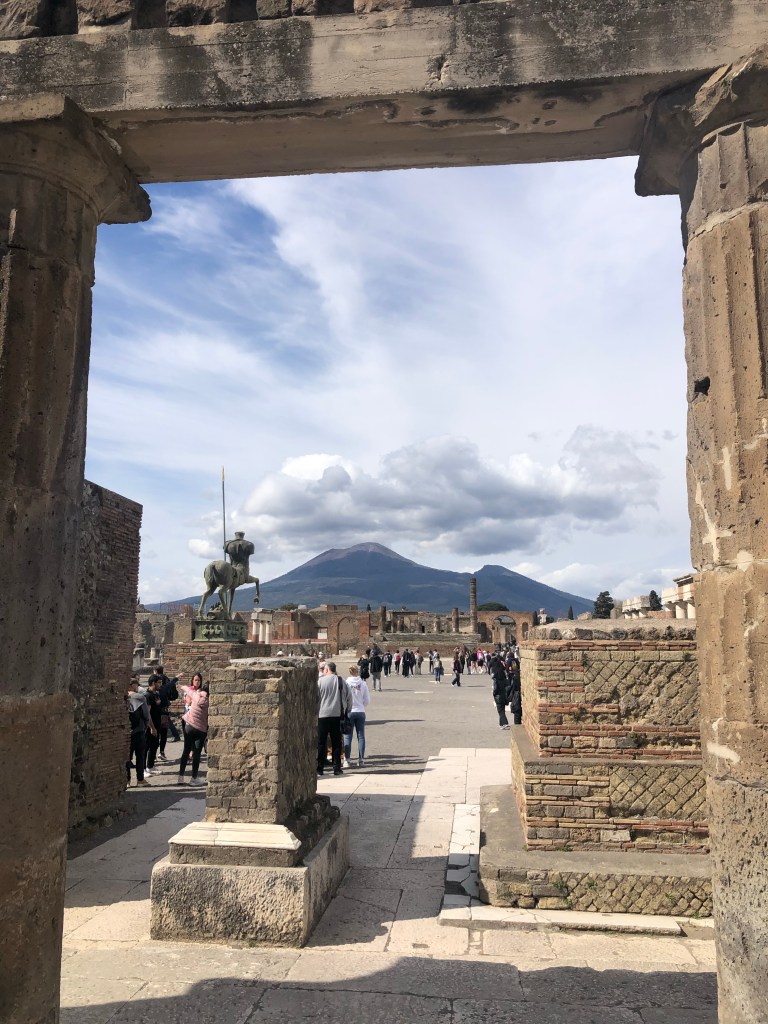
Mt Vesuvius towers over the forum 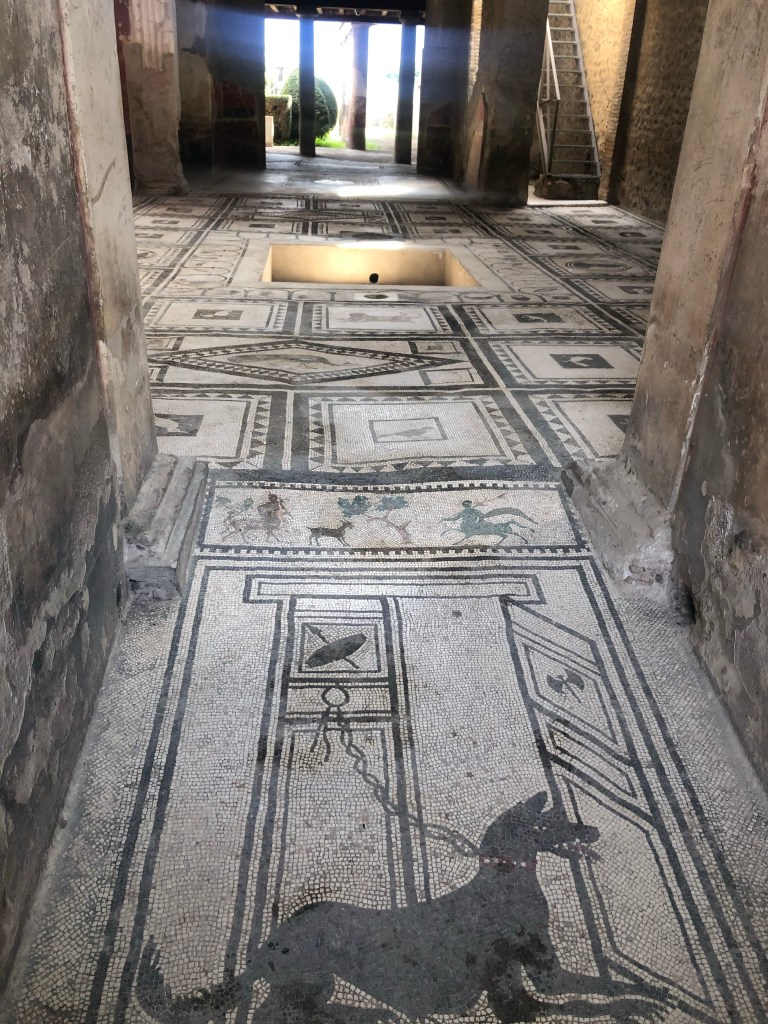
Mosaic floor 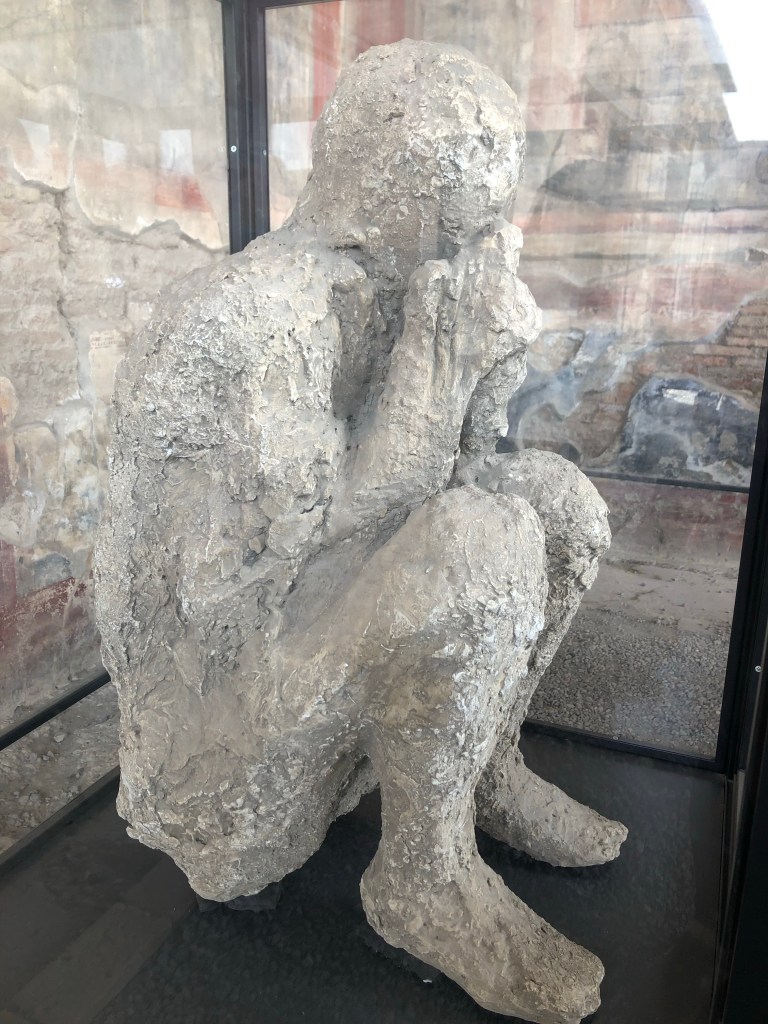
Mummified Pompeiian 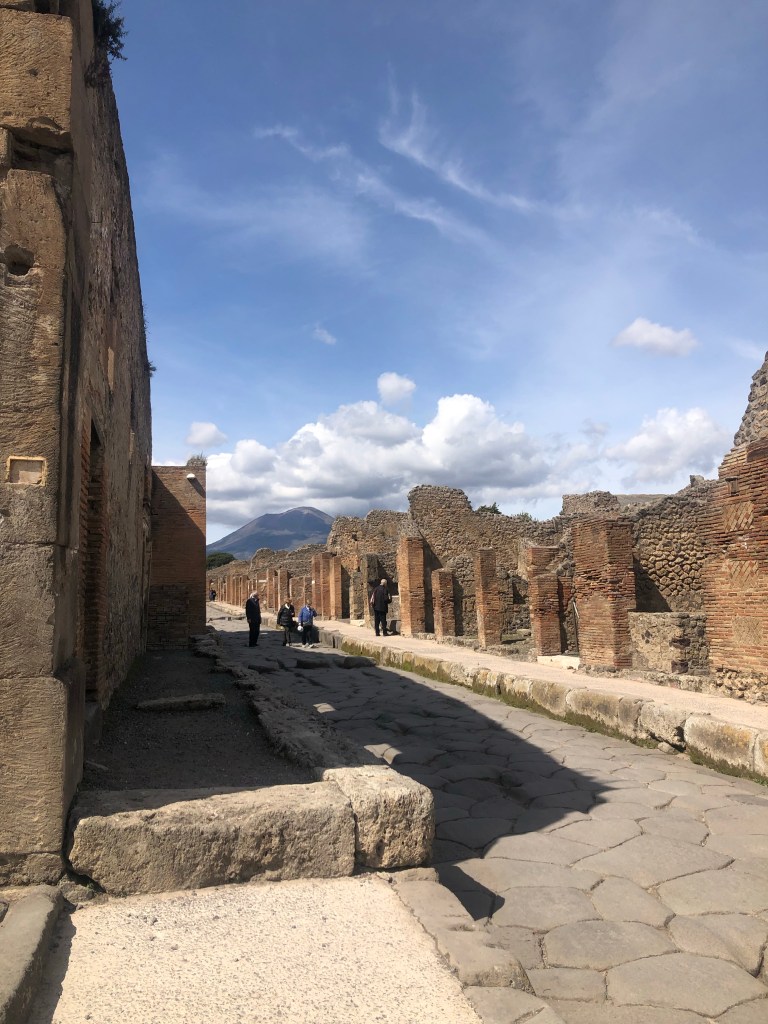
One of the many streets 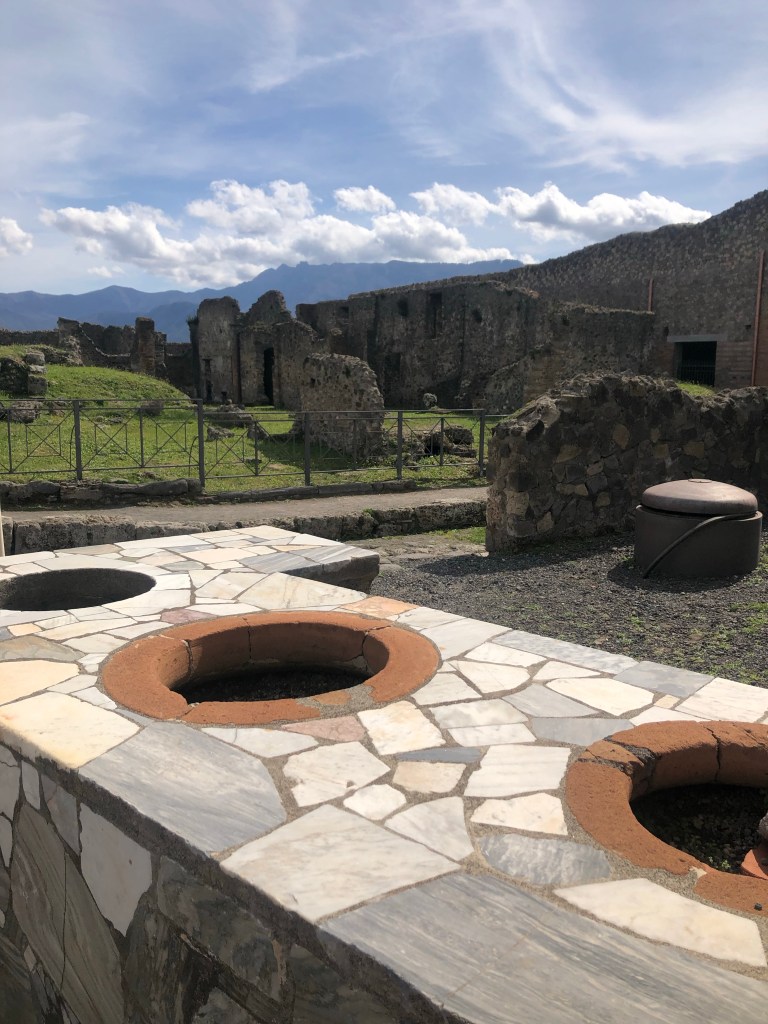
Thermopollium counter 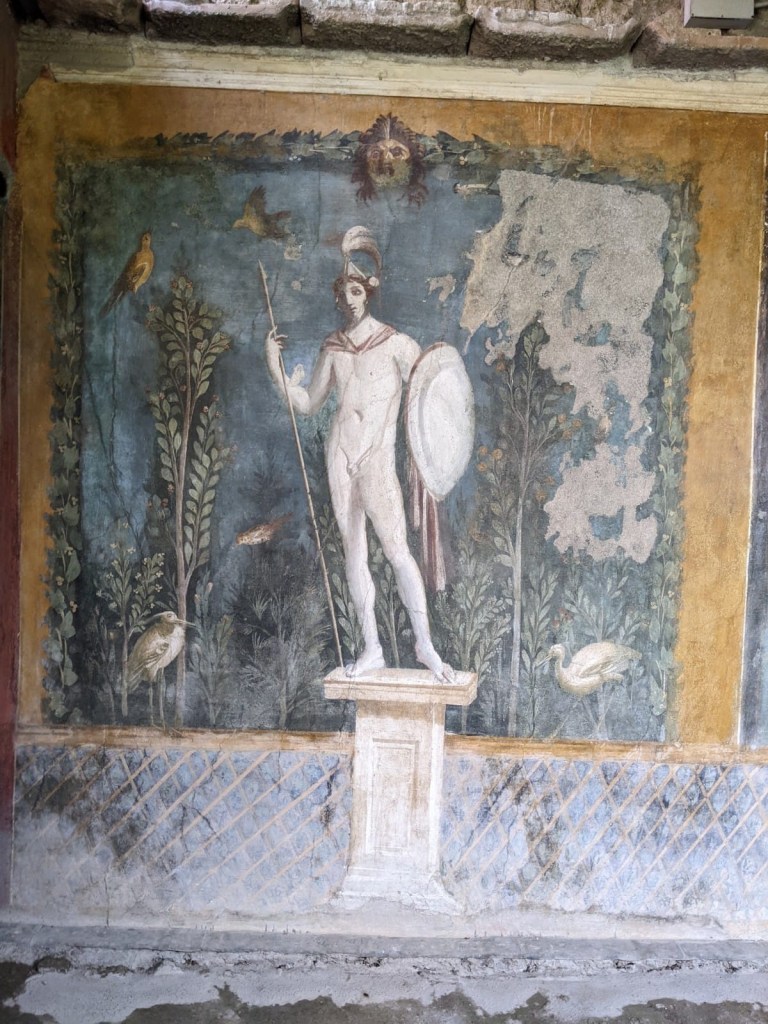
Mural 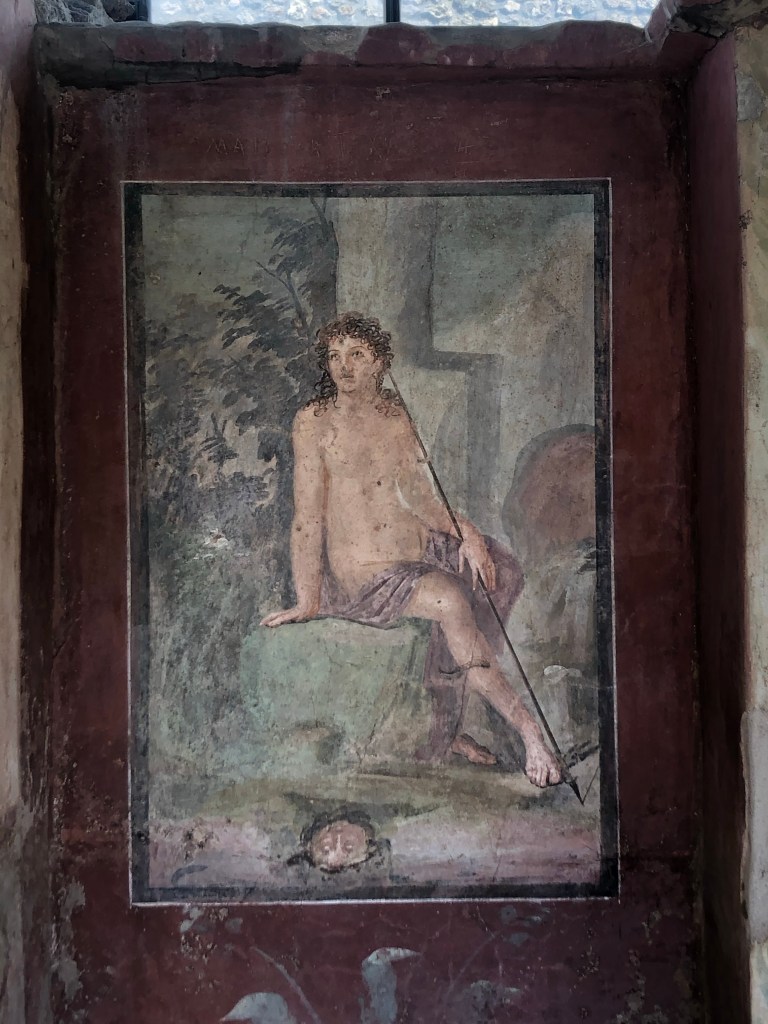
Another mural 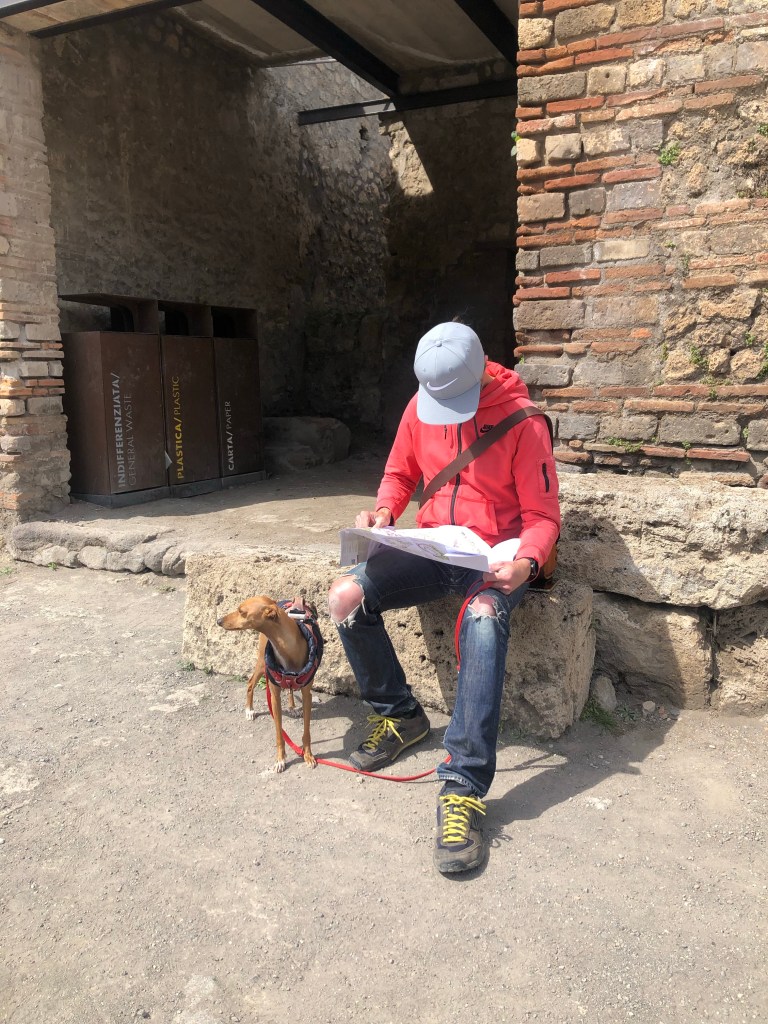
Planning our route 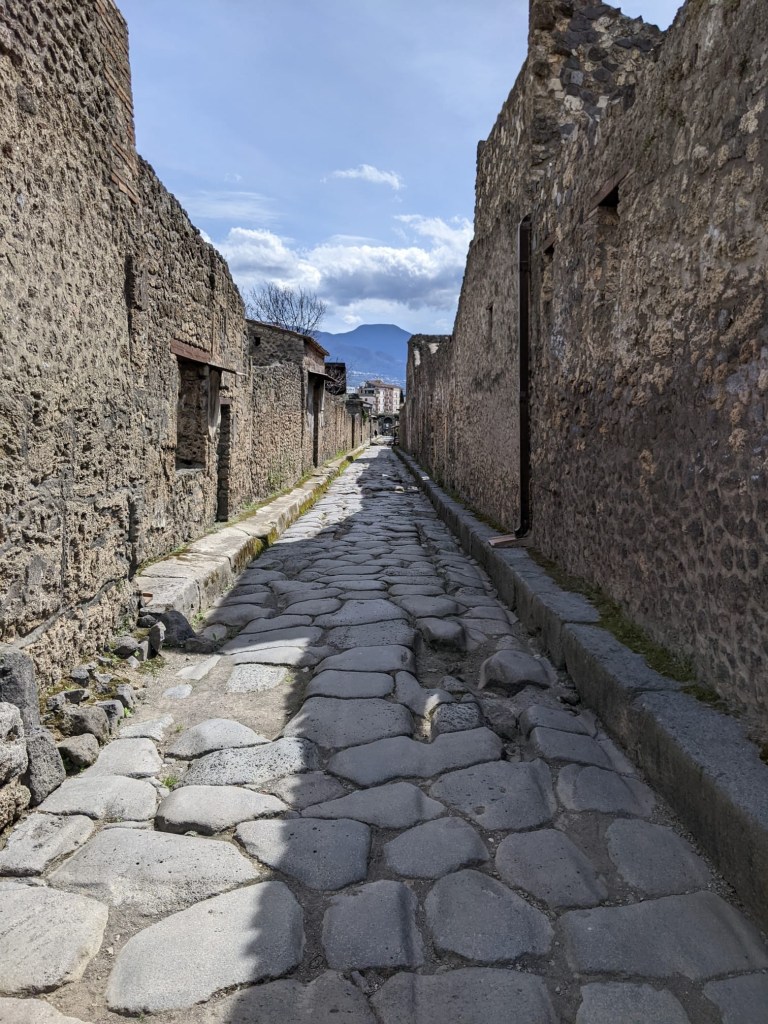
Intact cobblestones Scuderie del Peschio
We found Scuderie del Peschio, an agriturismo in the Molise province of Italy, by searching on Google Maps the area we expected to cross Italy, heading east on our way to Ancona. It got excellent reviews on both Google and Park4night (they let campers park and stay the night) so we decided it would be an ideal place to have a nice meal, and serve as a stopover point on our journey.
As the planned drive wasn’t mega-long, we intended to do a short hike in the mountain range between Calabria and Molise on our way. Unfortunately Google Maps served us, what have come to refer to as, a “Google Special”. A “Google Special” is a route that ignores an easy option, like take the autostrada 95% of the route, in favour of a cross country route typically on twisting roads, that might be marginally quicker if you had the skills of Sébastien Loeb and could drive along those roads bang on the speed limit. Since we’re in a Campervan and the route went up and down mountain passes it took much longer, but the scenery was great and we did stop for a short stretch of the legs somewhere picturesque. We’ve since swapped navigation tools to Waze (also owned by Google) and our initial experience is that it’s better.
Without exaggeration Scuderie del Peschio was exactly what we were hoping the agriturismo experience would be. It’s run by a couple who are clearly passionate about food and local produce. Since it was out of season, we and a German cycle tourer were the only customers, but the welcome was warm and the food excellent.
We shared lamb sweetbreads cooked in milk to start, super tender and flavoursome. There was a whole section of their menu dedicated to offal, something we commented on needing to explore in depth should we return.
Aileen then had a pasta of Mezze Lune stuffed with pork and nettles . James had Crioli which is similar to a fatter spaghetti served with cheese, pepper and spinach. Both these were excellent, we love greens so both dishes really appealed to our paletes. At this point we also had a dish described by our host as “a misunderstanding in the kitchen” not something we’d ordered, but the purple gnocchi with vegetables were happily enjoyed.
For secondi Aileen had perfectly cooked lamb chops with buttermilk, cabbage and chocolate powder. James really enjoyed his rabbit served with pistachio, caper berries and something similar to caponata. We washed this all down with a jug of local wine and the 10m stroll back to our parked campervan for the night completed the experience.
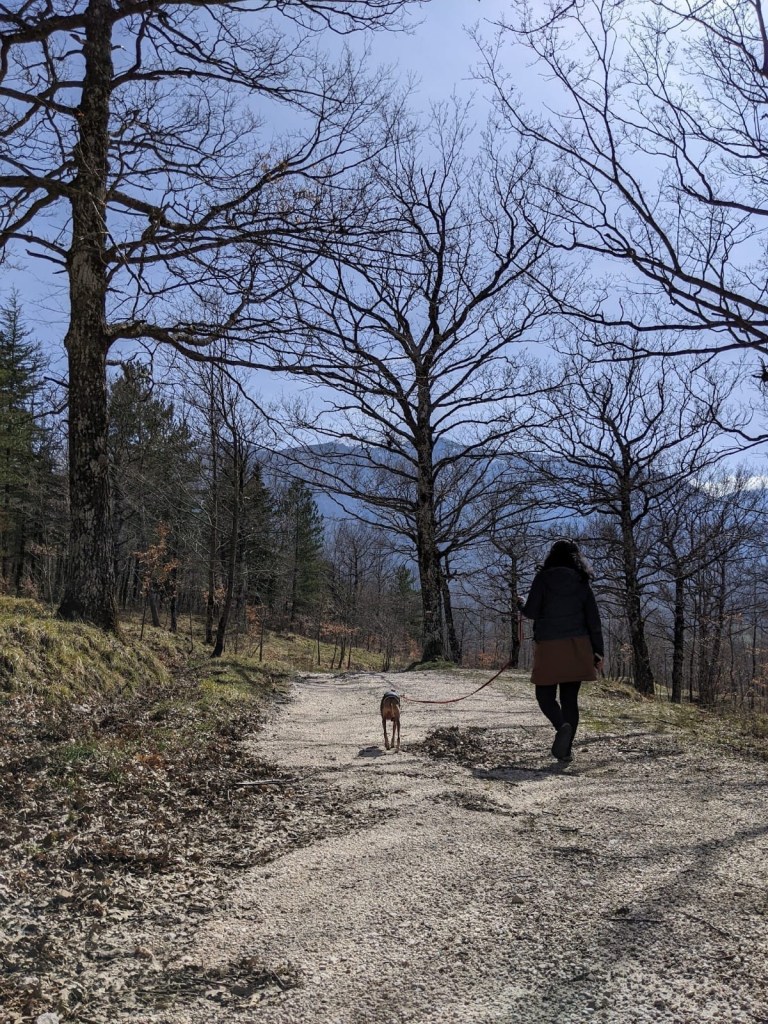
Leg stretch 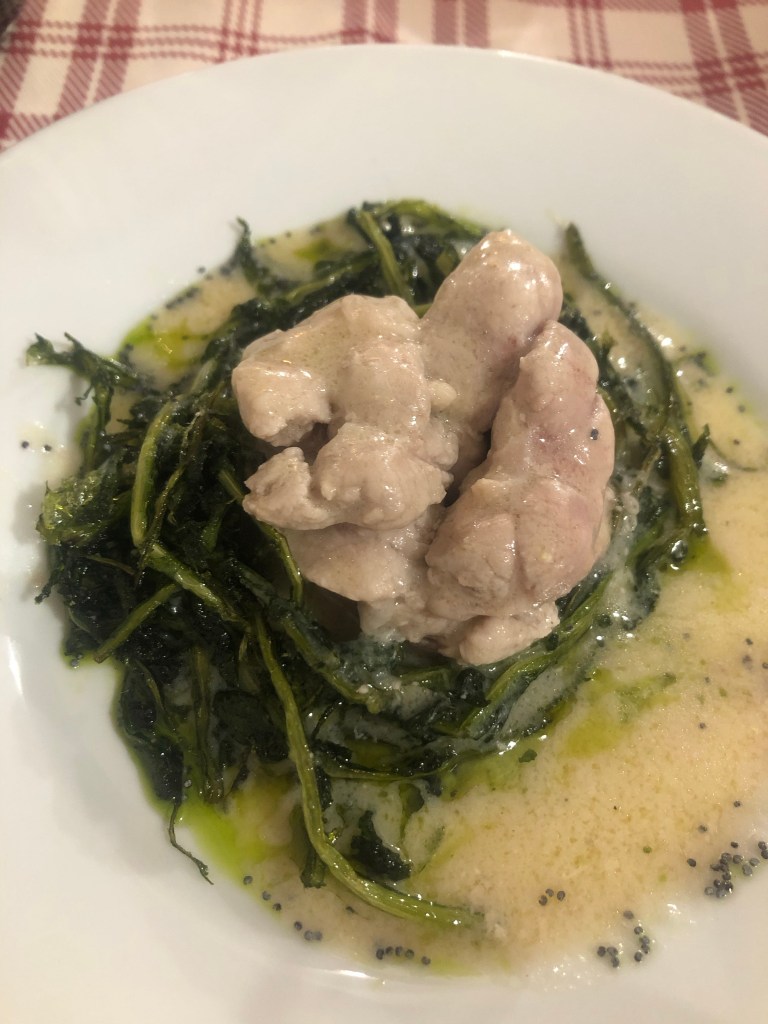
Sweetbreads 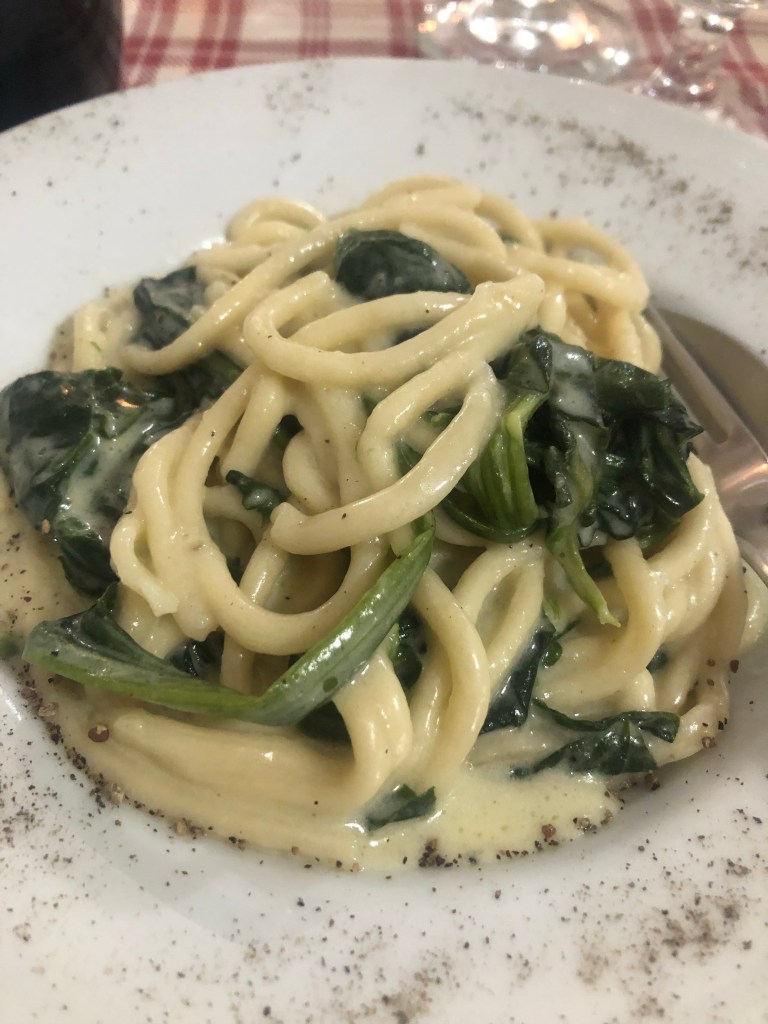
Crioli cacio e pepe 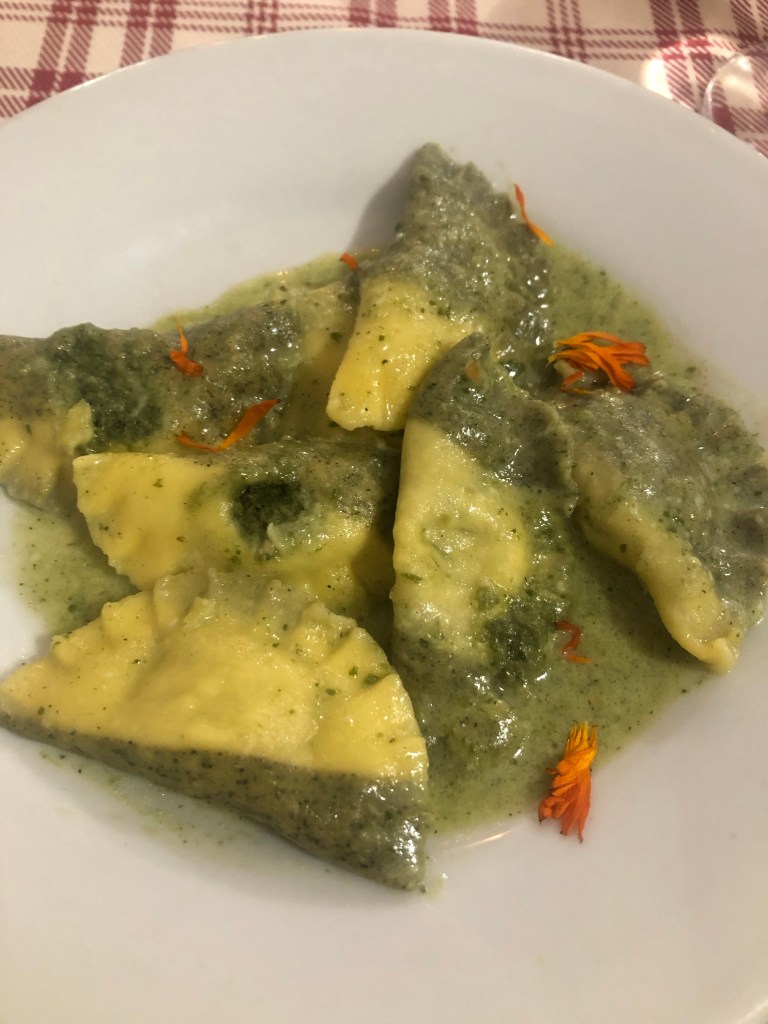
Nettle and pork mezze lune 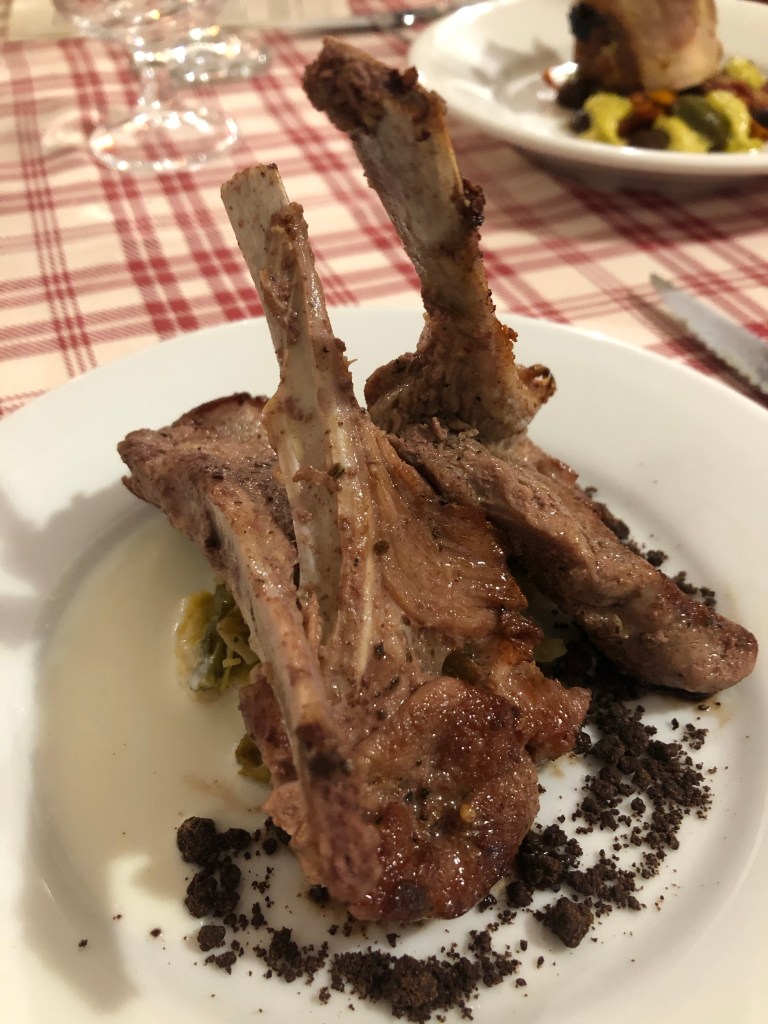
Lamb chops 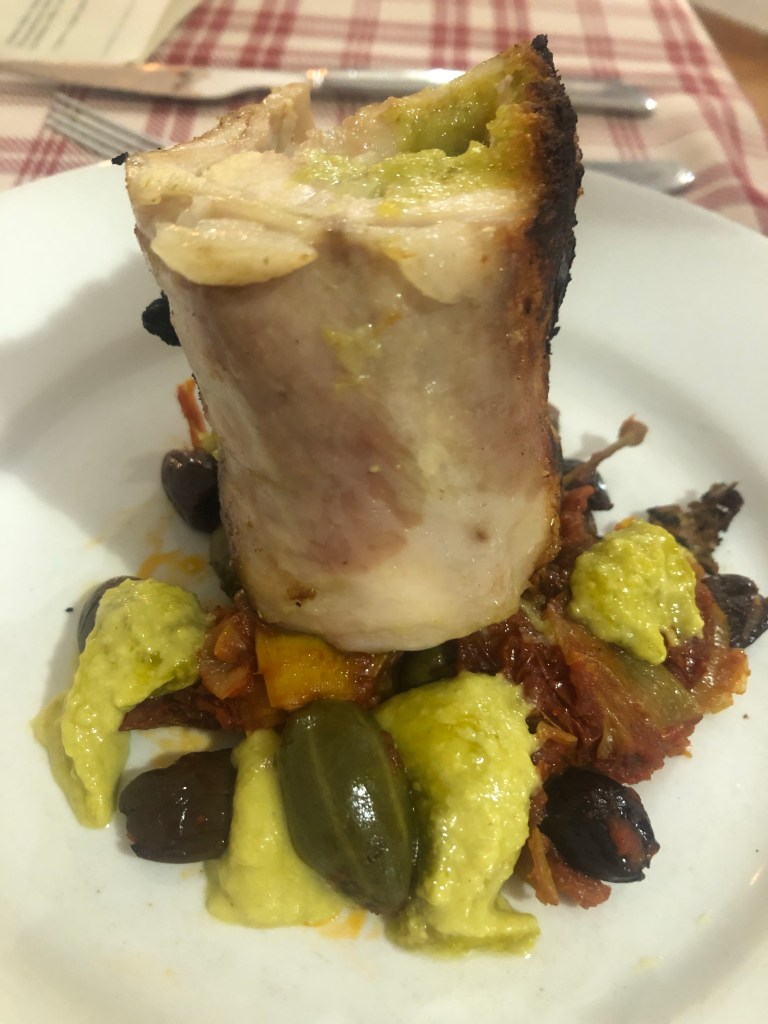
Rabbit Ferry to Croatia
The ferry from Ancona to Split takes 12 hours. Since we were doing a night crossing we booked a cabin. We were somewhat anxious about the journey for a couple of reasons:
- This would be the first time Zeus would be travelling on his EU pet passport – “paperwork anxiety” is a BREXIT reality
- It was Zeus’ first long distance boat crossing. We had no idea how he would react
Check-in took a moment. Loading onto the ferry turned out to be the most dramatic part of the journey. We had to reverse the campervan the entire length of the ferry to squeeze into a tiny space next to an articulated lorry. After that the crossing was happily without incident.
Zeus was fine with the new noises (including an excitable school group of Italian teens) and peed out on deck, even in the rain.
We prepared ourselves a charcuterie and cheese picnic washed down with some of the port we brought in Porto, Portugal. That helped us sleep although with some vivid dreams. Split and the Dalmation coast looked pretty on arrival.
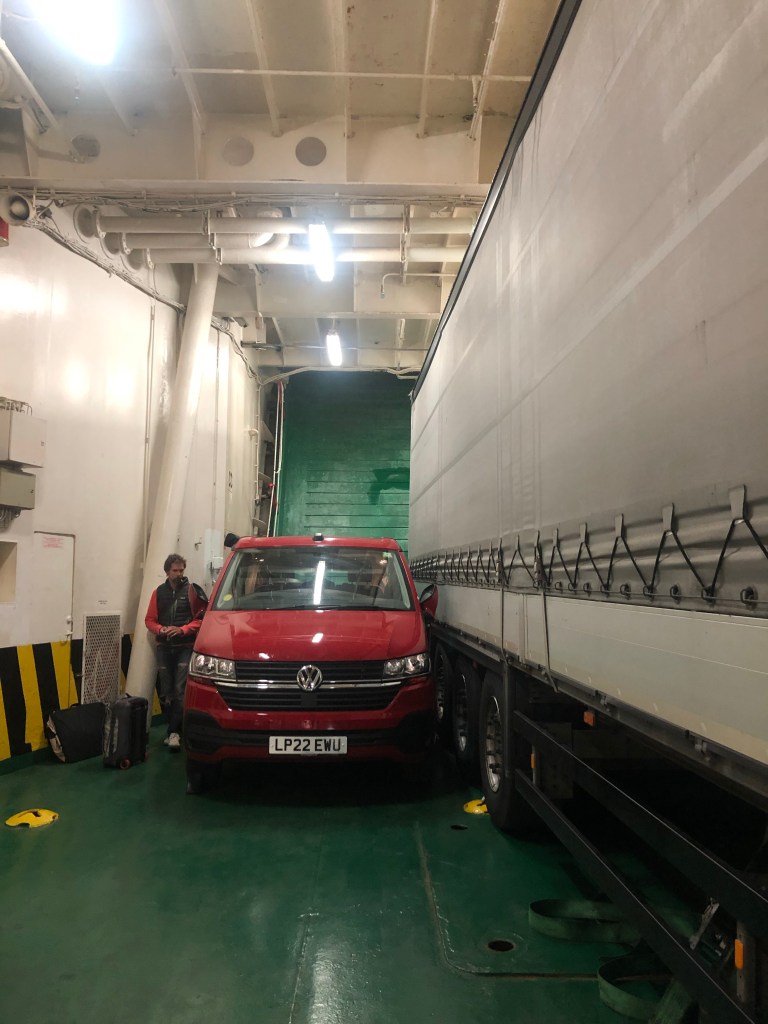
Breathe in 
Ferry picnic 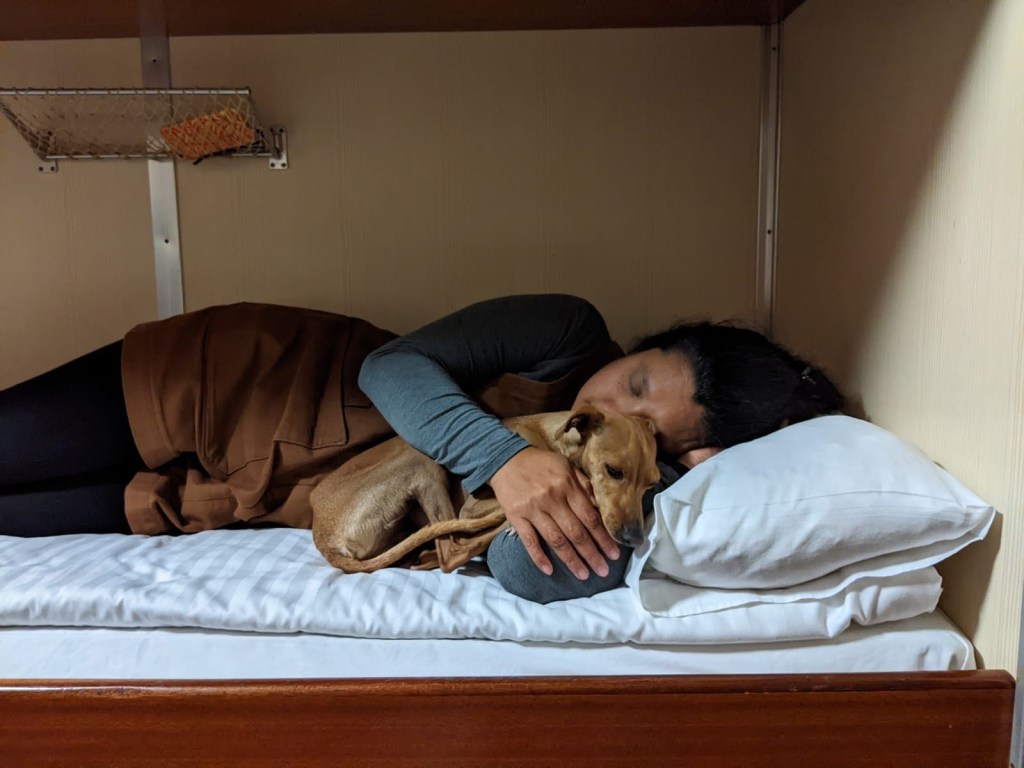
Zeus cuddles What’s Next
We’ve arrived in Croatia. We’re planning to explore some of the Dalmatian coast and its cities before heading inland to Croatia’s national parks.
 JAZ Adventures