Highlights – wine, wine and more wine, stunning countryside and opportunities for outdoor pursuits, interesting geological features (karsts and related), small but perfectly formed Ljubljana
Lowlights – we didn’t have enough time to explore this beautiful country
East Slovenia – Wine, walk and bike ride around Maribor
From Croatia we drove north to the northeast corner of Slovenia close to the border of Austria. The eastern end of Slovenia bordering Austria, Hungary and Croatia is less frequented by tourists, however James wanted to check out the famous mountain biking area Maribor, and Aileen was curious about the wines in the area.
Mulec Wines
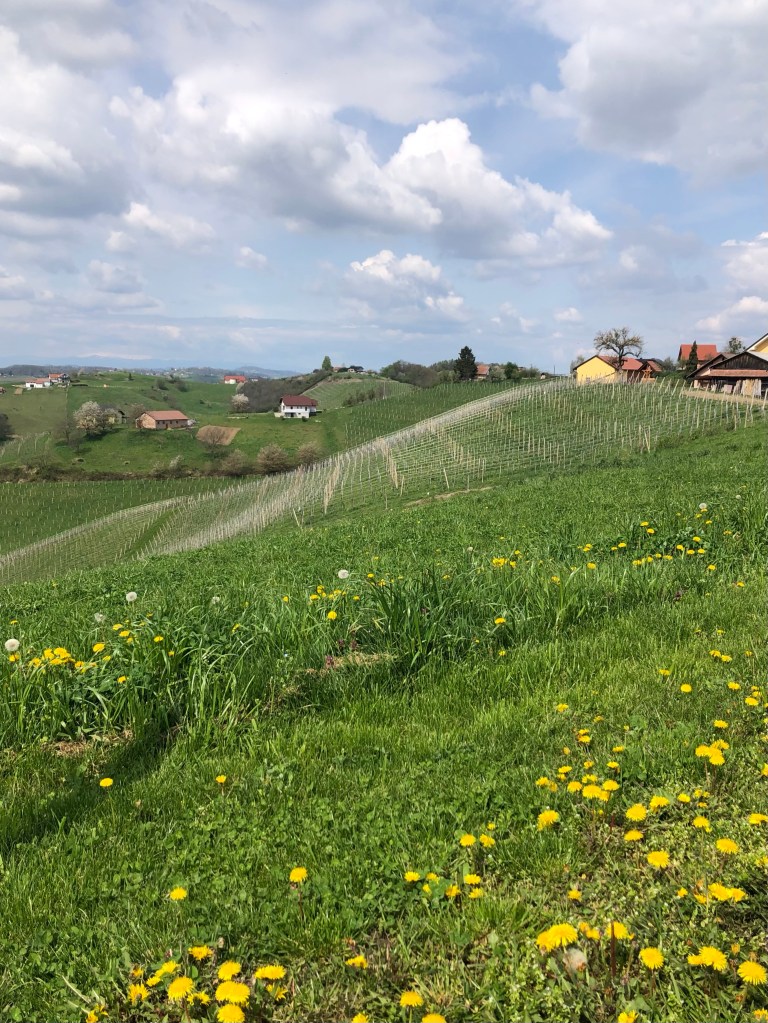
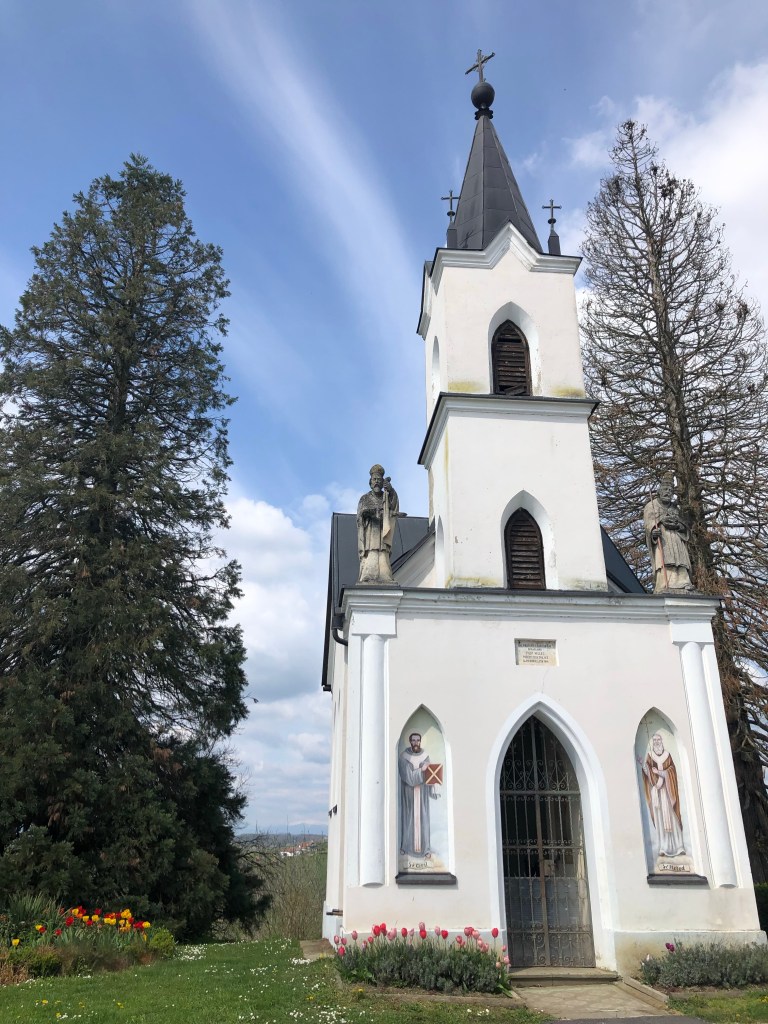
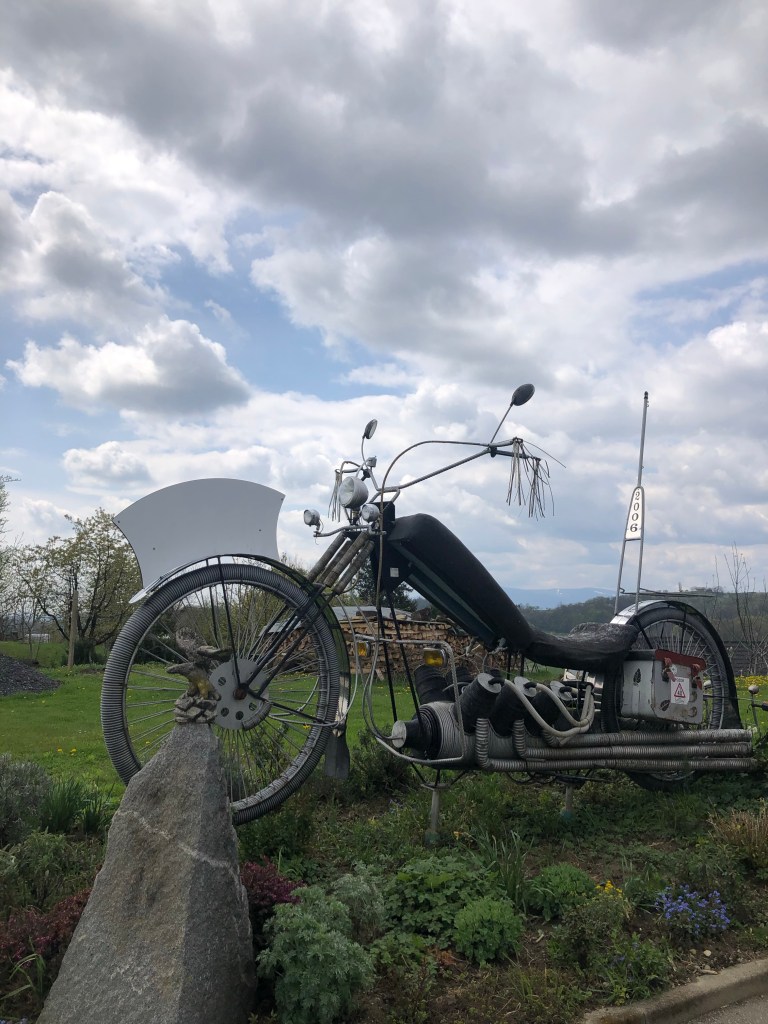
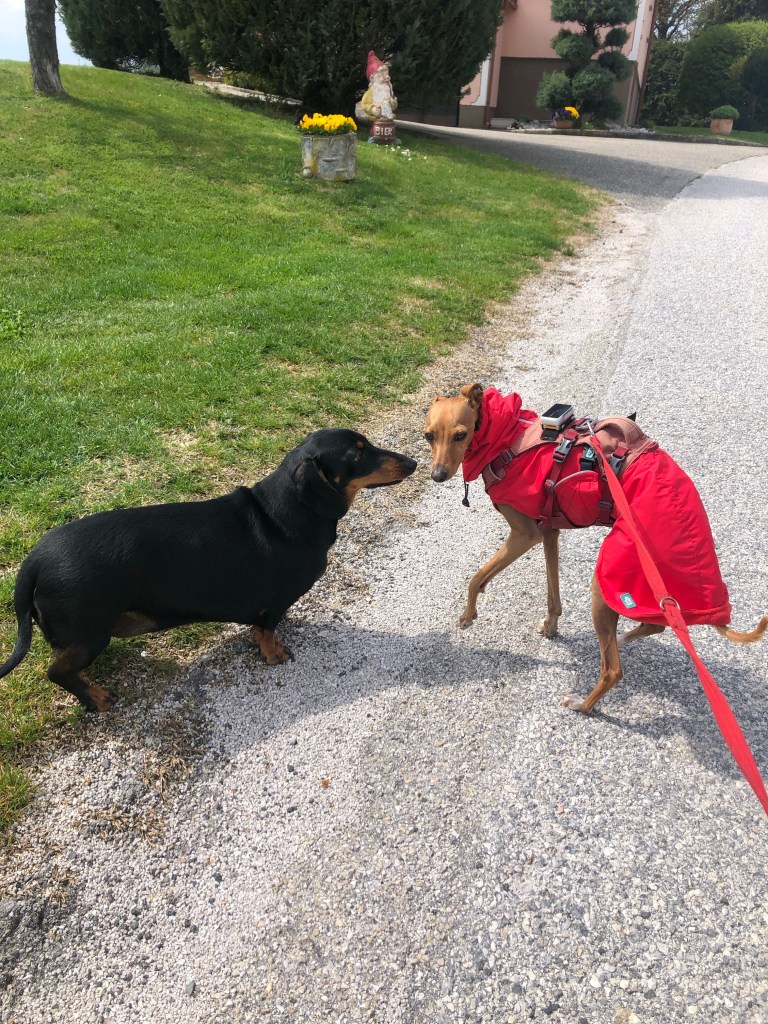
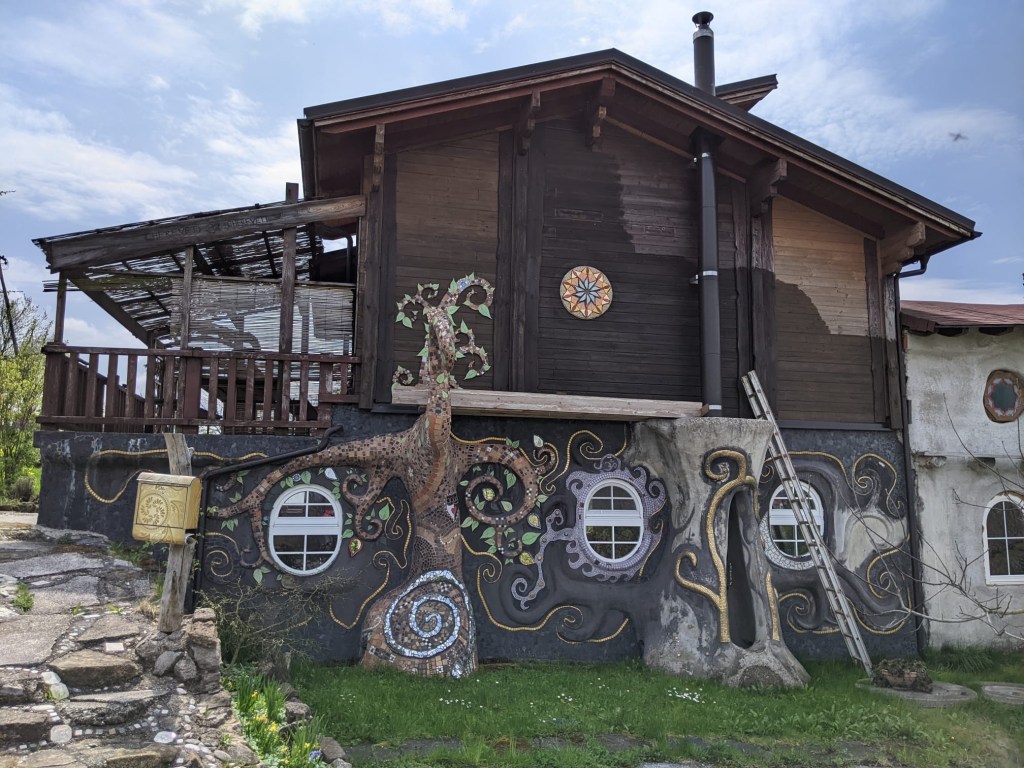
We found a small family-run vineyard Mulec Wines, in the hills north of Maribor, that offered facilities for campervan stays. The following day we did a walk through quiet lanes that surrounded where we were staying. This was an opportunity to see the local countryside of steeply vineyard-lined rolling hills and rural residences, often with well tended gardens. In one case there was a huge sculpture of a chopper motorcycle and in another, what might have been some Gaudi x Indian spiritually fusion decorative tile work.
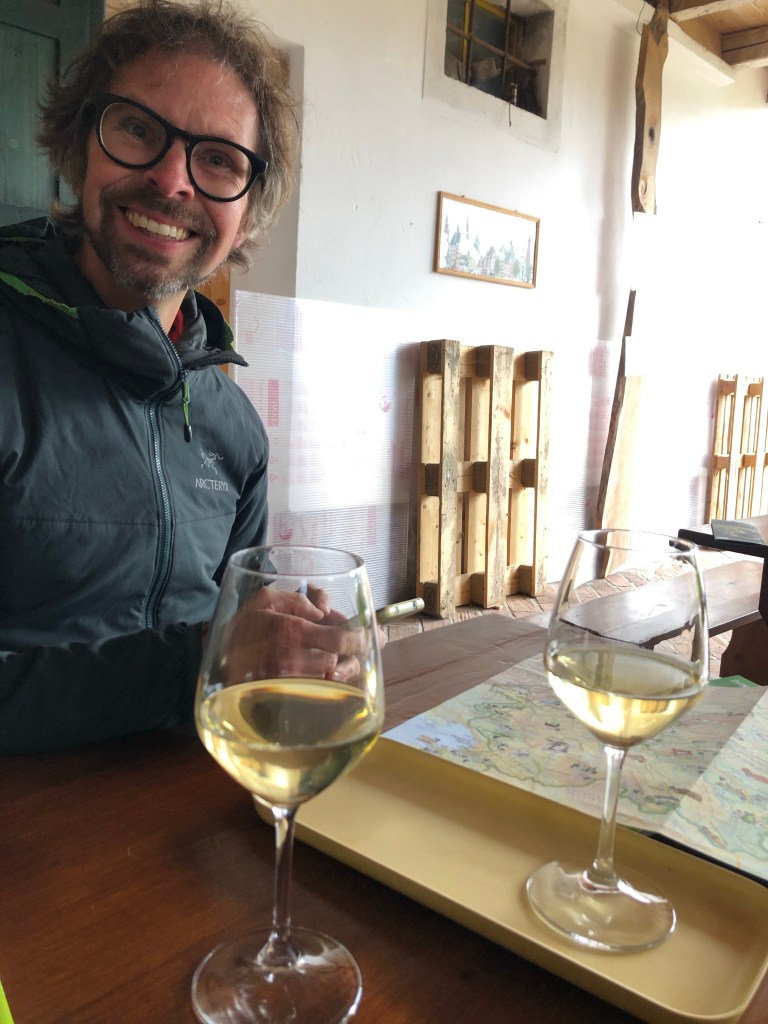
In the evening we did a wine tasting with Gregor, one of the two sons that run the winery. Mulec Wines is a family business that produces mostly white wine, including some Austrian, Hungarian varieties, given the region’s proximity to those countries. His Dad transformed their grandparents’ mixed-use farm to focus on wine making. Mum and dad are now mostly retired. Gregor, took over from his Dad in the wine-making side of the business at the age of 22 when his dad suffered a heart attack. His brother runs the marketing side of the business.
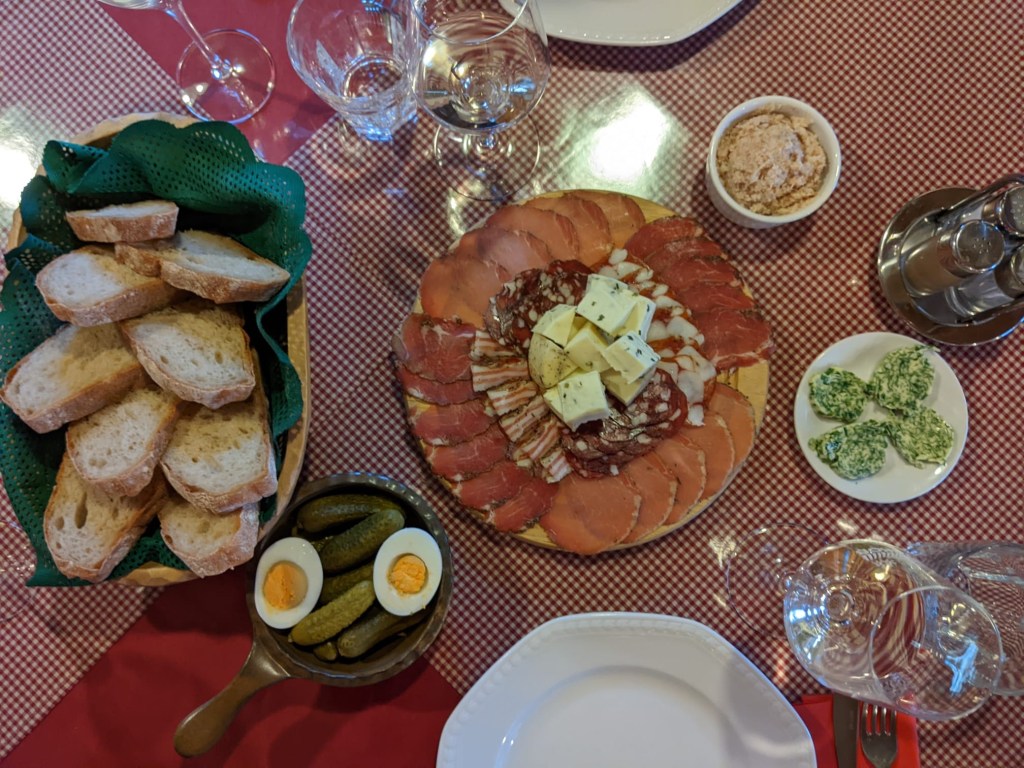
We really enjoyed the wine served with an epic selection of cured meats they make at the winery, some homemade wild garlic butter and bread, and cheese and honey from local producers. Over 3-hours and 10 glasses of wine, it was nice to hear about Gregor and his family, the evolution of their family business, and the changes in Slovenia over time as it transitioned from being a province of Yugoslavia to independence and membership in the EU. We left Mulec with 6 bottles of wine to share with friends and family back in the UK, and a delicious cured deer and pork fat sausage.
MTB Maribor
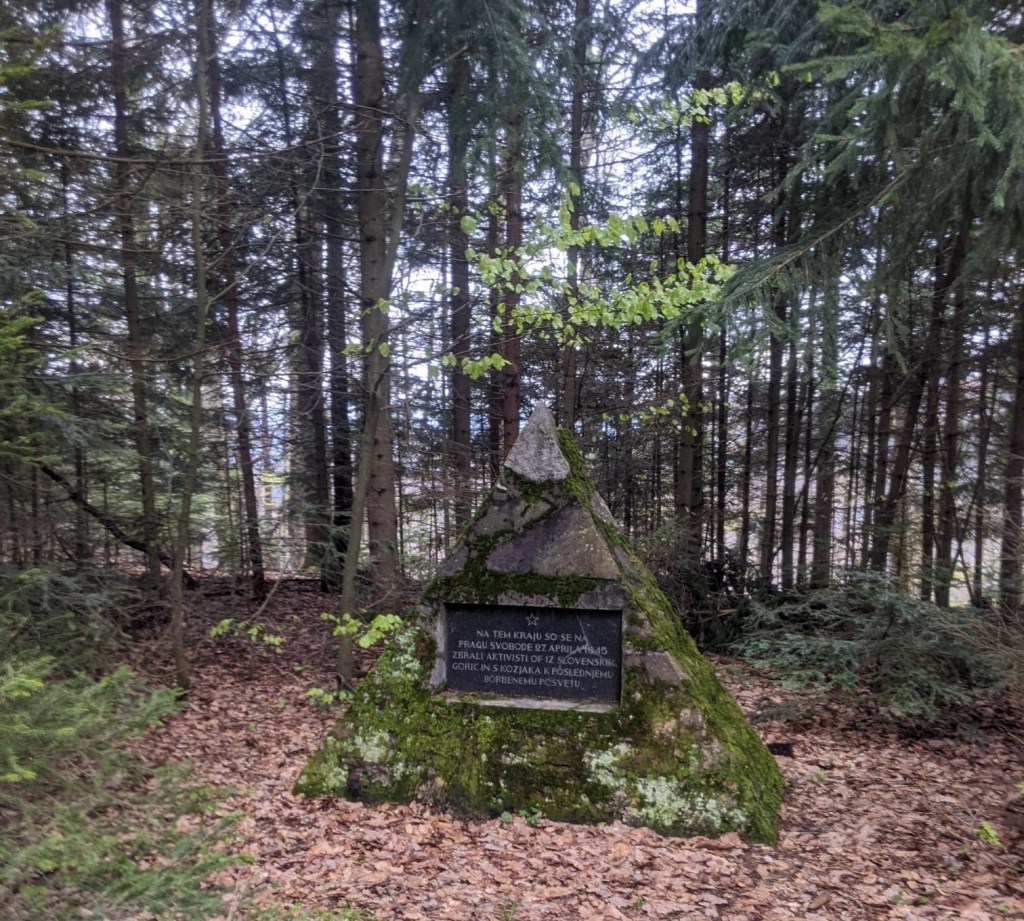
Maribor is the site of a round of the Downhill Mountain Bike World Cup. Unfortunately the bike park that has the downhill world cup course doesn’t open during the week so James didn’t get to ride the trails, but perhaps it reduced the risk of James breaking himself. Instead he did a ride on some local trails in the hills south of Maribor, and got to see bits of history from WWII.
Ljubljana
From Maribor we headed southwest to Ljubljana which sits in the centre of Slovenia. We didn’t know much about Ljubljana, other than we struggled with pronouncing it and that it’s the capital. We were very curious to check it out as we’d heard good things from various acquaintances and it’s the beating heart of an ex-Yugoslavian state that, from an outsider’s POV, has very successfully integrated into the EU and become a modern economy.
A good first impression
We parked at a camper stop just outside the city centre that was serviced by a chatty local taxi driver who completed a drop off shortly after we arrived, so we hopped into his taxi for the short drive into the city. We were hungry and curious to try some beers. We’d read somewhere that there’s a healthy microbrewery scene in Slovenia.
We headed to Pop’s Place, a popular riverside burger place with a good beer range. We sat at a table outside, ordered two “The Boss” burgers – burger patties made with dry-aged grass-fed Slovenian beef, Stilton cheese, grilled onion marmalade and truffle aioli. They were epic. The beers we ordered to wash them down were excellent too. We were quite content so we ordered beer tasting flights and watched the Ljubljana nightlife buzz go by.
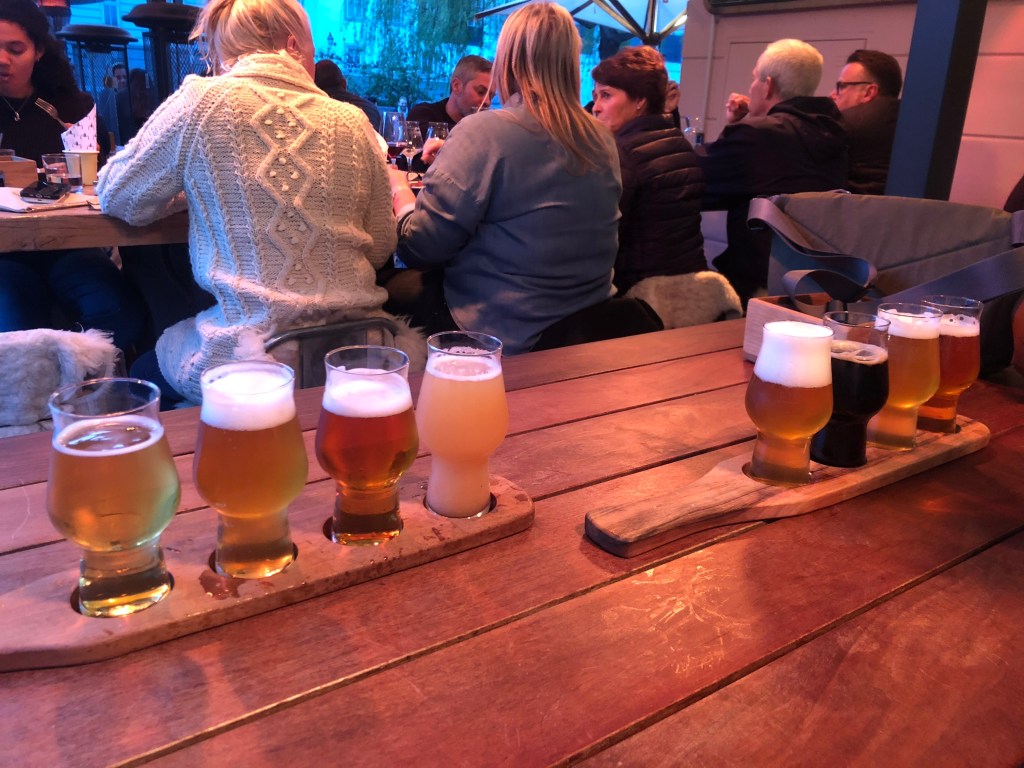
Afterwards we decided to go for a stroll to find a taxi. We walked by a park where a euro-metal band was playing loud music to a throng of happy youths. We returned to our camper stop with full bellies, a good beer buzz, and good first impressions of Ljubljana.
Walking and Eating Tour
The following day we decided to explore the city centre some more, but the local taxi man was incognito and there was no easy way to buy tickets for the bus so we decided to do the 45 minute walk into town. A good part of the walk was along the river Ljubljana. We were rewarded with a beaver sighting!
A few hundred metres on we ran into Wine Bar Šuklje, a wine bar situated on the riverside and stopped to savour some Slovenian wines and people-watch. The sun was shining, the views of the river and city’s castle were lovely, the wine was good, and the steady stream of pedestrians, cyclists, dogs and all-around positive buzz further added to our favourable impression.
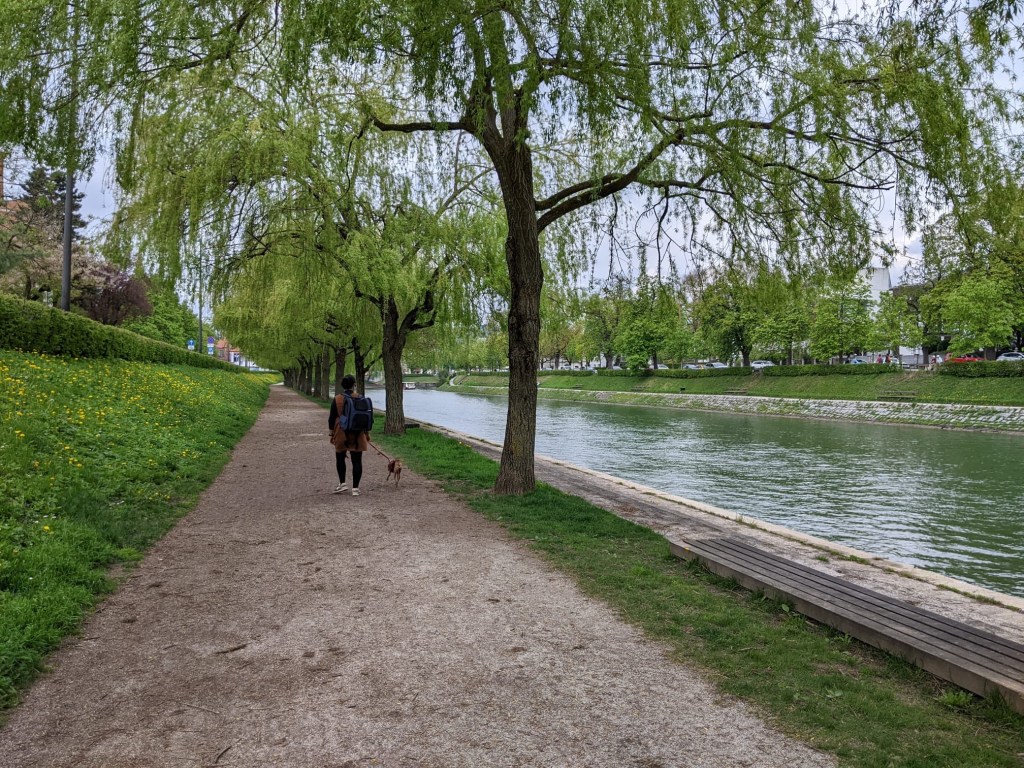

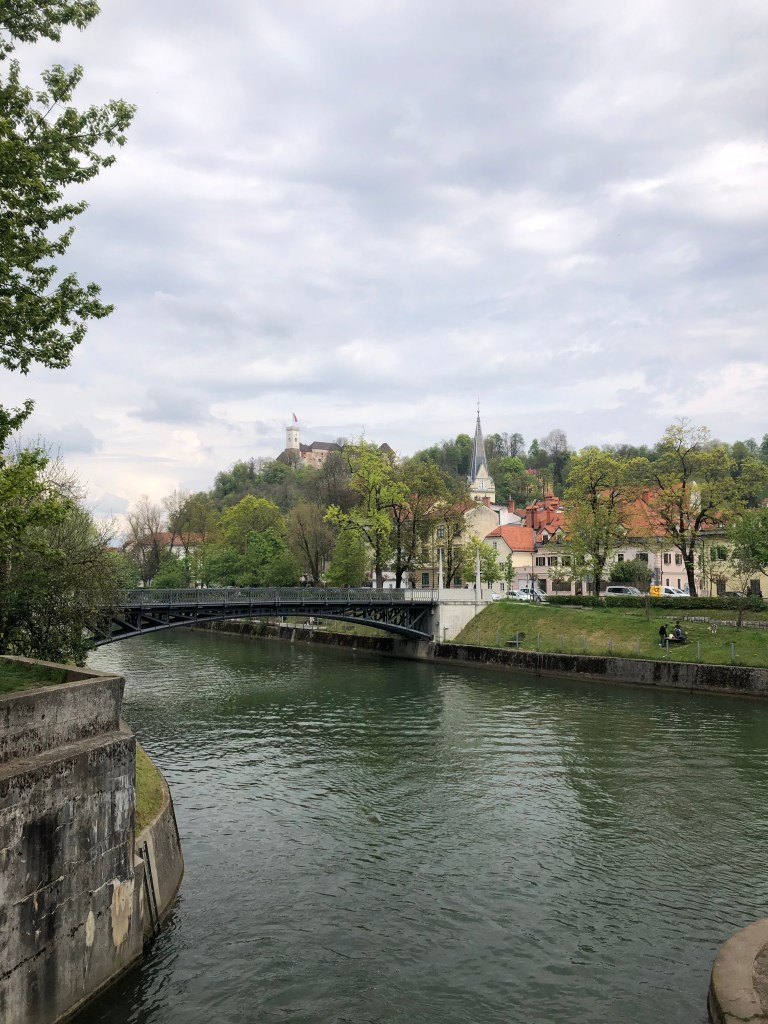
We then fashioned ourselves a little walking/eating tour:
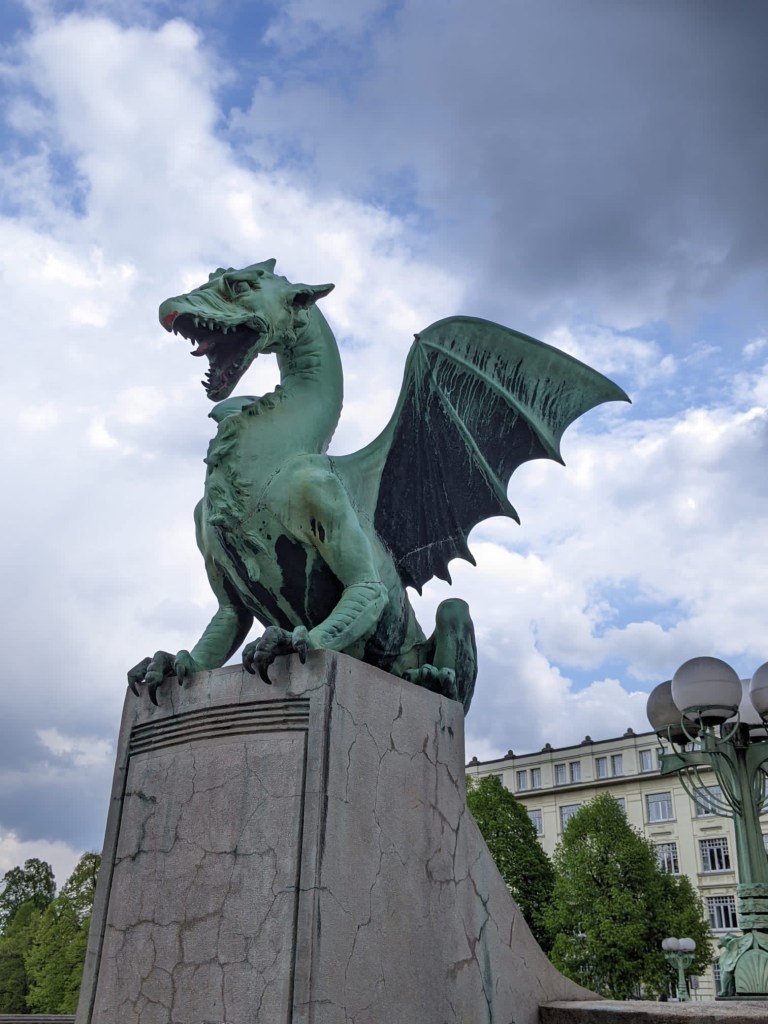
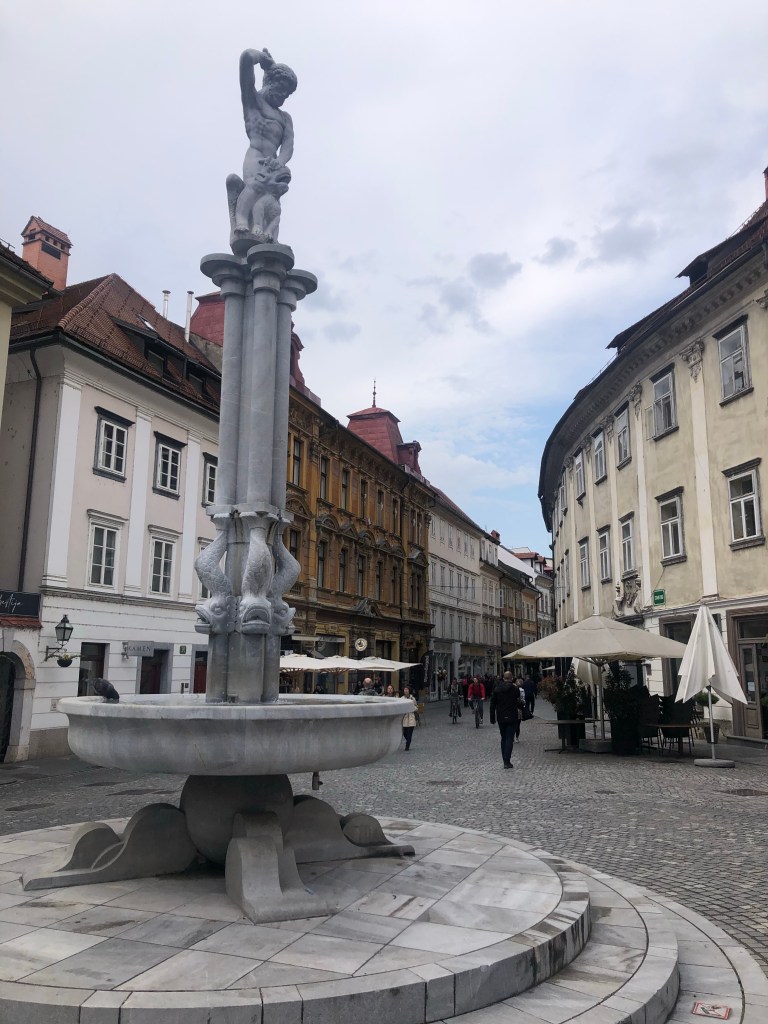
- Zmajski Most – our first stop was this bridge famous for its four bronze dragon statues (one on each corner), now the symbol of Ljubljana.
- Central market/food truck market – From Zmajski Most we crossed the bridge and headed to the Central Market, and a throbbing food-truck market.
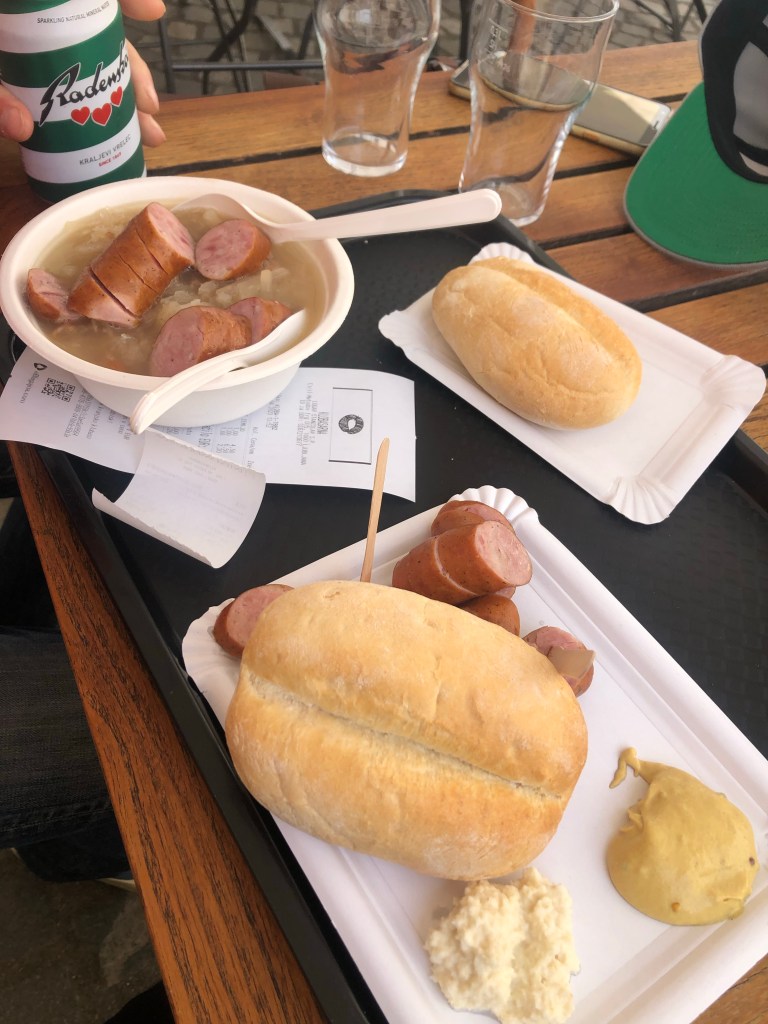
- Klobasarna – We ducked our way through the crowds of the food truck market, and instead headed to Klobasarna tucked away in the street behind the market. Aileen was on a mission to try some Carnolian sausage, Slovenia’s most famous sausage. It’s similar to Poland’s kielbasa. There are strict rules on how it is made e.g. it must be made with at least 75% pork meat, and no more than 20% fatty pork. It has to be seasoned with sea salt from local salt pans, garlic, black pepper, and saltpetre. Nothing more. It’s typically served with a roll of bread, mustard and horseradish. We also tried something they call Istrian stew which was chunks of sausage in a sauerkraut stew.
- Cheese Štrukjli (Attempt 1) – It started raining and Aileen was keen to try Cheese Štrukjli (cheese dumplings), a savoury dish of cottage cheese in pastry, so we ducked into Gostlina Sokol, a touristy looking restaurant in the old town of Ljubljana to try some. It was sad. The dumpling itself was dense and gummy like it had been microwaved. The cheese sauce tasted like packet cream of mushroom sauce. We left disappointed.
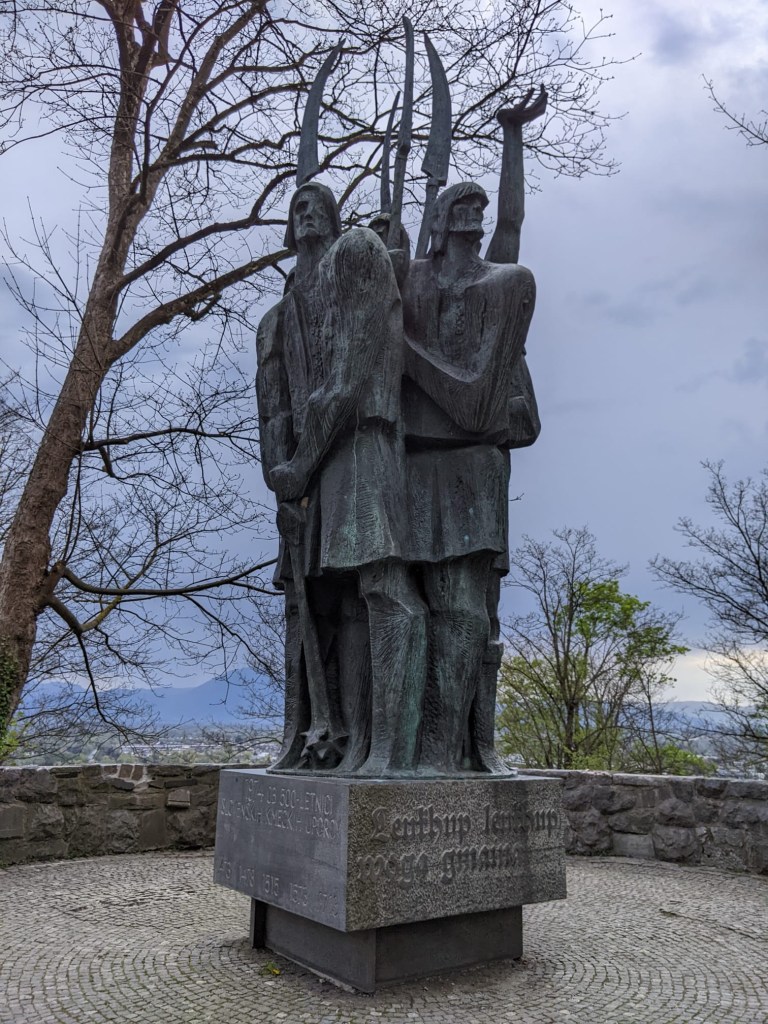
- Ljubljana Grad – We wandered around the old town a bit more, and decided to take one of the several paths that leads up to Ljubljana Castle. There’s a furnicular that goes up to the castle, but we felt we needed to burn the unnecessary calories inflicted by the štrukjli. The castle sits on a promontory hill in the centre of town. It is surrounded by parks and walking trails where one can have great views of Ljubljana. There is also an interesting sculpture at the top of the hill by the castle that pays tribute to the Peasant Rebellions that occurred over 250 years between 15th and early 18th centuries. Read more about this interesting time of Slovenia’s history here.
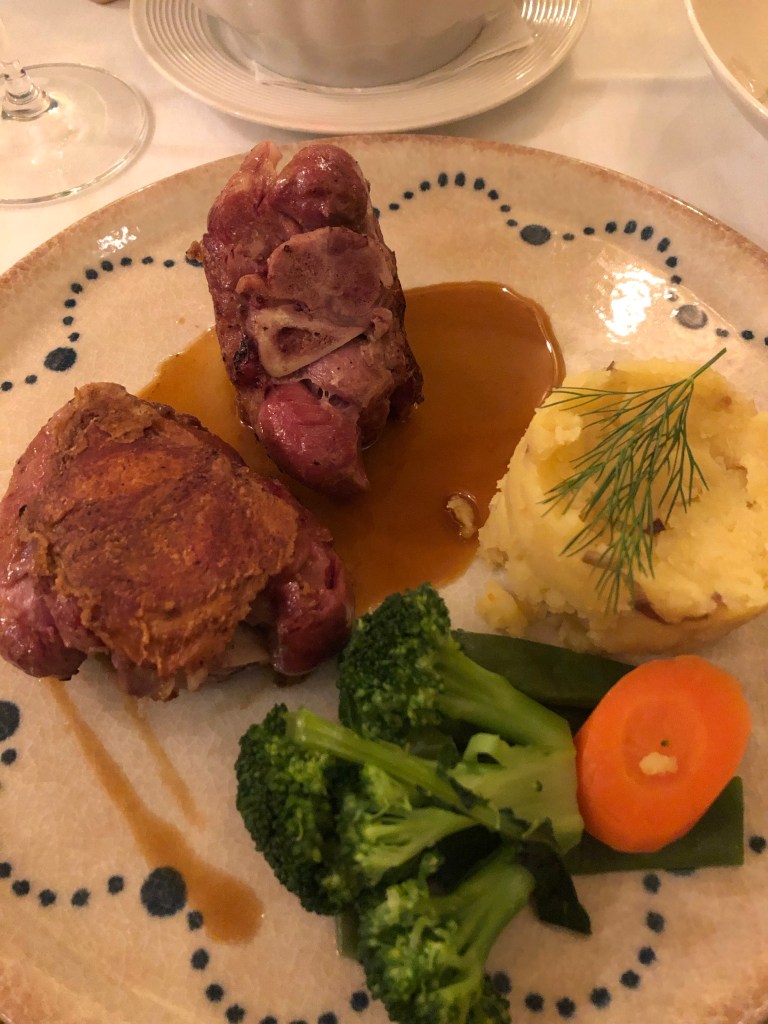
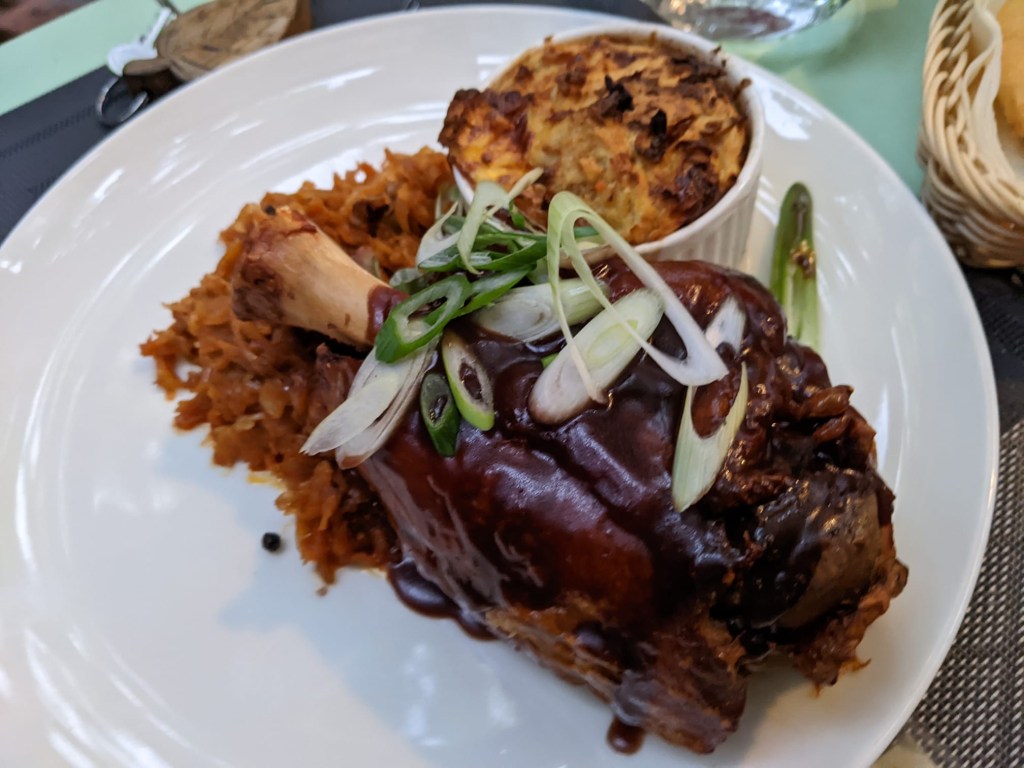
- Cheese Štrukjli (Attempt 2) – The walk had the benefit of cheering Aileen up. So much so that on descending back into town we stopped at Julija, a charming restaurant in the old town that serves traditional Slovenian food. Restaurants in Slovenia area’t typically dog-friendly, but it was still early for dinner so they let us in and we were seated at a table where Zeus could snooze while we dined. We ordered cheese štrukjli and roasted pork knuckle. Both were delicious. The štrukjli in particular was a hundred million times better than Attempt 1. The pastry and cheese were light and creamy, the porcini mushroom sauce tasted lovely and earthy and complemented the dumplings well. We washed it all down with a nice Slovenian red wine.


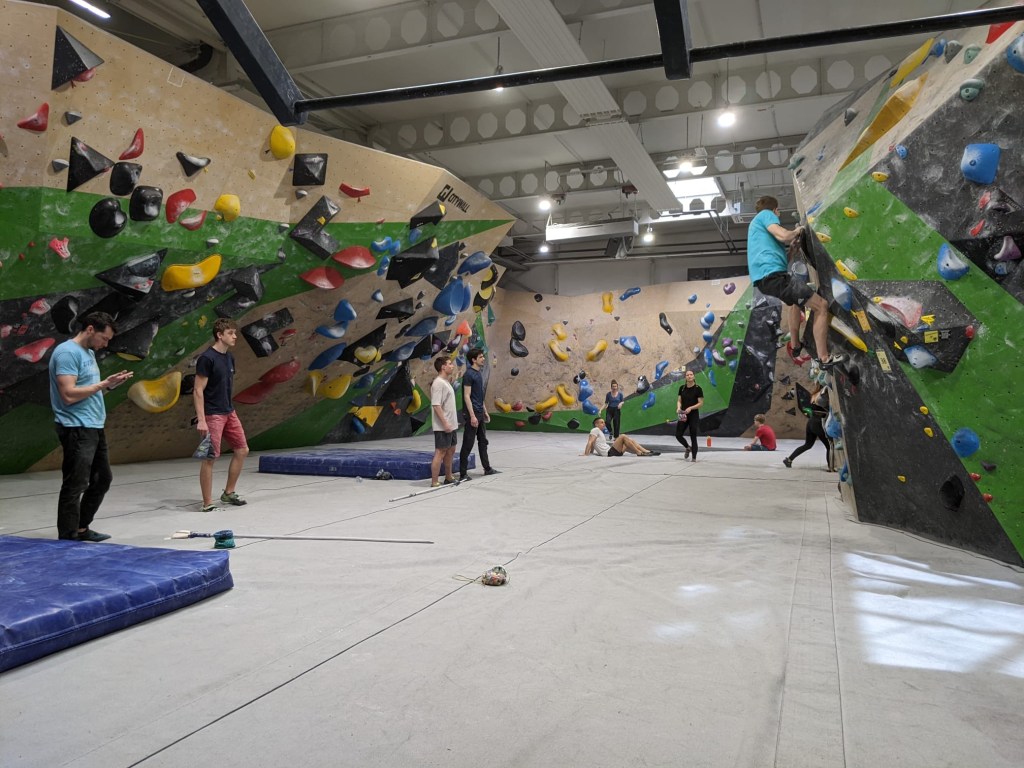
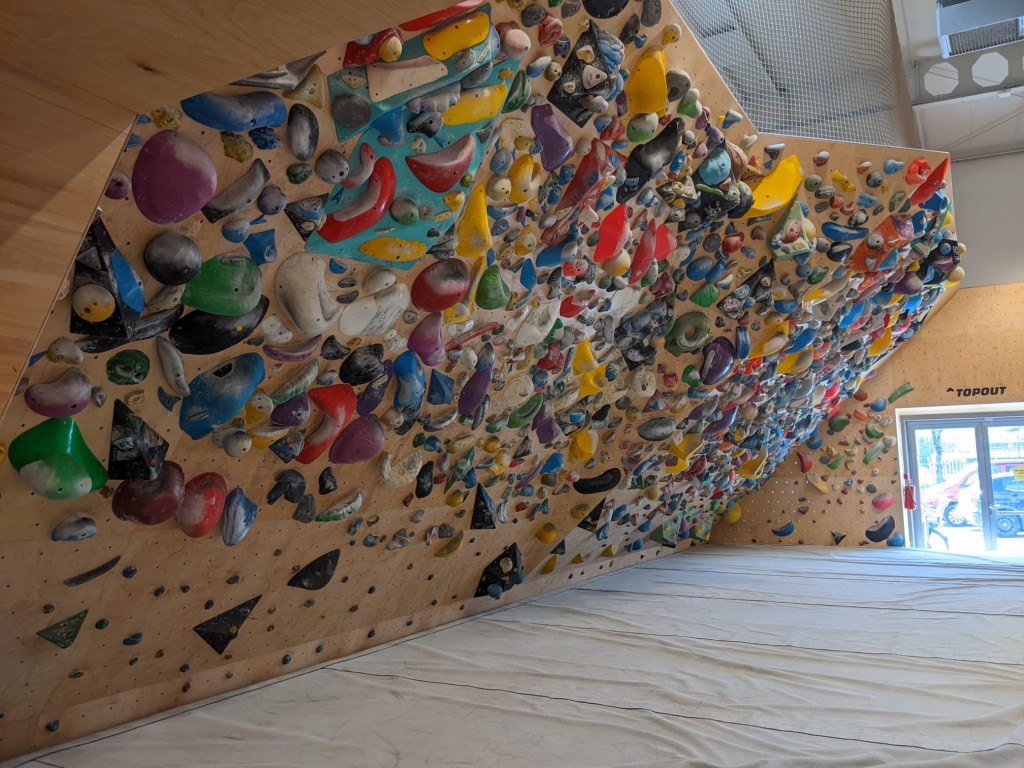
The next day we stopped at Boulder Scena, a climbing wall, on our way out of the city. It was a very good wall. We reflected afterwards that living in Ljubljana could be quite nice.
Southwest Slovenia: Karst landscape and wine
From Ljubljiana we headed southwest. Southwest Slovenia borders Croatia and Italy and is known for its karst landscape and also has some famous wine regions. Slovenia’s karst landscape is characterised by disappearing lakes and rivers, large caves and sinkholes. This region of Slovenia is formed of fairly soft limestone similar to that found in the Italian Dolomites, but creating some different and interesting geography.
Rakov Skoljan
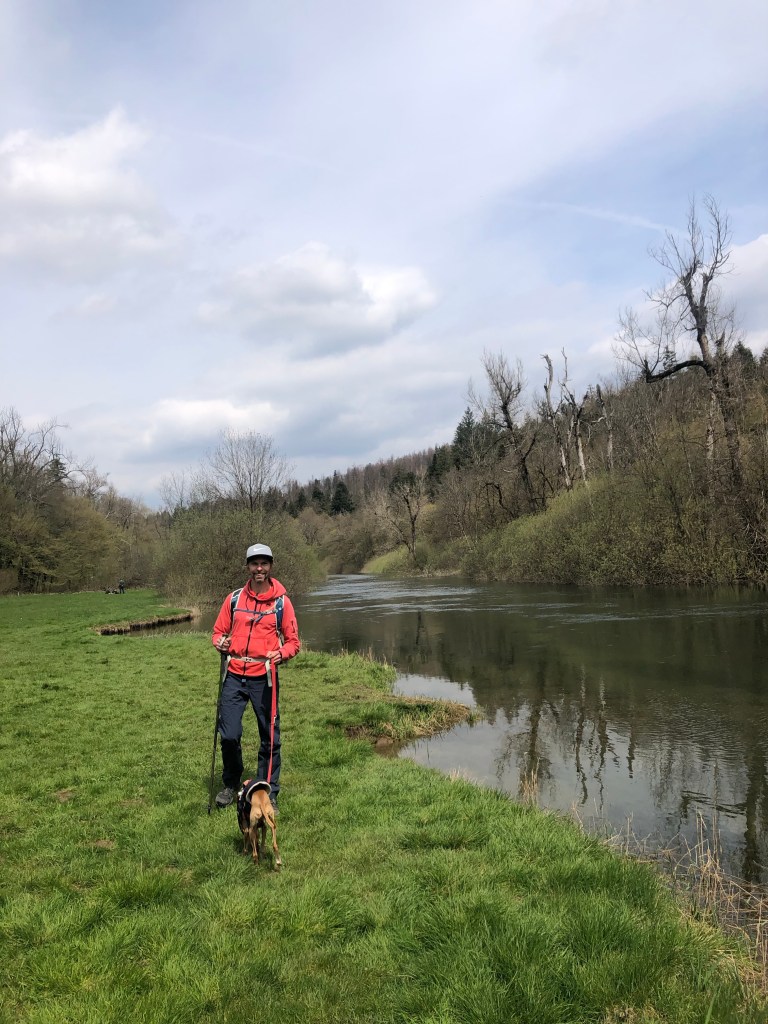
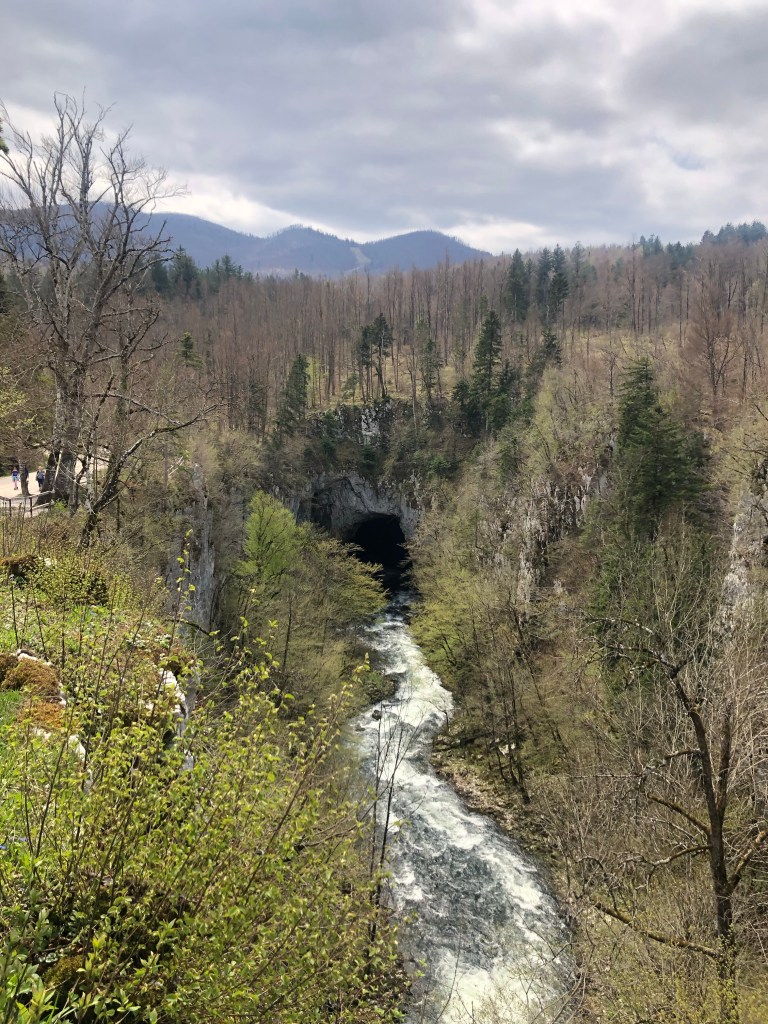
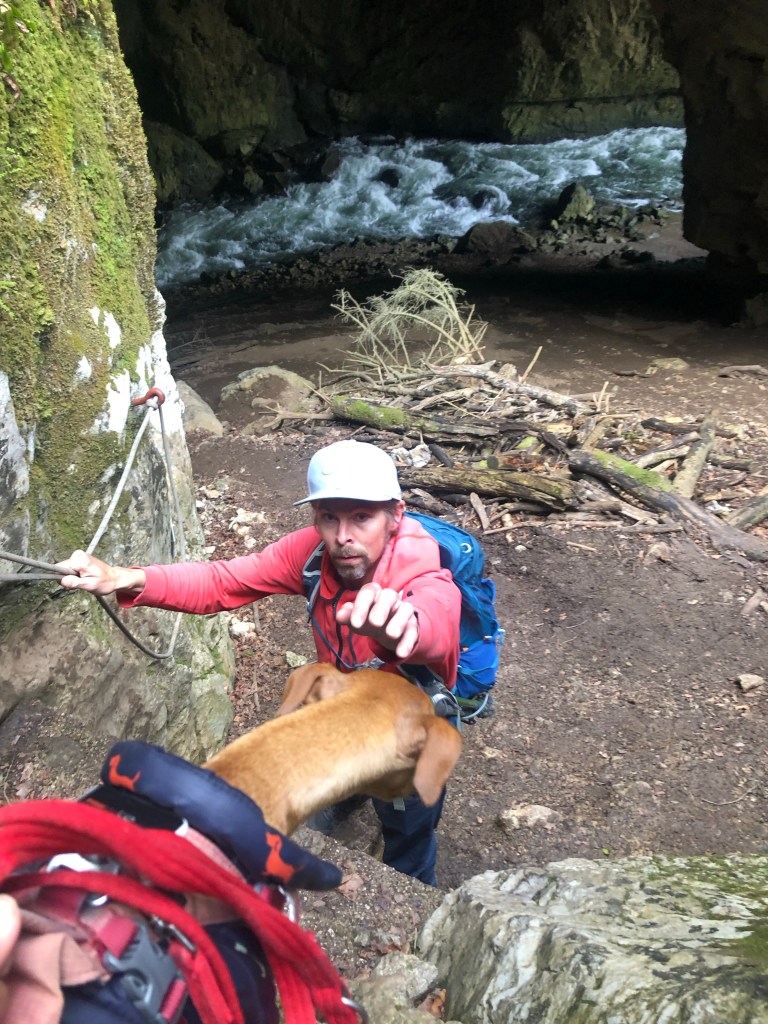
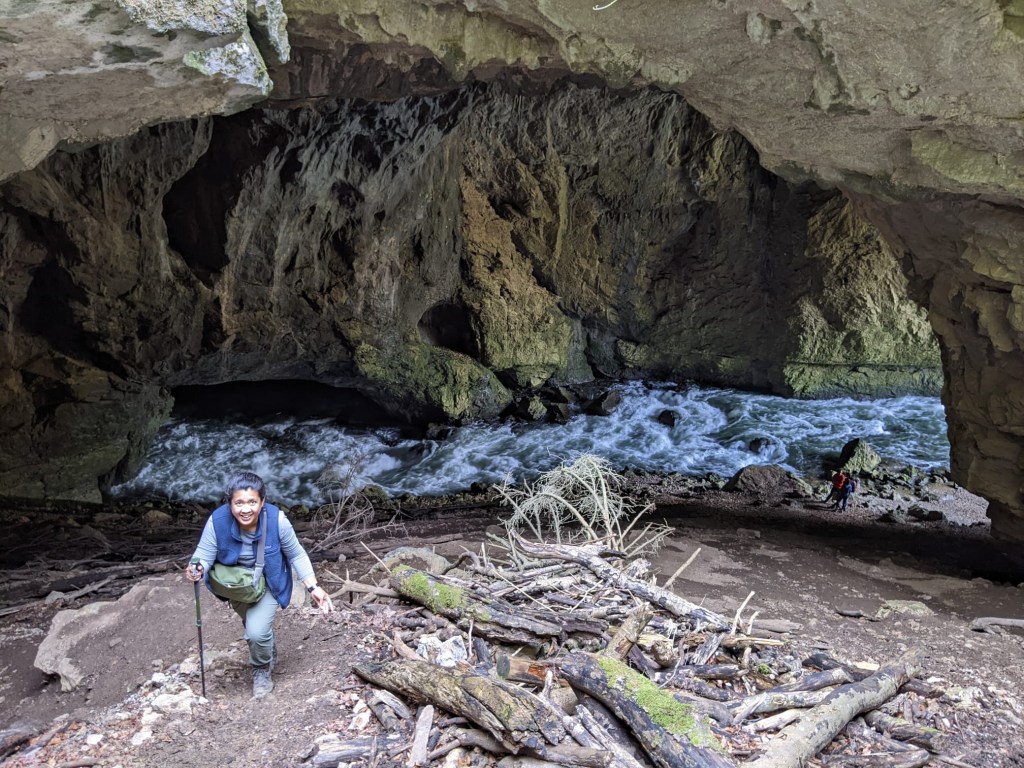
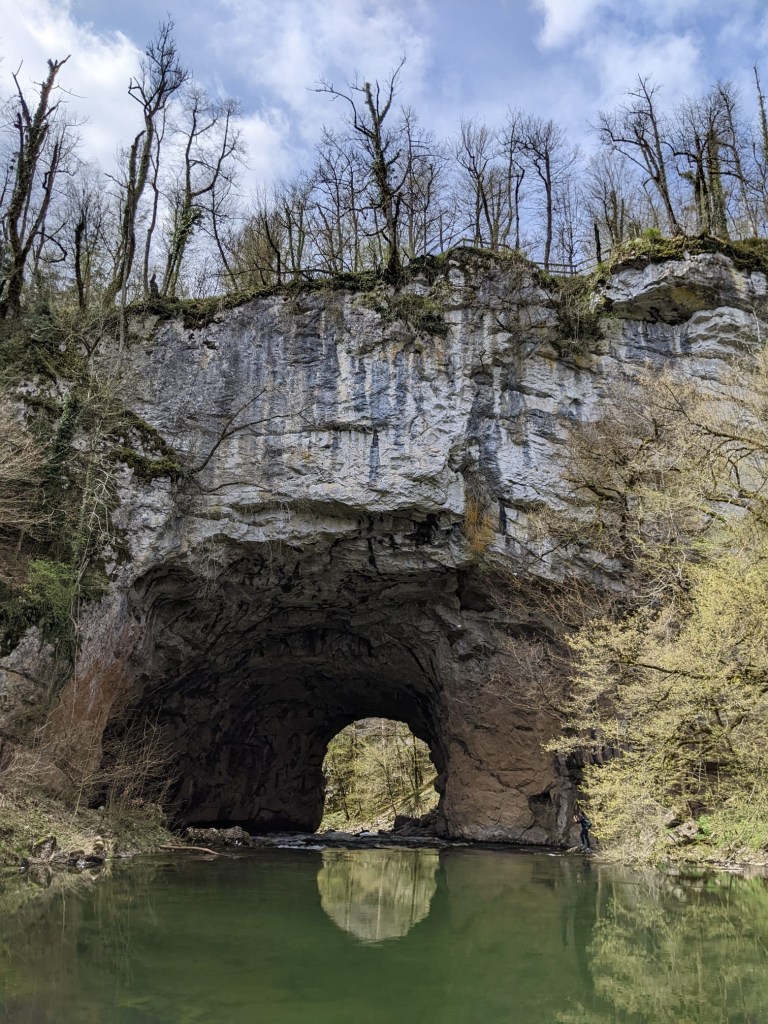
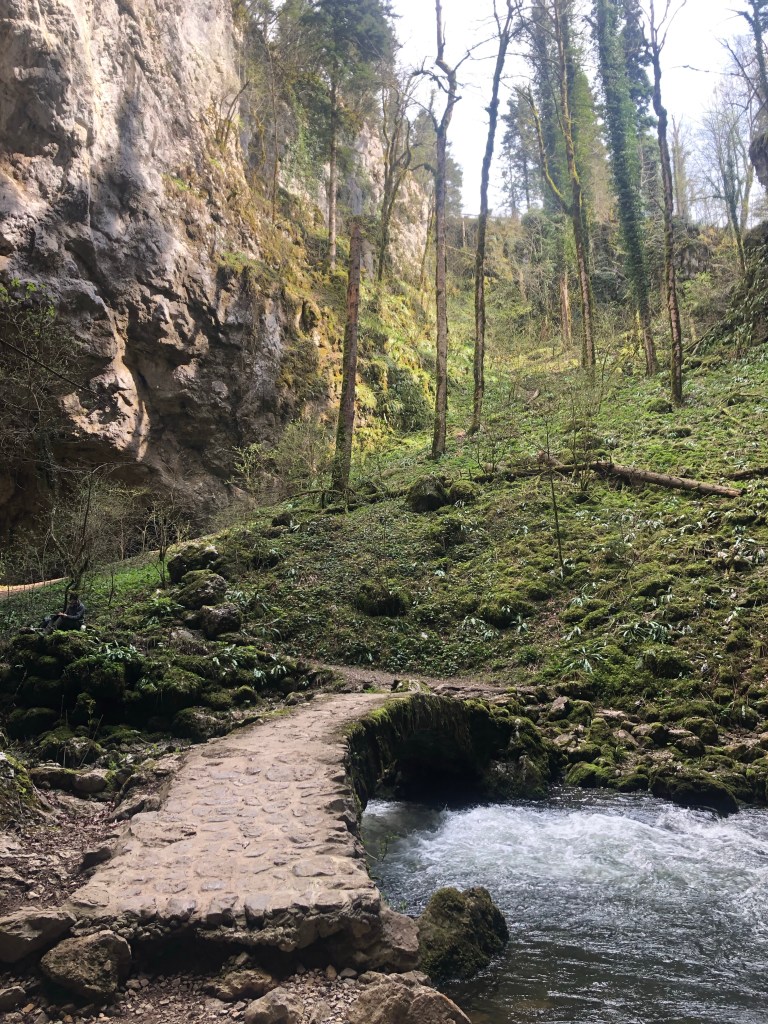
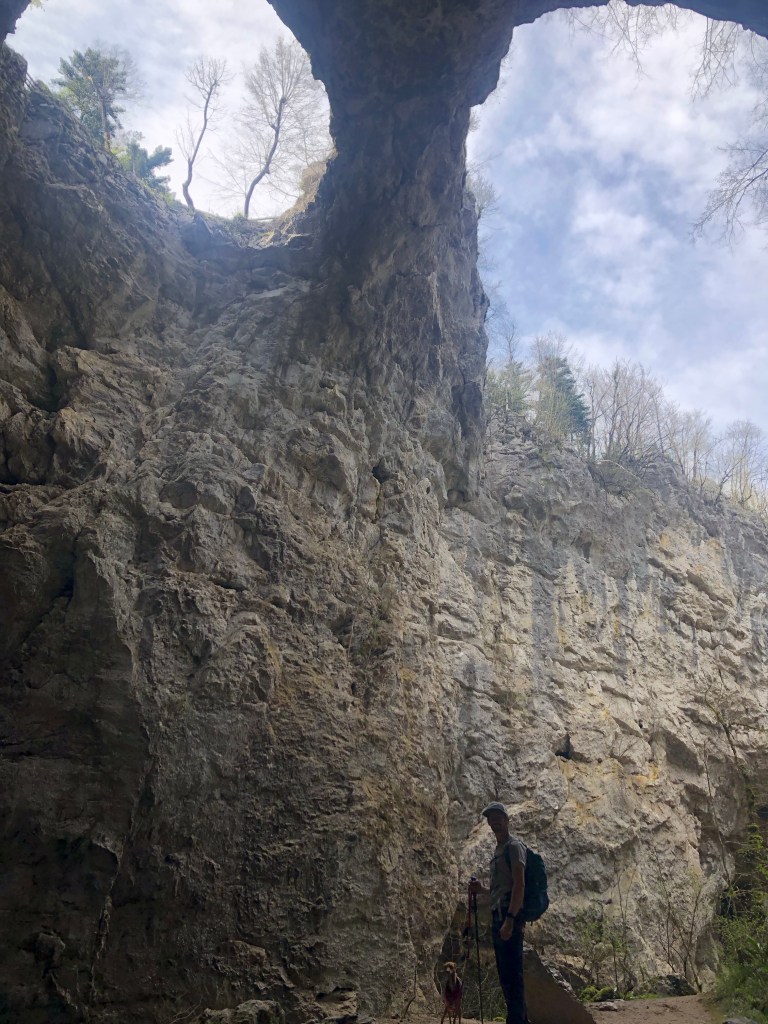
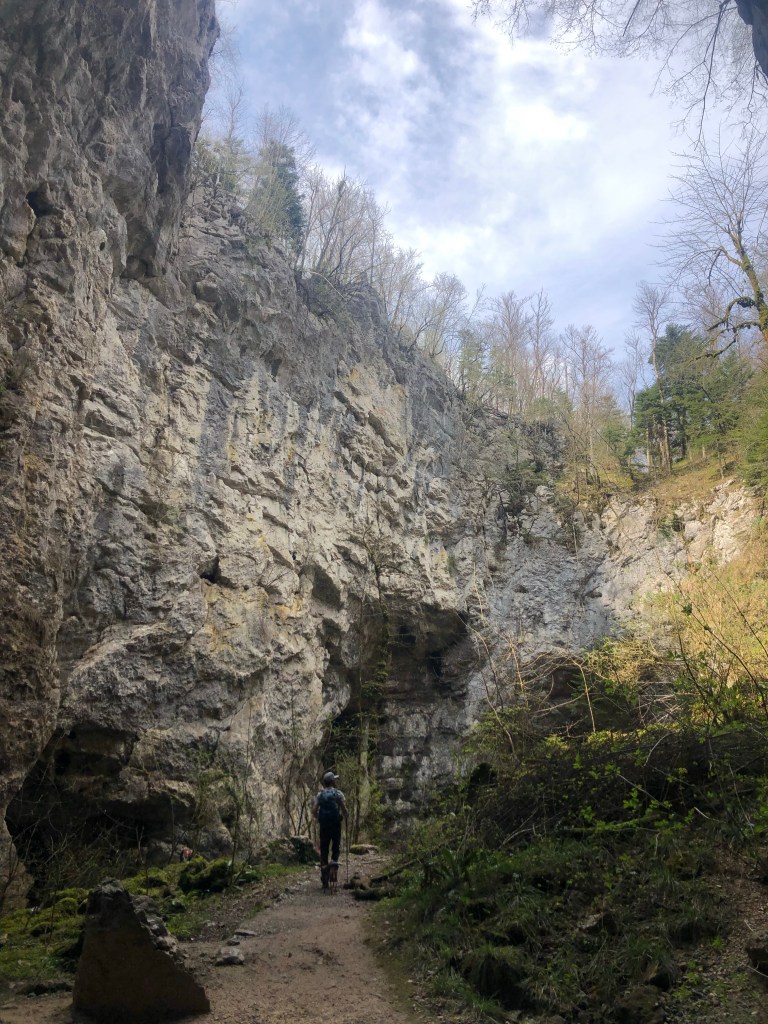
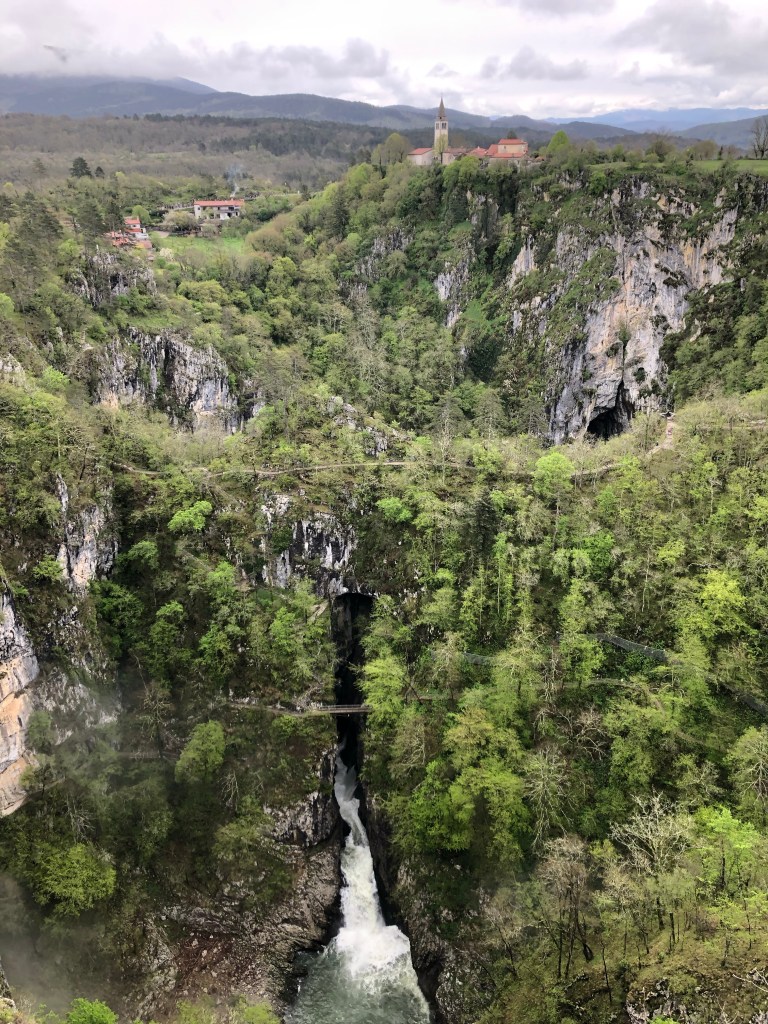
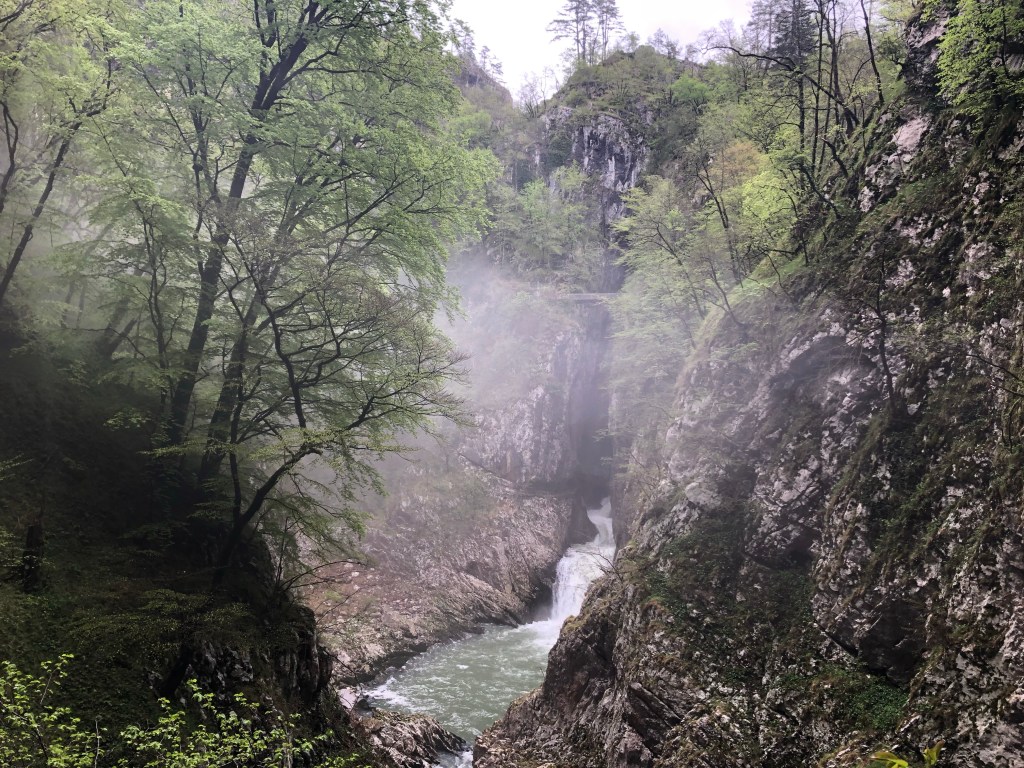
River Rak is in Notranjski Regijski Park. We did a hike that followed both sides of a 5 km section of the river from where it appears out of the ground to where it disappears again. The whole valley was previously underground cave and at some point parts of roof collapsed. In places gorges, caves, arches and rock bridgeways have been left behind and we enjoyed going over- and under- ground on the same sections of river. It transpires the same river goes by six different names for what previously appears to have been distinct sections of water, but are now known to be the same river. We read somewhere that the science that’s now known about karst landscapes originated in this area of Slovenia.

Škocjanska Jama Cave
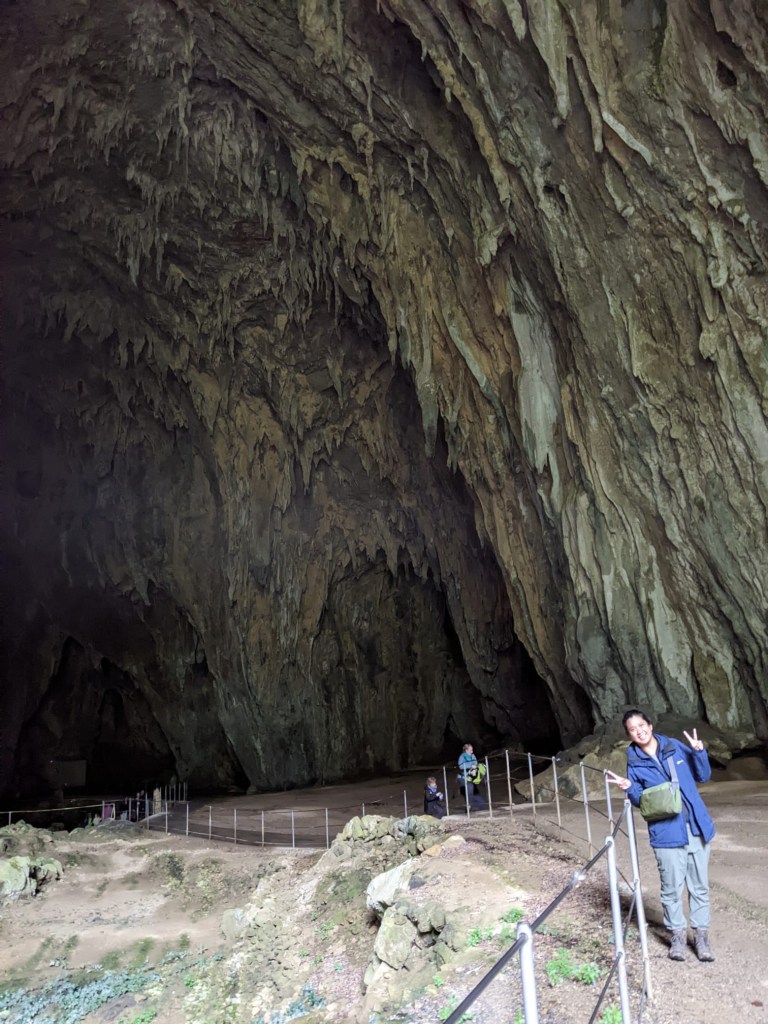
Škocjanska Jama is a UNESCO world heritage site and it’s easy to see why. It is spectacular. It is a massive karst cave system which has two main sections, both of which are stunning in different ways. The first is a “dry” cave with the expected stalactites and stalagmites. The space and size of the formations are enormous, some estimated to be 100s of thousands years old. Our guide was refreshingly heavy on geological and historical information and didn’t go for describing which cartoon characters the stalactites and stalagmites might resemble.
The second section holds an underwater river and is even more impressive. The cave ceiling was 50m high. It was full of mist due to recent rain swelling the river, which added to the impression of being in the Mines of Moria from Lord of the Rings. The river runs in a gorge that is many stories below you as you enter that cave. There is a bridge that you pass over which joins paths on opposite sides of the gorge. We did our impressions of Gandalf saying “none shall pass”. You can also observe tenuous paths and steps created long ago by original explorers. There are high water marks from previous heavy rain floods. The exit tunnel the water passes through is smaller than the entry, so in periods of heavy rain the cave fills. The idea of the cave system filling with millions and millions of litres of water still seems hard to conceive.
Taking photographs inside the cave is not allowed. This is understandable given the fragile and unique environments in the caves, and the risk that taking photographs could cause damage to it’s ancient formations. So we can’t share any with you. In any case it’s well worth a visit.
After exiting the cave we took Zeus, who had been snoozing in the campervan, for a walk around the area surrounding the cave’s entrance, basically the lip of an area where the cave ceiling has collapsed. It was nice to get more context about how the caves formed.
Vipava Valley
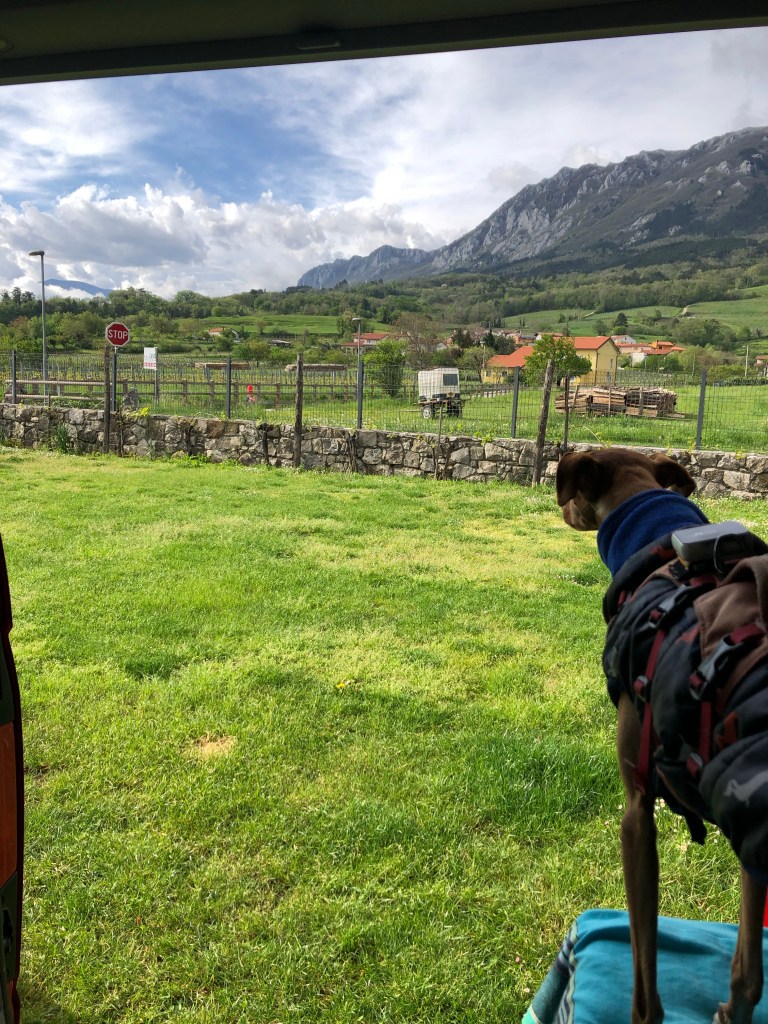
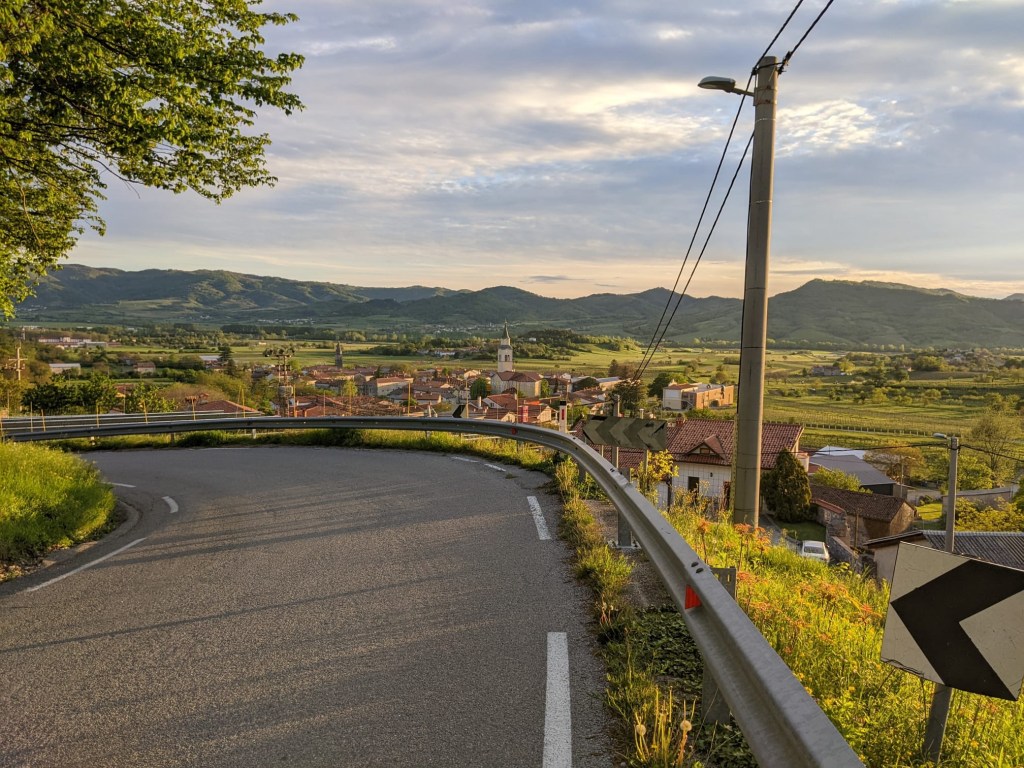
From Škocjanska Jama Cave we headed north to Vipava, a famous Slovenian wine region that sits in a pretty valley.
We stayed at Kamp Vrhpolje, another campsite that seemed to be in someone’s garden. They were very kind with a welcome glass of their own wine, and provided pointers on local wine makers and restaurants.
The next day we did a cycle tour of the valley and some wine producers. To start, we rode from our campsite just outside Vipava town, along the valley to Ajodovščina, a bigger town where we tried bread containing a hotdog from a local bakery, and then some gelato. It was a pretty hot day.
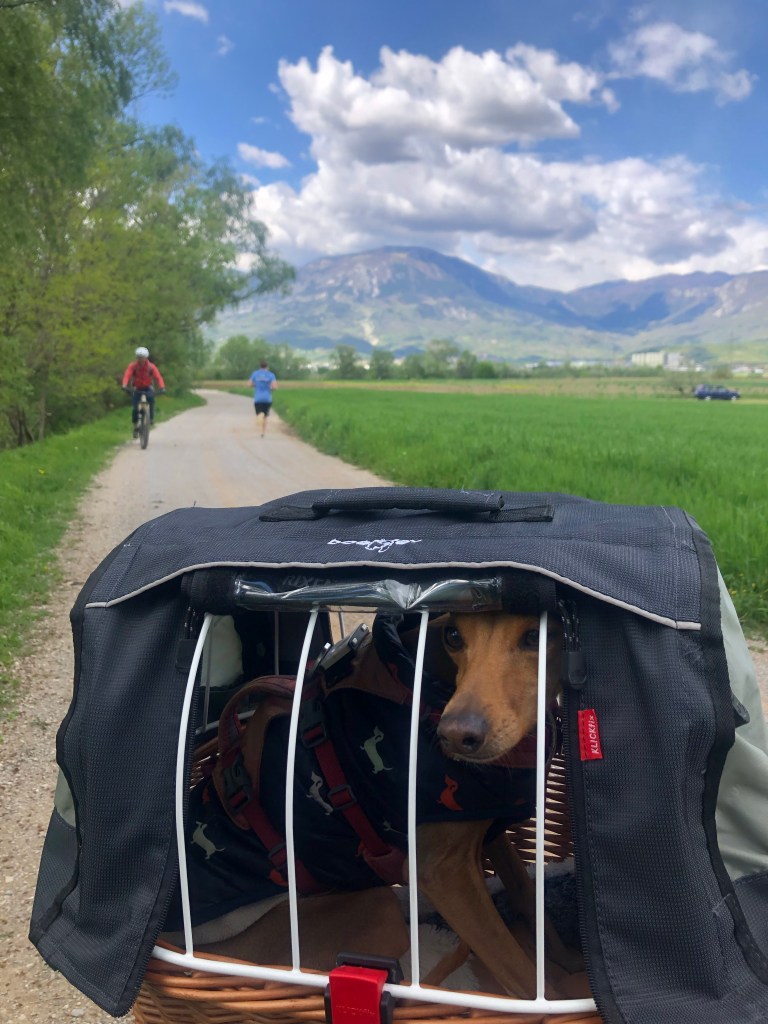
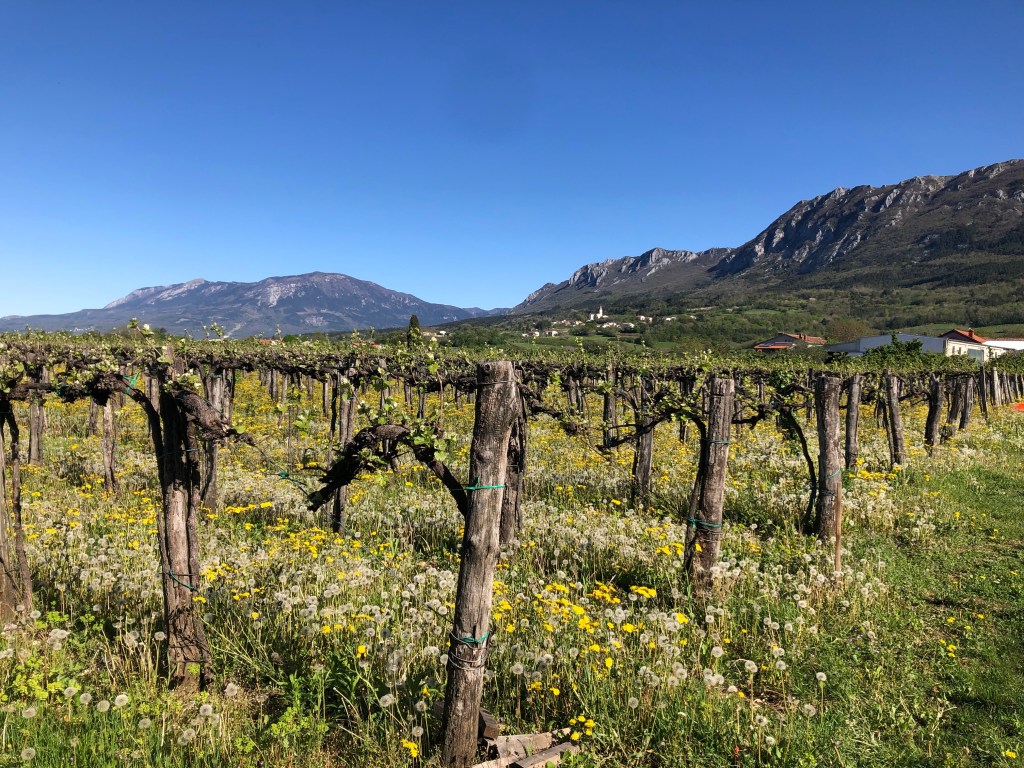
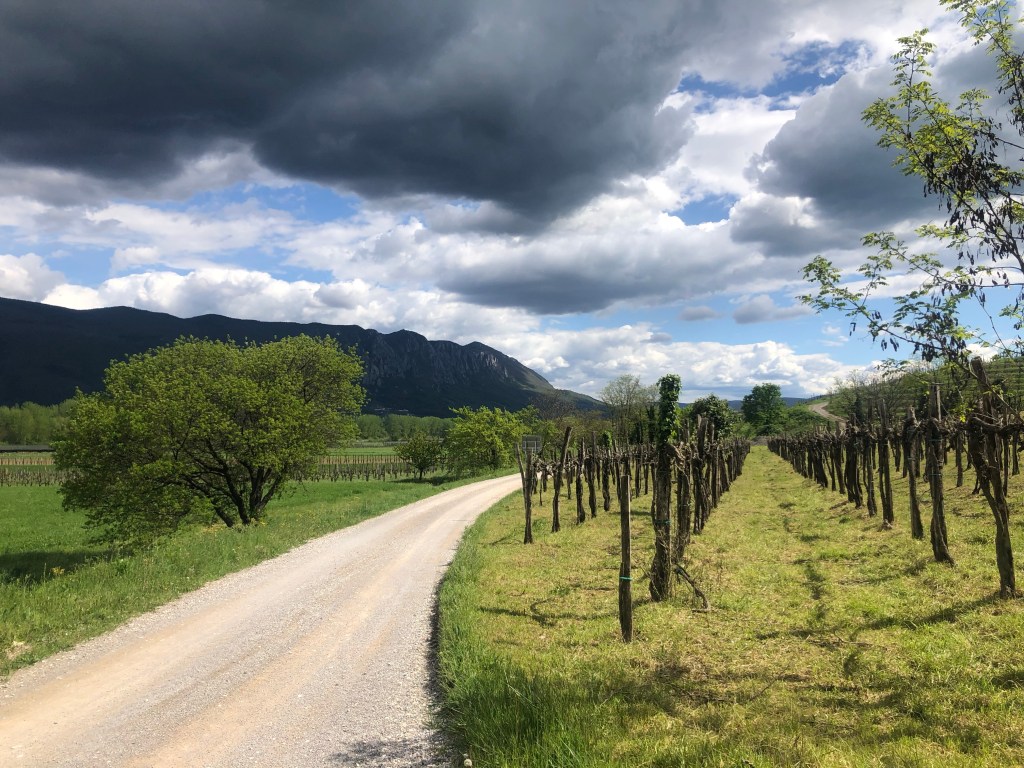
We then followed the river back along its southern side to take in some wine producers. We were out of season so the vineyards we’d planned to visit weren’t open. We made it as far as Slap, a town that our campsite lady had recommended. There we found Vino Žorž, who could do a tasting for us, but since we didn’t have a reservation we’d need to wait an hour. No problem.
Petrič Winery
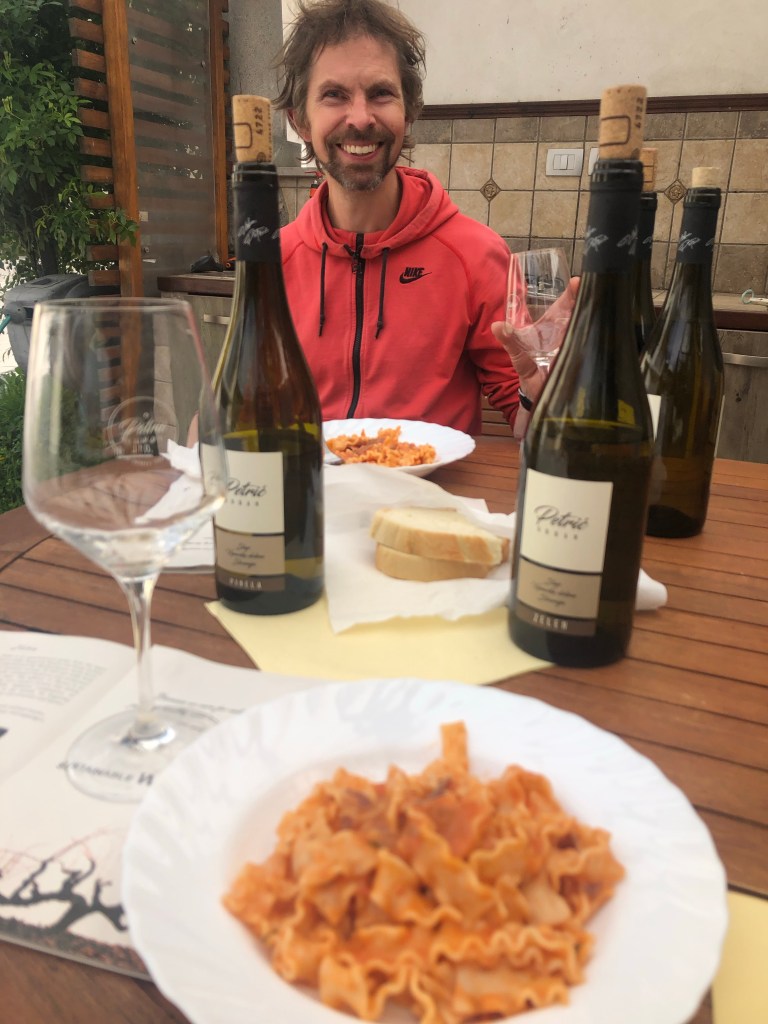
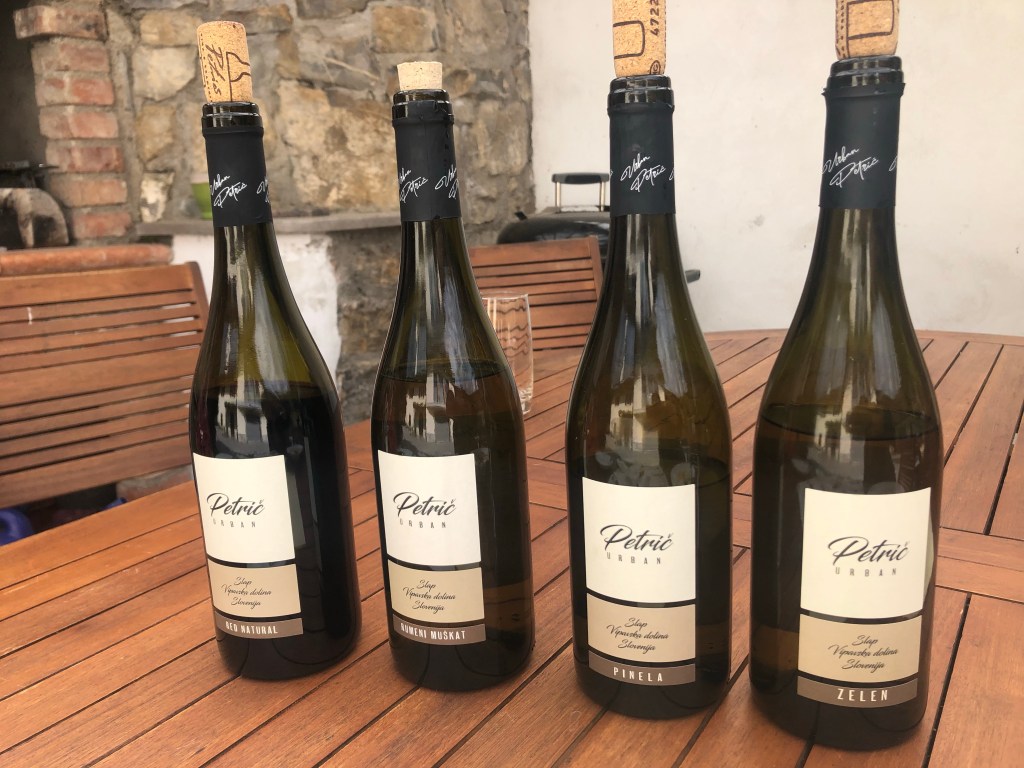
We rode 2 minutes up the hill and found Petrič winery, another producer. The owner was out, but his mum was in. Mum didn’t speak any English and we can’t speak Slovenian. She called her son who runs the tastings and speaks English and he said “Give them wine”. So we sat ourselves down at an outdoor table in the sunshine, and mum brought over 4 wines to taste – 2 local varieties Zelen and Pinela, a dry Rumeni Muškat, and a red blend whose primary grape was Barbera (the region grows some Italian varieties given its proximity to Italy). She asked (via a grandchild translator who spoke English) whether we wanted anything to eat. We politely declined so she gave us some nice pasta. We found Slovenians to be very warm and friendly. We left with 2 bottles of wine – the max we could carry on our bicycles.
Winery Žorž
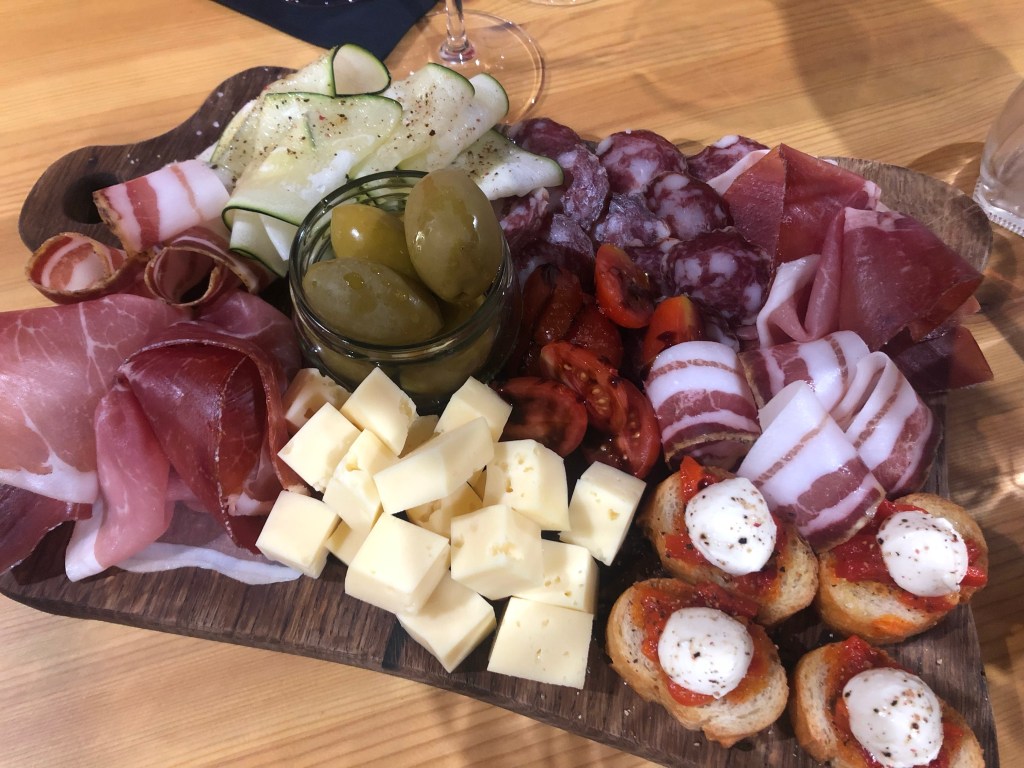
After that warm up we headed back to Winery Žorž, where we had a really enjoyable tasting of 7 wines with lots of delicious local charcuterie and cheese. Our host Anja (also the winemaker – her family has been making wine 1696) also shared some really interesting insight on generational changes in Slovenia – she didn’t think the positive open spirit that we’d observed in many people extended to her parent’s generation who she considered more insular and guarded. The younger generations, she said, had a collaborative spirit as a counter reaction to their guarded parents. She talked about her generation of winemakers who openly shared ideas and feedback with each other, in the belief that one’s success was everyone’s success. She talked about the younger generation’s willingness to try new things/be less bound by tradition. For example, one of the wines we tasted was a Cabernet Sauvignon that they grew in the valley in a less sunny spot, and the resultant wine was more subdued and refined, not your usually big bold Cab Sav. They also made orange wines (very trendy in London), which we learned was a wine made with white grapes, but with the method for red wines i.e. includes a maceration step.
We enjoyed the wines and bought 5 bottles. Since this was the last leg of Part 1 of our trip, we’d abandoned the 6 bottle limit in the van on the pretence we’d be taking gifts back to the UK. Cycling an additional 5 bottles back to the campsite wasn’t possible however so we picked them up in the van the next day.
At that point we were still capable of riding our bikes, but it needed extra concentration to get back to our campsite. In the evening we walked up the hill to Gostilna Theodosius for a very nice meal and despite good intentions tried a couple more glasses of wine with our meal.

The following day Aileen could afford a leisurely start, but James had committed himself to exploring the local mountain bike trails. We’d seen a few people riding mountain bikes and a bike shop in Ajodovščina. It seemed like there was a strong local biking scene. The trails James rode were probably some of the best built and most varied of our trip to date. More fuel to the idea Slovenia deserves a return trip.
Northwest Slovenia – Majestic Soca River Valley and Lake Bled
From Vipava, we headed northwest. Northwest Slovenia borders the Alps of Austria and Italy. It is home to Slovenia’s tallest mountains.
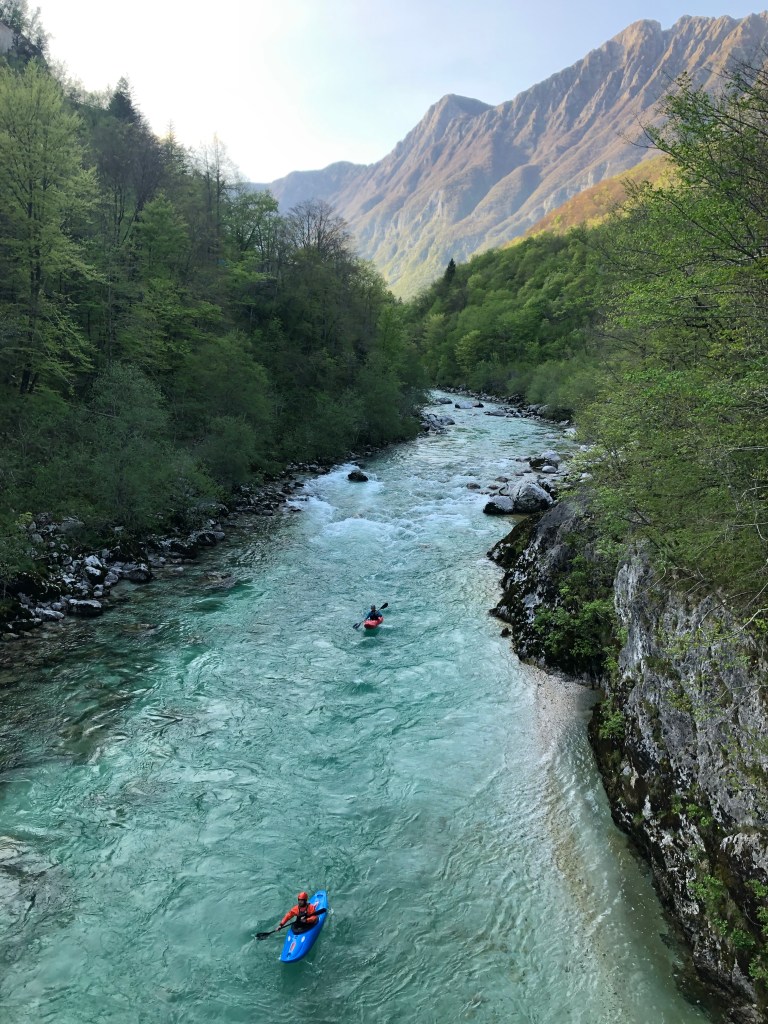
We stayed at Kamp Koren, a campsite in Kobarid, along the Soca River valley which is famous for the crystal clear rapids of the Soca and high mountain peaks alongside the river. It is definitely a hot spot for wild water rafting – most of the people at our campsite were there for this reason – kayaks and drying wetsuits were littered all over the campsite.
First taste of Soca
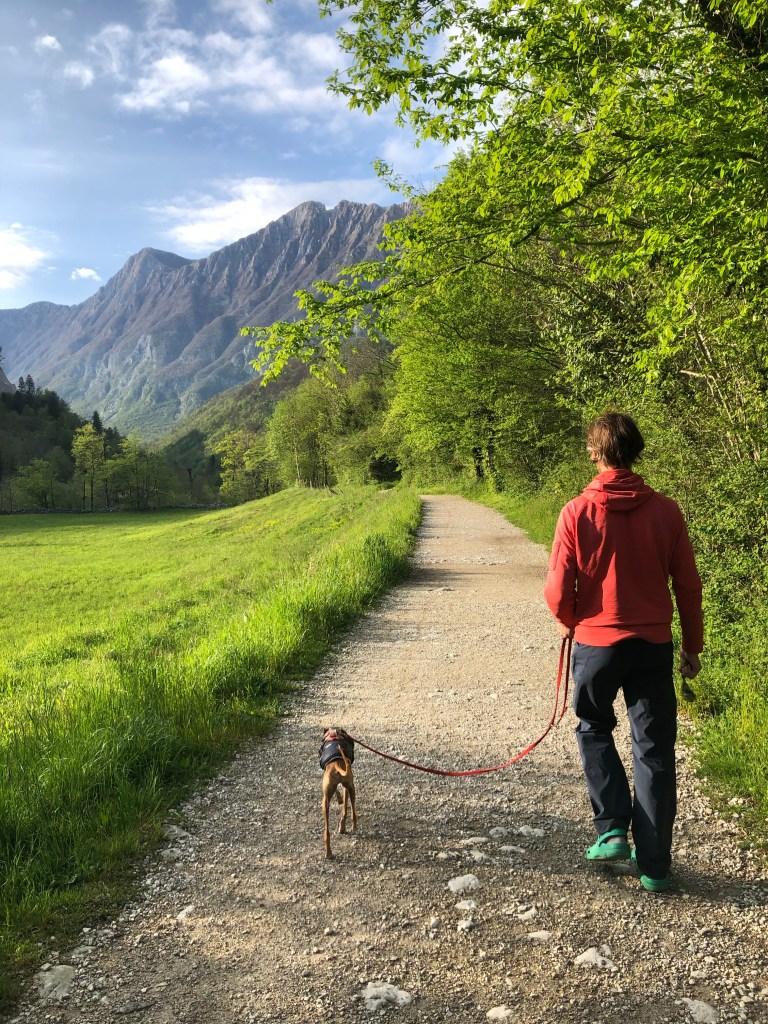
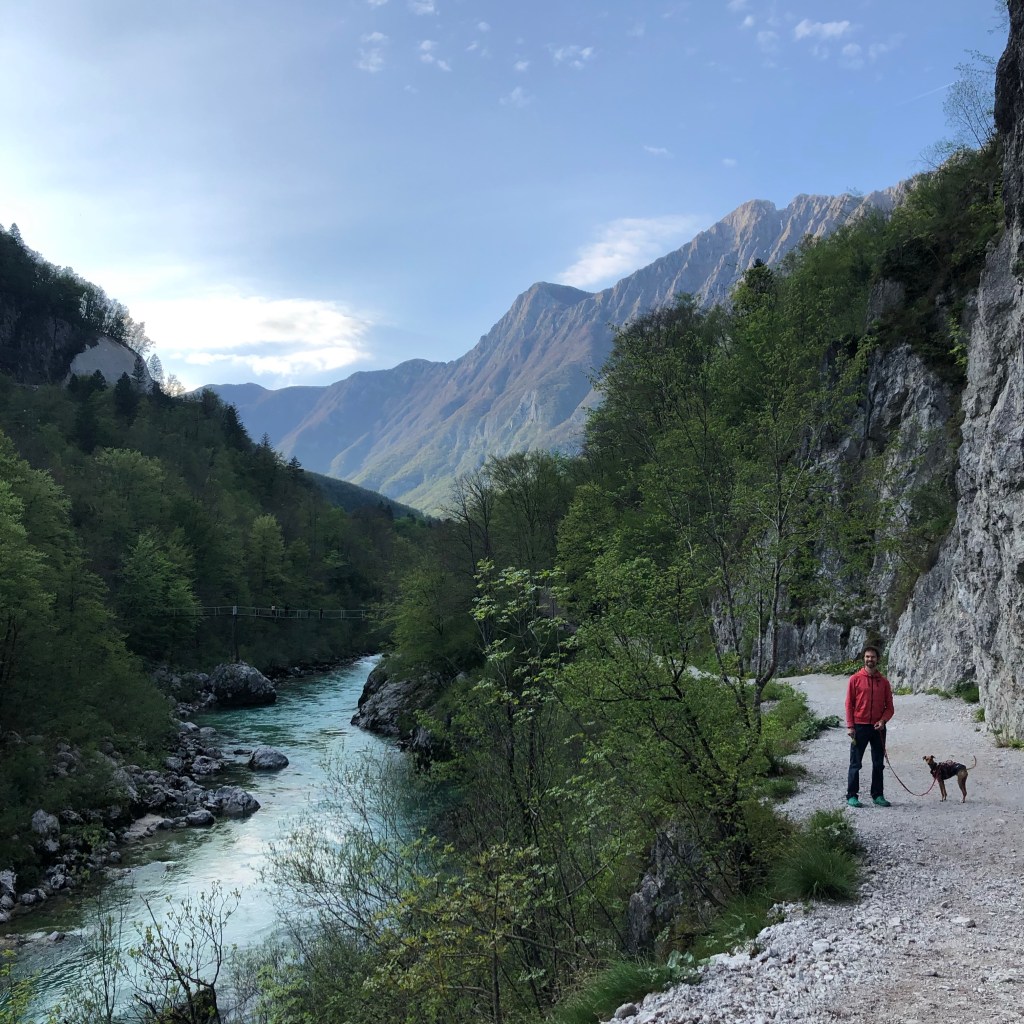
There is a trail along the river that passes the campsite so we went for a late afternoon stroll the day we arrived. The scenery was breathtaking, with the crystalline river winding through majestic rocky mountains. We were keen to explore the area.
Kobarid Historical Trail
The next day we walked the Kobarid Historical trail taking in:
- The riverside walk we’d checked out the night before, but this time we went over the suspension bridge. Zeus was not a fan of the bridge.
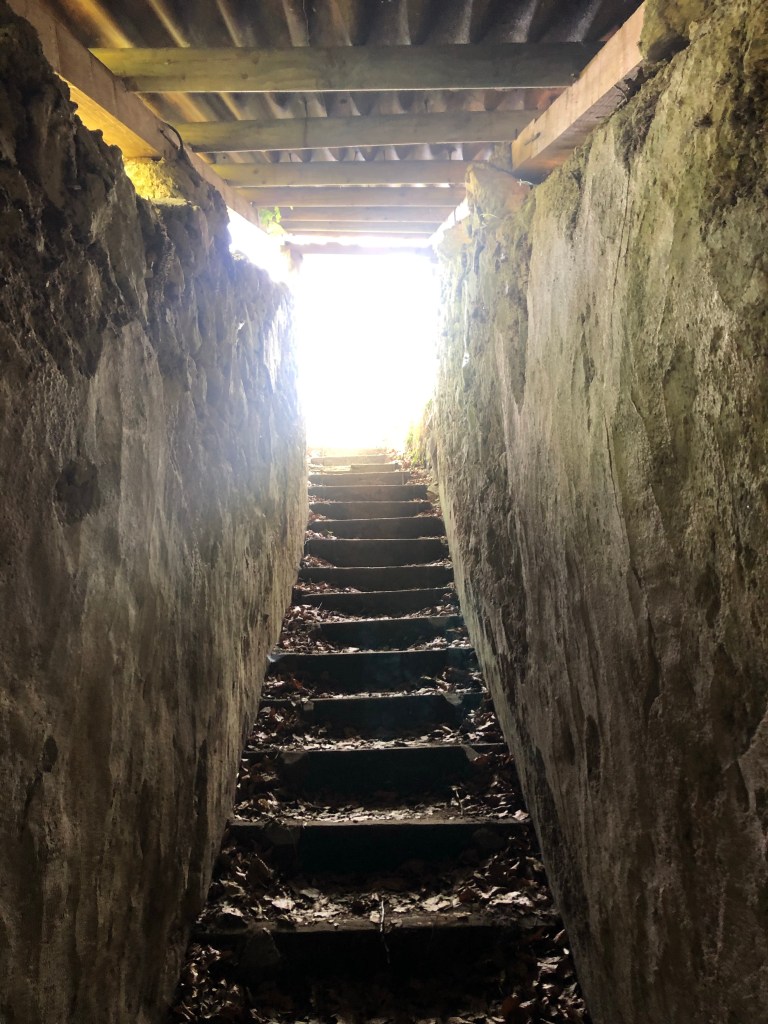
- A pretty extensive WWI Italian bunker with various tunnels and rooms
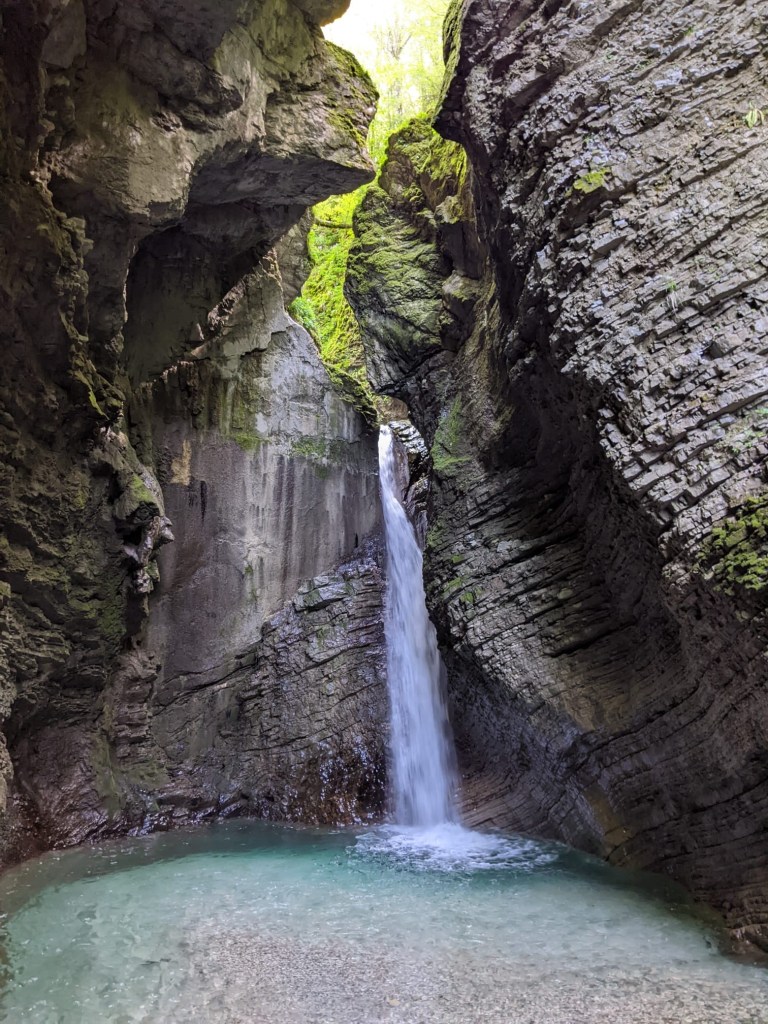
- Kozjak waterfall – a very picturesque waterfall and worth the 3 EUR entrance fee
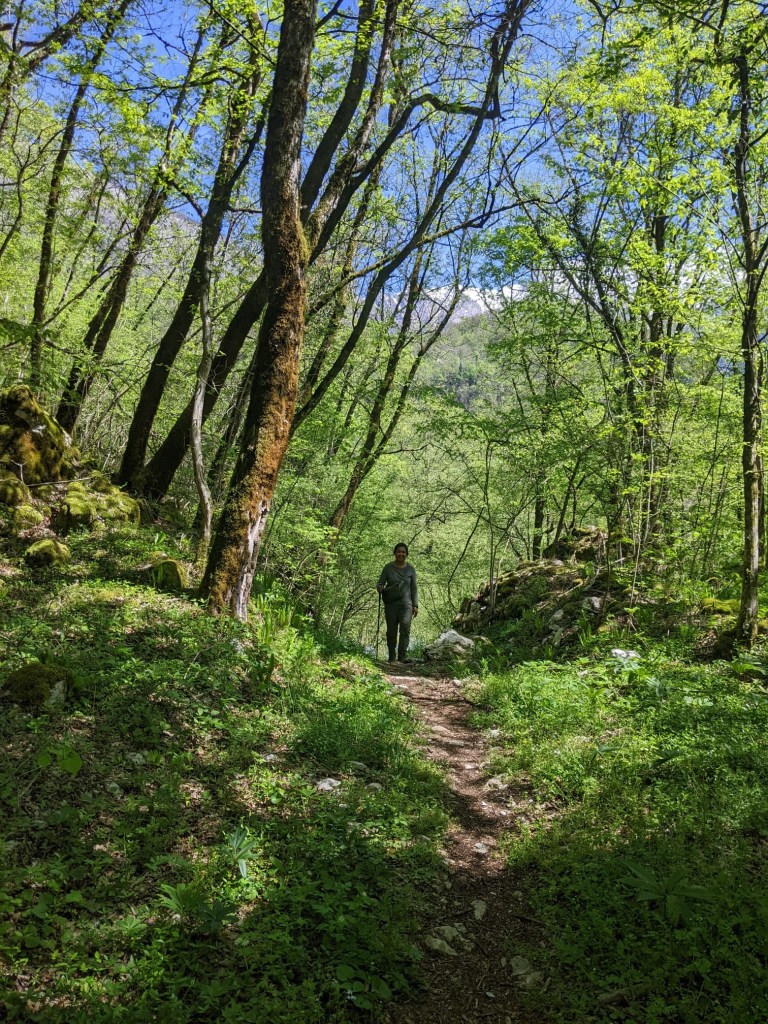
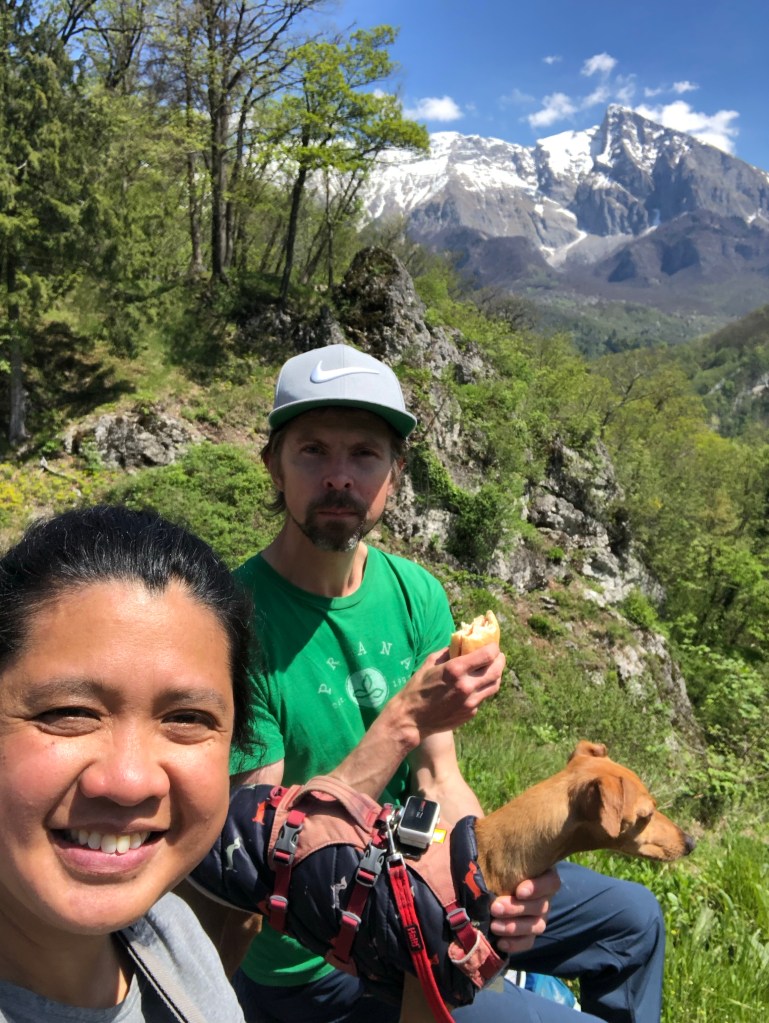
- Tonocov Grad – a copper-age hilltop settlement. It was quite a hike up and had excellent views of the valley so we stopped there for lunch. From the settlement, we walked down through a forested hillside to
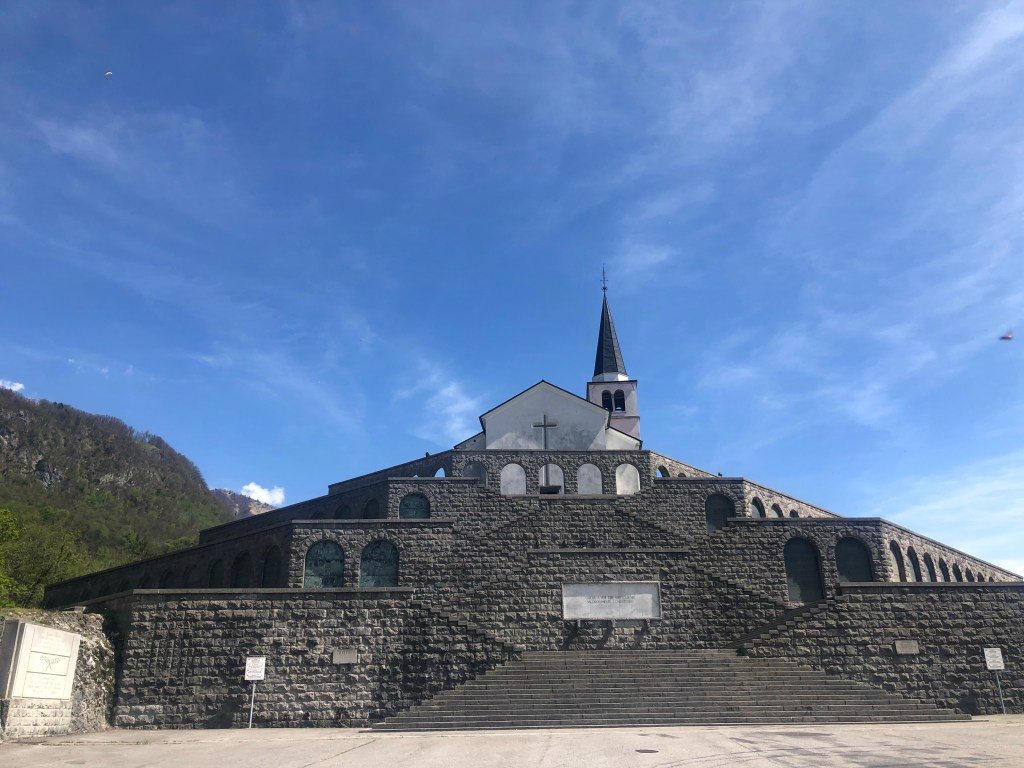
- Kostnica Italijanskih – a Mussolini-era cemetery and memorial for the 7014 known and unknown Italian soldiers who perished in the area in WWI
- Kobarid town – a small pretty town – we needed an ice cream and couldn’t find one quick enough
- Napoleon bridge – a bridge over the Soca river right by the campsite. It received its name when Napoleon marched over it a day after WWI had been declared.
Soca Valley is definitely a place we’d like to return to. There looked to be a lot of hiking in the area including one to Soca gorge that we’d hoped to do but time and weather did not permit. The mountains look inviting for mountain biking, nearby is Goriška Brda another famous wine region, whitewater rafting looks worth a try, and the region is linked to Triglav National Park via Vrsic, a famous mountain pass and feat of human engineering at 1611 m above sea level. The pass was still closed for the season when we visited.
Lake Bled – lake walk, last night meal and hotel
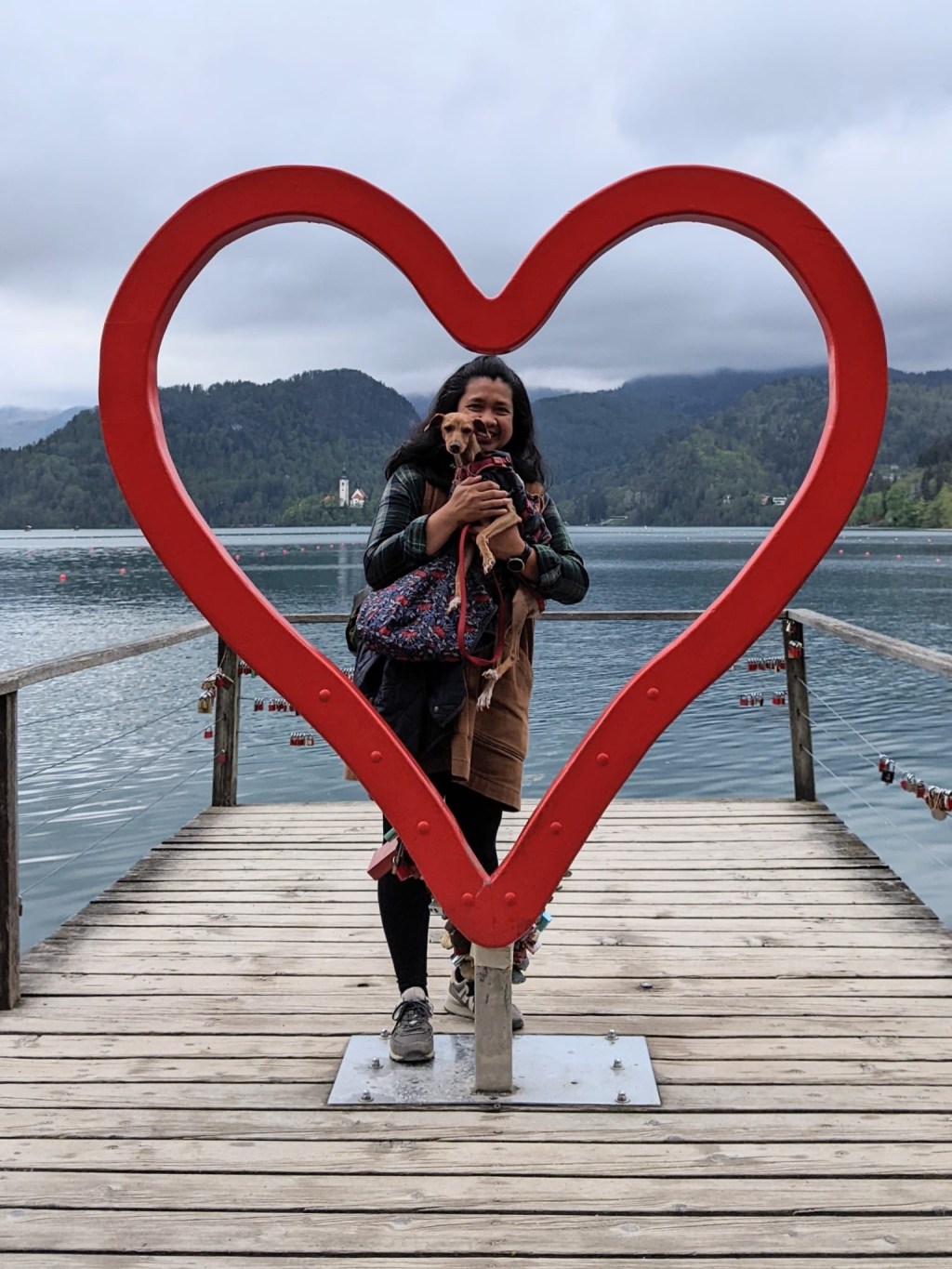
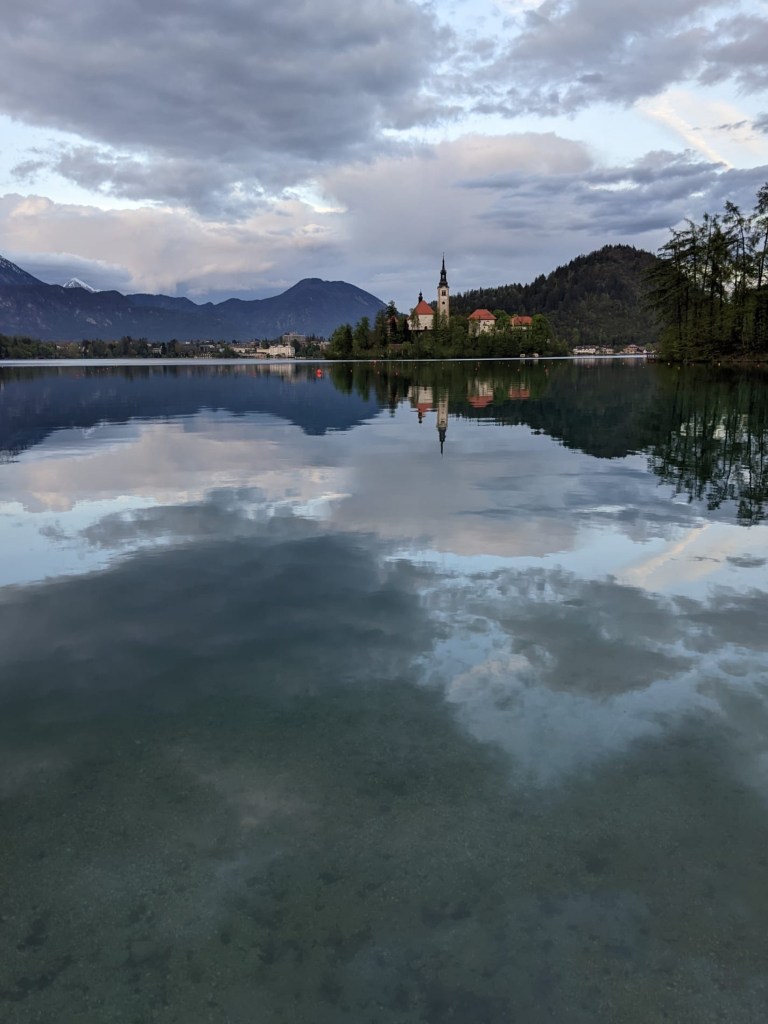
Lake Bled is one of Slovenia’s best known tourist spots. The lake nestles in the mountains, just outside Triglavski National Park, home to Slovenia’s tallest mountain, Triglav which sits 2,864m above sea level. Lake Bled has an island with a church on it, and a castle overlooking it. It’s a relatively compact lake, about 2 km across, the length of the competition rowing lanes that run from its furthest points. It is, understandably, a much photographed lake.
We arrived at our campsite, Camping Bled, which sits on the opposite side of the lake from the town, during a strong rain storm. The rain stopped shortly after we had checked in so we went for a short walk to the lake shore and took the same photos as everyone else, but they all look incredibly beautiful.
The next day we did the 6 km walk circumnavigating the lake and took the chance to relax before the long drive back to the UK. In the evening we checked into Old Bled House, a small dog-friendly and charming local hotel with a nice restaurant attached to it. We had a very nice last meal and good night’s sleep. The next day we began our long journey back to the UK.
The bottom line
We really enjoyed visiting Slovenia. It’s one of our favourite countries so far on this adventure, and it’s a place we’d like to visit again with more time. It has beautiful countryside that one could actively enjoy and excellent food and wine. And we found the people to be warm, friendly, and positive, which was refreshing after having endured Brexit and UK’s economic woes in recent years.
What’s next
Our 6 month visa is expiring so we’re heading back to the UK to catch up with family and friends, and apply for another visa that will allow us to continue our adventure.
 JAZ Adventures
Leave a comment