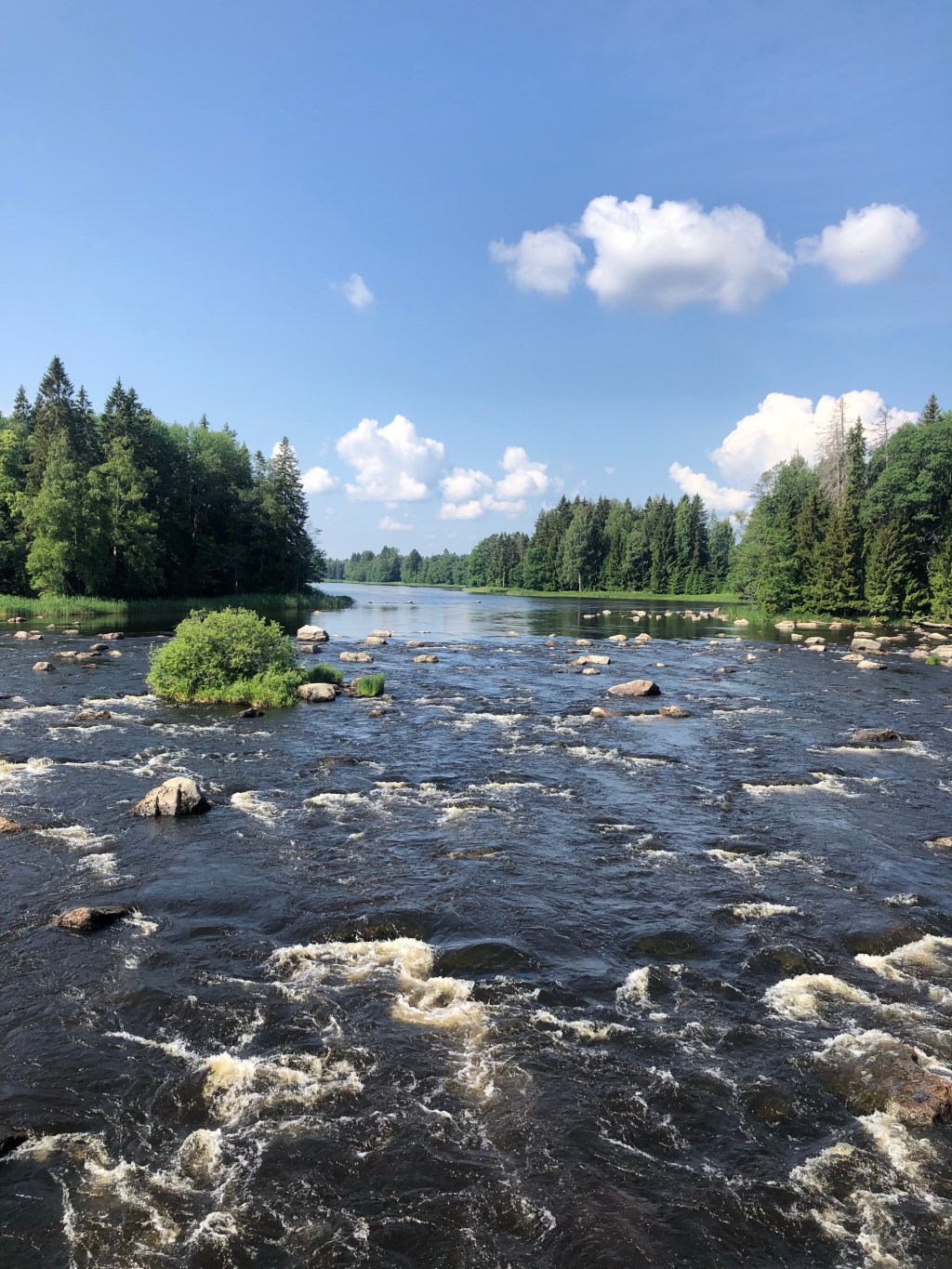
Highlights:
Beautiful and interesting landscapes, lovely mild weather this far north, top-notch bouldering, interesting cultural quirks, some surprisingly excellent fast food, and great facitilies and resources for campervan-life.
Lowlights:
Miles and miles of flat land, forest and lakes make for ideal mosquito conditions in June.
Our journey north from the UK
We left on the morning of Tuesday 13-June, crossing into France via the Eurotunnel. We were pleased to clear the border since the guidance on the use of our 90-day Schengen allowance soon after our 6 month visit wasn’t 100% clear.
From France we crossed to Belgium and then into the Netherlands. We spent our first night at a campervan stop at a horse stable near Nijkerkerveen roughly in the centre of the country. The next morning we had a nice stroll while people rode their bikes to work, school, etc.
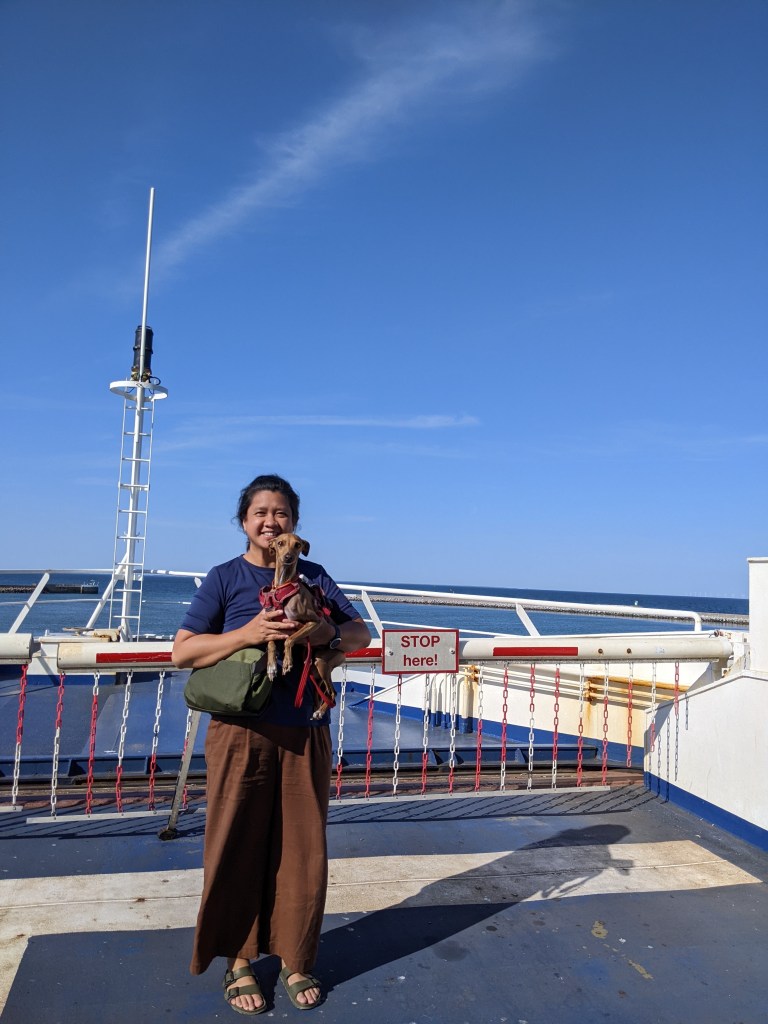
We drove further north-east into Germany, past Hamburg to catch the ferry from Puttgarden to Rødbyhavn, Denmark. You can also drive to Denmark via a more westerly route, but it’s a slightly longer drive, so we opted for the ferry.
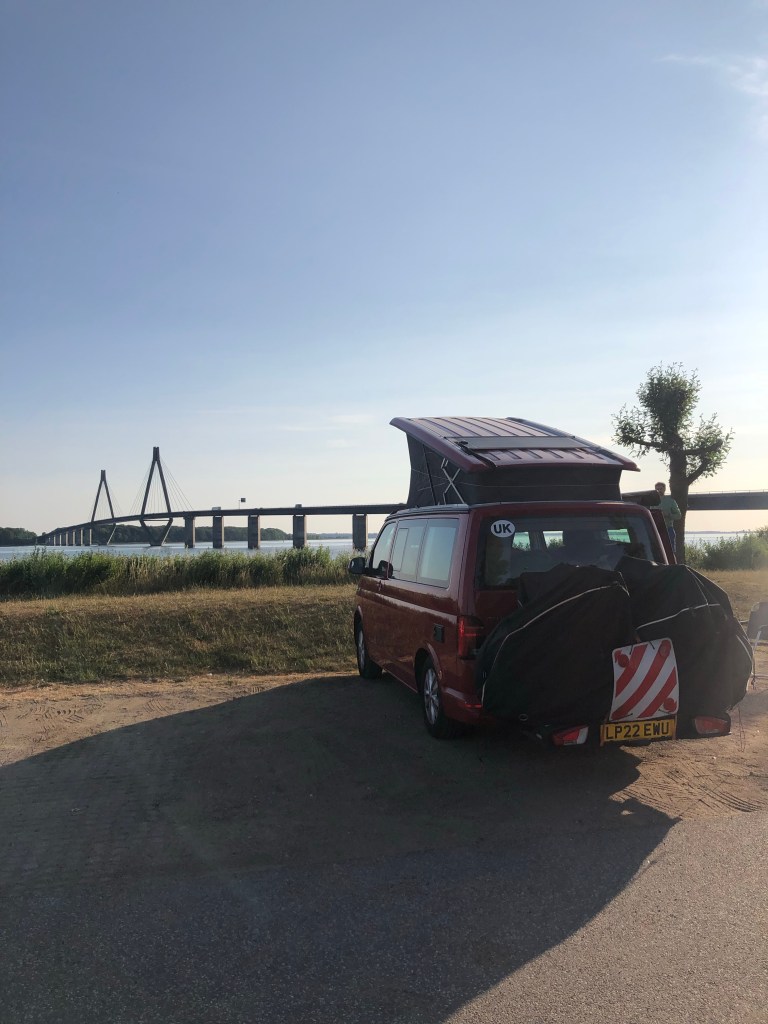
From the ferry in Rødbyhavn we drove further in the direction of Copenhagen on the E47 stopping overnight at campervan and truck stop on Bøgo island. The camperstop was next to the highway bridge crossing to the island. It was better than it sounds.
The following day was more driving. We headed past Copenhagen and over the 8 km long Øresund bridge to Malmo! Hoorah. After 2 and a bit days of driving we arrived in Sweden
A short exploration of Southern Sweden (Götaland)
Malmo
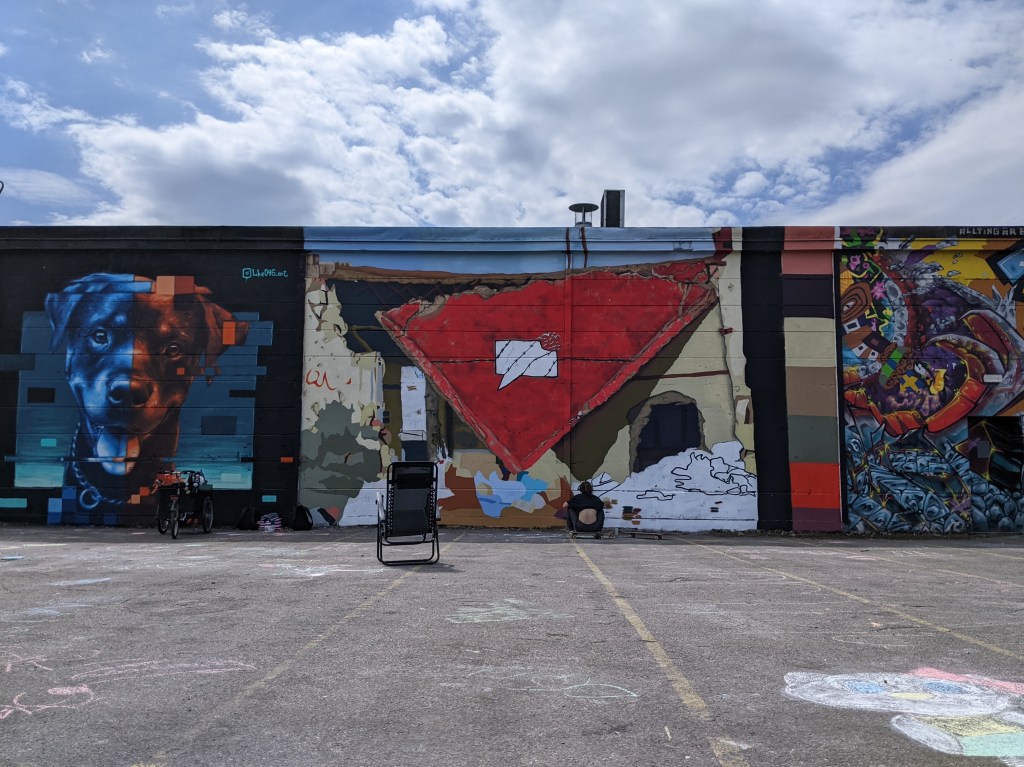
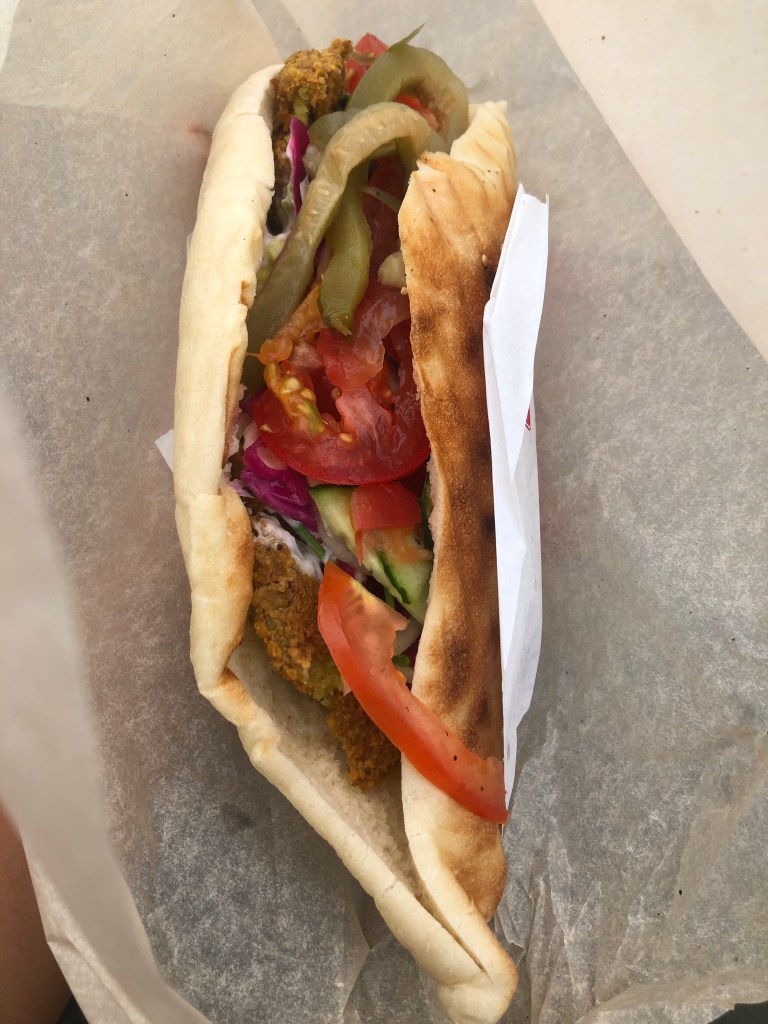
We stayed in Malmo only long enough to visit a climbing wall (see Climbing in Sweden), check out the amazing graffiti next door at Graffiti Hangaren – a warehouse set aside for that purpose, and hungrily gobble down some very tasty falafel wraps from Falafel Baghdad next door that serves Falafel with Iraqi bread (kind of a fluffy pita with pointy ends). Our initial impressions of Malmo were positive. It seemed an interesting, vibrant, multi-cultural city.
Stenshuvud National Park
From Malmö we drove east across rolling hills and farmland and stopped overnight at Brosarps Backar, a nature reserve that permits overnight stays in its concrete parking, and has some very nice loos considering they were public ones. We’ve learned over the course of the following weeks that this is normal in Sweden. Most places we parked (free/wild camped) had decent loos. In fact we would hazard to say that Sweden has been the most campervan-life friendly place with numerous free/wild camping options most with loos.
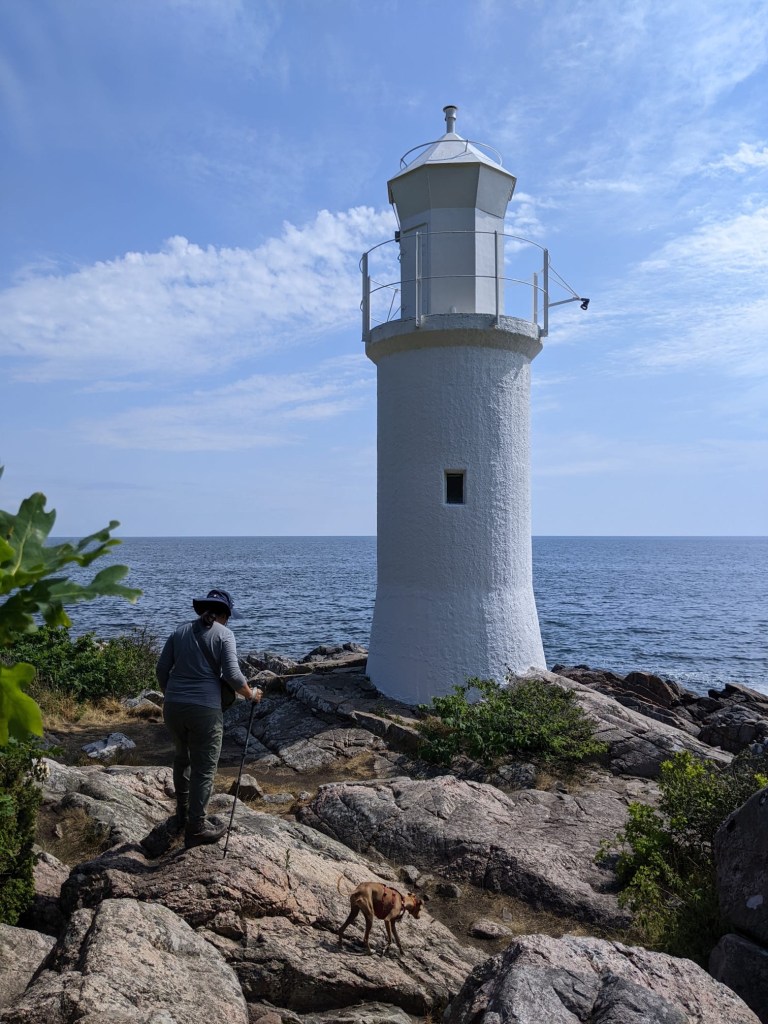
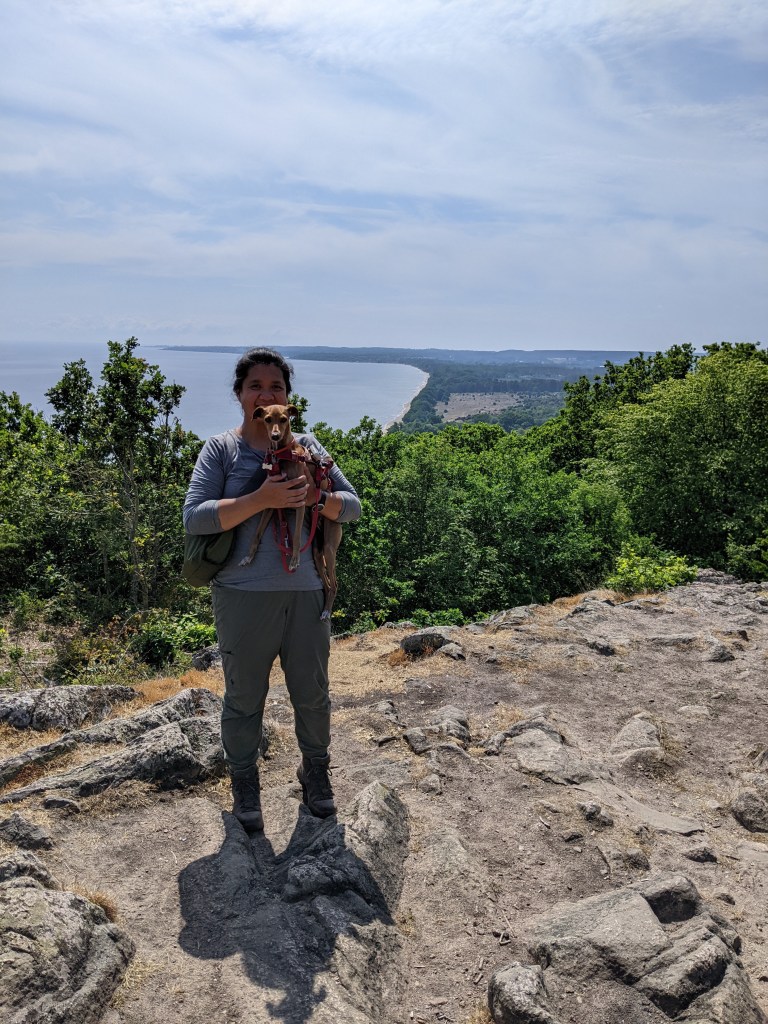
From Brosarps Backar we headed east stopped at Stenshuvud National Park on the east coast of the Skåne province. We did a circular walk around the park – we walked to a white sandy beach, passed a pretty lighthouse, walked through forests, and climbed some peaks with great views at the top.
Kjugekull and Knutby Climbing
From Stenshuvud we headed to Kjugekull and then Knutby, two popular crags in southern Sweden (see Climbing in Sweden), stopping at Långsjön Stugor Camping, a picturesque lakeside campsite for our rest day in between.
Central Sweden (Svealand) – Its cultural centre
The “middle” of Sweden can be considered its cultural beating heart. On the east coast is the great city of Stockholm, and inland is Siljan Lake, famous for the picturesque towns that line its coast. Falun red, the colour of most Swedish houses originated here, and it’s also the centre of Sweden’s biggest holiday celebration, midsomnar. This is the Sweden you see in tourist brochures and postcards.
Färnebofjärdens National Park
From Långsön we drove north along the east coast, skirting Stockholm (we hope to visit Stockholm after our concert in Copenhagen in mid-August) and stopped at Färnbofjärdens National Park, where we planned to do a walk the next day before heading west inland to Rättvik for midsomnar.
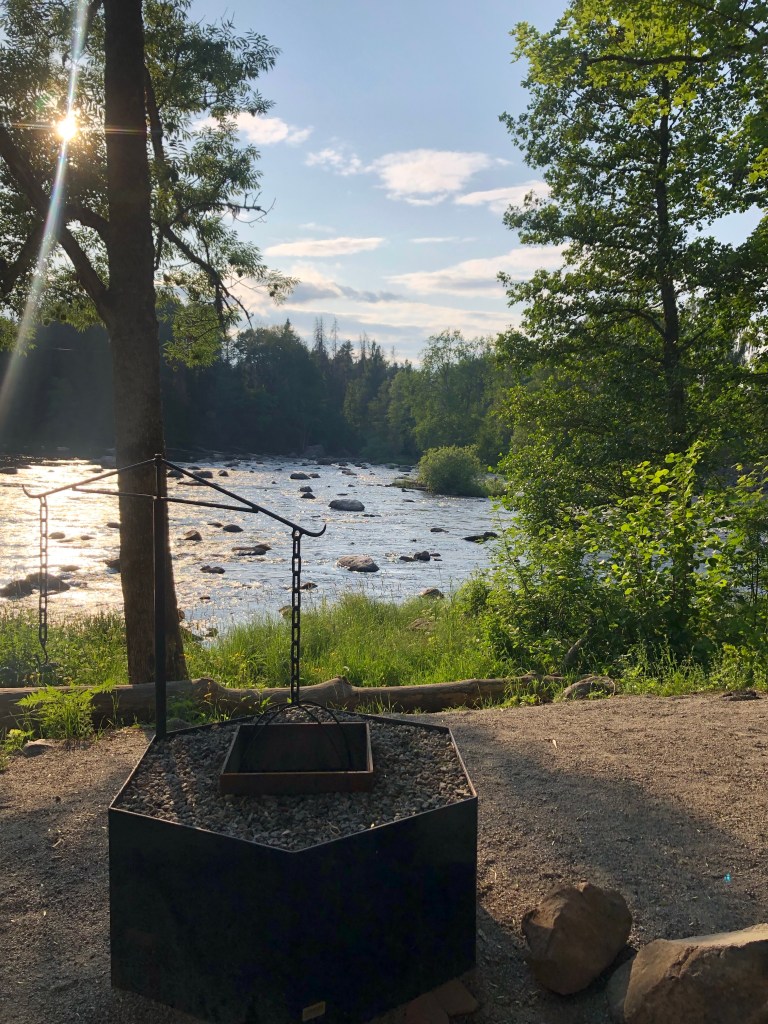
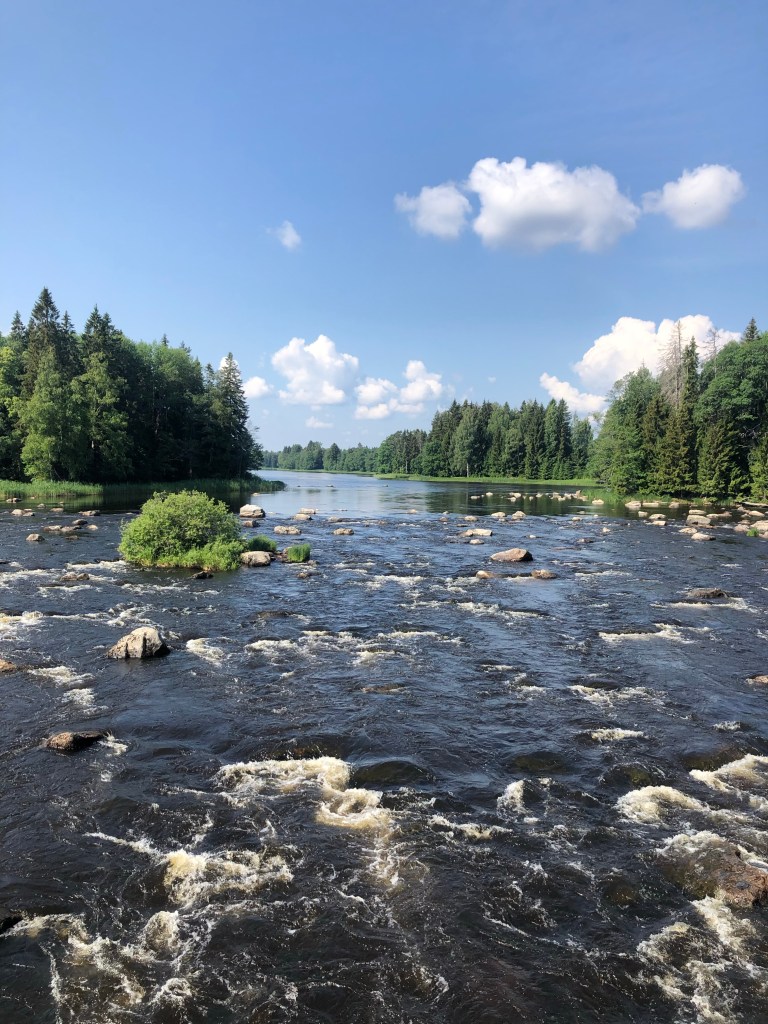
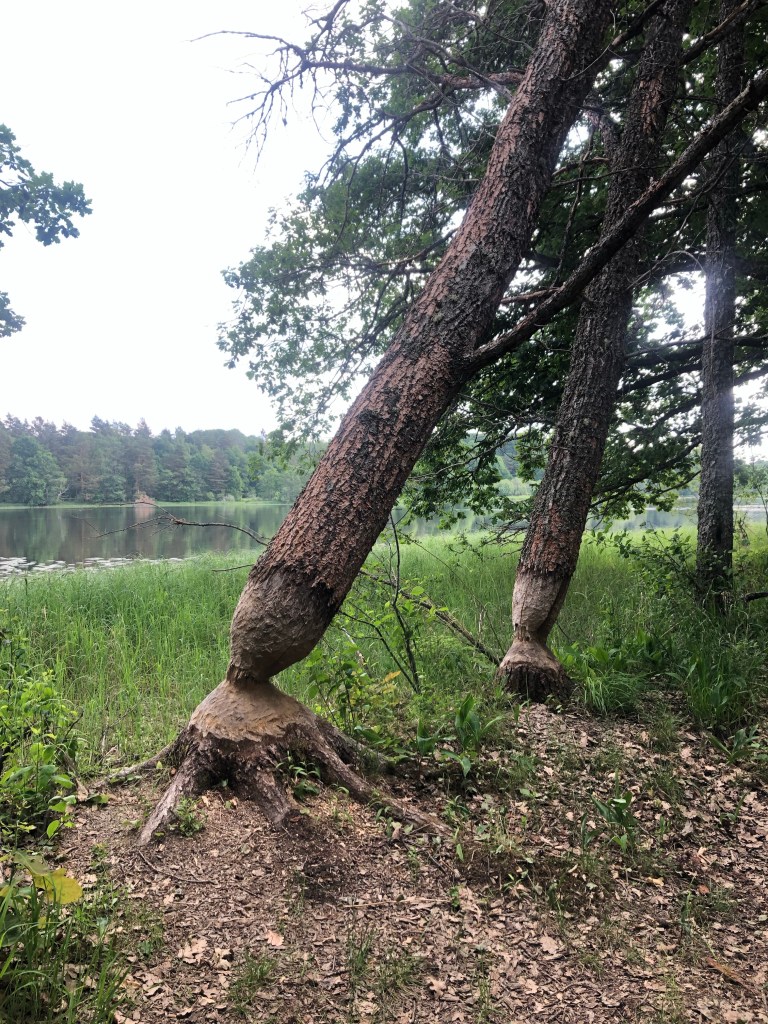
Färnbofjärdens National Park is a beautiful mosaic of rivers, islands, lakes and forests. It also happens to be mosquito heaven in June, a day or so after heavy rainfall. This is when we visited.
We did our fastest 8km hike ever. The scenery was beautiful, skirting the edge of lakes and waterways, walking through ancient forest, admiring the camping shelters and BBQ spots. But we didn’t dwell anywhere for too long, or the mosquitoes descended and once they found you, they were difficult to shake. We were glad when we made it back to the safety of the campervan.
Oppala Climing
From Färnbofjärdens National Park, we headed to Oppala, a crag north of Gävle, a city technically in Norrland, for some climbing. See Climbing in Sweden.
Midsomnar in Rättvik
From Gävle, we headed west inland to Rättvik, a town that sits on the northeast corner of lake Siljan, and hosts one of the more famous midsomnar festivals.
We booked a spot in a campsite in advance so we could enjoy 3 days in Rättvik without the need to move and find places to stay everyday. When we arrived the campsite was PACKED. We hadn’t really appreciated how big a holiday midsomnar is. In Sweden, it’s a time when extended families get together and mark the start of the holiday season. It’s Sweden’s biggest holiday, like Thanksgiving is to America.
Midsomnar is a holiday with lots of festivities and raucous celebrations. The extended family next door (4 caravans, 3 generations, 4 couples, lots of kids) spent 3 days hanging out – playing weird games like finding potatoes on the ground whilst blindfolded, and a jelly-spitting race. They made flower wreaths, had extended family meals, swam in the river, and basically enjoyed each other’s company.
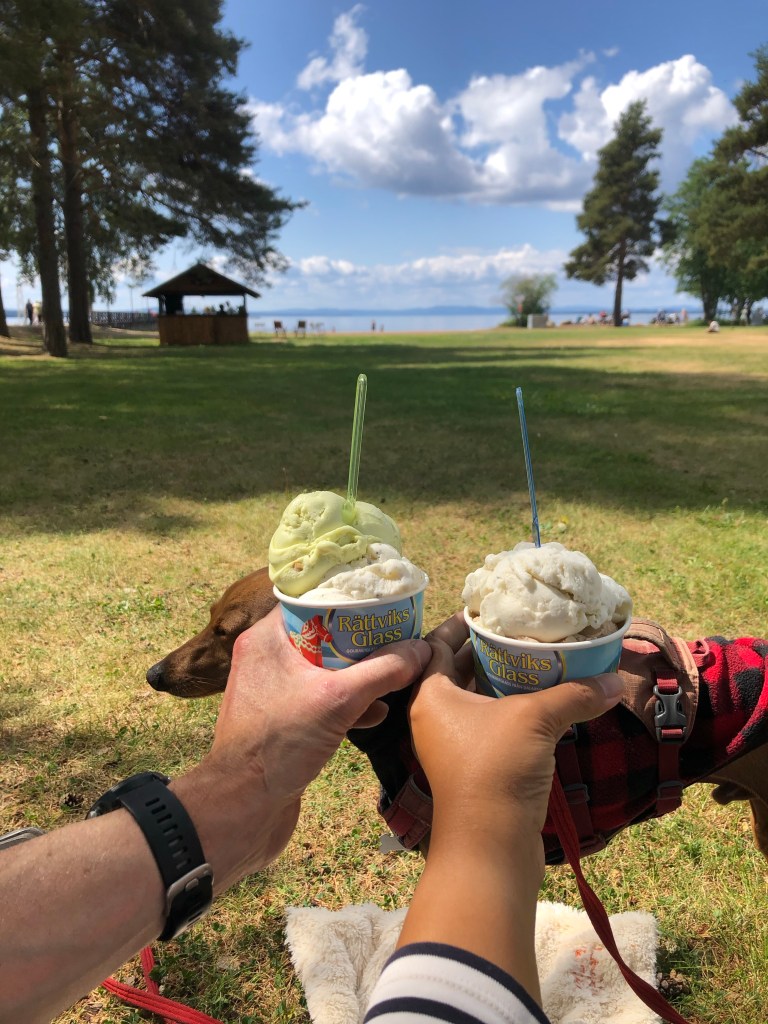
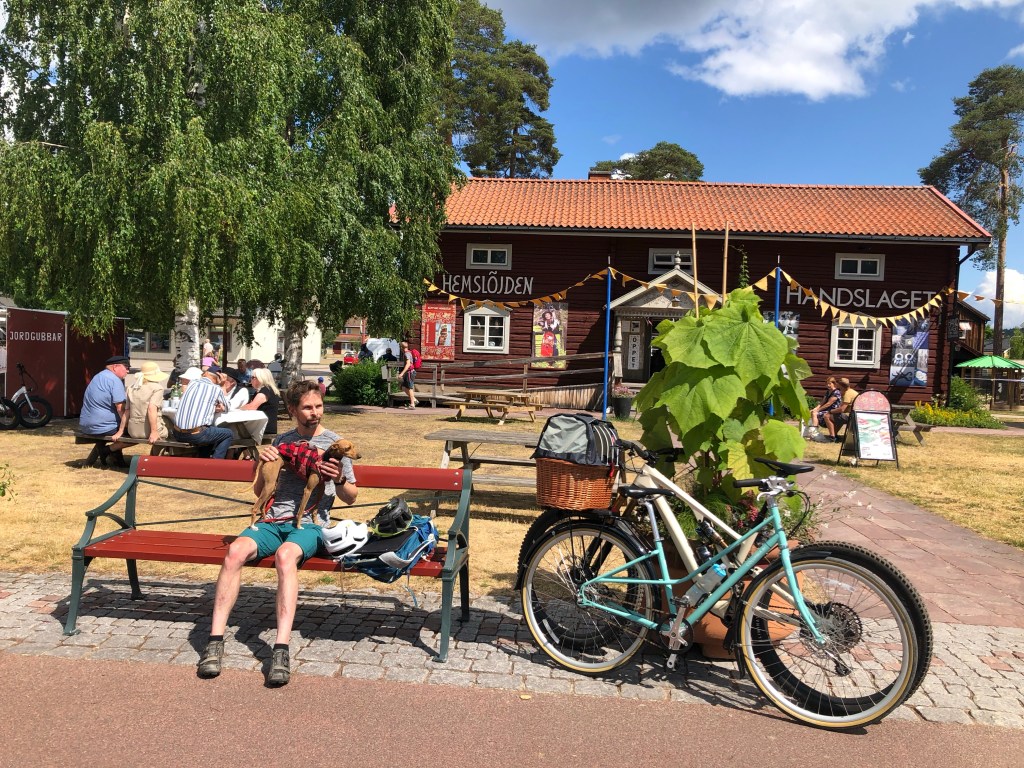
On midsomnar day we enjoyed a bike ride around town – we cooled down with an ice cream on the lake shore, stopped by the town centre to watch Swede’s dressed in traditional dress gather for picnics, and stopped at the midsomnar festival venue to check that dogs were allowed (they were!). In the evening, we headed to Gammelgården Rättvik, Rättvik’s cultural museum for midsomnar festivities.
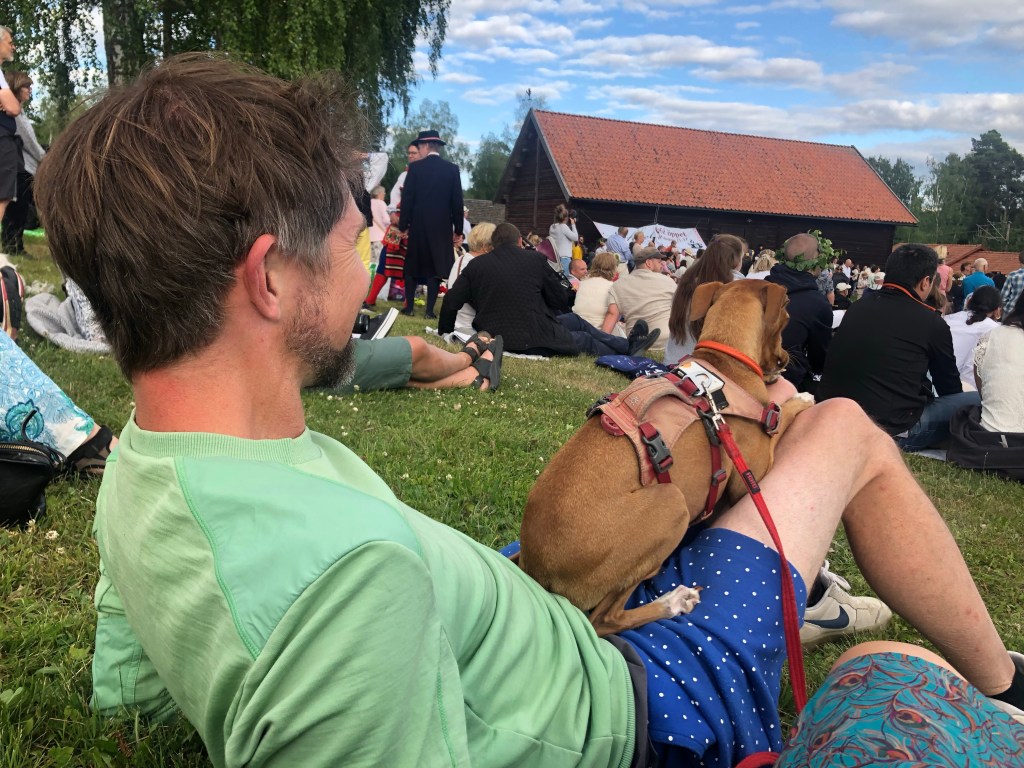
We sat on a grass knoll and tucked into some hotdogs while we waited for festivities to start. The emcee, dressed in traditional garb began talking in Swedish. At some point he addressed English speakers, only to say we hoped we were with someone who could translate his Swedish. Lol.
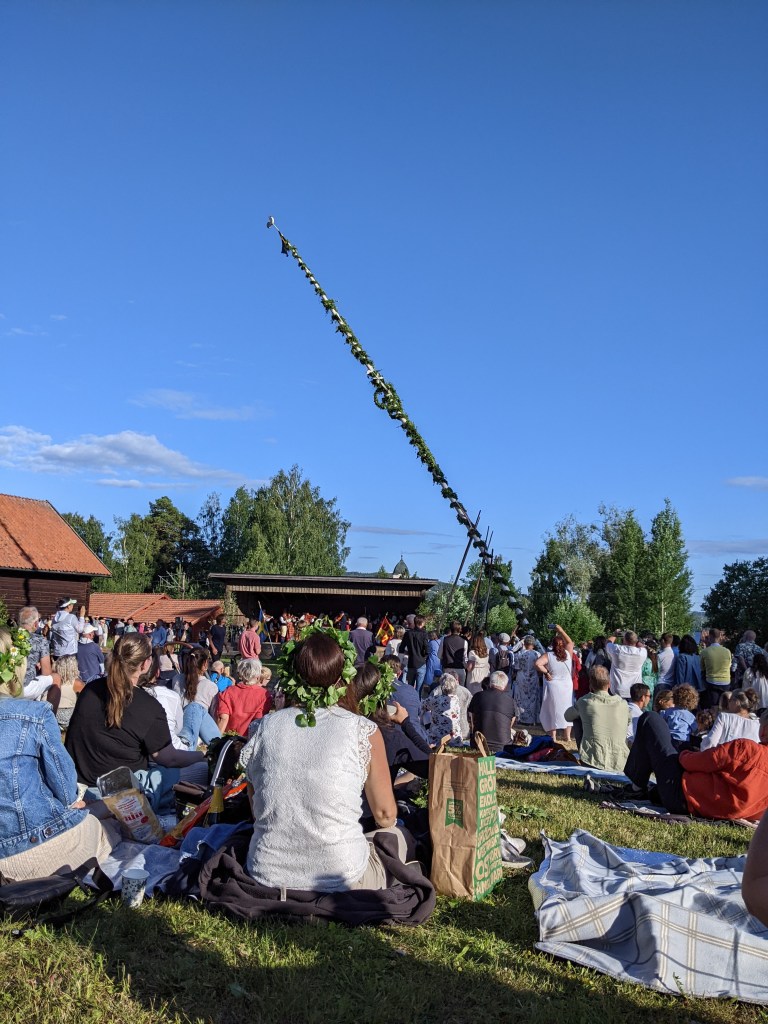
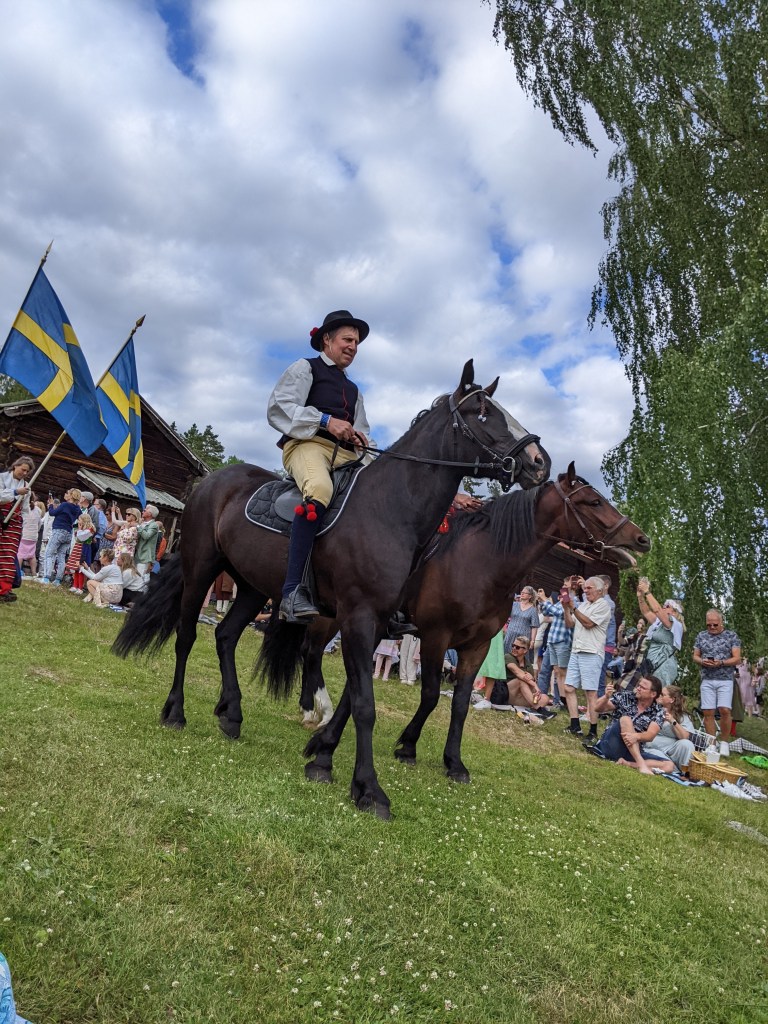
The festivities properly kicked off when the procession arrived. The procession was composed of some majestic horses at the front, followed by a cheery band of musicians, and then the star of the show – the loooong wreath to wrap the pole with, carefully carried by elected local volunteers.
The pole wrapping then began, followed by pole raising. Raising involved more volunteers with long stilts. A set of stilts would be positioned along the pole, the volunteers holding them would walk forward, the pole would raise, and then another set of volunteers with longer stilts would position their stilts further up the pole. This process was repeated what felt like hundreds of times. About an hour and a half later the pole was finally straight. Hoorah.
Once the pole was up, traditional dancing around the pole commenced. A large crowd gathered around the pole and lead dancers tried to coordinate the crowd – sometimes is was coordinated, most times it was hilarious chaos.
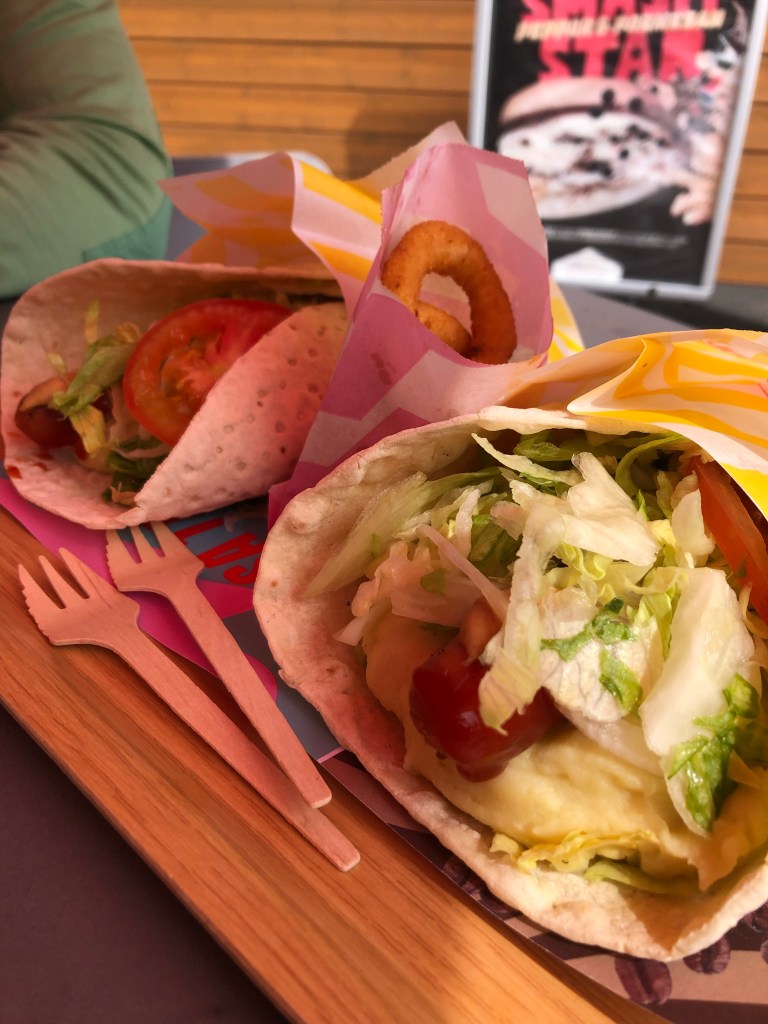
The following day we chilled – we had a Tunnsbrödrulle at Sibylla, an ubiquitous fast food chain named after a Swedish princess. Swedes love their hotdogs. The Tunnsbrödrulle is a hotdog, mashed potato and salad in a wrap. It plugs a big hole. It was tasty. While in Sweden we also really enjoyed food at Max Burgers, a local burger chain. The ingredients seemed to be of high quality, you had a choice of beef, chicken or veg for all burgers, the fries were delicious.
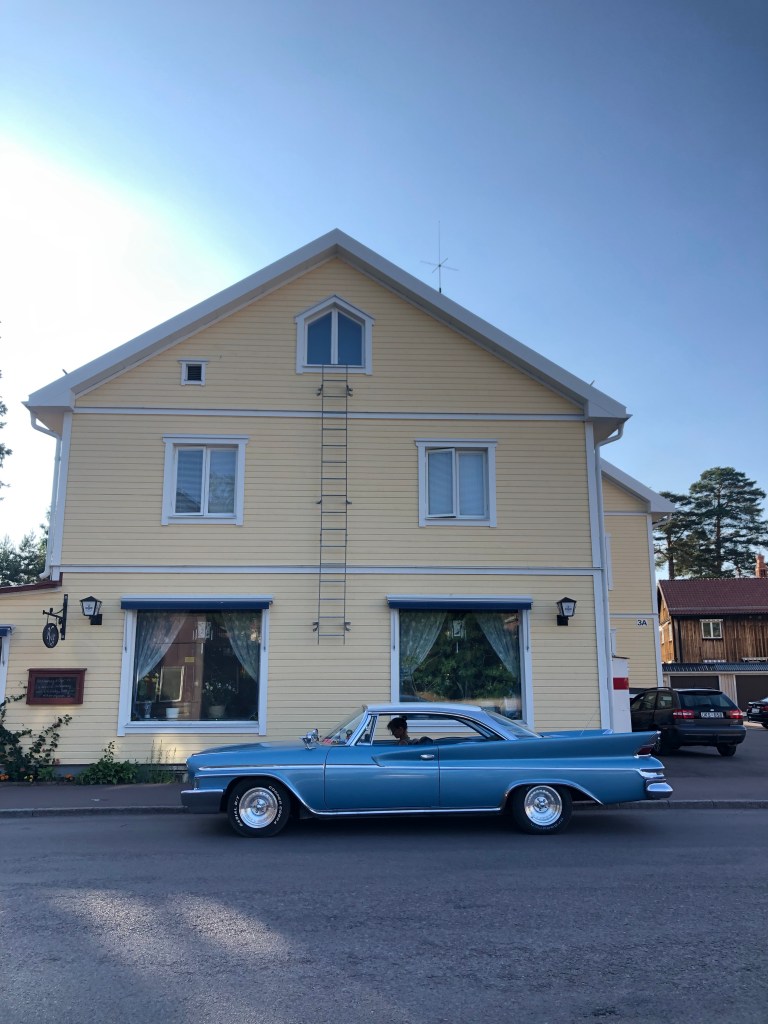
We also spotted as many vintage American cars (mostly from the 1950’s) as we could. They were everywhere. We were surprised to learn that an estimated 5,000 classic American cars are shipped to Sweden each year. Some were rust buckets with loud music blaring and youthful elbows portruding from open windows, others were perfectly preserved specimens with couples and families in them. Swedes, we learned, LOVE a vintage American car. Who knew?!?
On our last day in Rattvik, James managed to squeeze in a cycle ride (see Cycling in Sweden).
Norrland (North Sweden)
Norrland is the northern-most, largest and least-populated of the three traditional lands of Sweden. It’s where the arctic circle sits in Sweden, Sweden’s Lappland, and is the location of Sweden’s famous northern National Parks – Abisko, Sarek, and Stora Sjofallet.
We were eager to check out the national parks, but first….
Climbing in Sundsvall
From Rattvik we headed north to Sundsvall, the location of a famous seaside crag Juniskår. We overnighted in a bike park in Sundsvall (where we did a nice little nature trail hike), before driving south along the coast to the crag. See Climbing in Sweden.
High Coast and Skuleskogen National Park
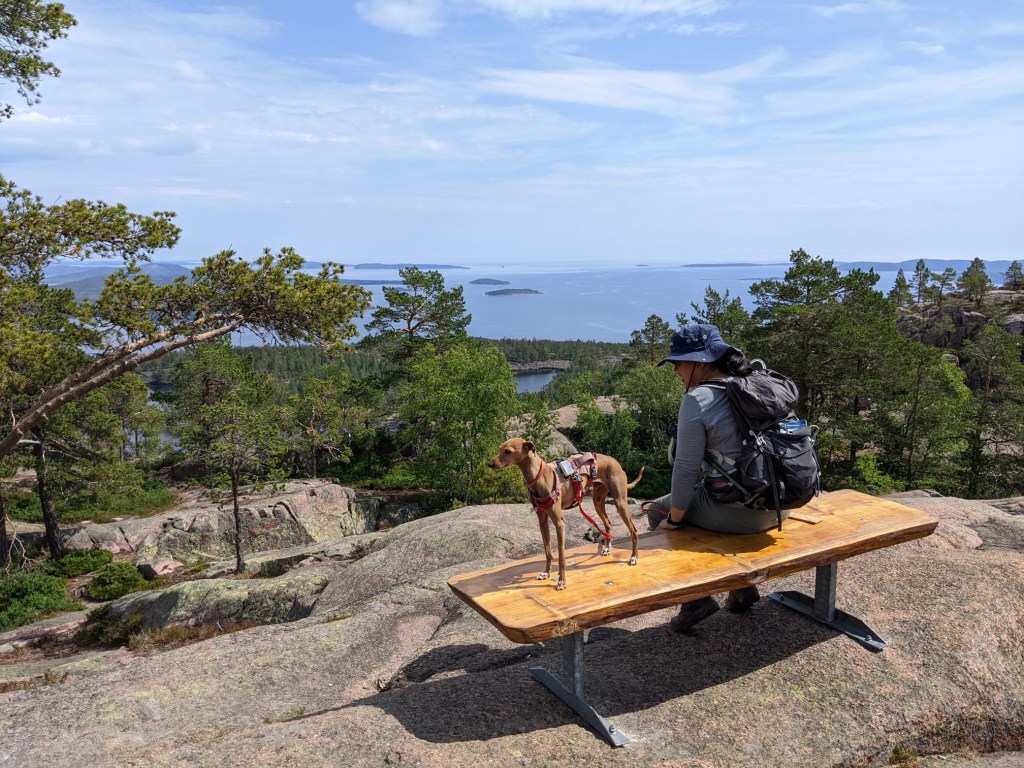
From Sundsvall we headed further to the High Coast, and Skuleskogen National Park. The High Coast is a UNESCO World Heritage area and a beautiful part of Sweden. It features undulating hills and mountains, numerous islands, and a stunning coastline formed by land-uplift when the ice ages ended and the glaciers melted. Land uplift is a process where areas were covered with thick and heavy ice sheets in the last ice age. Once these melted, the pressure from within the earth forces the land upwards. Around 700 hectares of new land are rising from the sea each year.
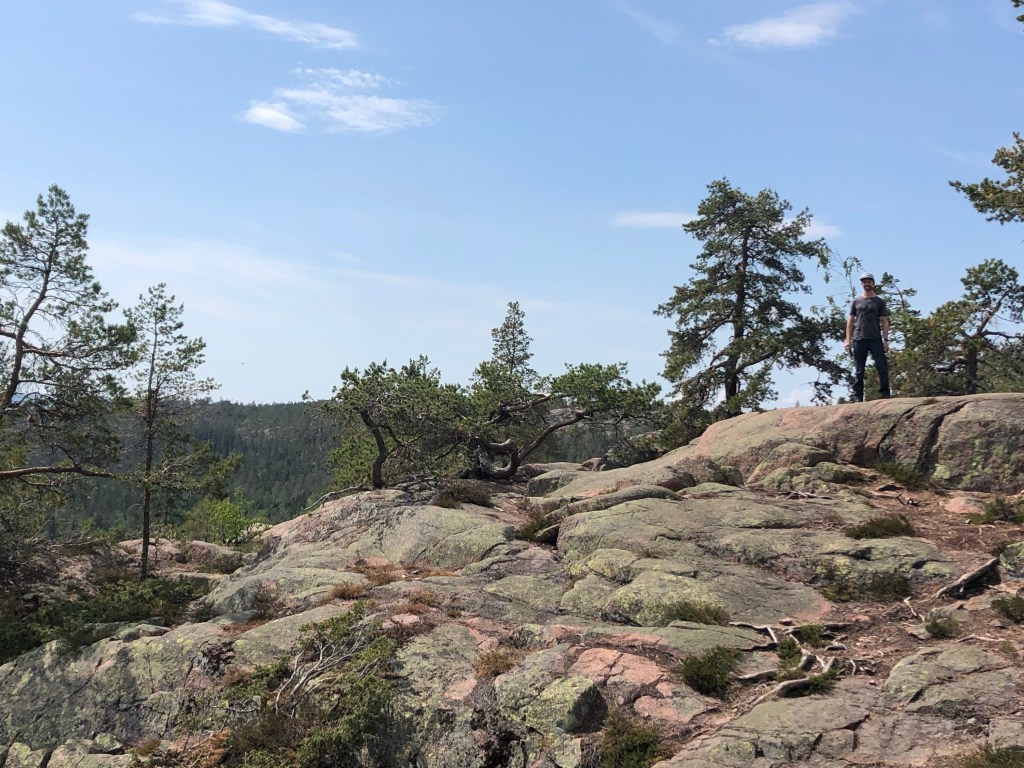
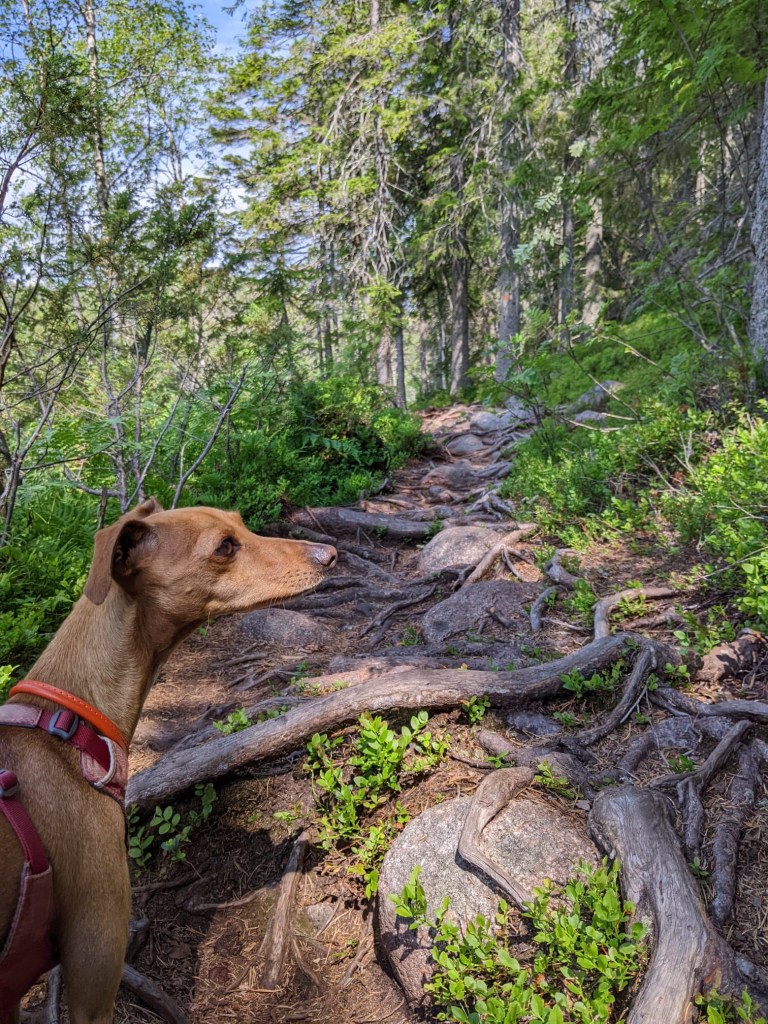
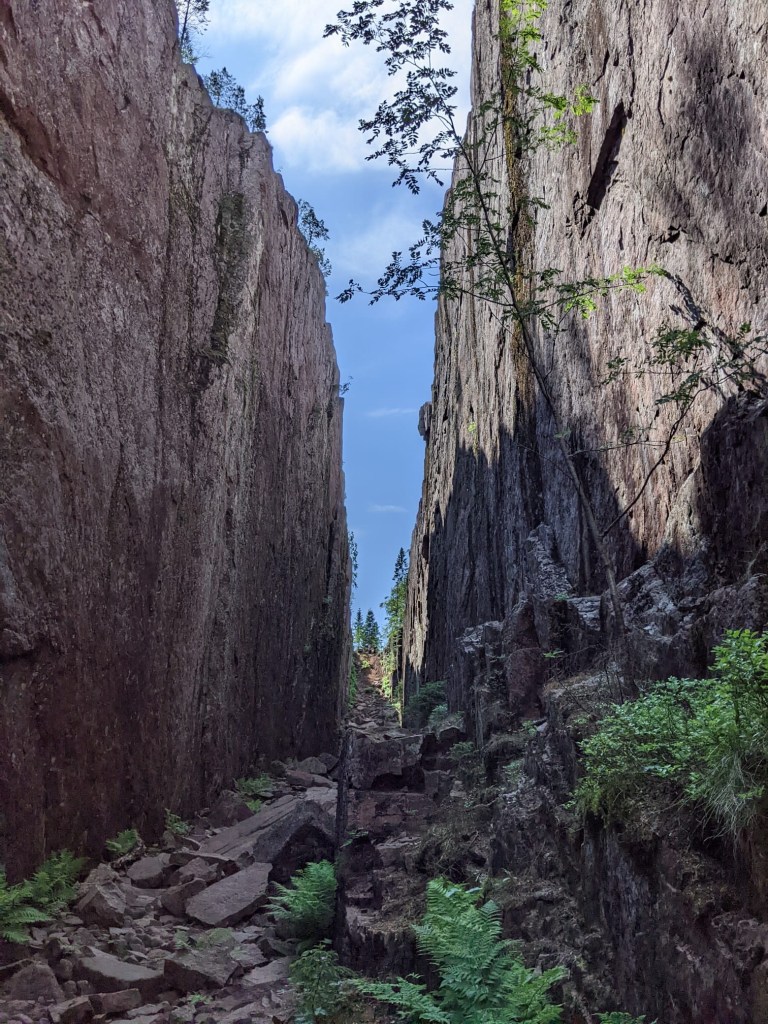
Skuleskogen National Park features large areas of bare rock, some huge and deep fissures in that rock, and large areas of rounded rocks that were once under and eroded by the sea. All of this is surrounded and interspersed by spruce and pine forest. We did an interesting walk with constantly changing views and some dramatic rock features.
Luleå – Last stop on the coast before heading inland towards Norway
From Skuleskogen we headed north to Luleå, via an overnight stop at Järnäsklubb. Järnäsklubb is at the tip of a peninsula off the highway. It lies about 15 km south of the E4 but felt very isolated, with only a few residences. The one cafe in town was closed for midsomnar holidays. We did have an interesting coastal walk in the nature reserve next to where we parked, and saw many similar features to those at Skuleskogen – rocky areas and islands, smooth boulder fields and forest but on a smaller, less dramatic scale.
At Luleå, James visited a climbing wall (see Climbing in Sweden), and we stocked up on supplies for our journey inland.
Crossing the Arctic Circle
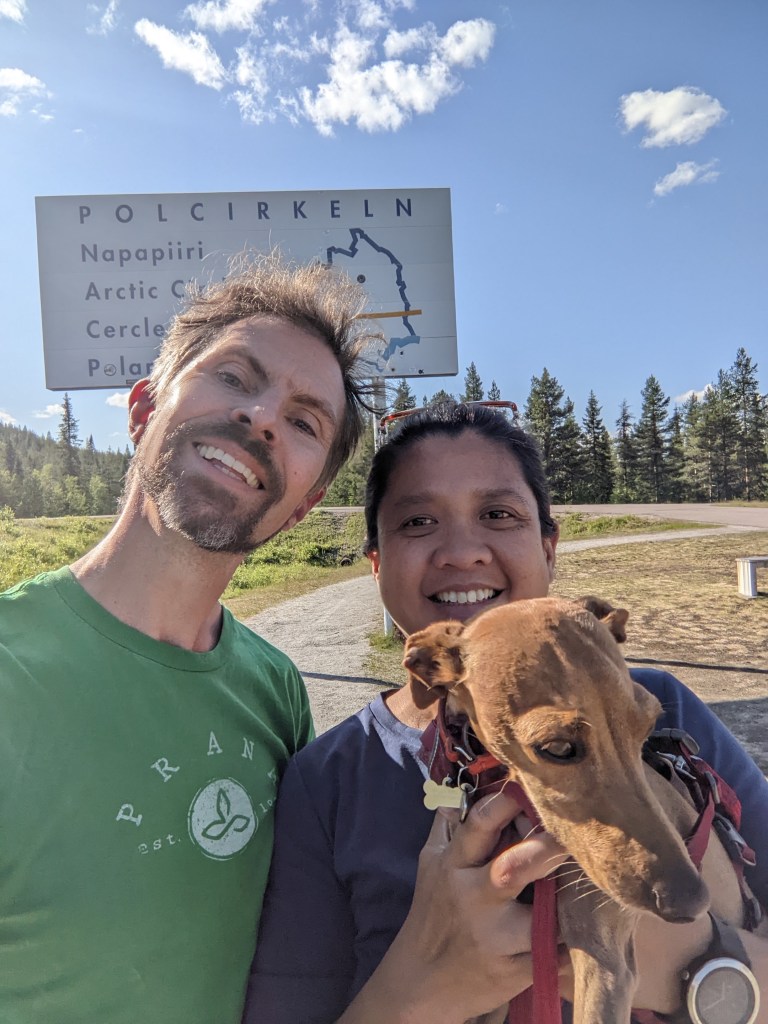
Stocked and ready to continue our adventures, we turned away from the Baltic coast and headed northwest inland on the E10 towards the Arctic Circle. We crossed the Arctic circle at Jokkmokk. The nights had been getting shorter and shorter, but it still felt like something of a milestone to cross into the circle. There was a roadside sign at the actual circle and some information boards. Interesting fact: The position of the arctic circle oscolates north and south slightly over time due to changes in the earth’s axial tilt.
Stora Sjofallet National Park
From Jokkmokk, we headed north to Stora Sjofallet National Park, which is one of several national parks that comprise the protected national heritage lands of Sami tribes. We saw our first reindeer on the drive up! They were chilling on the road (eek).
The national heritage lands are still actively used by the Sami people for the herding of reindeer, and have historical and spiritual significance to them. What this means practically for foreigners with a dog, is that access is limited to marked trails (there aren’t many and they don’t extend far into the parks), or to the sections of Kungsleden (King’s trail) which aside from Abisko National Park, don’t travel extensively through these parks either. As a result these parks are true places of wilderness, and while it’s a shame we couldn’t see more of them, we completely respect the rights and wishes of the Sami people with respect to their land.
We read a bit about the history of Kungsleden, and as the story goes, the Swedish Tourist Association wanted to be able to access the Sami land, so they devised a 400km long path they hoped would traverse the national parks. Whilst the path does travel the full length of Abisko National Park, it only skirts through small sections of Stora Sjofallet, and Sarek.
The walks we did do in Stora Sjofallet were still excellent. The first was a steep walk up to Soladen from the north shore of Langas lake . It first passed through some pine forest, then through beech forest, before passing into an exposed treeless plateau that was once a reindeer herding area, then across to a high ridgeline that had spectacular views of Stora Sjofallet and Sarek National Parks across the lake.
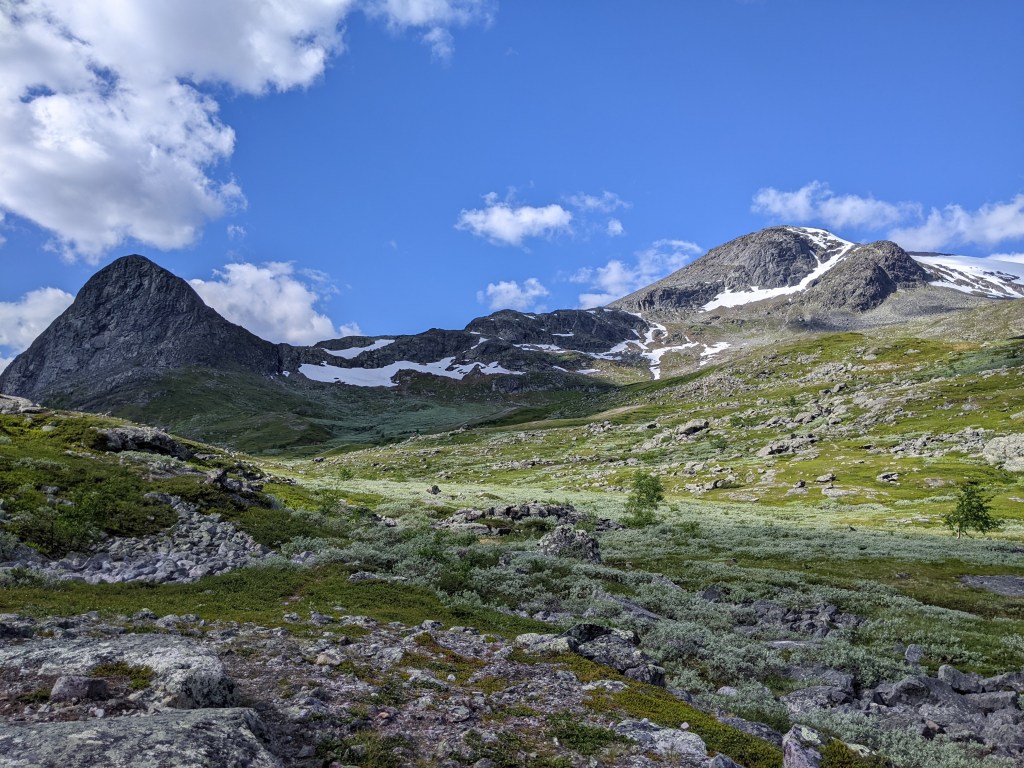
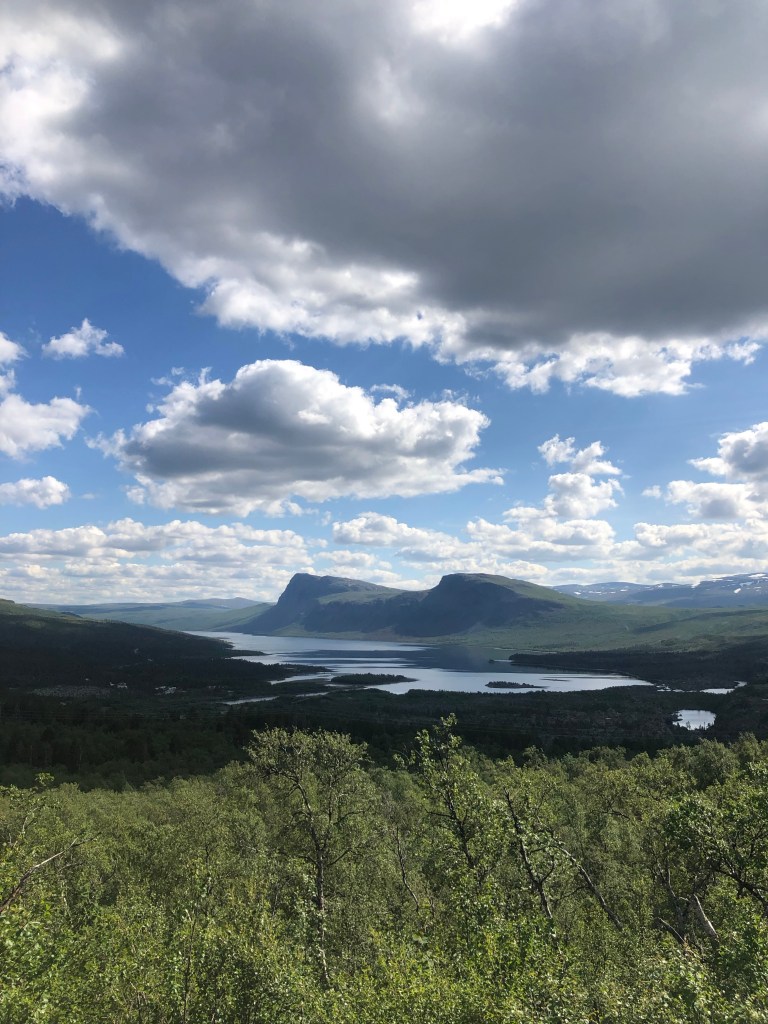
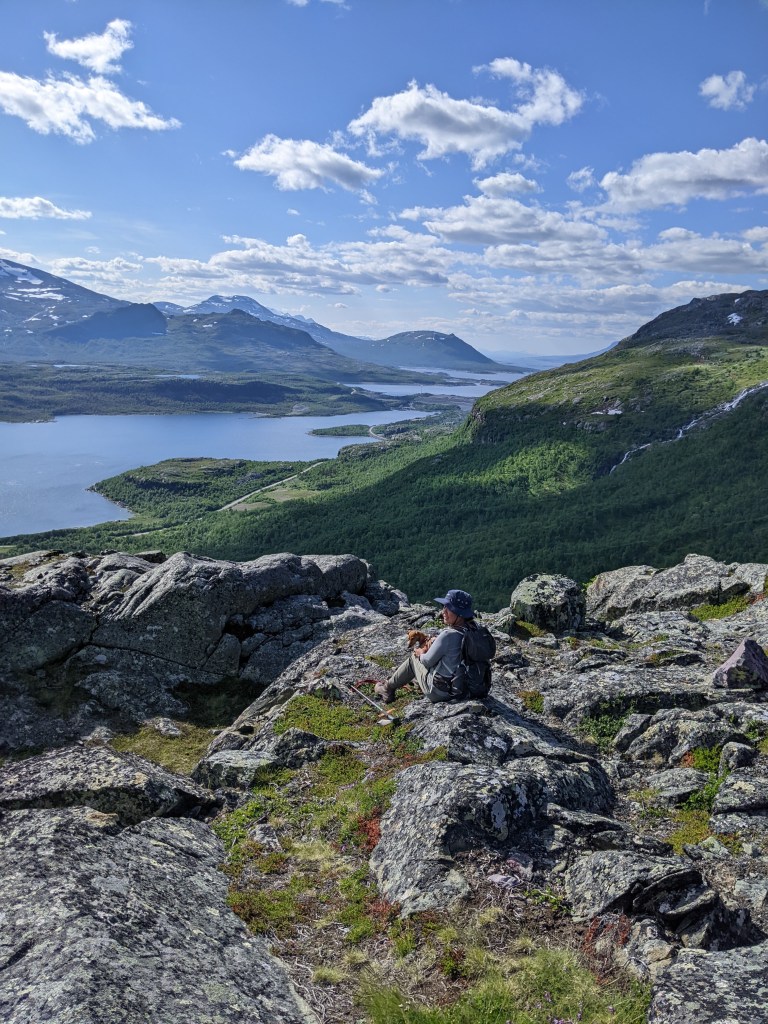
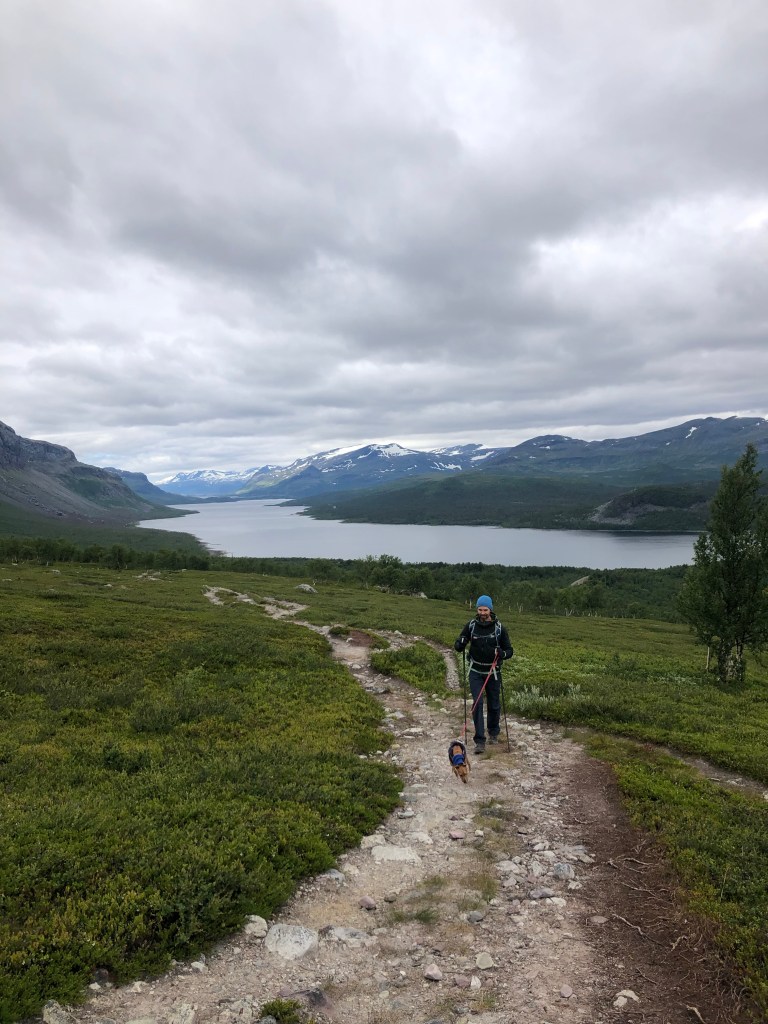
The next day we decided to take the ferry across the lake to Saltoluokta Mountain Station, and from there did a short there-and-back-section of the Kungsleden path. The fauna was similar with pine, beach, and then open heathland. The views were equally spectacular looking back at the snow capped mountains north of the lake, and where we had walked the previous day.
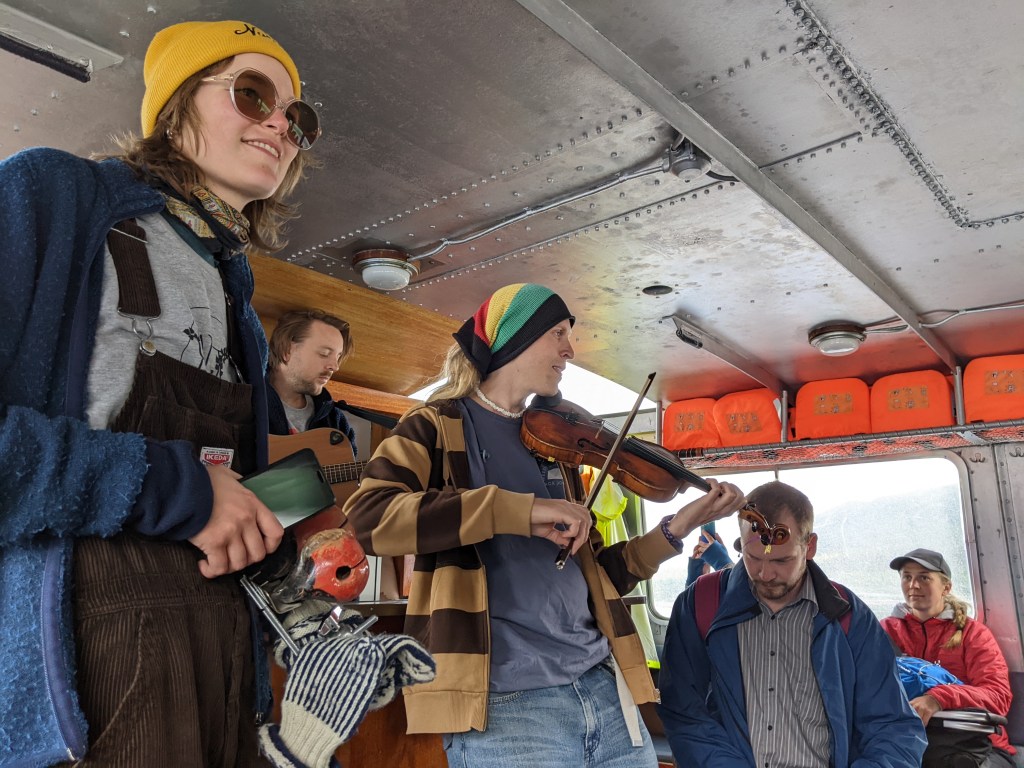
There had been a folk festival at the mountain station the previous day so there were lots of festival goers and musicians packing up and catching the ferry back. We were treated to a folk band playing on the ferry back.
Kiruna and Abisko National Park
From Stora Sjofallet we headed north to Kiruna, a fairly big town close to the border with Norway, where over 3-4 days we enjoyed a rest day at a campsite by a lake, stocked up on food, water and fuel, and had a vet appointment for Zeus to be administered a tapeworm tablet, a requirement for entering Norway from the EU.
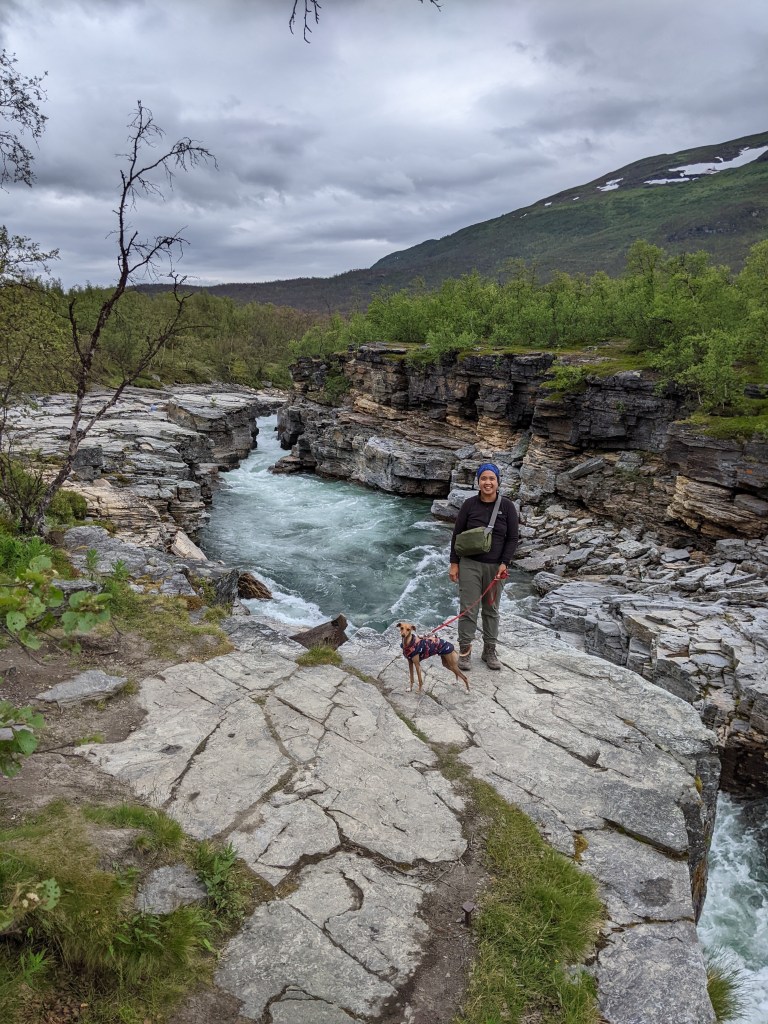
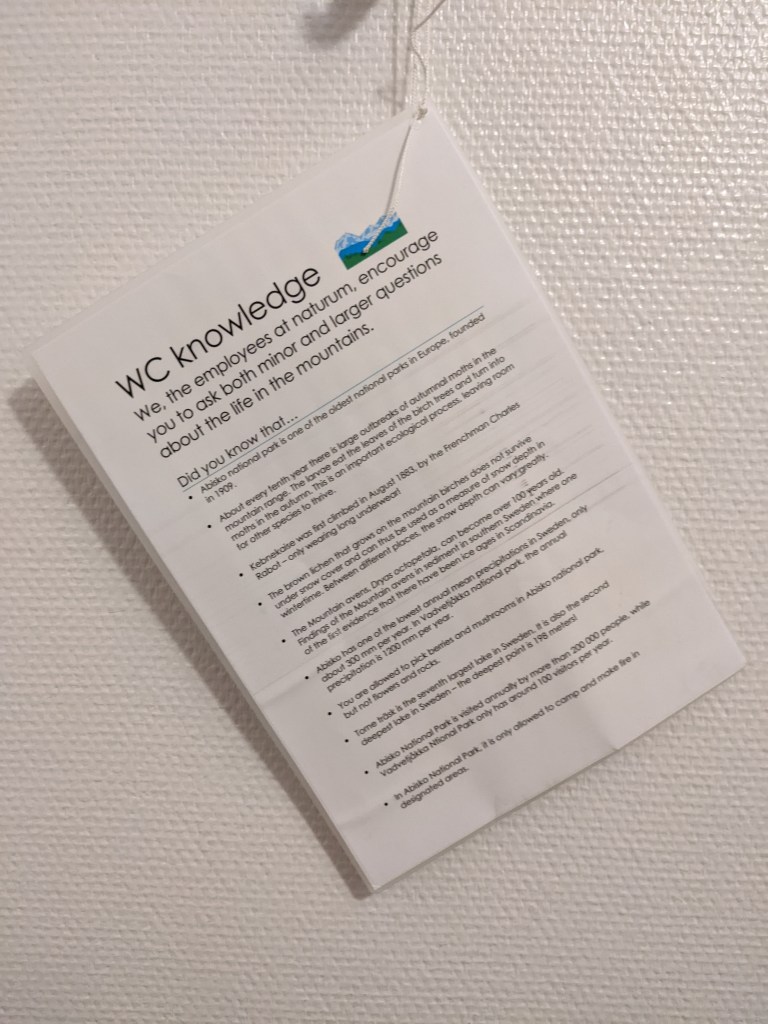
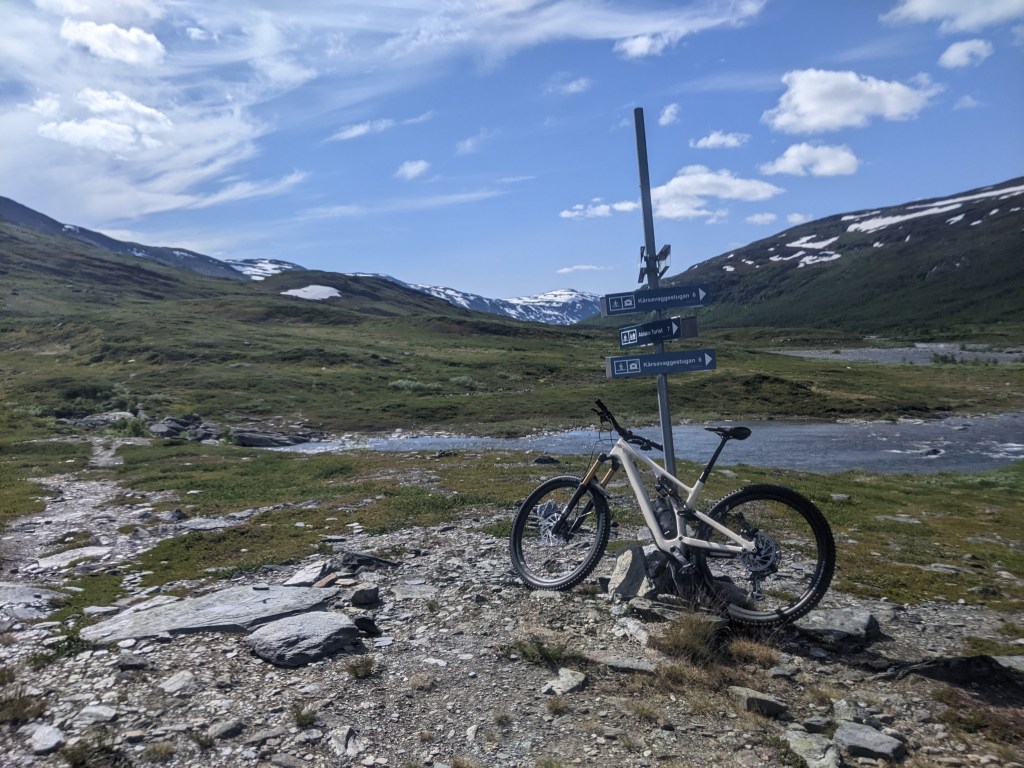
In between these prep activities, we headed to Abisko National Park several times – once for James to do a bike ride (see Cycling in Sweden), and the next day to do the Nature Trail that starts from the tourist office. Abisko is famous for being where Kungsleden starts, and the path heads south-west through the middle of the park for about 100 km.
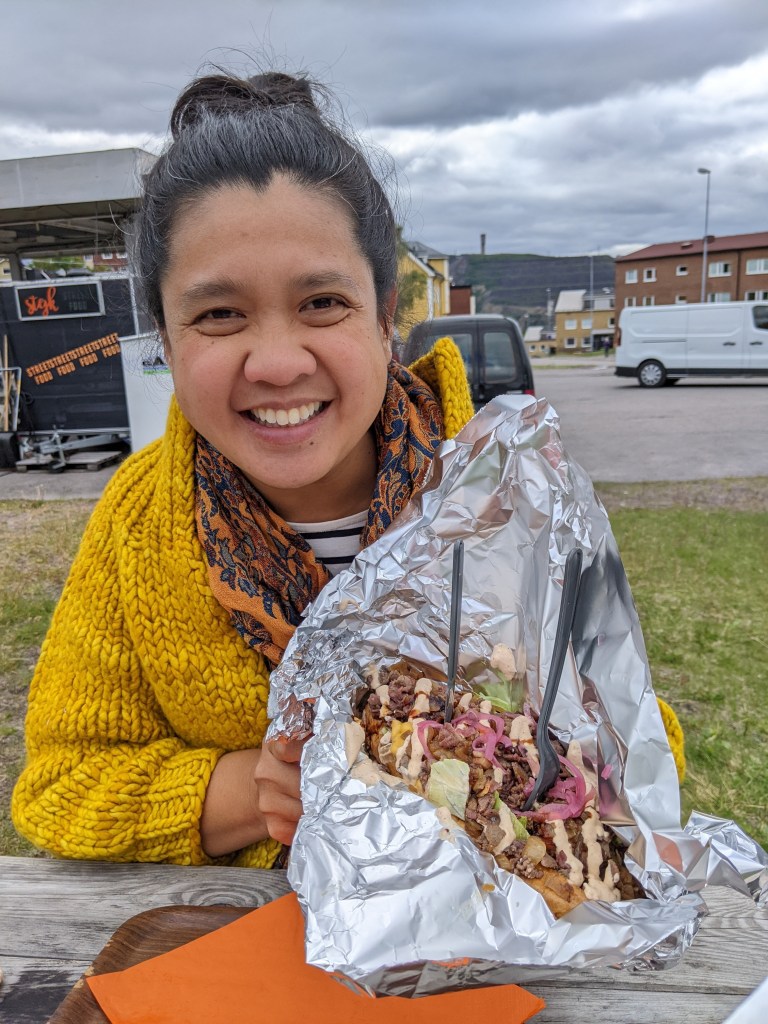
We also had some epic reindeer and moose subs at Stejkt Street Food. Stocked and stuffed, we started our journey west to Norway on the E10.
Climbing in Sweden
We visited several crags and a couple of climbing walls in Sweden. Described here in an easy to skip section 😉
Sweden Crags
James really enjoyed the opportunity to do several days of climbing on rock. All of the crags we visited were granite, it seems that most or all of Sweden is granite. All the crags were documented on 27Crags. In fact if you look at the app it can be a little bewildering since Sweden seems to have so many venues documented, although on close inspection a large proportion are just single boulders with a few problems. That does make figuring out where to go a little tricky, but fortunately we found a good article recommending some places.
Kjugeskull
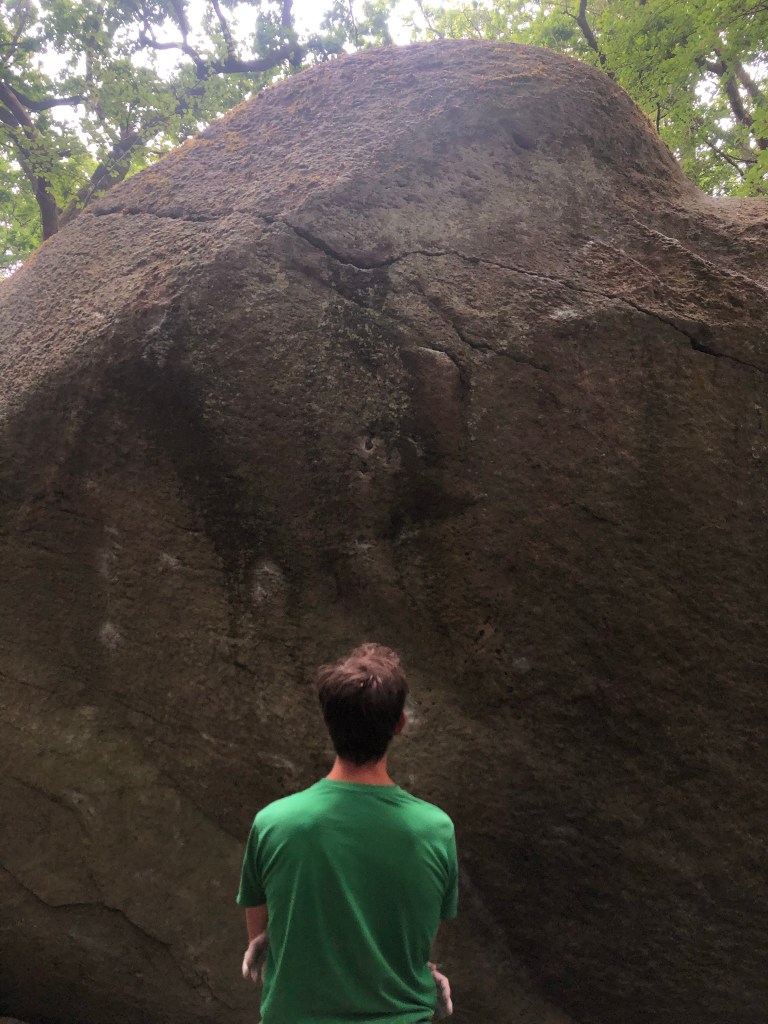
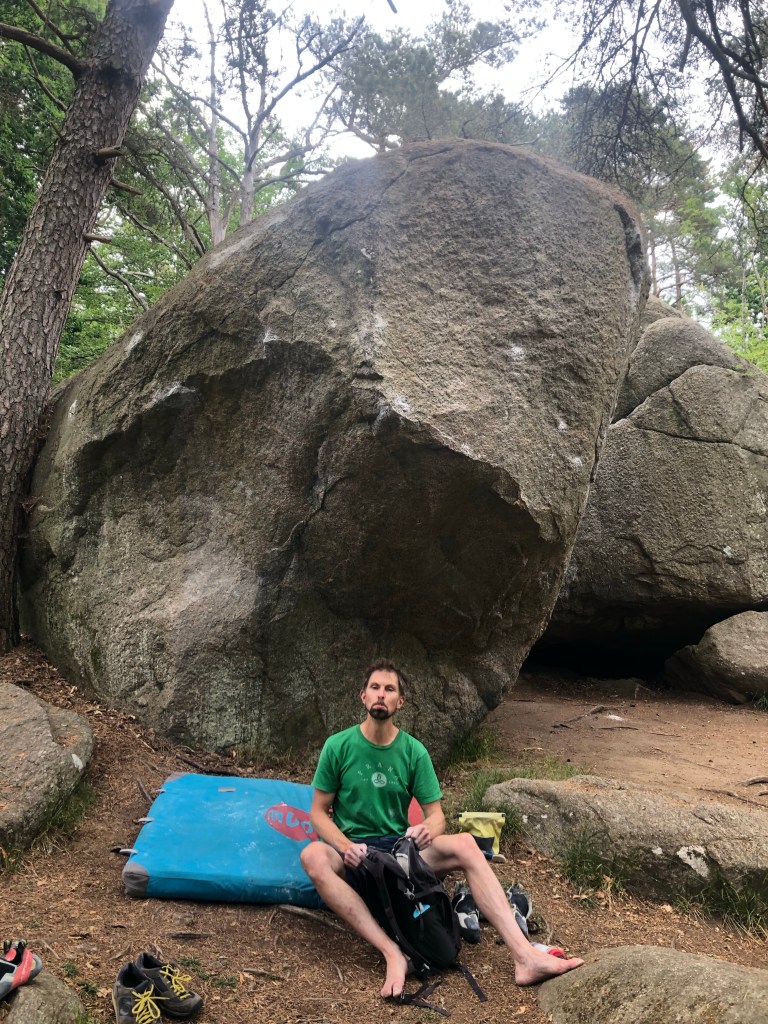
This is in the south and is one Sweden’s biggest bouldering venues with circa 1,400 problems. The boulders are in a forest that is slightly reminiscent of Fontainebleau. The granite here is quite rough, but forms some interesting features that James hasn’t seen on granite before, for example pocketed walls. Unfortunately mist and rain rolled in not long after warming up. But it looked like there were potentially lots of interesting climbs and James secretly hopes we might make a return trip as we head back to Denmark.
Knutby
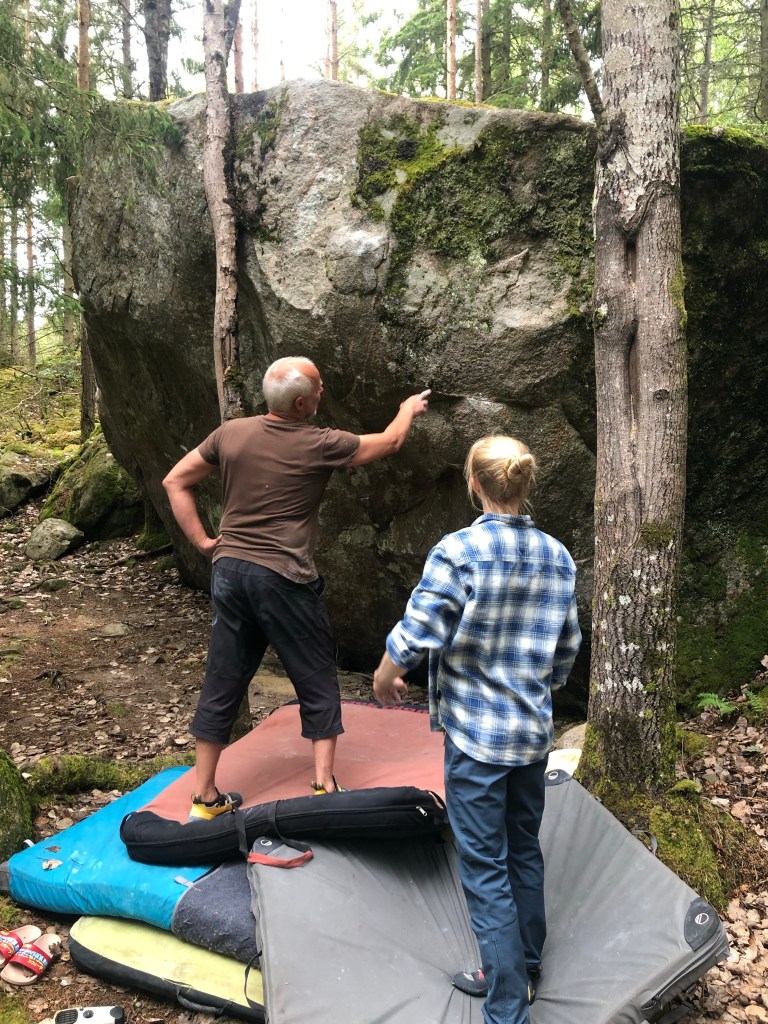
This was the second crag we visited in Sweden and learning a little from our first experience, we were covered in mosquito repellent. It reduced the assault-level but some still bit. Getting to Knutby involved a few kilometers of dirt road, then a short walk into the woods.
Shortly after we found a place to warm up, a Swedish climber came over introduced himself, then asked if we had a Thermacell, we looked at each other and at him with blank expressions and a “No, what’s that?”. He explained that it is a device which has a small gas burner that heats and releases an insecticide and without one it wasn’t going to end well for us. He also suggested we could (should) come and hang out with them and their Thermacell, where they were trying Tussilago one of the classic V5s of the crag.
After a warm up we did as suggested. The result: the Thermacell works very well, and Tussilago was a fine compression problem with poor right holds, but better left ones. We spent the rest of the day climbing with them. James enjoyed having people to climb with and they had lots of pads which meant he could do some problems that would have been too risky with our regular single pad set up. Knutby has finer grained granite, a lot of quality lines, decent landings and a few highballs. We bought a Thermacell while doing the grocery shop that evening.

Oppala
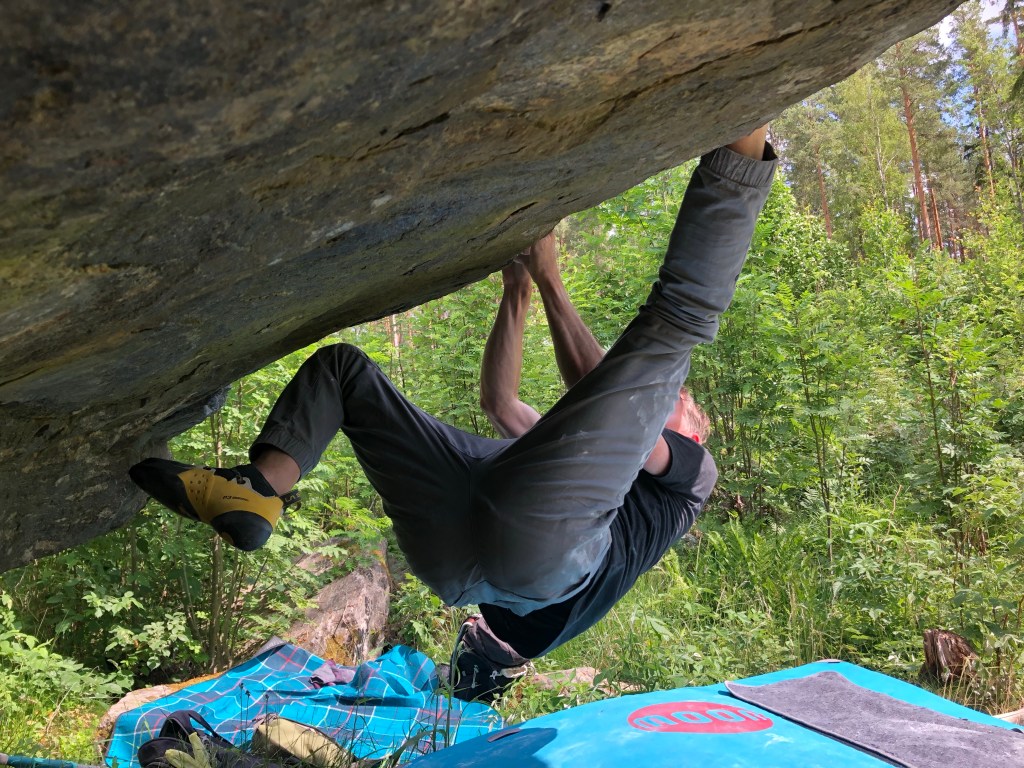
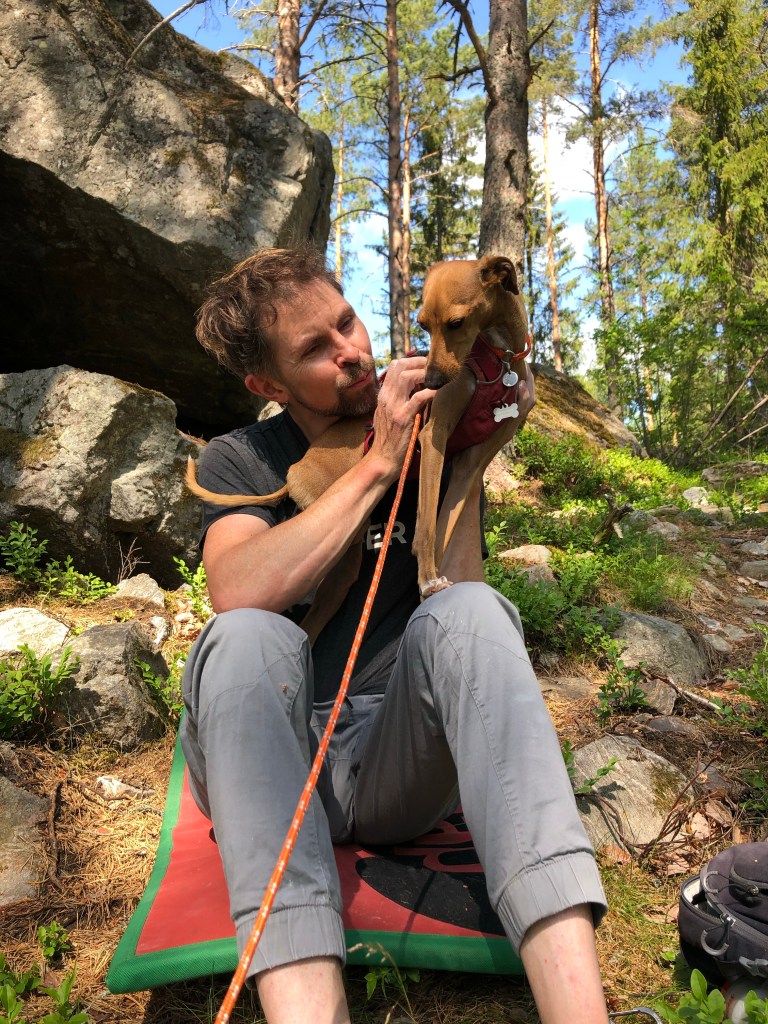
Oppala crag is in the middle of Sweden on the east coast, near the town of Gävle. The boulders are quite spread out, requiring different parking lots to access. We needed to do a fairly long drive to Rättvik in the afternoon so we just tried the boulders at one parking lot. One of the boulders looked amazing with lots of V6+ lines, but you also needed a ladder to get off (James had noticed someone’s ladder in a photo) so he skipped it. The other 2 boulders had simpler ways off and hosted a fine selection of climbs. Again good quality rock and nice holds.
Juniskär
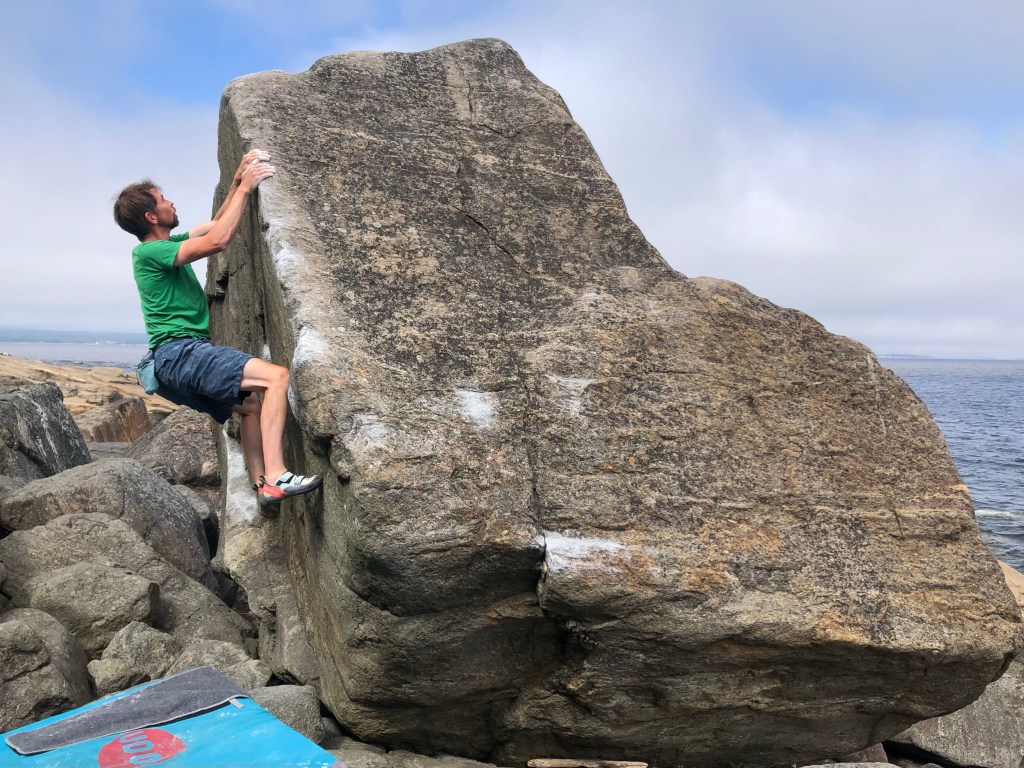
Juniskär is on the Baltic coast near the town of Sundsvall. Getting to the climbing required a walk-in through what felt like a magical wilderness landscape, over rounded rocks and a lot of lichen, followed by some extensive exploration to actually find the boulders. It’s a super nice setting on a boulder jumble leading down into the sea. The seaside location also meant relatively little in the way of insect pestilence. Erosion from the sea meant some more rounded features, the boulder problems typically followed aretes and/or some weakness in the rock.
Sweden Climbing Walls
We also had a good opportunity to sample some climbing walls during our travels in Sweden. They tended to be good, on par with other European venues we’d visited. This is impressive given the relatively small population of Sweden.
Klättercentret, Malmo
Malmo has a nice climbing wall Klättercentret with a good range of different problem styles. We were lucky that a lady was working from the cafe and kept an eye on Zeus for us while he snoozed, which meant James and Aileen could do some climbing together.
Klätterhuset, Luleå
James also visited the climbing wall in Luleå, Klätterhuset where he really enjoyed climbing and chatting with the 3 owners. The wall has bouldering and routes. James only tried the bouldering. The problems were interesting and well set, and James was pleased to break the beta for one and as result get it reset. Apparently Luleå is near one of the premier sport (route) climbing areas in Sweden, but local bouldering is limited or involves a long walk in. The wall also has a ‘No outdoor shoes policy (in the whole building), something we came across elsewhere in Sweden and it seems like a good idea.
Is it worth a trip to Sweden to go climbing?
Yes, there is some great climbing. But here are some provisos:
- You need to be prepared to meet mosquitoes, especially in the summer
- We were probably lucky with the weather. The guys at Klätterhuset, Luleå said that September would probably be the best time to visit for weather and insect conditions.
- You’d need to be prepared to travel between different venues, since nowhere has enough problems to sustain interest for multiple days
- A 2-week or more roadtrip in a campervan would probably be an ideal and fun way of doing it
Cycling in Sweden
Rättvik
Rättvik had some excellent cross country trails around some woodland and lakes, which reminded James how much fun can be had on a simple cross country ride. The trails are just outside the town and as seems to be common in Sweden the same area hosts winter cross country skiing and snowmobile tracks. James did 2 rides here and found it nice to follow marked trials without having to think too much about navigation, although an overview map would have been nice to give some assurance you weren’t heading kilometres in the wrong direction.
Abisko
James had a really enjoyable time here.
The ride started with some fun technical rocky trail heading uphill with wood sections crossing wet ground. Then a technical uphill bog which was very tiring and James would have liked to stop, except that meant getting attacked by horse flies (that part of the ride is best forgotten) Then some nice singletrack out and back to a high point. And, to finish a really really good descent, not that steep, lots of technical but rideable with flowy rock sections into fast sections on long wooden bridges, great combinations of corners too. If time permitted James would have done more (the best forgotten section had been forgotten)
What’s next?
We plan to continue heading west on the E10, to Norway and specifically the Lofoten Islands next.
 JAZ Adventures
Leave a comment