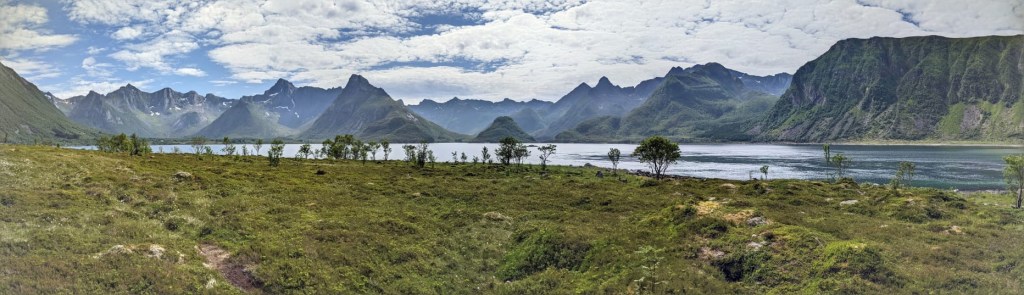
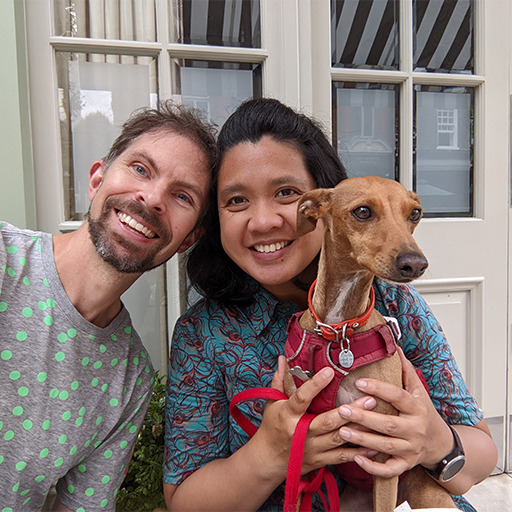
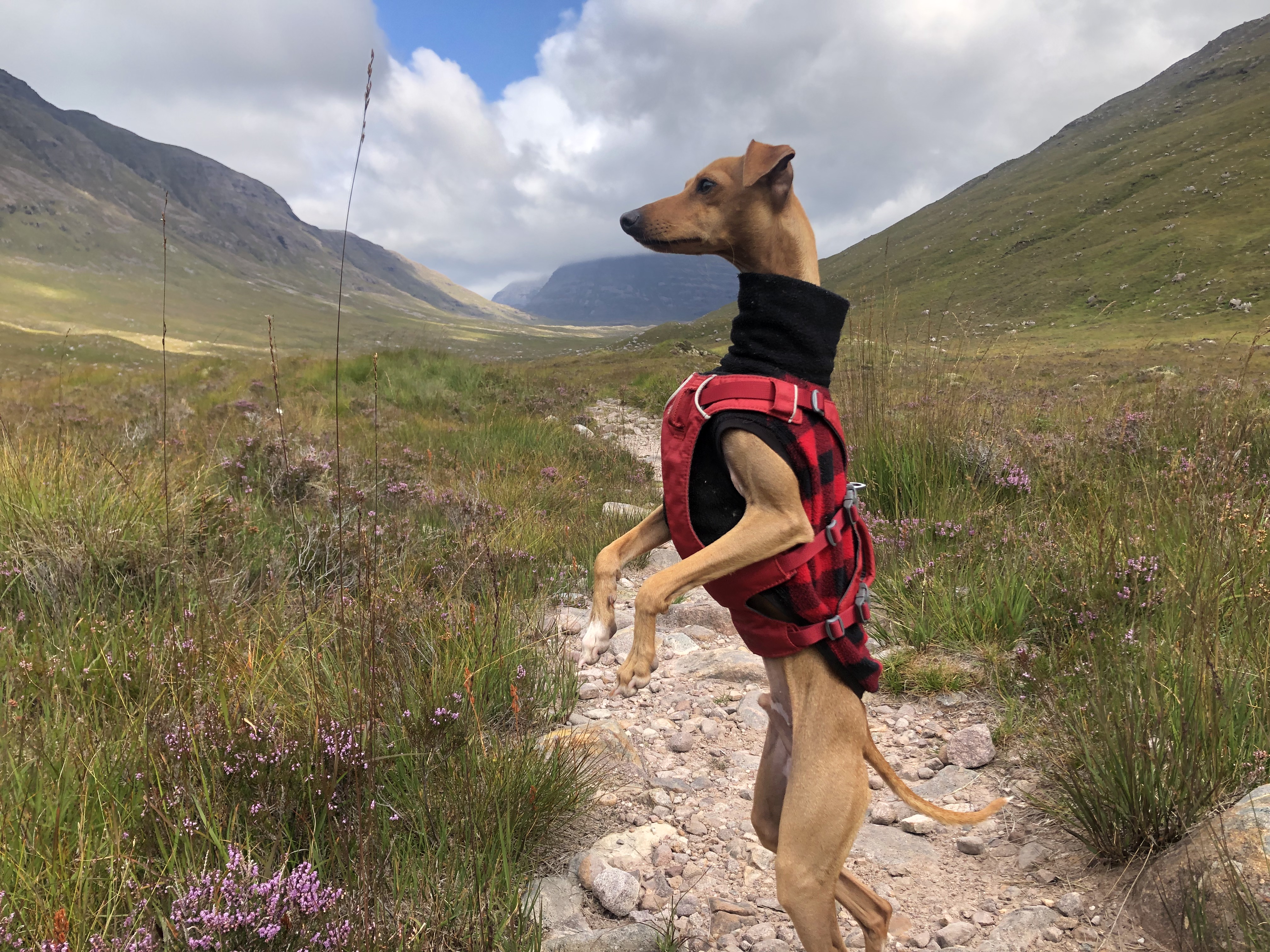
Hello, we’re James, Aileen and Zeus
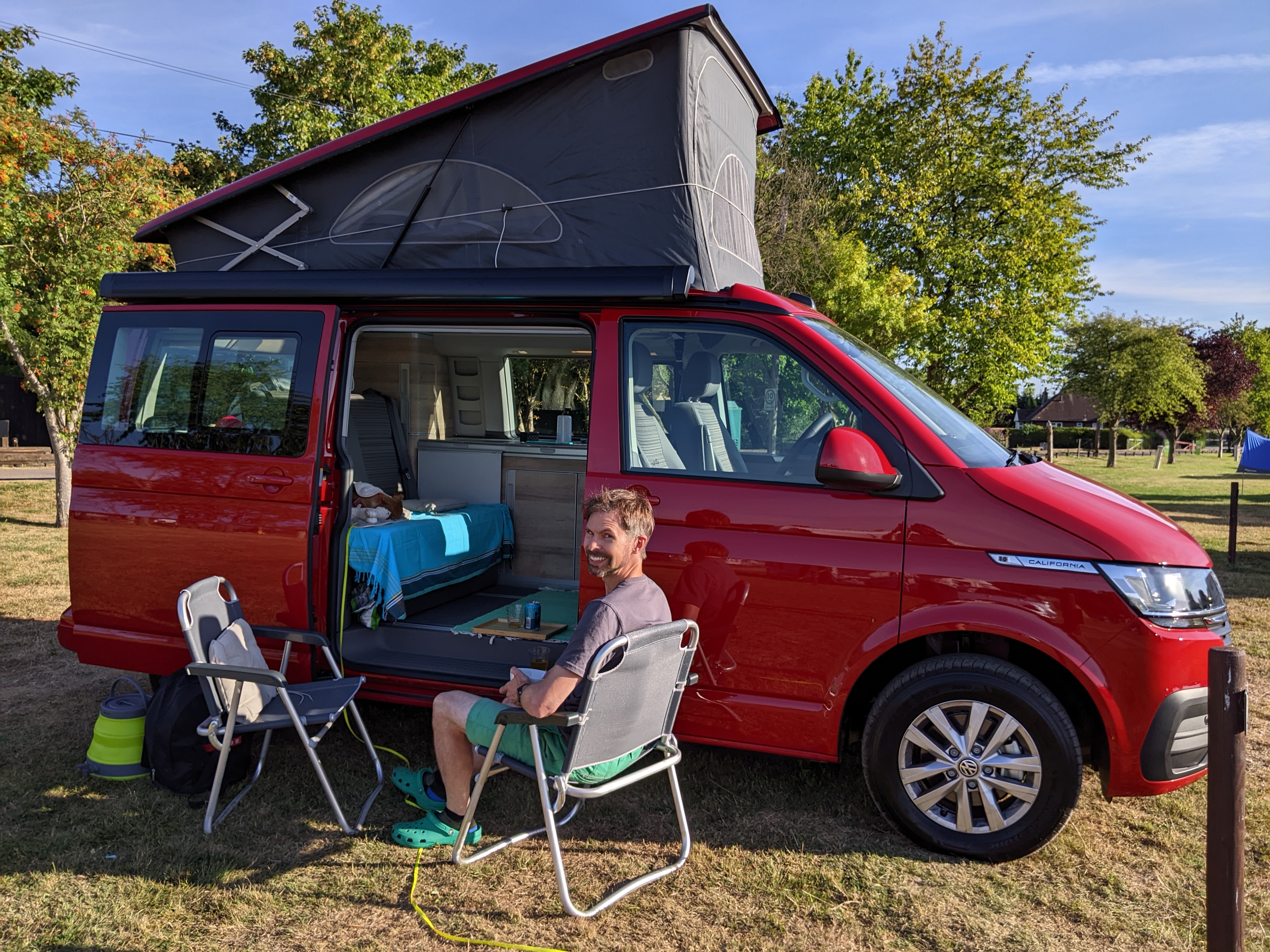
We’re touring Europe in a campervan. This is about our adventure.
-
Week 11: Córdoba, Sevilla and Costa de la Luz
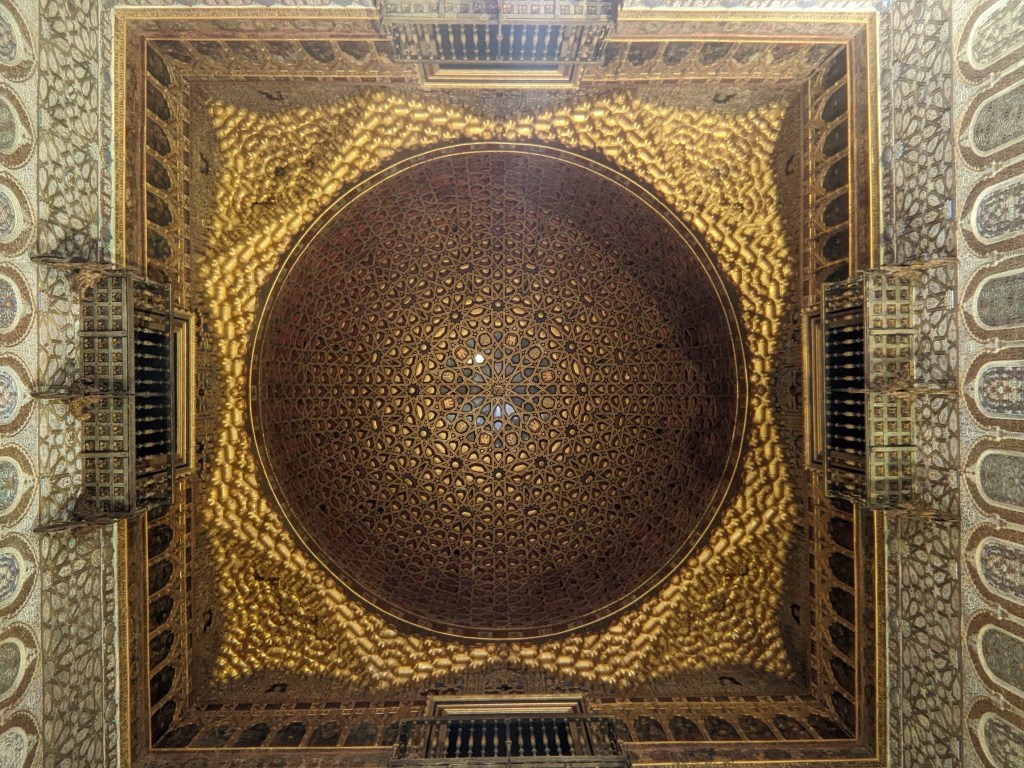
This week we explored 2 more of Andalucia’s fascinating cities before unwinding in beautiful and seemingly unspoilt Costa de la Luz.
Cordoba – Mezquita-Catedral, the Medieval city and snacking
After seeing the majestic Alhambra in Granada, we were curious to see the Mezquita-Catedral de Córdoba, which had been described to us as a “cathedral built inside a mosque”. Despite knowing what we were going to see, the description still didn’t quite prepare us for how shocking it is to see in reality.
As you enter the Mezquita, the first thing you see are hundreds of soaring double arches, for what feels like as far as the eye can see in all directions. Your eyes are immediately drawn upwards. It was clearly a grand site for Islamic worship. In Córdoba’s heyday in the 900 AD, it was the biggest city in Western Europe and the Córdoba caliphate encompassed much of the Iberian Peninsula, plus the Balearic Islands and some of North Africa. Córdoba became a place of pilgrimage for Muslims who could not make it to Mecca or Jerusalem. The size and beauty of the Mezquita reflect how important Córdoba must have been to the Islamic faith.
As you walk further into the site and your eyes grow accustomed to the setting, you notice that, woven into the arches are Catholic capillas and chapels dedicated to various saints. At the centre of the site is a soaring Transept, the main Cathedral. Construction of the Catholic elements began in 1237 following Fernando III’s conquest of Córdoba.
On the one hand, it was shocking to see what was obviously a majestic place of worship for one religion, disfigured by another. The differences in how each religion worshipped could not be more stark. The mosque elements of the site included the graceful arches, intricate carved stone and mosaics. The Catholic elements of the site incorporated numerous paintings and sculpture depicting the human form of saints and the holy trinity, as well as elaborate gold objects used in Catholic worship such as chalices and other objects for the alter or processions.
On the other hand, one could appreciate that much of the original mosque was preserved. Rather than tearing it down to build a new Catholic place of worship, the Catholic elements where built onto the original mosque structure. In our era of the mashup, this could even be considered culturally relevant.
Whatever one’s views on the matter, it was definitely a unique and awesome sight worth seeing.
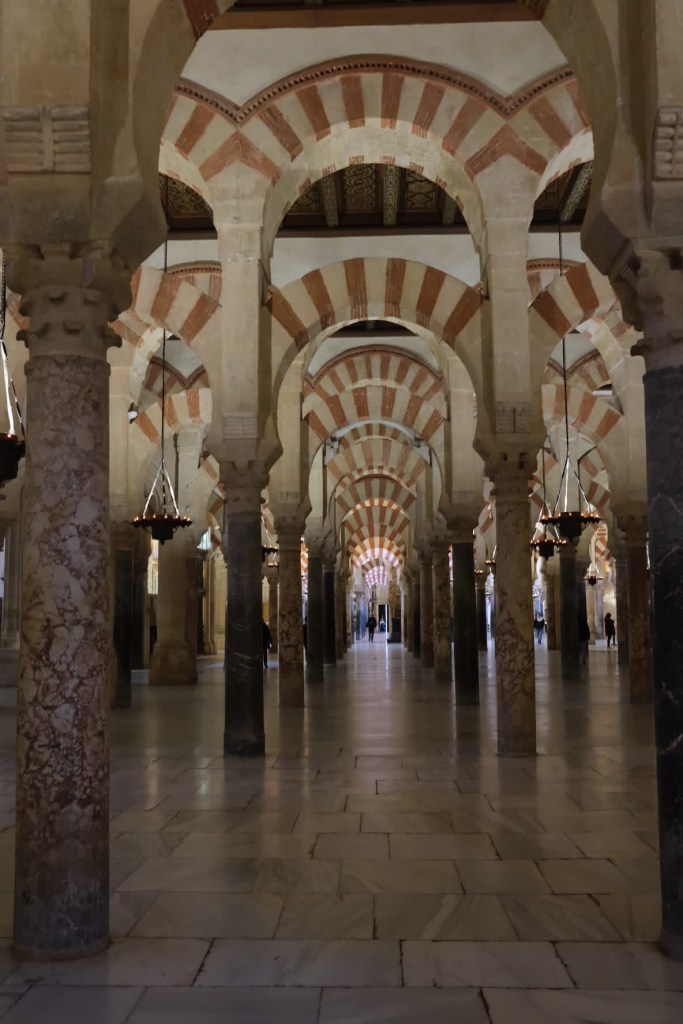
Arches galore 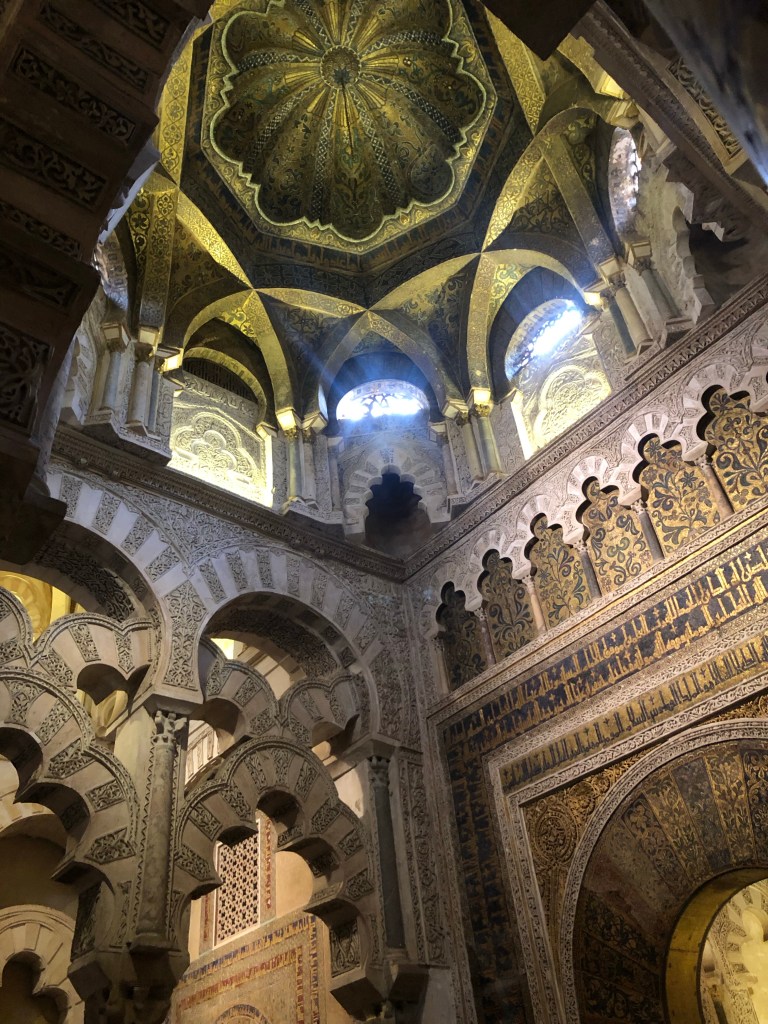
Intricate detail of the mihrab 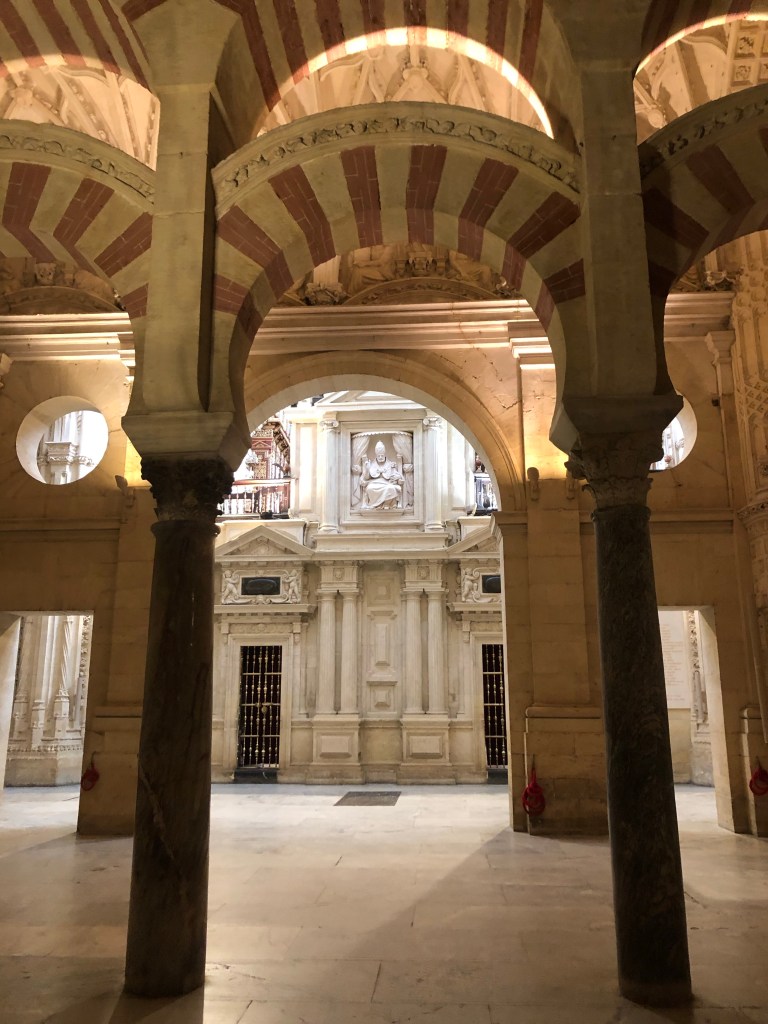
Catholic chapel visible through the arches 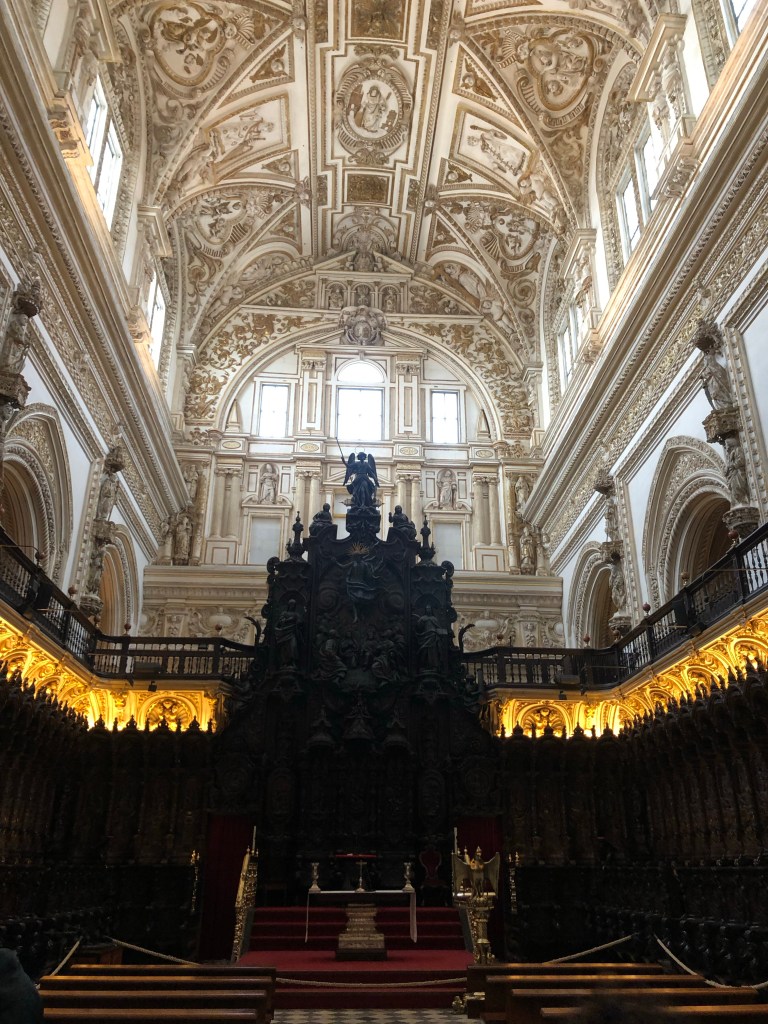
Cathedral We spent some time walking around Córdoba. The medieval city centre around the Mezquita-Catedral is fairly compact with narrow winding streets, so it’s a lovely place to wander. Aileen enjoyed peeking into patios, usually places of lush greenery hidden from view inside otherwise simple-looking building structures. We found the statues of Averroes and Maimonides, eminent philosophers (one Muslim, one Jewish) from Córdoba’s heyday who believed that philosophical reasoning could and should be applied to religious faith.
Finally, we sampled some Córdoban food specialities – Flamequín, jambon rolled in pork, breaded and deep fried, and ox-tail croquettes. Both were delicious.
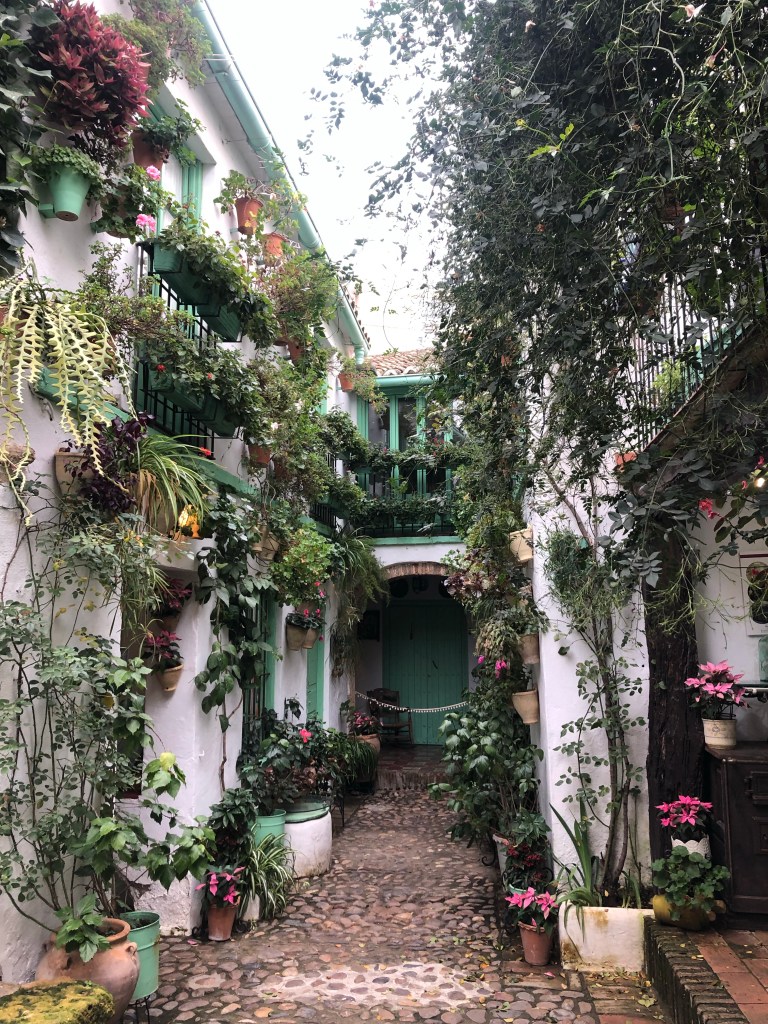
Patio 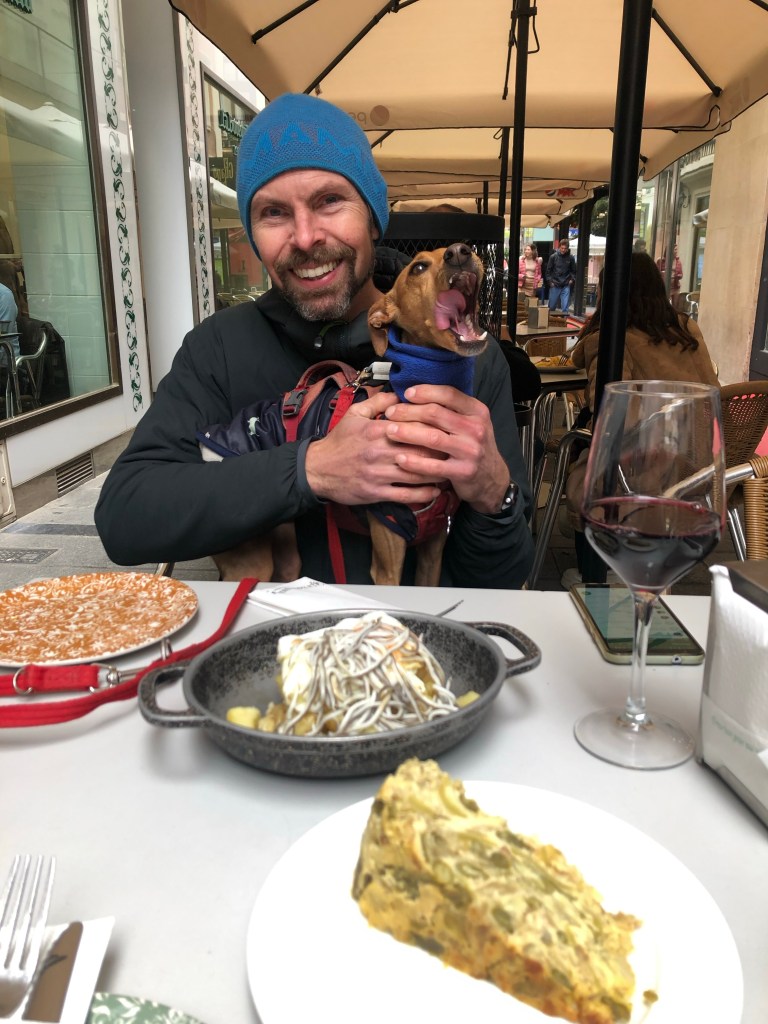
James, Zeus and some baby eels 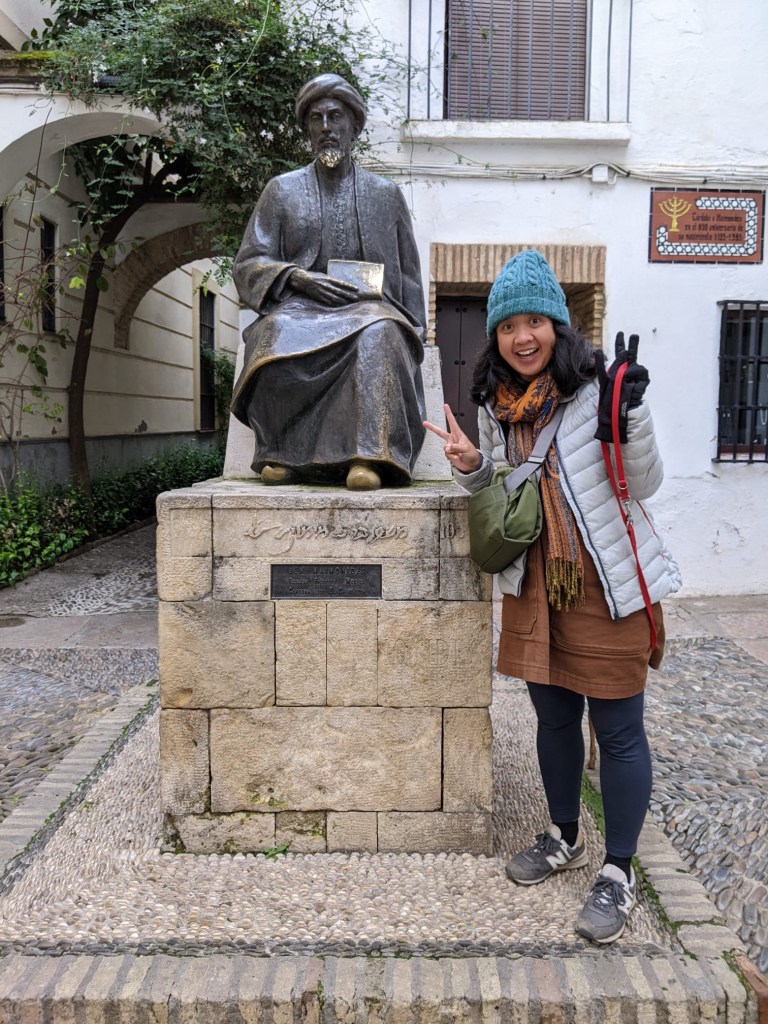
Aileen and Maimonides Sevilla – Real Alcázar, escaping the van and tapas-fest
From Córdoba we headed to Sevilla. Whilst driving we considered our options on where to stay. It had been quite cold in Cordoba so we didn’t find the idea of staying in another cold parking lot appealing. In addition, none of the caravan sites around Sevilla seemed handy for exploring Sevilla’s nightlife. So we booked into a dog-friendly hotel, El Rey Moro, in Barrio de Santa Cruz (Sevilla’s medieval Jewish quarter) for 2 nights, and parked the campervan in a secure parking place in the port area of Sevilla.
We’ve been happy living in the campervan for the past 3 months, but it was was very nice to be able to have a hot shower (with dry towels) when we wanted, get into bed without having to put on multiple layers of clothes to stave off the cold, and generally enjoy some space. Zeus also enjoyed jumping between the sofa and bed, especially when being told not to.
The streets in the center of Sevilla are very narrow and totally inappropriate for a campervan, but do have lots of different tapas places to try. So for 2 days we enjoyed having other people cook for us. Highlights were cazón de adobo (marinated and fried dogfish), tortilletas de camarones (shrimp fritters), espinaces con garbanzos (spinach and chickpea stew), washed down with good but cheap wine. We fully appreciated the 5 minute walk back to the hotel, bellies full and buzzed from a good night out in Sevilla.
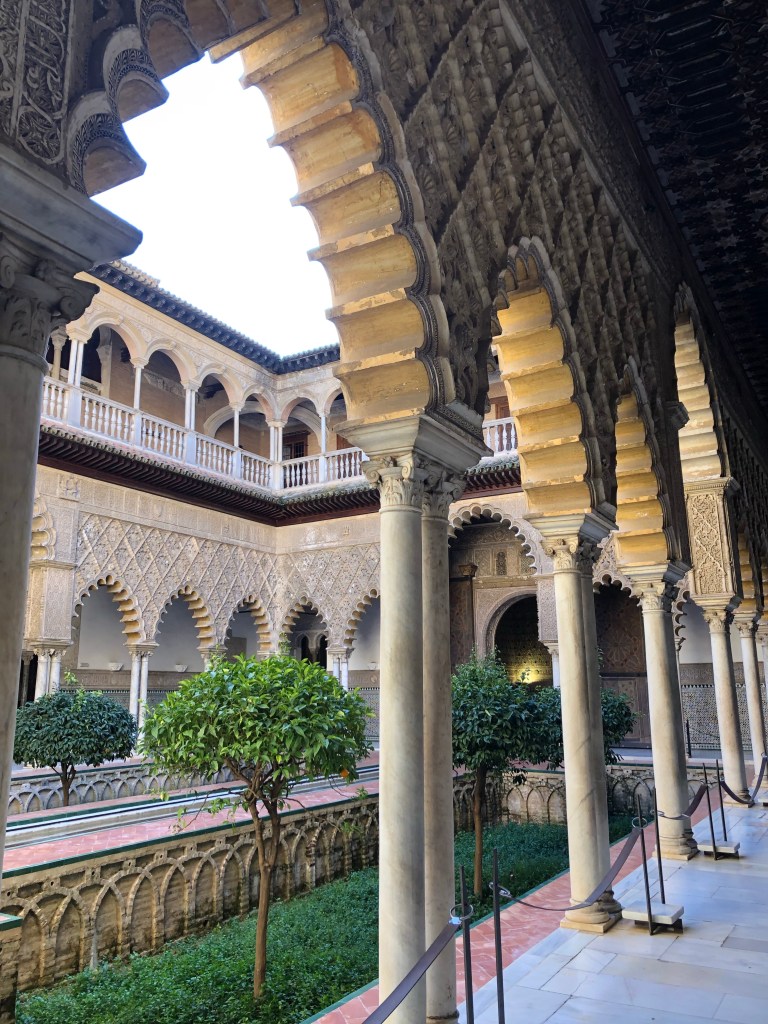
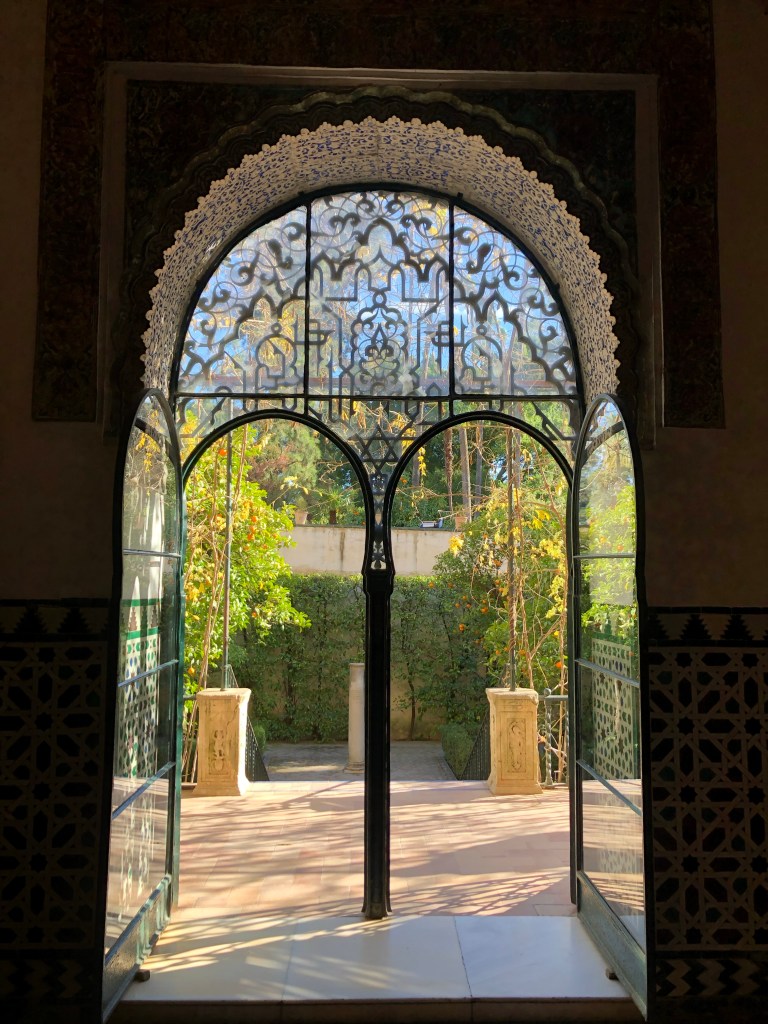
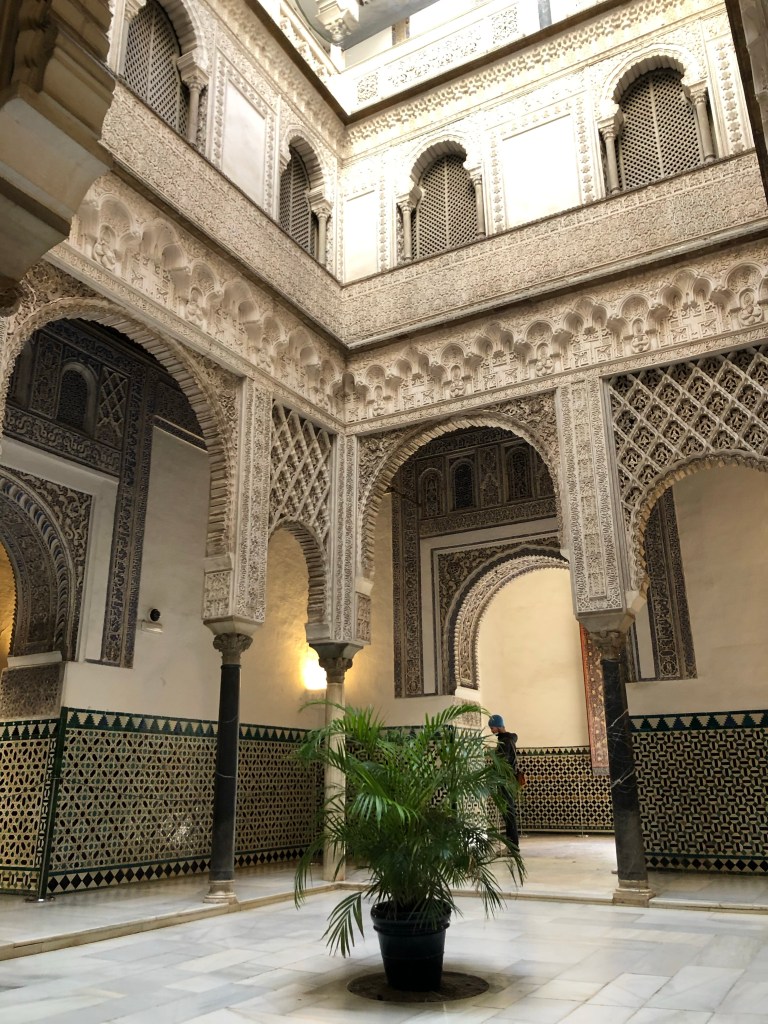
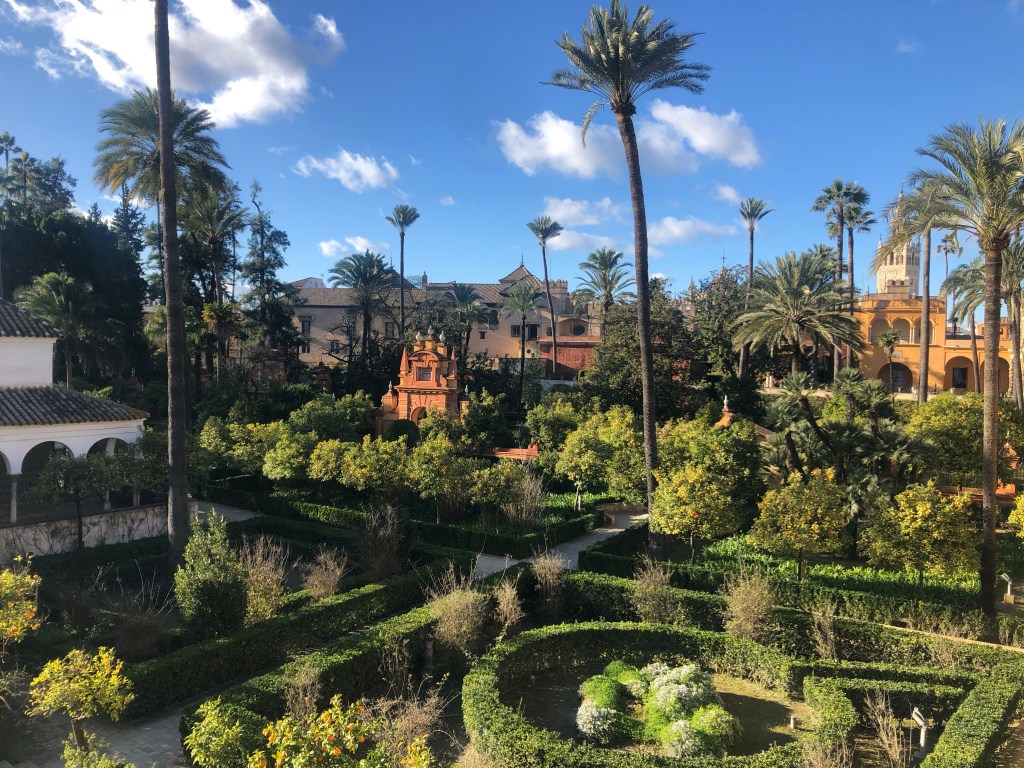
On the day we arrived, we wondered what the big compound near our hotel was. It turned out to be the Real Alcazár, a palace-fortress that has evolved with Muslim and Christian monarchs – including Al-Mu’tamid, Fernando III, Pedro I, and Isabella and Fernando. We decided we needed to see it. We found the most impressive site to be Palacio del Rey Don Pedro, a palace that Pedro I built with the help of Muslim artisans his ally Mohommed V in Granada sent. They were also responsible for decorating Alhambra’s Palacio Nazaries. So the palace is largely in Muslim-style but incorporates elements that were contemporary to Catholic culture at the time. The harmonious integration was in stark contrast to what we’d seen in the Mezquita-Catedral de Cordoba.

We visited Plaza de España, which is historically or architecturally less significant than the other places we’ve visited, but was a fun way to spend the afternoon. It’s a semi-circular building and plaza with a big fountain and pond, built for the 1929 Sevilla Expo. It features tiled alcoves showcasing all the provinces of Spain, in alphabetical order. We noted that many depicted conquistas. It was great for people watching (Tik tok-ers and Instragramers let loose), and Zeus met more of his fan club, more particularly 2 Ukrainian students who missed their Italian Greyhounds back home.
We had hoped to visit the Sevilla cathedral which also incorporates elements of the mosque that previously occupied its site. The cathedral’s impressive and iconic tower is a repurposing of the mosque’s minaret. But we didn’t have the time so it’s one to visit for our future selves.
We were a little nervous when we returned to the van, that it might have been broken into or the bikes stolen off the back. We’re please to say we found it as we left it.
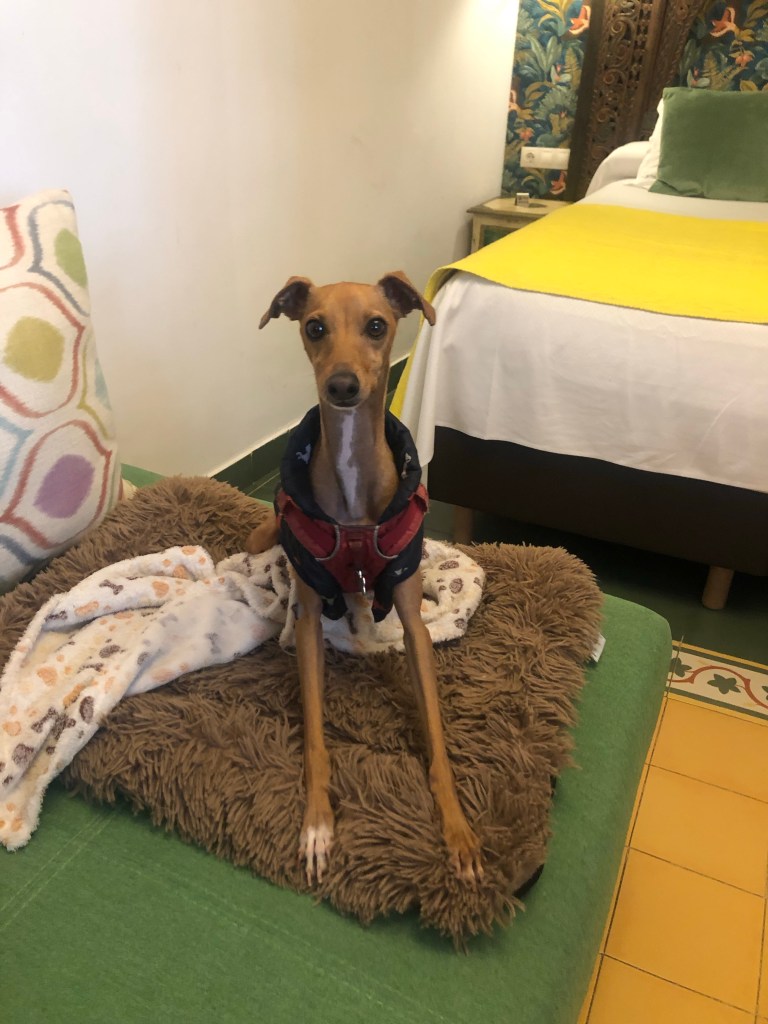
Small well-behaved dog 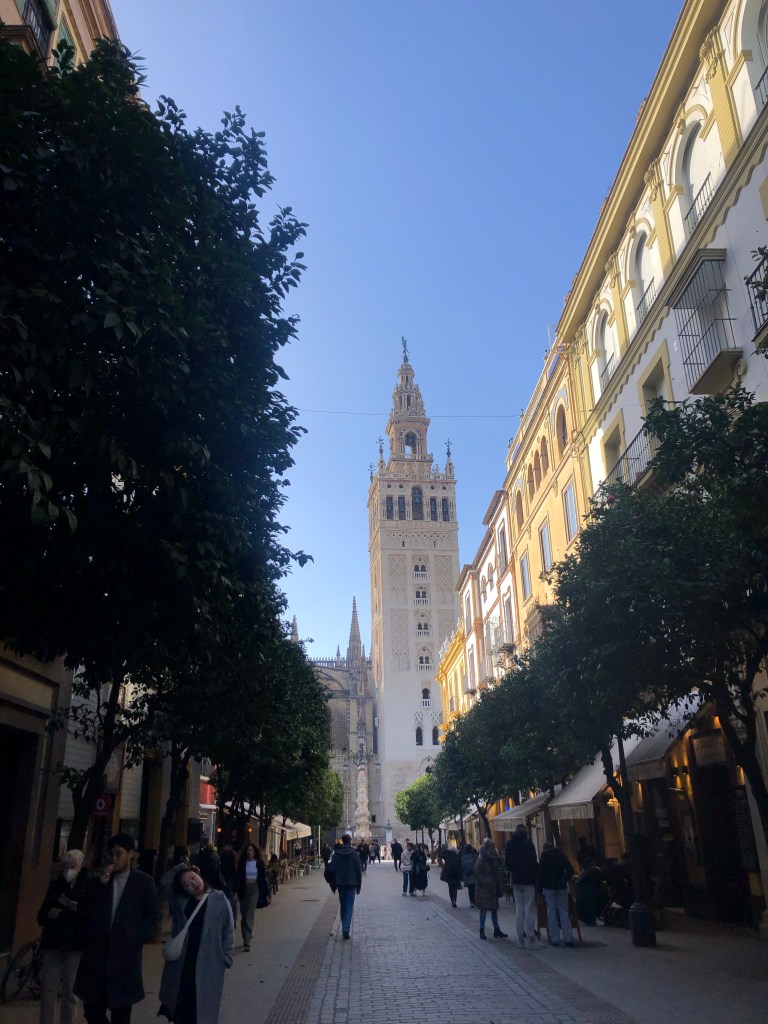
Sevilla cathedral tower 
Late night shrimp fritters 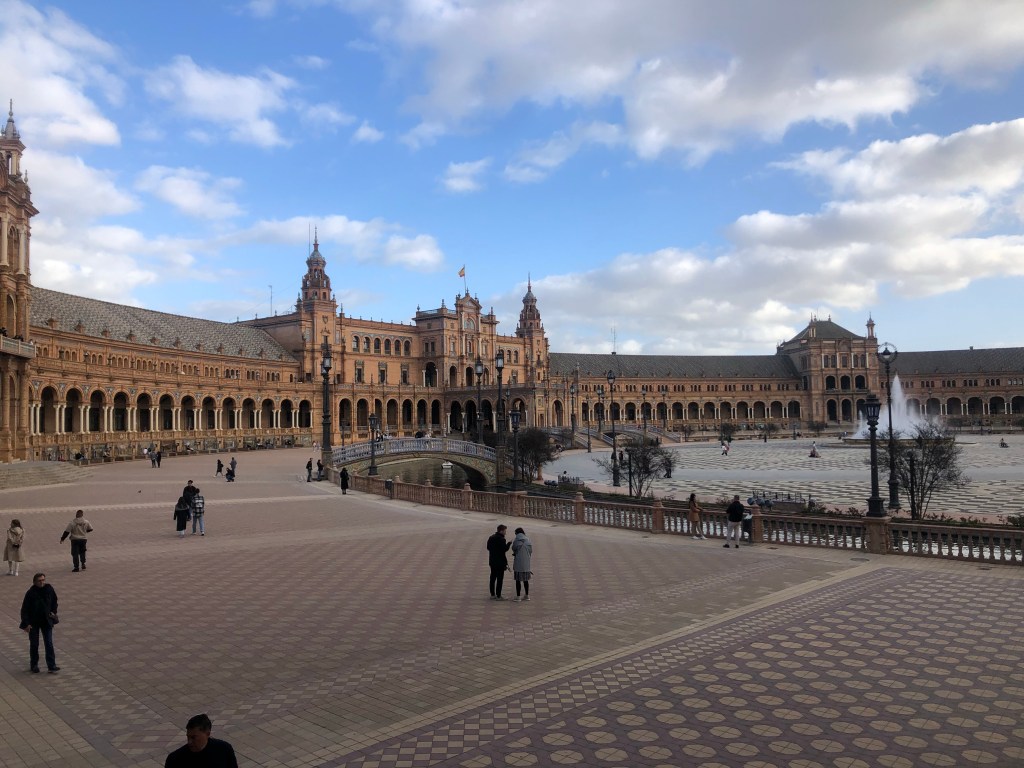
Plaza de España Costa de la Luz
After 4 days of visiting cities, it was nice to spend some time in relatively undeveloped Zahora on Costa de la Luz. Our campsite sat next to a coastal pine forest and you could hear horses neighing and frolicking nearby. We were a short walk away from beautiful, sandy and very quite beaches. It seems however, there was no escaping from history geeking – the coast overlooks the site of the Battle of Trafalgar.
We did a hike along the coast in nearby Parc Natural de La Breña y Marismas del Barbate. It had awesome views of the coast and ocean. We wondered if the landmass we saw in the distance was Gibraltar, but after checking Google maps it must have been Tangier!
We also enjoyed a bike ride along the coast between Los Caños de Meca (where we had a sherry stop), and El Palmar (where we saw lots of surfers and wild camping but not much surfing).
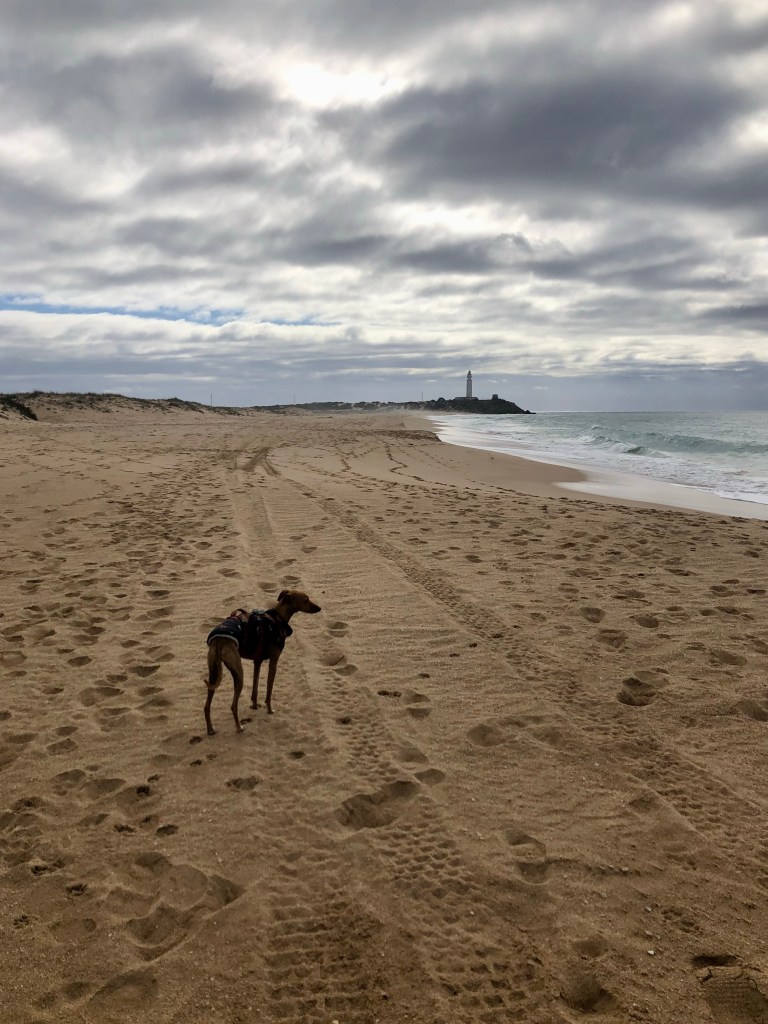
Zahora beach looking towards Cabo de Trafalgar 
Happy hikers 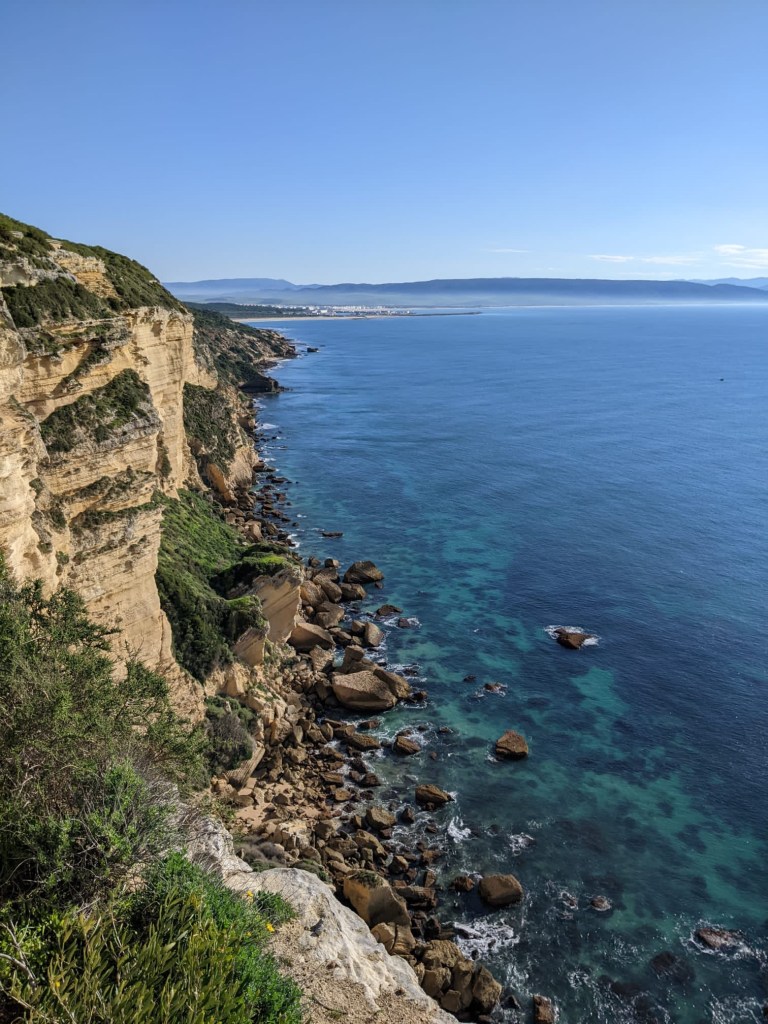
View from Mirador Torre del Tajo What’s next?
We’d like to visit a sherry bodega in one of the nearby sherry towns, and then possibly head to Portugal!
-
Week 10: Granada, Malaga and El Chorro
Visiting Granada and the Alhambra with a Campervan and a Dog
We finally made it to Granada. After several failed attempts last week at parking at Areas de Caravanas near Granada, we decided to change tack and just drive and park in Granada. We usually find driving into and parking in a city with a campervan loaded with 3 bikes a nerve wracking affair. But after some careful research into parking near Alhambra, we decided to go for it, and had an excellent experience. We drove into the city early and snagged a plum corner spot in the parking lot closest to the Alhambra. This gave us time to wander down to a churerria in town for breakfast before the first booking we had for the Alhambra.
The other important consideration we had was juggling visiting the Alhambra and Zeus care. We decided to take turns. James had a 10 a.m. slot to visit the Alhambra, and Aileen had a 1 p.m. slot. This gave us 3 hours each, which seems a lot, but there is so much to see at the Alhambra.
We were both quite moved at how beautiful the Alhambra (a Muslim palace and fortress) is. It was built in the 1200’s by the first Nasrid emir and was home to 23 successive emirs, until the conclusion of the Christian Reconquista in 1492. It’s quite hard to believe it was left to fall into disrepair for hundreds of years, housing beggars and squatters and being partially destroyed by Napoleon’s army, before restoration began in 1828. It was first brought to the world’s attention by the writings of Washington Irving in 1832.
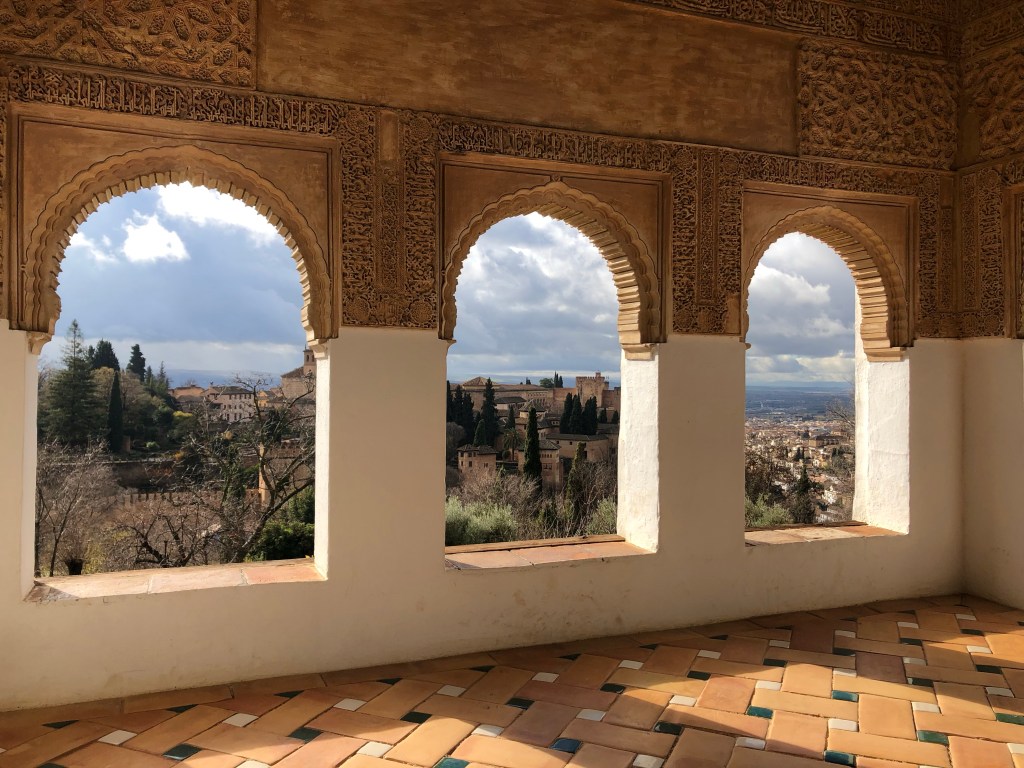
Palacio Nazaries is the main draw at Alhambra, and for good reason. It is quite simply, a work of art – with intricately carved stone walls and wood ceilings, elaborate honeycomb vaulting and framed windows with sweeping vistas of Granada, beautiful tiling, delicate fountains, each room unique. We were particularly impressed by the Haren, with its large patio surrounded by 124 delicate marble columns, and the serene sounds of water emanating from a central fountain of 12 stone lions.
Aside from Palacio Nazaries, we each visited Alcazaba, the main fortress and ramparts. Red, square, foreboding and utilitarian, it sits in stark contrast to the beauty and serenity of Nazaries.
Palacio Carlos V is a Renaissance-era palace that was never completed, and now houses the 2 museums of Alhambra – the Museo de la Alhambra which has a collection of Muslim artefacts from the Alhambra, Granada and Cordoba, and the Museo de Bellas Artes. We were most interested in the former, which unfortunately was closed the day we visited.
The Generalife, the summer palace and gardens were probably less dramatic a site than it would have been in spring or summer with full bloom and foliage, but visiting in winter did let one appreciate the design of the gardens and palace, and views of the city. After visiting the other areas of the Alhambra, the Generalife felt more relaxing and playful, a good way to end and wind down from the visit.
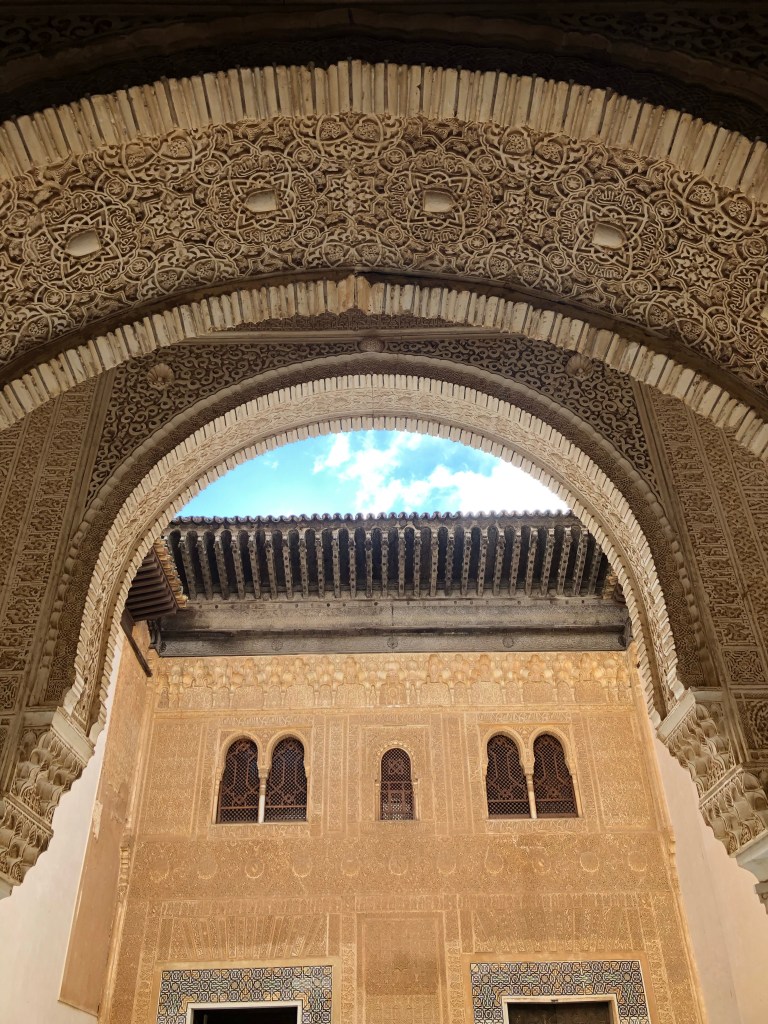
Intricate plasterwork 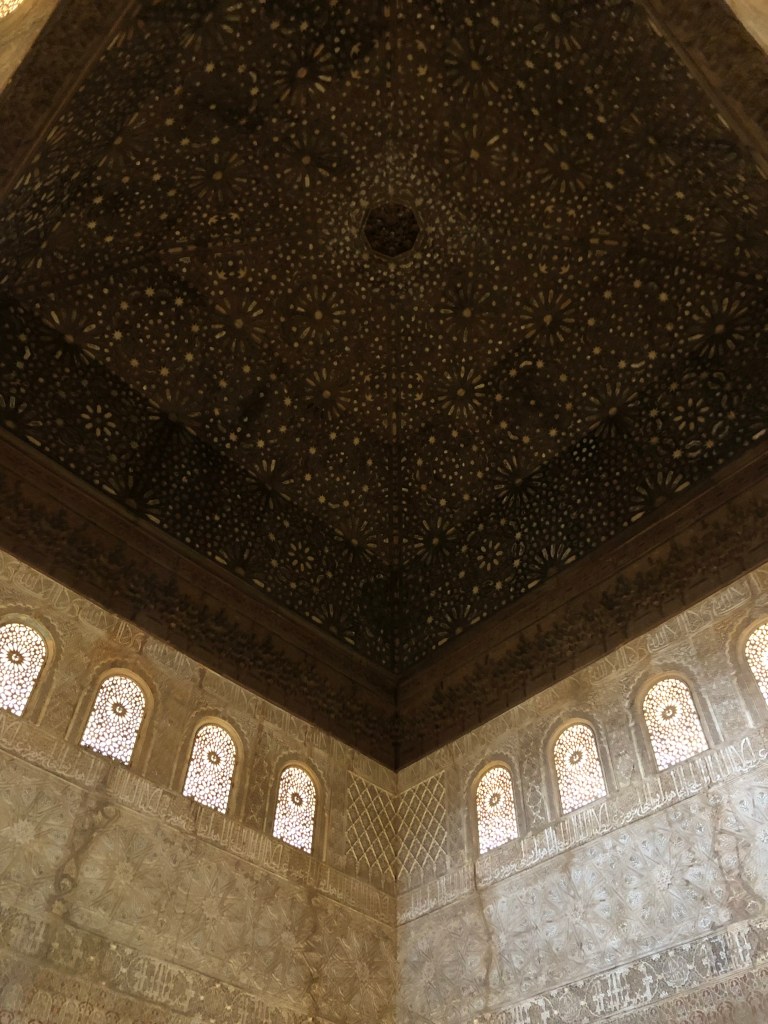
Breathtaking carved stone and wood ceiling of the Sala de la Barca 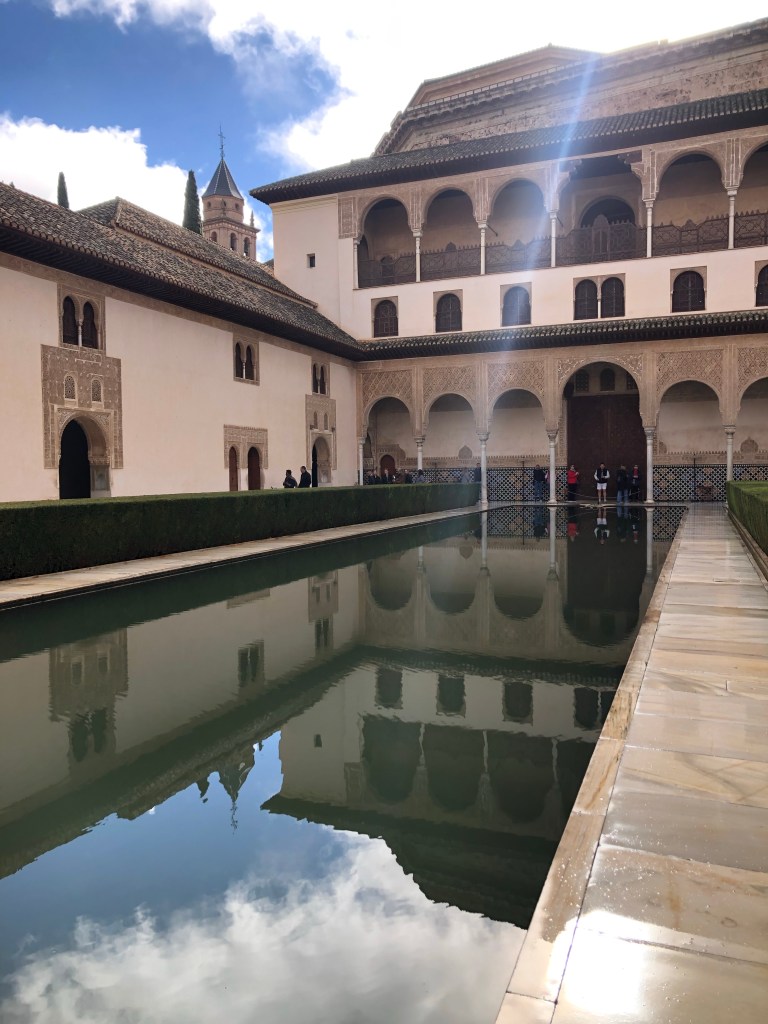
Patio de los Arrayanes 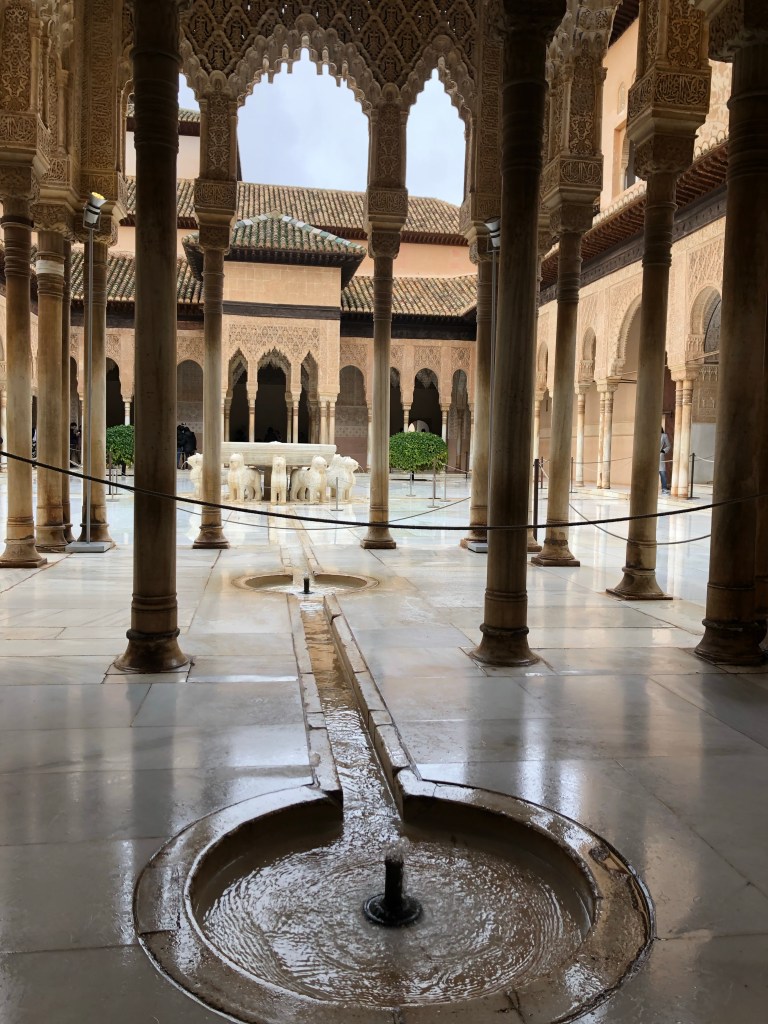
Harén 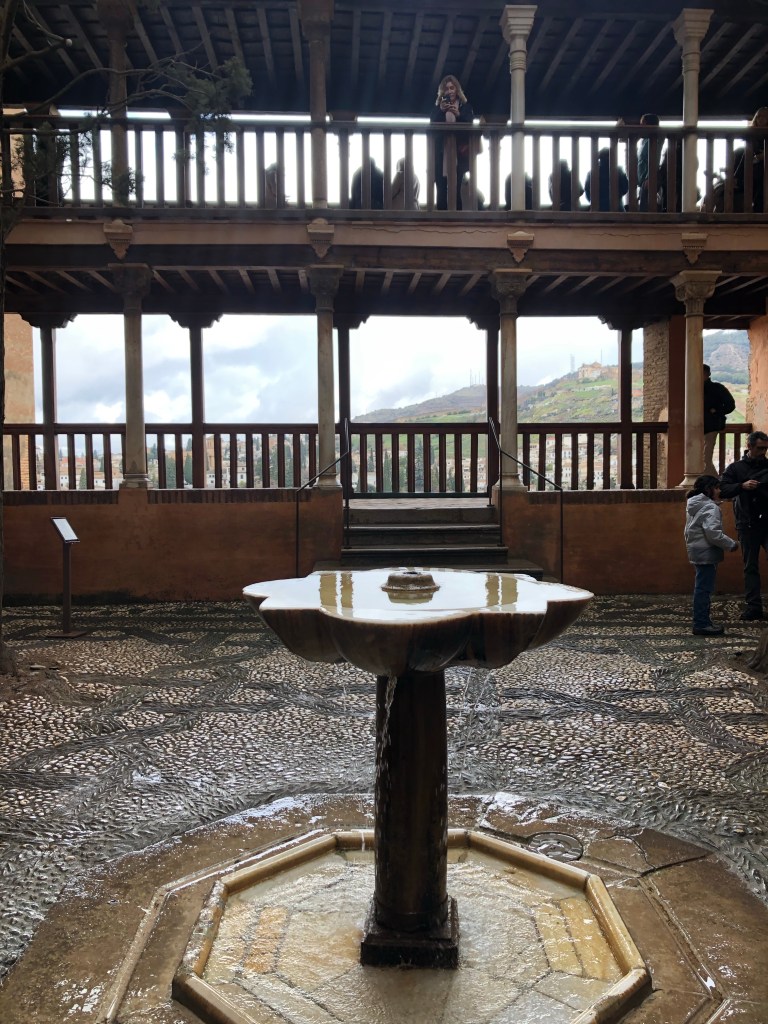
Patio de los Cipreses 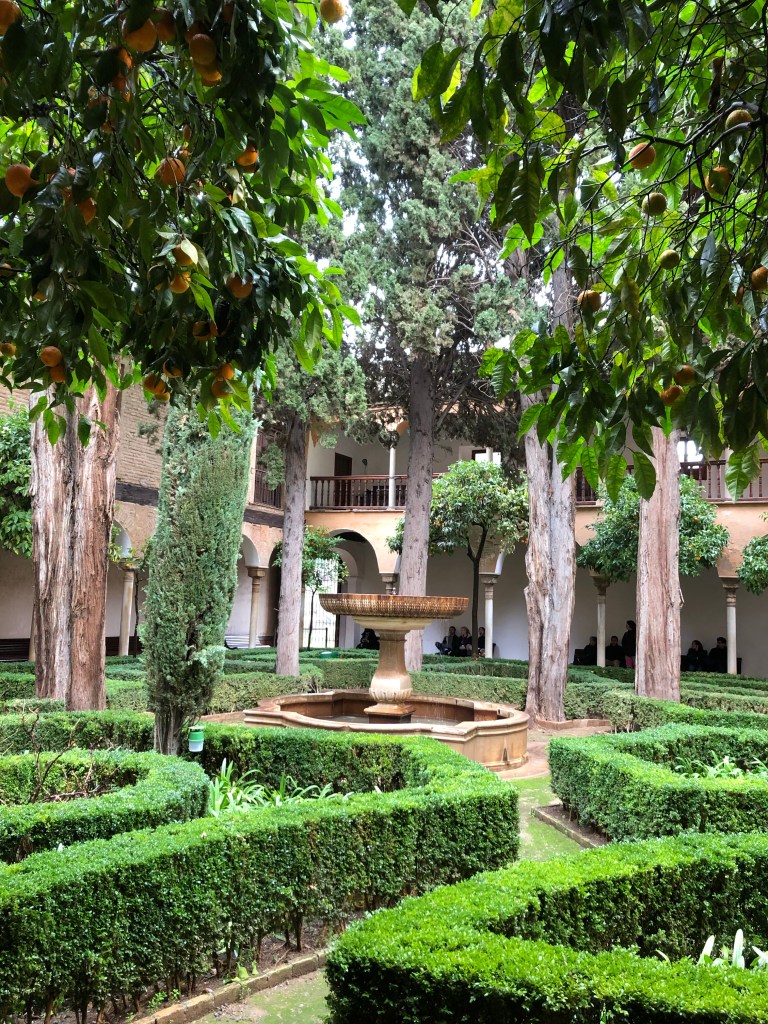
Interior gardens 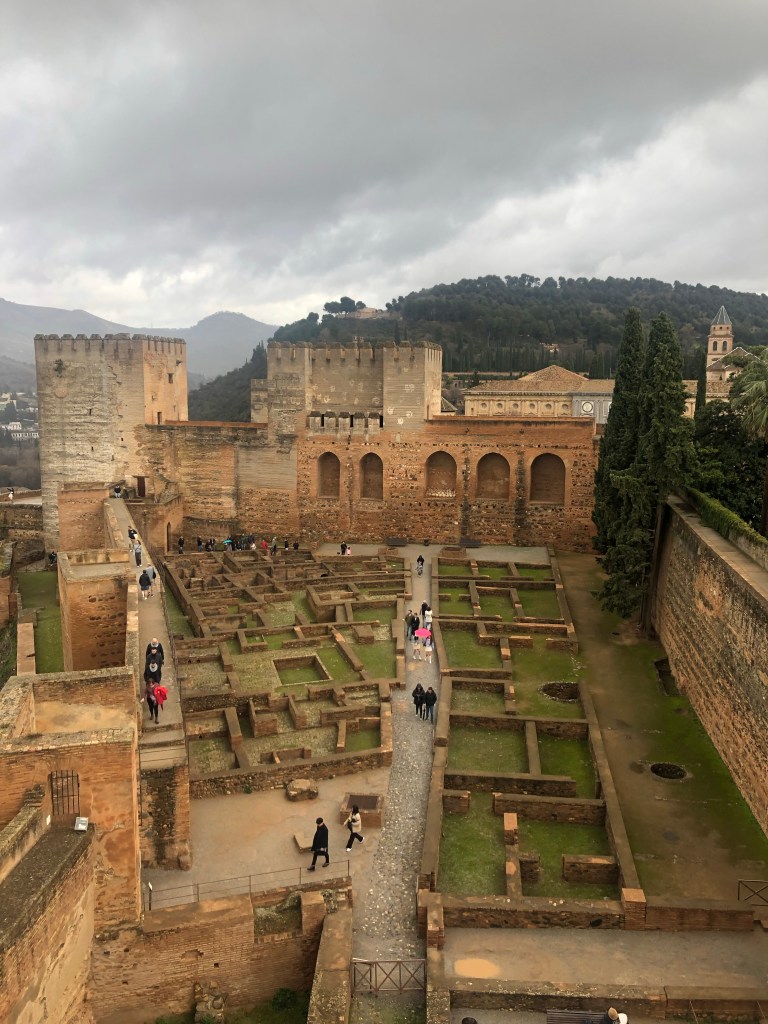
Alcazaba 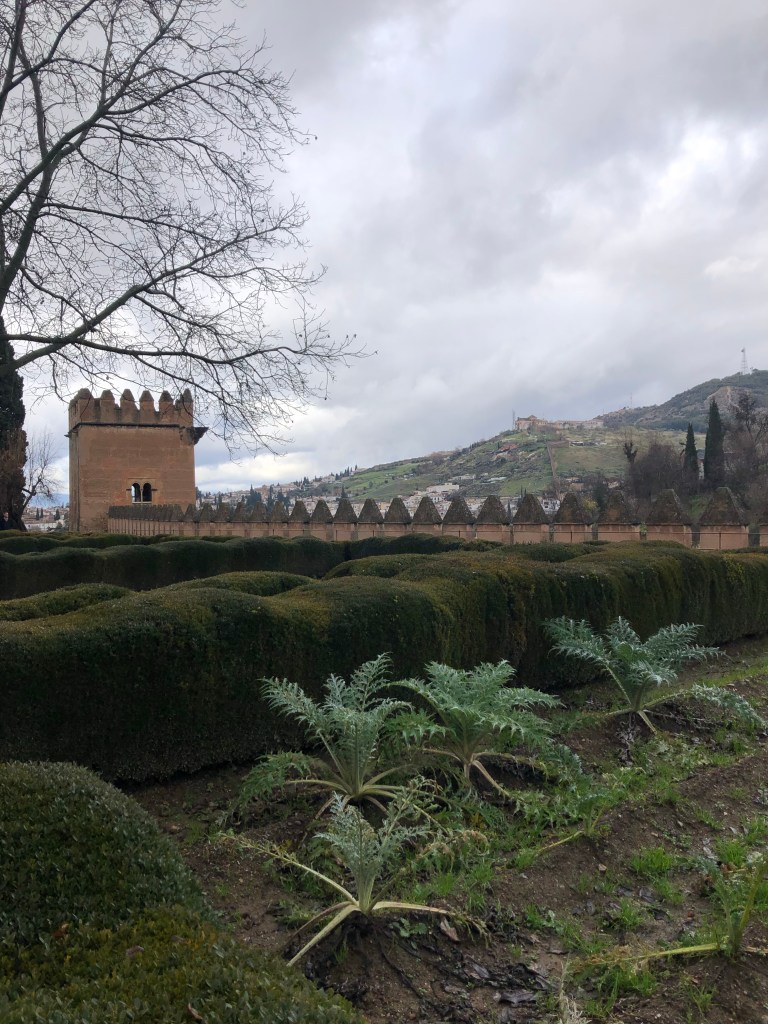
Alhambra and tower and gardens 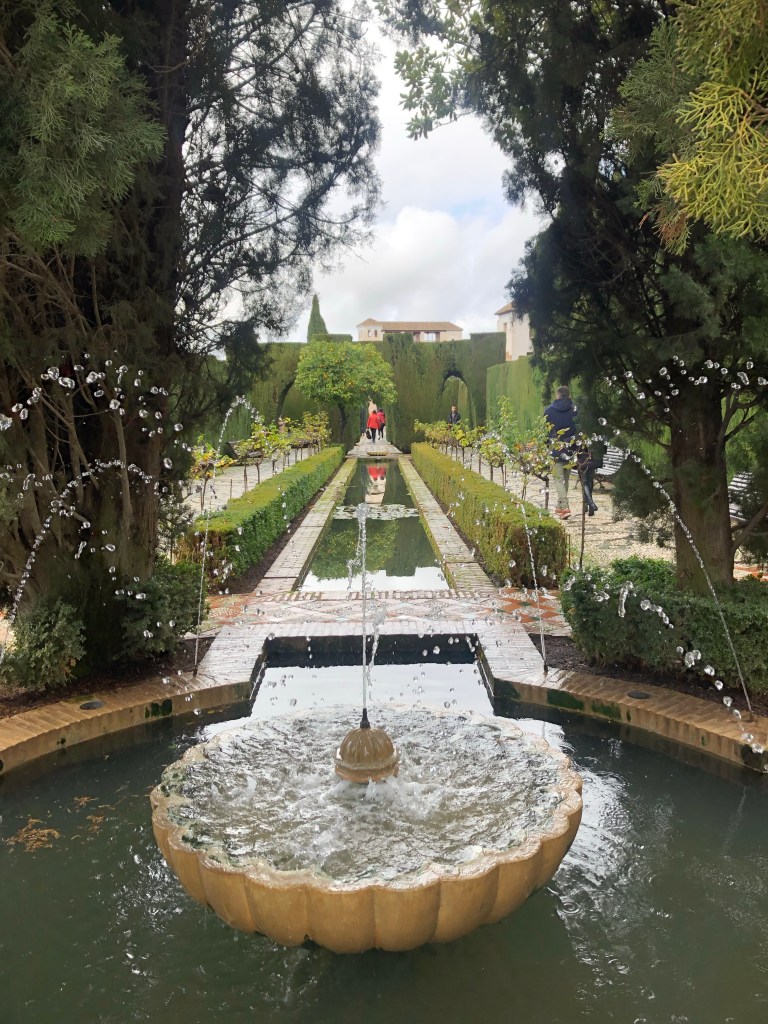
Generalife gardens 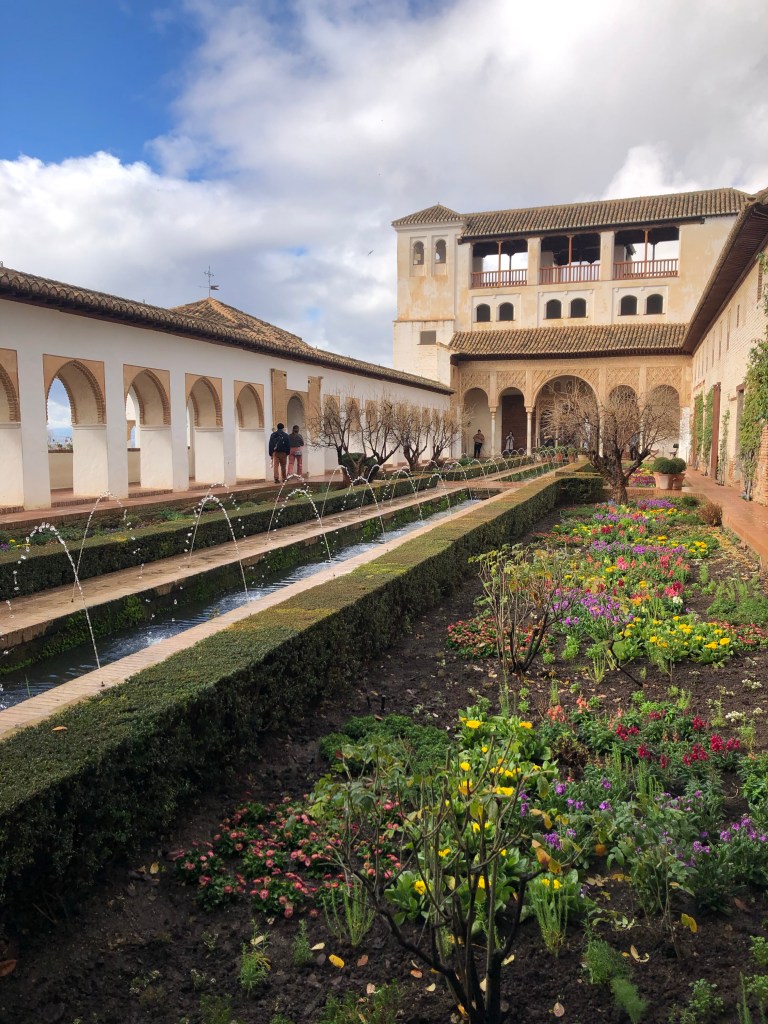
Patio de la Acequia in Generalife While James was visiting the Alhambra, Aileen and Zeus explored a bit of Granada – more particularly went in search of remnants of Muslim rule in the city. They enjoyed most wandering through the narrow streets and alleys of Albaicin, Granada’s old Muslim quarter, up to Mirador San Nicolas which had great views of the Alhambra and Granada.
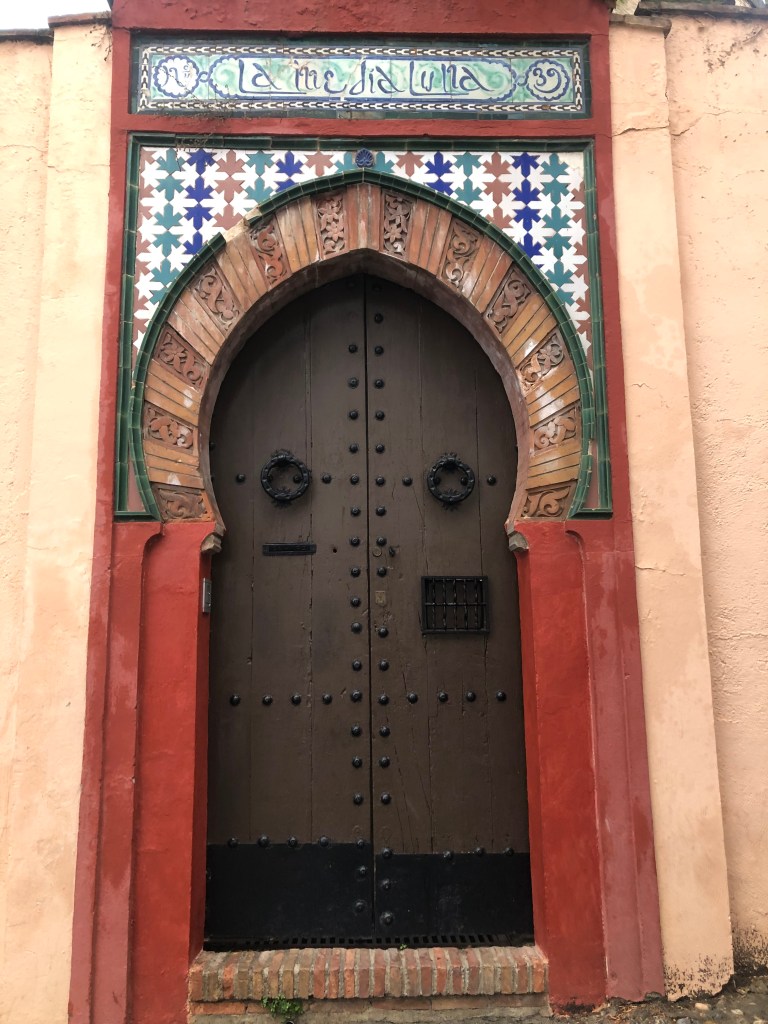
Doorway in Albaicin 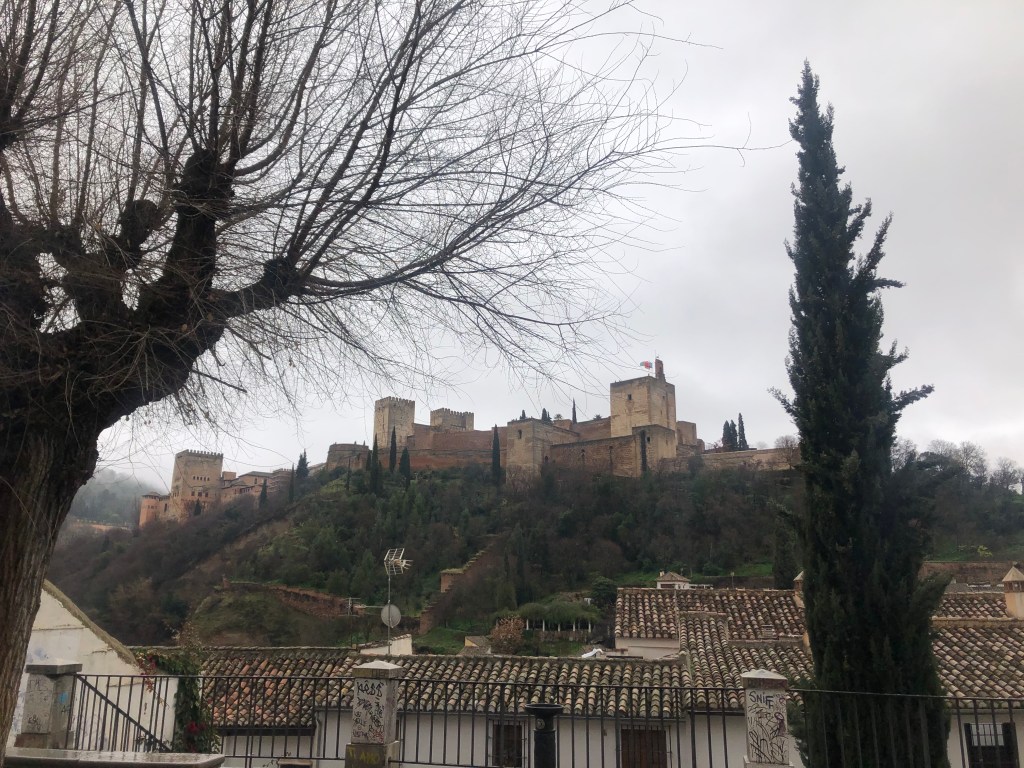
Looking uphill to Alhambra Malaga
From Granada we headed to Malaga, which we hadn’t really considered stopping at, but had to because of our appointment at the VW Service Centre in Malaga. After dropping the van off for service in the morning, we took a short train ride into the city for a bit of touristing which mostly involved eating. Our first stop after coffee and breakfast was the Mercado Central, the city’s main market. It was nice to see it was a proper functioning market with lots of locals buying their supplies for the day. We love exploring a market to see what fish, meat, cheese and vegetables are on offer in the area. We spotted lots of small local prawns – which was a sign we needed to try some. So we snagged a table at Mercado de Atarazanas, one of the bars at the mercado, and had a deeeeelicious lunch of mixed fried fish, fried prawns and grilled razor clams, washed down with white wine.
After lunch we meandered through the centre of Malaga, stopping for some very tasty gelato at Casa Mira, and to let Zeus’ many admirers pet him. We headed to the Alcazaba, remnants of a moorish palace to check it out. Unfortunately it didn’t allow dogs. We then head towards the port and gawked at the amazing trees we saw along our walk. Malaga is a good place for tree spotting – we saw some really old looking gnarled rubber trees, the kind you’d expect to see in old quarters of Delhi or Mumbai, some floss silk trees, natives of South America, with their massive swollen bottoms and spiney branches, and lots of grand and clearly old palm trees.
We were pleasantly surprised by Malaga. There’s a lot to see. It has a lot of museums – 2 Picassos, and outposts for the Pompidou, Thyseen, and many points of interest outside of high culture. Unfortunately many sites aren’t possible to visit with a dog. Malaga also has a feeling of uncomplicated and unadorned pleasures – the sun was shining brightly, the food was simple, fresh and delicious, and there was a positive vibe as locals went about their business.
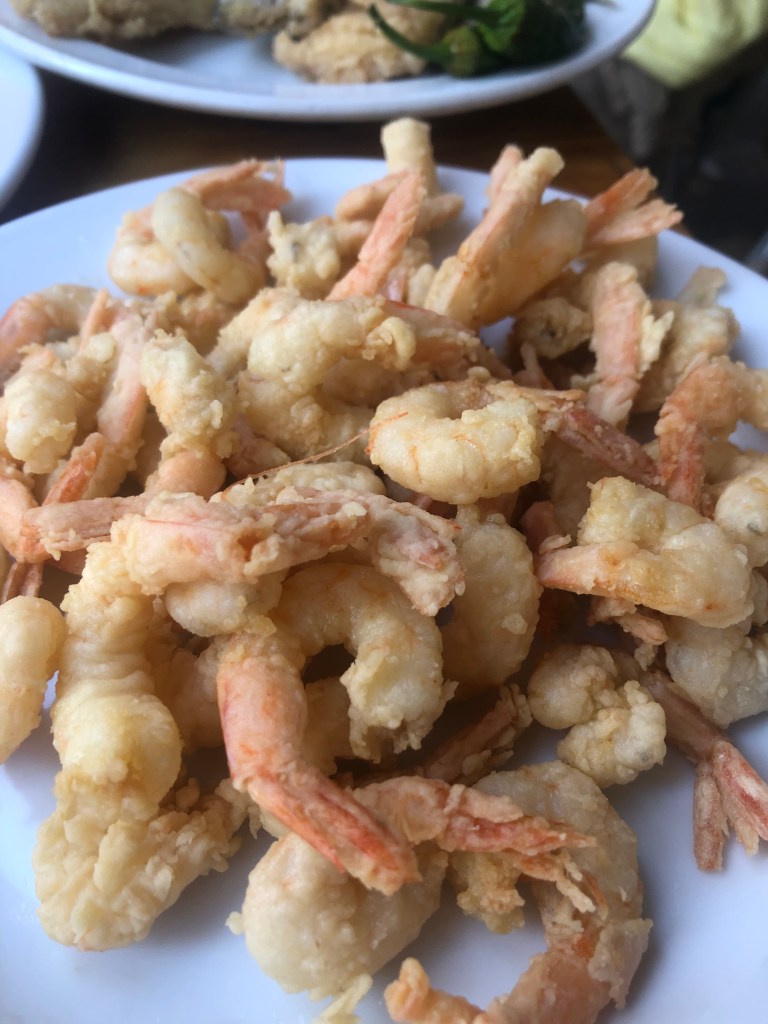
Small sweet shrimps 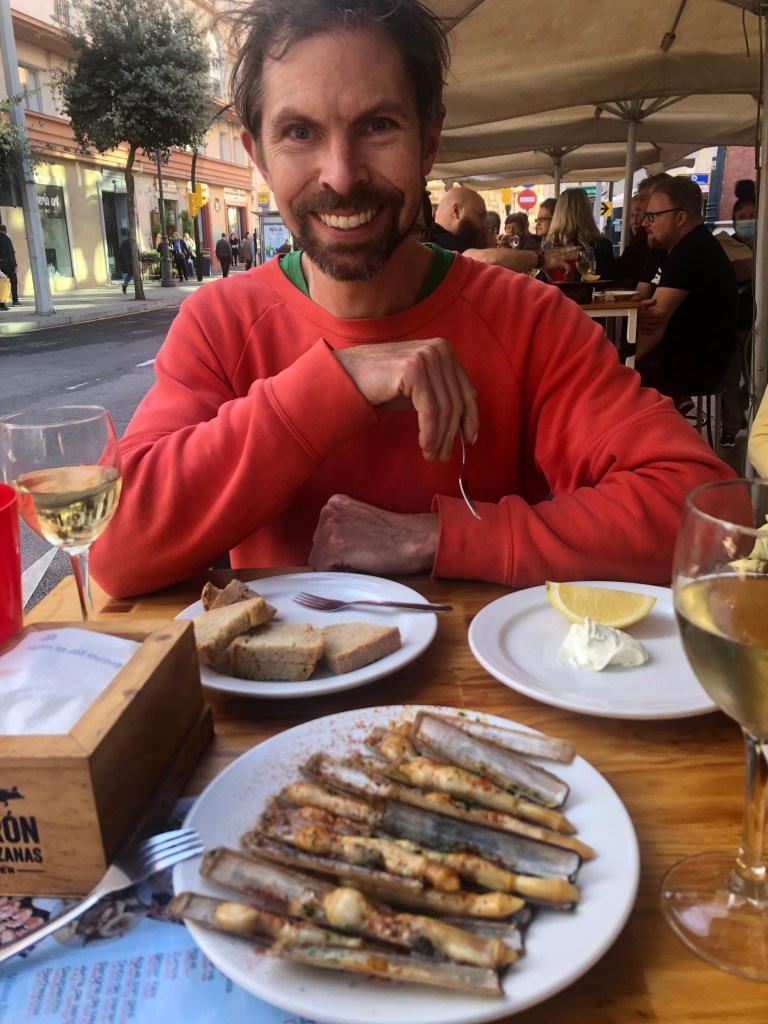
James about to devour razor clams 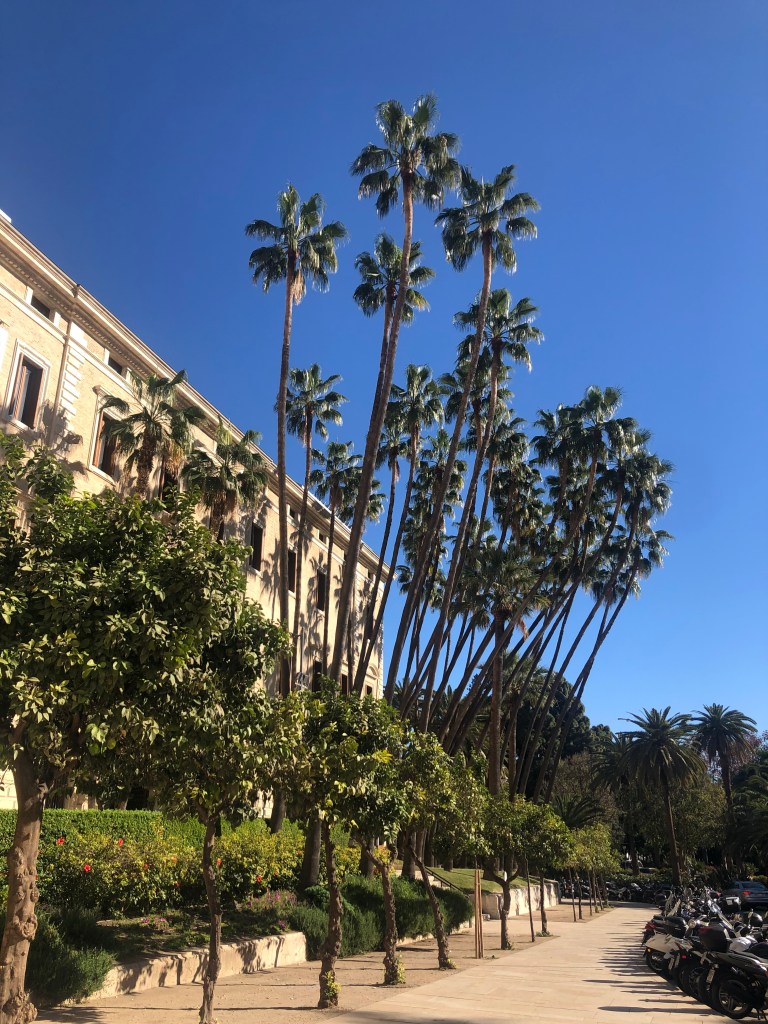
Palm trees of Malaga Aileen’s Food Poisoning Incident
It had to happen at some point. James had spent the morning at a climbing wall in Malaga, whilst Aileen and Zeus chilled in the campervan. We then started our journey to El Chorro without first stopping for lunch. Aileen does not cope well with driving through squiggly roads on an empty stomach, so we stopped for a bite at a roadside restaurant in Alora, just south of El Chorro. It was almost 4 in the afternoon. Aileen ordered the fish. That was the likely culprit. She then felt even sicker the rest of the way. The following day she was completely wiped out, and it took a couple of days to feel normal again. The lesson here is don’t order fish in a mountain restaurant.
Aileen is very grateful we had booked to park/stay at Casa La Paz El Chorro, a casa rurales in a stunning setting, owned and run by a lovely couple from the UK, Julie and Glynn. They have space for two campervans, and a dedicated bathroom for the campers. So we had ready access to bathroom facilities 😅
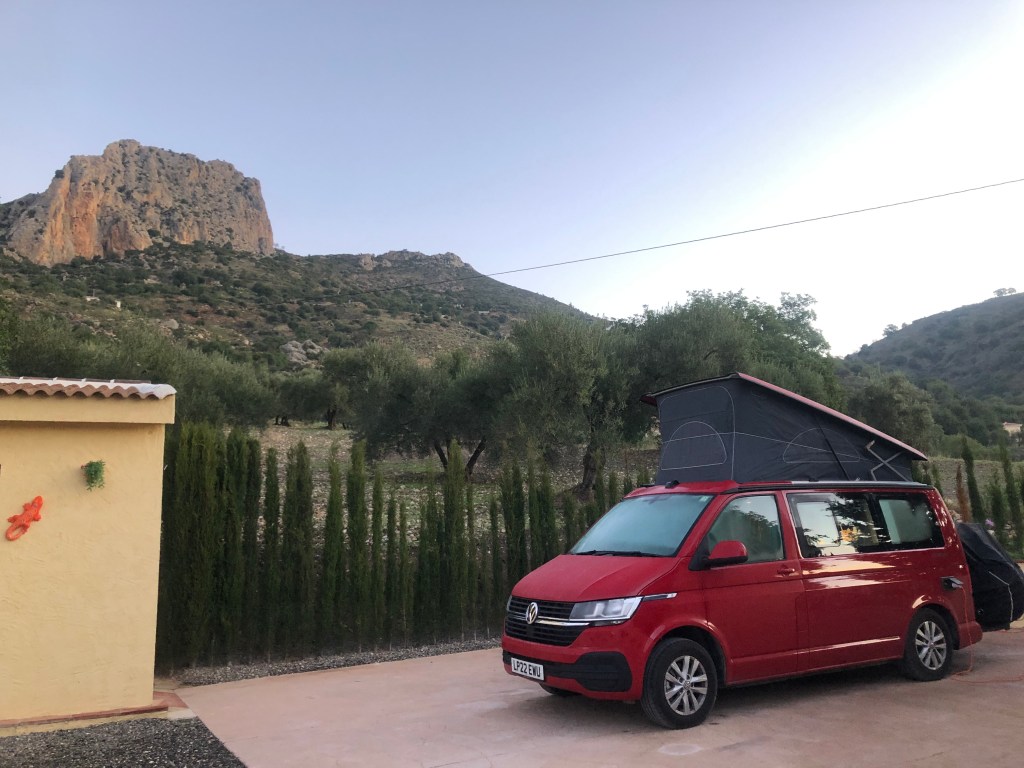
Campervan next to the bathroom 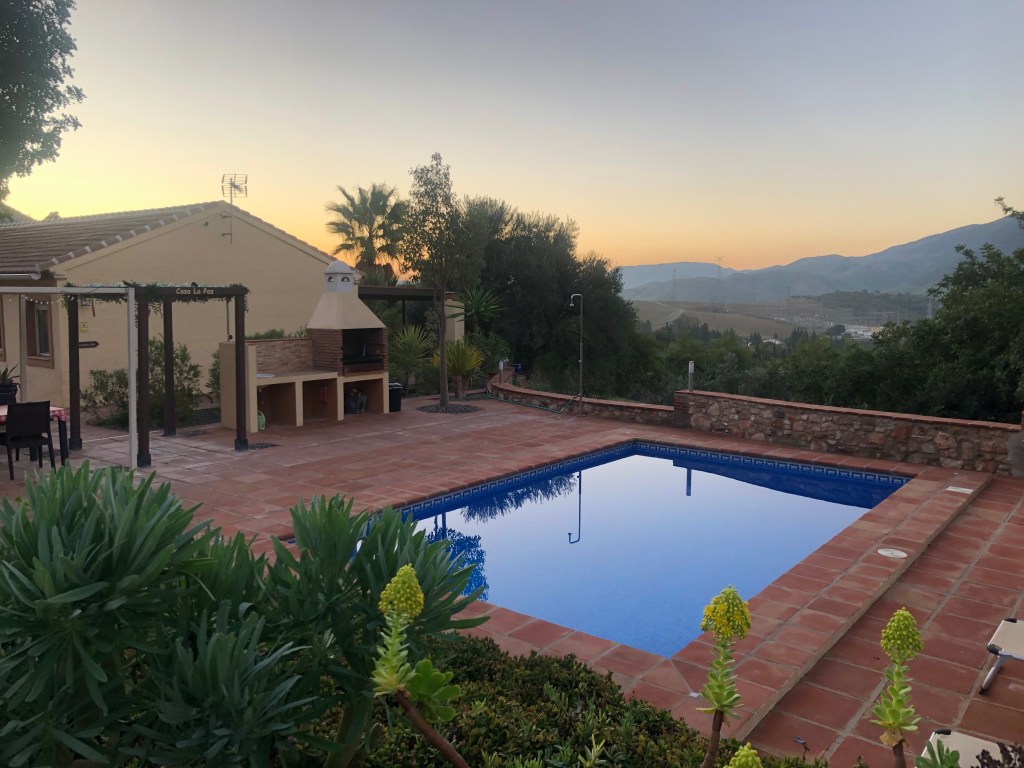
Casa La Paz El Chorro El Chorro: Hiking in El Chorro
El Chorro, a small village in Malaga province was founded to house workers for the construction of hydroelectric plants by the Chorro gorge in the early 1900s.
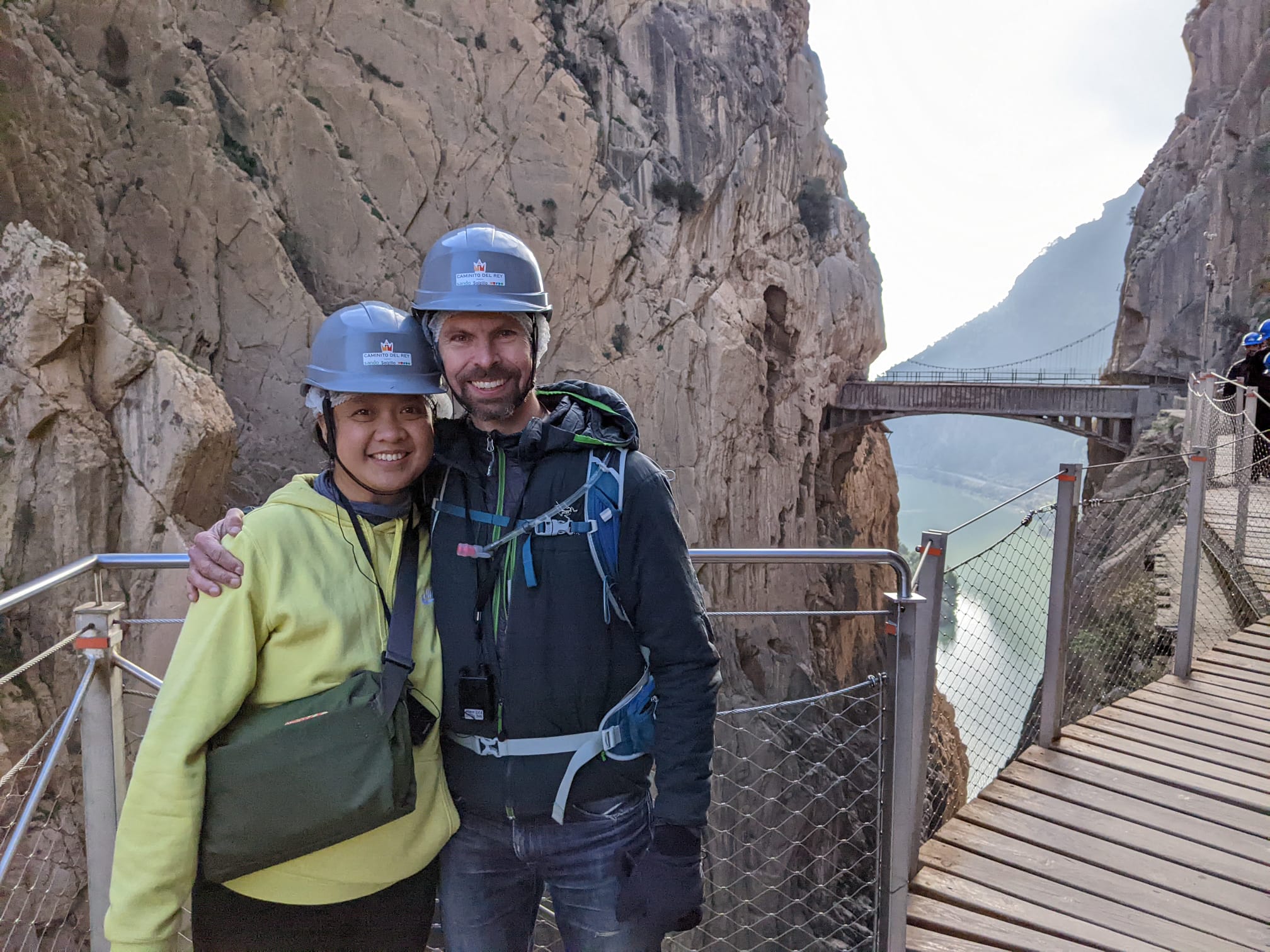
The most famous sight in El Chorro is the Caminito del Rey, a walkway with bridges and tunnels, some of it built into the vertical cliff walls of the El Chorro gorge. It was constructed as a means for transporting workers and materials for building the hydroelectric dams.
The original walkway has fallen into serious disrepair over the years and has sections missing. Dangerous to scale, until 2015 it was only used by climbers to access routes. James hadn’t climbed here but had heard stories from friends about their accessing routes via the train tracks and the walkway, and how scary the experience had been. It was named the deadliest walk as a number of climbers unfortunately died over the years at the site.
A “new” path was built in 2015 directly over the original path which is still visible, and allows tourists to visit the path safely. Having said that, a recent rockfall destroyed a section on the northern half of the path. On the day we visited we could only complete the southern end of the walk, which included the sections along the side of the gorge and the suspension bridge. The northern half continues into the valley behind the gorge. We had seen some of the northern half on a good walk we did the the previous day. (Our) Words can’t really describe how dramatic the setting of the walkway is, so we’re sharing pictures!
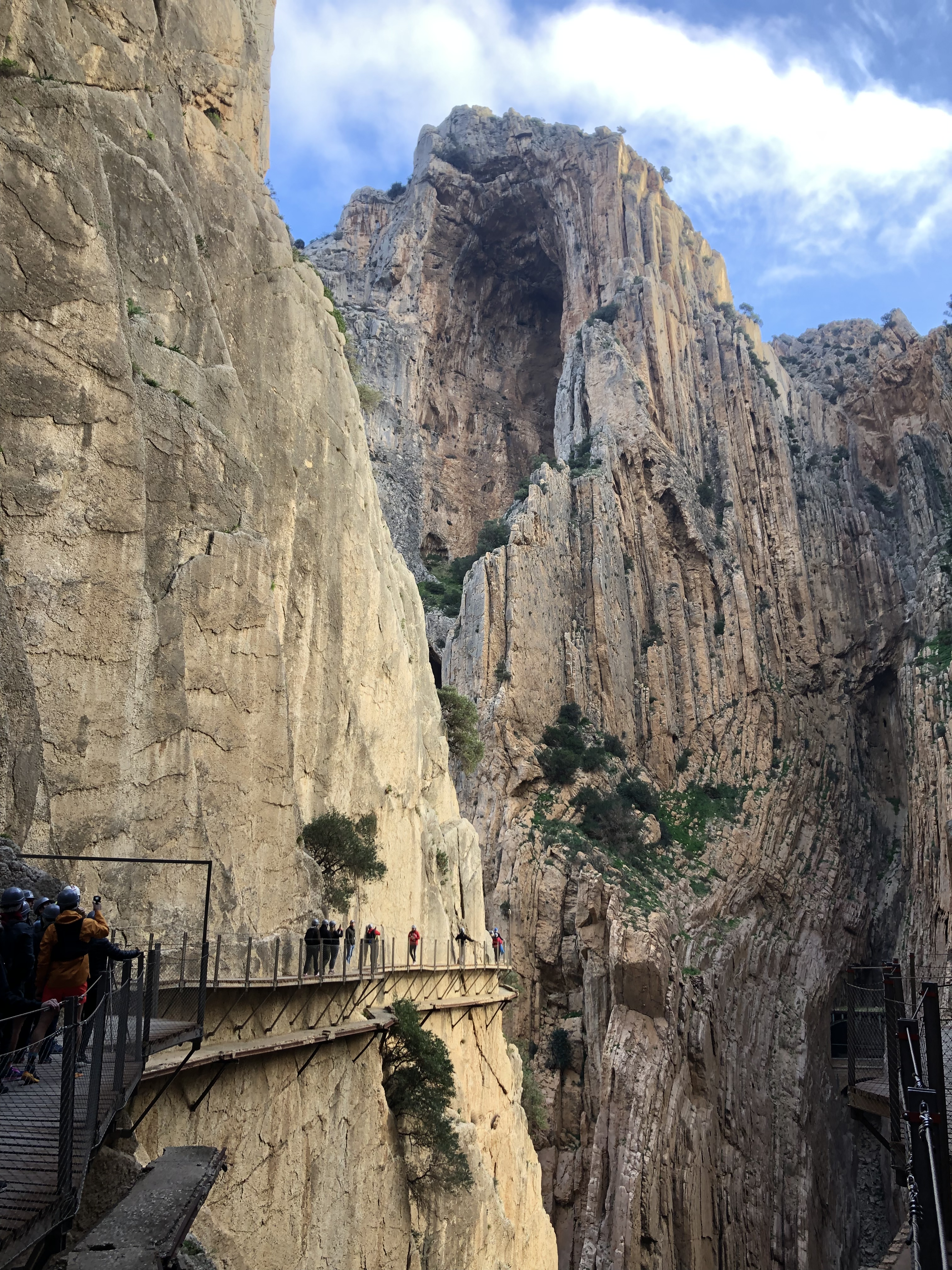
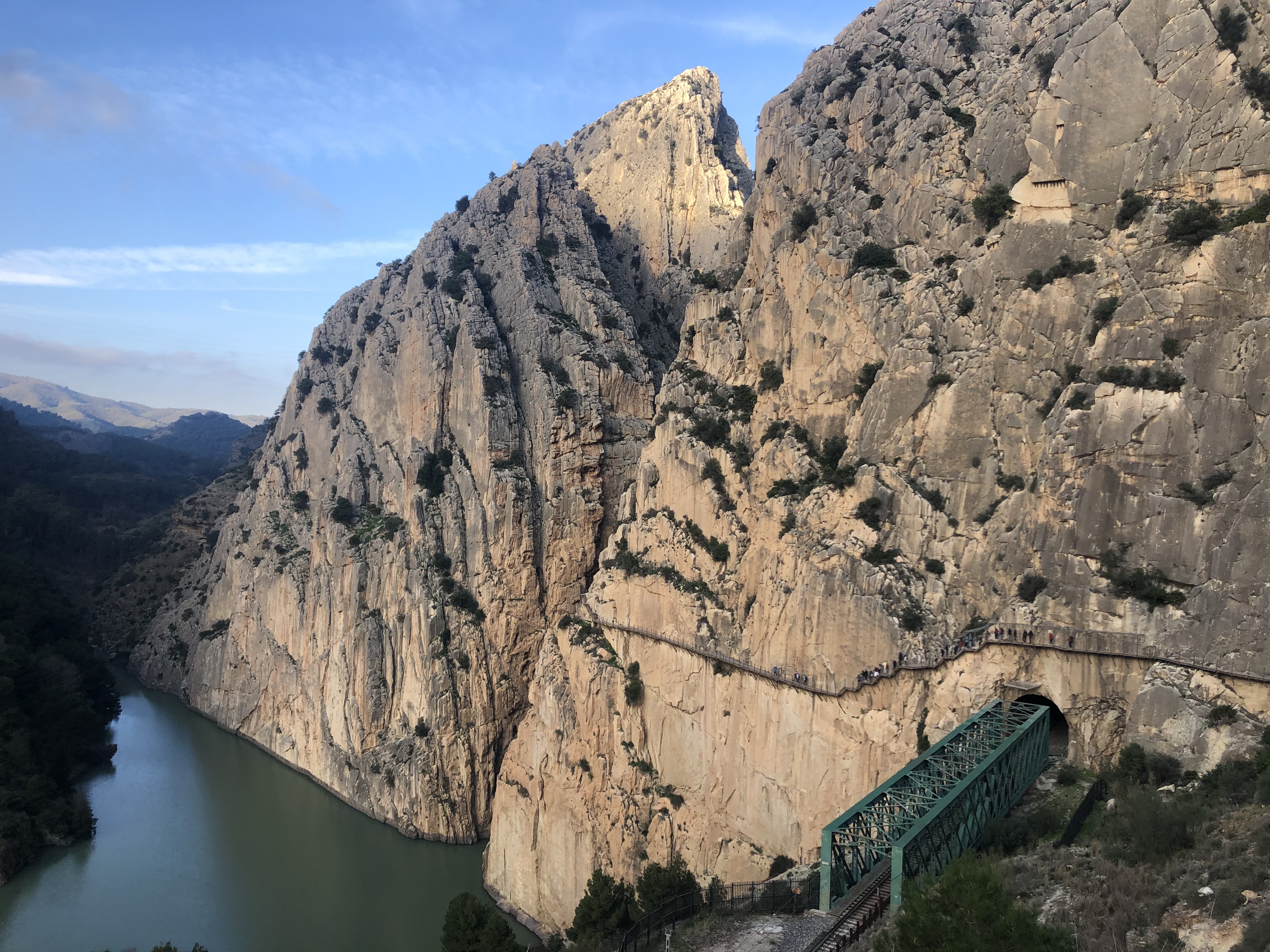
We also did a hike in Parc Natural Desfiladero de los Gaitanes, that took in 3 miradors (viewpoints) – Mirador de las Buitreras, Pico del Convento and Mirador del Embalse – and ran above the Caminito del Rey. It was a relatively short but rewarding hike with amazing views of the Gaitanes canyon, rivers and dams. It was also excellent for wildlife spotting – we same some wild deer, wild goats, and lots of eagles soaring overhead and sweeping through the canyon beneath us.
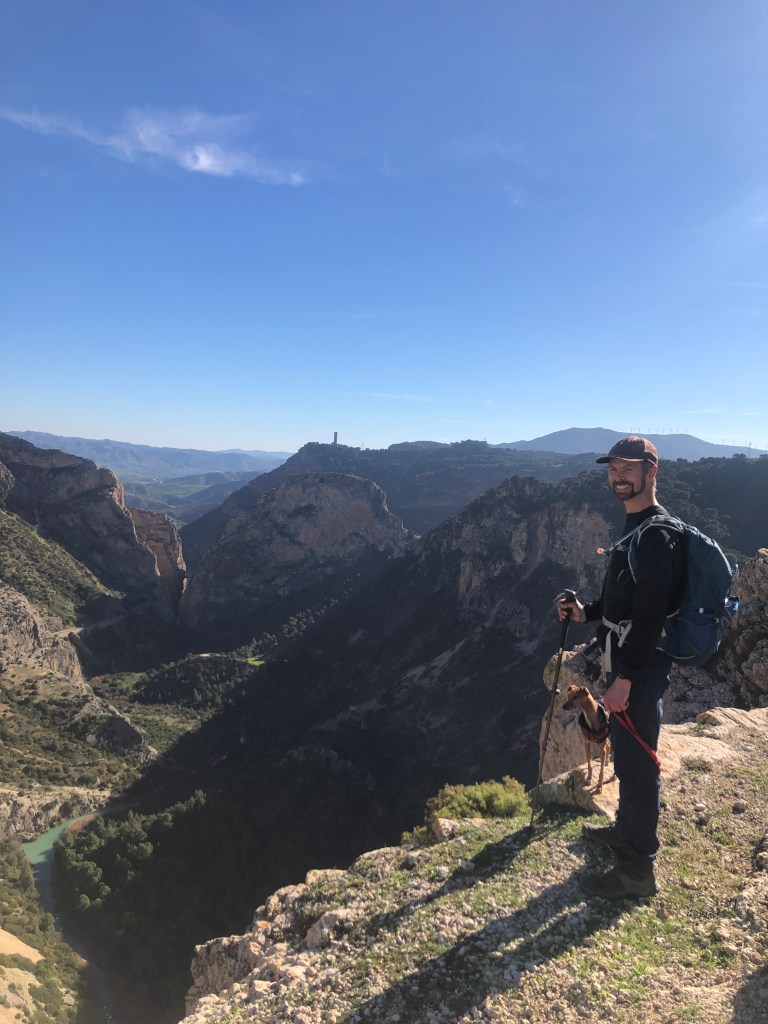
Above the canyon, looking towards Caminito del Rey 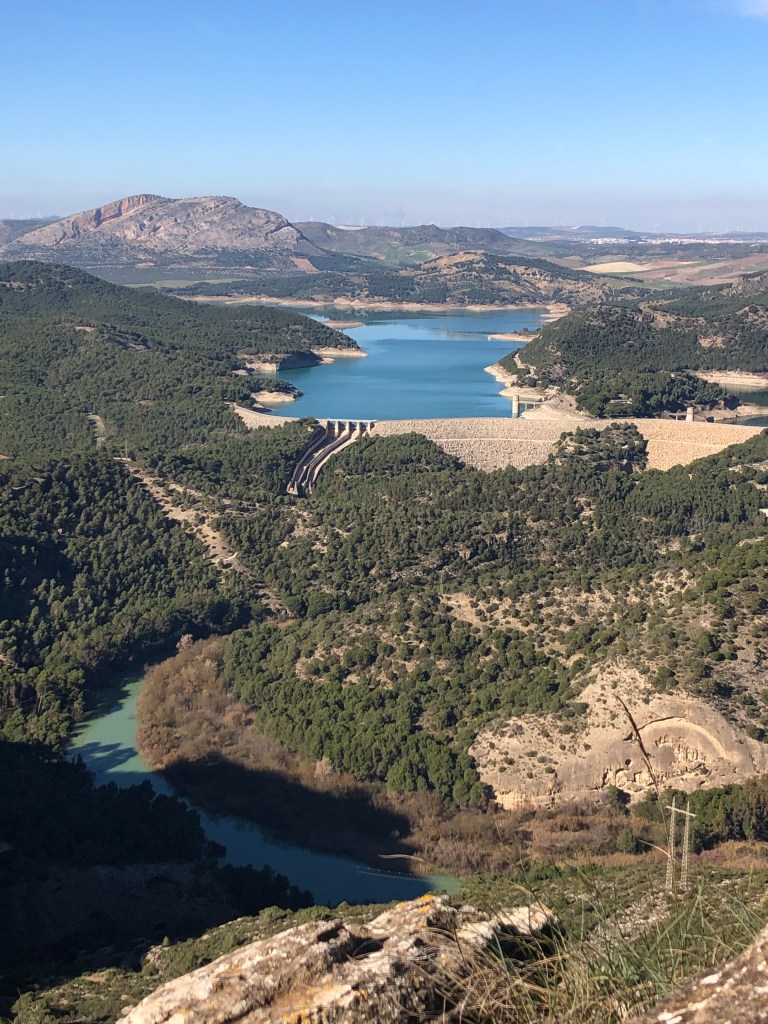
Upstream river and dam 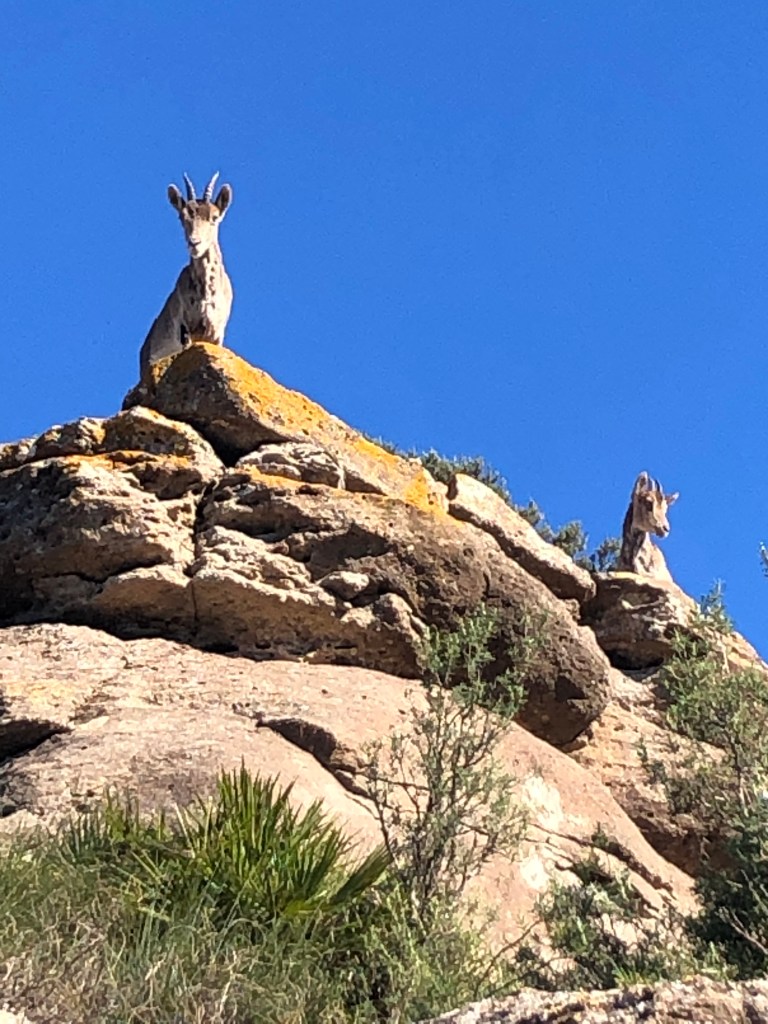
Wild goats We suspect there was a lot more good hiking to be done in the area, but we had to take it relatively easy while Aileen was recovering from her bout of food poisoning.
El Chorro: MTB
James also did a couple of mountain bike rides around El Chorro. It wasn’t somewhere he was aware of for off-road riding, but it turned out to have an interesting selection of trails. His first ride was the shorter of the two, and on the same side of the valley as our camping site. It did an ascent up a winding road to some pretty good views of the valley. There was choice of two mountain bike trails heading down after the climb. He took Slippery when Wet, but with hindsight should have taken Fast and Loose which he rode the end of and was a fast hand built flow trail. He was planning to go back to ride it, except the trails on the second ride / other side of the valley were so good.
His second ride was a longer workout. James explored the other side of the valley and found three downhill trails of very different characters. The first was called El Moab and like it’s namesake Moab, Utah, it took in several sections of exposed rock, at times with steep drops that needed to be either ridden or avoided. The second was a fast flow trail following the course of a dry stream incorporating the river banks and gulley. The third headed down from La Mesa which is a table top mountain overlooking El Chorro. As well as stunning views in all directions, the peak also had a big reservoir which is part of the surrounding hydroelectric infrastructure and made navigation around security fences difficult. This trail followed a more natural path and was very rocky and physical to ride cleanly.

View from La Mesa back to campsite and Ride 1 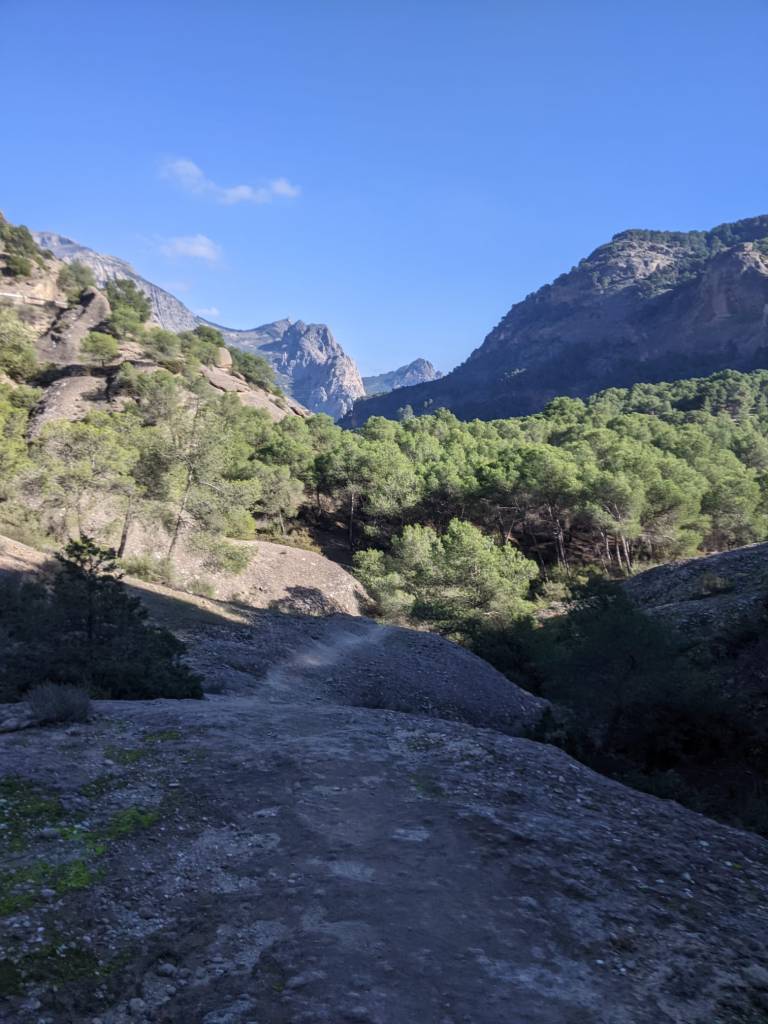
El Moab trail 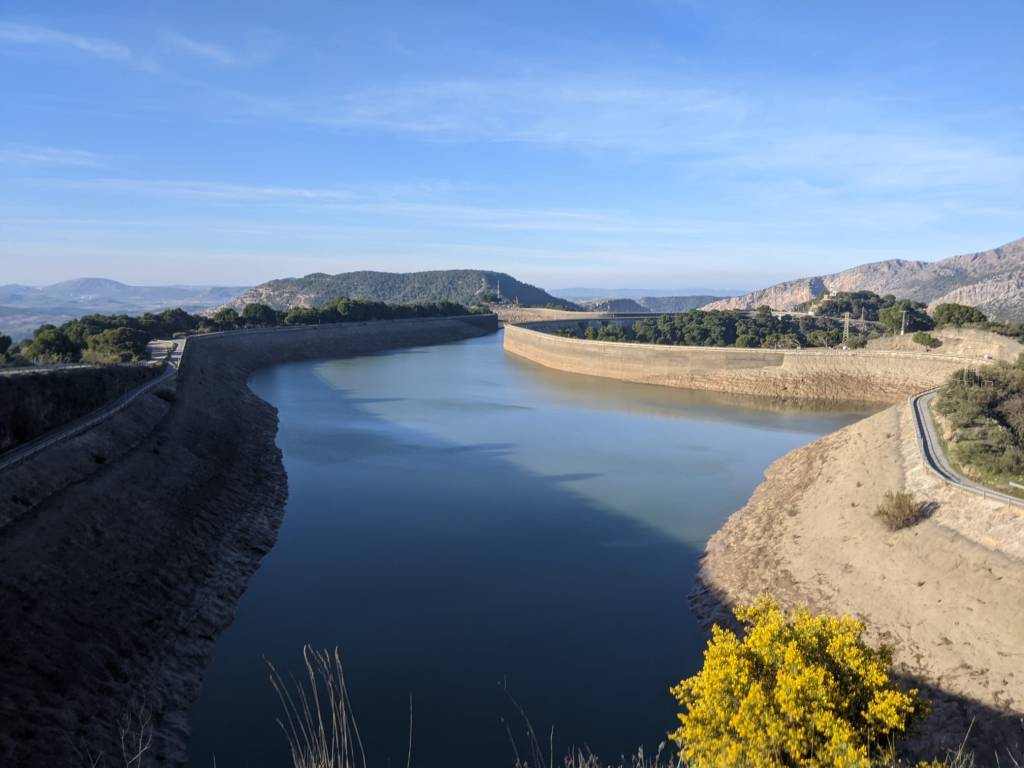
La Mesa reservoir It also looks like there would also be some good road riding in El Chorro, but the mountain bike takes precedence.
What next?
We plan to head to Cordoba and Sevilla to explore of more of Spain’s fascinating Muslim history, and maybe head down to the sherry towns on the coast. We’re also inching closer to Portugal!
-
Week 9: Sierra Nevada
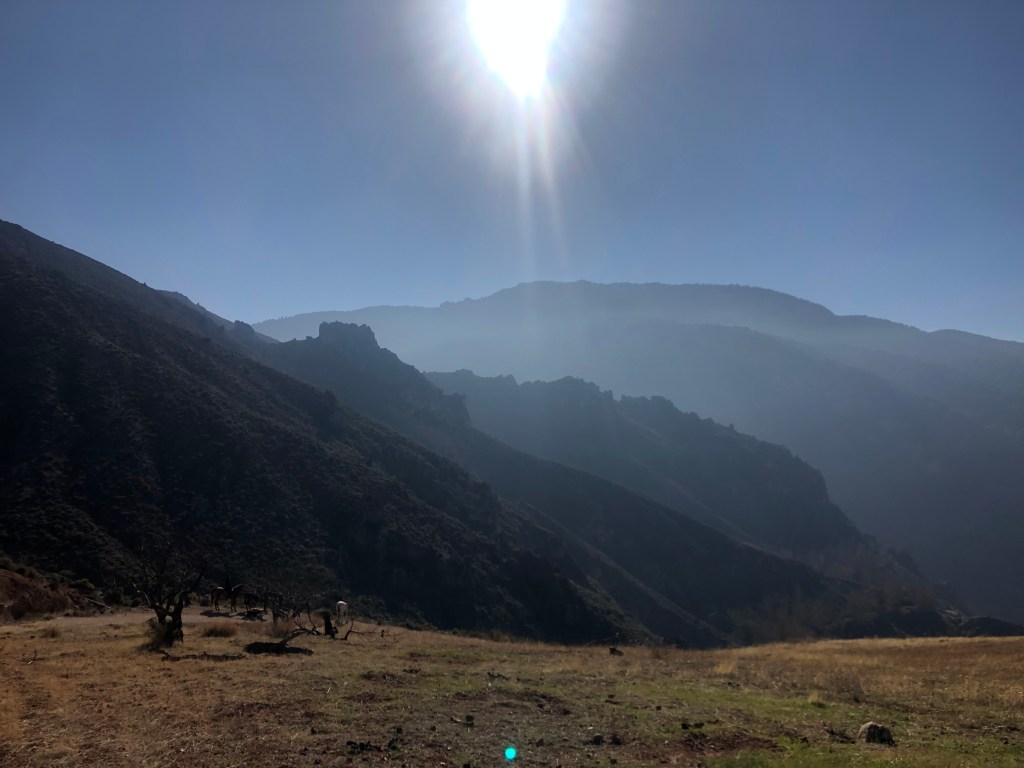
For the first week of 2023 we headed to Spain’s highest mountain range – the Sierra Nevada, James did some epic road cycling, we had to adjust to several failed plans, and spent some time chilling on the south coast.
Road cycling in the Sierra Nevada
We’ve watched television coverage of the Vuelta and have been awestruck as riders battle each other on super steep climbs that look like walls of tarmac. After a couple of tough road rides in this week James can confirm it is every bit as brutal as the TV screen makes it look – “It’s a good reminder that you are a mortal and middle aged”.
His first ride was from Pinos Genil in the heart of the Sierra Nevada and was plotted as a moderate morning ride. Unbeknownst to him it took in a significant part of the main climb from the 2022 Vuelta Queen Stage – “I saw a sign at the foot indicating an average gradient of 12%, and 22% for the immediate section, similar signs repeated up the climb”. In spite of the fierce climb the ride was survived and even enjoyed.
His next ride was into the mountains from the coast where we stayed at Castell de Ferro. This time it fulfilled expectations and had stunning views back to the sea, although James’ planned mid-climb break in a village had to be deferred as he was cheered on by some guys in their eighties, so it felt disrespectful to stop a few meters further up the road.
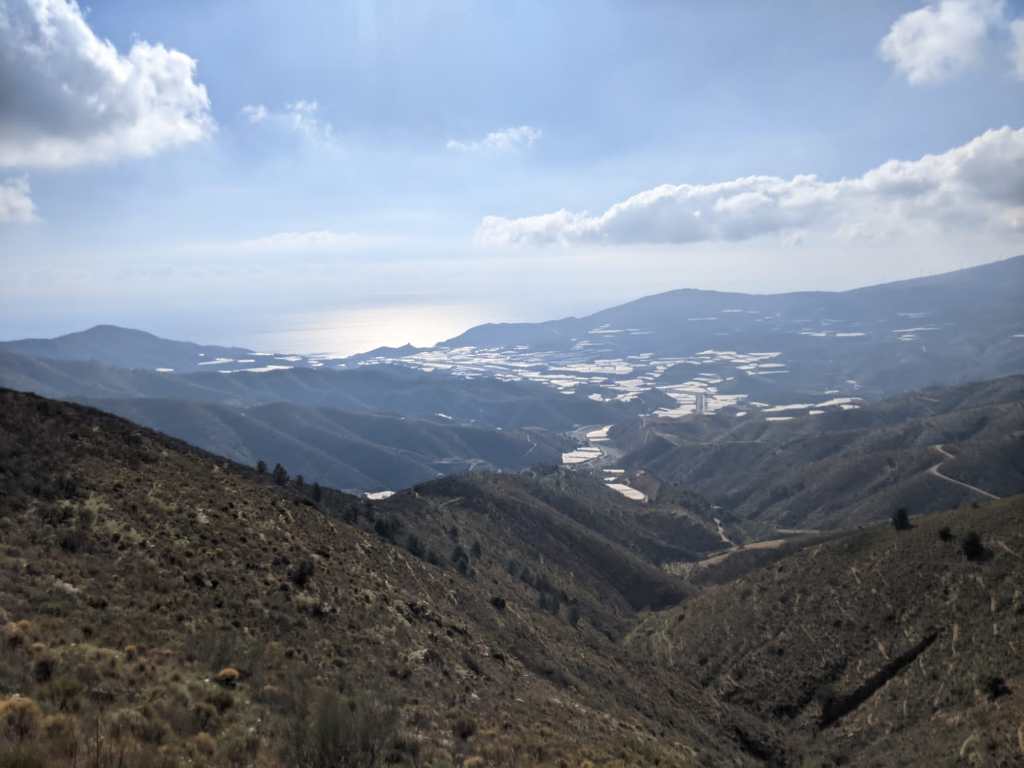
View back to Castell de Ferro with polypro farms 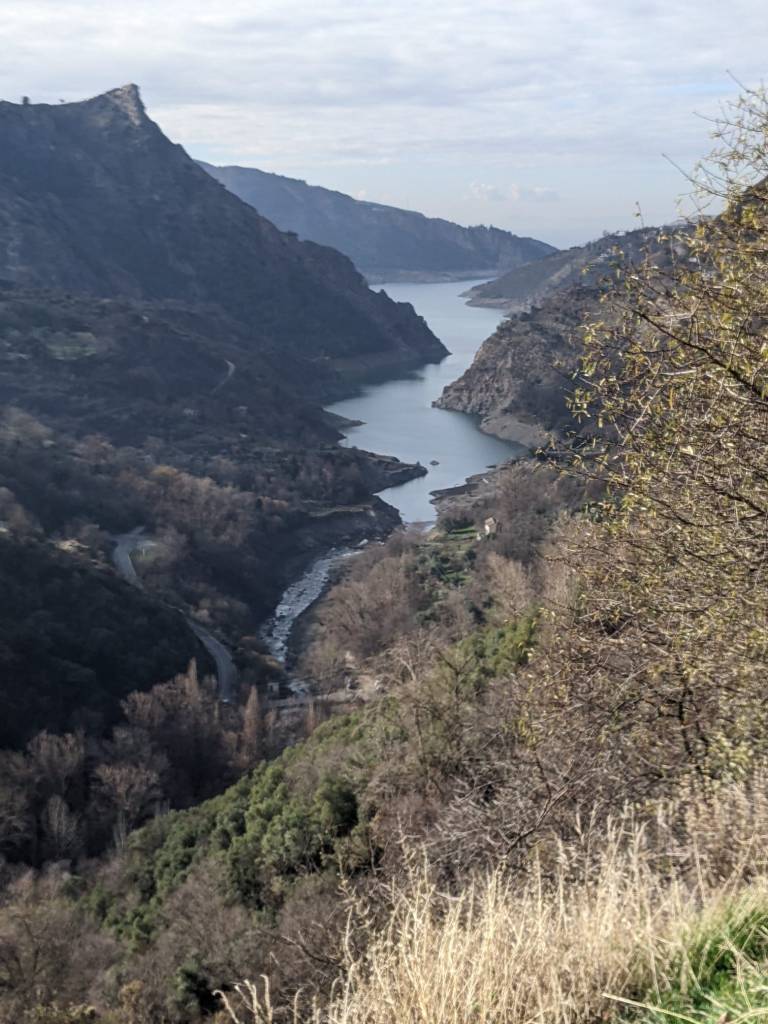
Bottom of 2022 Vuelta Queen Stage 
Looking back towards Granada No room at the inn
This week we had several instances of having to change our plans because we could not stay where we planned to, or do what we planned to. In all cases it seems to work out for the better (we think). Though we can’t seem to make it to Granada.
The first instance was on New Year’s day. We had hoped to stay in La Peza, a town at the foot of the north end of Sierra Nevada. We were tired from a hike we did in Sierra Cazorla, we’d been driving for 2 hours and it was getting late. As we got close to the town we saw a lot of what looked like abandoned vehicles at the roadside and we were met by the Guardia Civil, who blocked us from entering the town. We drove on and managed to snag the last spot in an Area de Autocaravanas in Beas de Granada. Turns out the police had been trying to disperse an illegal rave in La Peza for days. The next day we planned to head to Granada. While waiting at a bus stop, a stranger walking by kindly informed us it was a fete, and buses weren’t running. So we headed back to the campervan, put on our hiking boots and went for a nice walk directly from Beas de Granada instead. We enjoyed our first sighting of the snow capped peaks of the Sierra Nevada, and Granada nestled in the valley at the foot of the mountains.
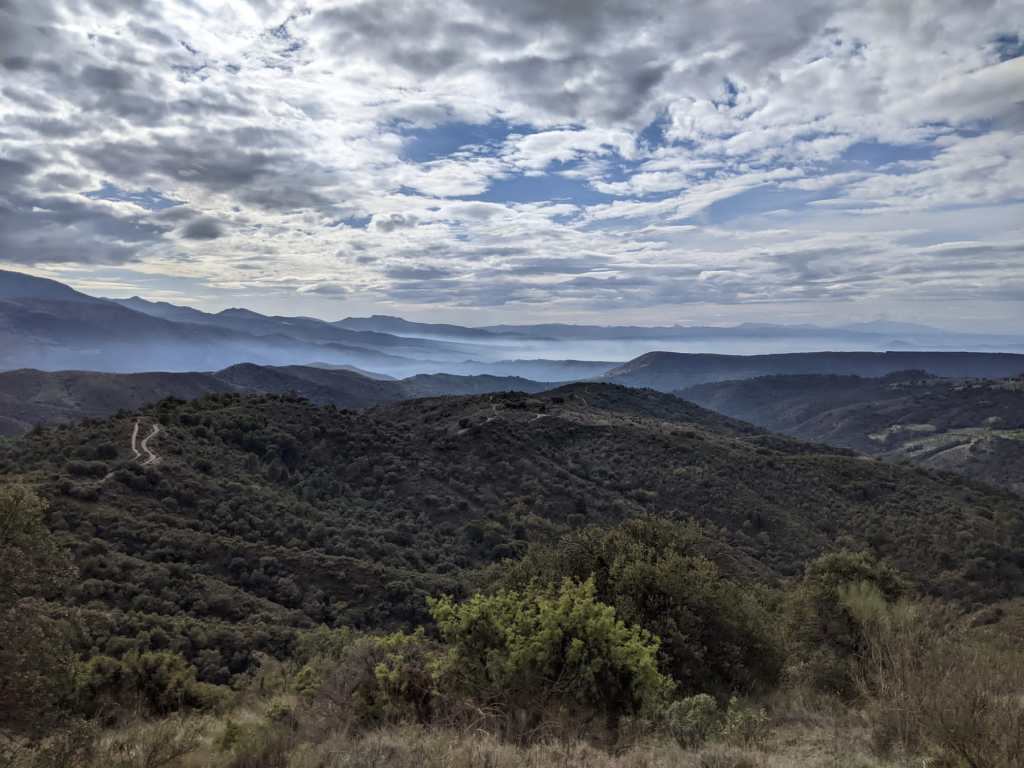
Granada shrouded in mist 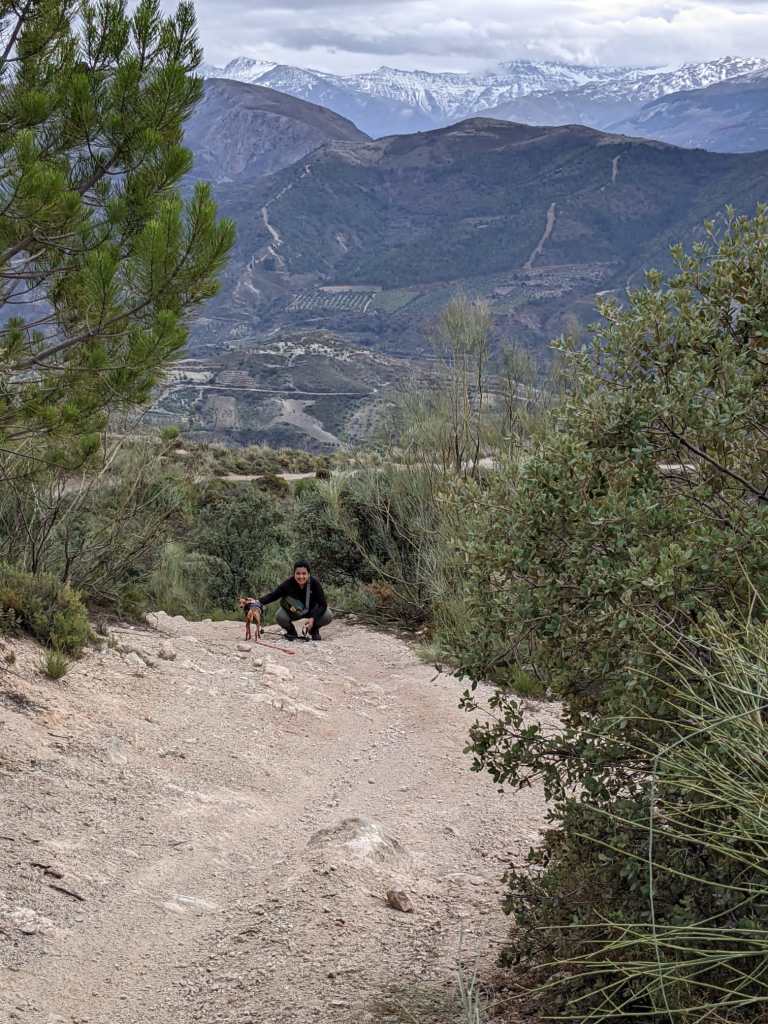
Snow-capped peaks of Sierra Nevada In the second instance of a failed plan, we had planned to stay at another Area de Autocaravanas closer to Granada, the plan being we would take a bus into Granada the next day. We’d done a tiring hike in the mountains that day and it was getting late (a trend maybe?!). The campervan park was full. We decided to do an hour-long drive to another Area de Autocaravanas in Órgiva, the gateway to Las Alpujarras, and instead do a hike and/or explore the famous whitewashed mountain towns of the Poqueira valley the next day. Las Alpujarras is a region of deep dramatic valleys that form the southern flank of the Sierra Nevada. It has a fascinating history having been a centre of silk worm farming for the silk mills of Almeria during the reign of the Moors. After Reconquista, the region was given to the last emir Boabdil as his fiefdom. When he left for Fes shortly after, the Muslims who lived in the area either had to convert to Christianity, or be banished. A lot of the land was given over to northerners who changed the area’s economy to one of farming of livestock and grains that it is today.
It was a dreary rainy day when we visited that area, so we made the most of it by having a most excellent lunch of Pierna Choto Asado (roasted baby lamb shoulder) at El Asador, a restaurant in Capileira. And we managed to admire the beauty of the area as we drove through the squiggly misty mountain roads.
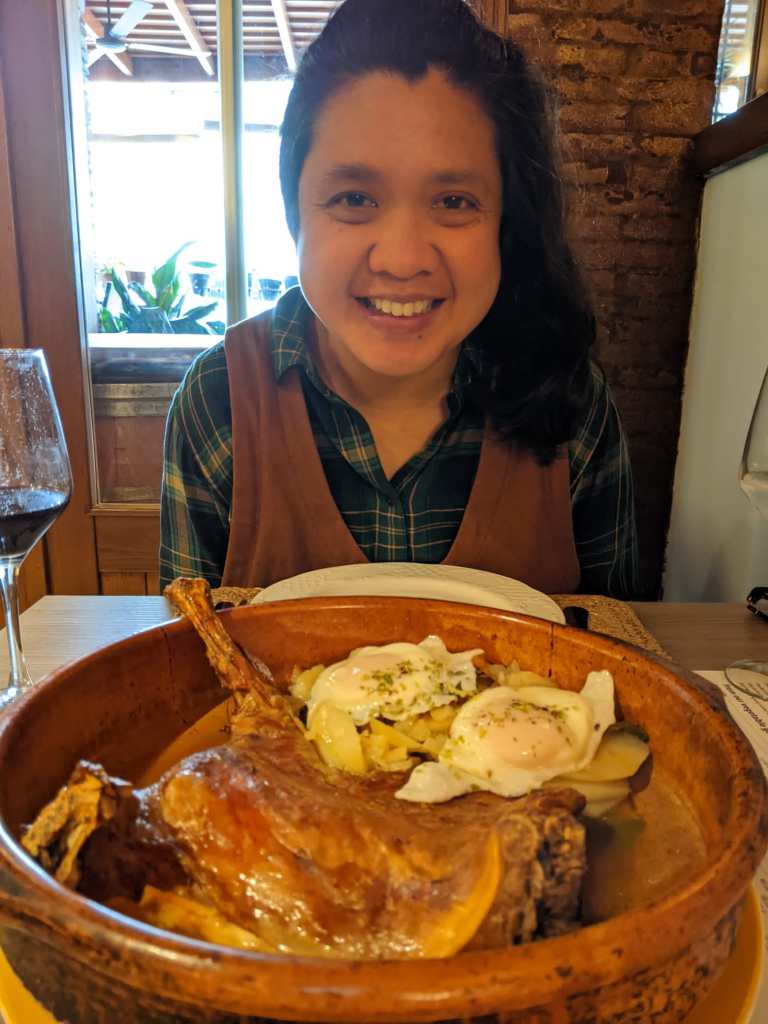
Aileen ready to pounce 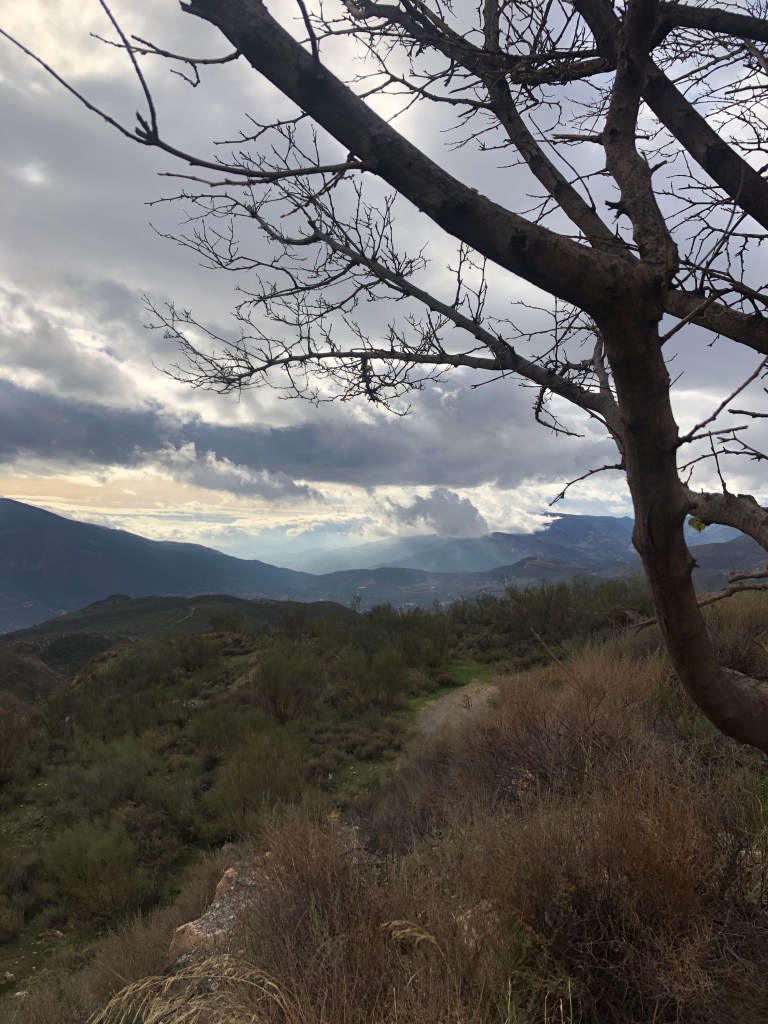
Brief break in rain In the third case of a failed plan, we had to bin a hike in the Sierra Nevada. We had stayed in a parking lot in Monachil overnight, the plan being to do a hike to Los Cahorros the next morning. We woke up and while we were getting ready for the hike, we tried calling a VW service centre to make an appointment to sort out a potential coolant leak issue. With our very basic knowledge of Spanish (and a rather unhelpful person on the other end of the phone), we failed miserably to make an appointment. We decided the issue was important to resolve, so we drove 1.5 hours to a VW in Malaga to make an appointment with Google Translate in hand. We managed to make an appointment at the earliest slot they had available the following week.
The flexibility and freedom of living in a campervan is both a blessing a curse. A blessing in that you do have the freedom to roam and always have the comforts of a home with you. A curse in that you have to flexible and adjust to the inevitable uncertainty when things don’t go to plan.
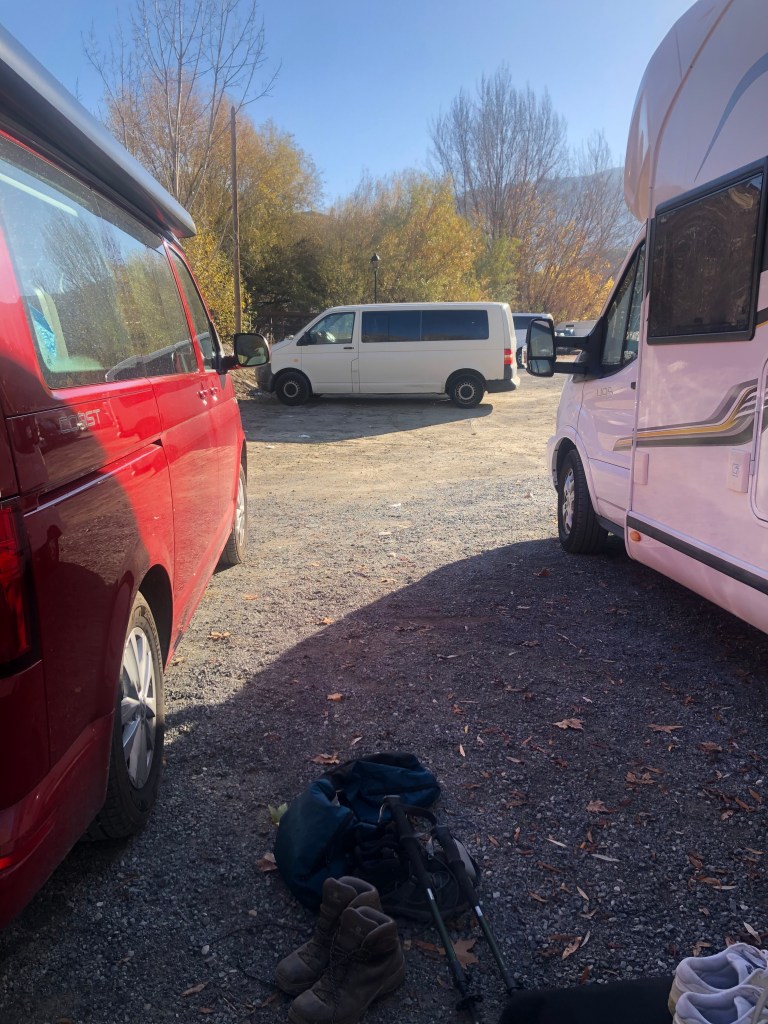
Nice morning, preparing for hike 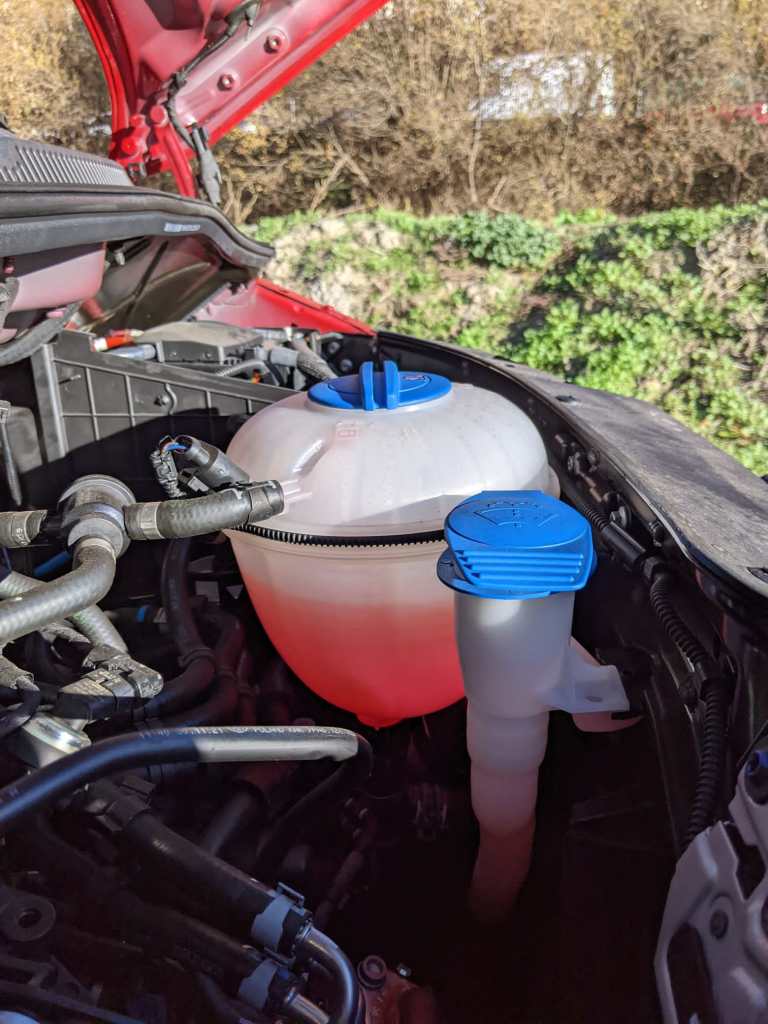
Checking coolant level Hiking in the Sierra Nevada
We did eventually manage to do that hike around Los Cahorros. Los Cahorros is a deep gorge that runs from the town of Monachil to the source of it’s eponymous river. It is a popular walk, particularly through the gorge where the path is linked by several suspension bridges. We elected to do a bigger, elevated loop around the surrounding area and were rewarded with some beautiful scenery and stunning views. We definitely just scratched the surface though, and no doubt there are many wonderful hikes we could do in the region. Alas we had the VW service appointment scheduled that required us to move west to Malaga. Sierra Nevada is definitely an area we need to explore more of at some point in the future.
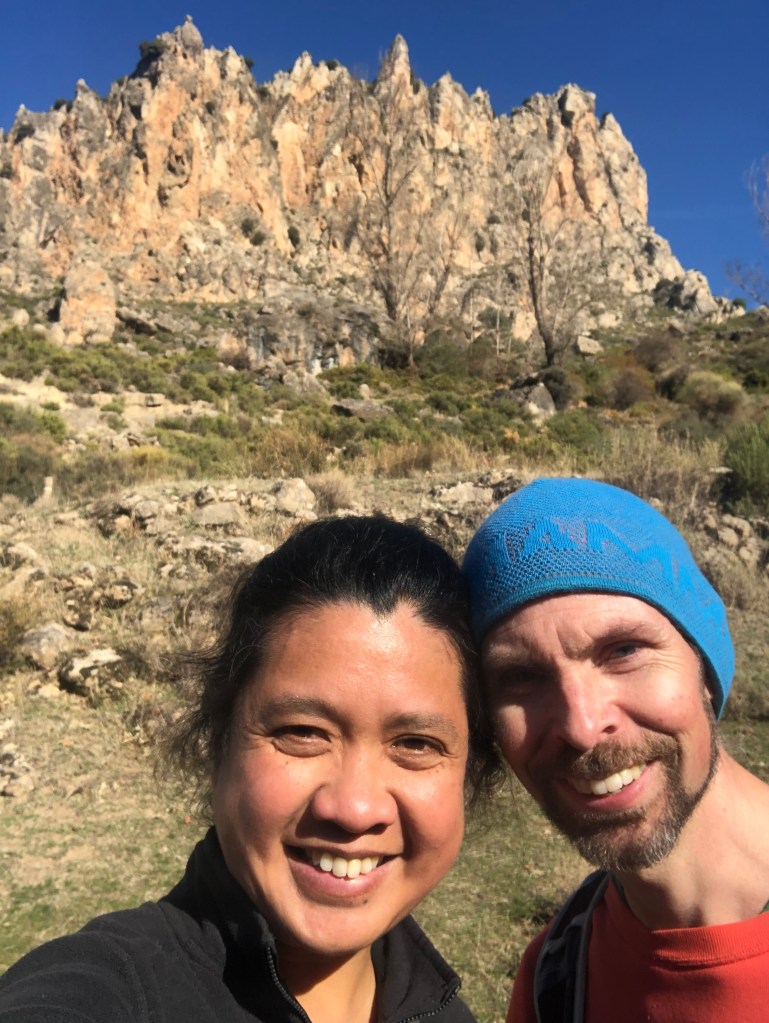
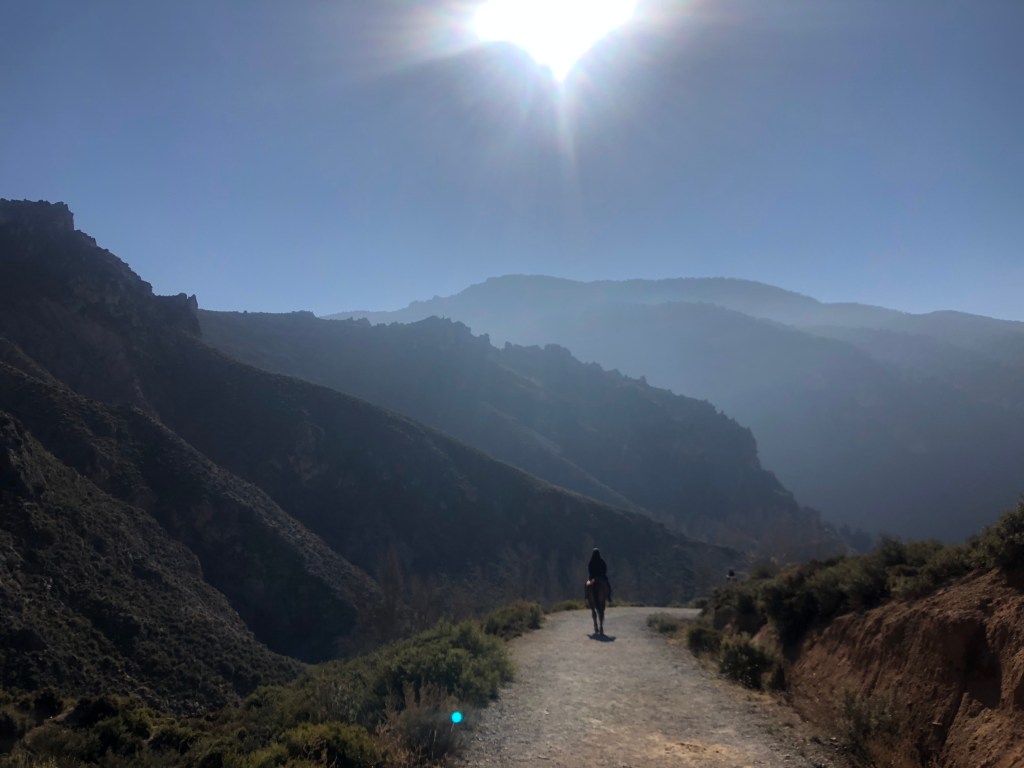
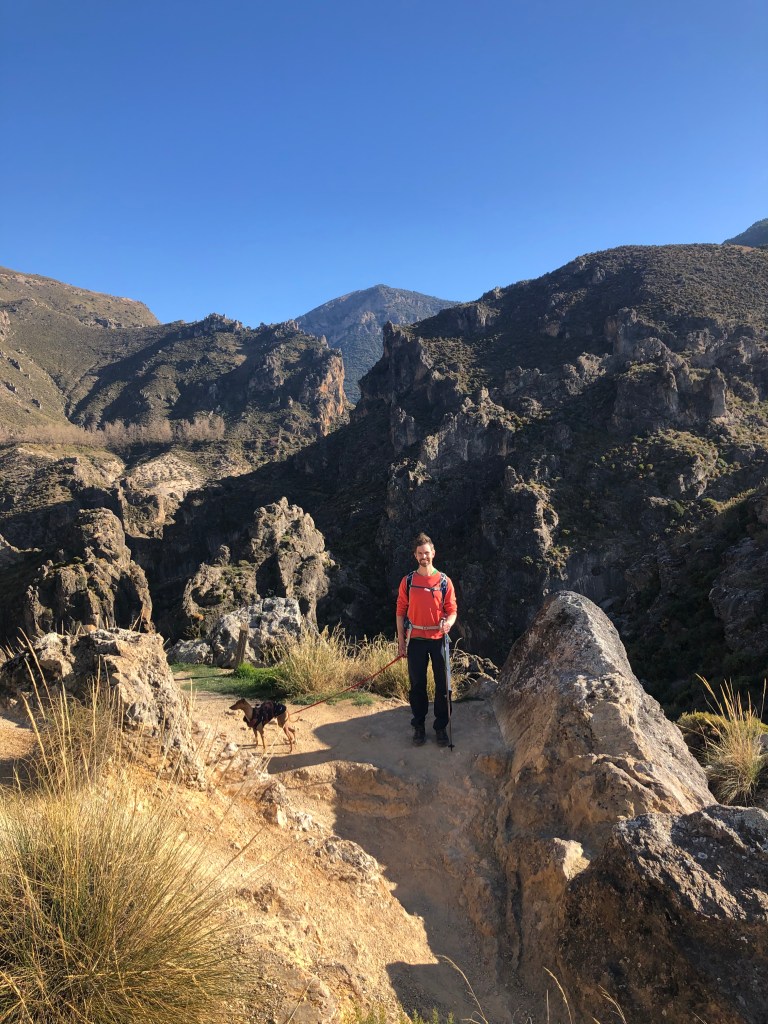
Castell de Ferro
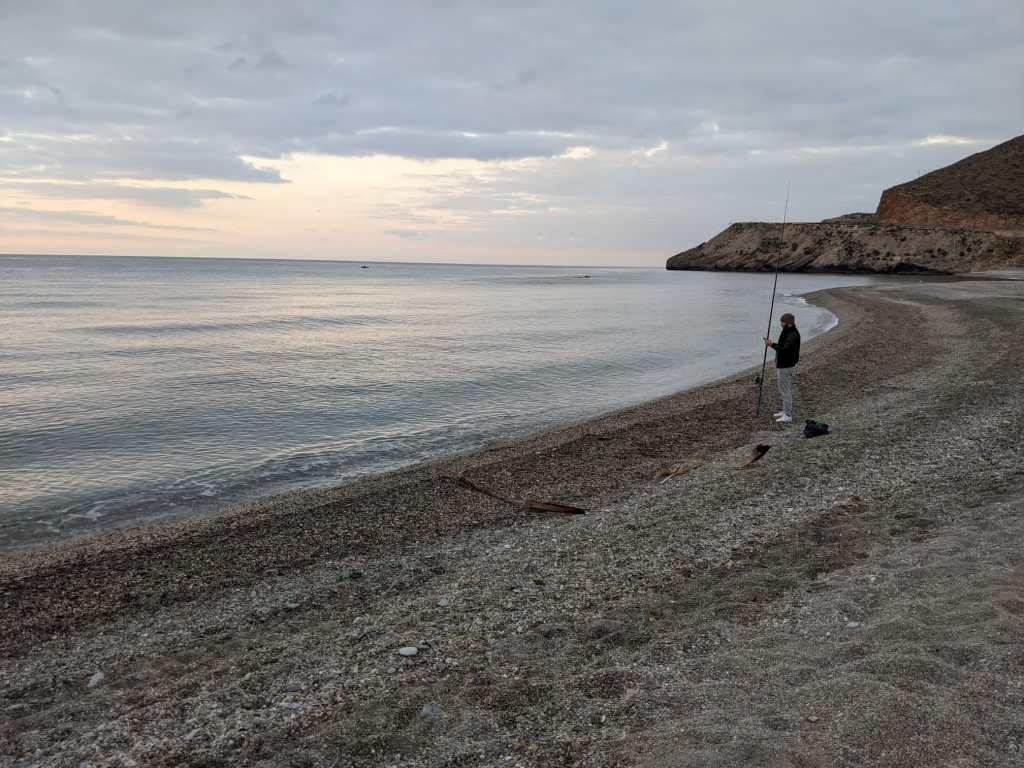
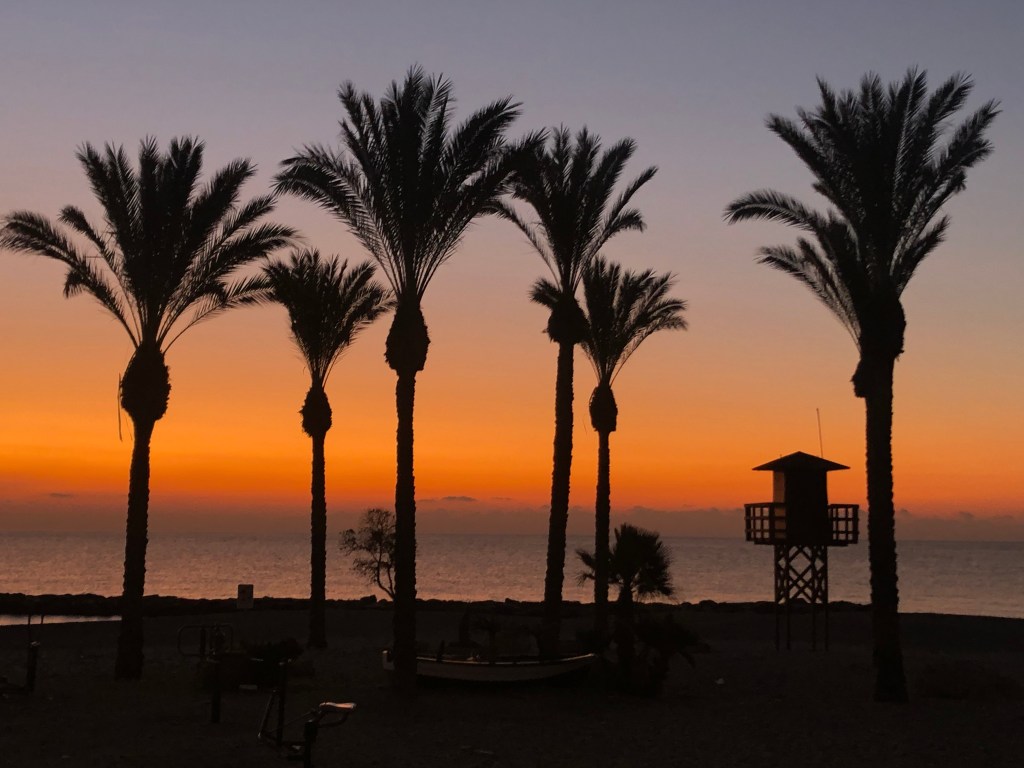
For our necessary and important days “off” to thaw and clean, we decided to head to Castell de Ferro on the coast south of Granada. It was nice not to have to wear a jacket, or thermals and socks to bed. The town itself had a long wide beach and clear water, great sunrises, nice cafes and restaurants, and a picturesque Muslim fort on top of a hill. The valley behind the town however, was lined chock-a-block with the polypro-covered tunnels for fruit and vegetable farms. It’s quite a remarkable site, but not in a good way.
Eagles eagles eagles
We forgot to mention in the last post – over the past number weeks we have seen a LOT of eagles on walks. They’ve been super impressive to watch and thankfully none have fancied Zeus for lunch, at least that we know of. Whilst driving through Parque Natural de las Sierras de Cazorla, Segura and Las Villas we saw what must have been at least a hundred eagles circling as a group in a huge column. At one point about 5-10 eagles swooped into a tree right next to us on the road. We want to mention it here because the blog is our diary of our adventures, and in case anyone knows what that behaviour is related to? We’re guessing it could be related to mating, but the internet has let us down on a dependable explanation, so do let us know if you know what it’s all about!
What’s next?
We aim to visit Granada – our priority is to see the Alhambra. After a number of failed attempts, will we finally make it we wonder? (If you follow us on Instagram you may know the
Afterwards we need to head to Malaga to get the van’s coolant issue assessed and hopefully fixed.
From there we aim to head north towards Cordoba.
Thanks for reading this week’s instalment. We’d love to hear your questions or thoughts about our blog. Feel free to drop us a comment!
-
Andalucia, Aragon, Climbing, Cycling, Natural Parks, Spain, Valencia, Vanlife, Vanlife cooking, Wine
Week 7/8: Festive double edition
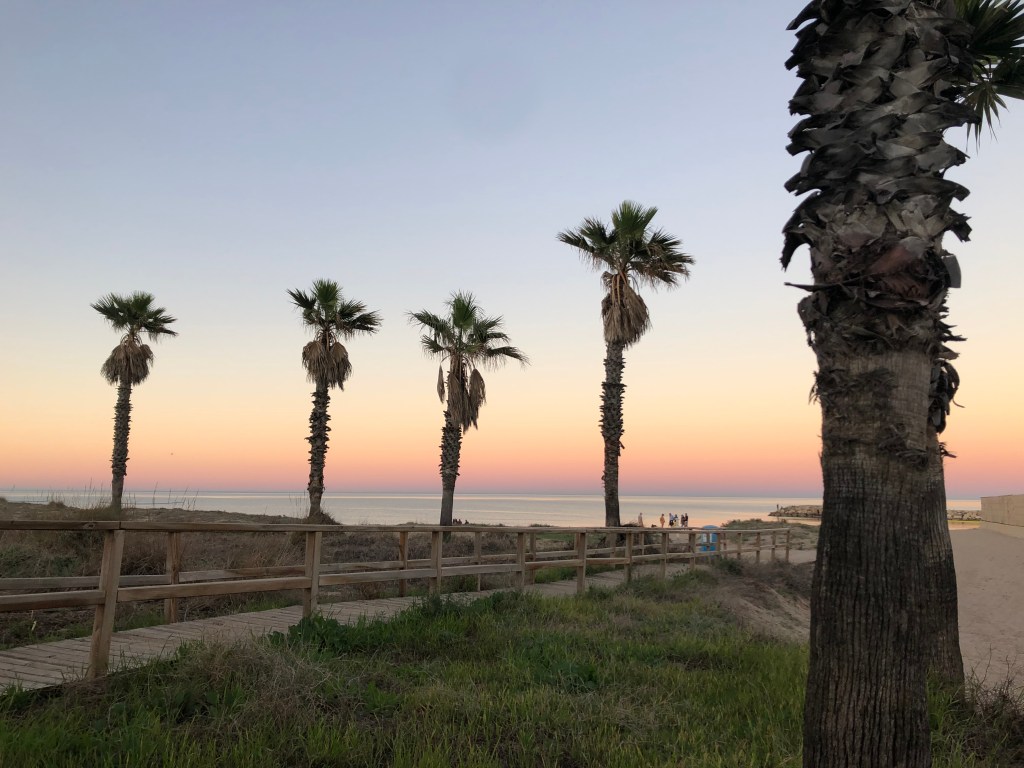
Happy New Year! We hope you had a wonderful holiday season and thank you for following us on our journey.
We experienced our first vanlife Christmas and New Year, and whilst it was a “different” or “new” experience, frankly the last two Christmas holidays were “different” too so perhaps that’s the new normal 🙂. 2020 was last-minute-lockdown Christmas, 2021 was sick-with-COVID Christmas, and 2022 was sunny-campervan-park-by-the-beach-surrounded-by-Germans Christmas. We wonder what 2023 will bring?
The last 2 weeks have been quite a mix of experiences – aside from chilling by the beach over Christmas in Oliva surrounded by enormous motorhomes and German retirees, we’ve been to a couple of bouldering sites, James has gotten a good taste of cycling in Spain, we’ve continued our exploration of natural parks, and we’re settling into the rhythm of vanlife – the daily routines such as cooking and finding a loo, as well as the uncertainty of what each day will bring.
Climbing in Alcañiz
We spent 3 days in Alcañiz and James managed to climb about as many boulders. On the first day/attempt, Google took us down some pretty dodgy looking off-road tracks that led to muddy dead ends. We spent the rest of the afternoon figuring out how to access some crag sites. On the second day/attempt, we woke up to thick fog. We headed down the dirt tracks in said fog. For a brief moment the sun appeared and James managed to climb some boulders before the fog rolled back in. Hooray. On the third day, we woke up to thick fog. We didn’t bother trying, and went on a sightseeing trip to Morella instead. In summary, the weather was not on our side.
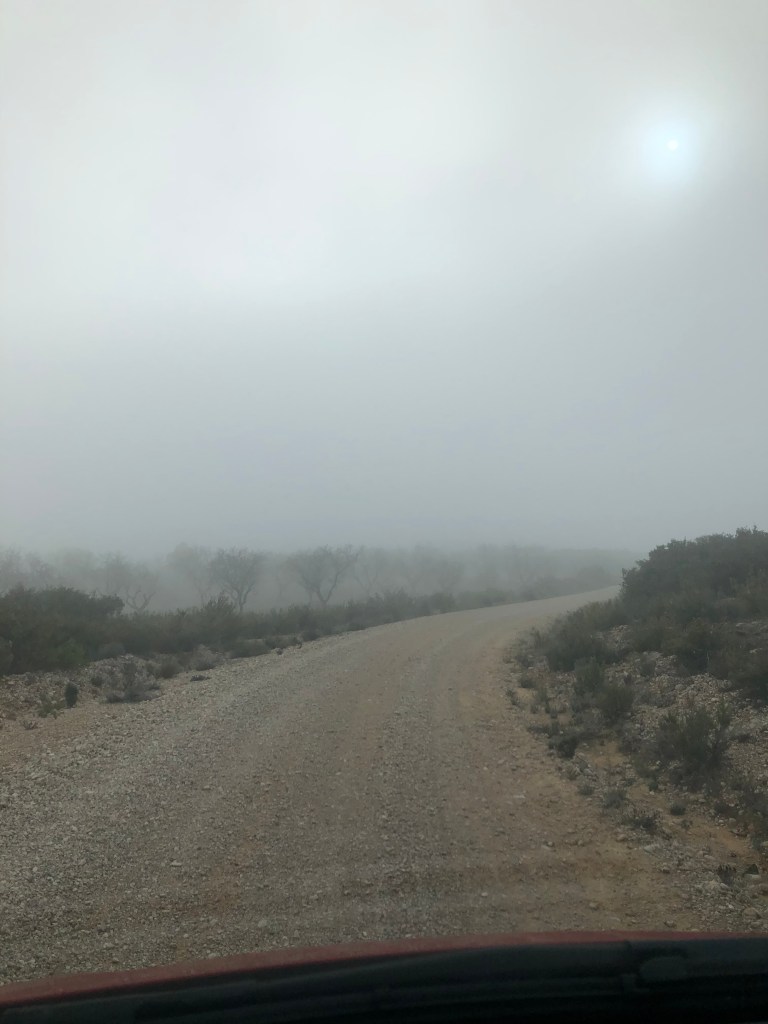
Driving through fog hoping we don’t get stuck 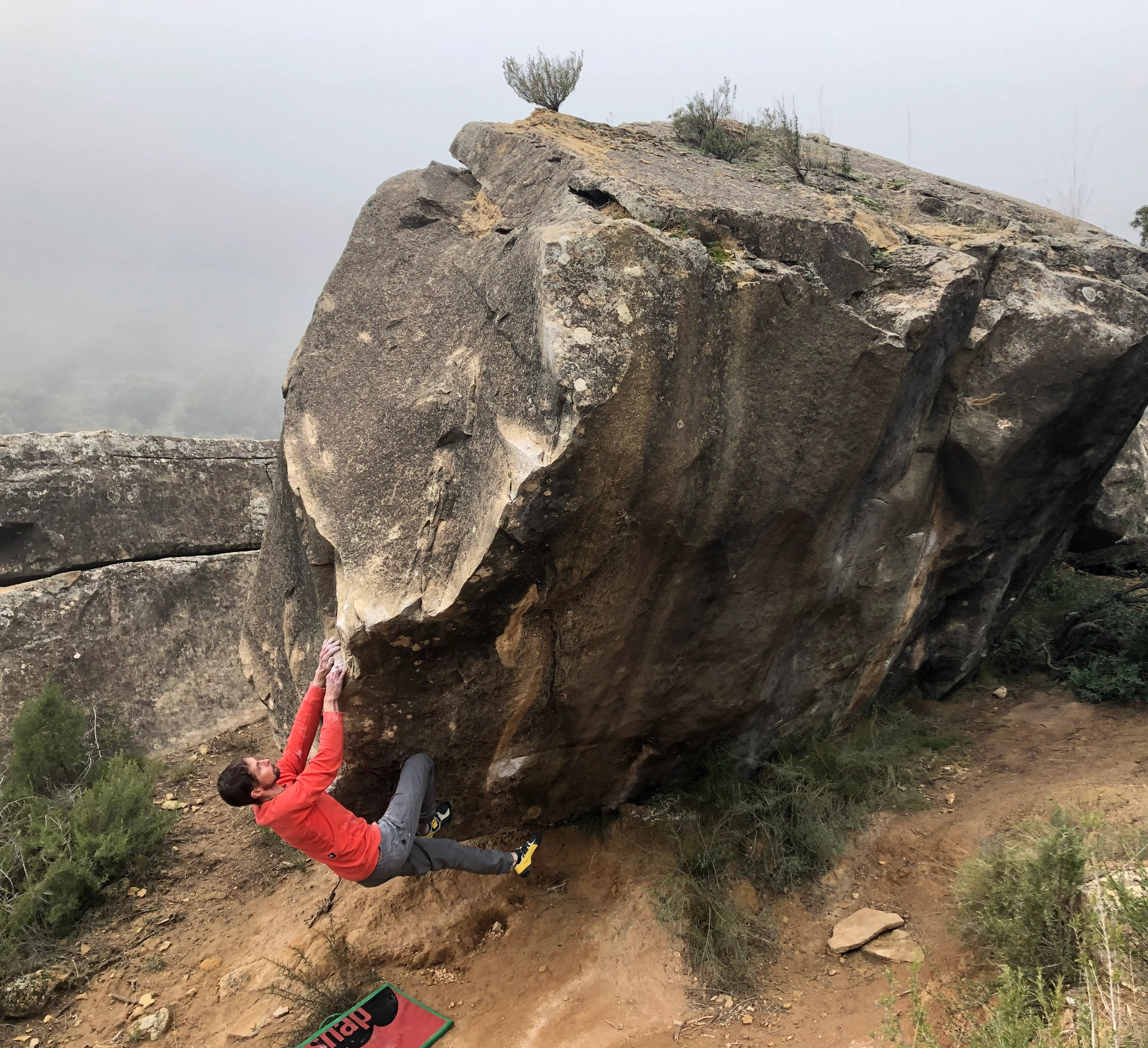
Reveillon @ El Arenal 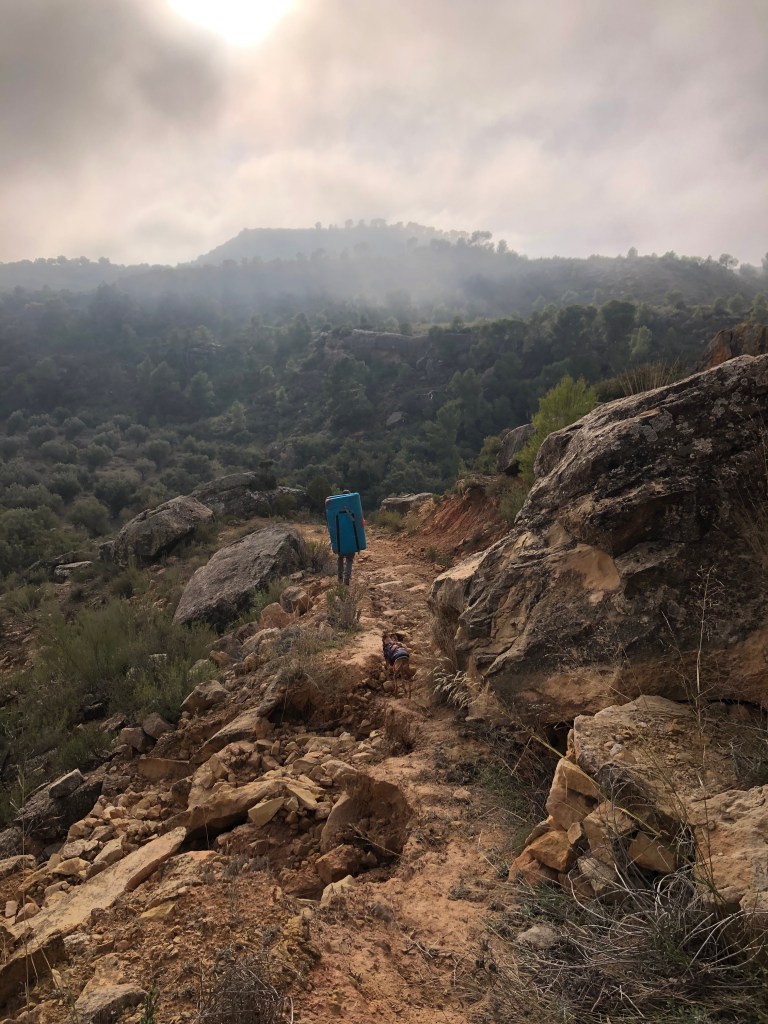
El Arenal walk-in Note: James subscribes to the 27 Crags app for topos and is pleased to say it works well (it’s €50 a year, but we don’t have space to bring lots of print guides with us).
Morella
Morella is a walled hilltop medieval town with a very impressive castle perched on a big rock in the middle. Castell de Morella has a long history of being used as a defensive fort, first by the Muslims, and then a long succession of Christian kings. The castle itself is pretty well preserved and well worth a visit. Dogs are also allowed on the grounds which we’re finding a rarity in Spain. There were also some pretty cool and well-preserved medieval aqueducts just outside the walled town.

Morella 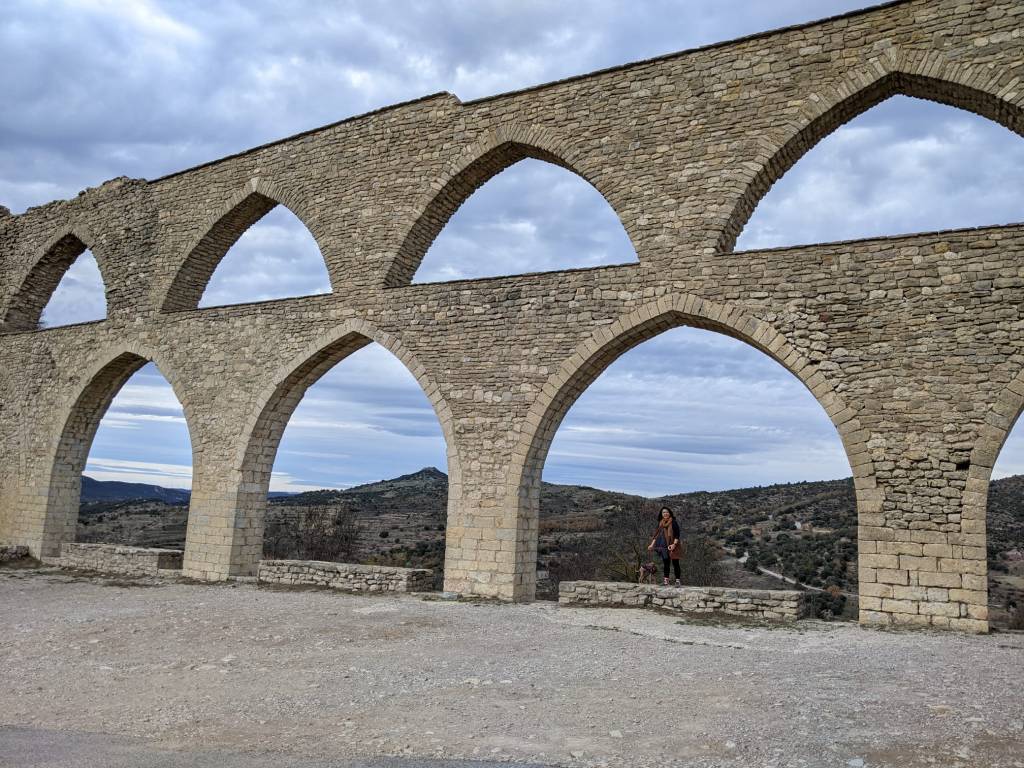
Medieval aqueduct Christmas Climb in Xàtiva
We met up with some of James’ climbing friends Jon and Ellie for a Christmas climb. The closest site James could find to Oliva (where we were all staying) was Xàtiva, a 45-min drive away. The crag sat on the edge of the town, had some “local artwork” on them and didn’t look very promising on 27 Crags. Despite the somewhat grungy setting, it turned out to be nice crag for an afternoon of climbing.
Tired and hungry afterwards, we stopped by a restaurant at a petrol station on the way back to Oliva, and had a fantastic 3 course lunch of arroz con pollo y setas, grilled sardines, and crème Catalan. The non-driving party enjoyed 2 glasses of wine. We both had espressos. Lunch came to €20 for two!!??!!
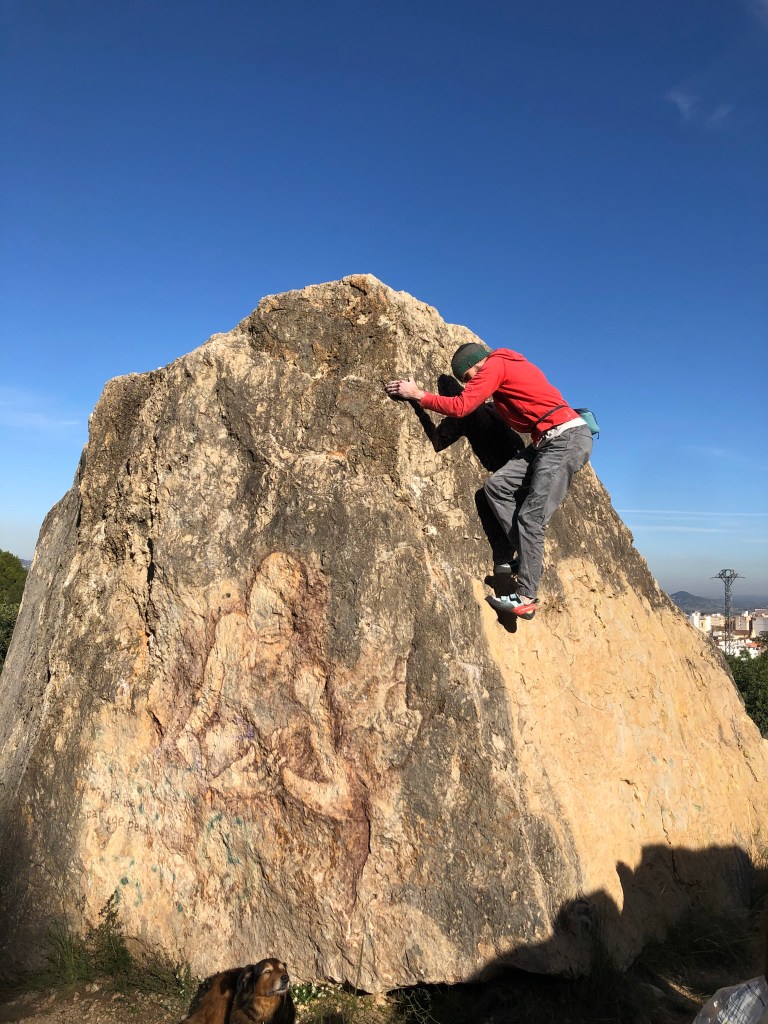
James warming up with less explicit artwork 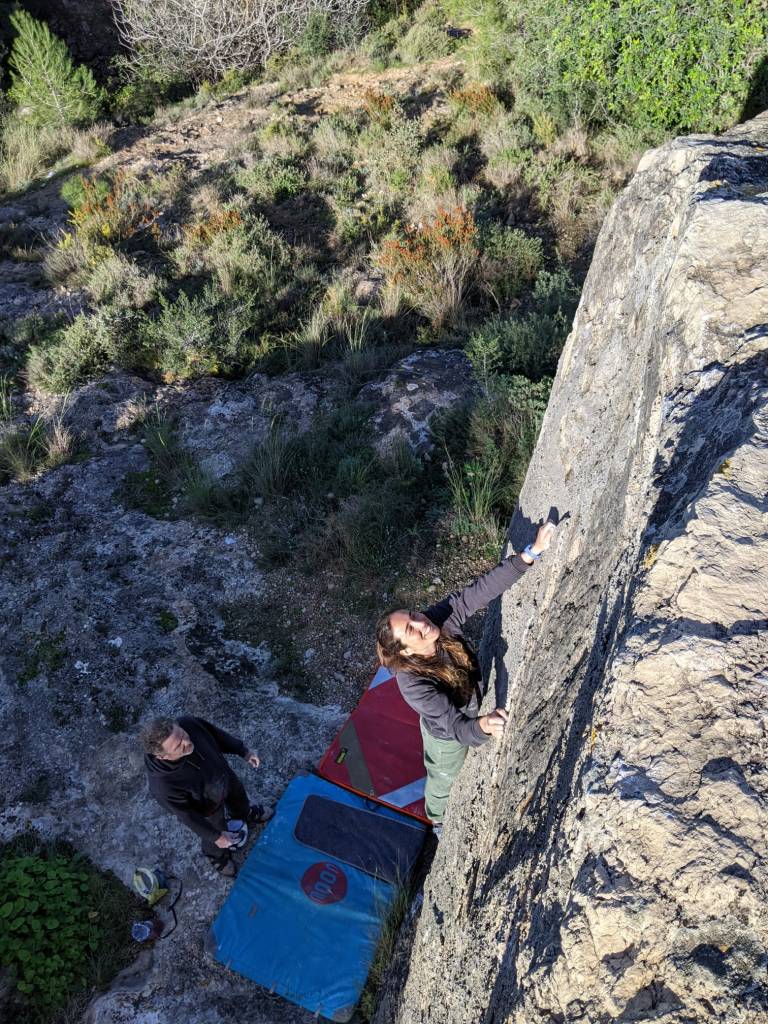
Ellie on highball slab 
F-ing brilliant lunch Cycling in Valencia
James enjoyed a couple of good rides on the mountain bike, without crashes. First in Serra de Espadà then in Oliva. Serra de Espadà was all on hiking trails that could be ridden, Oliva was a mix of hiking and purpose built mountain bike trails. There is an element of chance if hiking trails are going to be good to ride so he was very pleased to have found some challenging and fun trails.
One thing that makes cycling in Spain particularly enjoyable is people’s enthusiasm for the sport and the respect car drivers show. That’s helped offset the suffering he inflicted on himself with the road bike and long steep hills.
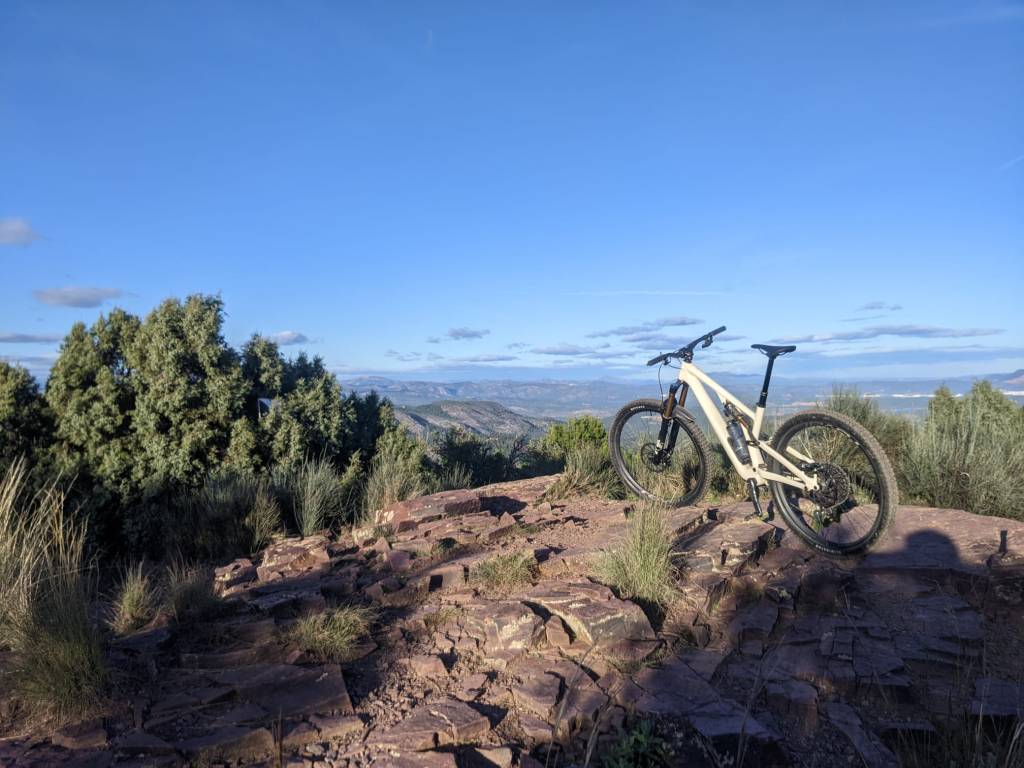
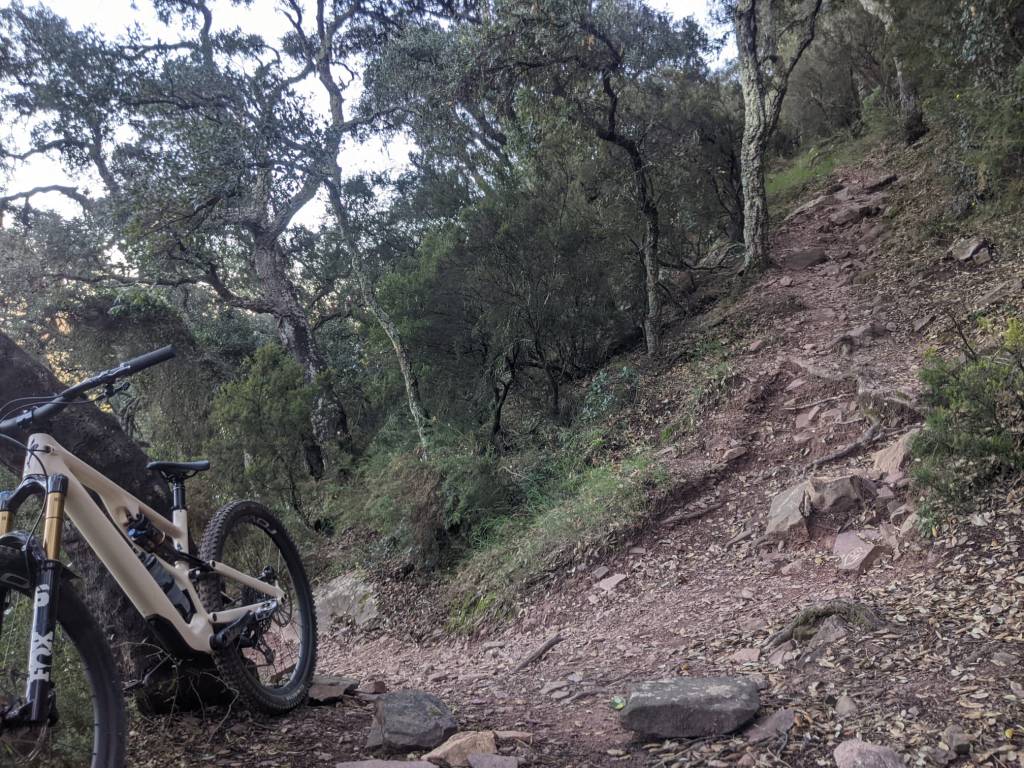
Note: For finding mountain bike trails James has a subscription to the Trailforks app which he finds significantly more helpful than Strava for identifying trails and their likely character.
More of Spain’s Natural Parks – Valencia and Andalucia
We continued our exploration of Spain’s Natural Parks. In Valencia, we did a hike up to Los Órganos de Benitandús (which we think translates to “the organs of Benitandus”?!?), an impressive rock pinnacle/formation in Parc Natural de la Sierra de Espadá. We also did a hike up to a Muslim fort, Castell de Serra in Parc Natural de la Serra Calderona. The latter required a very steep climb up, and Aileen could see how this would be a good deterrent for prospective marauders, and people who don’t like steep climbs. At one point James worried we would not make it to the fort. We did. And we made it back down too well before sunset.
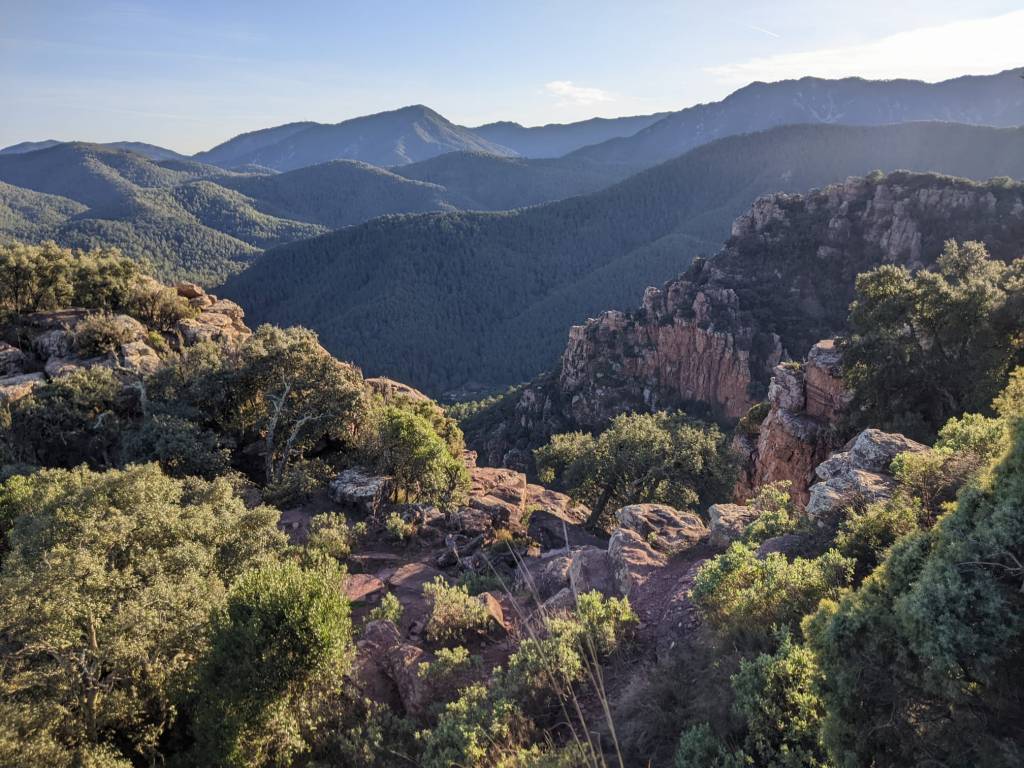
Los Organos de Benitandus 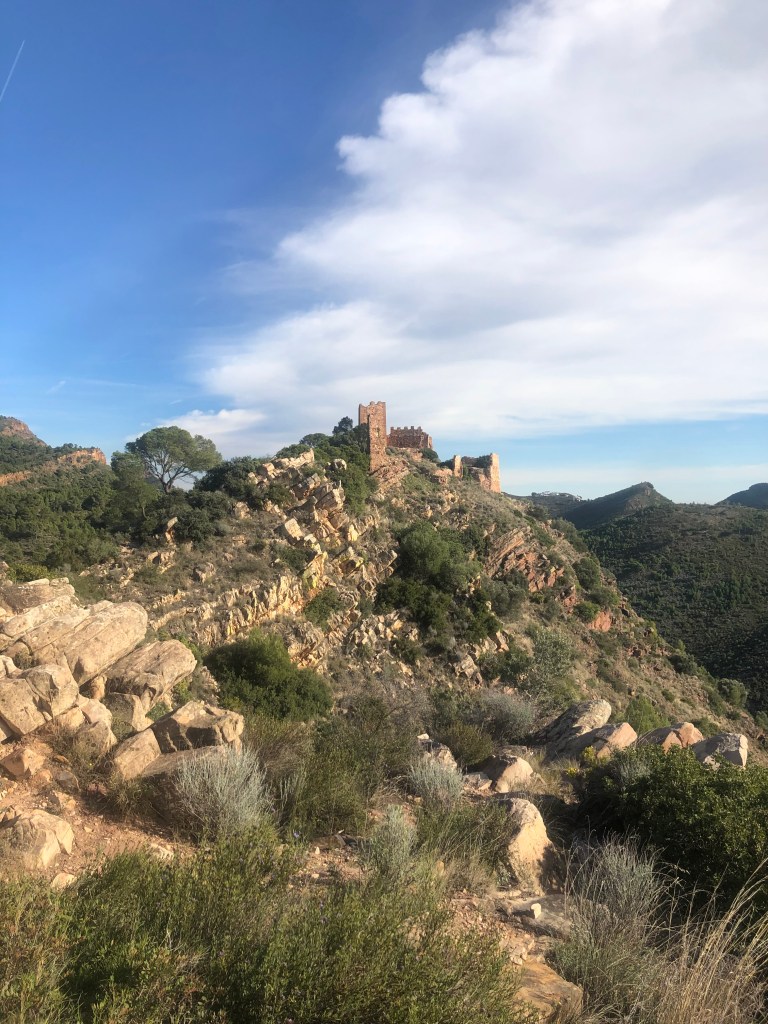
Castell de Serra Note: Both these walks and most others we have found and navigated with the AllTrails app, we’ve been impressed but haven’t paid for the premium version yet.
From Valencia we headed southwest to Parc Natural Sierras de Cazorla, Segura y Las Villas in the Jaén province of Andalucia. It is a vast park with multiple mountain ranges, and is the largest protected area in Spain. We saw sooooo many eagles, drove on lots of teeny squiggly mountain roads, and also had our first incident requiring road side assistance. While in the middle of this vast park, we got a Low Coolant – stop immediately warning. Our van’s manual instructed us to stop and call for assistance. Given where we were, we had no inclination to do otherwise. Our rescue arrived 2 hours later, and we drove with him 18 minutes down the road to a town we passed earlier and got a coolant top up. We also found out the literal translation from Spanish for follow me to the garage is “do you want to come from behind”.
We decided to “wild camp’ in a small parking lot in a very small town, rather than drive an hour and a half in the dark on windy roads with a known coolant issue to the nearest town with campervan parking. We enjoyed a very nice dinner in the town’s restaurant, went to bed early, got up at the crack of dawn and continued on our merry way. This was our first wild camping experience and it wasn’t so bad, although it was -1.5 C when we woke up and James can confirm that unlocking bikes and wiping down misty windows is not fun in freezing weather.
We did 2 hikes in the park – one to Peñamujo, a huge rock formation jutting out of the Sierra Segura, that we climbed to enjoy breathtaking views over the park and Embalse del Tranco de Beas (a very long lake) tucked between the ridges, with eagles gliding past, perhaps to check if Zeus was tasty looking. The second hike we did was along the base of Picón de Rayal on Sierra Cazorla. Jaén, we later learned, produces 10% of the world’s olive oil, and the views of a carpet of olive groves as far as the eye could see were pretty spectacular.
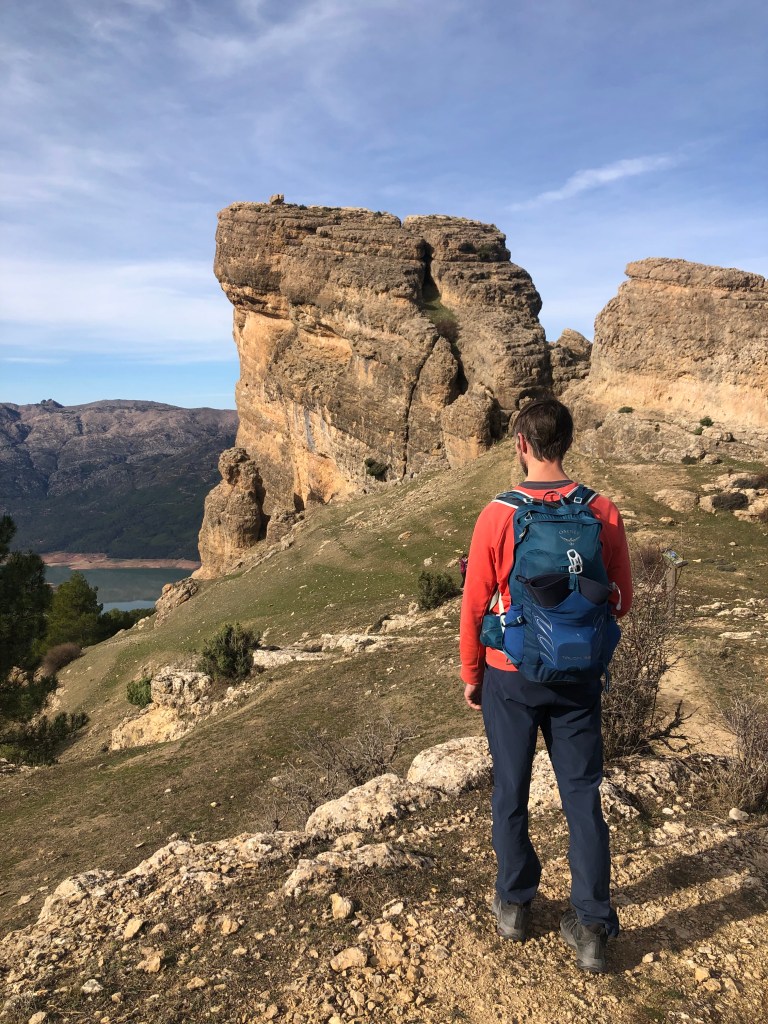
Peñamujo 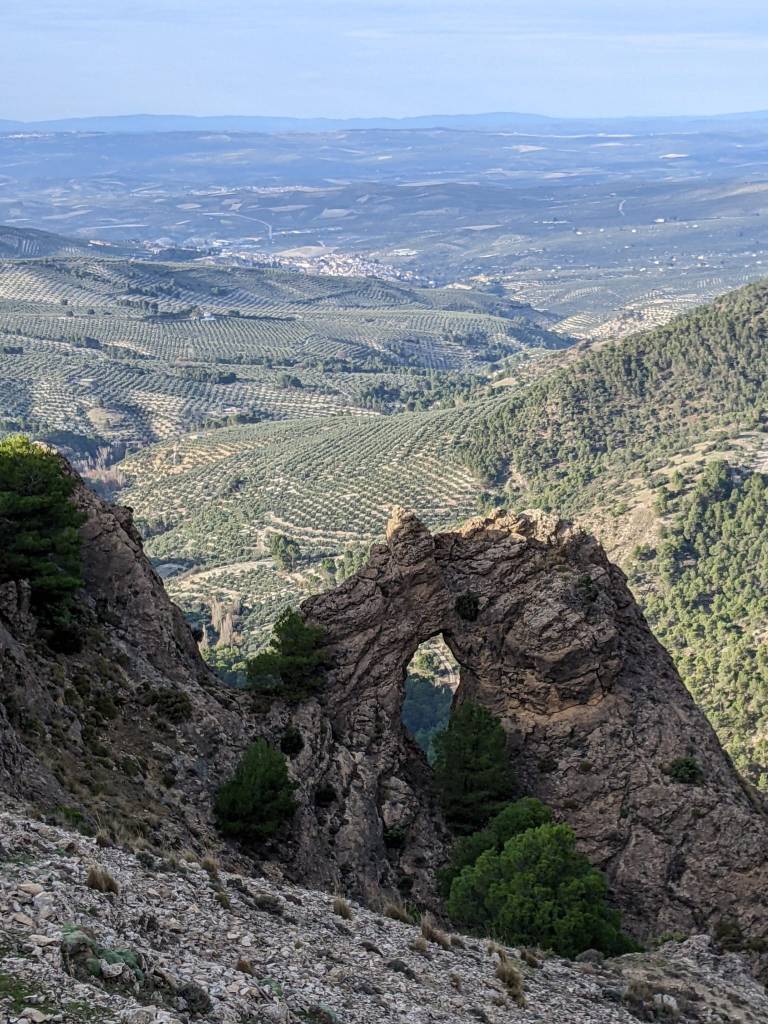
Views of olive groves from Picon de Rayal Vanlife Christmas and New Year
One of the interesting differences we’ve noticed in Spain vs the UK is the cuts of meat. In the UK it’s quite common/easy to find a pork roast with skin still attached for crackling, or a lamb leg with the shank removed, or a rolled prime cut of beef. There aren’t (at least to us) any/many obvious cuts for roasting in Spain that doesn’t require a big oven. The closest campervan-appropriate thing we found in a supermarket was Margo Cabeza Malla, which translates to “Lean meshed head”. To this day we’re still not quite sure what part of the pig it was, but it was a mighty tasty Christmas roast.
We spent Christmas in a campsite in Oliva and enjoyed the benefits of a wash basin with running hot water. So our Cobb BBQ was put to good use – we had whole roasted turbot one evening, a “Lean meshed head” roast for Christmas Eve, and grilled a lovely piece of aged on-the-bone sirloin we picked up at a butcher for Christmas Day. We also enjoyed the wines we’d collected over our recent winery visits. The bottle of Antis Tiana Xarelo we picked up in Penedes went nicely with the turbot. The DO Monsant Clos Maria Blanc we picked up in Priorat was delicious with the pork roast. And our Christmas gift to ourselves was a bottle of Perinet Priorat 2016 with the steak. It was a lovely Christmas for eating, drinking and enjoying the sunshine and balmy weather.
We also did a deep van clean at the campsite which involved taking stuff out of storage spaces and cleaning out accumulated dust and dirt. We did a massive load of laundry. We gave the van a wash. It definitely helps, we think, to share van life with someone who is equally fastidious about the cleanliness of the van!
We were in the mountains on New Year’s Eve, so we enjoyed a quiet evening in the van with prawns and cava and saw the New Year in with hastily eaten grapes.
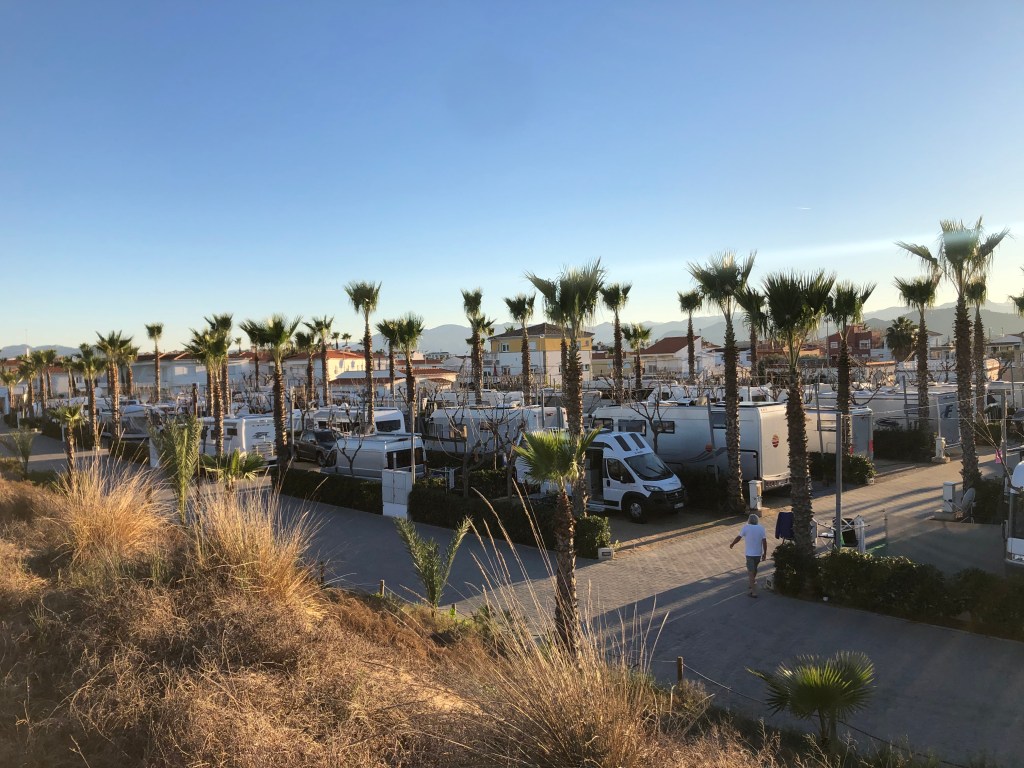
100 million (German) motorhomes 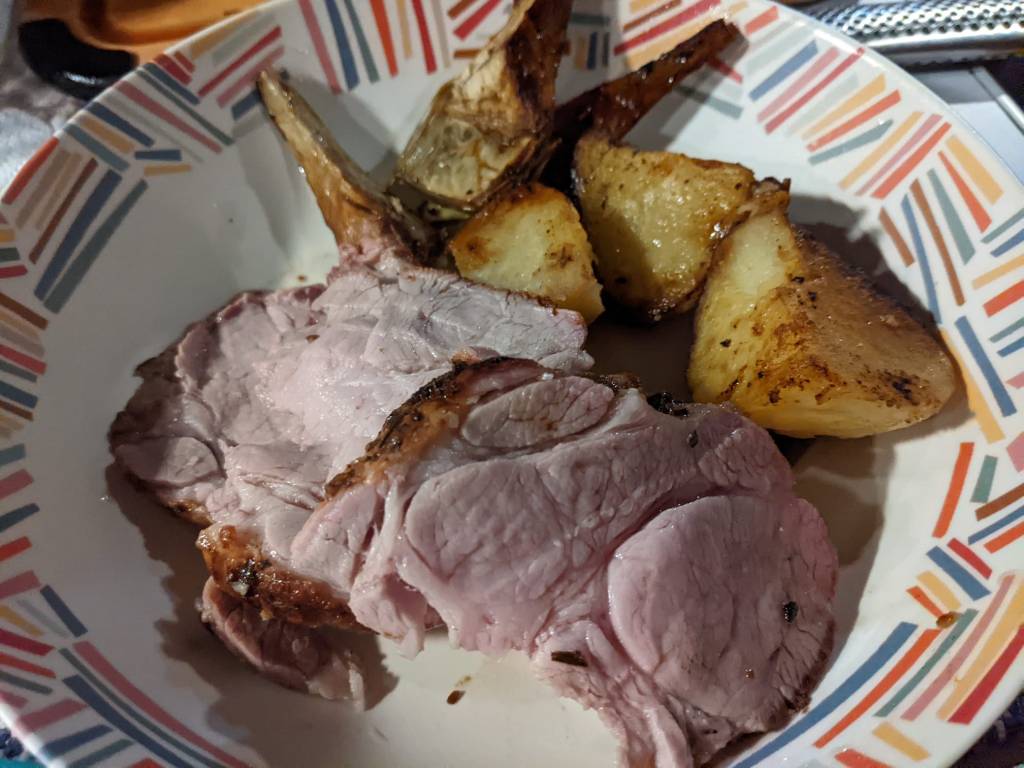
Roasted margo cabeza malla What next
We’ve headed south towards Granada where we’ll no doubt do a hike or two in the Sierra Nevada, hopefully get to explore more of Spain’s Muslim history, James hopes to dust the bicycles off, and after 6 days on the road, we’re looking to stop at a campsite on the south coast for a thaw and clean.
-
Week 6: Catalunya
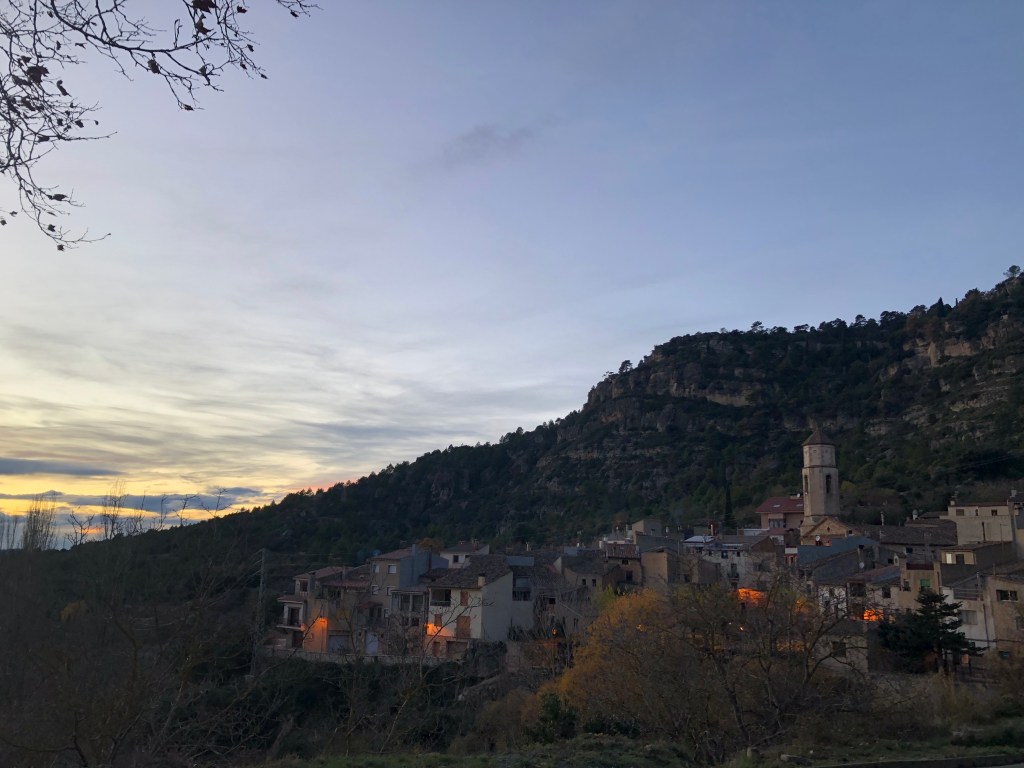
A change of plan
We have to admit, we never planned to explore the east coast of Spain. Without knowing too much about it, we had a vague idea of coastal beach areas, and the big cities Barcelona and Valencia which we’d visited before. Our loose Spain “plan” was to visit the mountainous north – Pyrenees and Picos, Basque Country and Galicia, then head south through Portugal to explore the parks and Muslim history of the South, then catch a ferry heading east towards Sardinia and Sicily etc.
Instead 2 weeks ago we found ourselves needing warmer climes and so we headed to the east coast of Spain, and have shelved our northern Spain plans until the summer. We needed to fill the time leading up to Christmas, so we decided to meander down towards Valencia where we’ll be stopping for Christmas to meet up with some friends.
And what a wonderful surprise Catalunya was. Yes there’s been the warm sun filled beach coast where we’ve enjoyed “recovery time”, but exploring the numerous natural parks that run parallel to the coast and are usually a mere 30-45 minutes away has been such an unplanned pleasure.
Catalunya’s natural parks
Montserrat, which we visited last week, was a no-brainer given it’s proximity to Barcelona, and is a well known place to visit. But when we looked at Google maps, we noticed a string of parks that continued south, and so we decided to explore them too.
Parc Natural Serra de Montsant lies west of Tarragona in the Priorat region. It features a long, tall and dramatic ridge which we did an epic hike up. Heading up the ridge you have expansive views of the Prioriat area which looks like a jumble of hills and mountains sandwiched between bigger sierras and mountains. Vineyards scale the sides of the smaller mountains and small hilltop villages dot the jumble of mountains. It was a breathtaking sight. We stopped frequently and took way too many pictures. We wondered if the multiple eagles flying nearby thought Zeus looked like a tasty snack.
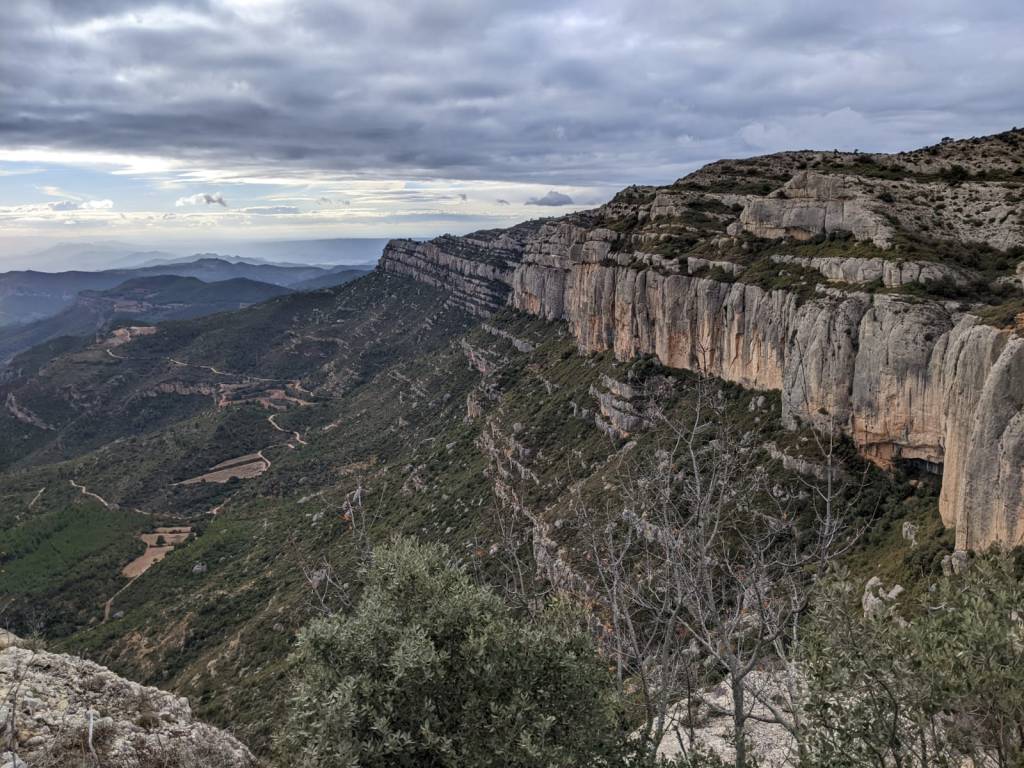
Serra de Montsant 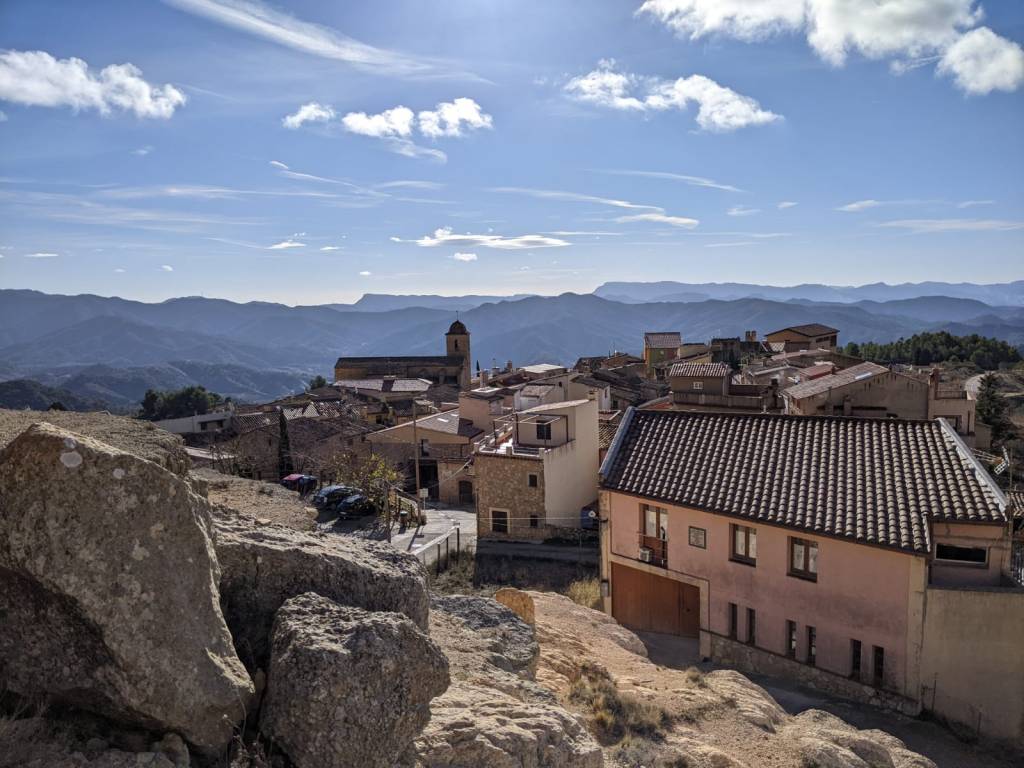
La Morera de Montsant 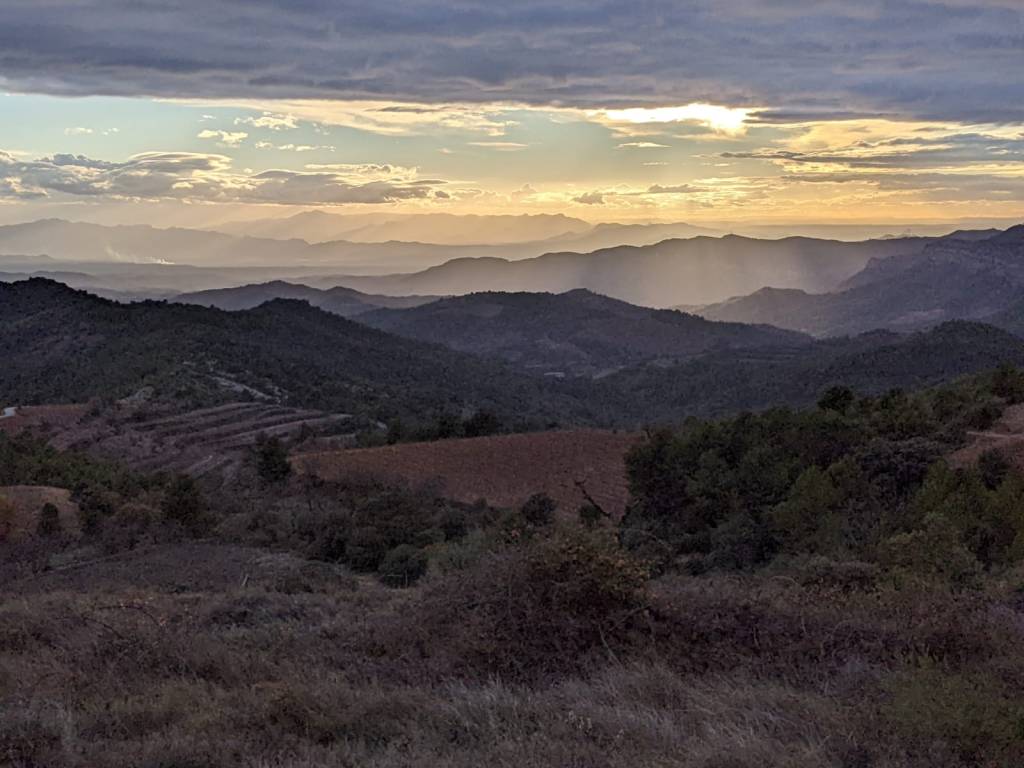
Priorat at dusk Parc Natural dels Ports lies south of Montsant, and from what we can tell is an expansive park of dramatic limestone mountains and ridges. We climbed up Roques De Benet, a dramatic conglomerate rock jutting out of the mountain. We saw climbers scaling it and were greeted at the top by a family of wild goats.
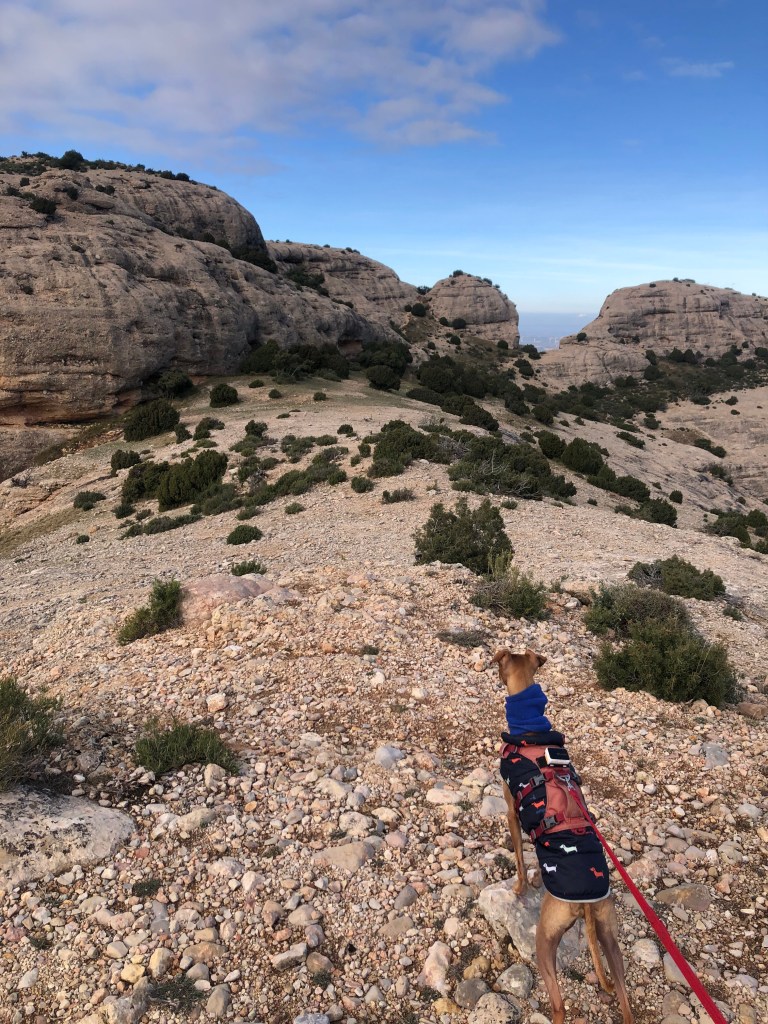
Zeus staring down mountain goats 
Roques de Benet 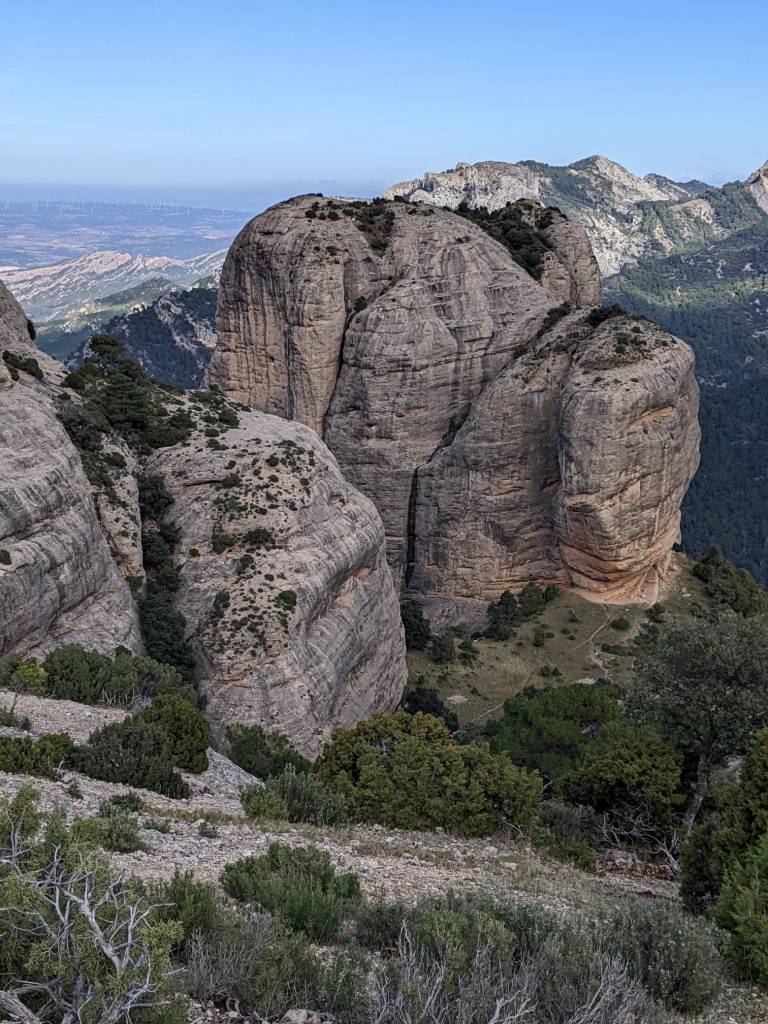
Cap de Gos We feel we’ve only scratched the surface too. We could easily spend a week or 2 in each of these parks, and we look forward to returning to them at some point our our future.
Catalunya wine
It’s also been a pleasure exploring the wine regions of Catalunya. Last week we visited a cellar in DO Penedes, Cava country.
This week we visited Perinet, a winery in the prestigious DOQ Priorat region. Prioriat red wines are renowned in the wine world as bold, complex and top notch wines. And you can see why when you visit the region – it’s a tough place for vines to grow. They grow on steep slopes of rocky slate hills, and endure extreme extreme temperatures. So the grape yields are low, but the vines grow grapes with deep and concentrated flavours.
It was great to explore inside the winery – from the lab where the winemaker determines when to start/stop key steps in the wine making process, to where the picked grapes are cleaned and sorted, to the enormous fermentation tanks, to the underground cellar where the wine ages in oak barrels.
Prioirat wines are delicious. And the price of the wine reflects this. We picked up a bottle as a treat to go with our Christmas meal.
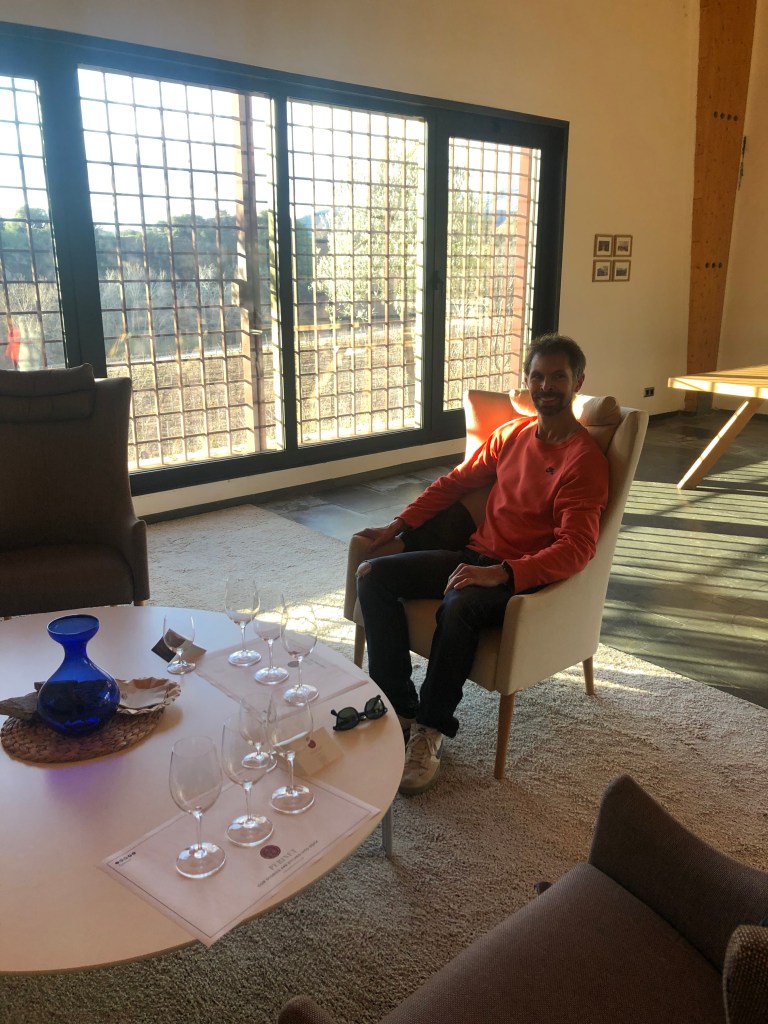
Designated driver 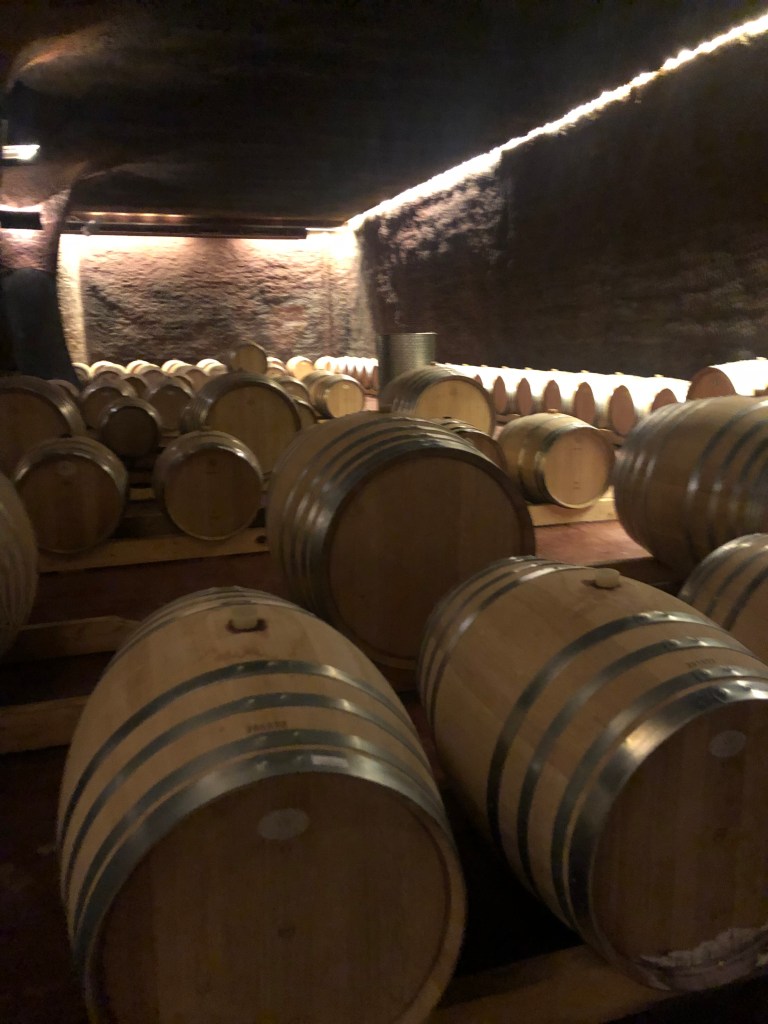
Cellar 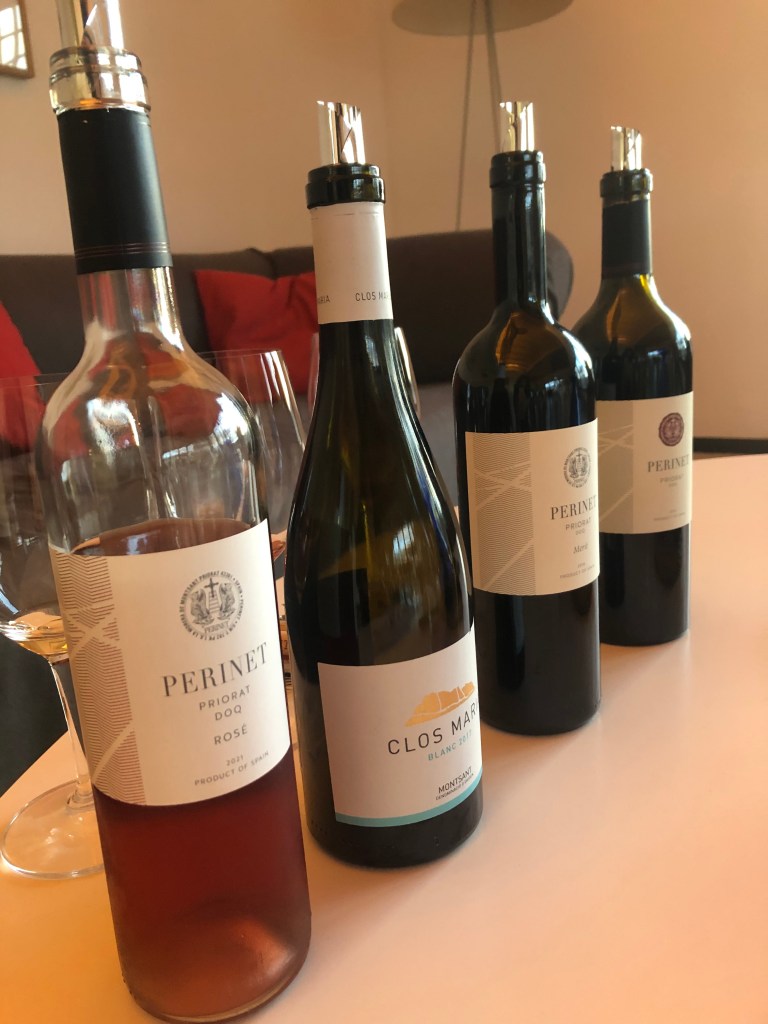
Priorat wine tasting Coastal exploits
We previously knew nothing about Tarragona, but when we read about it’s Roman past life as Tarraco, we had to visit. And it did not disappoint. The amphitheatre was an impressive sight, situated overlooking the sea. You could see Roman relics littered throughout the city, including a circuit for chariot racing, the forum, a theatre and quite a bit of the original city wall.
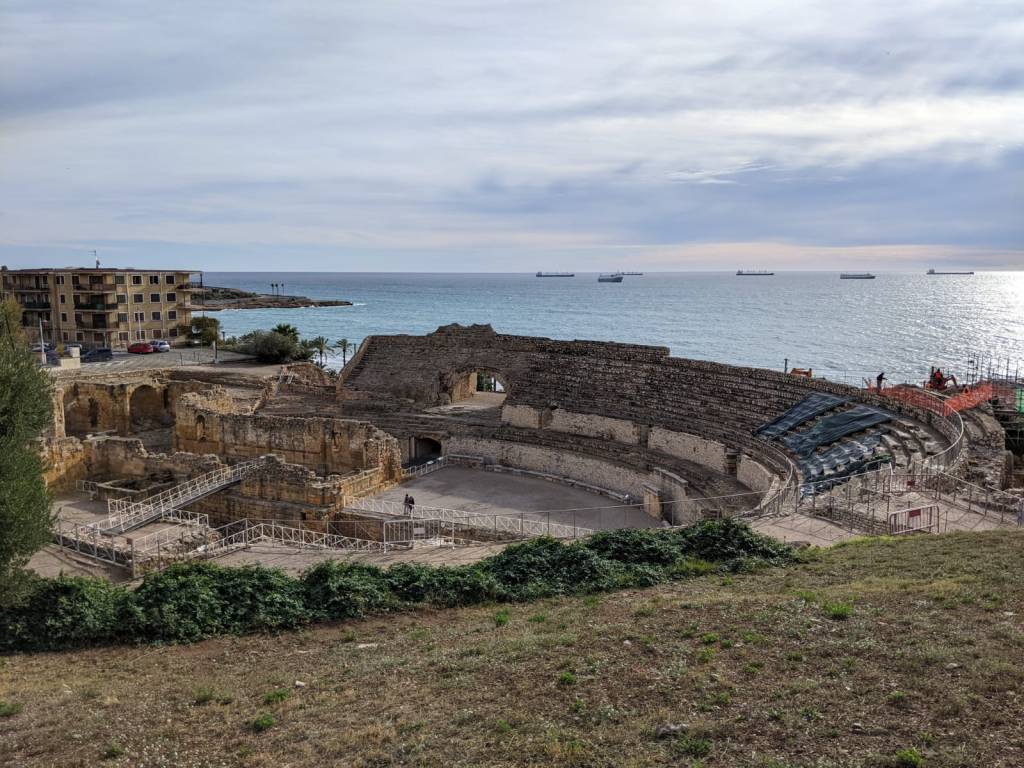
Amfitheatre de Tarragona 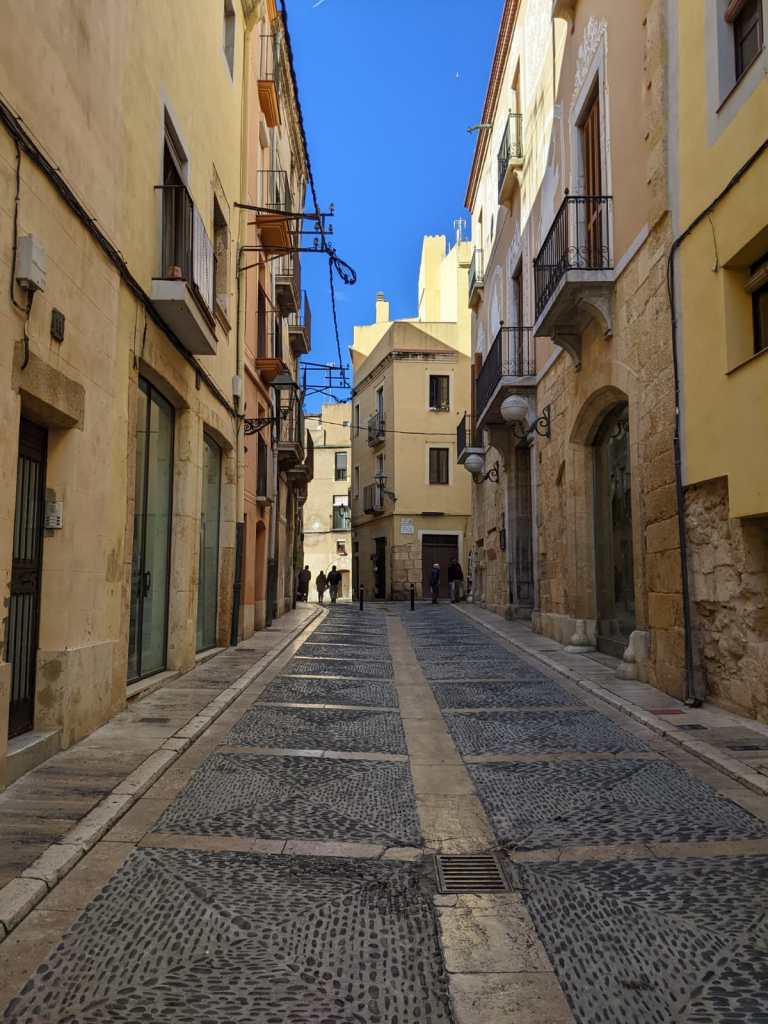
Tarragona old town We also spent 3 days chilling in Cambrils, a coastal town just south of Tarragona, which we can report has an epic fishmonger – Peixos Savall. We think Zeus is slowly getting used to the feeling of sand under his toes. He’s still hilariously curious and scared at the same time about waves, but he did manage to have a beserk run on the beach which was great to see.
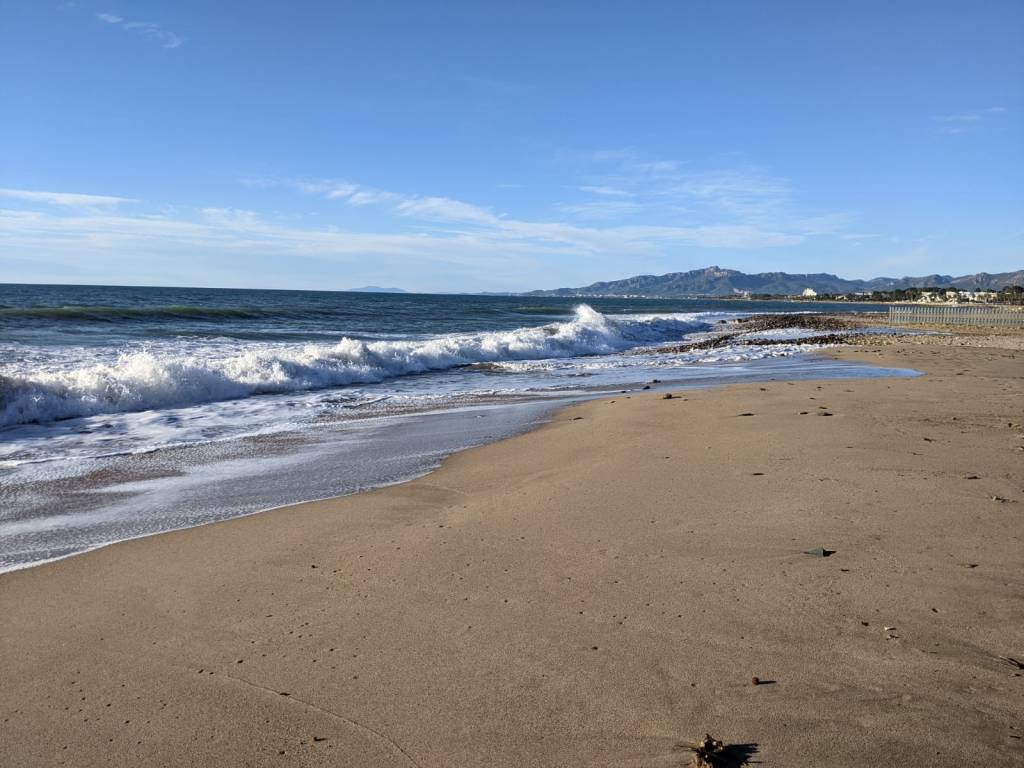
Cambrils beach 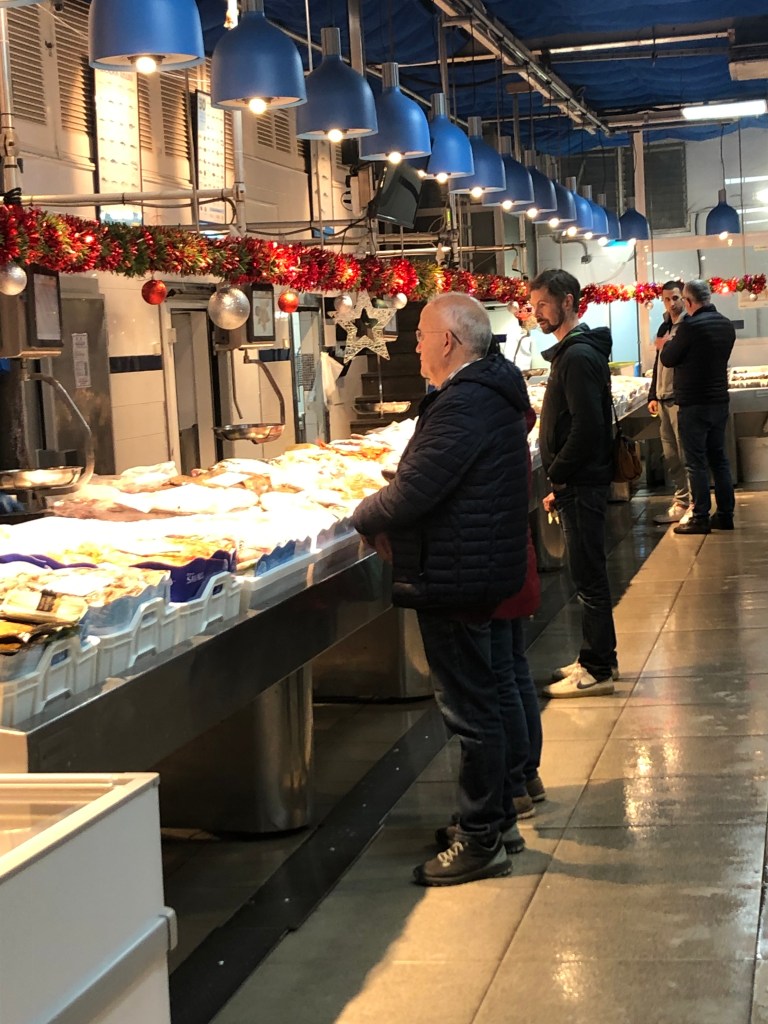
Peixos Savall 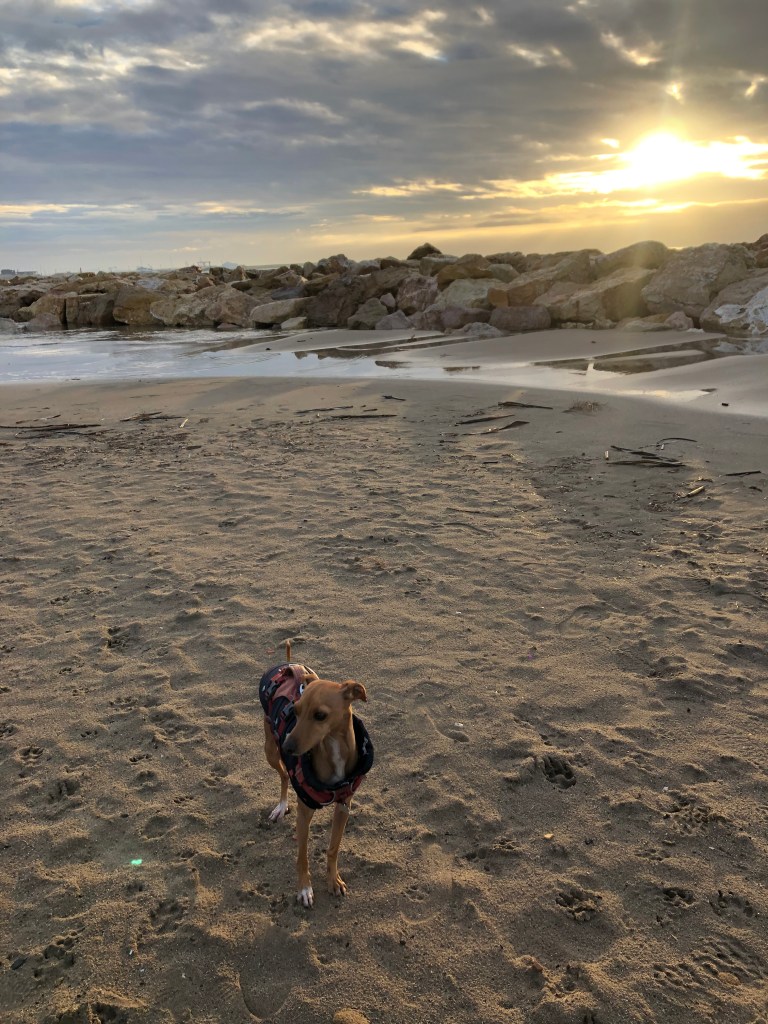
Beach boy What’s next
We’ve left Catalunya, and have just arrived in Aragon, where we’ll be spending 3 days in Alcaniz where James hopes to climb some rocks. From here we plan to meander down towards Valencia via a natural park or two.
 JAZ Adventures